
A Post-Transfer Escrow Analysis Notification informs homeowners of changes to their monthly mortgage payments following a loan transfer. It details adjustments based on property tax and insurance evaluations conducted by the new servicer. Understanding this statement ensures your escrow account remains funded and prevents unexpected payment shortages. To help you communicate these changes effectively, below are some ready to use template.

Image cover: Streamline Your Mortgage Servicing: Post-Transfer Escrow Analysis Notification Templates
Letter Samples List
- Post-Transfer Escrow Analysis Notification Letter
- Initial Post-Transfer Escrow Account Review Letter
- Post-Transfer Escrow Shortage Disclosure Letter
- Post-Transfer Escrow Surplus Disbursement Letter
- Post-Transfer Escrow Payment Adjustment Letter
- Servicing Transfer Escrow Analysis Summary Letter
- Post-Transfer Escrow Deficiency Notice Letter
- Post-Transfer Escrow Account Reconciliation Letter
- Notice of New Escrow Payment Amount Letter
- Post-Transfer Escrow History Evaluation Letter
- Mortgage Escrow Reassessment Notification Letter
- Post-Transfer Property Tax Escrow Adjustment Letter
Post-Transfer Escrow Analysis Notification Letter
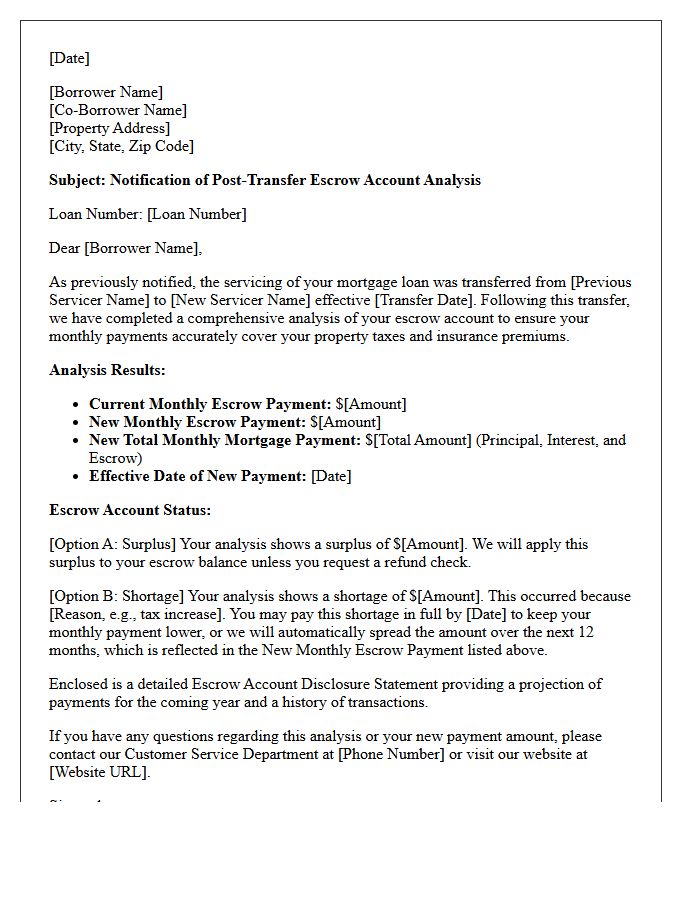
A Post-Transfer Escrow Analysis Notification Letter is a legal disclosure sent after your mortgage moves to a new servicer. It details the annual review of your escrow account to ensure sufficient funds for property taxes and insurance. This document identifies any escrow shortages or surpluses resulting from tax rate changes. It specifies your updated monthly mortgage payment and outlines any required lump-sum contributions. Reviewing this letter promptly is essential to understand how your housing costs have adjusted under the new management and to avoid unexpected payment gaps.
Initial Post-Transfer Escrow Account Review Letter
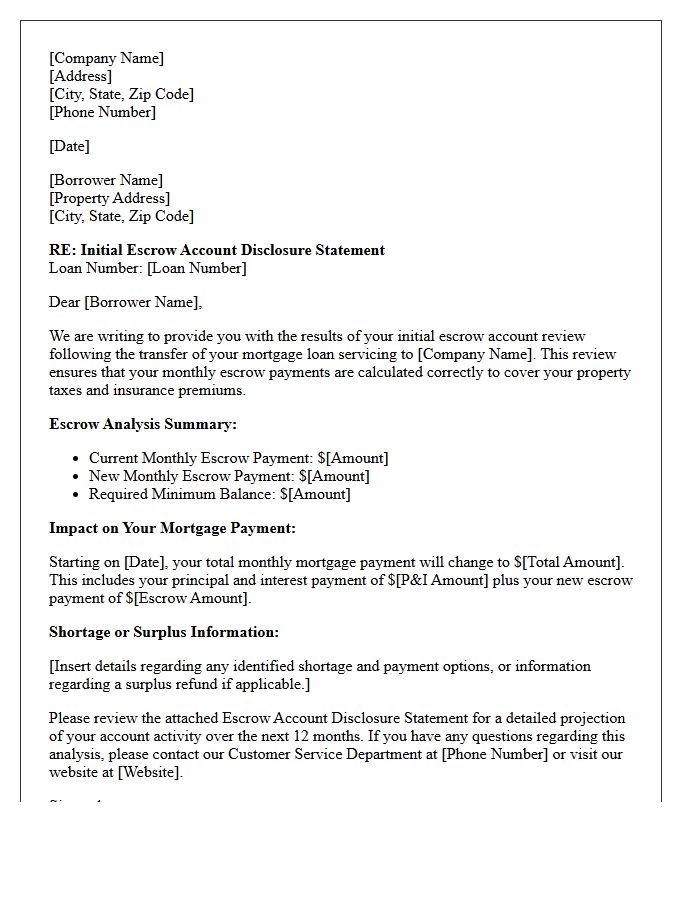
The Initial Post-Transfer Escrow Account Review Letter is a critical document sent when your mortgage servicer changes. It provides a detailed analysis of your escrow account to ensure the previous lender transferred the correct balance. This review determines if your monthly mortgage payment will increase or decrease based on updated property tax and insurance costs. Homeowners must review this statement immediately to identify any escrow shortages or overages that could impact financial planning and future housing expenses during the transition period between lending institutions.
Post-Transfer Escrow Shortage Disclosure Letter
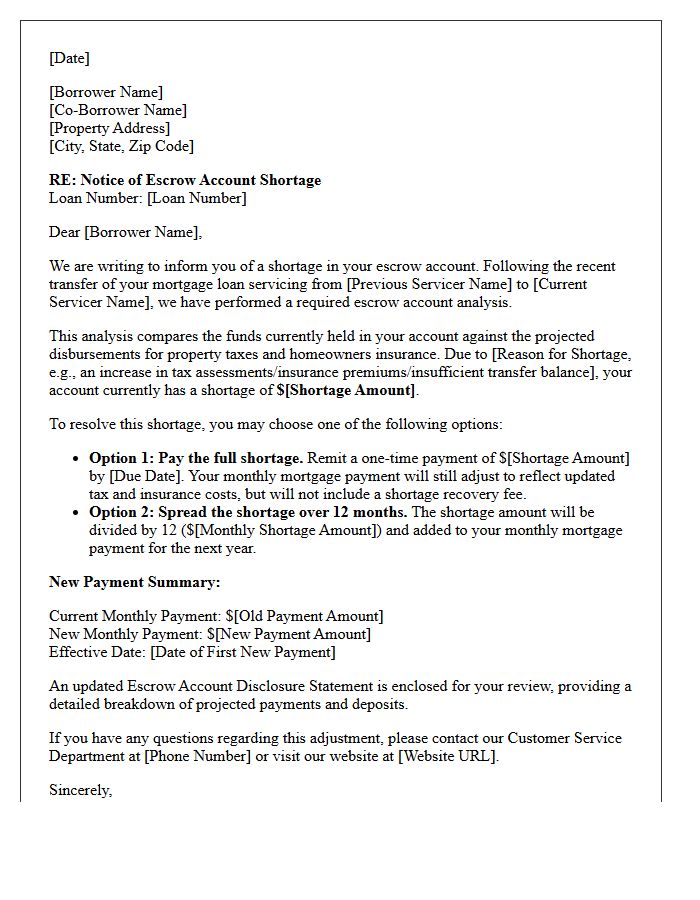
A Post-Transfer Escrow Shortage Disclosure Letter notifies homeowners when their escrow account balance falls below the required minimum after a mortgage transfer. This typically occurs because the new servicer recalculates property taxes or insurance premiums using different projections. The letter outlines your new monthly payment and provides options to resolve the deficiency, such as making a one-time lump sum payment or spreading the shortage across future installments. It is essential to review this document immediately to understand how your mortgage obligations have changed under the new lender.
Post-Transfer Escrow Surplus Disbursement Letter
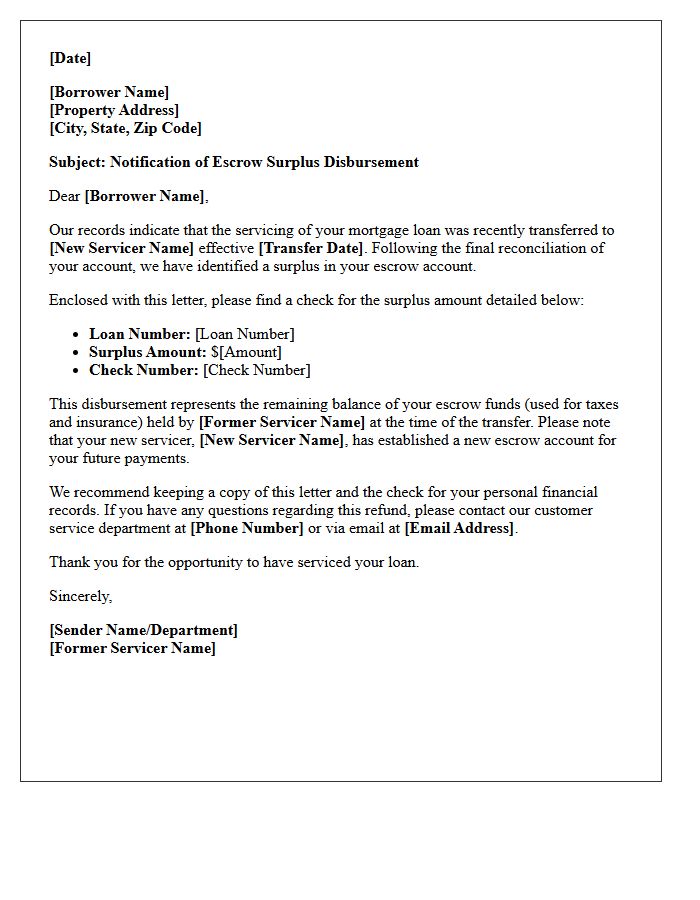
A Post-Transfer Escrow Surplus Disbursement Letter is a formal notification sent after a mortgage servicing transfer. It informs the homeowner that an audit of their escrow account revealed excess funds. This surplus occurs when the previous lender's tax and insurance estimates exceed actual costs. The letter confirms the amount being refunded and includes a disbursement check. It is essential to verify this document to ensure your new servicer has accurate records and that your surplus refund is processed correctly following the transition of your loan management.
Post-Transfer Escrow Payment Adjustment Letter
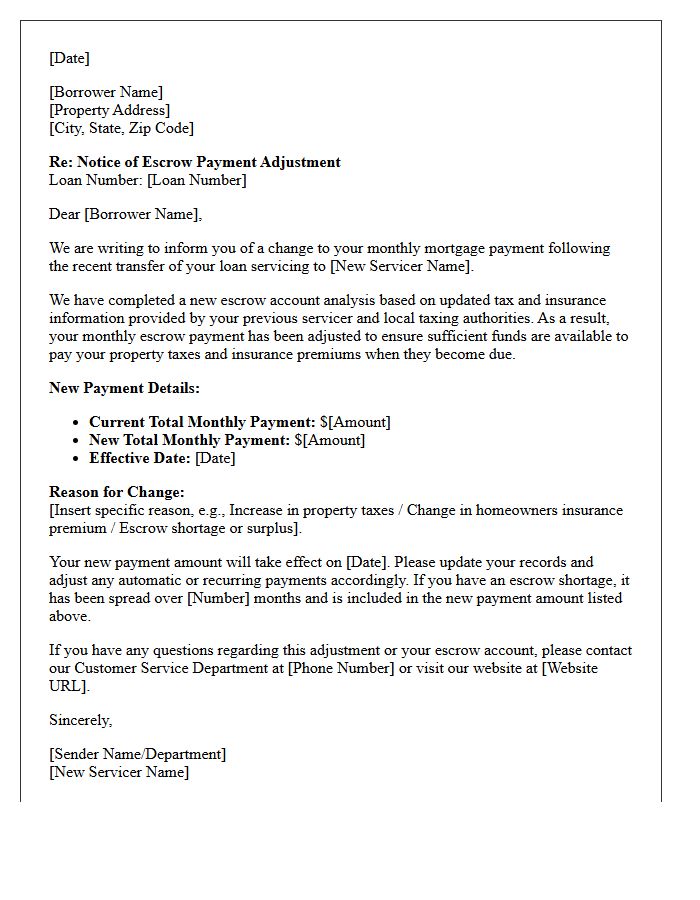
A Post-Transfer Escrow Payment Adjustment Letter informs homeowners of changes to their monthly mortgage payment following a servicing transfer. When a new lender takes over, they conduct an escrow analysis to ensure the account covers property taxes and insurance. This letter details whether your payment will increase or decrease due to shortages or surpluses identified in the transition. It is crucial to review this document immediately to understand your new total monthly obligation and ensure your records align with the previous servicer's final statement to avoid payment gaps.
Servicing Transfer Escrow Analysis Summary Letter
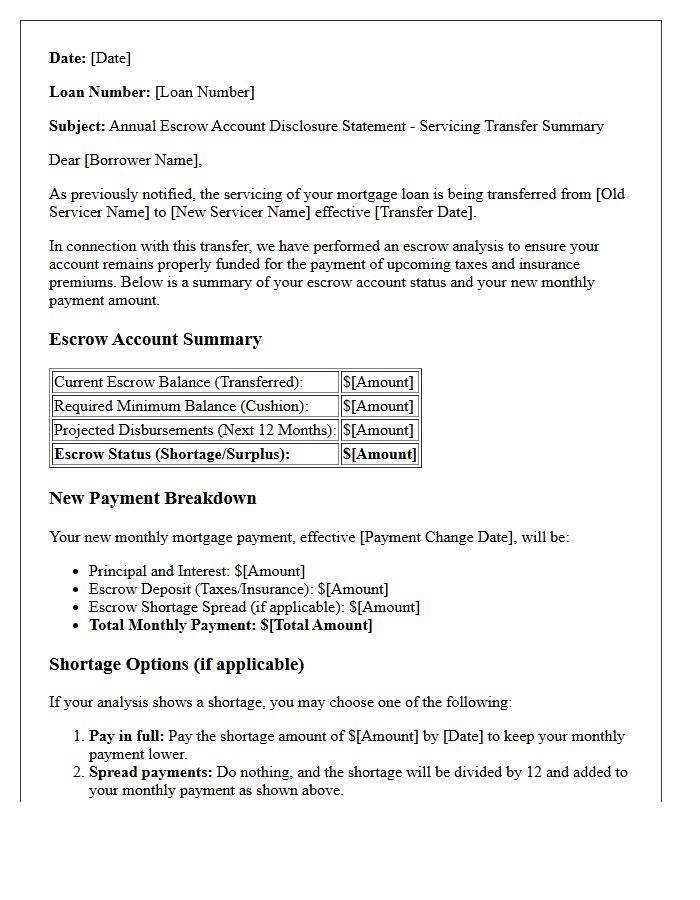
A Servicing Transfer Escrow Analysis Summary Letter is a critical document sent when your mortgage is moved to a new servicer. It details how your impound account funds, used for property taxes and insurance, are transitioned. This summary ensures your escrow balance remains accurate and identifies any potential shortages or surpluses resulting from the transfer. Reviewing this letter is essential to understand changes in your monthly payment amount and to confirm that all future tax and insurance obligations will be paid correctly by the new company.
Post-Transfer Escrow Deficiency Notice Letter
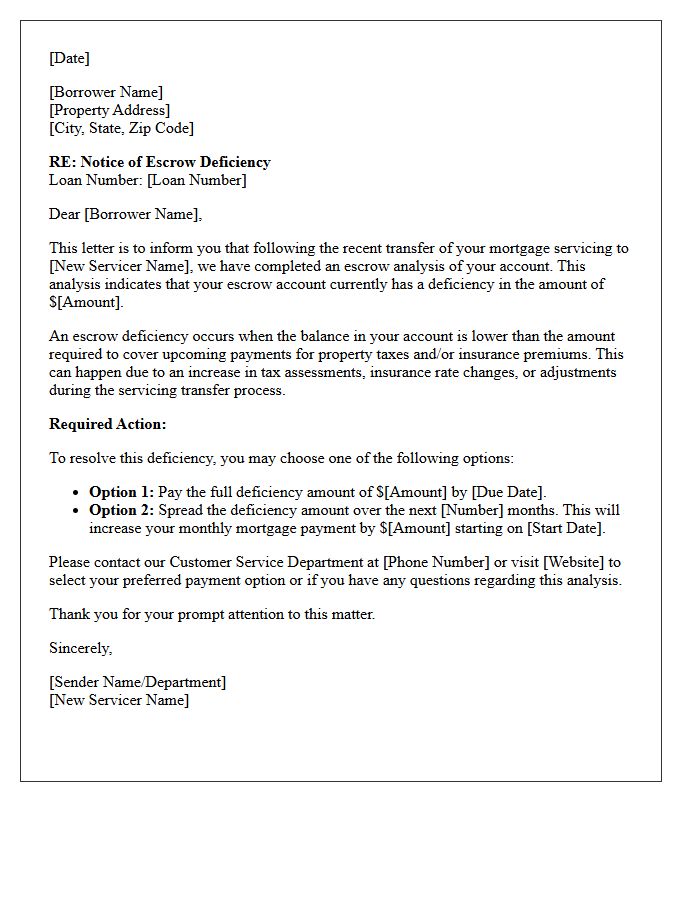
A Post-Transfer Escrow Deficiency Notice Letter informs homeowners of a shortage in their escrow account following a mortgage servicing transfer. This occurs when the new servicer recalculates projected property taxes or insurance premiums. Recipients must review the escrow analysis to understand updated monthly payment increases or one-time lump-sum requirements. To maintain financial stability, it is essential to verify that all previous payments were correctly applied during the transition and to contact the new lender immediately to discuss repayment options for the remaining balance.
Post-Transfer Escrow Account Reconciliation Letter
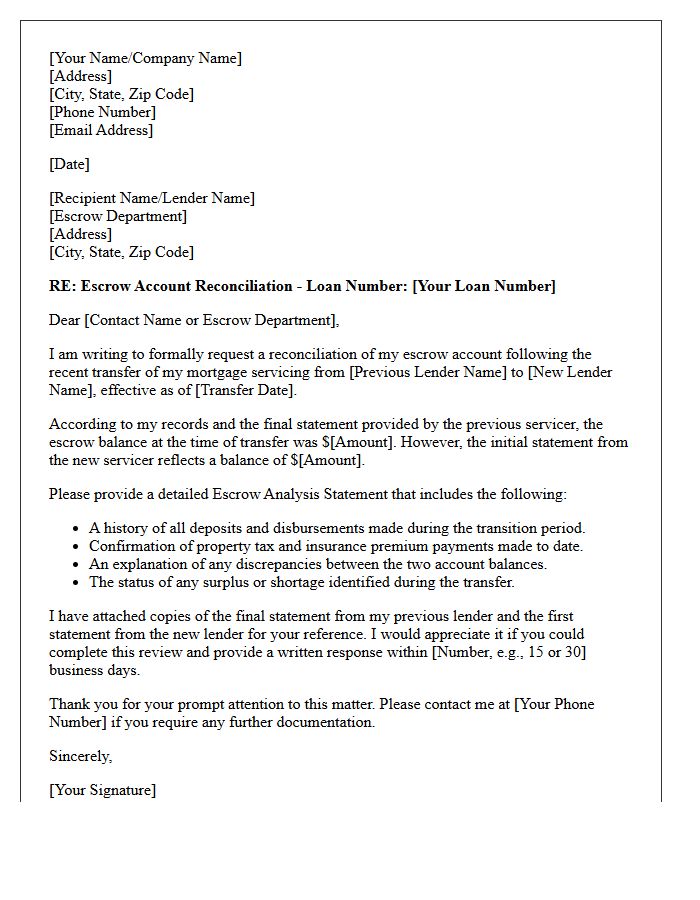
A Post-Transfer Escrow Account Reconciliation Letter is a critical document sent by mortgage lenders after a loan transfer. It confirms the final escrow balance and ensures all property taxes and insurance premiums were accurately paid. Borrowers should review this statement to identify potential surpluses or shortages that could impact future monthly payments. Verifying this reconciliation protects your financial interests during a transition, ensuring your escrow funds are correctly credited by the new servicer and preventing unexpected payment spikes or lapses in essential coverage.
Notice of New Escrow Payment Amount Letter
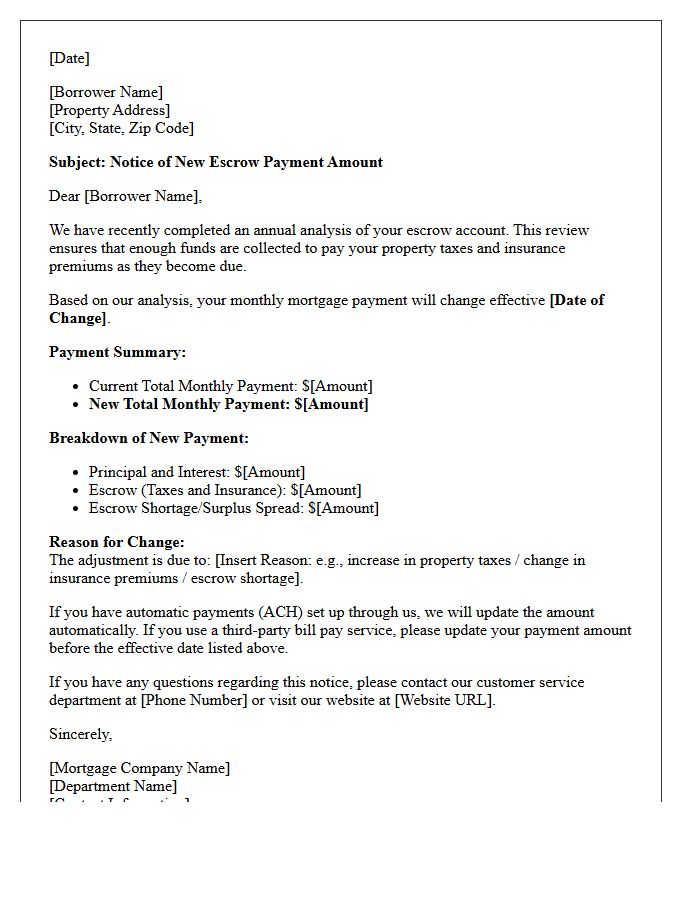
A Notice of New Escrow Payment Amount informs homeowners of changes to their monthly mortgage bill following an escrow account analysis. This annual review compares collected funds against actual costs for property taxes and insurance premiums. If these expenses increase or a shortage occurs, your payment will rise to cover the gap. It is crucial to review this document to understand your new monthly obligation and ensure your escrow cushion meets federal requirements, preventing unexpected financial strain or potential payment delinquencies.
Post-Transfer Escrow History Evaluation Letter
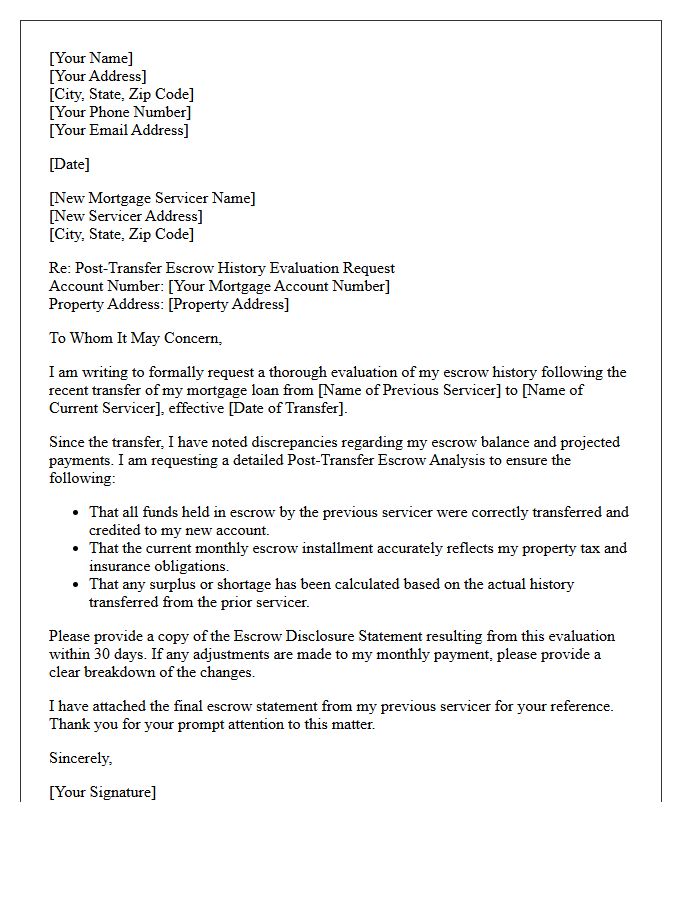
A Post-Transfer Escrow History Evaluation Letter is a formal document issued by mortgage servicers after a loan transfer. It provides a detailed reconciliation of your escrow account, comparing previous payments to current balances. This letter is crucial for ensuring your property taxes and insurance premiums are accurately accounted for during the transition. Reviewing this document helps homeowners identify potential shortages or overages early, preventing unexpected spikes in monthly mortgage payments. It serves as essential verification that your funds were correctly transferred and applied by the new servicer.
Mortgage Escrow Reassessment Notification Letter
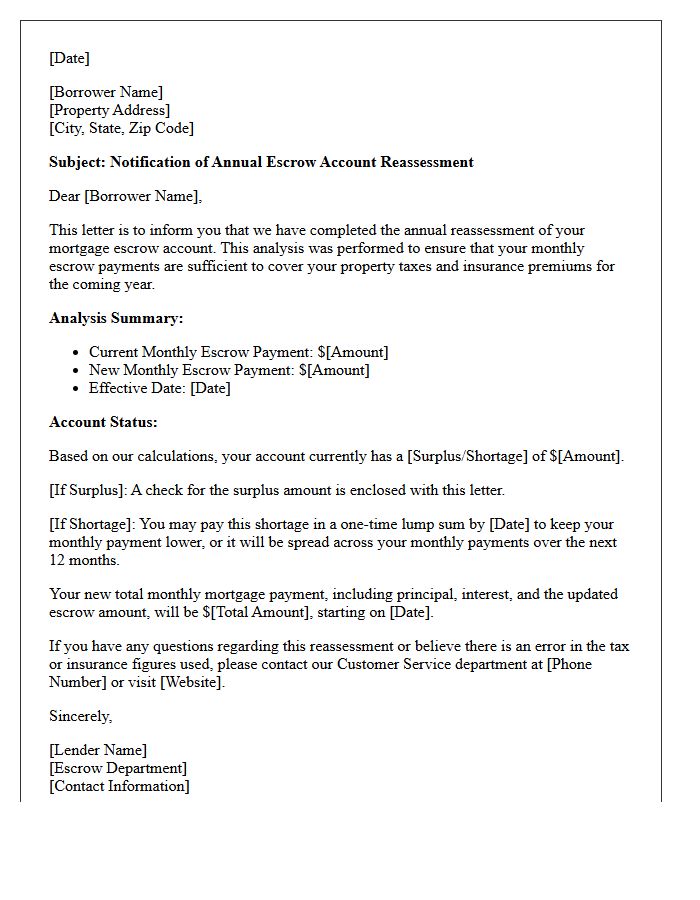
A mortgage escrow reassessment notification letter informs homeowners of changes to their monthly payment due to fluctuations in property taxes or insurance premiums. This annual review determines if your escrow account has a surplus or a deficiency. If a shortage exists, your lender will typically increase your payment to cover the gap. It is crucial to review this document to understand adjustments in your housing costs and ensure your tax assessments are accurate to avoid unexpected financial burdens.
Post-Transfer Property Tax Escrow Adjustment Letter
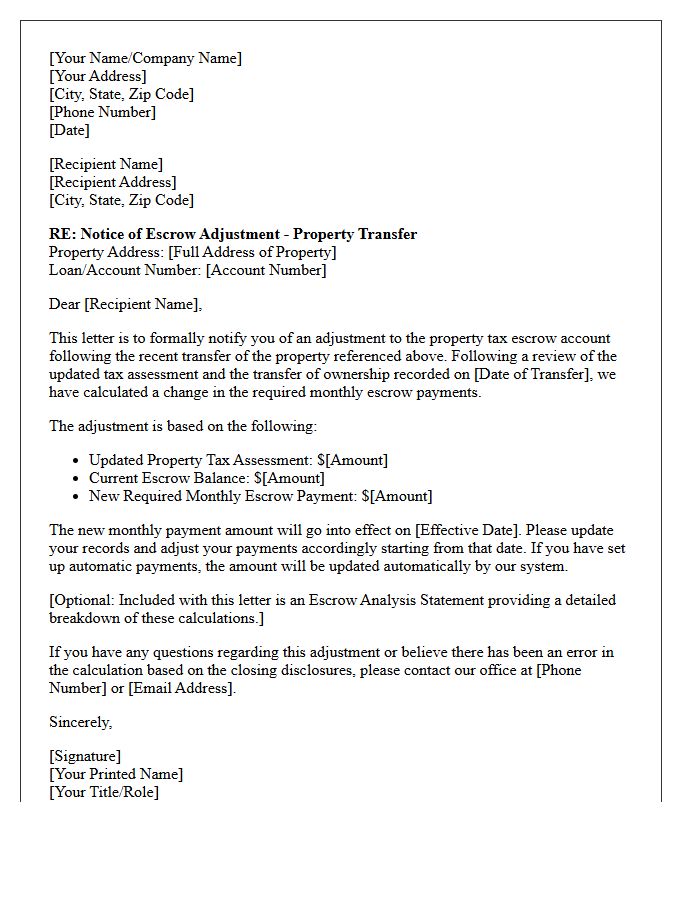
A Post-Transfer Property Tax Escrow Adjustment Letter notifies homeowners of a change in their monthly mortgage payment following a property title transfer. When ownership changes, local governments often re-assess the home's value, typically leading to a tax increase. Your lender sends this notice to adjust your escrow account balance to cover the new tax liability. It is crucial to review this letter to understand your new payment amount and identify any potential shortfalls in your impound account, ensuring your property taxes remain fully funded and paid on time.
What is a Post-Transfer Escrow Analysis Notification?
A Post-Transfer Escrow Analysis Notification is a formal statement issued by your new mortgage servicer shortly after a loan transfer. It details an updated review of your escrow account to ensure sufficient funds are available to cover future property taxes and insurance premiums based on the new servicer's projections.
Why did my escrow payment change after my loan was transferred?
Payments often change because the new servicer may use different calculation dates, anticipate tax hikes, or identify a shortage left by the previous servicer. The analysis ensures your monthly contributions align with the actual projected disbursements for the upcoming year.
How do I handle an escrow shortage found during a post-transfer analysis?
If your analysis reveals a shortage, you typically have two options: pay the entire shortage amount in a one-time lump sum to keep your monthly payment lower, or spread the shortage amount across 12 monthly installments, which will increase your total monthly mortgage payment.
Is a post-transfer escrow analysis different from my annual escrow review?
Yes. While an annual review happens once every 12 months, a post-transfer analysis is a one-time assessment triggered specifically by the change in loan servicing. Once this initial review is complete, you will return to a standard annual analysis schedule with the new servicer.
What should I do if my new servicer's escrow analysis shows different tax amounts than my previous servicer?
You should compare the tax figures on the notification with your local municipality's current assessments. If the servicer is using outdated or incorrect tax data, contact their escrow department immediately with documentation to request a manual re-analysis of your account.

Comments