
When a mortgage loan is transferred, you must provide a Servicing Transfer Notification to your flood insurance provider to update the mortgagee clause. This ensures continuous coverage and proper premium billing during the transition between lenders. Keeping your policy accurate prevents lapses in mandatory protection. To simplify this process, below are some ready to use template.
Image cover: Official Notification Templates for Servicing Transfers to Flood Insurance Providers
Letter Samples List
- Flood Insurance Servicing Transfer Notification Letter
- Mortgage Loan Servicer Change Notice Letter
- Transfer Of Mortgage Servicing Rights Letter
- Flood Policy Mortgagee Clause Update Letter
- New Servicer Flood Insurance Assignment Letter
- Lender Servicing Transfer Announcement Letter
- Flood Insurance Provider Servicing Update Letter
- Notice Of Loan Servicing Transfer Letter
- Mortgage Servicing Reassignment Notification Letter
- Flood Insurance Premium Payee Change Letter
- Mortgage Lender Servicing Transition Letter
- Flood Policy Escrow Servicer Update Letter
Flood Insurance Servicing Transfer Notification Letter
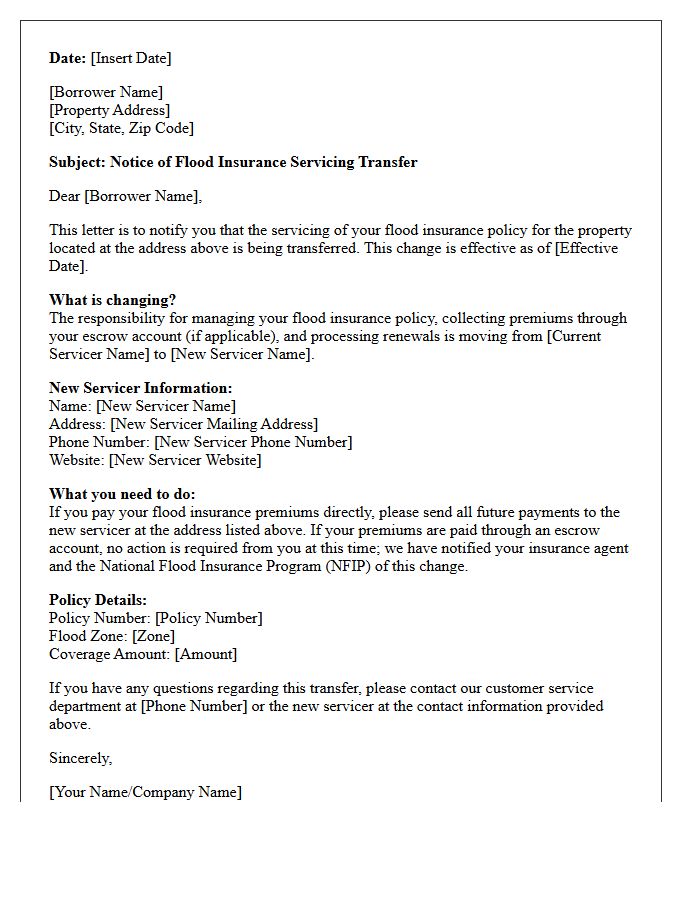
A Flood Insurance Servicing Transfer Notification Letter informs policyholders that their policy management is moving to a new provider. This mandatory notice ensures continuous coverage and outlines critical updates regarding premium payments and customer support contacts. It is essential to review the effective date to avoid lapsed protection. While the underlying NFIP or private coverage terms typically remain identical, homeowners must update their records and notify mortgage lenders to ensure seamless escrow transitions and maintain financial security against water damage risks.
Mortgage Loan Servicer Change Notice Letter
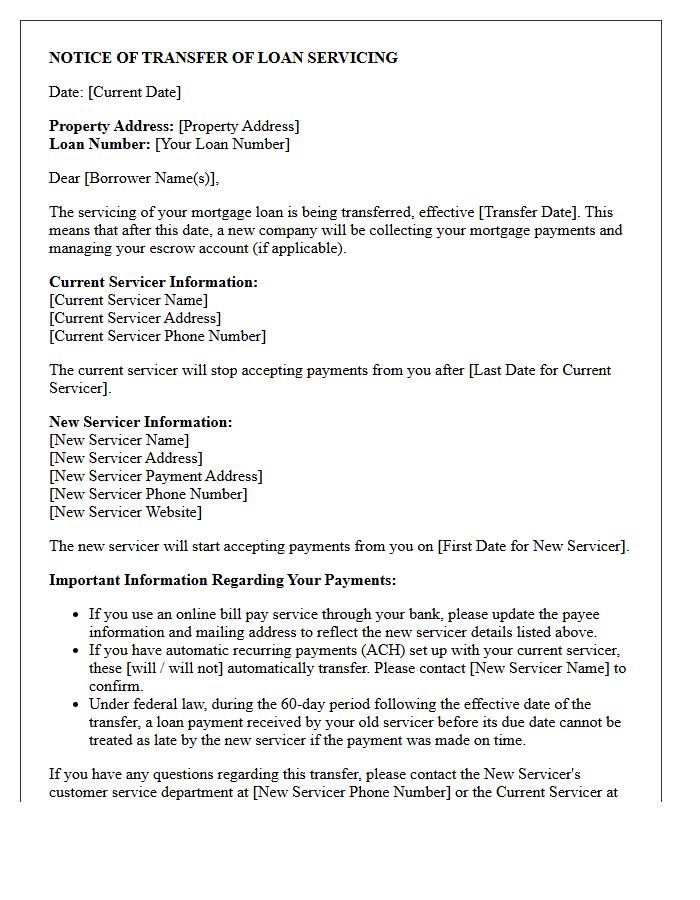
Receiving a Mortgage Loan Servicer Change Notice Letter is a critical legal requirement under the Real Estate Settlement Procedures Act (RESPA). This document informs you that a new company will manage your payments and escrow. The most important action is to verify the effective transfer date and update your automated payment settings to avoid late fees. Legally, you are granted a sixty-day grace period during which payments sent to the previous servicer cannot be marked late. Always confirm the new mailing address to ensure your home ownership remains secure.
Transfer Of Mortgage Servicing Rights Letter
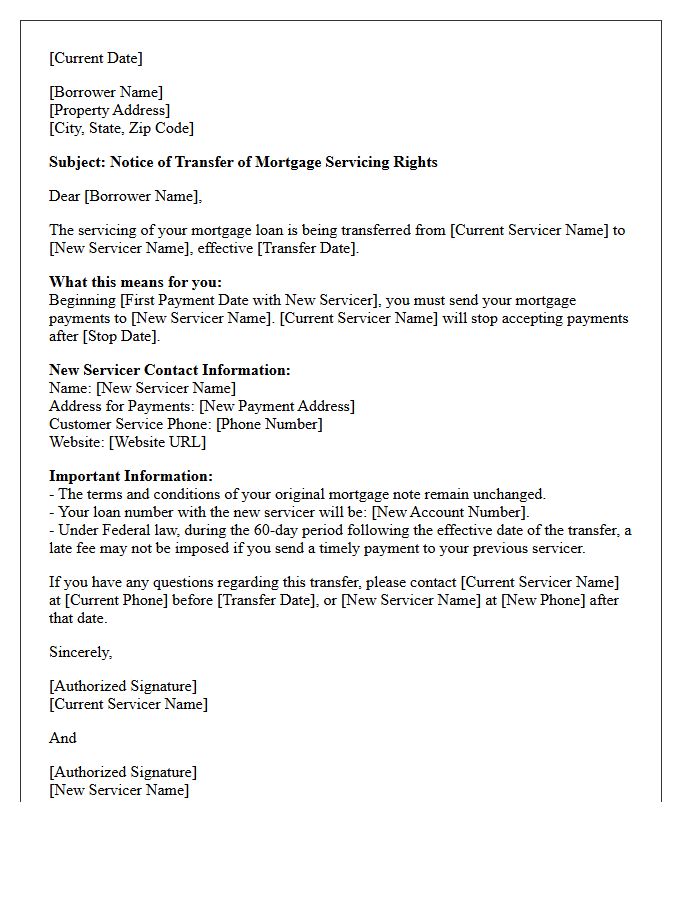
A Transfer of Mortgage Servicing Rights letter notifies you that a new company will manage your payments and escrow. Legally, your current servicer must send this notice at least 15 days before the switch. This change does not alter your loan terms, interest rate, or balance. Always verify the new servicer's legitimacy to avoid payment scams. During the 60-day grace period following the transfer, you cannot be charged late fees if you accidentally send payments to your previous lender. Carefully update your records and automated billing to ensure a seamless transition.
Flood Policy Mortgagee Clause Update Letter
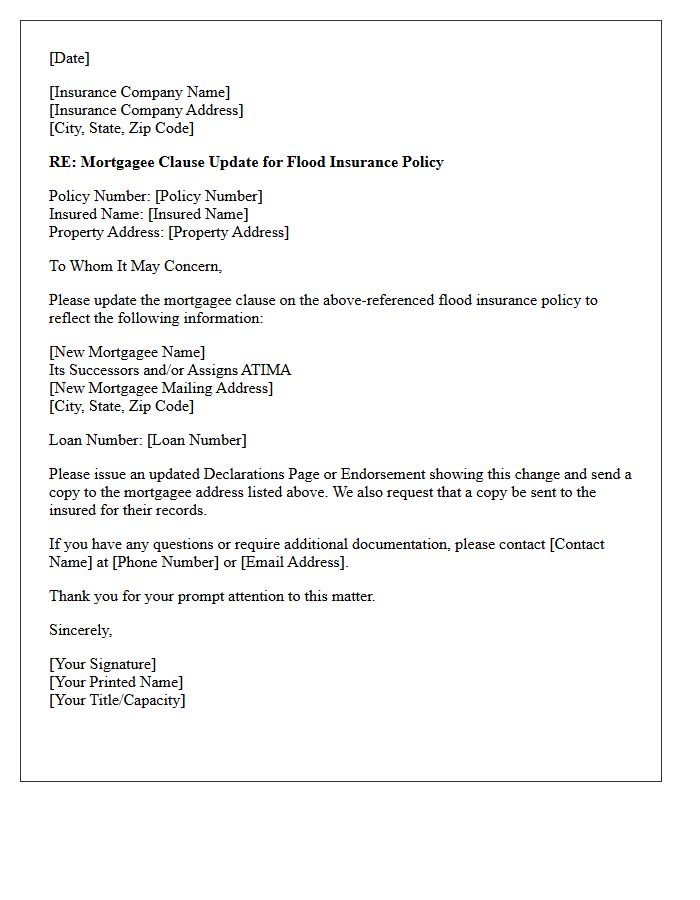
A Flood Policy Mortgagee Clause Update Letter is a formal notification sent to insurance providers to modify the lienholder information on a property policy. This document ensures that the correct lender is listed as the loss payee, protecting their financial interest in the asset. It typically includes the loan number, the new mortgagee's legal name, and their specific mailing address for notifications. Timely updates are essential to maintain regulatory compliance and ensure seamless communication regarding premium payments, renewals, or potential claims processing between the insurer and the financial institution.
New Servicer Flood Insurance Assignment Letter
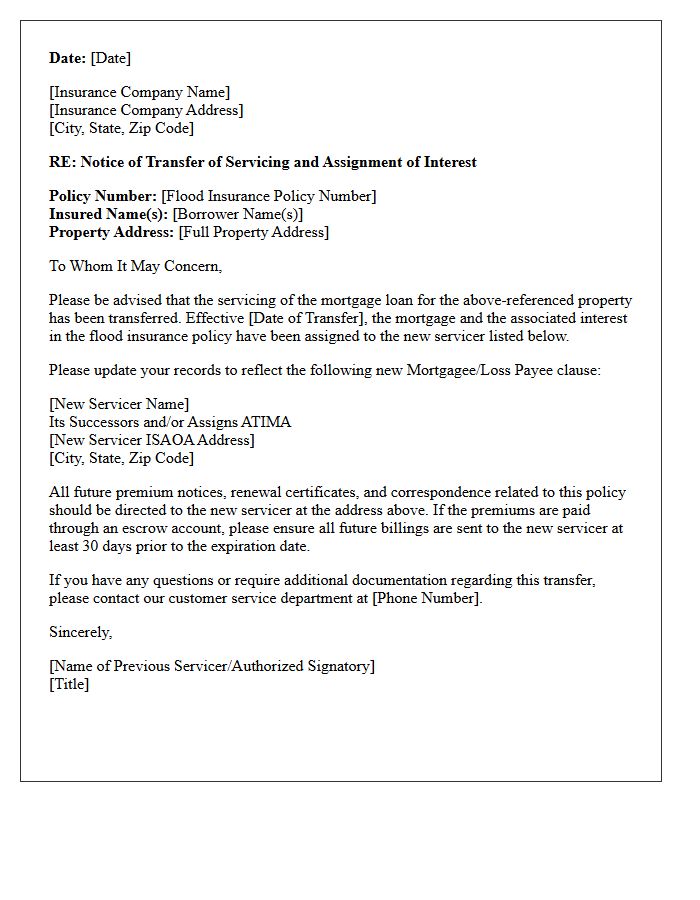
A New Servicer Flood Insurance Assignment Letter is a critical legal notice informing you that your mortgage servicer has changed. To maintain continuous compliance, you must immediately update your flood insurance policy with the new servicer's loss payee information. Failing to provide this updated documentation can lead to unnecessary lender-placed insurance, which is often more expensive. Ensure your policy accurately reflects the new billing address and mortgagee clause to protect your property and satisfy federal lending requirements during the transfer process.
Lender Servicing Transfer Announcement Letter
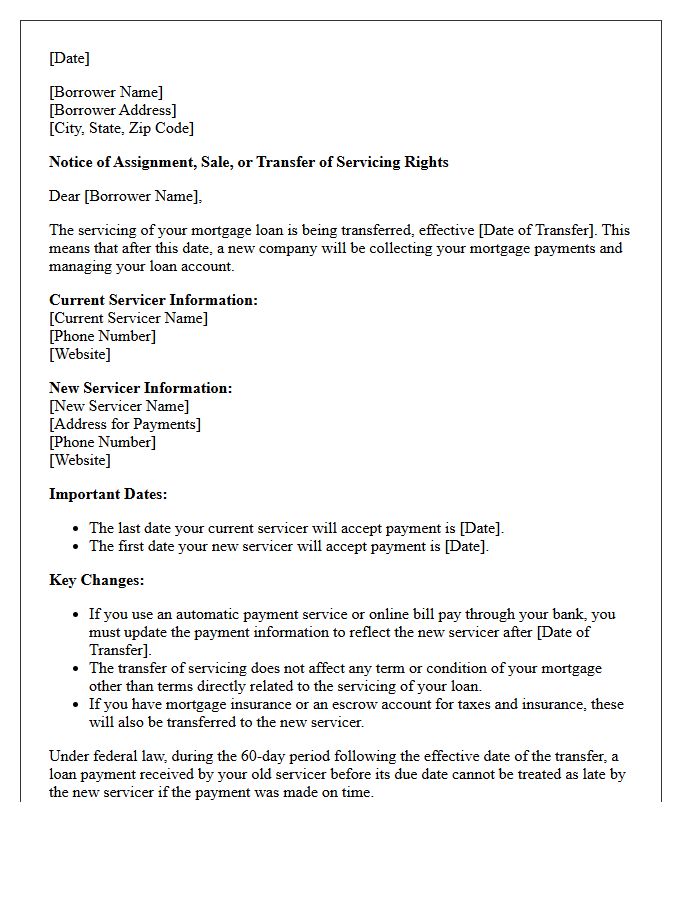
A Lender Servicing Transfer Announcement Letter is a formal notice informing you that a new company will manage your loan payments. This transition does not change your original mortgage terms, interest rate, or balance. Key details include the effective transfer date, contact information for the new servicer, and instructions for directing future payments. By law, you receive a 60-day grace period to ensure payments reach the correct entity without late fees. Always verify the letter's authenticity with your current lender to prevent payment redirection scams and ensure account security.
Flood Insurance Provider Servicing Update Letter
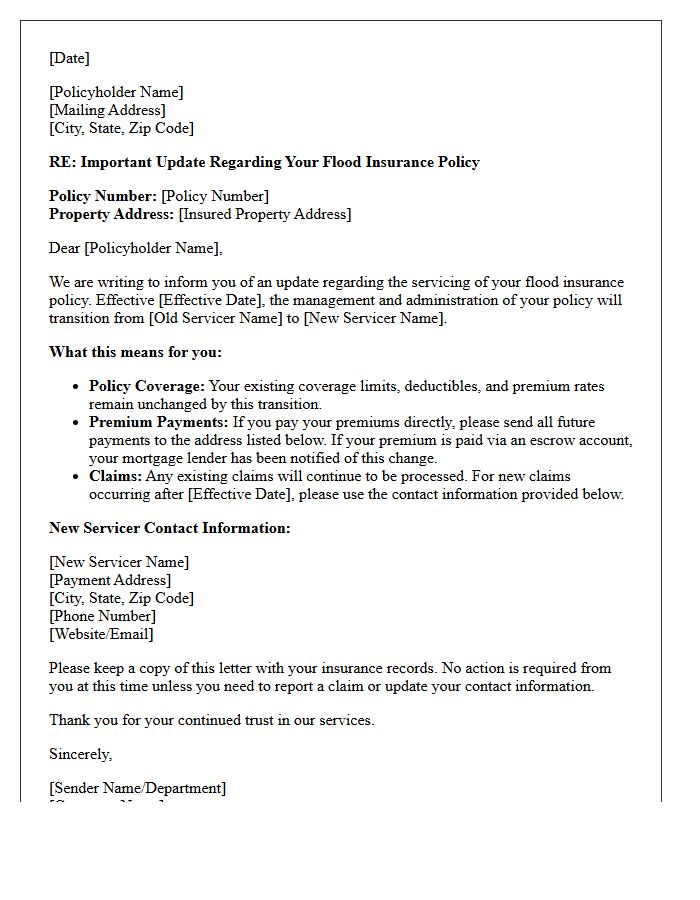
A Flood Insurance Provider Servicing Update Letter is a formal notification informing policyholders about changes in their insurance carrier or policy administrator. This document confirms that while your coverage terms remain the same, the company handling your premiums, claims, or renewals has changed. It is essential to update your mortgage lender and payment records to ensure continuous protection. Always verify the new contact information provided in the letter to prevent lapses in coverage or payment processing errors during the transition between servicing entities.
Notice Of Loan Servicing Transfer Letter
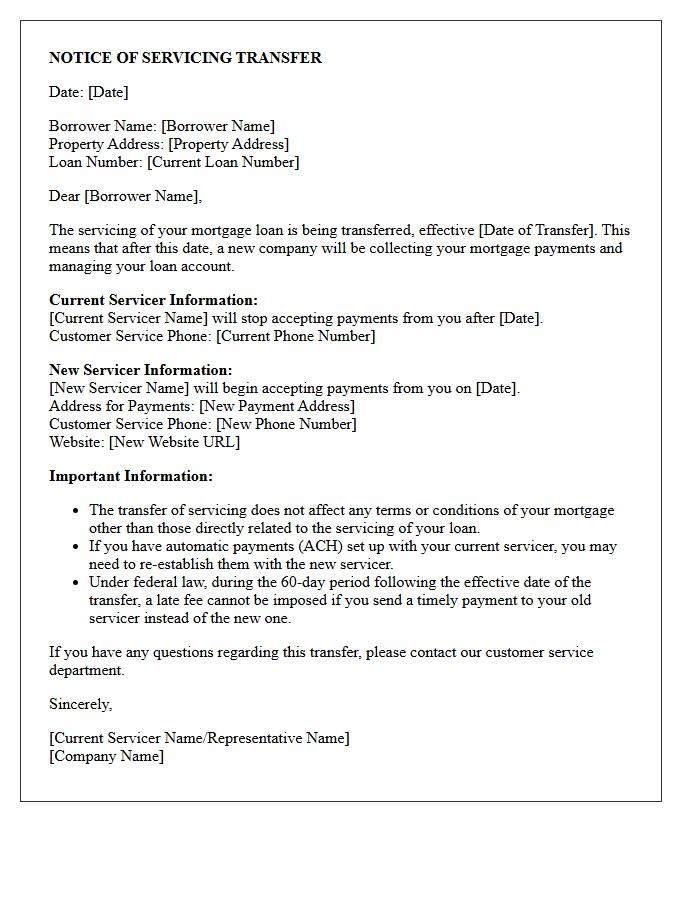
A Notice of Loan Servicing Transfer Letter is a mandatory document informing you that a new company will manage your mortgage payments. Federal law requires your current lender to send this notice at least 15 days before the change occurs. It contains the effective transfer date, contact details for the new servicer, and instructions for future payments. To ensure financial security, verify all details to avoid scams and confirm your escrow accounts transition correctly. During the 60-day grace period, late fees cannot be charged if payments are sent to the previous servicer.
Mortgage Servicing Reassignment Notification Letter
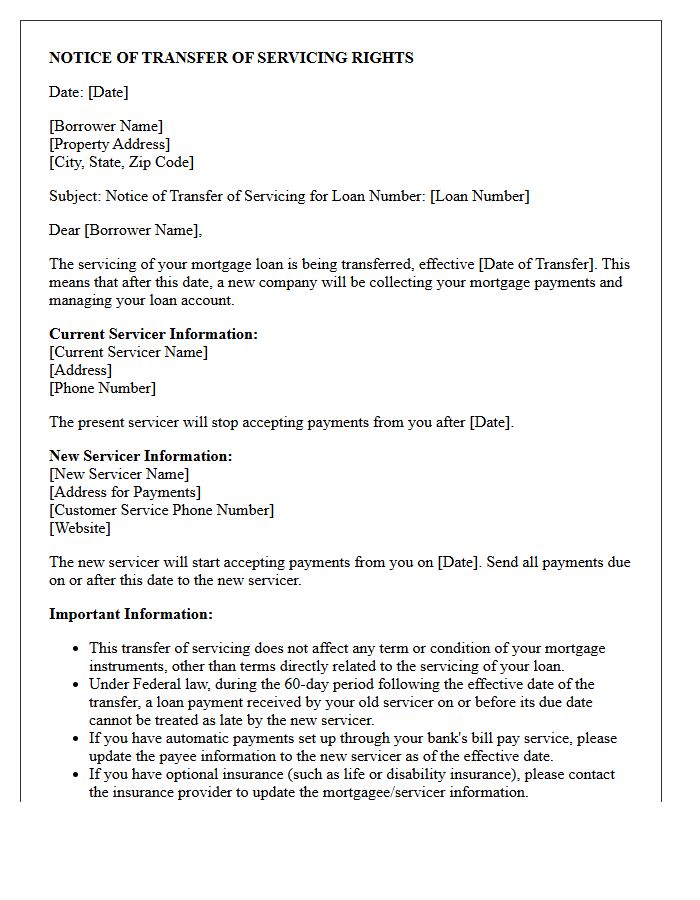
A Mortgage Servicing Reassignment Notification Letter is a formal notice informing you that a new company will manage your loan payments. By law, your current servicer must send a Notice of Transfer at least 15 days before the change occurs. This transition does not alter your loan terms, but you must update your payment records to avoid delinquency. Carefully verify the new servicer's contact details and payment address to ensure security. Always keep a copy of this correspondence to document your compliance with the new billing instructions during the transition period.
Flood Insurance Premium Payee Change Letter
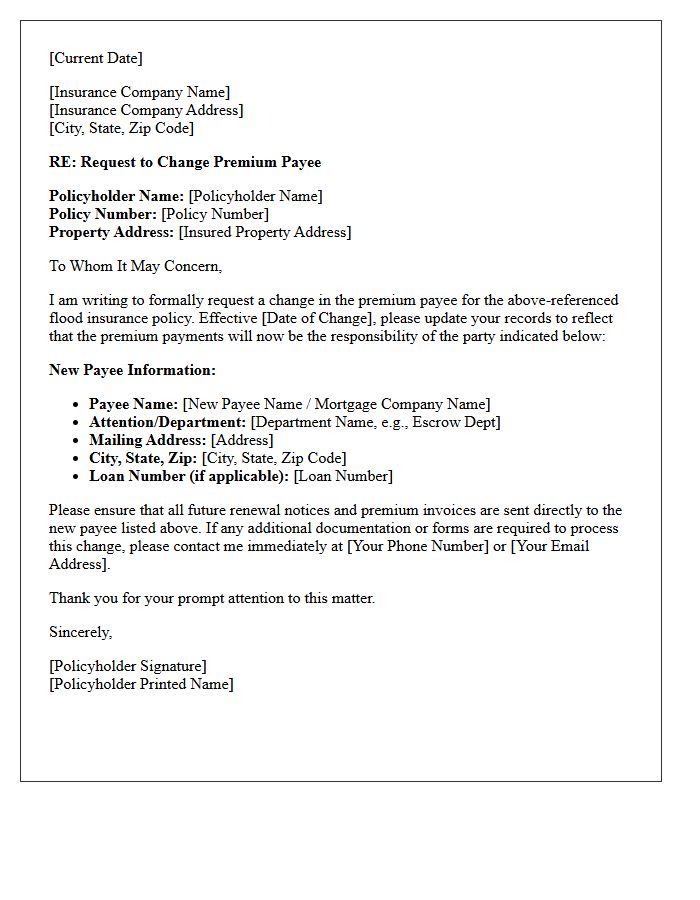
A Flood Insurance Premium Payee Change Letter is a formal notification sent to an insurance provider to update billing responsibilities. This document is essential when a mortgage is refinanced, sold, or paid off, ensuring the correct entity receives future invoices. Timely submission prevents coverage lapses and payment delays. It must include the policy number, property address, and the new mortgagee clause details. Providing clear instructions ensures that the lender or homeowner is accurately billed, maintaining continuous protection against water damage and financial loss under the National Flood Insurance Program.
Mortgage Lender Servicing Transition Letter
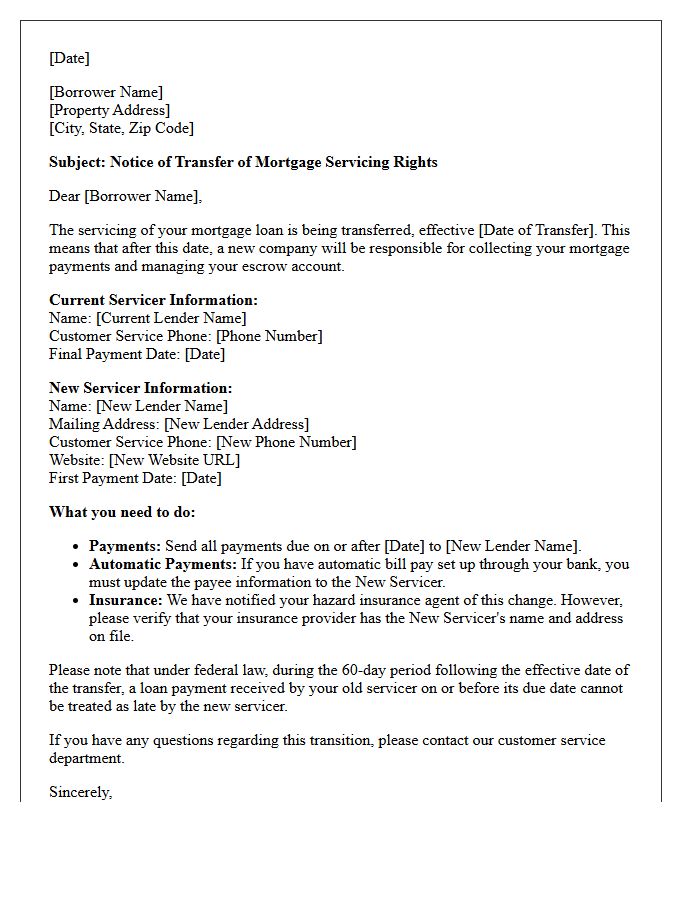
A mortgage lender servicing transition letter is a critical notice informing you that the right to manage your loan has been transferred to a new company. This document outlines your new account number, payment address, and the effective transfer date. It is essential to verify this information to avoid payment processing errors or late fees. By law, there is a 60-day grace period following the transfer where late fees cannot be charged. Always confirm the change with both your old and new servicers to ensure your financial security.
Flood Policy Escrow Servicer Update Letter
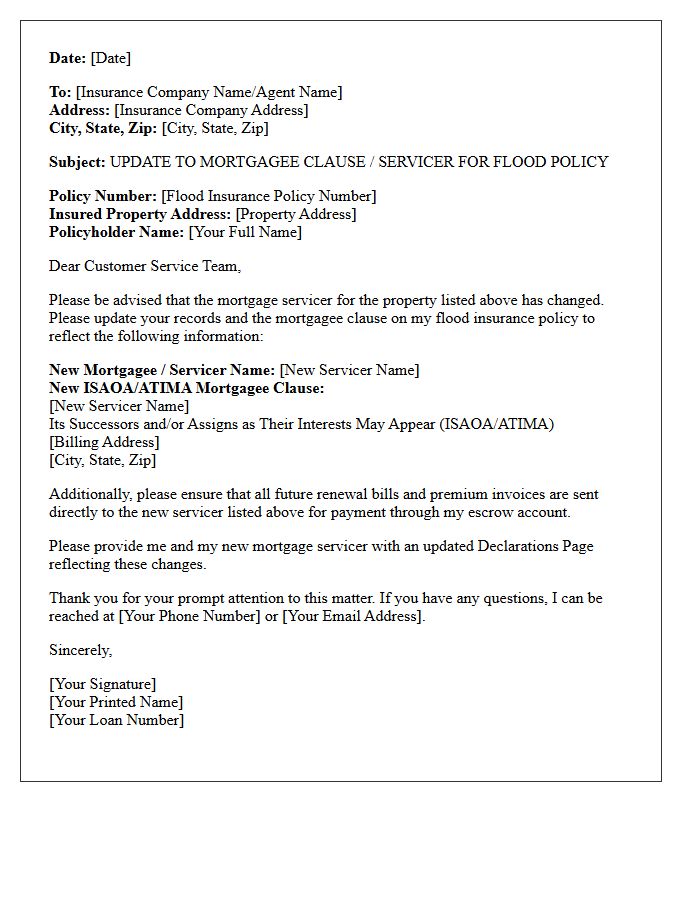
A Flood Policy Escrow Servicer Update Letter is a formal notification sent to your insurance provider when your mortgage servicer changes. This document ensures that escrowed funds are correctly directed to the new billing entity. It is vital for maintaining continuous flood insurance coverage and avoiding policy lapses. Homeowners must verify that the new servicer's name and loan number are accurate. Timely updates prevent late payments, ensuring your property remains protected and compliant with federal lending requirements and lender-placed insurance mandates.
How do I notify my flood insurance provider about a loan servicing transfer?
To update your flood insurance policy, you must provide your insurance agent or company with a copy of the "Notice of Servicing Transfer." You can typically send this via email or fax to ensure the mortgagee clause is updated to reflect the new servicer's name and payment address.
What information does the flood insurance company need for a servicing change?
Your flood insurance provider requires the name of the new mortgage servicer, their specific billing address for insurance premiums, and your new loan account number. Providing the effective date of the transfer ensures there is no gap in coverage or billing errors.
Who is responsible for updating the mortgagee clause on a flood insurance policy?
While the new servicer often sends a formal request to the insurance carrier, it is the borrower's responsibility to ensure the flood insurance provider has received the updated information. This prevents the previous servicer from being billed and ensures the new servicer can pay premiums through your escrow account.
Will a loan servicing transfer affect my flood insurance escrow payments?
The transfer itself does not change your coverage, but it does change where the insurance company sends the bill. If the flood insurance provider is not notified of the transfer, the bill may be sent to the old servicer, potentially resulting in late payments or a policy lapse.
How long do I have to notify my flood insurance agent after a servicing transfer?
You should notify your flood insurance agent as soon as you receive the "Goodbye Letter" from your current servicer or the "Welcome Letter" from the new one. It is recommended to complete this update at least 30 days before your next policy renewal date.


Comments