
A Notice of Default and Intent to Evict is a formal legal document issued by landlords when a tenant violates lease terms, typically for non-payment of rent. It serves as a final warning, detailing the breach and providing a specific period to remedy the issue before formal eviction proceedings begin. To simplify your legal process, below are some ready to use templates.
Image cover: Official Notice of Default and Intent to Evict: Essential Templates and Legal Guidelines
Letter Samples List
- Notice of Default and Intent to Evict Letter for Unpaid Rent
- Notice of Default and Intent to Evict Letter for Lease Violation
- Notice of Default and Intent to Evict Letter for Property Damage
- Notice of Default and Intent to Evict Letter for Unauthorized Pets
- Notice of Default and Intent to Evict Letter for Illegal Activity
- Notice of Default and Intent to Evict Letter for Unauthorized Occupants
- Notice of Default and Intent to Evict Letter for Nuisance and Noise Violations
- Notice of Default and Intent to Evict Letter for Failure to Pay Utilities
- Notice of Default and Intent to Evict Letter for Expired Lease Holdover
- Notice of Default and Intent to Evict Letter for Refusal of Landlord Access
- Notice of Default and Intent to Evict Letter for Health and Safety Code Violations
- Notice of Default and Intent to Evict Letter for Illegal Subletting
Notice of Default and Intent to Evict Letter for Unpaid Rent
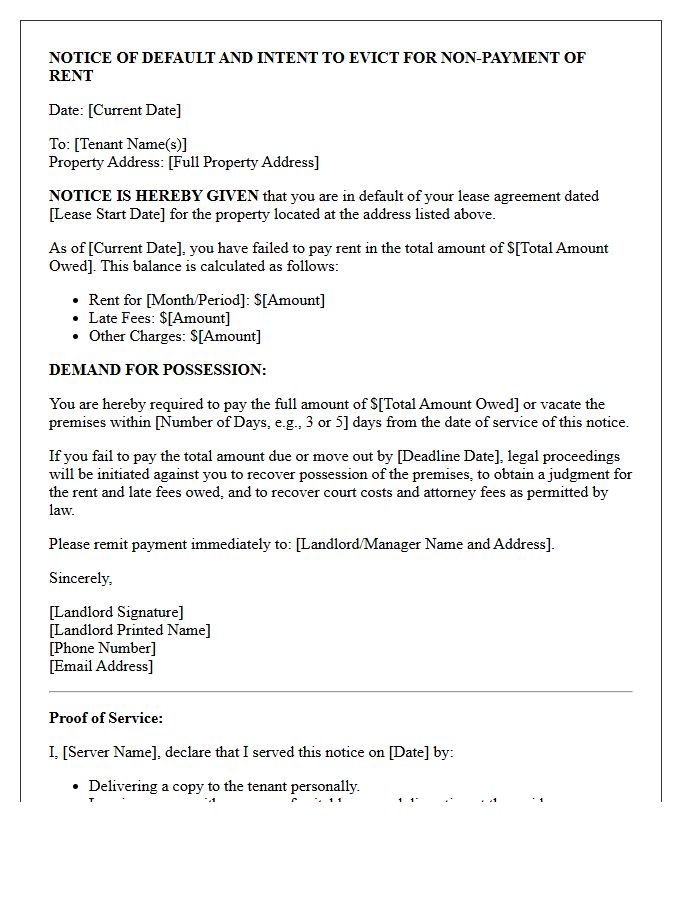
A Notice of Default and Intent to Evict is a formal legal document issued by a landlord when a tenant fails to pay rent. It serves as a mandatory warning, notifying the tenant of the specific breach of contract. This letter initiates the legal timeline for the eviction process, granting the tenant a set period to cure the debt or vacate the premises. Receiving this notice is a critical stage; failure to resolve the balance typically leads to a formal unlawful detainer lawsuit in court to regain property possession.
Notice of Default and Intent to Evict Letter for Lease Violation
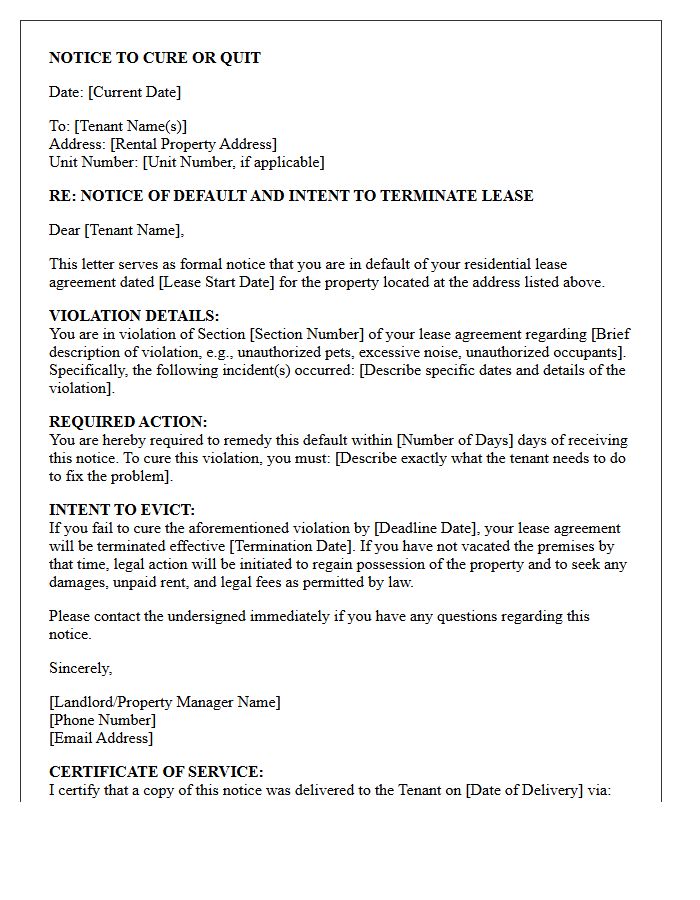
A Notice of Default and Intent to Evict is a formal legal document informing a tenant they have violated specific lease terms. This letter serves as a final warning, detailing the breach-such as unpaid rent or property damage-and providing a mandatory cure period to fix the issue. Failure to rectify the violation within the specified timeframe allows the landlord to terminate the agreement and file for formal eviction in court. Understanding your local landlord-tenant laws is essential to ensure the notice meets all statutory notice requirements and delivery methods.
Notice of Default and Intent to Evict Letter for Property Damage
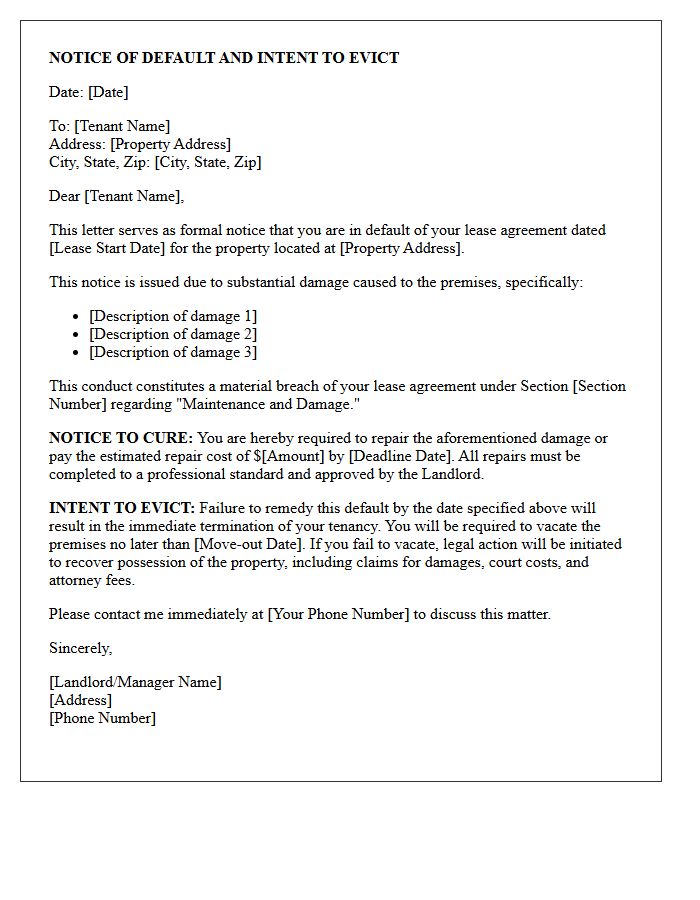
A Notice of Default and Intent to Evict for property damage is a formal legal warning issued by a landlord to a tenant. It specifies that the rental agreement has been breached due to unauthorized destruction or significant neglect of the premises. This document serves as a notice to cure, providing the occupant a set timeframe to repair the damage or vacate. Failure to resolve these issues typically leads to formal eviction proceedings in court. It is essential for landlords to include detailed evidence and specific lease violations to ensure the notice is legally enforceable.
Notice of Default and Intent to Evict Letter for Unauthorized Pets
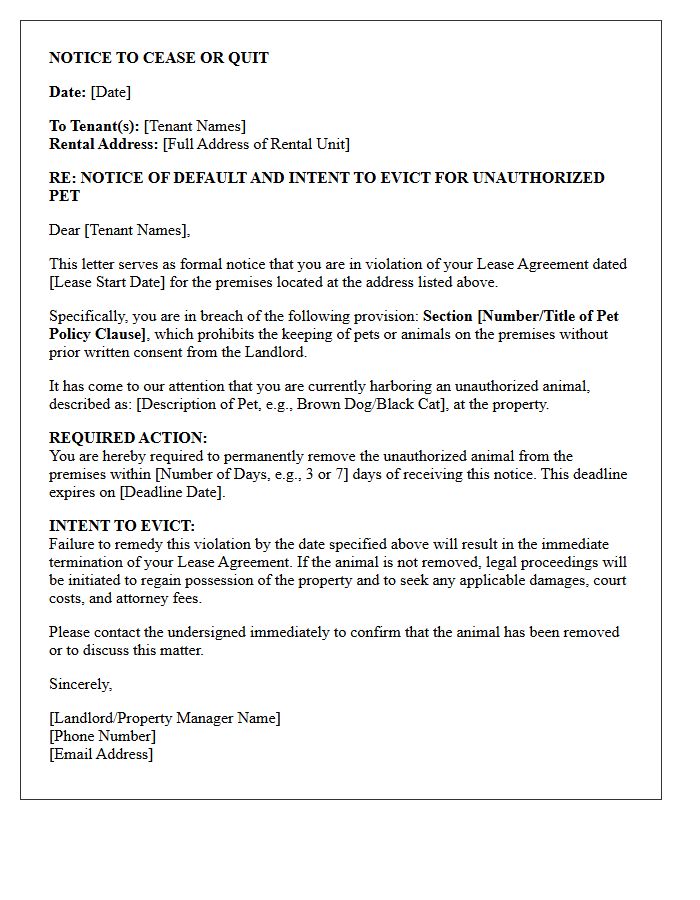
A Notice of Default and Intent to Evict for unauthorized pets is a formal legal warning issued when a tenant violates a lease agreement by keeping an animal without permission. This notice to cure informs the occupant of the specific breach and provides a deadline to remove the pet or vacate the premises. Failing to comply or rectify the lease violation can lead to formal eviction proceedings in court. Landlords must ensure the document complies with local housing laws to be legally enforceable during the eviction process.
Notice of Default and Intent to Evict Letter for Illegal Activity
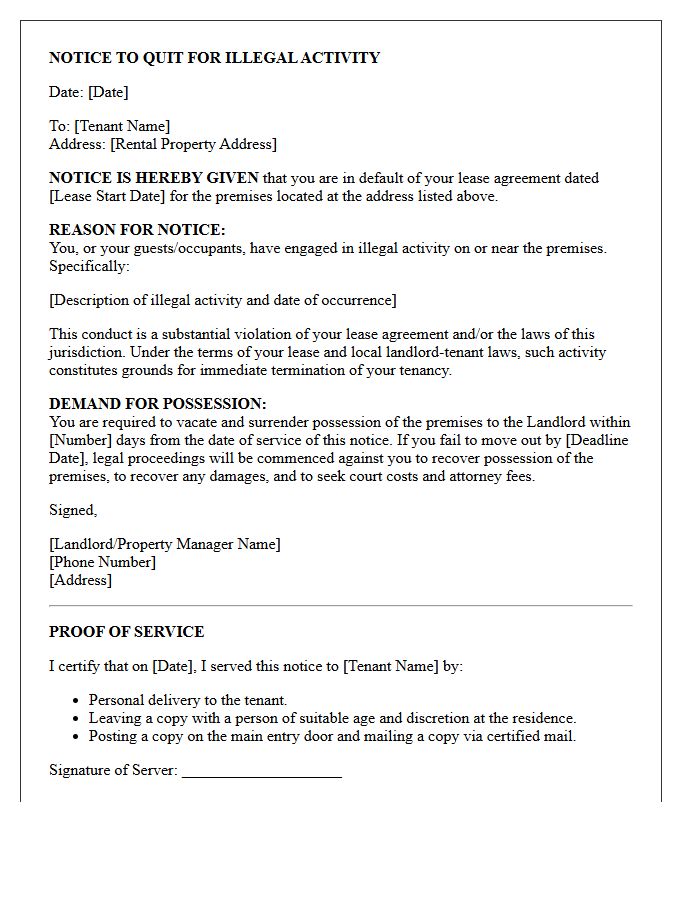
A Notice of Default and Intent to Evict for illegal activity is a formal legal document issued by a landlord when a tenant engages in criminal behavior on the premises. Unlike standard lease violations, illegal activity often allows for an expedited eviction process, sometimes bypassing the typical right to cure. This notice serves as an official warning that the rental agreement is being terminated due to safety risks or law violations. It is a critical step in regaining possession of the property and maintaining a secure environment for other residents and neighbors.
Notice of Default and Intent to Evict Letter for Unauthorized Occupants
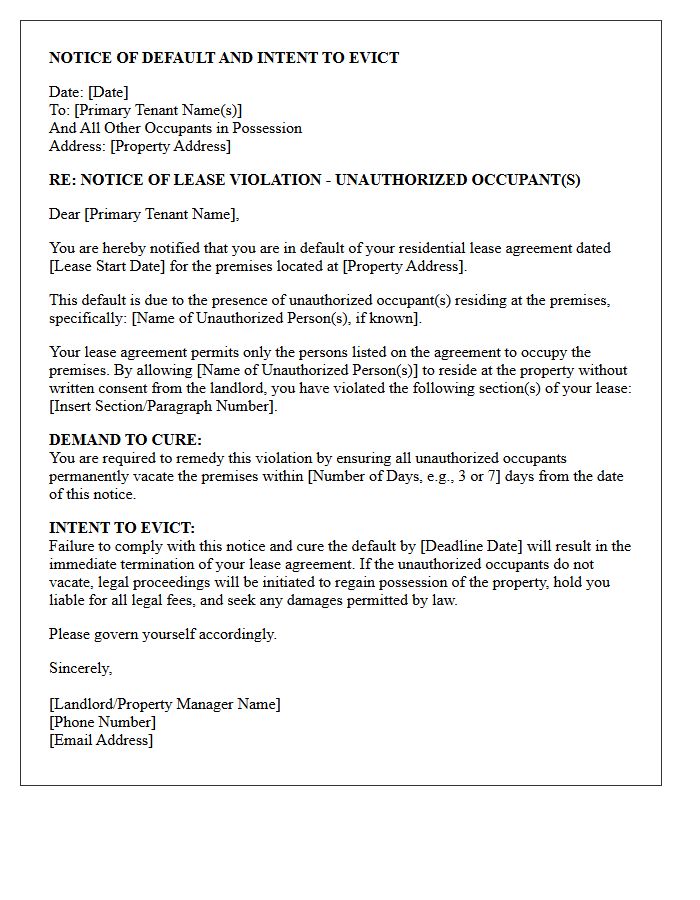
A Notice of Default and Intent to Evict for unauthorized occupants is a formal legal document issued by a landlord to address lease violations. This notice informs the primary tenant and any illegal residents that an unauthorized occupant is residing on the premises without written consent. It serves as a final demand to remedy the breach by removing the individual or vacating the property within a specific timeframe. Failure to comply typically results in the commencement of formal eviction proceedings in court to regain possession of the rental unit.
Notice of Default and Intent to Evict Letter for Nuisance and Noise Violations
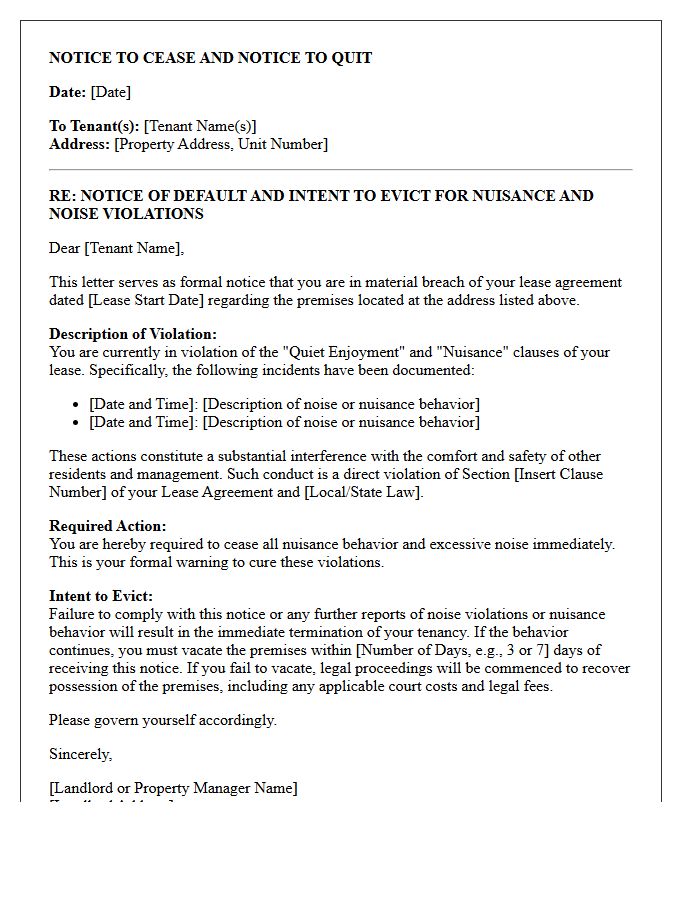
A Notice of Default and Intent to Evict for nuisance and noise violations is a formal legal warning issued by a landlord. This document notifies the tenant that they are in lease violation due to disruptive behavior, such as excessive volume or harassment. It serves as a mandatory step in the eviction process, providing a specific timeframe to "cure" the breach. Failure to resolve these noise disturbances or behavioral issues within the notice period allows the property owner to terminate the tenancy and file for a formal court-ordered removal.
Notice of Default and Intent to Evict Letter for Failure to Pay Utilities
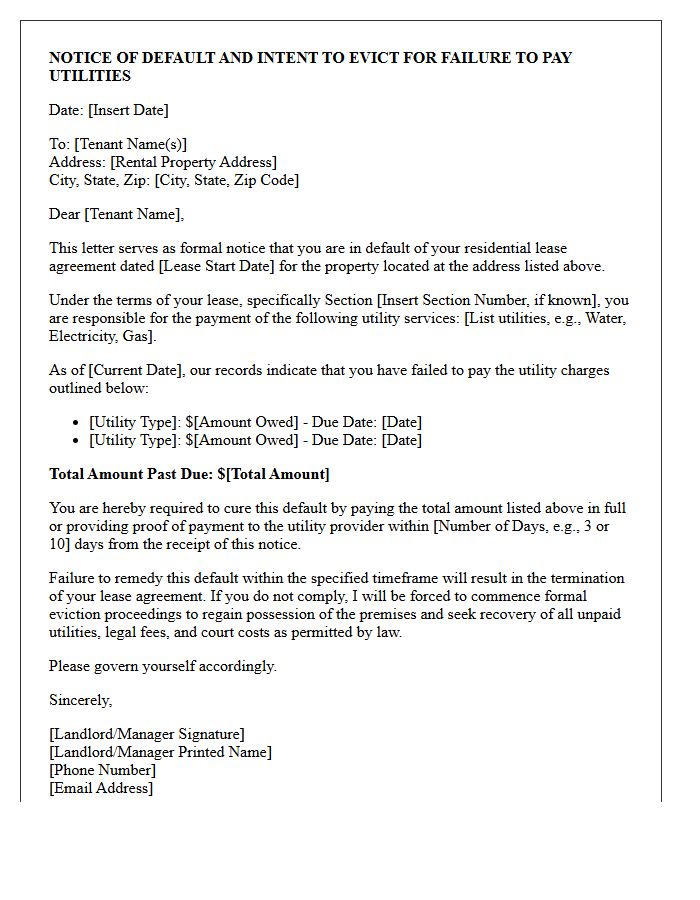
A Notice of Default and Intent to Evict for unpaid utilities is a formal legal warning issued by a landlord when a tenant breaches their lease agreement by failing to maintain essential services. This document serves as an official demand for payment, outlining the specific amount owed and providing a strict deadline to cure the default. Failure to resolve the balance or restore utility accounts can lead to the termination of the tenancy and subsequent eviction proceedings. Tenants must act quickly to provide proof of payment or face potential legal action and displacement.
Notice of Default and Intent to Evict Letter for Expired Lease Holdover
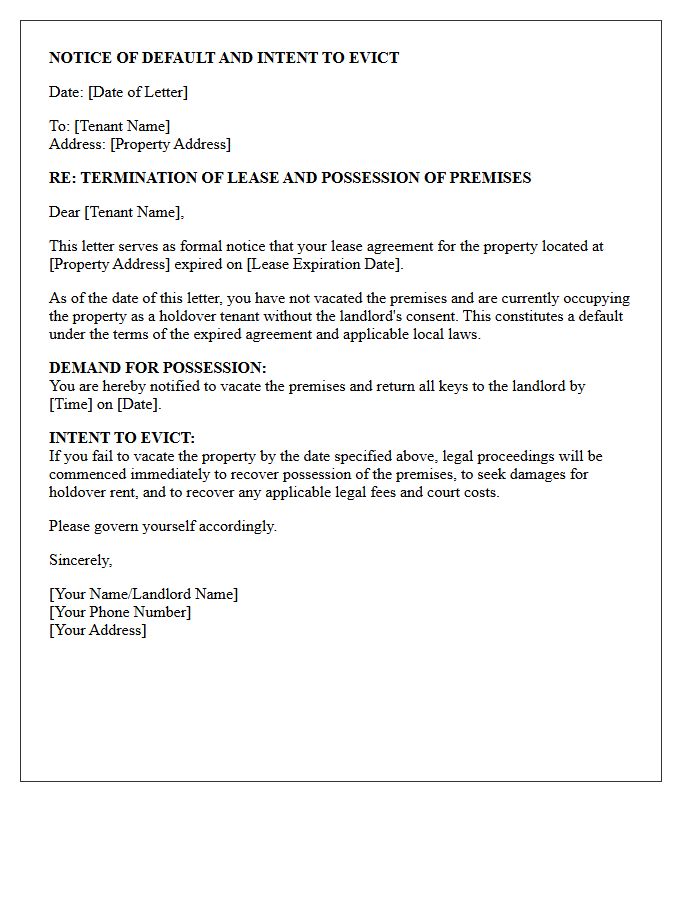
A Notice of Default and Intent to Evict for an expired lease holdover is a formal legal document issued when a tenant remains in a property after their rental agreement ends. This notice informs the occupant they no longer have a legal right to possession. It serves as a final warning to vacate voluntarily before the landlord initiates formal eviction proceedings in court. Understanding local holdover tenancy laws is critical, as state-specific requirements dictate the necessary notice period and delivery methods required to regain lawful control of the premises.
Notice of Default and Intent to Evict Letter for Refusal of Landlord Access
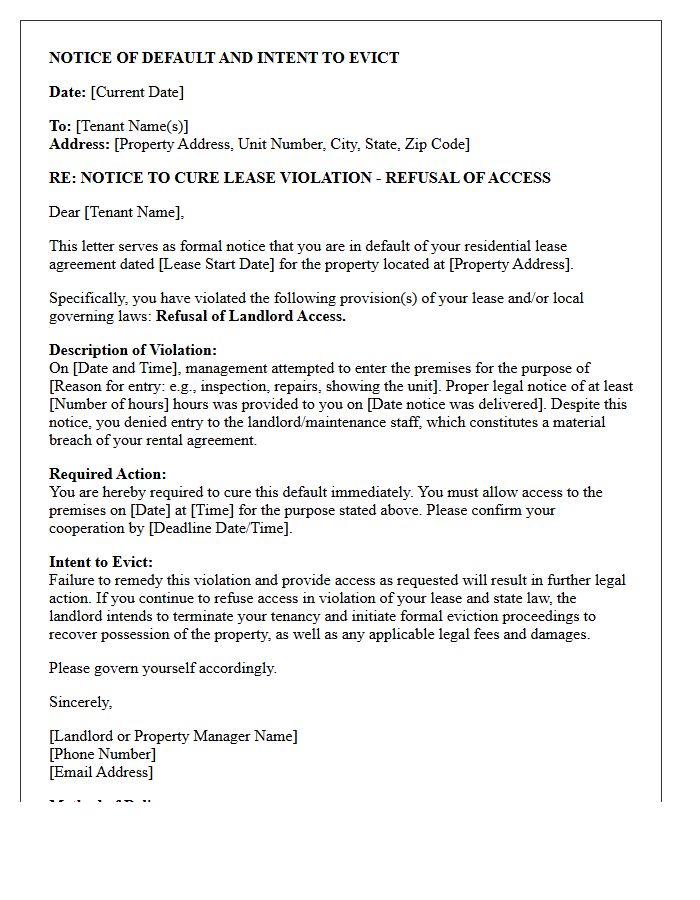
A Notice of Default and Intent to Evict for refusal of access is a formal legal document issued when a tenant denies a landlord entry to the property. Most lease agreements grant owners the right to enter for repairs, inspections, or emergencies, provided they give proper notice. If access is unreasonably withheld, the tenant violates the contract. This notice serves as a final warning to cure the breach or face eviction proceedings. Tenants must understand that persistent non-compliance can lead to court action and termination of their residency under local housing laws.
Notice of Default and Intent to Evict Letter for Health and Safety Code Violations
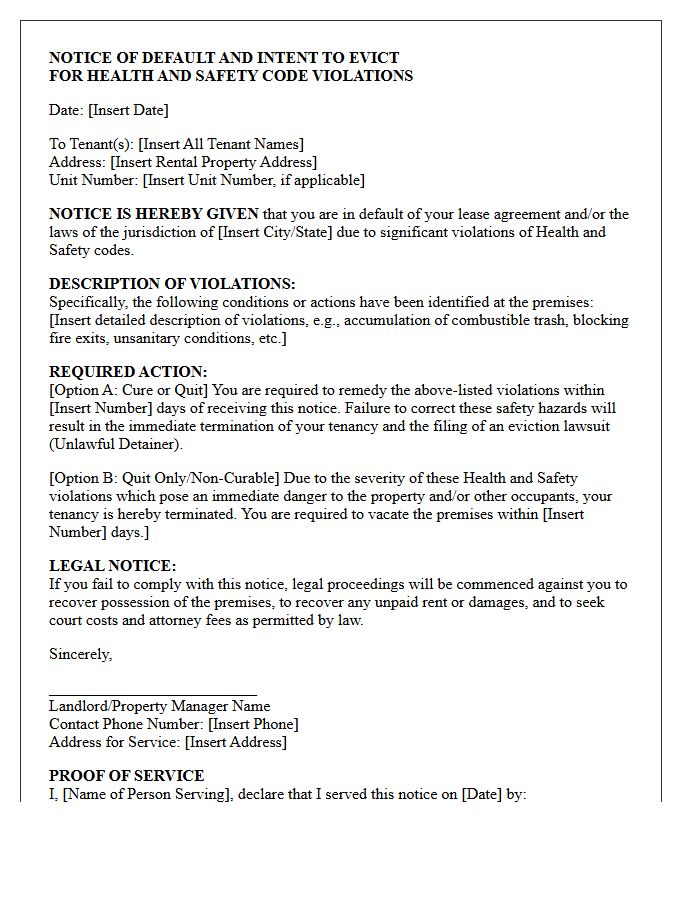
A Notice of Default and Intent to Evict for Health and Safety Code violations is a legal warning issued when a tenant's actions or property conditions create hazardous environments. This notice specifies the exact safety breaches that jeopardize occupants or the public. Tenants typically receive a fixed period to remedy the violation or vacate the premises. Failure to comply allows the landlord to initiate formal eviction proceedings. It is a critical document used to mitigate liability and ensure the building remains compliant with local building and sanitary regulations.
Notice of Default and Intent to Evict Letter for Illegal Subletting
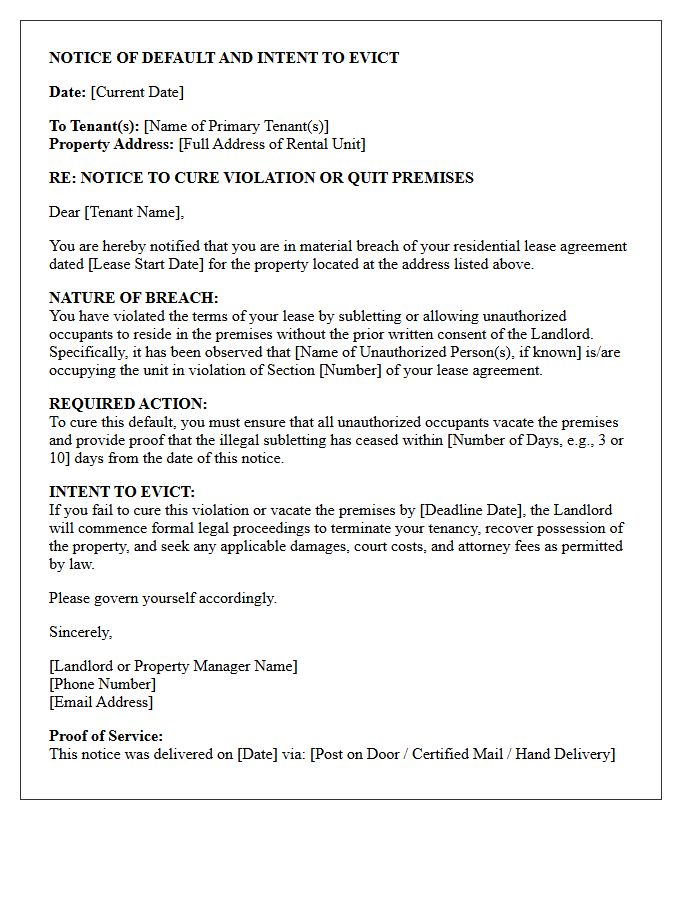
A Notice of Default and Intent to Evict for illegal subletting is a formal legal document issued by a landlord when a tenant rents out the property without authorization. This notice serves as a mandatory warning that the lease agreement has been breached. The primary purpose is to provide the tenant with a notice to cure, requiring them to remove the unauthorized occupant within a specific timeframe. Failure to rectify this violation typically grants the landlord the legal right to terminate the tenancy and initiate formal eviction proceedings through the court system.
What is a Notice of Default and Intent to Evict?
A Notice of Default and Intent to Evict is a formal legal document served by a landlord to a tenant indicating that the tenant has violated the lease agreement, most commonly through non-payment of rent. This notice serves as a final warning that legal proceedings to remove the tenant will begin unless the specified default is corrected within a set timeframe.
How many days do I have to respond to a Notice of Default?
The timeframe varies by state and local jurisdiction, but it typically ranges from 3 to 14 days. During this period, known as the "cure period," the tenant must either pay the outstanding rent (pay or quit) or remedy the lease violation to prevent the landlord from filing a formal eviction lawsuit in court.
What should I do if I receive an Intent to Evict notice?
If you receive this notice, you should immediately review the document to identify the specific breach of contract and the deadline for compliance. You should prioritize paying the owed amount or correcting the violation, and keep written records of all communications and payments made to the landlord during this process.
Can a landlord evict me immediately after serving a Notice of Default?
No, a landlord cannot physically remove you or your belongings immediately after serving a Notice of Default. The notice is the preliminary step in the legal process; if the tenant does not comply, the landlord must then file an unlawful detainer lawsuit and obtain a court order before a law enforcement officer can perform a physical eviction.
Does a Notice of Default and Intent to Evict stay on my credit report?
The notice itself typically does not appear on a credit report. However, if the situation escalates to a formal court-filed eviction case (unlawful detainer), it will appear in public records and specialized tenant screening databases. Additionally, any unpaid rent debt associated with the default may be sent to a collection agency, which will negatively impact your credit score.


Comments