
A Thirty-Day Notice to Vacate is a formal legal document used by landlords or tenants to terminate a month-to-month rental agreement. It ensures a smooth transition by providing official communication thirty days before moving out. Understanding your local housing laws is essential for a valid termination process. To simplify your move, below are some ready to use template.

Image cover: Mastering the Thirty-Day Notice to Vacate: Professional Samples and Templates
Letter Samples List
- Thirty-Day Notice to Vacate Letter
- Lease Renewal Offer Letter
- Notice of Rent Increase Letter
- Welcome to the Property Letter
- Notice of Lease Violation Letter
- Notice to Pay Rent or Quit Letter
- Move-Out Inspection Scheduling Letter
- Security Deposit Deduction Letter
- Notice of Intent to Enter Property Letter
- Noise Complaint Warning Letter
- Notice of Property Abandonment Letter
- Property Management Introduction Letter
- End of Lease Term Notification Letter
Thirty-Day Notice to Vacate Letter
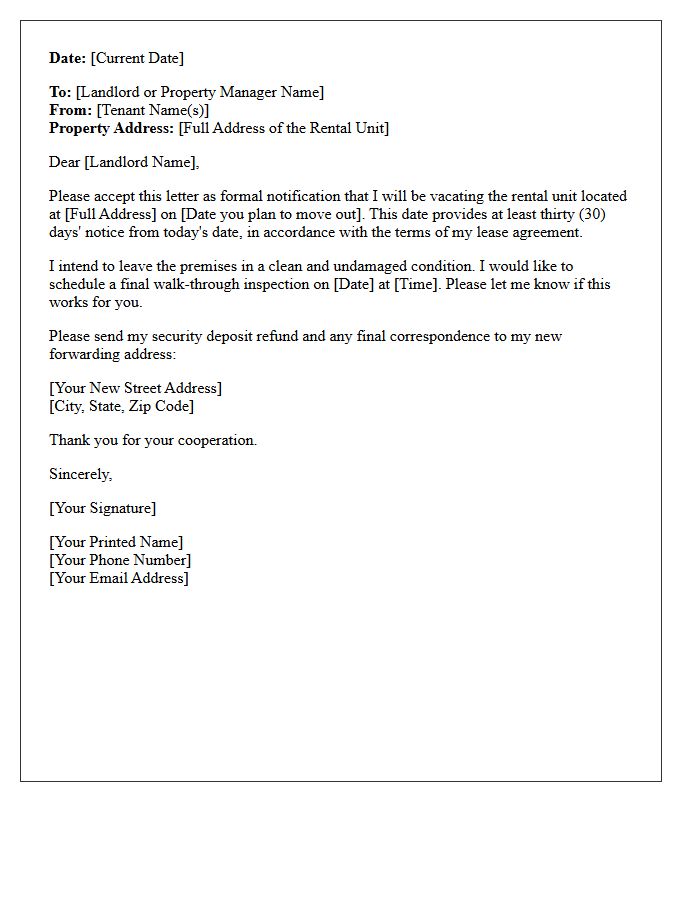
A Thirty-Day Notice to Vacate Letter is a formal legal document used by landlords or tenants to terminate a month-to-month rental agreement. It provides a mandatory notice period, ensuring both parties have sufficient time to arrange for a move or find a new occupant. To remain valid, the letter must clearly state the move-out date and be delivered according to local tenancy laws. Proper documentation prevents legal disputes and ensures a smooth transition while protecting your security deposit or property rights.
Lease Renewal Offer Letter
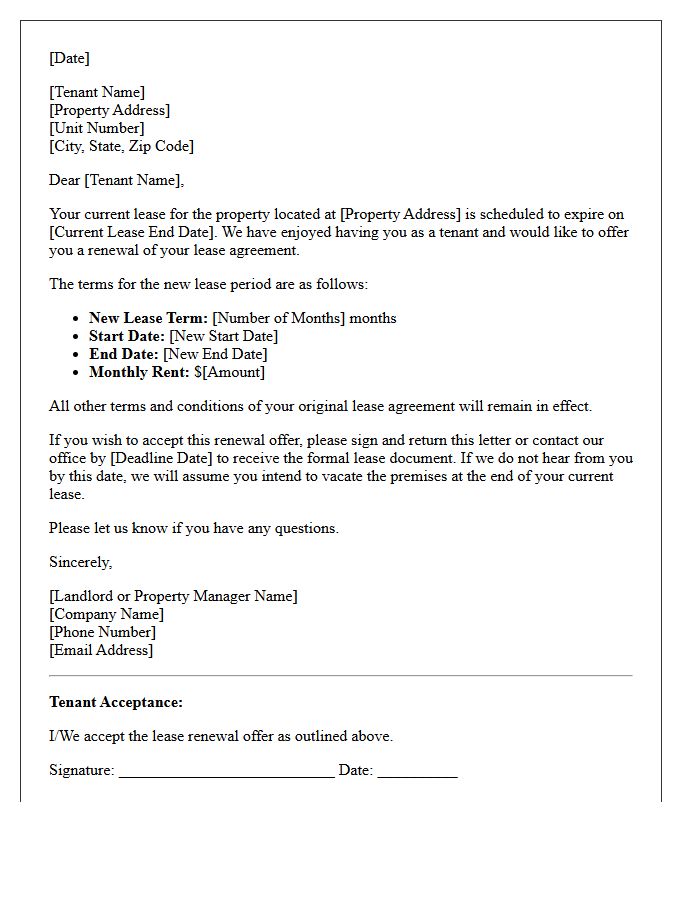
A Lease Renewal Offer Letter is a formal document sent by a landlord to a tenant proposing to extend the rental agreement. It outlines critical changes to the original terms, most notably any rent increases or adjustments to the lease duration. Tenants should review the expiration date and response deadline carefully to avoid automatic termination or month-to-month penalties. Timely communication ensures legal clarity, protects housing stability, and allows both parties to negotiate favorable conditions before the current contract officially ends.
Notice of Rent Increase Letter
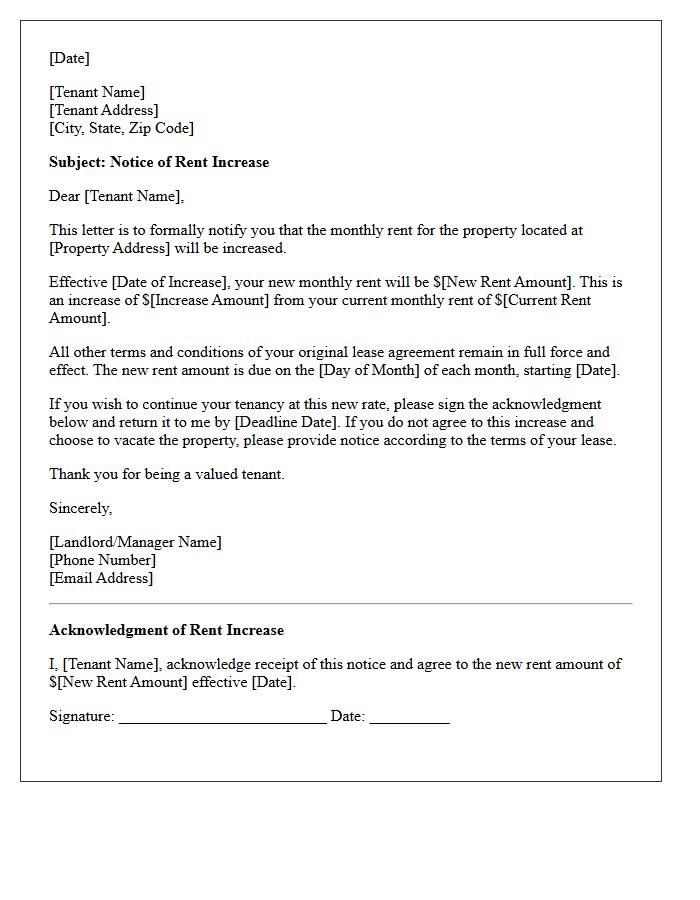
A Notice of Rent Increase Letter is a formal legal document used by landlords to inform tenants of an upcoming change in rental costs. To ensure validity, this written notice must adhere to local lease agreements and state housing laws regarding the required notice period, typically 30 to 60 days. It should clearly state the current rent, the new amount, and the effective date of the change. Proper documentation protects both parties and ensures the rental adjustment follows statutory requirements to avoid potential legal disputes.
Welcome to the Property Letter
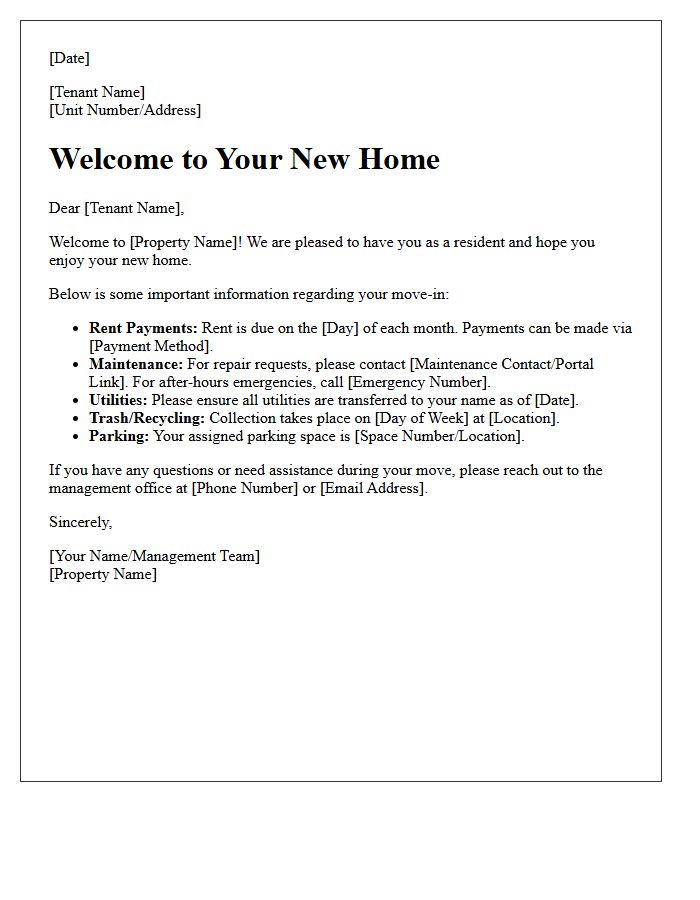
Welcome to the Property Letter, your premier resource for navigating the complex real estate market with confidence. We provide expert analysis, current trends, and actionable investment insights tailored for homeowners and professional investors alike. Staying informed is the most important thing to know when making high-stakes financial decisions. Our newsletter simplifies property data, offering you a clear advantage in identifying lucrative opportunities and avoiding common pitfalls. Subscribe today to receive timely updates and strategic advice directly in your inbox to master your next property transaction.
Notice of Lease Violation Letter
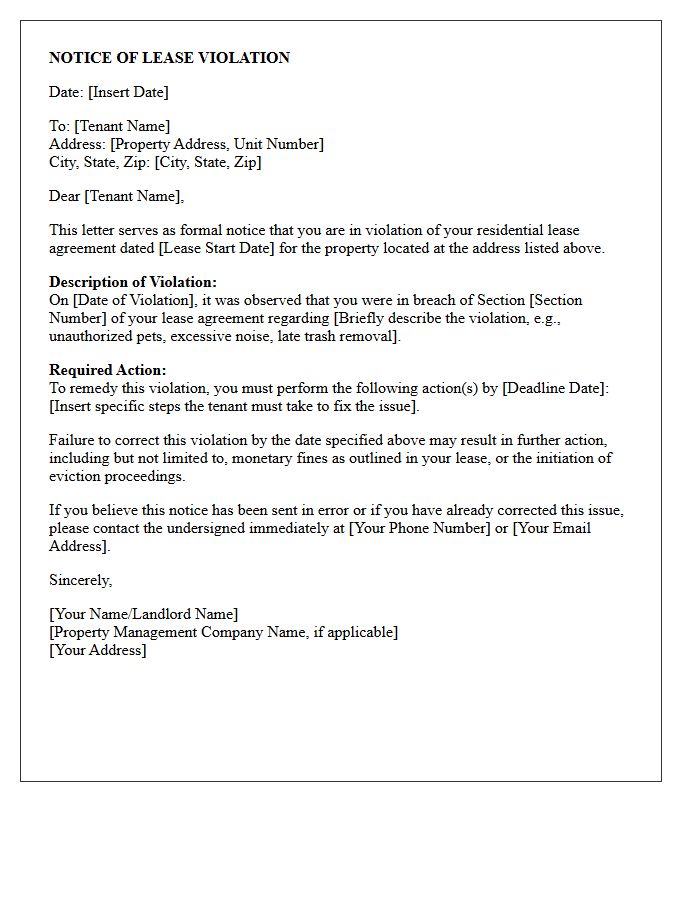
A Notice of Lease Violation Letter is a formal legal document issued by a landlord to a tenant who has breached specific rental agreement terms. It serves as an official warning, identifying the non-compliance issue, such as unauthorized pets, excessive noise, or property damage. This letter provides a strictly defined cure period for the tenant to rectify the behavior or face further legal action, including potential eviction. Proper written documentation of these notices is essential for protecting the landlord's rights and maintaining a clear evidentiary record for future legal proceedings.
Notice to Pay Rent or Quit Letter
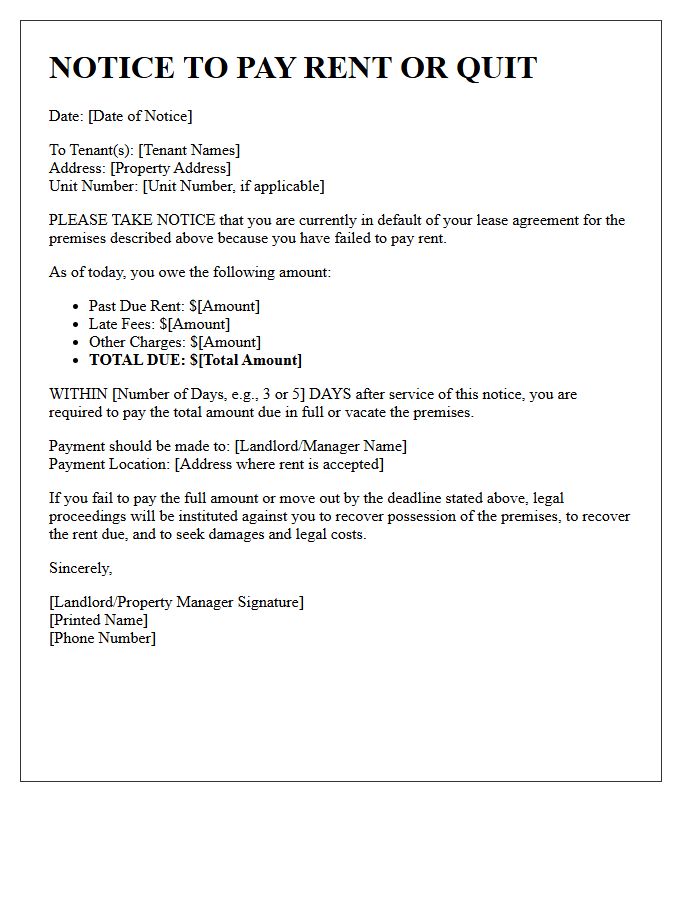
A Notice to Pay Rent or Quit is a formal legal document served by landlords when a tenant fails to pay rent on time. This letter provides a final warning, giving the tenant a specific deadline-typically three to five days-to either settle the total debt or vacate the property. It is the mandatory first step in the eviction process. If the tenant complies within the timeframe, they can stay; otherwise, the landlord gains the legal right to file for a court-ordered removal.
Move-Out Inspection Scheduling Letter
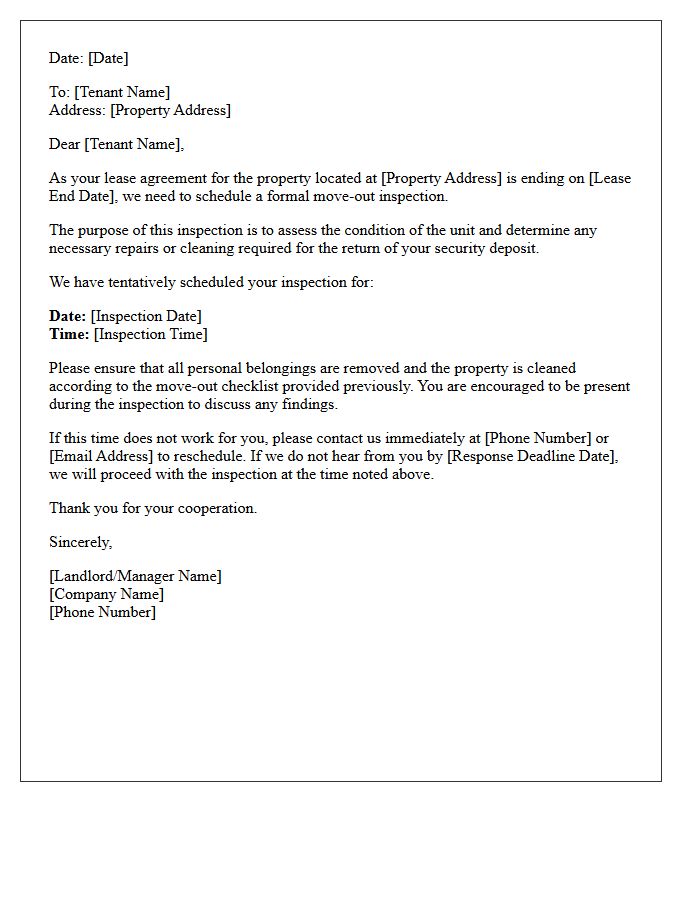
A Move-Out Inspection Scheduling Letter is a formal notice sent by a landlord to establish a final walkthrough date. This document is essential for protecting your security deposit by identifying potential damages before you vacate. It ensures both parties are present to document the property's condition, helping to prevent future disputes over repair costs. To ensure a smooth transition, you should confirm the appointment time promptly and ensure the premises are thoroughly cleaned and empty of personal belongings prior to the inspector's arrival.
Security Deposit Deduction Letter
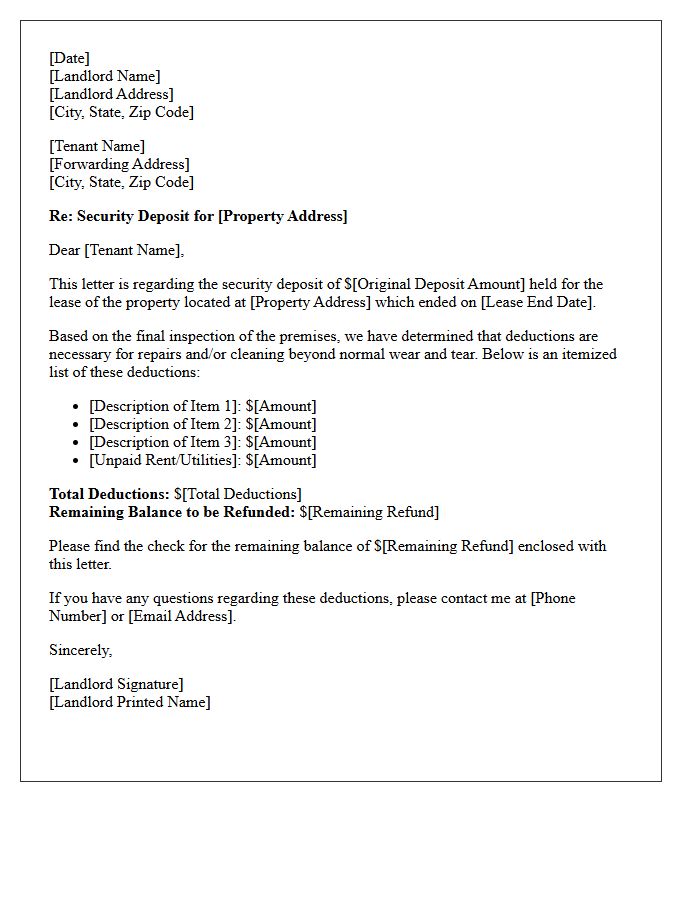
A Security Deposit Deduction Letter is a formal document sent by a landlord to a tenant explaining why funds were withheld. It must include an itemized list of specific charges, such as unpaid rent or repairs for damages exceeding normal wear and tear. Legally, this notice must be sent within a strict deadline defined by local state laws. Providing clear receipts and documentation helps prevent legal disputes. If a landlord fails to provide this written accounting, they may be required to refund the full deposit amount regardless of property damage.
Notice of Intent to Enter Property Letter
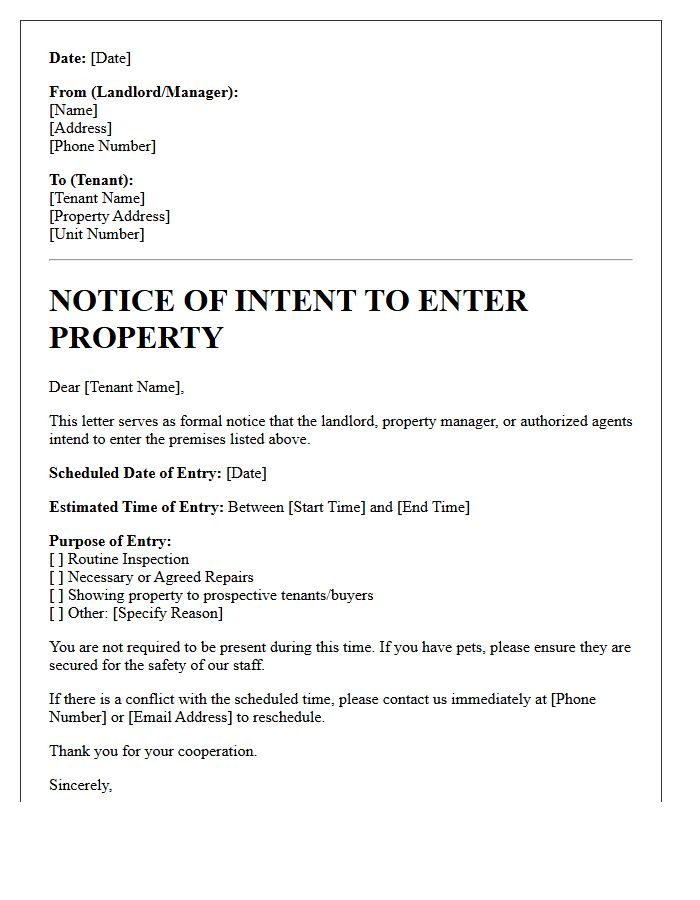
A Notice of Intent to Enter Property is a formal legal document used by landlords to provide mandatory advance notice before accessing a rental unit. It ensures compliance with tenant privacy rights and state-specific regulations, typically requiring a 24 to 48-hour warning period. The letter must clearly state the purpose of entry, such as necessary repairs, inspections, or property showings, along with the specific date and time. Providing this written notice helps prevent legal disputes and maintains a professional relationship between the landlord and tenant.
Noise Complaint Warning Letter
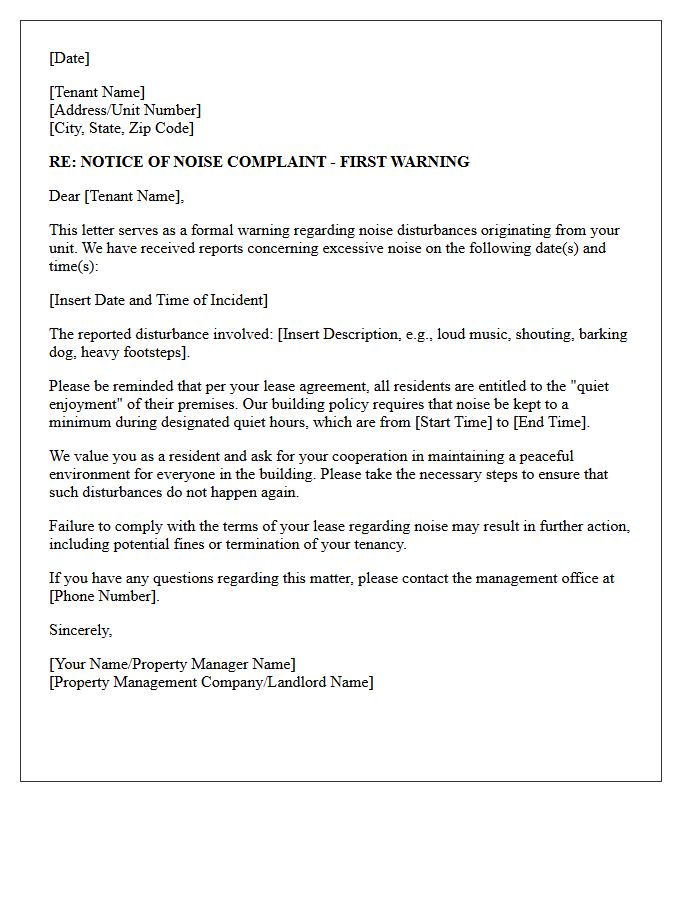
A noise complaint warning letter serves as a formal notification regarding excessive noise disruptions. It identifies specific dates and times of the disturbance, citing lease agreements or local noise ordinances. This document acts as an official record, giving the recipient an opportunity to rectify their behavior before further disciplinary action or eviction proceedings begin. Understanding the legal implications is essential, as repeated violations can lead to tenancy termination. It is a critical step in maintaining a peaceful living environment for all residents while documenting compliance efforts for future reference.
Notice of Property Abandonment Letter
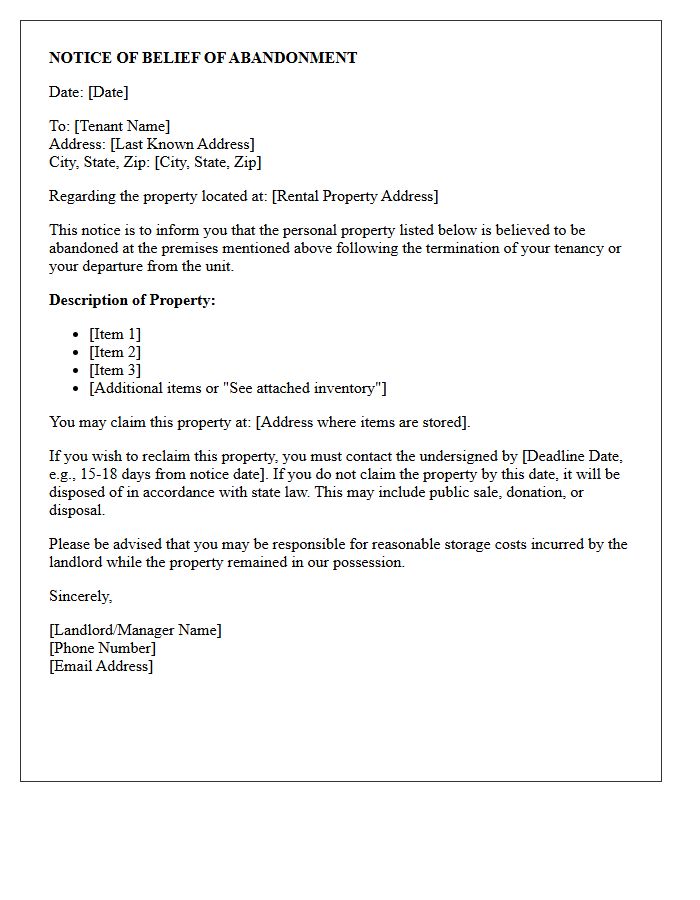
A Notice of Property Abandonment Letter is a formal legal document used by landlords to notify former tenants that personal belongings were left behind. This notice is essential for legal compliance, establishing a specific deadline for the owner to claim their items. It must clearly detail the storage location, potential disposal fees, and the final date before the property is sold or discarded. Sending this letter via certified mail protects property owners from potential liability claims and ensures a transparent process for clearing the rental unit according to local statutes.
Property Management Introduction Letter
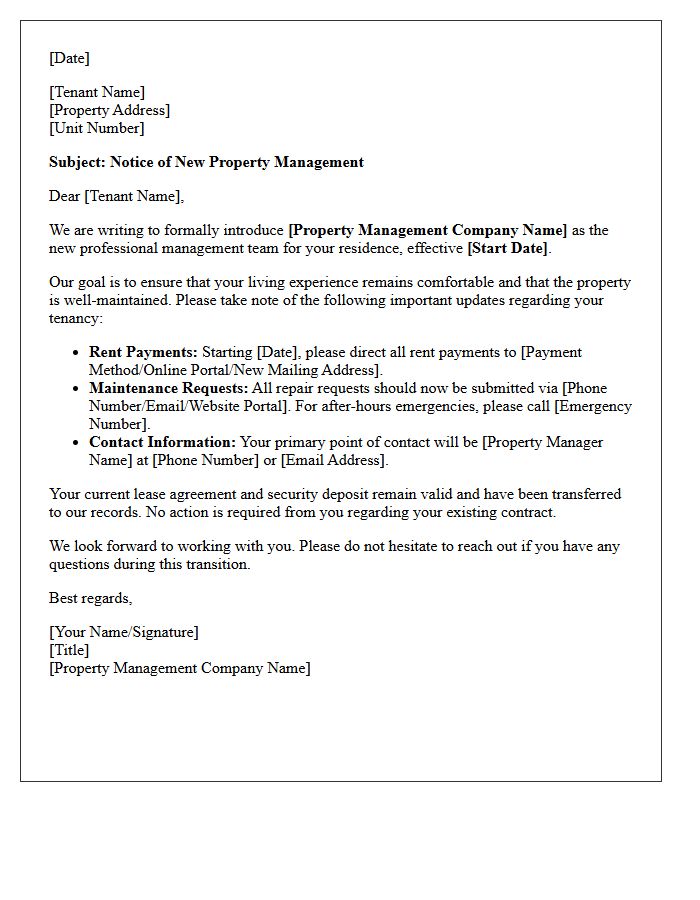
A Property Management Introduction Letter is a vital communication tool used to establish professional relationships with tenants or property owners. This formal document outlines the manager's responsibilities, contact information, and emergency protocols. It sets clear expectations regarding rent collection, maintenance requests, and policy changes to ensure a smooth transition. Effective letters build trust by demonstrating transparency and competence from the outset. By providing direct channels for support, this introduction minimizes confusion and fosters a positive, long-term management environment for all parties involved.
End of Lease Term Notification Letter
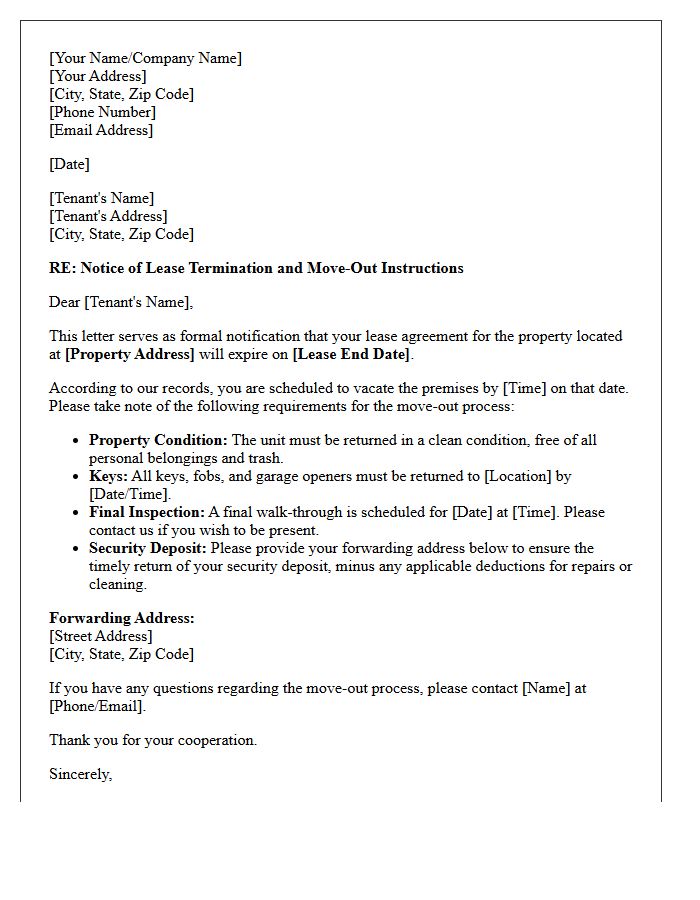
An End of Lease Term Notification Letter is a formal document sent by a landlord or tenant to clarify intentions regarding a rental agreement's conclusion. It serves as legal notice to either vacate the premises or propose a renewal. Providing this written statement within the required notice period prevents automatic extensions and clarifies expectations for security deposit returns. Ensuring clear communication regarding the move-out date and inspection requirements is essential for a smooth transition and protecting your legal rights under the original contract terms.
What is a Thirty-Day Notice to Vacate?
A Thirty-Day Notice to Vacate is a formal legal document issued by either a landlord or a tenant to terminate a month-to-month rental agreement. It provides a 30-day window for the tenant to move out of the property, effectively ending the tenancy without requiring a specific reason in most jurisdictions.
How do I write a valid 30-day notice to move out?
A valid notice must be in writing and include the current date, the address of the rental property, the intended move-out date, and a clear statement of intent to terminate the lease. It should also include your forwarding address for the security deposit return and be signed by all parties listed on the lease agreement.
When should a landlord serve a 30-day notice to vacate?
A landlord serves this notice when they wish to regain possession of a property currently under a month-to-month lease. This is commonly used when the owner intends to sell the property, perform major renovations, or change the usage of the unit, provided the termination does not violate local rent control or "just cause" eviction laws.
Does a 30-day notice mean I have to leave exactly in 30 days?
Yes, the notice period typically begins the day after the notice is served and expires 30 days later. Tenants are legally required to surrender the keys and remove all personal belongings by the end of the 30th day. Failure to vacate by this deadline may result in the landlord filing an unlawful detainer or eviction lawsuit.
Can a 30-day notice to vacate be rescinded or cancelled?
A notice to vacate can only be rescinded if both the landlord and the tenant mutually agree to the cancellation in writing. If a tenant changes their mind and wishes to stay, the landlord is not legally obligated to accept the withdrawal of the notice and may proceed with the original move-out date.

Comments