
A Warning Notice of Lease Violation Letter is a formal document used by landlords to notify tenants of specific rental agreement breaches. It serves as a legal record and provides an opportunity for resolution before formal eviction proceedings begin. Effective communication helps maintain professional landlord-tenant relationships. To simplify the process, below are some ready to use templates.
Image cover: Essential Guide to Lease Violation Notices: Professional Templates and Examples
Letter Samples List
- Noise Disturbance Lease Violation Letter
- Unauthorized Pet Warning Notice Letter
- Smoking Policy Lease Violation Letter
- Unauthorized Occupant Warning Notice Letter
- Property Damage Lease Violation Letter
- Improper Trash Disposal Warning Letter
- Parking Rule Lease Violation Letter
- Illegal Subletting Warning Notice Letter
- Landscaping Maintenance Violation Letter
- Poor Sanitation Lease Violation Letter
- Unauthorized Business Operation Warning Letter
- Homeowners Association Rule Violation Letter
Noise Disturbance Lease Violation Letter
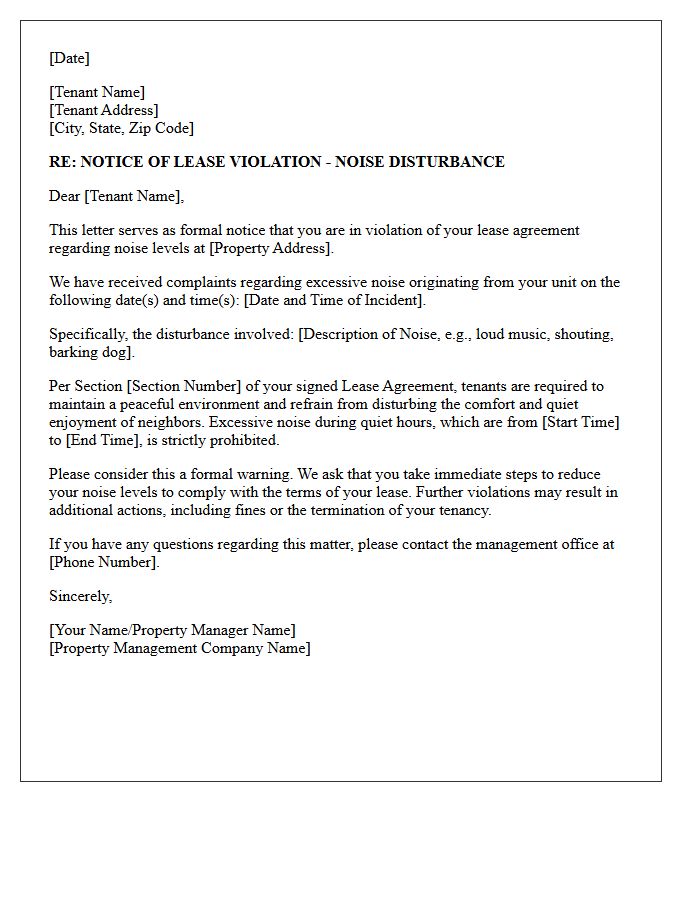
A Noise Disturbance Lease Violation Letter serves as a formal written notice from a landlord to a tenant regarding excessive sound levels. This document is essential for legal documentation and enforcing community rules. It must clearly specify the date, time, and nature of the incident to ensure the tenant understands the breach. Providing this written warning is a necessary procedural step before pursuing further actions, such as fines or eviction, while helping to maintain a peaceful environment for all residents by ensuring compliance with the lease agreement terms.
Unauthorized Pet Warning Notice Letter
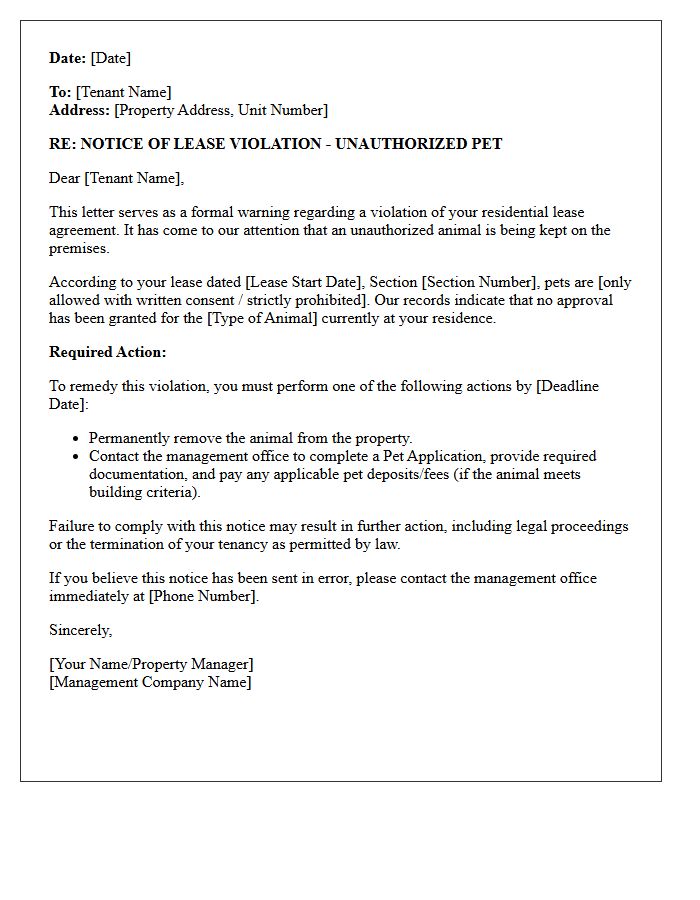
An Unauthorized Pet Warning Notice is a formal legal document issued by landlords to tenants violating a "no-pets" policy or lease agreement. This letter serves as an official request to remove the animal within a specific timeframe to avoid further legal action. It must clearly detail the lease violation, provide a deadline for compliance, and outline potential consequences like eviction. Providing this notice ensures proper documentation of the breach, protecting the property owner's rights while giving the resident a final opportunity to resolve the lease non-compliance issue before formal termination begins.
Smoking Policy Lease Violation Letter
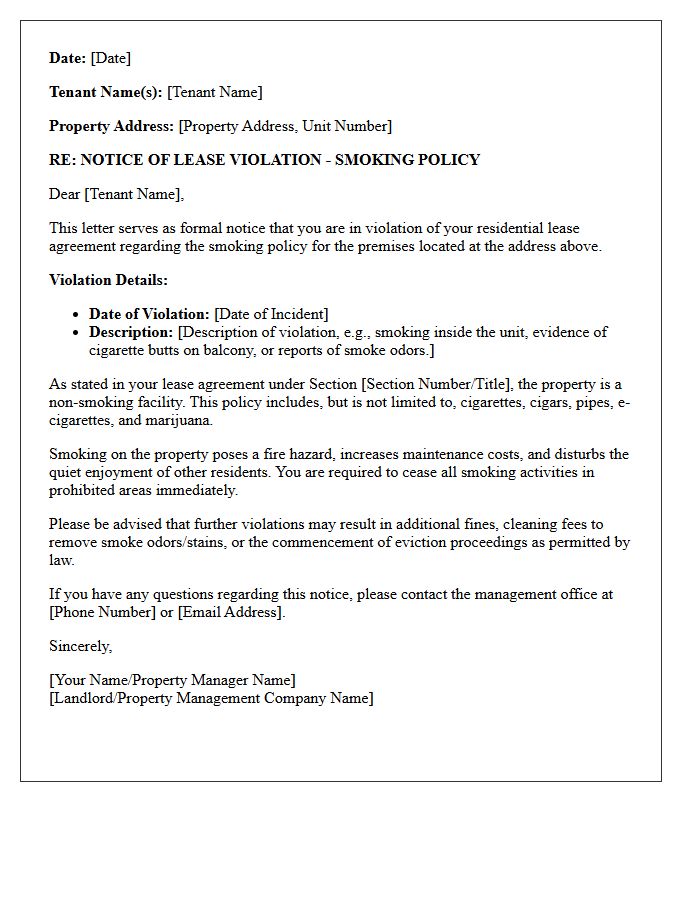
A smoking policy lease violation letter serves as a formal notice to tenants who breach smoke-free agreements. This legal document identifies specific infractions, such as odor or debris, and references the original lease terms. It functions as a crucial step in the eviction process if non-compliance continues. Landlords must provide clear evidence and a set timeframe for the tenant to remedy the behavior. Issuing this letter promptly protects property value, ensures neighbor safety, and maintains a healthy environment while establishing a written paper trail for potential legal proceedings.
Unauthorized Occupant Warning Notice Letter
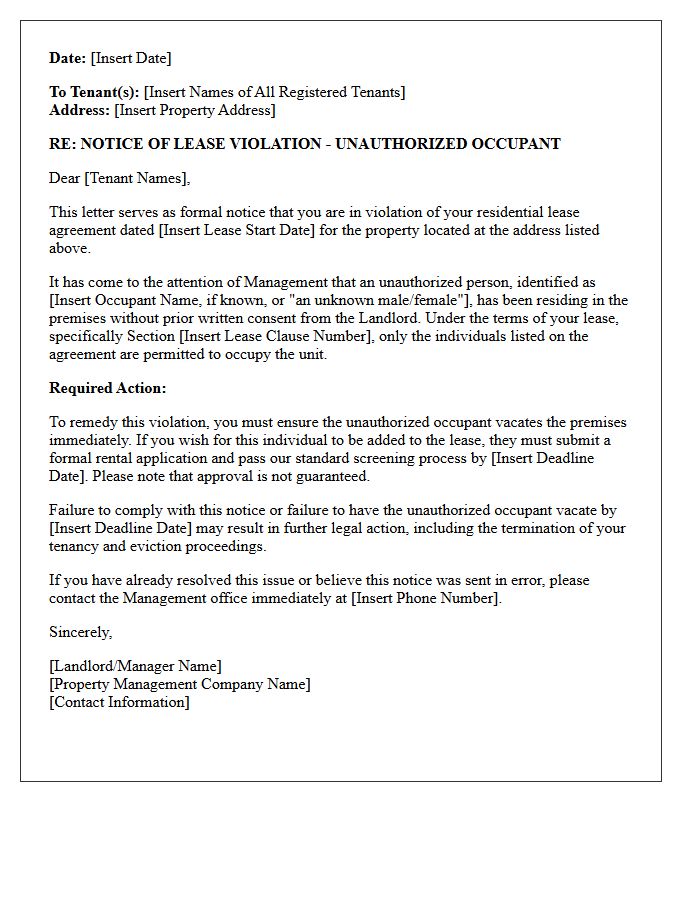
An Unauthorized Occupant Warning Notice is a formal legal document sent by landlords to tenants violating lease terms by hosting long-term guests. This letter serves as a mandatory compliance request, identifying the unapproved individual and setting a strict deadline for their departure. Failure to resolve this breach can lead to eviction proceedings. It is essential for protecting property rights and ensuring all residents undergo background checks. Always document the delivery of this notice to maintain a clear legal paper trail for potential court actions or lease termination requirements.
Property Damage Lease Violation Letter
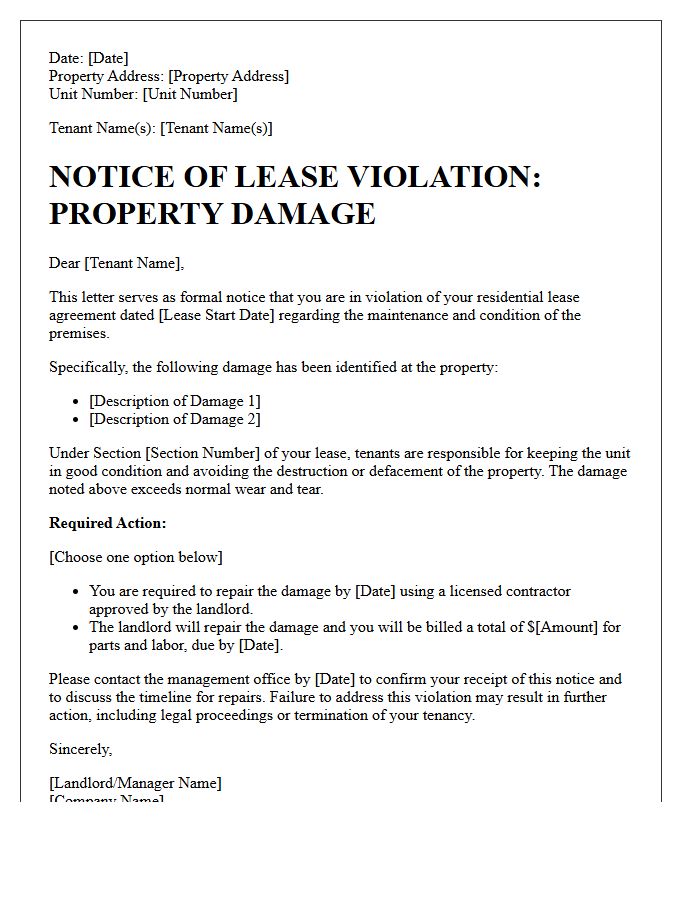
A Property Damage Lease Violation Letter is a formal notice issued by a landlord when a tenant causes physical harm to the rental unit beyond normal wear and tear. This document serves as legal evidence, clearly identifying the specific damages, repair costs, and the required timeline for remediation. It is crucial for maintaining the lease agreement integrity and protecting property value. The letter typically outlines whether the tenant must pay for repairs or face eviction proceedings if they fail to comply with the terms specified in the original rental contract.
Improper Trash Disposal Warning Letter
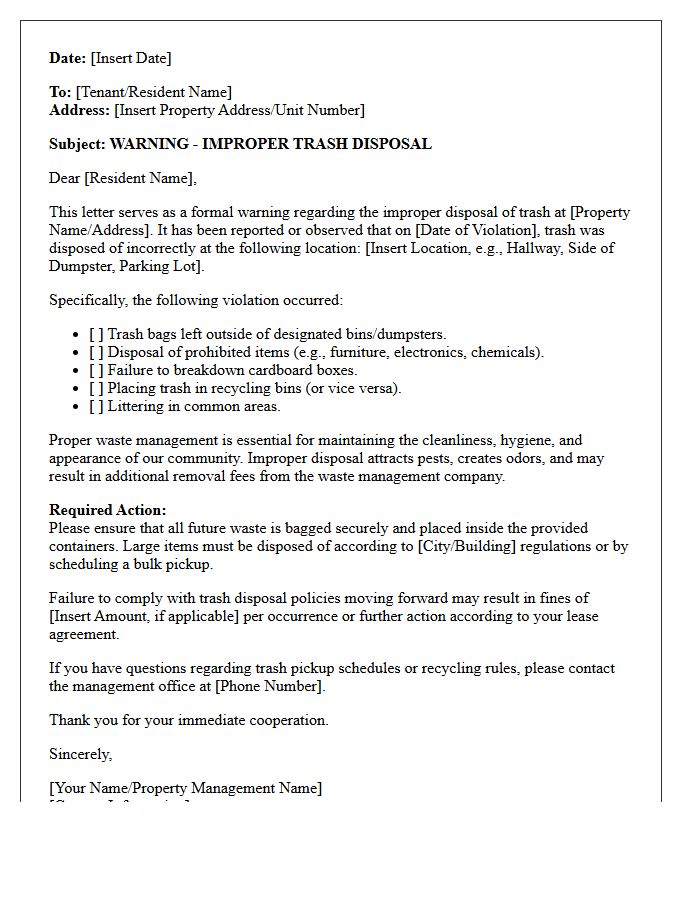
An Improper Trash Disposal Warning Letter is a formal notice issued by landlords or homeowners associations to address waste management violations. This document serves as a legal record, outlining specific incidents such as illegal dumping, missed collection times, or failure to use designated bins. Recipients must rectify their behavior immediately to avoid fines or potential eviction proceedings. Understanding these regulations is essential for maintaining community hygiene and ensuring compliance with local environmental statutes and property lease agreements to prevent further disciplinary action or financial penalties.
Parking Rule Lease Violation Letter
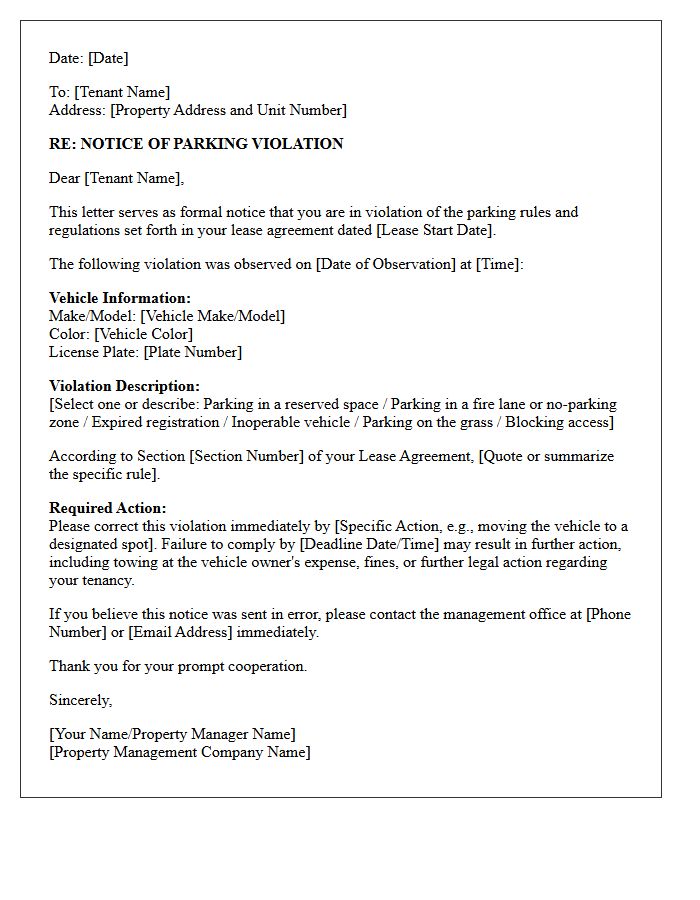
A Parking Rule Lease Violation Letter serves as a formal notice to tenants failing to comply with community vehicle regulations. This document clearly identifies the specific breach, such as unauthorized parking, blocking access, or storing inoperable vehicles on the premises. It acts as a legal warning, outlining required corrective actions and potential consequences like towing or lease termination. Property managers use this written record to maintain safety, ensure fair space distribution, and protect the property's aesthetic value while establishing a paper trail for future enforcement actions if non-compliance persists.
Illegal Subletting Warning Notice Letter
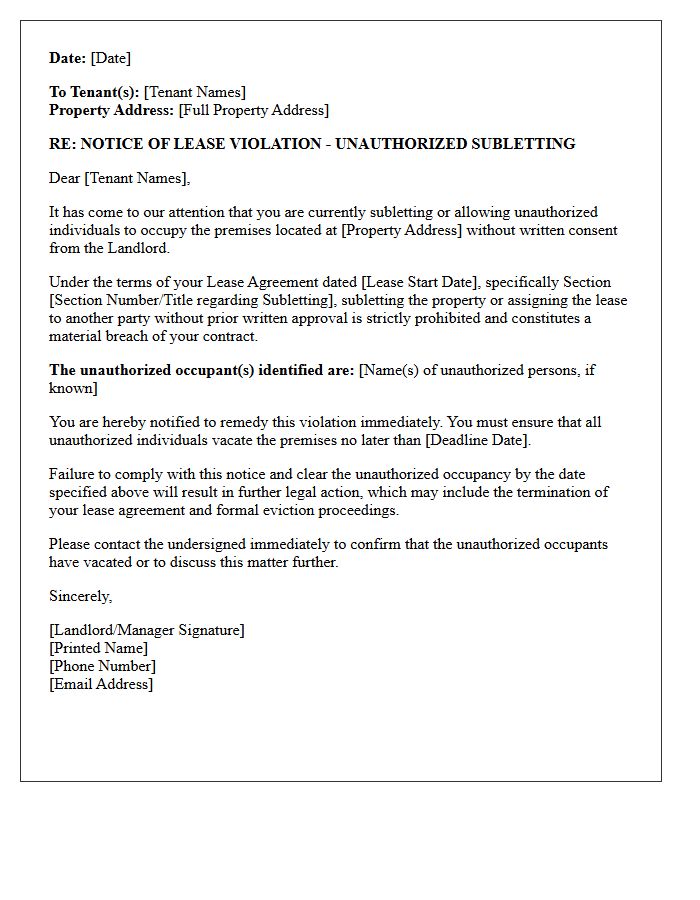
An Illegal Subletting Warning Notice serves as a formal legal communication informing a tenant they have violated their lease agreement by renting the property to unauthorized occupants. This critical document outlines the specific lease violations, providing a mandatory timeframe for the tenant to remedy the situation or face eviction. It acts as essential evidence in legal proceedings, protecting the landlord's property rights. To be enforceable, the notice must clearly state the unauthorized residency evidence and the required corrective actions to maintain the tenancy and avoid further litigation.
Landscaping Maintenance Violation Letter
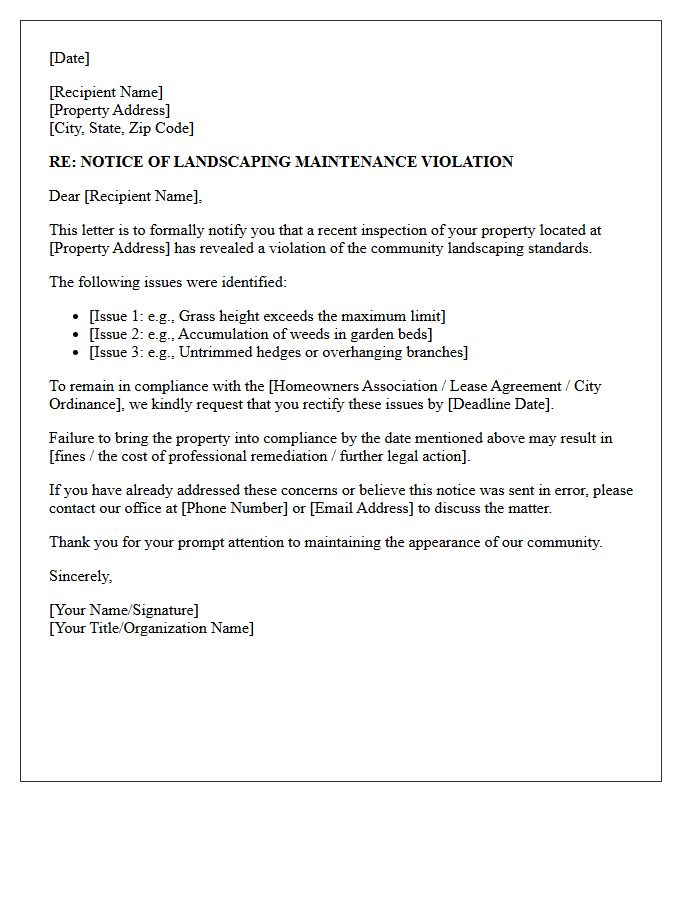
Receiving a Landscaping Maintenance Violation Letter typically indicates that your property fails to meet specific community aesthetic or safety standards. These notices, often issued by an HOA or local municipality, outline required corrective actions such as weed removal, lawn mowing, or pruning. It is crucial to address the citation within the specified timeframe to avoid fines or legal penalties. Always review your local bylaws to understand compliance requirements and contact the issuing authority immediately if you need an extension or clarification to resolve the issue effectively.
Poor Sanitation Lease Violation Letter
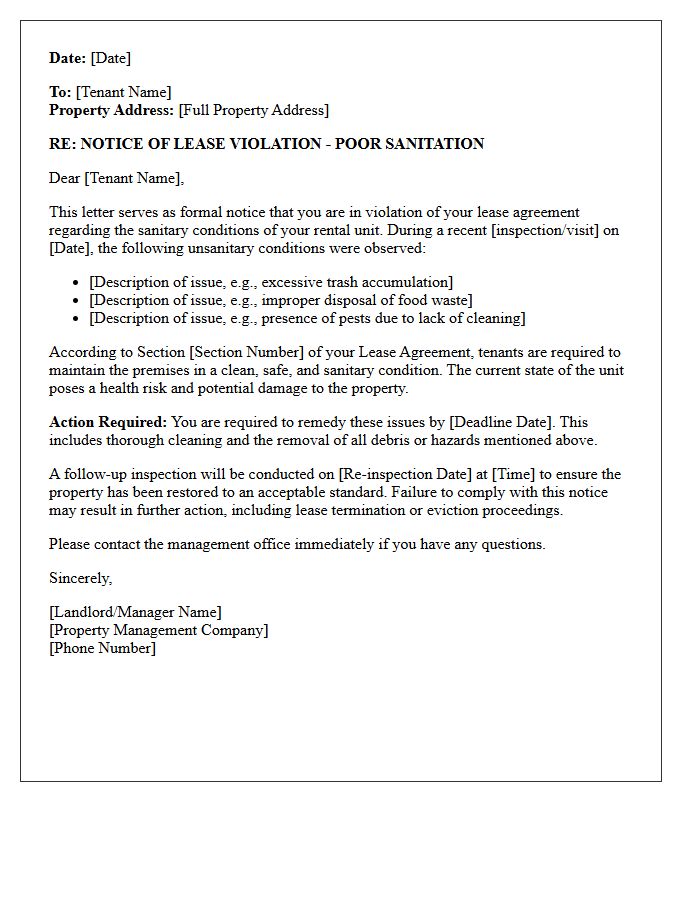
A Poor Sanitation Lease Violation Letter serves as a formal notice from a landlord to a tenant regarding unsanitary living conditions that breach the rental agreement. This document outlines specific issues, such as trash accumulation or pest attractants, and provides a strict deadline for remediation. It is a critical step in the legal process to protect property value and ensure habitability. Tenants must address the highlighted concerns promptly to avoid further escalations, such as eviction proceedings or financial penalties, while landlords must maintain clear documentation of the lease non-compliance.
Unauthorized Business Operation Warning Letter
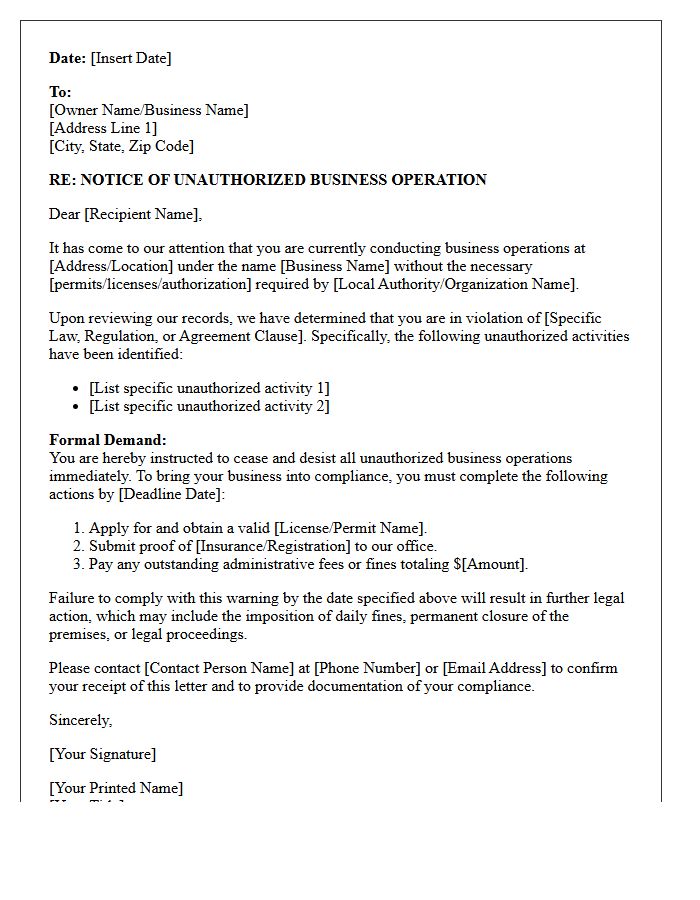
An Unauthorized Business Operation Warning Letter is an official legal notice issued by regulatory bodies or government agencies. It serves as a formal alert that an entity is conducting commercial activities without the required licenses, permits, or legal registration. Receiving this letter indicates a violation of local or state statutes. Immediate compliance is necessary to avoid severe legal penalties, permanent business closure, or criminal prosecution. Always verify the sender's credentials and seek professional legal counsel to rectify your regulatory status and ensure legitimate operations within the law.
Homeowners Association Rule Violation Letter
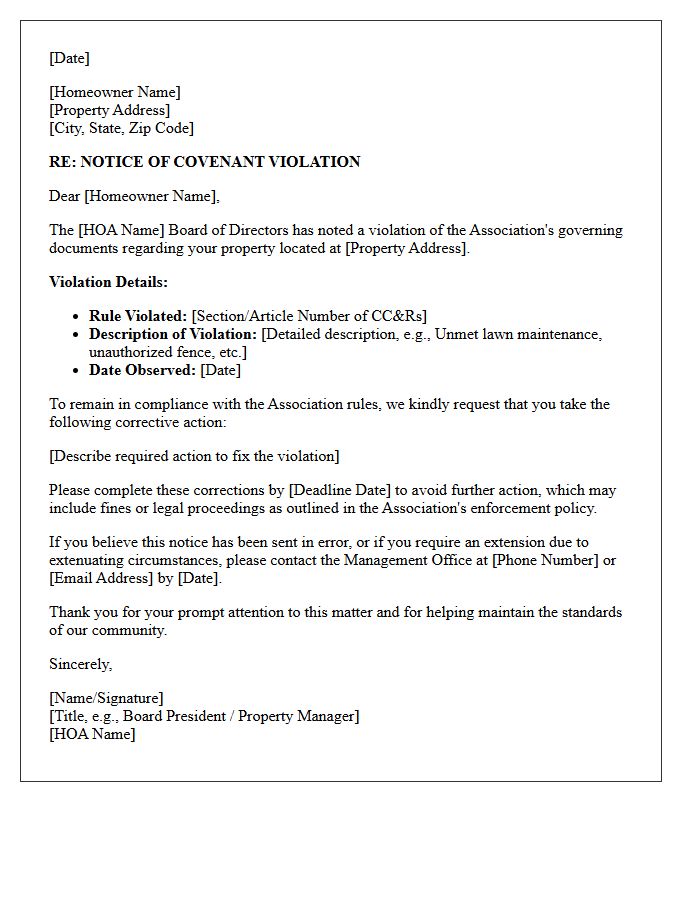
Receiving a Homeowners Association Rule Violation Letter is a formal notice that your property or conduct breaches community bylaws. It typically outlines the specific covenant violation, a required timeframe for correction, and potential penalties like fines. To avoid escalating legal action or liens, you should promptly address the issue by fixing the non-compliance or requesting a formal hearing with the board. Clear communication and understanding your CC&Rs are essential to maintaining neighborhood standards and protecting your property value while ensuring a quick resolution to any compliance dispute.
What is a Warning Notice of Lease Violation?
A Warning Notice of Lease Violation is a formal written document sent by a landlord to a tenant to officially communicate that a specific term of the rental agreement has been breached. It serves as an initial notification to correct the behavior before further legal action, such as eviction, is pursued.
What should be included in a formal lease violation letter?
The letter should include the date of issuance, the tenant's name and address, the specific clause of the lease agreement that was violated, a description of the non-compliant incident, the required steps to remedy the issue, and a deadline for compliance to avoid further consequences.
Is a lease violation notice the same as an eviction notice?
No, a lease violation notice is a warning intended to give the tenant an opportunity to cure the breach (fix the problem). An eviction notice is a legal demand to vacate the property, which often follows if the tenant fails to resolve the violation mentioned in the initial warning notice.
Can a tenant be evicted after receiving just one warning notice?
Most jurisdictions and standard lease agreements require the landlord to provide a "Notice to Cure or Quit." If the tenant corrects the violation within the specified timeframe (commonly 3 to 14 days), they generally cannot be evicted for that specific incident. However, repeated violations may lead to a non-curable notice and subsequent eviction.
What are the most common reasons for issuing a lease violation warning?
Common reasons include unauthorized pets, excessive noise complaints, unauthorized occupants living in the unit, failure to maintain the property in a clean condition, illegal activity on the premises, or smoking in non-designated areas.

Comments