
A Thirty-Day Notice to Terminate Month-to-Month Tenancy is a formal legal document used by landlords or tenants to end a rental agreement without cause. This essential notice ensures compliance with local housing laws and establishes a clear timeline for vacating the property. Understanding the proper requirements helps avoid legal disputes during the move-out process. To simplify your filing, below are some ready to use templates.
Image cover: Professional Month-to-Month Lease Termination Notice Templates and Samples
Letter Samples List
- Standard Thirty-Day Month-to-Month Tenancy Termination Letter
- Landlord Initiated Thirty-Day Notice to Vacate Letter
- Tenant Initiated Thirty-Day Lease Termination Letter
- Property Sale Thirty-Day Tenancy Termination Letter
- Owner Move-In Thirty-Day Notice to Vacate Letter
- Major Renovation Thirty-Day Lease Termination Letter
- Unconditional Thirty-Day Notice to Quit Letter
- Residential Month-to-Month Tenancy Termination Letter
- Commercial Month-to-Month Lease Termination Letter
- Mutual Agreement Thirty-Day Tenancy Termination Letter
- Roommate Month-to-Month Tenancy Termination Letter
- Sublease Thirty-Day Notice to Vacate Letter
Standard Thirty-Day Month-to-Month Tenancy Termination Letter
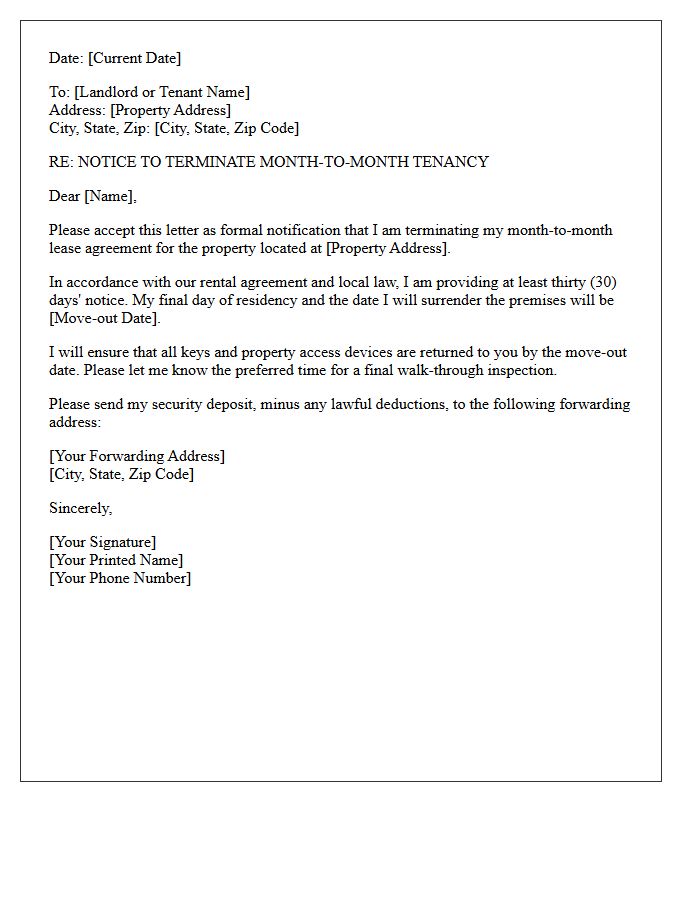
A Standard Thirty-Day Month-to-Month Tenancy Termination Letter serves as a formal legal notice to end a rental agreement. Both landlords and tenants must provide this written document at least thirty days before the intended move-out date to comply with housing laws. It must clearly state the termination date, property address, and contact details to ensure a valid transition. Proper delivery of this notice is essential to avoid automatic lease renewals or financial penalties, protecting the legal rights of both parties during the move-out process.
Landlord Initiated Thirty-Day Notice to Vacate Letter
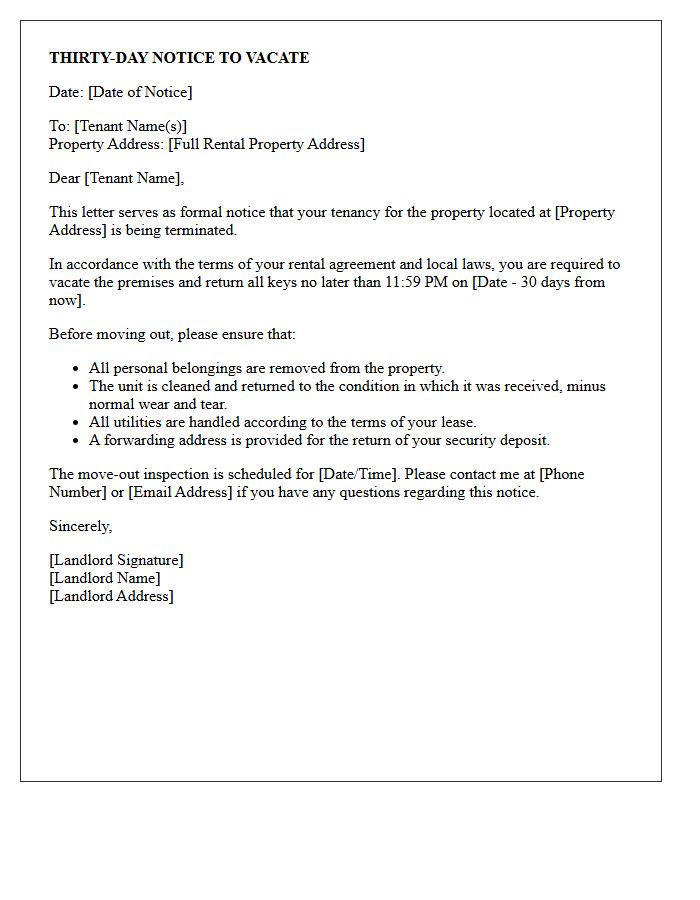
A Thirty-Day Notice to Vacate is a formal legal document used by a landlord to terminate a month-to-month tenancy. This written notice must clearly state the date the tenant is required to move out, typically providing a minimum of thirty days' warning. It is essential to follow local landlord-tenant laws regarding delivery methods to ensure the document is legally binding. While it often does not require a specific reason for termination, the notice cannot be used for retaliatory or discriminatory purposes. Proper documentation is vital for initiating any future legal eviction proceedings.
Tenant Initiated Thirty-Day Lease Termination Letter
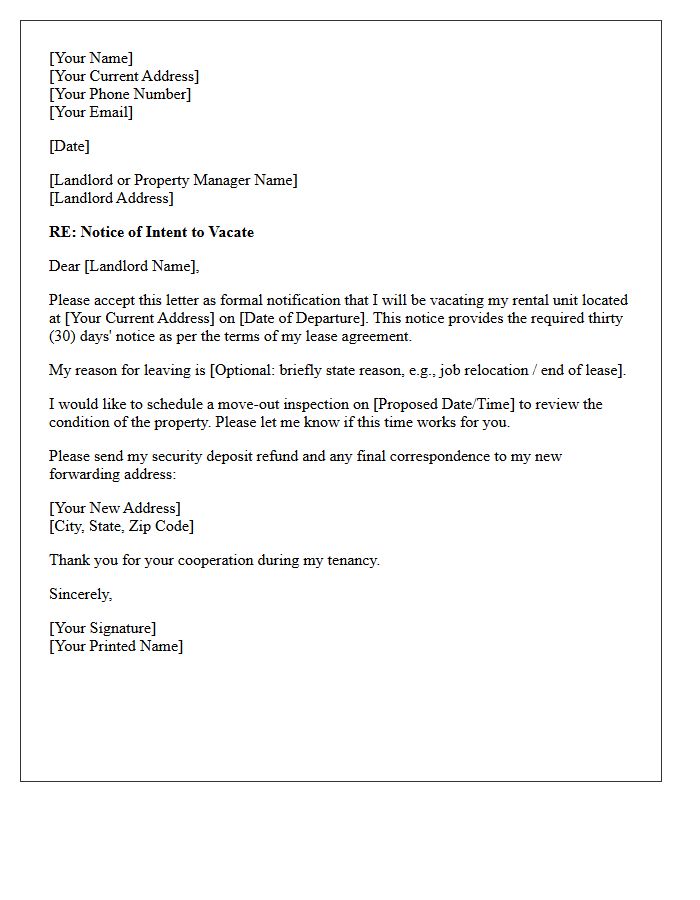
A tenant initiated thirty-day lease termination letter is a formal notice sent to a landlord to end a month-to-month rental agreement. To ensure legal validity, it must be written and delivered at least thirty days before the intended move-out date. The document should clearly state the property address, the final date of occupancy, and a forwarding address for the security deposit return. Following specific state laws and lease terms is essential to avoid potential financial penalties or legal disputes during the move-out process.
Property Sale Thirty-Day Tenancy Termination Letter
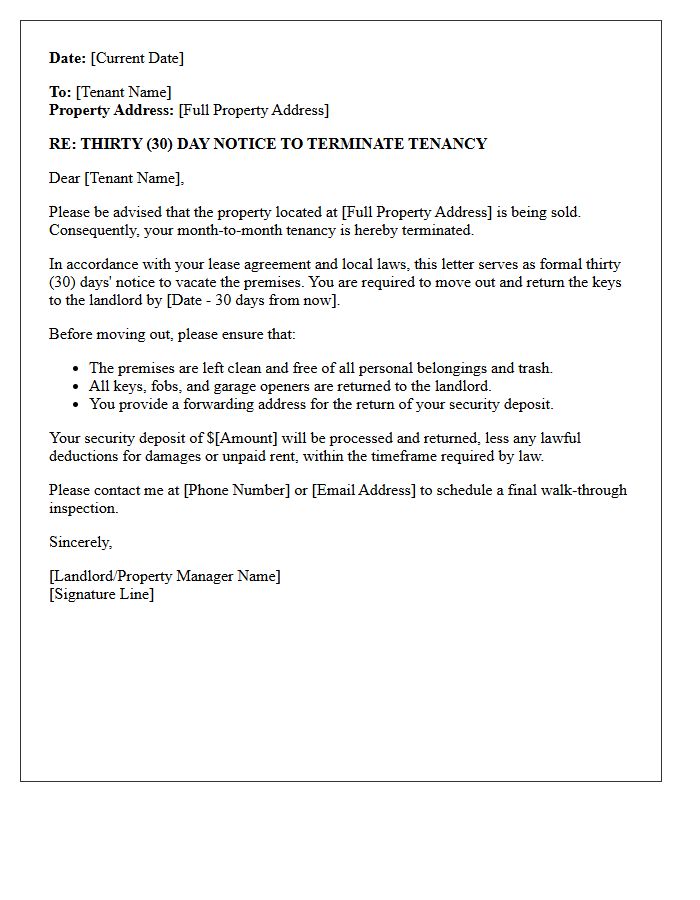
A Property Sale Thirty-Day Tenancy Termination Letter is a formal legal notice issued by a landlord to inform tenants that their lease will end due to the sale of the premises. This document is essential for legal compliance, ensuring the owner regains possession for the new buyer. It must clearly state the final move-out date and comply with local notice period requirements. Providing this written notice protects the rights of both parties while facilitating a smooth transition during the real estate transfer process.
Owner Move-In Thirty-Day Notice to Vacate Letter
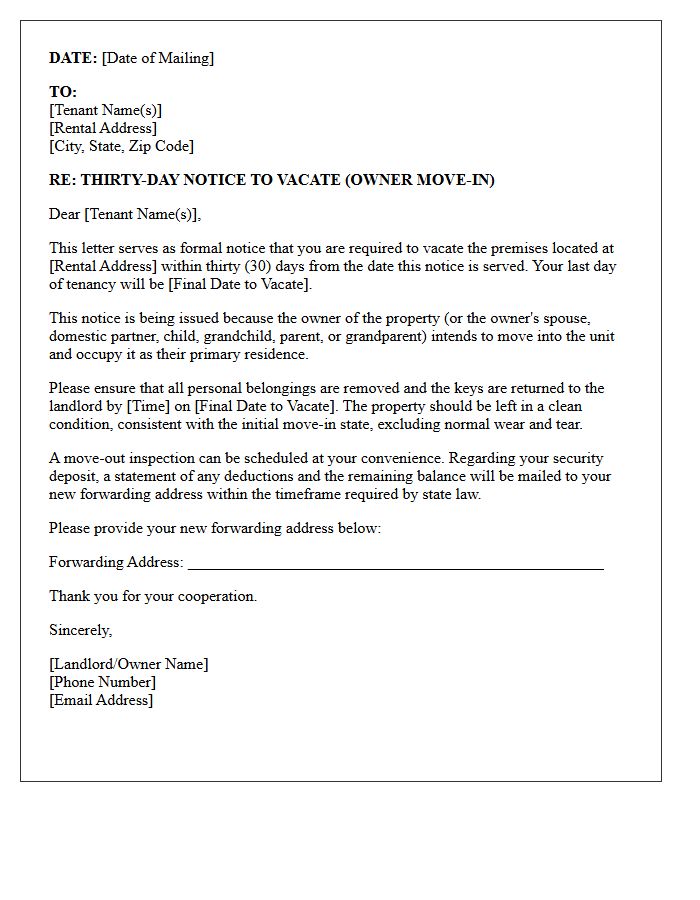
An Owner Move-In Thirty-Day Notice to Vacate is a formal legal document used by landlords to regain possession of a rental unit for personal use. This notice typically applies to month-to-month tenancies where the owner or an immediate family member intends to occupy the property as their primary residence. It is essential to ensure the notice period complies with local jurisdictional laws and rent control ordinances. The letter must clearly state the move-out date and the specific legal grounds for termination to ensure the eviction process remains valid and enforceable.
Major Renovation Thirty-Day Lease Termination Letter
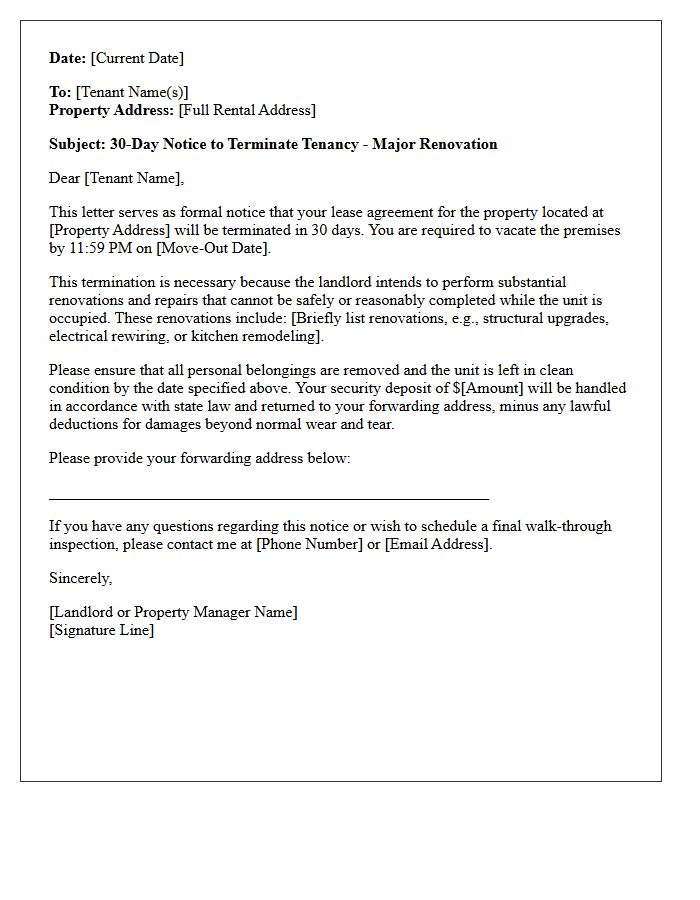
A Major Renovation Thirty-Day Lease Termination Letter is a formal legal notice used by landlords to end a month-to-month tenancy. To be valid, the substantial rehabilitation must be so extensive that the unit is uninhabitable during construction. Landlords must provide at least thirty days' notice before the move-out date. Depending on local jurisdictions, the owner may be required to include specific redevelopment permits or offer relocation assistance. Tenants should verify that the renovation is genuine and complies with local housing laws to prevent wrongful eviction under the guise of repairs.
Unconditional Thirty-Day Notice to Quit Letter
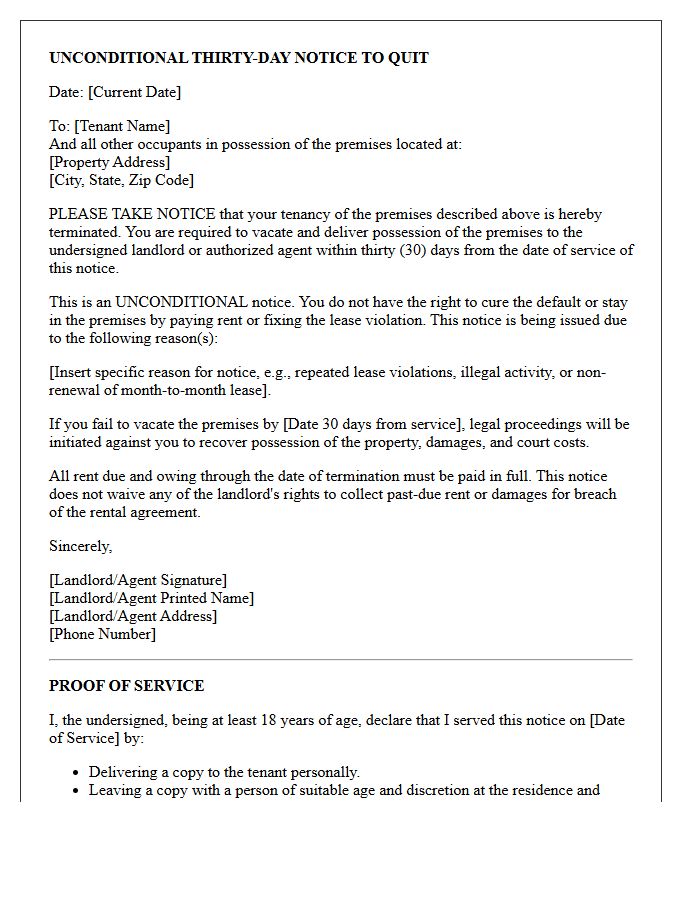
An Unconditional Thirty-Day Notice to Quit is a formal legal document used by landlords to terminate a tenancy without the option for the tenant to correct a lease violation. Unlike standard notices, it requires the occupant to vacate the premises within thirty days due to severe breaches, such as illegal activity or repeated non-compliance. This notice is final and serves as a prerequisite for filing an eviction lawsuit if the tenant remains. It is crucial to verify local state laws, as specific just cause requirements must be met for this notice to be valid.
Residential Month-to-Month Tenancy Termination Letter
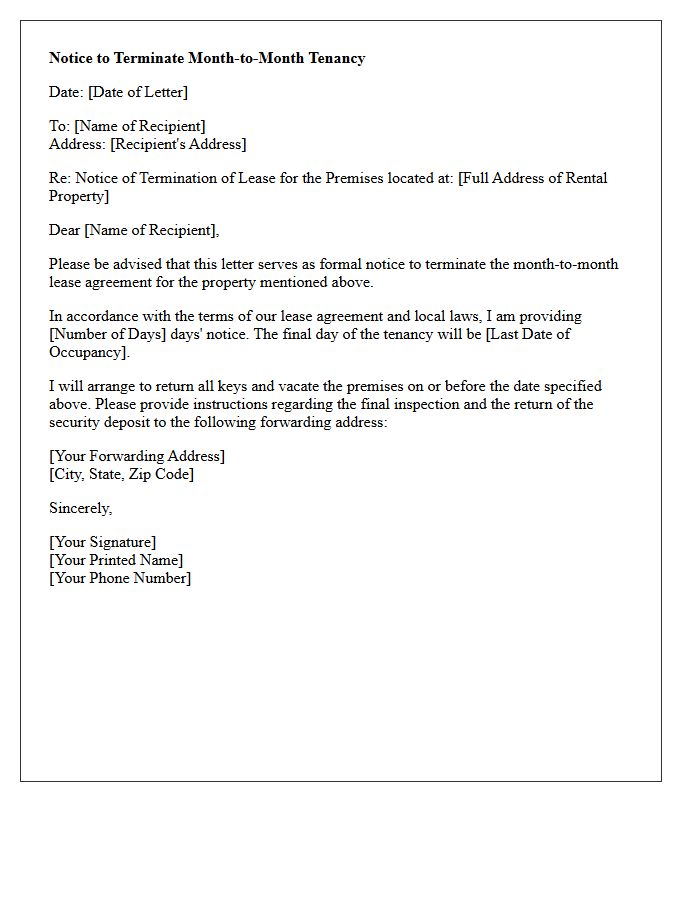
A Residential Month-to-Month Tenancy Termination Letter is a formal legal notice used by landlords or tenants to end a rental agreement. Unlike fixed-term leases, this periodic tenancy requires written notification, typically 30 days in advance, to remain legally compliant. The document must clearly state the termination date and property details to ensure a smooth move-out process. Providing proper notice protects both parties from legal disputes and clarifies expectations regarding the final rent payment and security deposit return. Always verify local state laws for specific notice period requirements.
Commercial Month-to-Month Lease Termination Letter
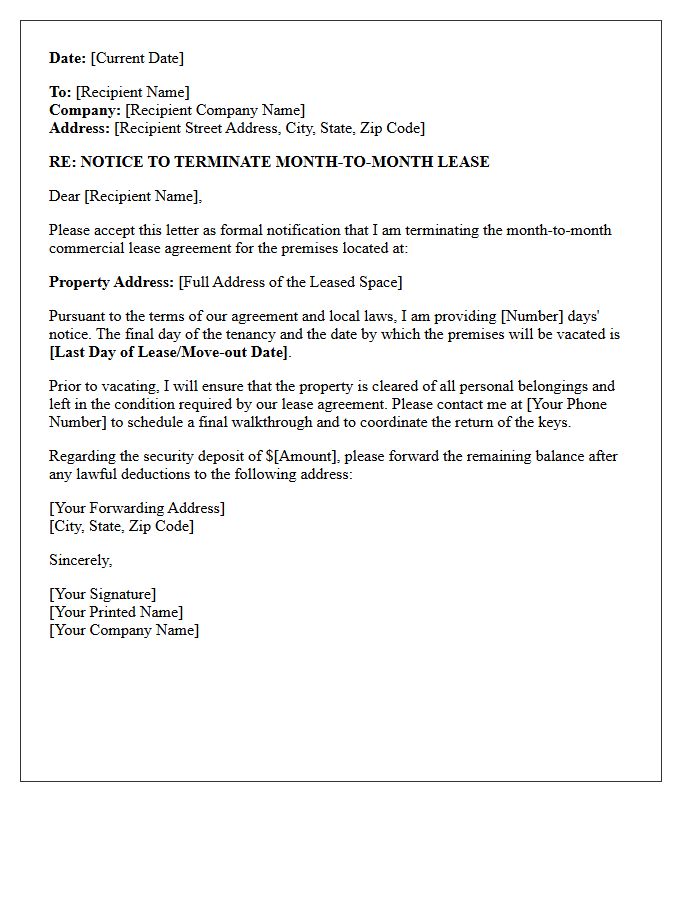
A Commercial Month-to-Month Lease Termination Letter is a formal document used to end a periodic tenancy. The most critical element is providing the statutory notice period, typically 30 or 60 days, as defined by local laws or the original agreement. This written notice ensures a legal record of the intent to vacate, protecting both landlords and tenants from disputes. It must clearly state the termination date and include delivery confirmation to be enforceable. Proper documentation prevents automatic renewal and clarifies final obligations regarding security deposits and property condition.
Mutual Agreement Thirty-Day Tenancy Termination Letter
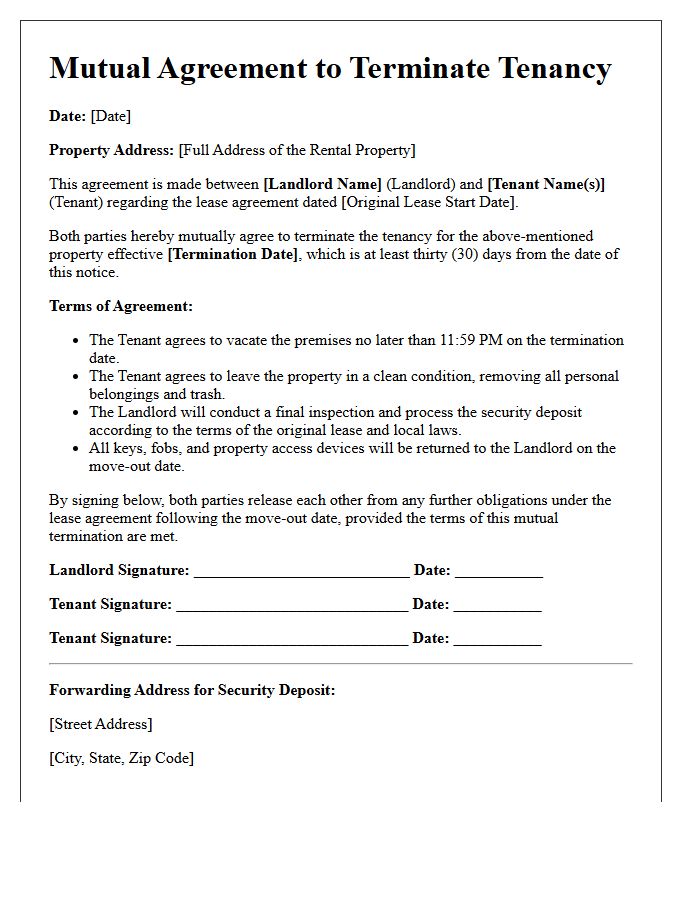
A Mutual Agreement Thirty-Day Tenancy Termination Letter is a legal document used when both landlord and tenant voluntarily agree to end a lease early. Unlike a standard eviction, this bilateral contract ensures a peaceful transition without legal disputes. It must clearly state the agreed move-out date, security deposit terms, and property condition expectations. This mutual rescission protects both parties by waiving further obligations under the original lease. It is crucial that both individuals sign the document to confirm their voluntary consent and avoid future claims for breach of contract.
Roommate Month-to-Month Tenancy Termination Letter
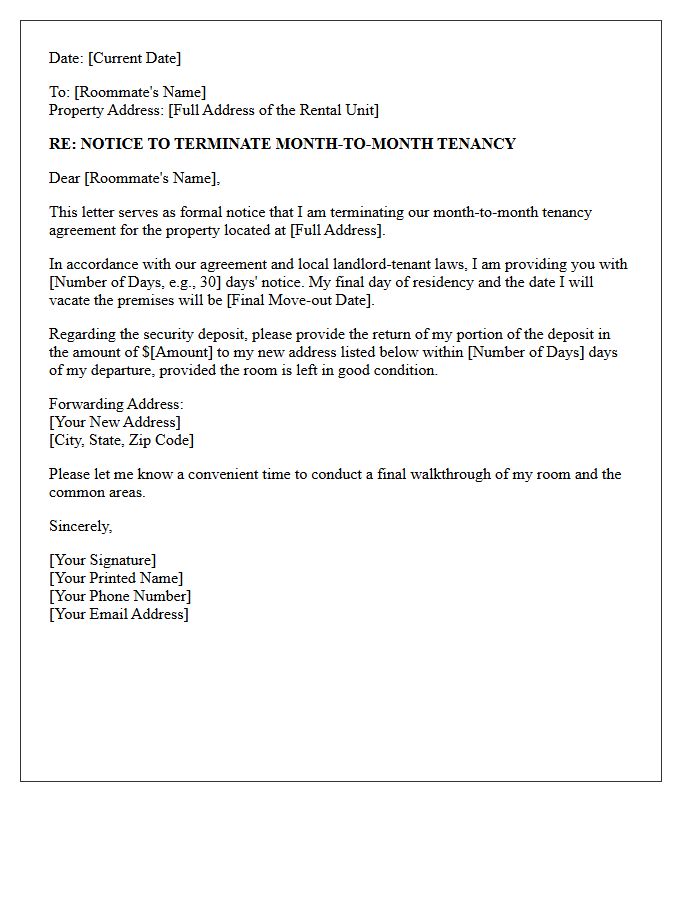
A Roommate Month-to-Month Tenancy Termination Letter is a formal legal document used to end a shared living arrangement. It serves as official written notice, typically requiring a 30-day lead time depending on local jurisdiction. To ensure validity, the letter must clearly state the move-out date, the current date, and the names of all parties involved. Providing this notice in writing protects your rights, minimizes disputes over security deposits, and establishes a clear timeline for vacating the premises according to the terms of your original rental agreement.
Sublease Thirty-Day Notice to Vacate Letter
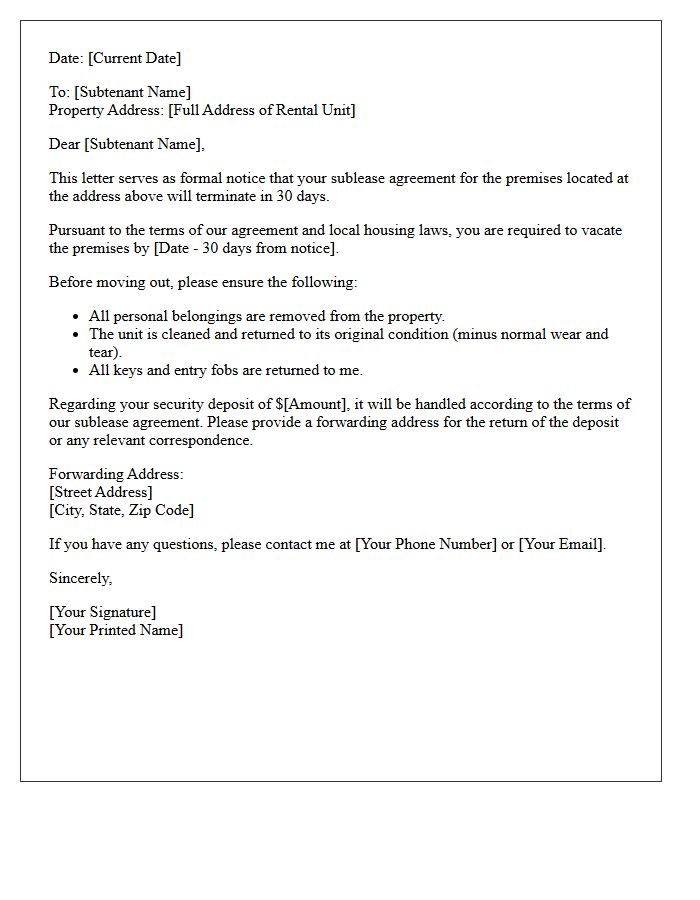
A Sublease Thirty-Day Notice to Vacate is a formal legal document used by a sublessor or subtenant to terminate a rental agreement. It ensures proper legal compliance by providing a standard one-month warning before moving out or reclaiming the property. This notice must clearly state the move-out date and be delivered according to local landlord-tenant laws to avoid disputes or financial penalties. Providing this written notice protects both parties, ensuring a smooth transition and the legal handling of security deposit refunds according to the original sublease terms.
What is a Thirty-Day Notice to Terminate a Month-to-Month Tenancy?
A Thirty-Day Notice to Terminate a Month-to-Month Tenancy is a formal legal document used by either a landlord or a tenant to end a rental agreement that does not have a fixed end date. This notice informs the other party that the lease will expire thirty days from the date the notice is served.
When should a landlord use a 30-day notice instead of an eviction notice?
A landlord should use a 30-day notice when they wish to end a month-to-month lease without alleging a lease violation, such as non-payment of rent. Unlike an eviction notice for cause, this notice is typically used for "no-fault" terminations, provided the property is not subject to specific local "just cause" eviction laws.
Does a 30-day notice to terminate need to be in writing?
Yes, to be legally enforceable, a notice to terminate a tenancy must be in writing. Verbal notice is generally insufficient in a court of law. The written document should include the property address, the date the notice was served, and the final date the tenant is expected to vacate the premises.
How must a 30-day notice be served to a tenant?
Service requirements vary by state, but generally, the notice must be delivered personally to the tenant, left with a person of suitable age at the residence followed by a mailed copy, or sent via certified mail with a return receipt requested. Checking local landlord-tenant laws is essential to ensure proper service.
What happens if a tenant stays past the date on the 30-day notice?
If a tenant remains in the unit after the 30-day period expires, they become a "holdover tenant." At this point, the landlord can no longer simply use the notice; they must file a formal holdover eviction lawsuit (Unlawful Detainer) in court to regain possession of the property.


Comments