
A Notice of Mold Remediation Protocol outlines the specific professional guidelines and safety measures required to eliminate indoor fungal growth. This document ensures compliance with health standards while protecting occupants and property integrity during the cleanup process. Understanding these procedures is essential for successful restoration. To help you get started, below are some ready to use template.
Image cover: Mastering Mold Remediation: Professional Protocol Samples and Templates
Letter Samples List
- Initial Notice of Mold Remediation Protocol Letter
- Tenant Health and Safety Mold Protocol Letter
- Vendor Authorization for Mold Remediation Letter
- Mandatory Unit Access for Mold Protocol Letter
- Post-Remediation Clearance Protocol Letter
- Temporary Relocation for Mold Remediation Letter
- Notice of Environmental Testing Protocol Letter
- Mold Remediation Protocol Schedule Update Letter
- Landlord Disclosure of Mold Protocol Letter
- Completion of Mold Remediation Protocol Letter
- Acknowledgement of Tenant Mold Protocol Letter
- Final Clearance and Protocol Closure Letter
Initial Notice of Mold Remediation Protocol Letter
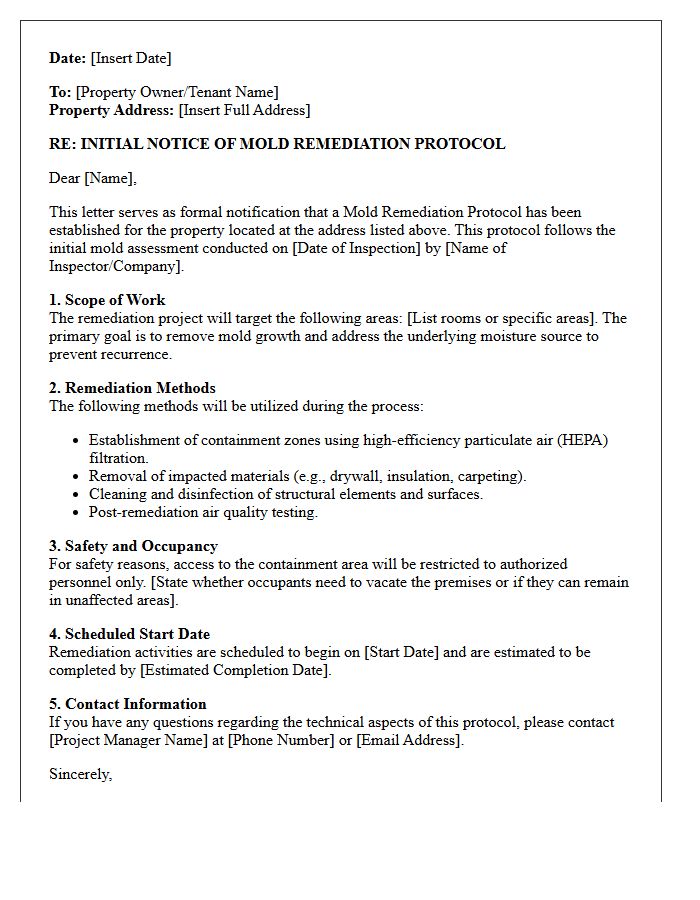
The Initial Notice of Mold Remediation Protocol is a formal document issued by a licensed mold assessment consultant. It outlines the specific scope of work, cleaning methods, and safety measures required to resolve an infestation. This notice ensures that remediation contractors follow a professional plan to prevent cross-contamination and meet regulatory standards. Property owners must receive this document before physical remediation begins, as it serves as a legal blueprint for remediation success and provides essential documentation for future property sales or insurance claims regarding structural safety.
Tenant Health and Safety Mold Protocol Letter
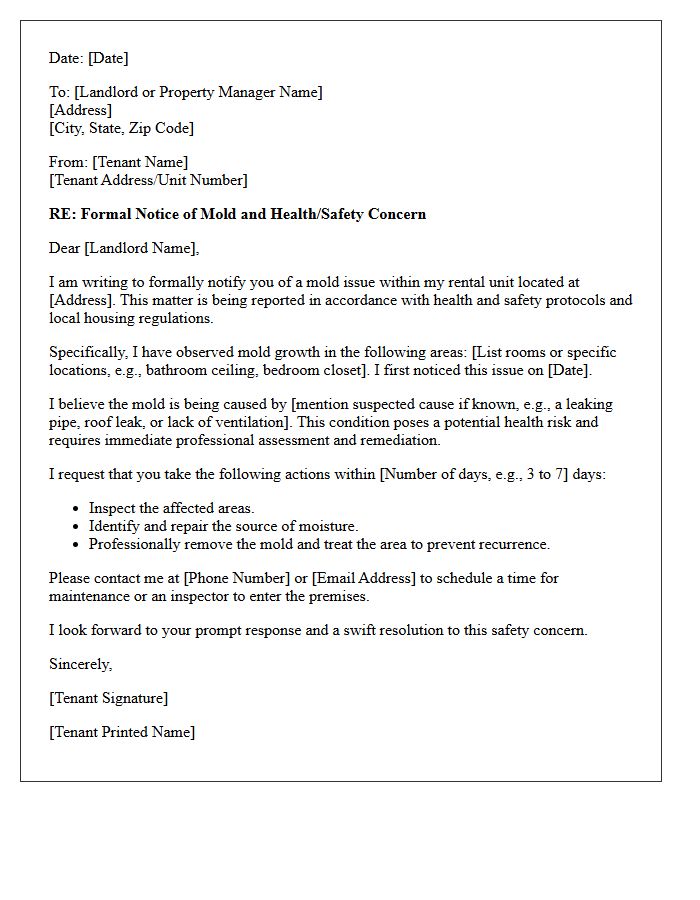
A Tenant Health and Safety Mold Protocol Letter is a formal written notice sent to a landlord regarding fungal growth and air quality concerns. This document serves as an official record of the issue, demanding immediate remediation to ensure the property remains habitable. Legally, it establishes a timeline for repairs and protects the tenant's rights under local health codes. Clear documentation of visible mold and any related health symptoms is essential for liability protection. Sending this via certified mail ensures proof of receipt, which is vital if future legal action or lease termination becomes necessary.
Vendor Authorization for Mold Remediation Letter
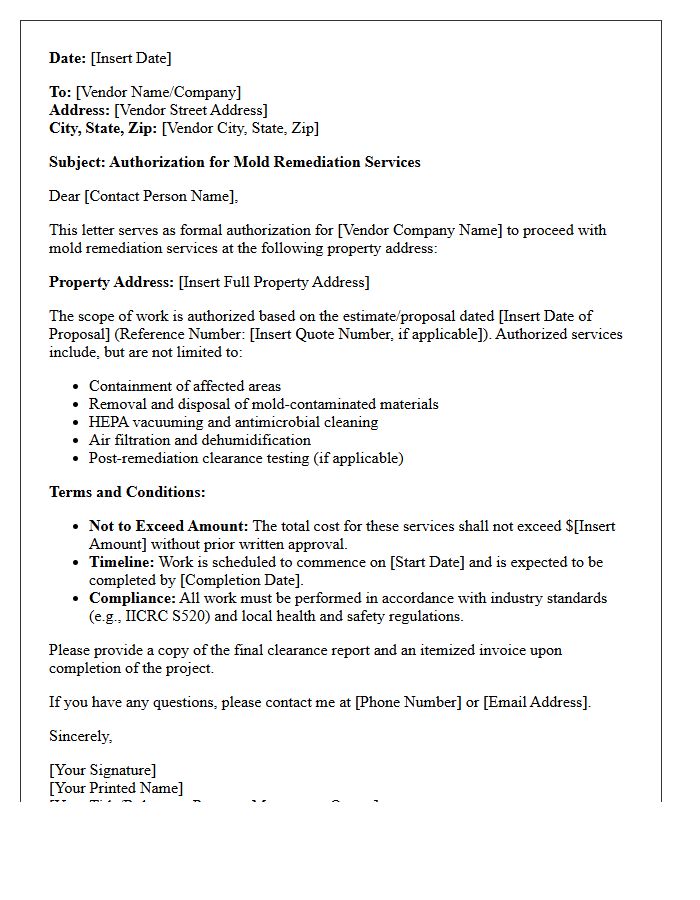
A Vendor Authorization for Mold Remediation Letter is a formal document granting a specialized contractor legal permission to perform mold removal on a property. This letter is essential for defining the scope of work, ensuring compliance with safety standards, and establishing payment responsibilities. It often serves as a critical piece of documentation for insurance claims, protecting both the property owner and the vendor by clarifying expectations. Having a written authorization ensures that all toxic remediation efforts follow environmental regulations while providing a clear legal framework for the restoration process.
Mandatory Unit Access for Mold Protocol Letter
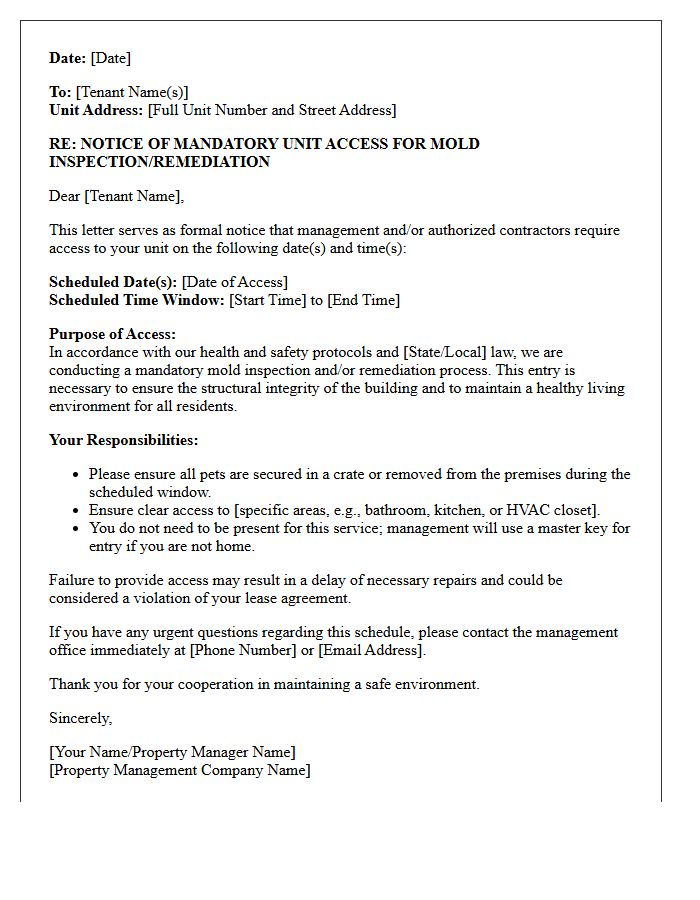
A Mandatory Unit Access for Mold Protocol Letter is a formal notification issued by landlords to tenants, establishing a legal right of entry for environmental inspections. This document ensures compliance with health regulations by allowing professionals to perform mold remediation and moisture testing. It must specify the date, time, and purpose of access to maintain transparency. Providing this notice is essential for preventing structural damage and protecting occupant safety, as it grants the necessary authority to address biohazard concerns within a private residence while adhering to local housing laws and lease agreements.
Post-Remediation Clearance Protocol Letter
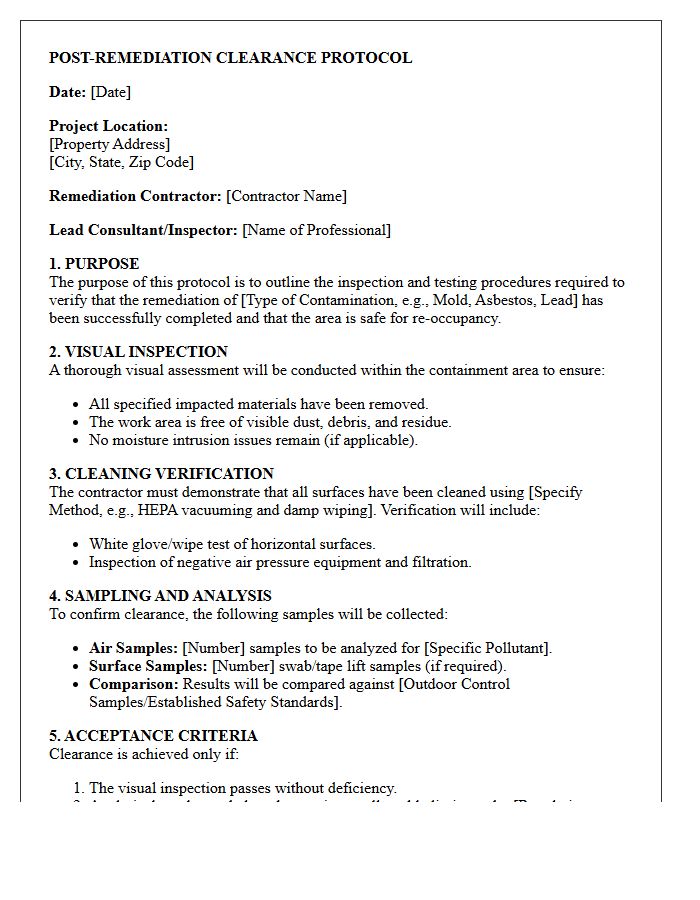
A Post-Remediation Clearance Protocol Letter is a professional document confirming that mold or hazardous material remediation was successful. Issued by an independent environmental consultant, it provides verification that the treated area meets safety standards and is fit for occupancy. This letter is essential for insurance claims, real estate transactions, and legal protection, as it proves that the underlying moisture issue was resolved and air quality has returned to normal. Always ensure the testing is performed by a third party to avoid conflicts of interest and guarantee clearance accuracy.
Temporary Relocation for Mold Remediation Letter
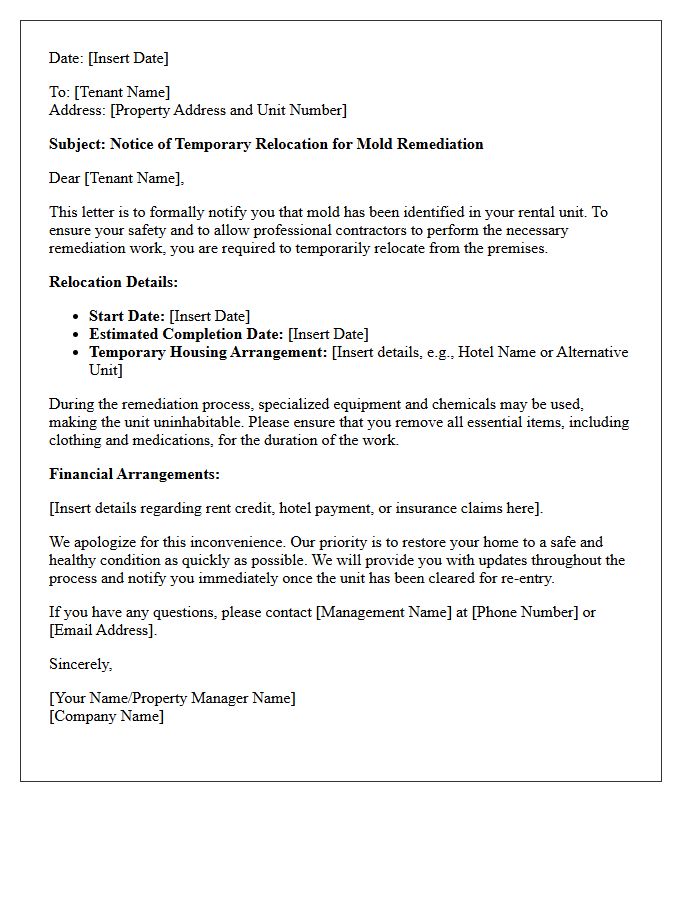
A Temporary Relocation for Mold Remediation Letter is a formal notice informing tenants or occupants that they must vacate a property due to hazardous environmental conditions. This document must clearly state the required move-out date, the estimated duration of repairs, and any provided alternative housing arrangements or stipends. It serves as a legal record to ensure safety compliance and outlines the tenant's rights during the restoration process. Providing specific contact details for project updates helps maintain transparency while the specialized team removes toxic growth and restores the building to a habitable state.
Notice of Environmental Testing Protocol Letter
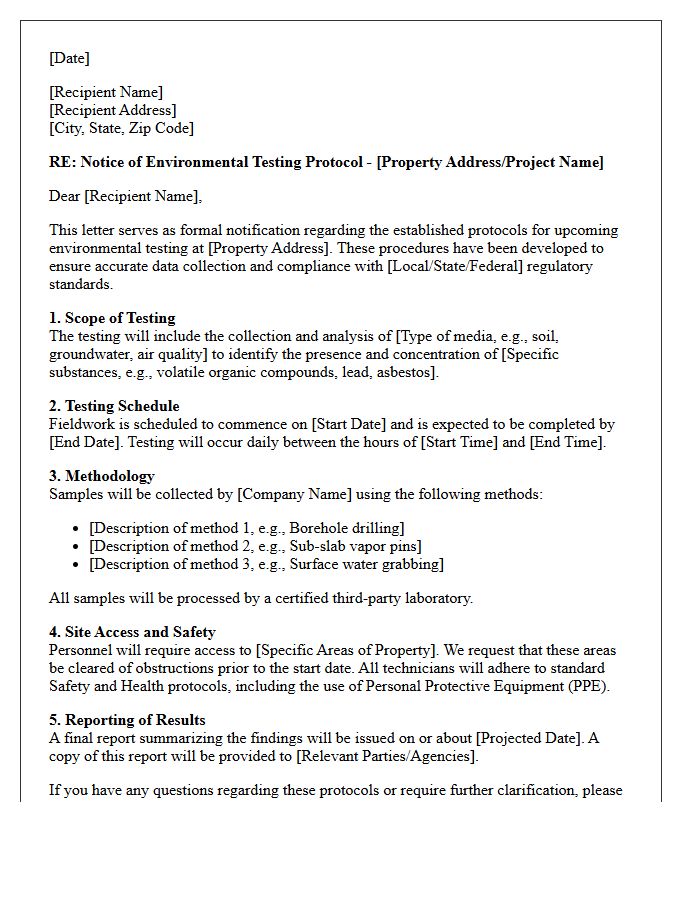
A Notice of Environmental Testing Protocol Letter is a formal document outlining the specific methodology used to assess potential contamination on a property. It ensures transparency by detailing sampling locations, testing standards, and safety procedures before work begins. This notification is crucial for regulatory compliance and protecting public health. Stakeholders must review these protocols to verify that the investigation follows scientific guidelines and legal requirements, ensuring that all environmental risks are accurately identified and mitigated during the site evaluation process.
Mold Remediation Protocol Schedule Update Letter
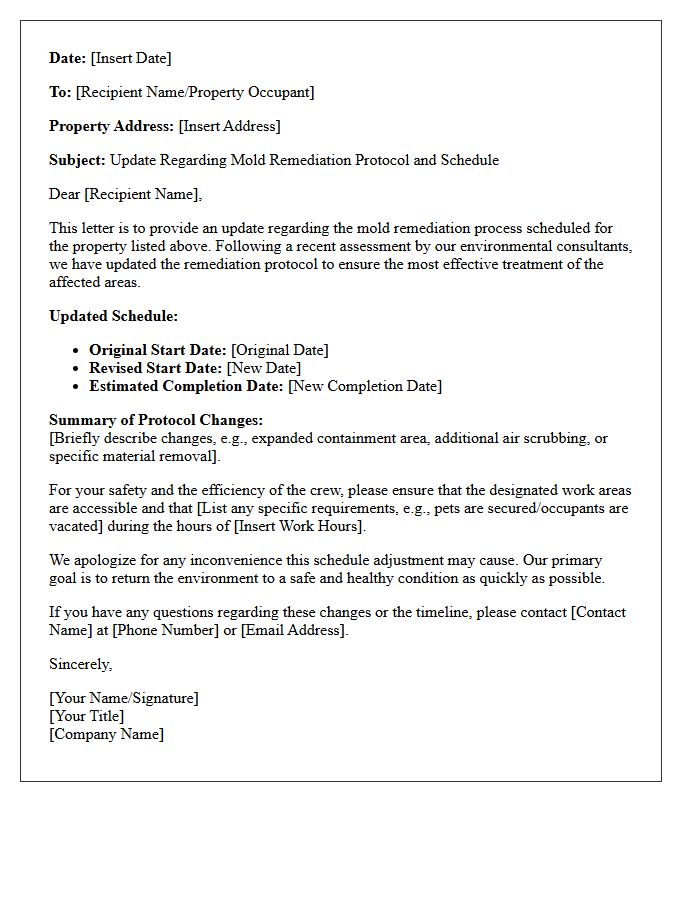
A Mold Remediation Protocol Schedule Update Letter is a vital document used to inform occupants about changes to the remediation timeline. It ensures transparency regarding revised containment measures, air filtration stages, and expected completion dates. Keeping residents informed reduces health risks and manages expectations during the cleanup process. This update should clearly outline any new safety procedures and the revised post-remediation verification (PRV) testing window. Proper communication is essential for maintaining compliance and ensuring the property returns to a safe, mold-free environment according to industry standards.
Landlord Disclosure of Mold Protocol Letter
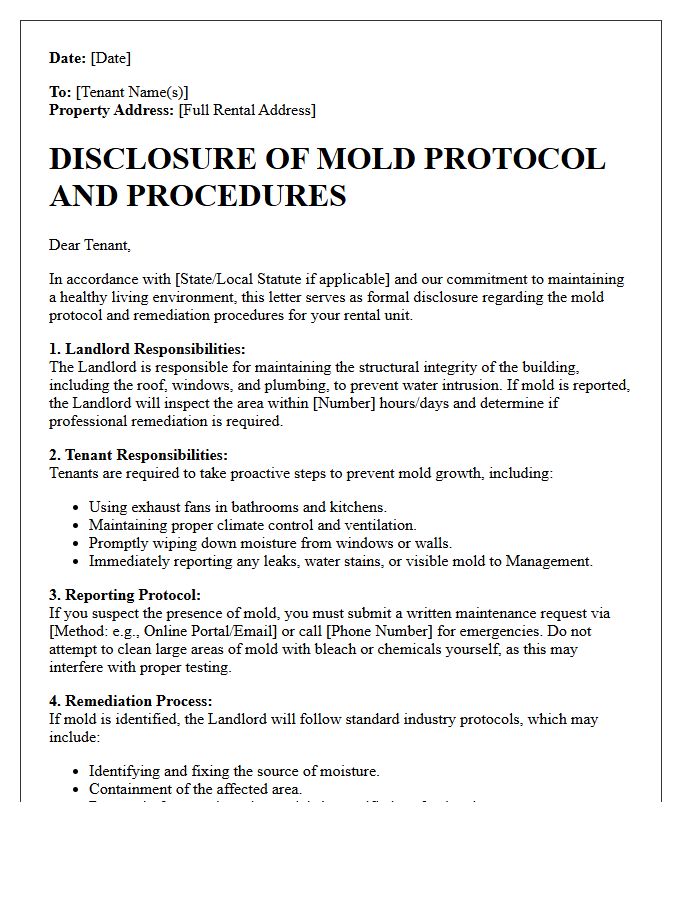
A Landlord Disclosure of Mold Protocol Letter is a vital document ensuring transparency regarding indoor air quality. It informs tenants of known mold history, active growth, or remediation efforts within the property. Providing this notice helps landlords comply with legal disclosure requirements and limits potential liability for health issues. Tenants should review this letter to understand their maintenance responsibilities and how to report moisture problems immediately. Clear communication through this protocol fosters a safe living environment and ensures both parties adhere to environmental safety standards during the lease term.
Completion of Mold Remediation Protocol Letter
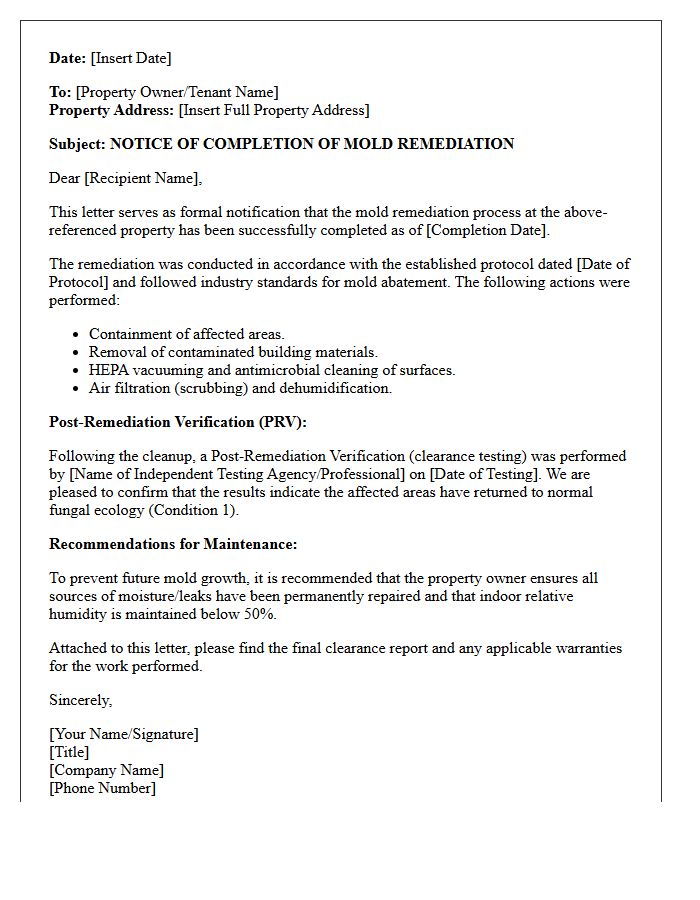
A Completion of Mold Remediation Protocol Letter is a formal document issued by a licensed professional certifying that a property is safe for re-occupancy. It confirms that all biohazards were removed according to industry standards and the remediation plan. This letter is essential for legal liability protection, property insurance claims, and real estate transactions. It serves as verified proof that the indoor air quality has returned to a healthy baseline, ensuring the structural integrity and safety of the environment for all future inhabitants.
Acknowledgement of Tenant Mold Protocol Letter
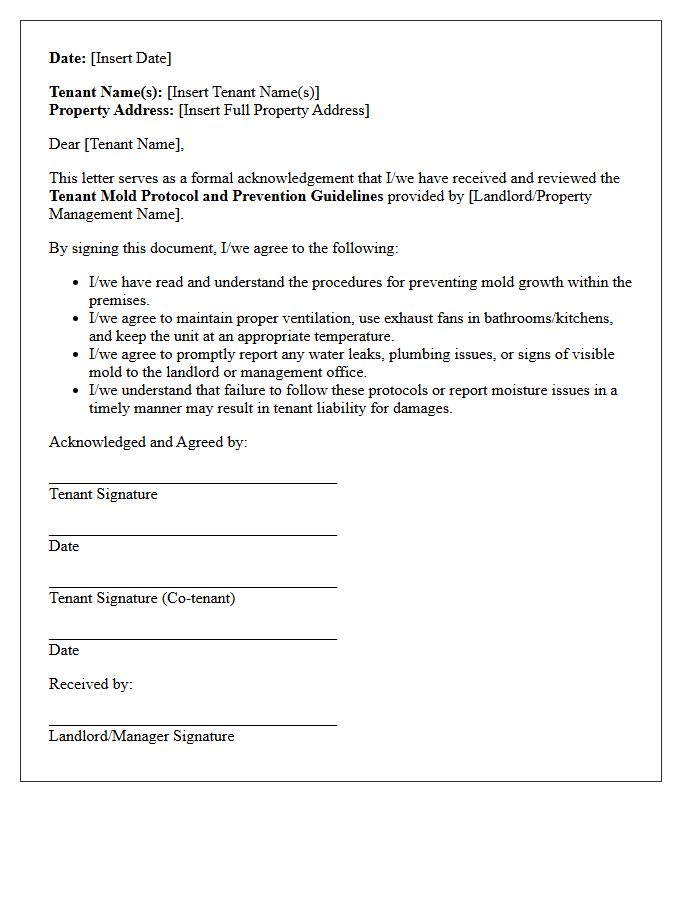
The Acknowledgement of Tenant Mold Protocol Letter is a vital document confirming that a renter has received and understood the safety procedures regarding indoor air quality. It establishes clear reporting responsibilities for moisture issues, helping to prevent property damage and health risks. By signing this legal notice, the tenant agrees to follow specific maintenance guidelines, which protects both parties from liability. This formal record ensures transparency and serves as essential evidence that the landlord proactively addressed potential biological hazards before or during the lease term.
Final Clearance and Protocol Closure Letter
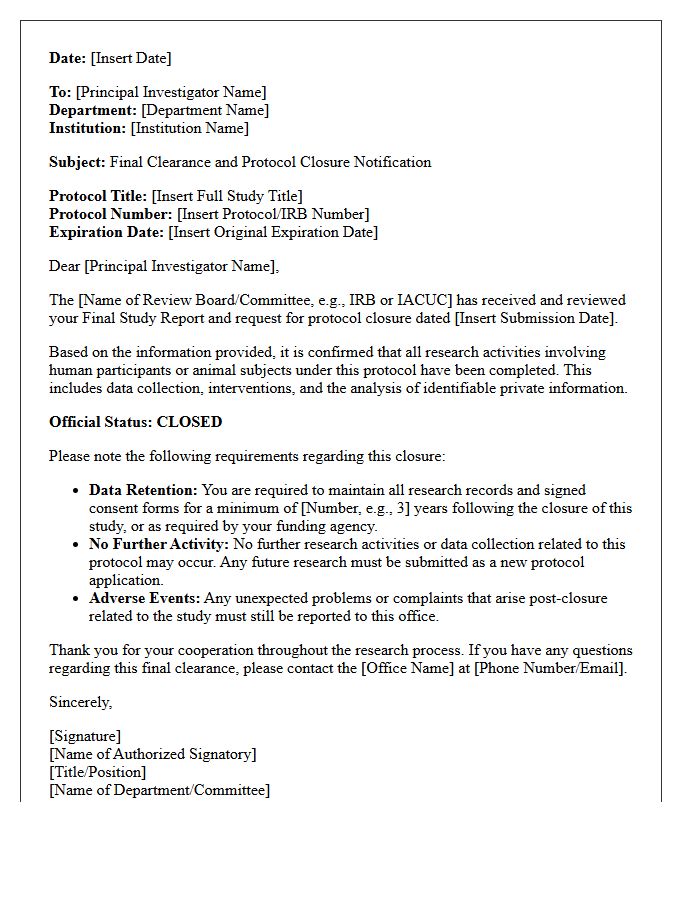
A Final Clearance and Protocol Closure Letter is the formal document issued by an Institutional Review Board (IRB) or Ethics Committee to officially terminate a study. It confirms that all research activities have ended, data is de-identified or secured, and final reporting requirements are met. Receiving this letter is crucial as it signifies the investigator has fulfilled all regulatory obligations and the file is closed. You must retain this record for auditing purposes to prove the study was completed in full compliance with approved ethical standards and legal protocols.
What is a Notice of Mold Remediation Protocol?
A Notice of Mold Remediation Protocol is a formal document developed by a licensed mold assessment consultant that outlines the specific scope of work, methods, and safety procedures required to remove mold growth and address moisture sources in a building.
When is a mold remediation protocol legally required?
In many jurisdictions, a formal protocol is required before professional remediation begins if the mold contamination exceeds a certain size threshold (typically 25 contiguous square feet) or if it is mandated by state-specific mold assessment and remediation regulations.
What key information must be included in a remediation protocol?
A comprehensive protocol must include the location of the mold, the estimated quantities of materials to be removed, the specific containment types (source, local, or full), the PPE requirements for workers, and the clearance criteria for project completion.
Who is responsible for creating the mold remediation protocol?
The protocol must be authored by a licensed or certified Mold Assessment Consultant. To prevent conflicts of interest, the individual or firm that writes the protocol should be independent of the mold remediation contractor performing the physical cleanup.
Why is the protocol essential for Post-Remediation Verification (PRV)?
The protocol serves as the benchmark for the final inspection; it defines the "pass/fail" standards that a mold assessor will use during clearance testing to ensure the environment is safe for re-occupancy and that the remediation goals were met.

Comments