
Receive an official Notice of Unauthorized Pet Violation if you are housing an animal without landlord approval. This document serves as a formal warning to resolve lease breaches regarding unapproved pets or face potential eviction. Understanding your rights and responsibilities is essential for maintaining your tenancy. To help you address this issue professionally, below are some ready to use template.
Image cover: Professional Notice Templates for Unauthorized Pet Violations
Letter Samples List
- First Warning Letter for Unauthorized Pet Violation
- Official Notice Letter Regarding Unauthorized Pet on Premises
- Property Management Letter for Unapproved Animal Violation
- Final Demand Letter to Remove Unauthorized Pet
- Lease Violation Letter for Unauthorized Pet Detection
- Initial Notification Letter of Unauthorized Pet Policy Breach
- Cure or Quit Letter for Unauthorized Pet Violation
- Formal Warning Letter Regarding Unregistered Pet
- Tenant Compliance Letter for Unauthorized Pet Removal
- Property Manager Letter Detailing Unauthorized Pet Fine
- Notice of Lease Infraction Letter for Unauthorized Pet
- Second Violation Letter for Unapproved Pet on Property
- Action Required Letter for Unauthorized Pet Discovery
First Warning Letter for Unauthorized Pet Violation
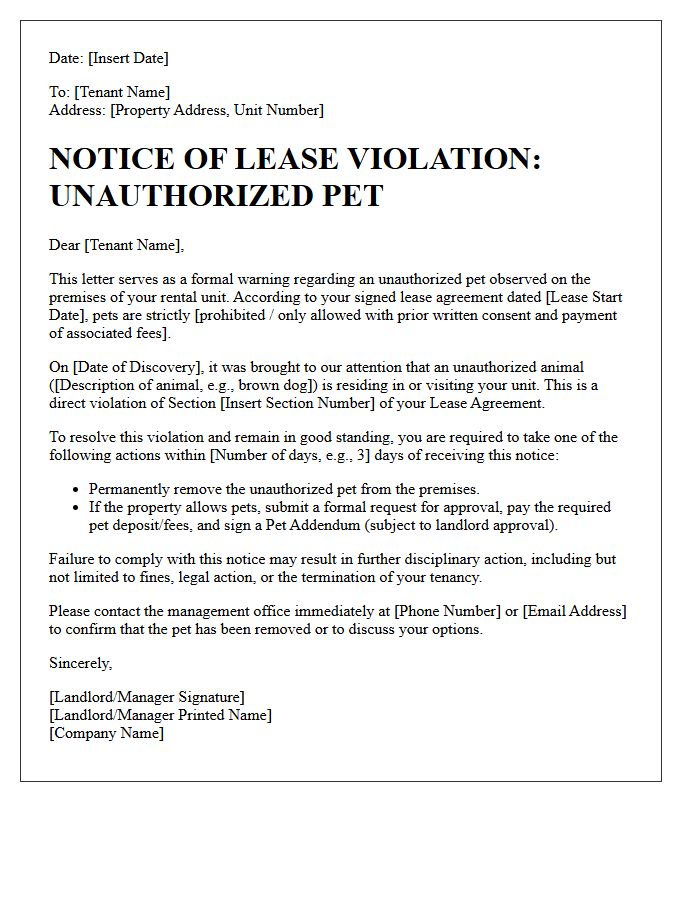
Receiving a First Warning Letter for Unauthorized Pet Violation is a formal notice that you are in breach of your lease agreement. This document typically outlines the specific violation, potential fines, and a deadline to remove the animal or register it properly. To avoid eviction proceedings, you must respond immediately by either providing proof of pet authorization, requesting a reasonable accommodation for a service animal, or removing the pet from the premises. Always keep written records of your communication with the landlord to ensure legal compliance and protect your housing status.
Official Notice Letter Regarding Unauthorized Pet on Premises
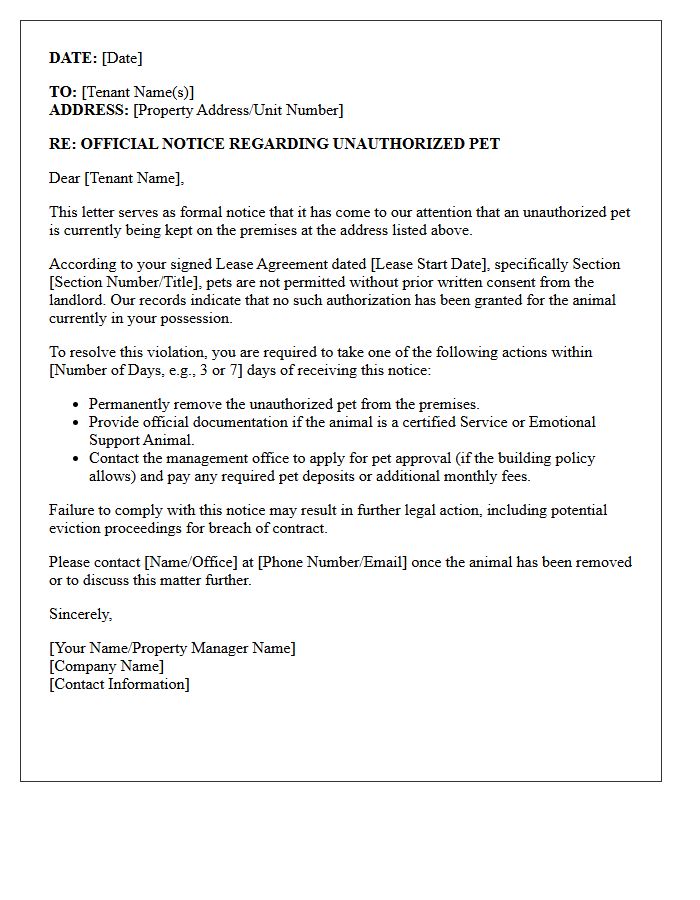
Receiving an Official Notice Letter Regarding Unauthorized Pet on Premises is a formal warning that your landlord has identified an unapproved animal in your rental unit. This document serves as a legal notice of a lease violation, requiring you to either remove the pet or seek official approval immediately. Failure to address this lease compliance issue can lead to significant penalties, additional fees, or even eviction proceedings. It is essential to review your rental agreement and respond promptly to resolve the unauthorized animal dispute through proper documentation or pet registration.
Property Management Letter for Unapproved Animal Violation
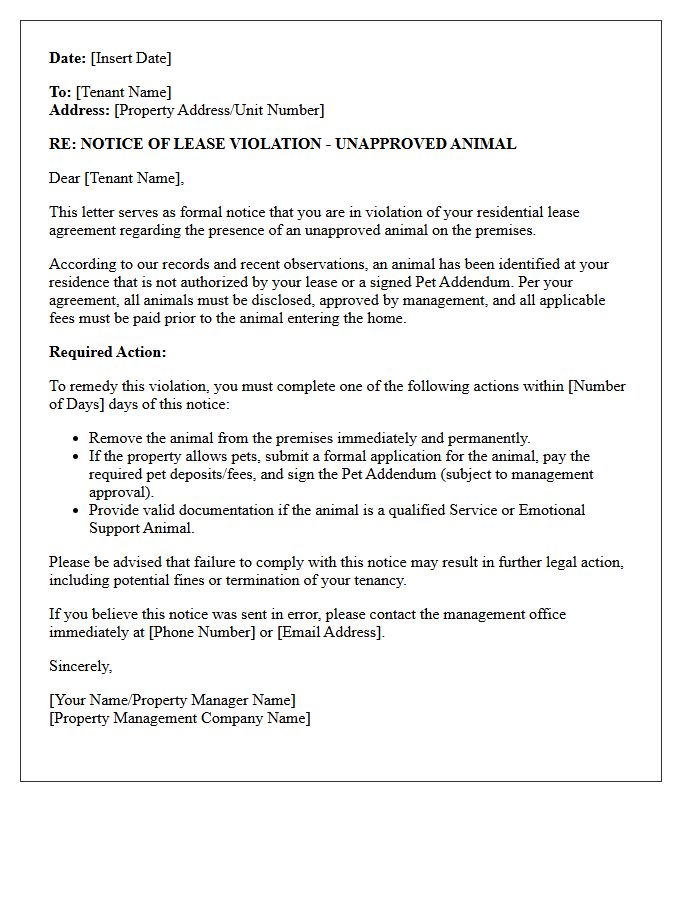
A property management letter for an unapproved animal violation is a formal notice sent to tenants who harbor unauthorized pets. It identifies the lease agreement breach and provides a specific deadline for the animal's removal or registration. This document serves as a legal warning, outlining potential consequences such as fines or eviction if the violation persists. Clear communication ensures compliance with building policies and protects the landlord's property rights. It is essential to include evidence of the violation and instructions for a formal cure or quit process to resolve the dispute professionally.
Final Demand Letter to Remove Unauthorized Pet
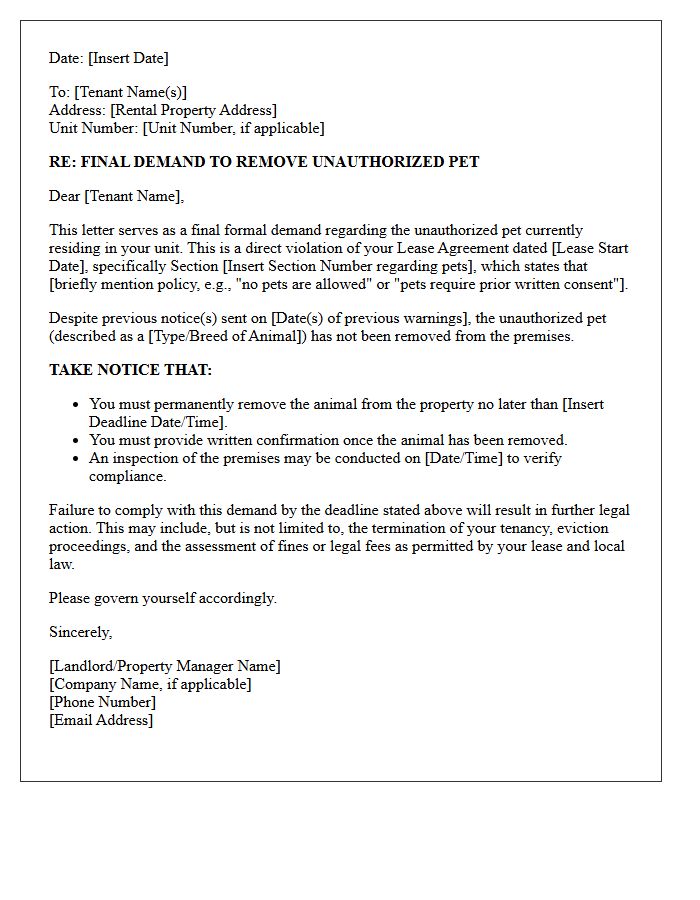
A Final Demand Letter serves as a formal legal notice to a tenant violating a "no pets" policy. It clearly outlines the lease violation, providing a strict deadline to remove the unauthorized animal before eviction proceedings begin. This document creates a vital paper trail for court, demonstrating the landlord's attempt to resolve the issue amicably. To be effective, it must reference specific contract clauses and state the consequences of non-compliance. Issuing this letter is the mandatory final step before filing for a formal lease termination or legal possession of the property.
Lease Violation Letter for Unauthorized Pet Detection
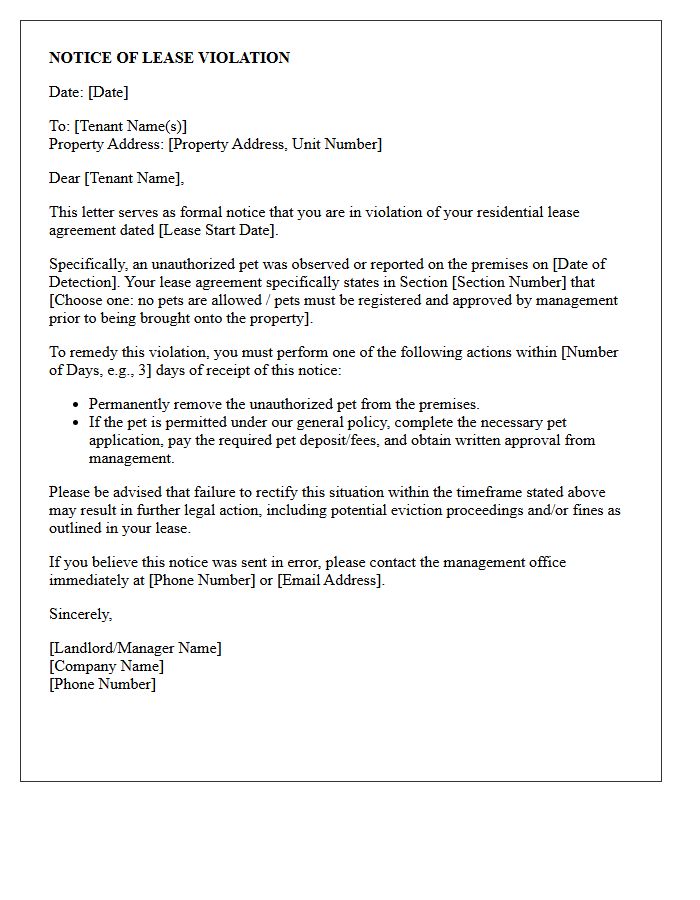
A Lease Violation Letter serves as a formal legal notice when a tenant keeps an unapproved animal on the premises. This document identifies the specific lease clause breached and provides a mandatory deadline for the pet's removal or proper registration. It is a critical step in the eviction process, ensuring property owners maintain safety and sanitation standards. Landlords must ensure the notice complies with local housing laws while clearly outlining potential legal consequences or fines if the unauthorized pet detection is not promptly addressed by the resident.
Initial Notification Letter of Unauthorized Pet Policy Breach
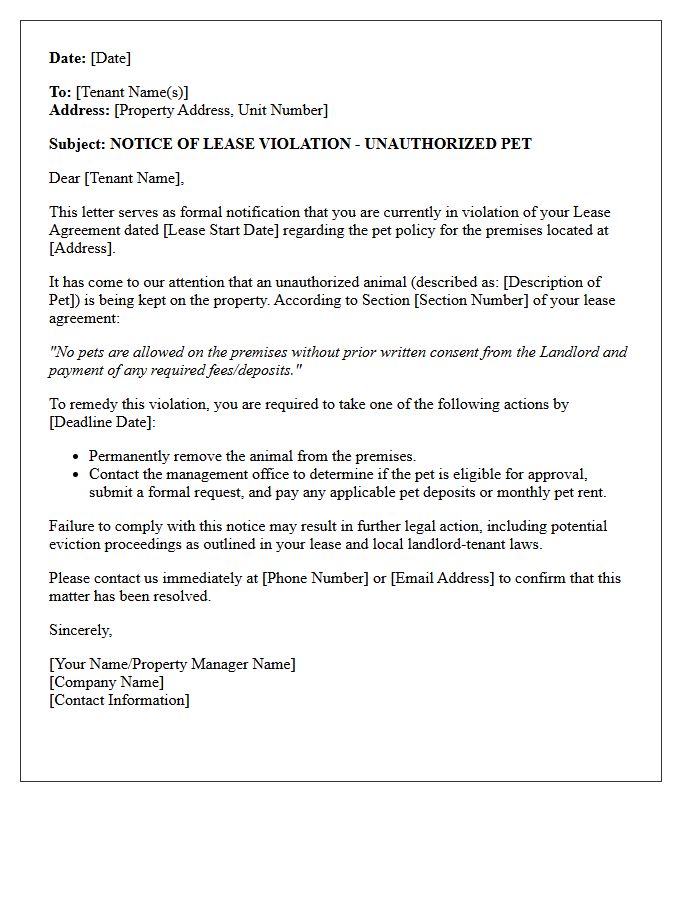
An Initial Notification Letter serves as a formal warning regarding an unauthorized pet policy breach. This critical document informs tenants that a domestic animal was discovered on the premises without prior written consent or required documentation. It outlines specific lease violations, potential fines, and a strict deadline for compliance. To avoid eviction proceedings, residents must either remove the animal immediately or complete the official registration process, including paying necessary deposits. Promptly addressing this notice is essential to maintaining your tenancy and ensuring lease agreement adherence.
Cure or Quit Letter for Unauthorized Pet Violation
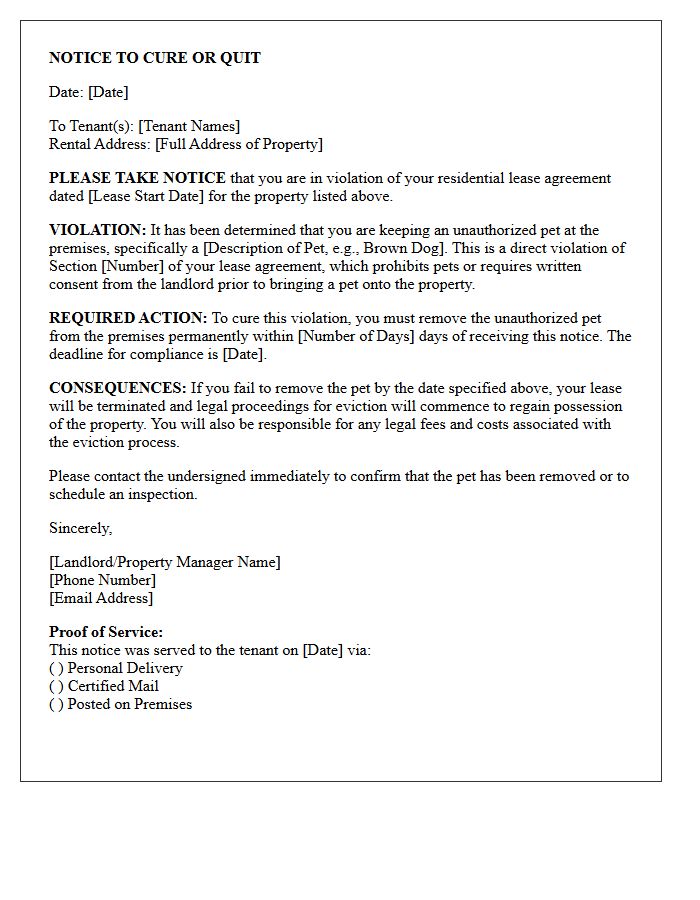
A Cure or Quit Letter is a formal legal notice issued by a landlord when a tenant violates a lease by keeping an unauthorized pet. To "cure" the violation, the tenant must remove the animal within a specified timeframe, typically three to ten days. Failure to comply or "quit" the premises can lead to formal eviction proceedings. It is essential to document the animal's removal in writing to avoid further legal action. Always check local housing laws, as Service Animals and Emotional Support Animals are generally exempt from standard pet prohibitions.
Formal Warning Letter Regarding Unregistered Pet
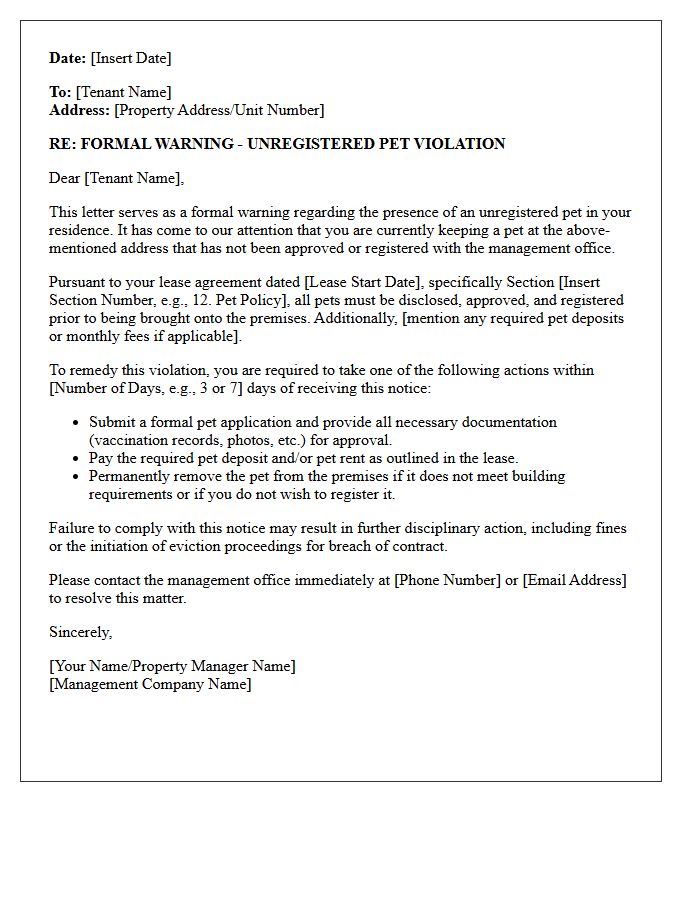
A formal warning letter regarding an unregistered pet serves as an official notice that your animal is not documented with local authorities. Compliance with pet licensing ordinances is mandatory to avoid escalating penalties, such as significant fines or legal action. To resolve this issue, you must provide proof of rabies vaccination and complete the registration process within the specified deadline. Maintaining an updated permit ensures community safety and helps identify your pet if lost. Failure to respond may lead to the impoundment of your animal and further administrative sanctions.
Tenant Compliance Letter for Unauthorized Pet Removal
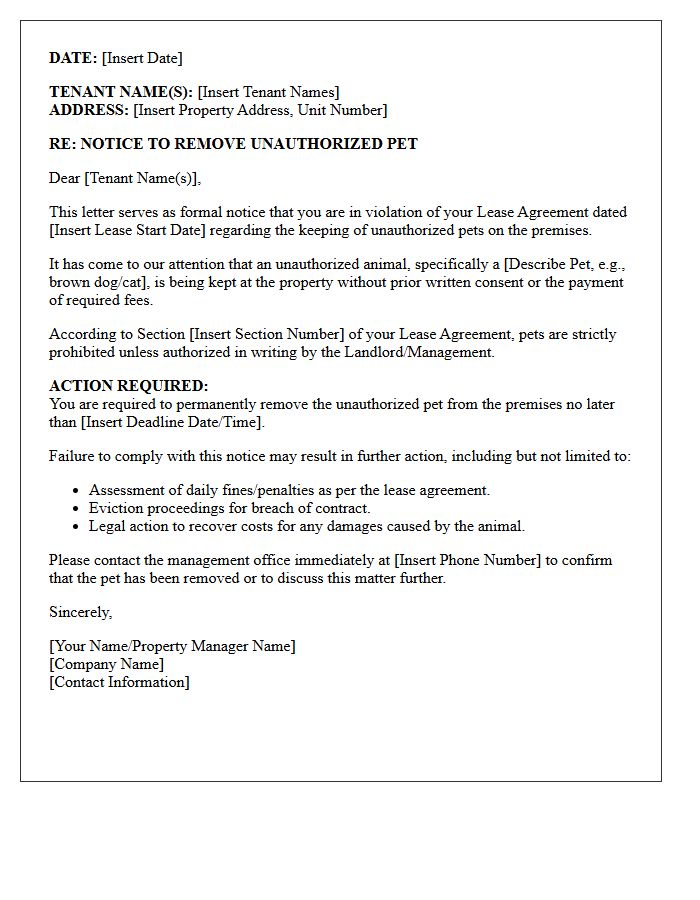
A Tenant Compliance Letter for Unauthorized Pet Removal is a formal legal notice issued by landlords to address lease violations. It serves as an official demand for the tenant to remove an unapproved animal within a specific notice period to avoid further legal action. The document must clearly reference the original lease agreement clauses, outline the consequences of non-compliance, and specify potential eviction proceedings. Maintaining written documentation is crucial for protecting property rights and ensuring a safe environment for all residents while upholding the integrity of the rental contract.
Property Manager Letter Detailing Unauthorized Pet Fine
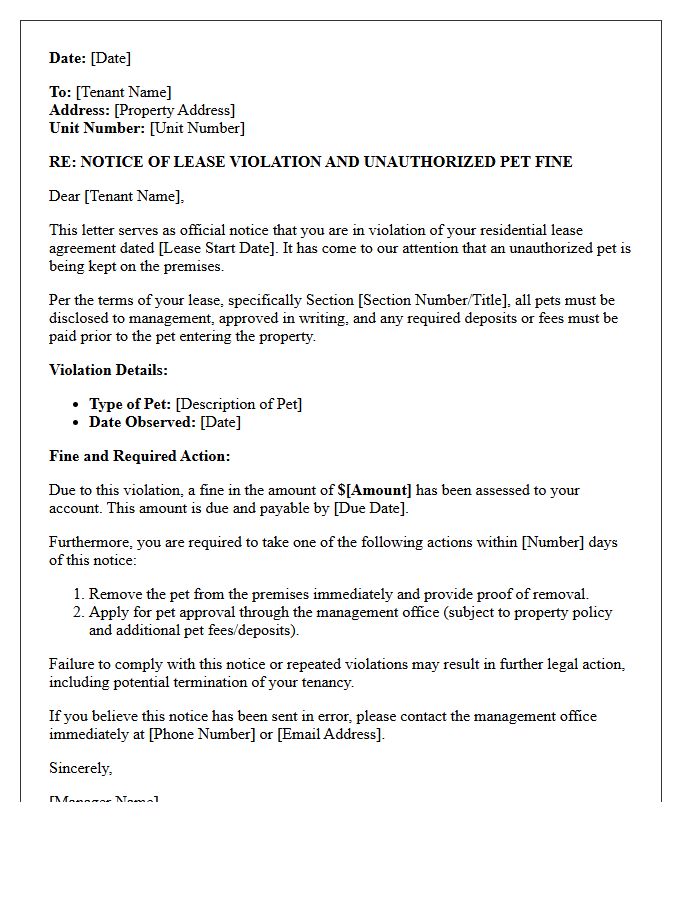
A property manager letter regarding an unauthorized pet fine serves as a formal notice of a lease violation. It identifies the specific animal observed and outlines the mandatory penalty fee as stipulated in the rental agreement. To ensure legal compliance, the document must detail the required remedy period for removing the pet or completing official registration. Tenants should review their contract immediately, as failure to address the notice can lead to eviction proceedings or recurring daily charges. Clear communication and photographic evidence are essential components for resolving these disputes effectively.
Notice of Lease Infraction Letter for Unauthorized Pet
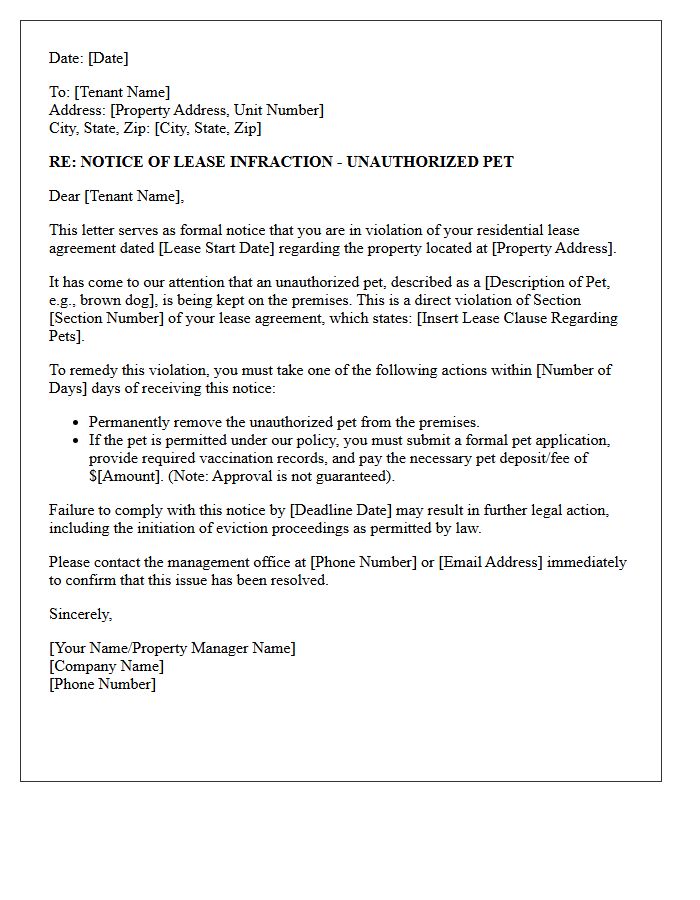
A Notice of Lease Infraction for an unauthorized pet is a formal legal document issued by a landlord to a tenant. It serves as an official warning that a lease violation has occurred by keeping an animal without prior approval. The letter typically outlines the specific terms breached and provides a deadline for cure, requiring the tenant to remove the pet or seek authorization. Failure to comply can lead to eviction proceedings. Maintaining written records of these notices is essential for legal protection and ensuring compliance with the rental agreement.
Second Violation Letter for Unapproved Pet on Property
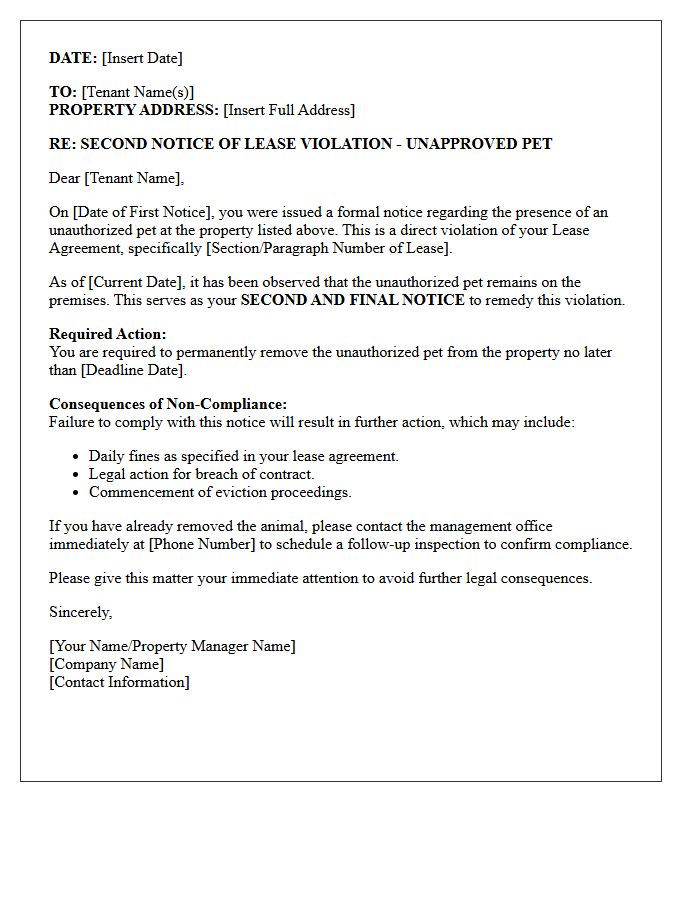
Receiving a second violation letter for an unapproved pet indicates a serious breach of your lease agreement. This formal notice signifies that previous warnings were ignored, potentially leading to eviction proceedings or heavy fines. To protect your residency, you must immediately remove the animal or provide official legal documentation, such as an ESA letter, if applicable. Failure to respond promptly or comply with property policies typically results in a lease termination notice, as repeated lease violations demonstrate a fundamental breach of contract.
Action Required Letter for Unauthorized Pet Discovery
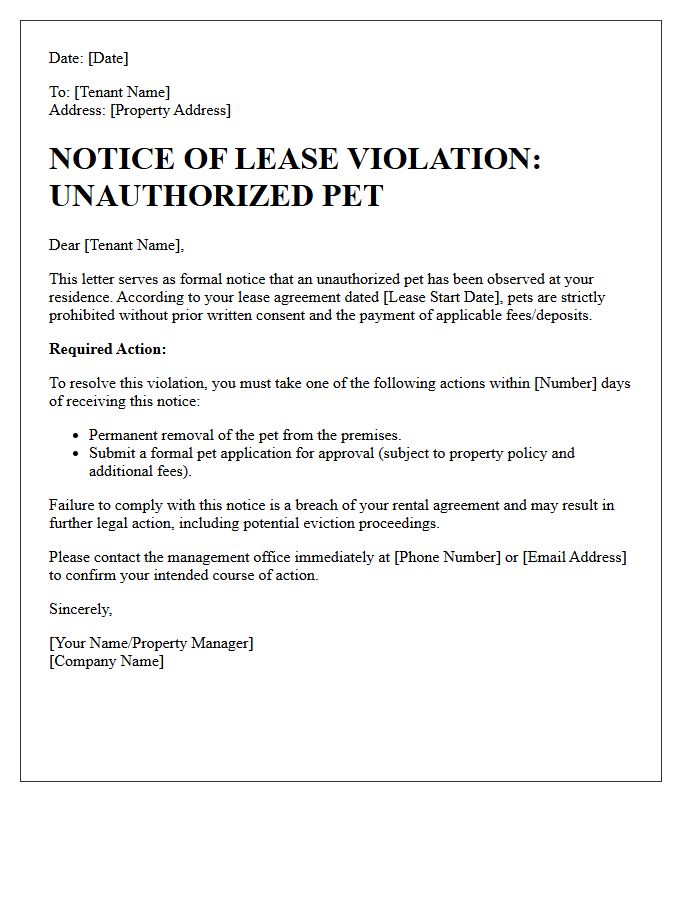
Receiving an Action Required Letter for an unauthorized pet discovery signifies a lease violation. Landlords issue this formal notice when an animal is found on the premises without prior written consent or registration. You must immediately choose between removing the pet, officially registering it with management, or providing Service Animal documentation if applicable. Failure to respond within the specified deadline may lead to eviction proceedings or substantial non-compliance fines. Always review your original rental agreement and respond in writing to document your compliance and protect your residency status.
What is a Notice of Unauthorized Pet Violation?
A Notice of Unauthorized Pet Violation is a formal legal document issued by a landlord or property manager to a tenant who is keeping an animal on the premises without prior approval or in violation of the lease agreement.
What should I do if I receive a violation notice for an unauthorized pet?
You should immediately review your lease agreement to verify pet policies. You must then choose to either remove the animal by the specified deadline, apply for official pet authorization if permitted, or provide documentation for a Service or Emotional Support Animal (ESA).
Can I be evicted for having an unauthorized pet?
Yes, keeping an unauthorized pet is considered a breach of contract. If you fail to resolve the violation within the timeframe provided in the notice (the "cure" period), the landlord may initiate formal eviction proceedings.
How long do I have to remove an unauthorized pet after receiving a notice?
The timeframe varies by state law and lease terms, but typically range from 3 to 10 days. The specific deadline to "cure" the violation will be clearly stated on the written notice provided by your landlord.
Does a Notice of Unauthorized Pet Violation apply to Emotional Support Animals (ESAs)?
While landlords cannot prohibit legitimate Emotional Support Animals under the Fair Housing Act, tenants are still required to request a reasonable accommodation. If you receive a notice for an ESA, you must provide valid documentation from a licensed healthcare professional to waive the violation.


Comments