
Property managers must provide tenants with a formal Notice of Entry for Pest Control before scheduled treatments. This document ensures legal compliance and allows residents to prepare their units for inspections or spraying. Clear communication helps maintain a pest-free environment while respecting privacy rights. To simplify your process, below are some ready to use templates.
Image cover: Professional Pest Control Notice of Entry: Templates and Essential Guidelines
Letter Samples List
- Notice of Entry for Pest Control Services Letter
- Property Management Pest Control Notification Letter
- Scheduled Pest Control Maintenance Entry Letter
- Tenant Notice of Entry for Extermination Letter
- Routine Pest Control Inspection Entry Letter
- Mandatory Pest Control Service Notice Letter
- Apartment Entry Notice for Pest Control Letter
- Upcoming Pest Treatment Entry Notification Letter
- Property Access for Pest Control Services Letter
- Landlord Notice of Entry for Pest Management Letter
- Residential Pest Control Service Entry Letter
- Notice of Intent to Enter for Pest Control Letter
Notice of Entry for Pest Control Services Letter
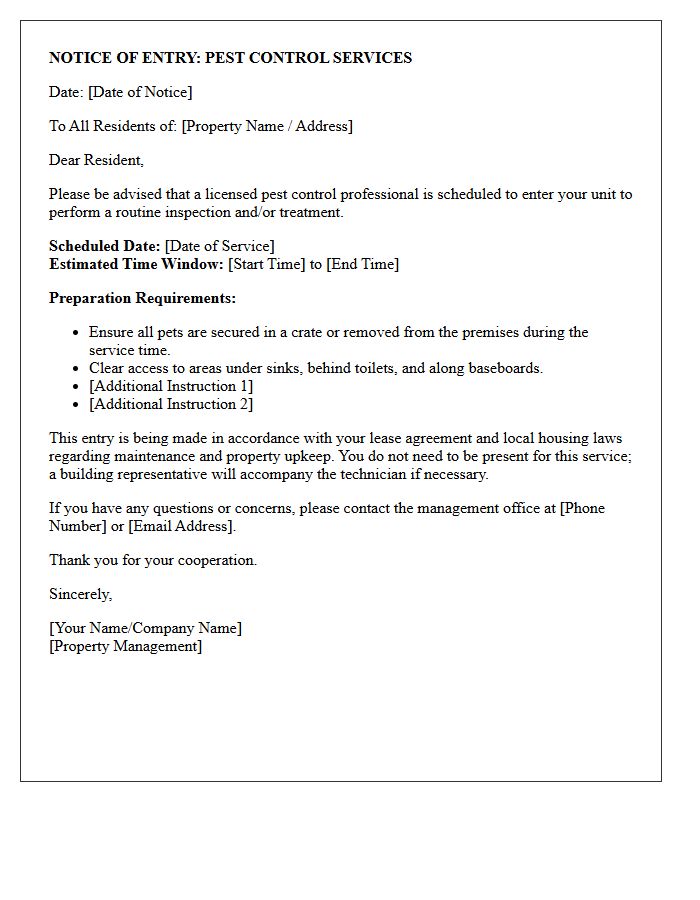
A Notice of Entry is a legal document informing tenants that pest control services will access their rental unit. Landlords must typically provide this written notification at least 24 to 48 hours in advance, depending on local housing laws. The notice must specify the scheduled date, time window, and necessary preparations, such as clearing cabinets or securing pets. This ensures transparency, protects tenant privacy, and allows technicians to perform essential treatments to maintain a safe, sanitary living environment while following regulatory compliance protocols.
Property Management Pest Control Notification Letter
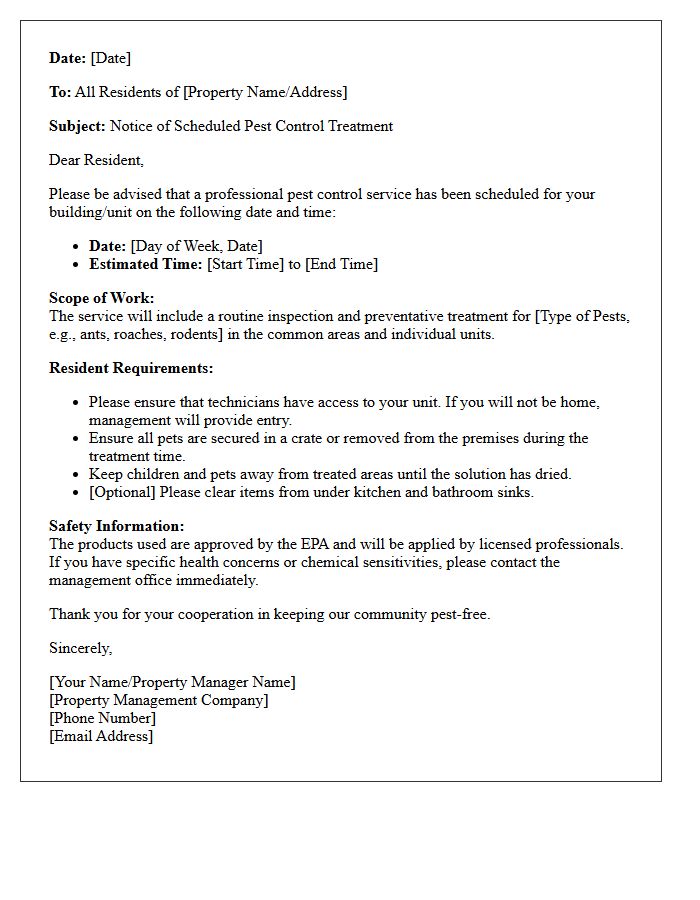
A Property Management Pest Control Notification Letter is a mandatory legal document informing tenants of upcoming extermination services. It must clearly state the date and time of treatment, the specific pesticides being used, and any necessary safety precautions. Providing advanced notice, typically 24 to 48 hours, ensures regulatory compliance and allows residents to prepare their units, such as clearing cabinets or securing pets. Open communication minimizes health risks and fosters cooperation, which is essential for effective integrated pest management and maintaining a habitable living environment for all occupants.
Scheduled Pest Control Maintenance Entry Letter
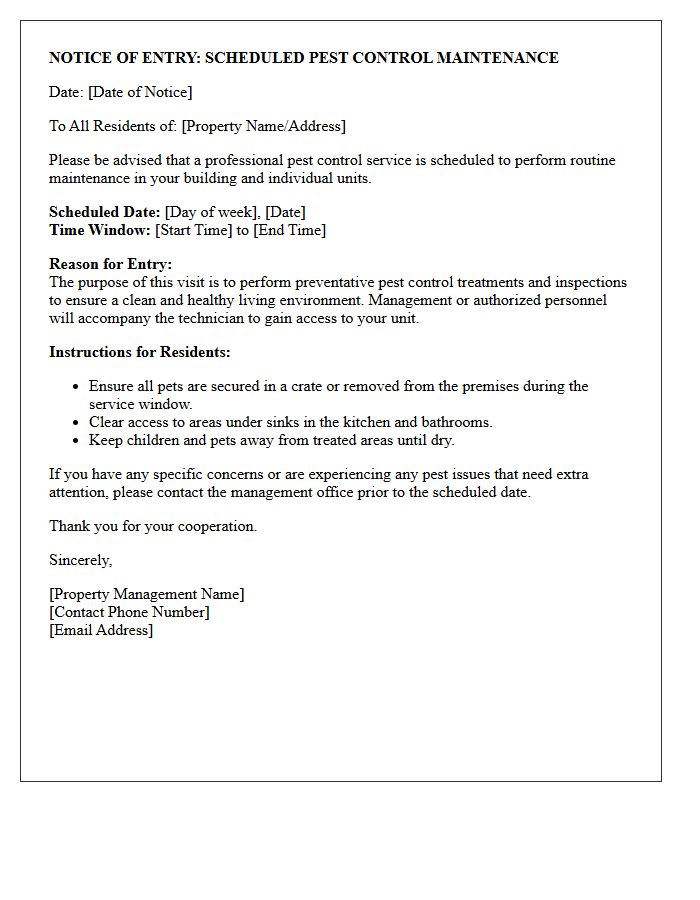
A Scheduled Pest Control Maintenance Entry Letter is a formal advance notice issued by property management to residents. It is legally required in most jurisdictions to provide at least 24 to 48 hours of warning before technicians enter a dwelling. The letter outlines the scheduled date, arrival window, and specific preparation steps, such as clearing cabinets or securing pets. Timely communication ensures compliance with tenant rights while maintaining a pest-free environment through proactive treatment. Residents must review these instructions carefully to facilitate effective service and ensure the safety of their personal belongings.
Tenant Notice of Entry for Extermination Letter
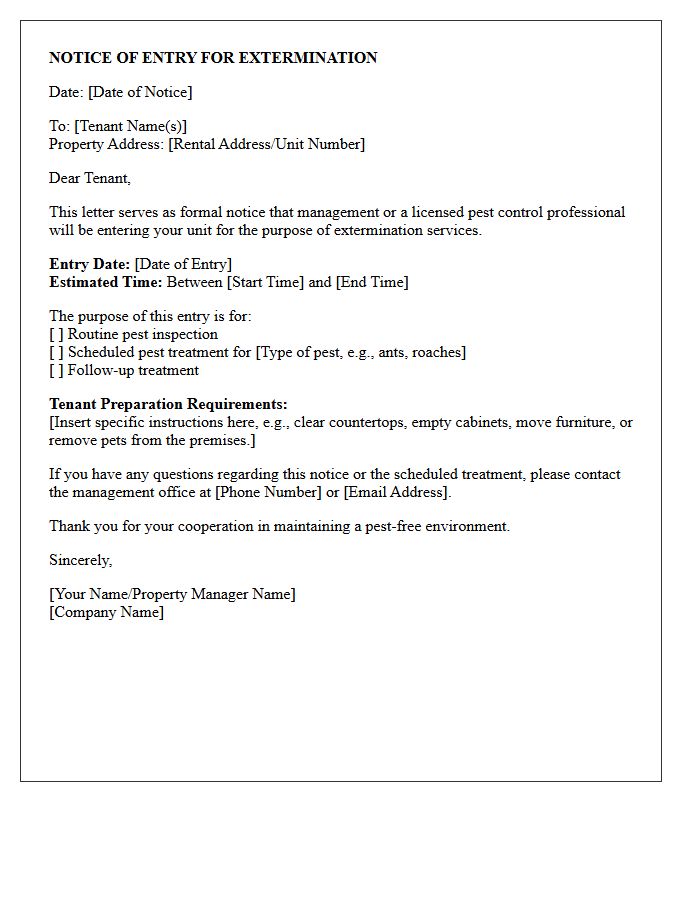
A Tenant Notice of Entry for Extermination is a legal document informing residents that a professional pest control service will access their unit. Landlords must provide advance notice, typically 24 to 48 hours, as required by local housing laws. This letter should clearly state the scheduled date and time of entry. It is essential to include specific preparation instructions, such as clearing cabinets or securing pets, to ensure the treatment is effective. Proper notification maintains tenant privacy rights while addressing necessary building maintenance and health standards.
Routine Pest Control Inspection Entry Letter
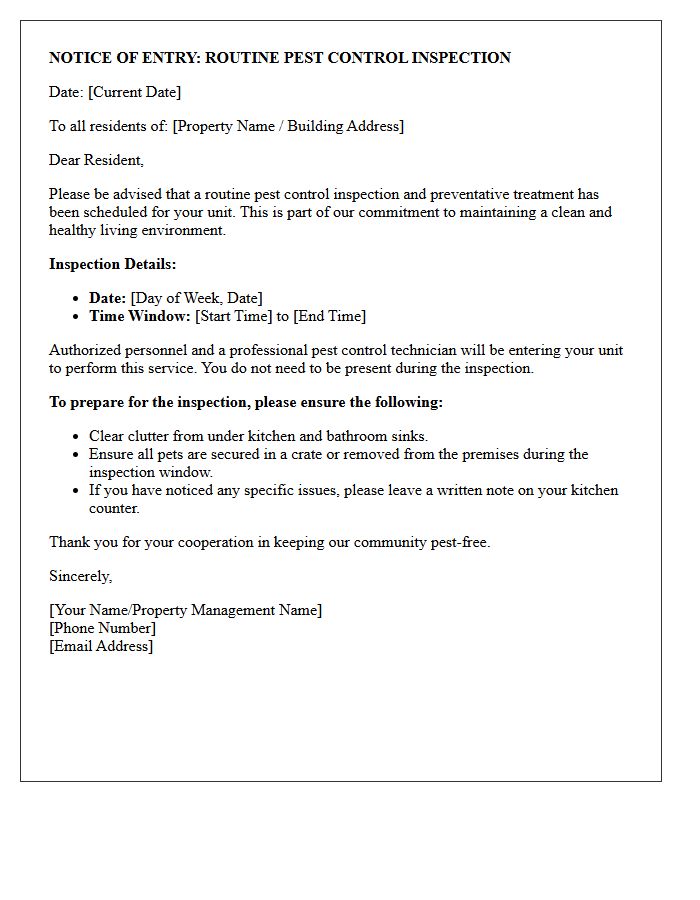
A Routine Pest Control Inspection Entry Letter is a formal notification sent by landlords to tenants. It provides advance notice, typically 24 to 48 hours, before a professional technician enters the property. This essential document ensures legal compliance with housing regulations and privacy laws. It outlines the scheduled date, time window, and necessary preparations, such as clearing cabinets or securing pets. Timely communication helps maintain a pest-free environment while respecting tenant rights and fostering transparency between property management and residents during preventative maintenance visits.
Mandatory Pest Control Service Notice Letter
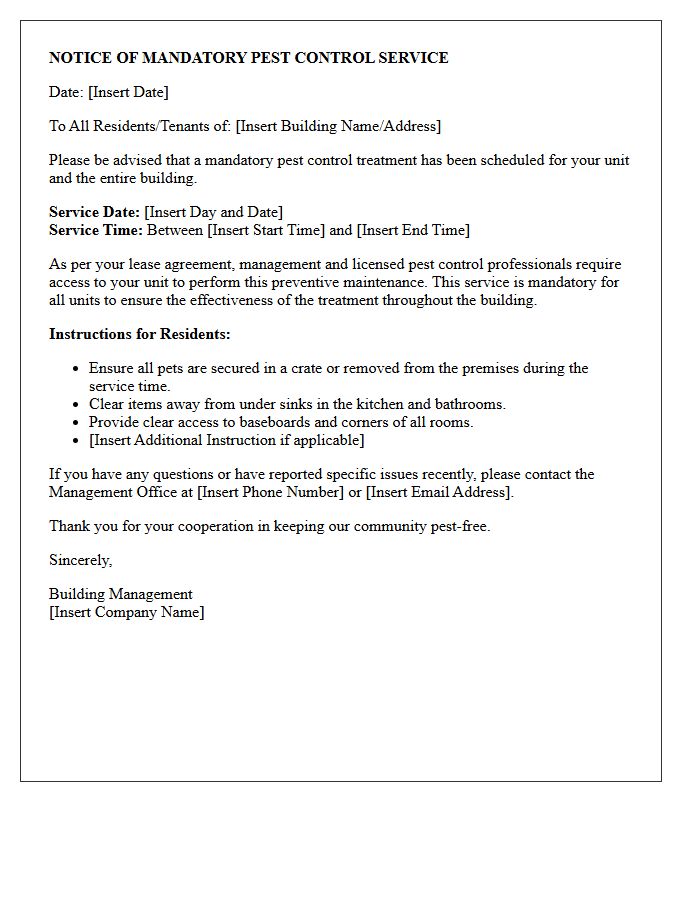
A Mandatory Pest Control Service Notice Letter is a legal document informing tenants of scheduled treatments within their residence. It is essential to provide proper notice, typically 24 to 48 hours in advance, to ensure compliance with local housing laws. The notice must specify the date, time, and specific preparations required, such as clearing cabinets or securing pets. Timely communication ensures tenant safety and allows professional exterminators to effectively eliminate infestations. Failure to grant access after receiving this formal notification may result in lease violations or additional maintenance fees.
Apartment Entry Notice for Pest Control Letter
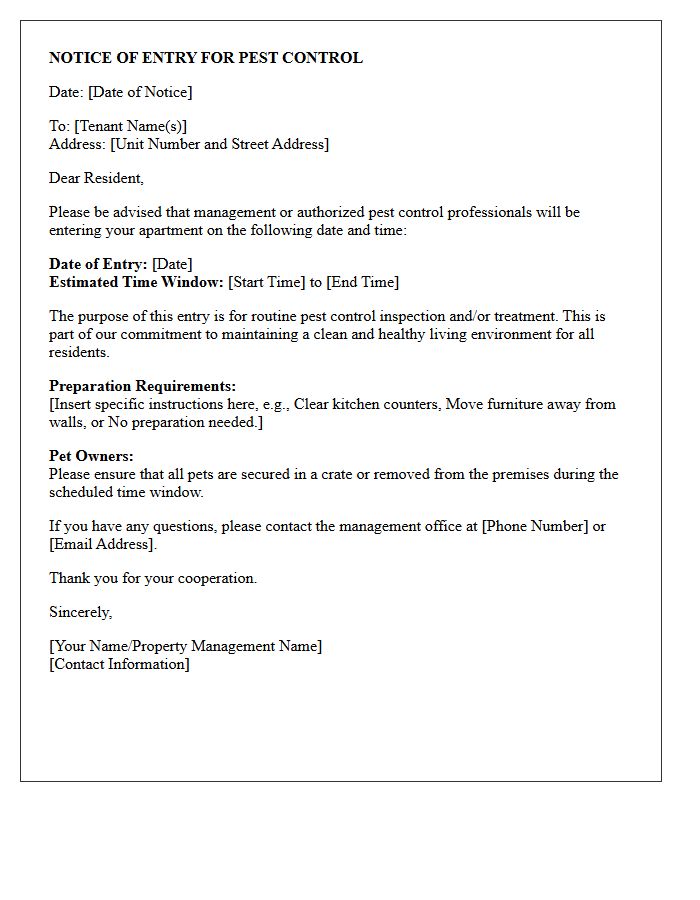
An apartment entry notice for pest control is a formal document informing tenants that management or exterminators will access their unit. To ensure a smooth process, legal compliance requires landlords to provide advance notice, typically 24 to 48 hours prior. The letter must specify the scheduled date, time window, and necessary tenant preparations, such as clearing cabinets or securing pets. Timely communication ensures resident privacy is respected while maintaining a healthy, pest-free living environment for the entire building community.
Upcoming Pest Treatment Entry Notification Letter
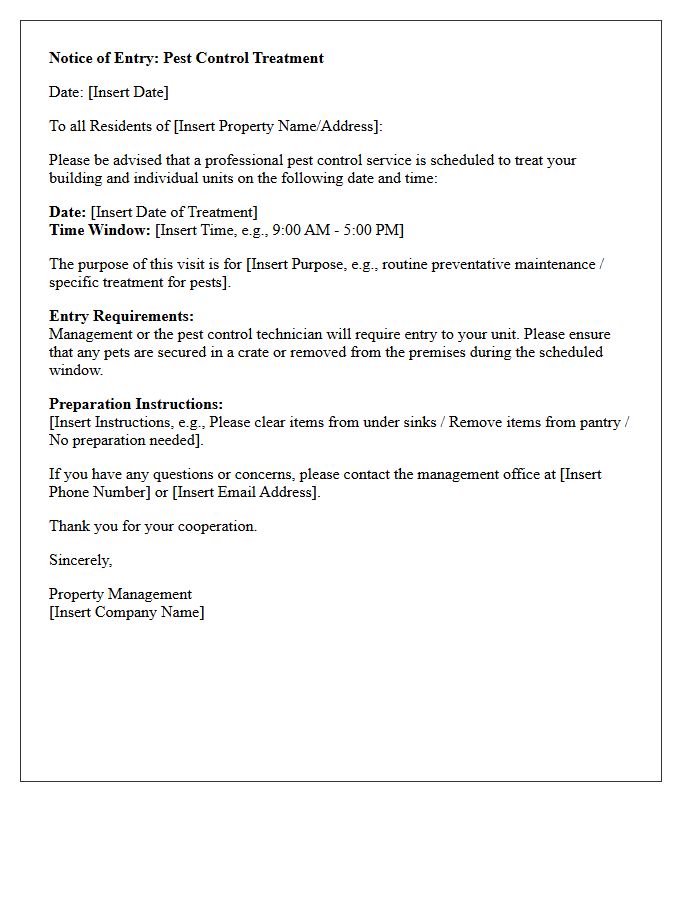
An upcoming pest treatment entry notification letter is a legal requirement informing residents of scheduled inspections or chemical applications. It must clearly state the date and time window for building access to ensure compliance with local housing laws. To prepare effectively, tenants should follow the preparation instructions, such as clearing cabinets or securing pets, to guarantee a successful treatment. Timely communication regarding health sensitivities or rescheduling needs is essential for maintaining a safe and pest-free environment while protecting occupant rights and property standards.
Property Access for Pest Control Services Letter
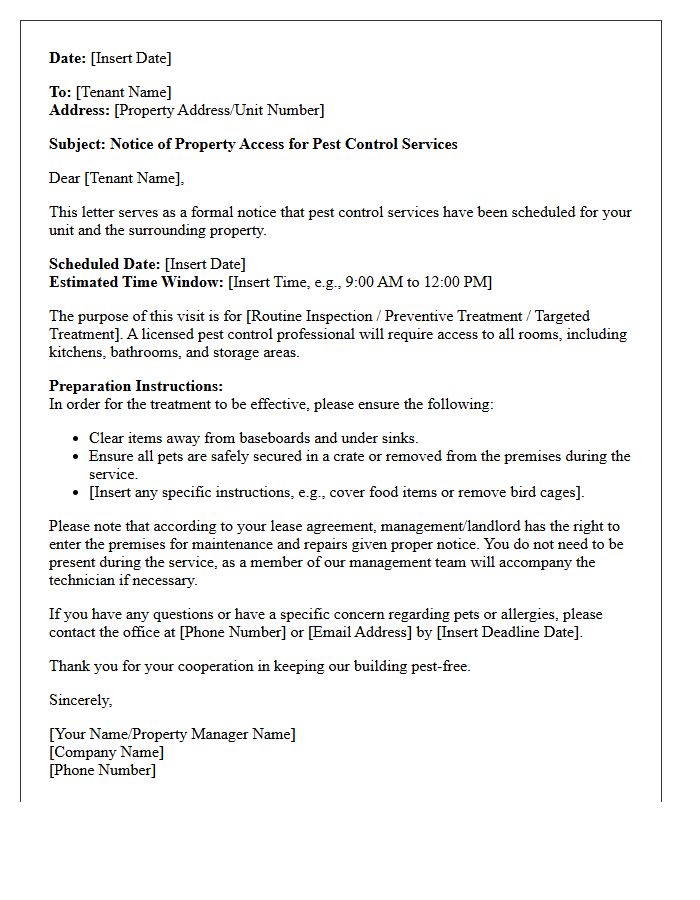
A property access letter is a formal notice informing tenants about scheduled pest control services. Legally, landlords must provide advance written notice, typically 24 to 48 hours before entry. The document should clearly state the date, time window, and specific areas being treated. It is essential for tenants to follow preparation instructions, such as clearing cabinets or securing pets, to ensure treatment efficacy. Providing this letter ensures legal compliance, maintains safety standards, and fosters transparent communication between property management and residents to effectively manage infestations.
Landlord Notice of Entry for Pest Management Letter
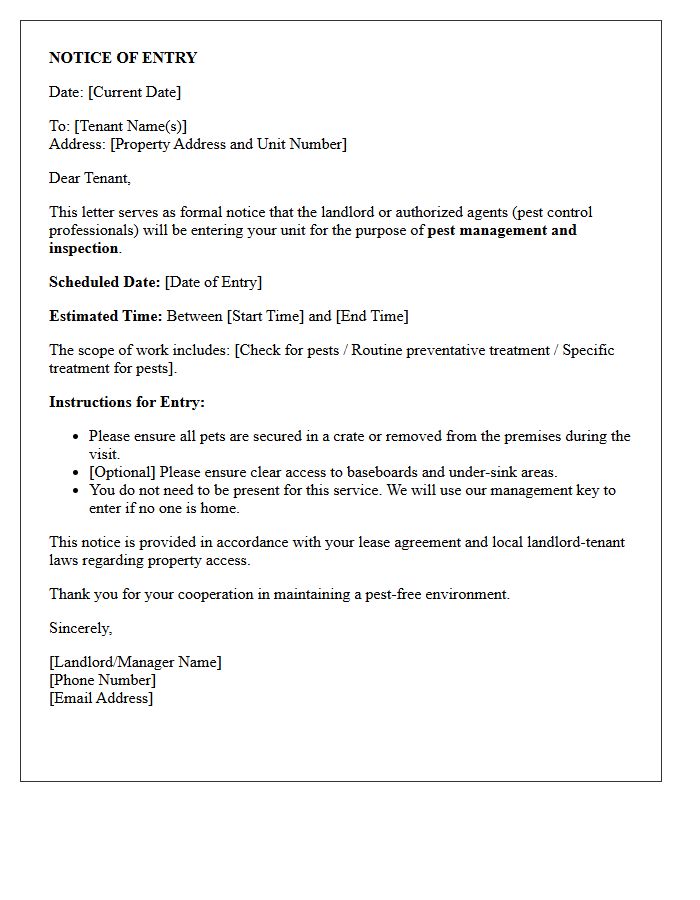
A Landlord Notice of Entry for pest management is a formal document informing tenants of upcoming pest inspections or treatments. Most jurisdictions require a written notice delivered at least 24 to 48 hours in advance. The letter must specify the date, time, and purpose of entry to ensure legal compliance and tenant privacy. Tenants should follow any preparation instructions, such as clearing cabinets or securing pets, to ensure the treatment is effective. Proper notification maintains a professional relationship while addressing essential property maintenance and health safety standards.
Residential Pest Control Service Entry Letter
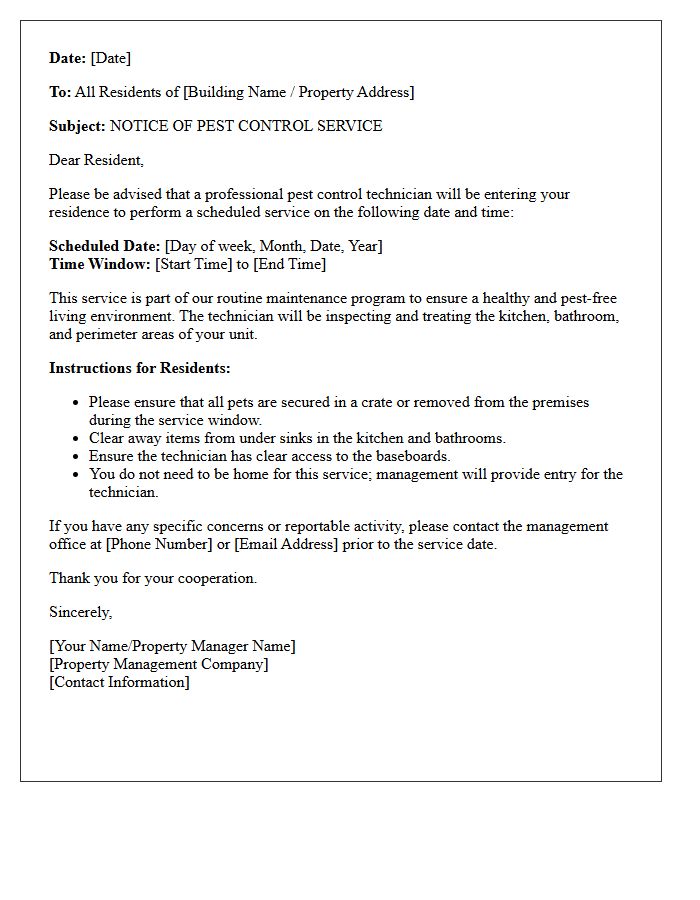
A residential pest control service entry letter is a mandatory legal notice informing tenants of upcoming treatments. It must clearly state the scheduled date and time of entry to ensure compliance with local housing laws. The document outlines necessary preparation steps, such as clearing cabinets or securing pets, to facilitate an effective application. Providing this notification respects tenant privacy while maintaining a pest-free environment. Residents should review the safety data provided to understand the products used and any required post-treatment precautions for their household's safety.
Notice of Intent to Enter for Pest Control Letter
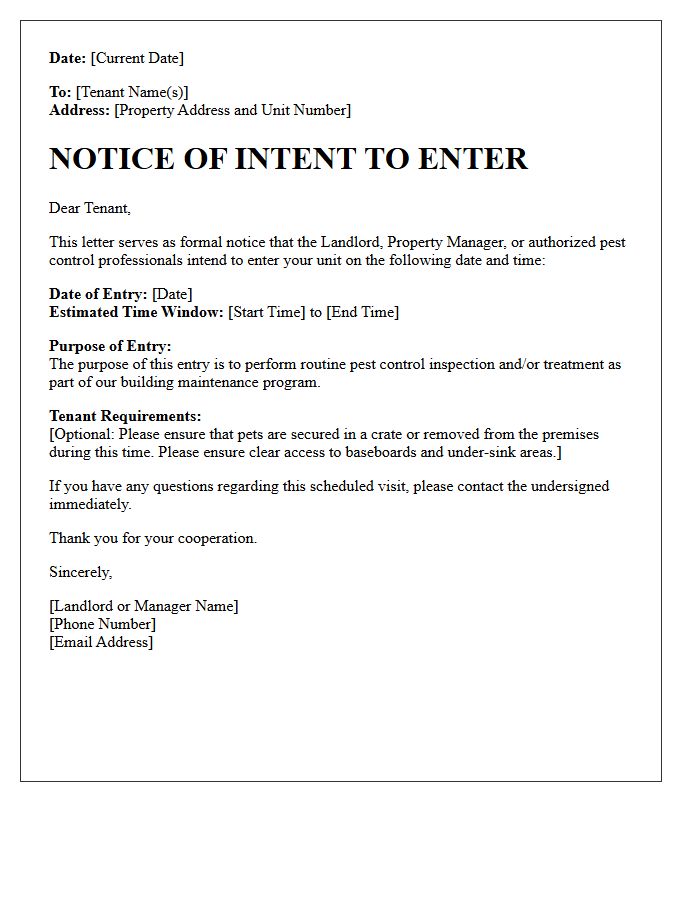
A Notice of Intent to Enter is a formal legal document sent by landlords to inform tenants of scheduled pest control services. To ensure compliance with local housing laws, this letter must specify the exact date and time of the visit. It provides residents with essential instructions regarding pesticide safety, pet relocation, and necessary unit preparation. Providing proper notice, typically twenty-four to forty-eight hours in advance, protects tenant privacy while allowing property managers to maintain a sanitary environment and effectively manage infestations within the building.
What is a Notice of Entry for pest control services?
A Notice of Entry is a formal written notification provided by a landlord or property manager informing tenants that a licensed pest control professional will be entering their unit to perform inspections or treatments.
How much advance notice must a landlord provide before pest control entry?
Most jurisdictions require a minimum of 24 to 48 hours' notice before entering a rental unit for pest control, though specific timeframes vary by local housing laws and lease agreements.
Do I need to be home during the scheduled pest control treatment?
In most cases, you do not need to be present as long as the landlord or building manager provides access to the technician; however, you must ensure that the premises are prepared and pets are secured according to the instructions in the notice.
What preparations are required after receiving a pest control notice?
Common preparation requirements include clearing items from under sinks, emptying kitchen cabinets, moving furniture away from walls, and vacuuming floors to ensure the technician can access treatment areas effectively.
Can a tenant refuse entry for a scheduled pest control service?
Generally, tenants cannot refuse entry if the landlord has provided proper legal notice, as pest control is considered a necessary maintenance and health safety measure for the entire building.

Comments