
Failure to follow organization guidelines regarding improper storage of personal property can lead to safety hazards and removal of belongings. Residents and employees must utilize designated areas to maintain a clear and secure environment. Understanding these regulations helps prevent loss and ensures compliance with property management policies. To help you draft a formal notice, below are some ready to use template.
Image cover: Notice of Improper Personal Property Storage: Templates and Compliance Samples
Letter Samples List
- First Warning Letter for Improper Storage of Personal Property
- Second Notice Letter for Unauthorized Personal Belongings Storage
- Final Warning Letter Regarding Improper Personal Property Storage
- Lease Violation Letter for Unauthorized Storage of Personal Items
- Common Area Storage Violation Letter for Personal Belongings
- Patio and Balcony Improper Storage Warning Letter
- Fire Hazard and Safety Warning Letter for Improper Storage
- Notice to Cure Letter for Improper Personal Property Storage
- Property Management Warning Letter for Clutter and Storage Violations
- Pre-Eviction Warning Letter for Improper Storage of Personal Belongings
- Shared Hallway Storage Violation Warning Letter
- Outdoor Space Improper Storage Warning Letter
First Warning Letter for Improper Storage of Personal Property
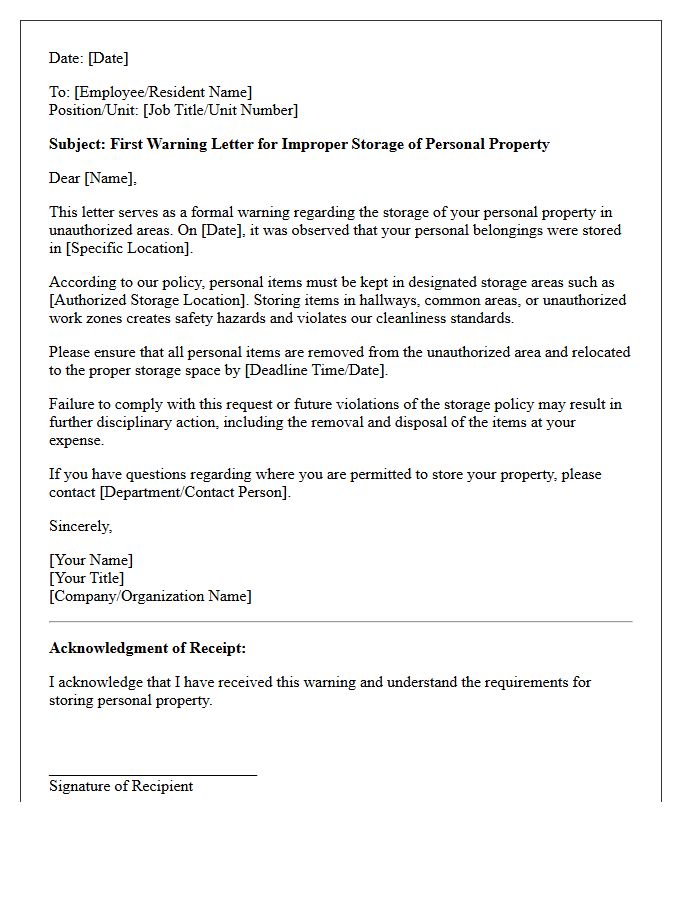
A first warning letter for improper storage of personal property serves as a formal notice that your belongings are obstructing common areas or violating safety codes. This document highlights the specific compliance failure and provides a deadline for removal to avoid further disciplinary action or disposal of items. It is crucial to address the issue immediately to maintain a safe, organized environment and prevent fines or legal complications. Proper storage ensures clear pathways and adheres to building policies, protecting both your property and the safety of others within the premises.
Second Notice Letter for Unauthorized Personal Belongings Storage
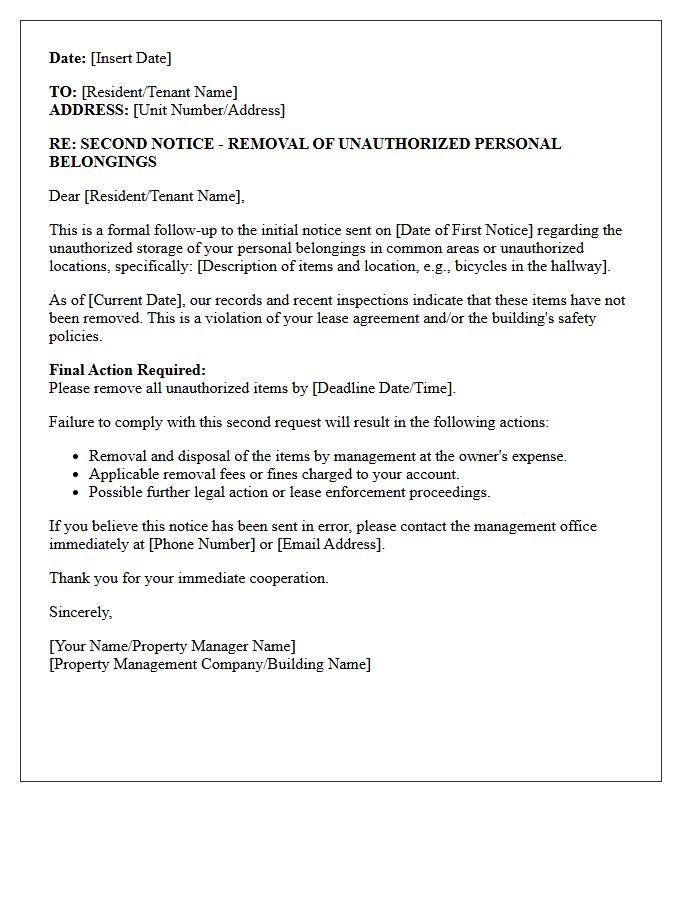
A second notice letter serves as a final formal warning regarding unauthorized personal belongings storage in restricted areas. It informs the recipient that previous requests for removal were ignored and outlines mandatory compliance deadlines. Failure to clear the items typically results in impoundment or disposal at the owner's expense. To protect your property, you must immediately vacate the space and verify current building policies. This document is a critical step before legal action or permanent removal, ensuring all parties follow established safety protocols and property regulations.
Final Warning Letter Regarding Improper Personal Property Storage
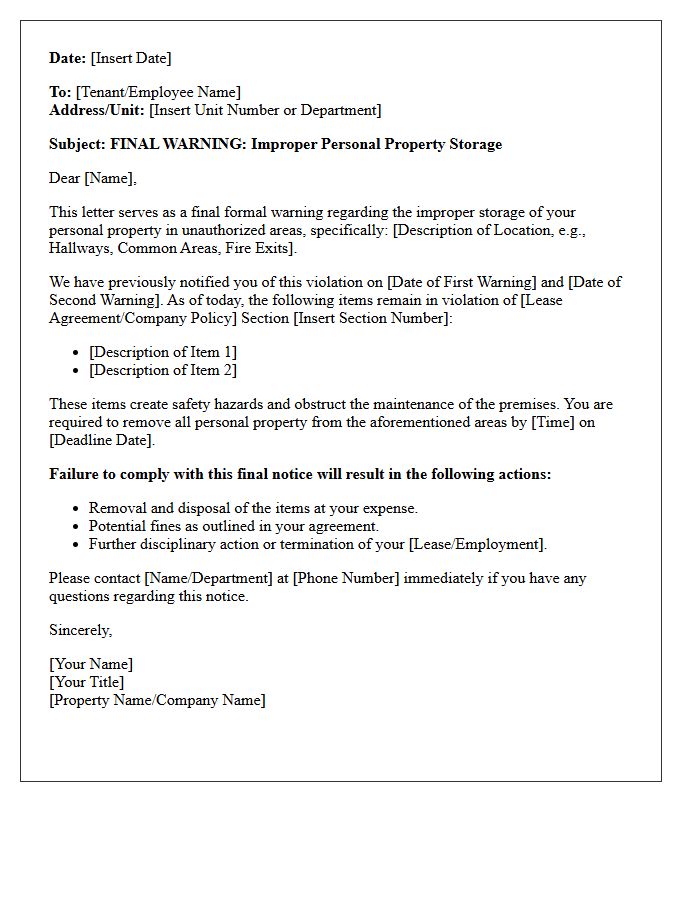
A final warning letter regarding improper personal property storage is a formal notice issued before management takes disciplinary action or removes items. It signifies a breach of safety protocols or building policies that must be addressed immediately. Recipients should clear unauthorized belongings from hallways, common areas, or workstations to prevent permanent disposal or fines. This document serves as the last opportunity to comply with storage regulations before the organization exercises its right to enforce penalties or clear the space for safety compliance.
Lease Violation Letter for Unauthorized Storage of Personal Items
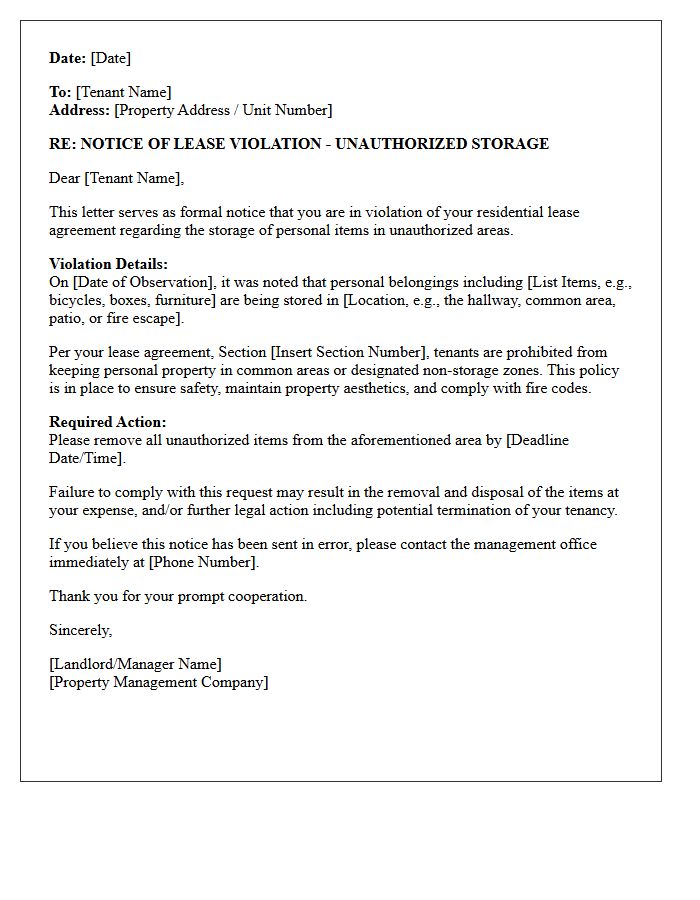
A lease violation letter for unauthorized storage of personal items serves as a formal notice to tenants who clutter common areas or restricted zones. This legal document identifies the specific lease provision breached and requests immediate removal of items like bicycles or boxes to maintain safety and fire code compliance. It is essential for landlords to document the issue clearly, providing a compliance deadline to avoid further legal action or potential eviction proceedings, ensuring the property remains accessible and hazard-free for all residents.
Common Area Storage Violation Letter for Personal Belongings
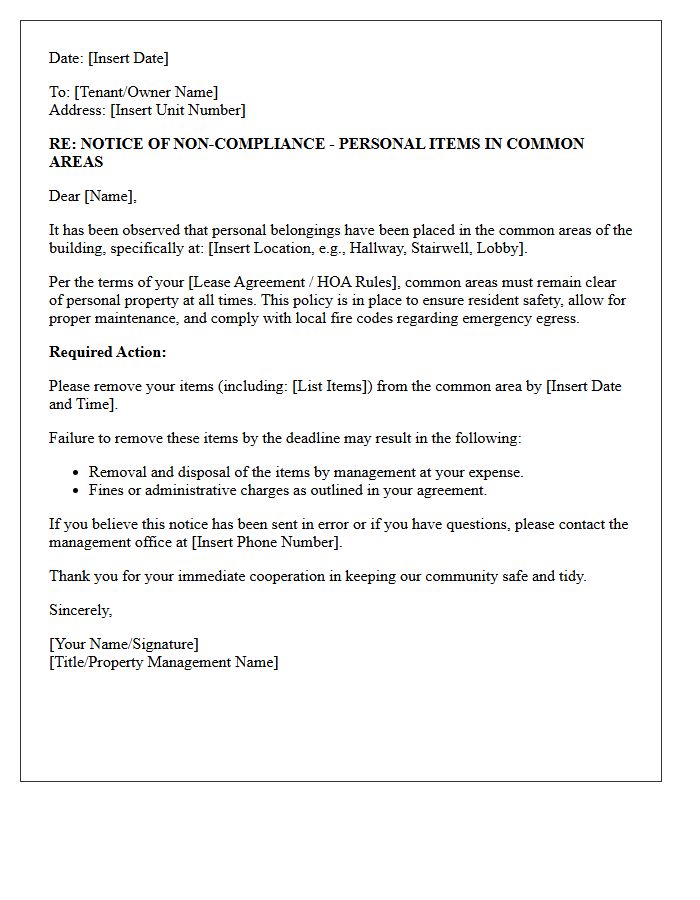
A common area storage violation letter is a formal notice issued by a homeowners association or landlord regarding unauthorized personal belongings left in shared spaces. It is crucial to understand that safety regulations and aesthetic standards usually prohibit storing items like bicycles, boxes, or shoes in hallways and lobbies. Receiving this letter serves as a legal warning to remove objects within a specific timeframe to avoid fines or removal. Keeping these zones clear ensures fire code compliance and maintains property accessibility for all residents and emergency responders.
Patio and Balcony Improper Storage Warning Letter
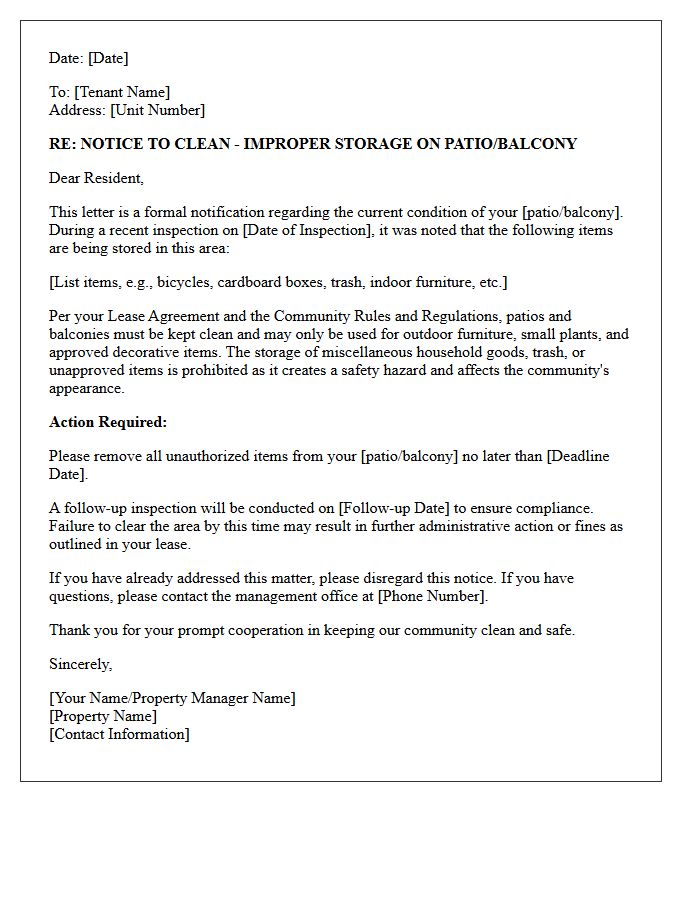
A patio and balcony improper storage warning letter is a formal notice issued by property management to address lease violations involving cluttered outdoor spaces. These notices aim to maintain aesthetic standards, ensure fire safety, and prevent structural damage. Receiving this letter means specific items, such as trash, indoor furniture, or flammable materials, must be removed immediately to avoid fines or potential eviction. To remain compliant, tenants should only store approved outdoor items to preserve the property's safety and curb appeal according to the community guidelines.
Fire Hazard and Safety Warning Letter for Improper Storage
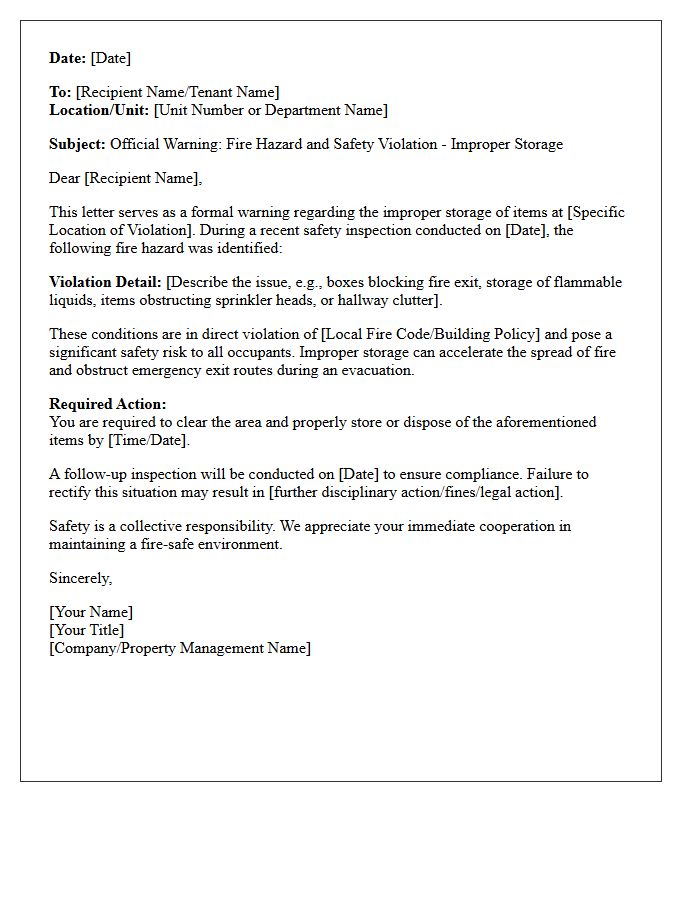
A fire hazard warning letter serves as a formal notice regarding improper storage practices that increase combustion risks. It identifies specific violations, such as blocking emergency exits or stacking flammable materials near heat sources. Recipients must prioritize immediate corrective action to ensure compliance with safety regulations and prevent potential disasters. Maintaining clear walkways and organized inventory is essential for workplace safety and legal liability protection. Failure to address these hazards promptly can lead to severe penalties, property damage, or loss of life during an emergency evacuation.
Notice to Cure Letter for Improper Personal Property Storage
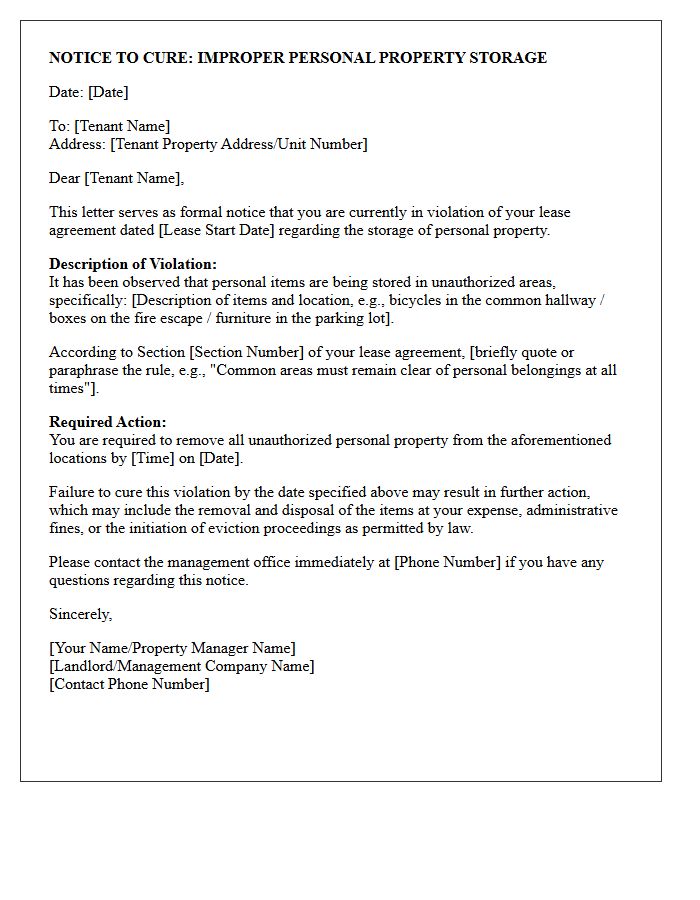
A Notice to Cure for improper personal property storage is a formal legal document issued by a landlord requiring a tenant to remove items from unauthorized areas. This notice serves as a final warning to rectify lease violations regarding clutter in hallways, common areas, or fire exits. The most important term is the "cure period," which defines the specific timeframe allowed to clear the property before facing eviction proceedings. Properly addressing this notice is essential to maintaining your tenancy and ensuring compliance with local safety regulations and building codes.
Property Management Warning Letter for Clutter and Storage Violations
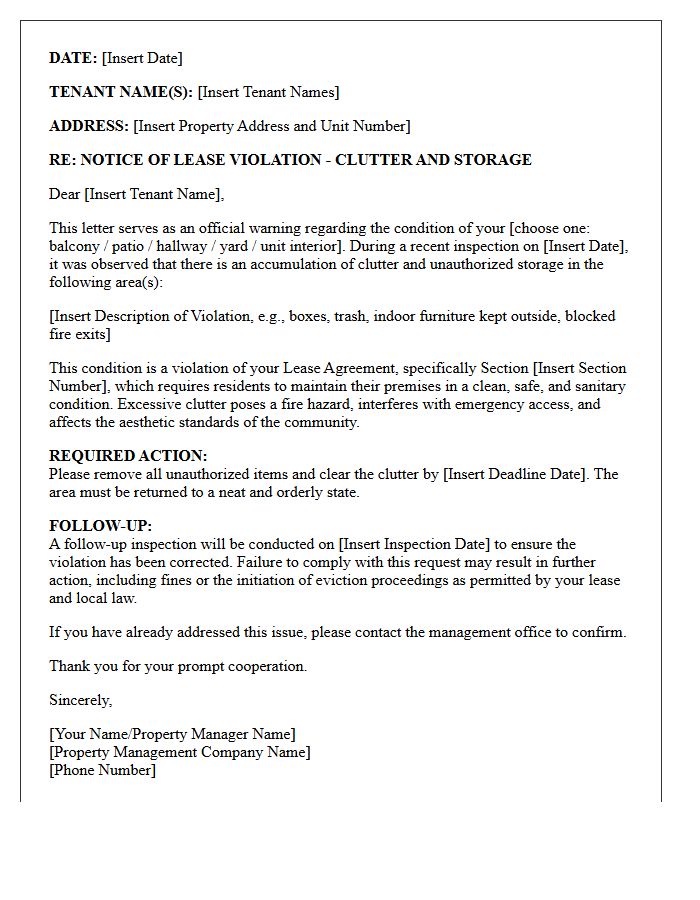
A property management warning letter for clutter and storage violations serves as a formal notice to resolve safety hazards or lease breaches. It is essential to address issues like blocked exits, fire risks, or unauthorized items in common areas immediately. The document outlines specific compliance deadlines and potential consequences, such as fines or eviction, if the unsanitary conditions persist. Tenants should document their cleanup efforts to prove they have met the required safety standards and maintained the property's structural integrity as stipulated in their rental agreement.
Pre-Eviction Warning Letter for Improper Storage of Personal Belongings
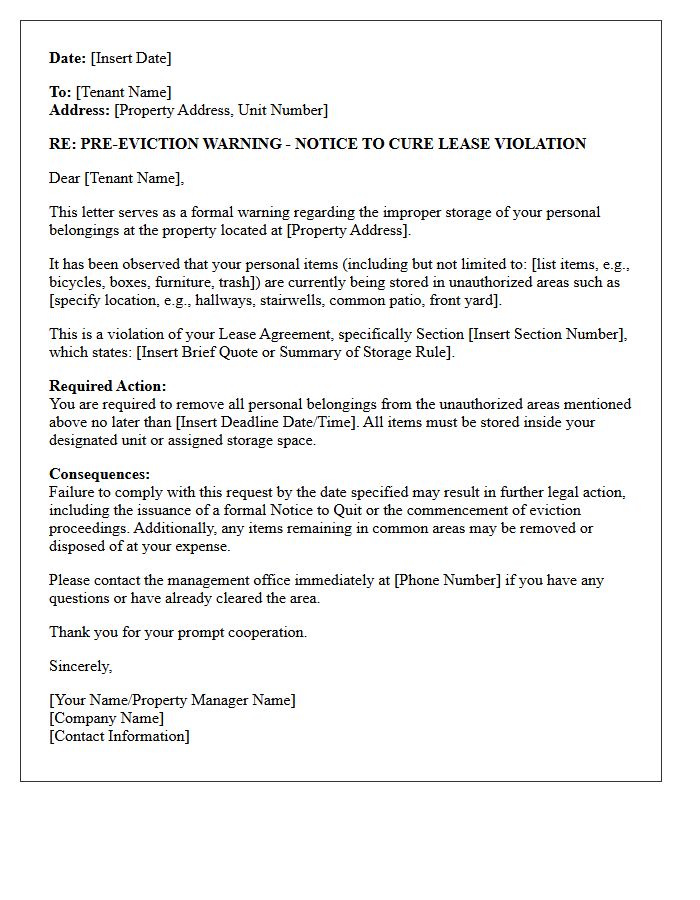
A pre-eviction warning letter regarding improper storage serves as a formal notice that a tenant is violating their lease agreement. This document highlights the specific clutter or safety hazards blocking common areas or exits. It provides a mandatory cure period for the tenant to remove the items before formal eviction proceedings begin. To maintain your tenancy rights, it is crucial to address these storage violations immediately, as failing to clear personal belongings can be legally classified as a safety risk or a breach of contract.
Shared Hallway Storage Violation Warning Letter
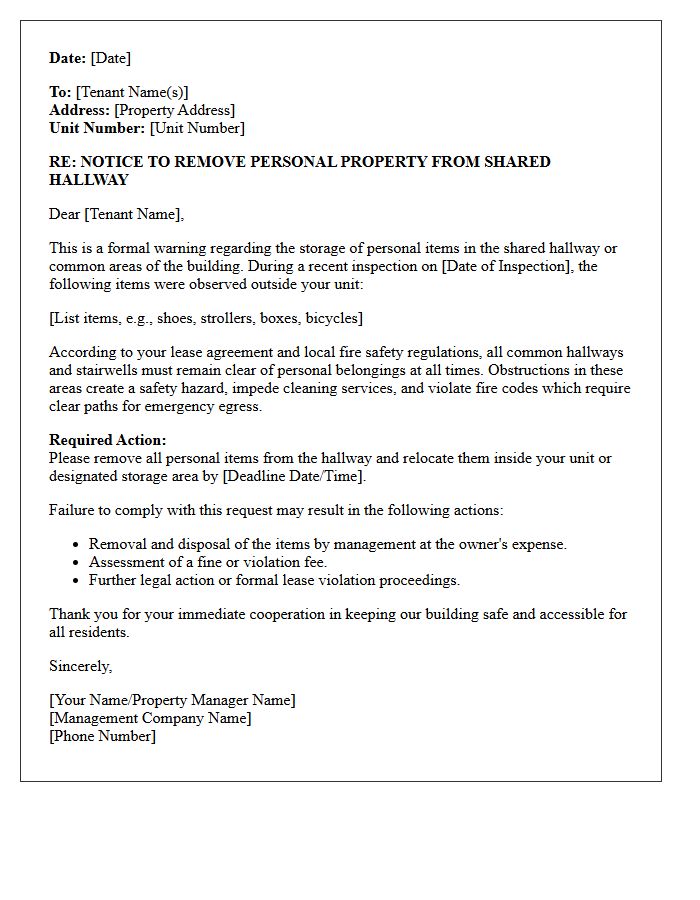
A Shared Hallway Storage Violation Warning Letter is a formal notice issued by landlords or HOAs regarding personal items left in common areas. For safety and compliance, hallways must remain clear to ensure unobstructed emergency exit routes and adhere to local fire codes. This letter typically specifies the items to be removed and provides a deadline for compliance. Ignoring this warning can lead to fines, the disposal of your property, or potential lease termination. Always keep shared corridors empty to maintain building safety and avoid legal or financial penalties.
Outdoor Space Improper Storage Warning Letter
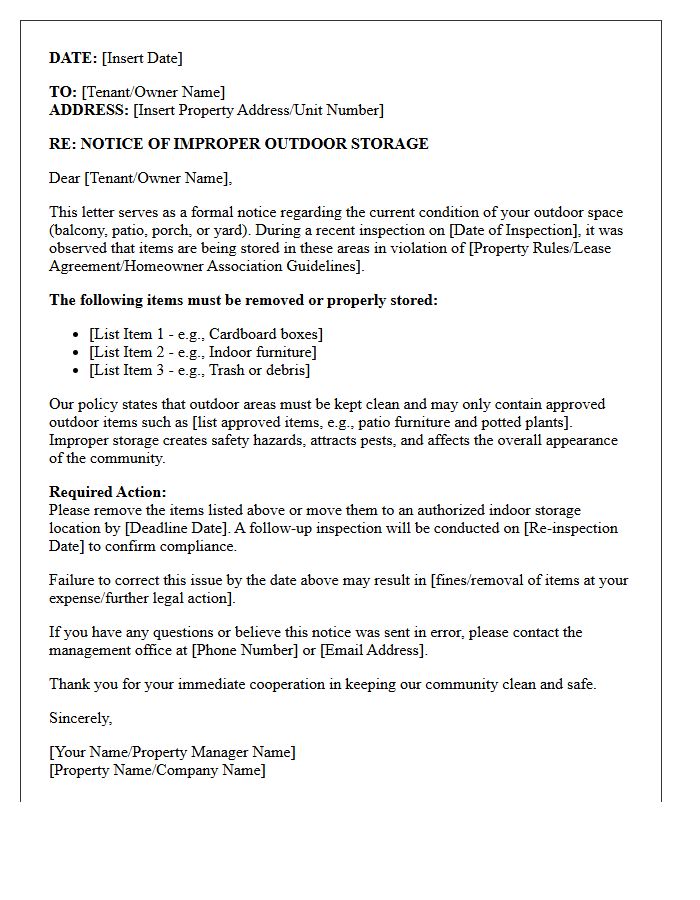
An Outdoor Space Improper Storage Warning Letter serves as a formal notice to residents regarding unauthorized items kept in common areas or private balconies. It identifies specific lease violations, such as storing trash, bicycles, or bulky furniture that compromises property aesthetics and safety standards. The document outlines a clear remediation deadline to remove the items before further action is taken. Timely compliance is essential to avoid potential fines or lease termination, ensuring the community remains clean, organized, and compliant with local fire codes and management policies.
What is a Warning for Improper Storage of Personal Property?
A Warning for Improper Storage of Personal Property is an official notice issued to an individual who has left belongings in unauthorized areas, common spaces, or prohibited zones, requiring them to relocate the items by a specific deadline to avoid removal or disposal.
Where is personal property typically prohibited from being stored?
Personal property is generally prohibited in common hallways, stairwells, fire exits, building lobbies, and landscaped outdoor areas. These regulations are enforced to maintain safety standards, ensure unobstructed emergency egress, and uphold the aesthetic standards of the property.
How much time do I have to move my items after receiving a storage warning?
The grace period varies by local laws and lease agreements, but most warnings provide between 24 to 72 hours to remove the property. Failure to comply within the stated timeframe may result in the property being impounded or discarded at the owner's expense.
What happens to personal property that is not moved after a warning?
If the items are not relocated by the deadline, management or local authorities may seize the property. Depending on the jurisdiction, the items may be placed in a secured storage facility (incurring retrieval fees) or treated as abandoned property and disposed of immediately.
Can I appeal a warning for improper storage of my belongings?
Yes, if you believe the warning was issued in error or if you have a valid accessibility need, you should contact the issuing party or property management immediately. Documenting the location of the items and reviewing your tenant handbook or local ordinances can assist in resolving the dispute.

Comments