
A Blind Profile Candidate Submittal Letter is an essential tool for recruiters to present top talent to clients while protecting candidate privacy. By highlighting key skills and achievements without revealing personal details, you spark interest and maintain control over the hiring process. Streamline your recruitment workflow with our expert tips; below are some ready to use template options to get you started.
Image cover: Winning Blind Profile Submittal Letter Templates and Best Practices
Letter Samples List
- Blind Profile Candidate Submittal Letter
- Confidential Candidate Introduction Letter
- Anonymous Professional Submittal Letter
- Blind Resume Submission Letter
- Executive Blind Profile Presentation Letter
- Redacted Candidate Submittal Letter
- Confidential Talent Introduction Letter
- Blind Applicant Profile Submittal Letter
- Unnamed Candidate Overview Submittal Letter
- Top Talent Blind Submittal Letter
- Confidential Candidate Qualifications Letter
- Anonymous Candidate Representation Letter
Blind Profile Candidate Submittal Letter
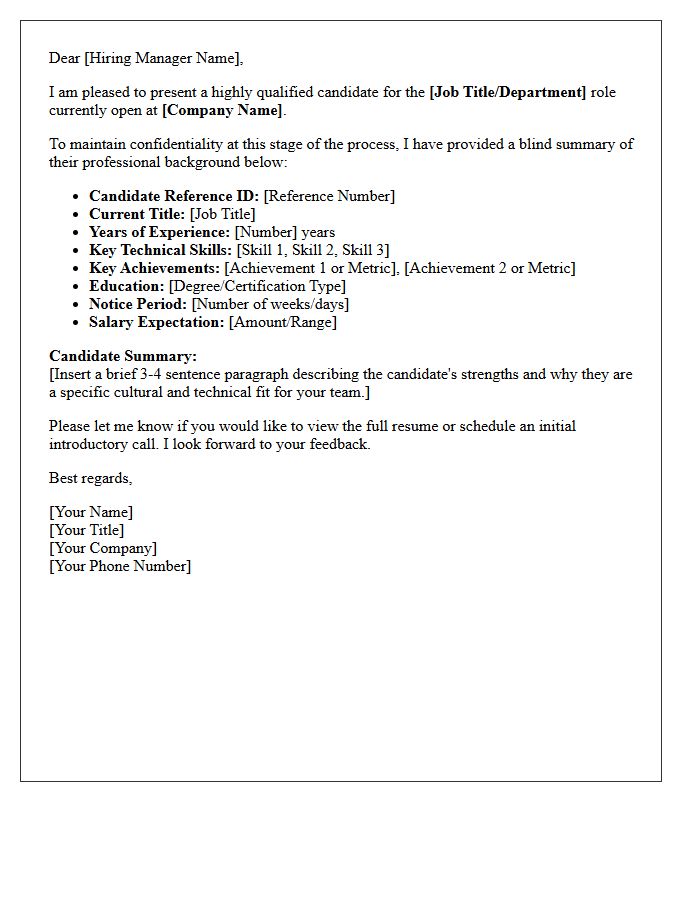
A Blind Profile Candidate Submittal Letter is a strategic document used by recruiters to present a top-tier professional to potential employers without revealing their identity. By focusing on measurable achievements and core competencies, it protects the recruiter's ownership of the lead. The most highlighted term is the candidate's value proposition, which must be compelling enough to secure an interview. This anonymous approach ensures the hiring manager focuses purely on qualifications and cultural fit, effectively piquing interest while maintaining confidentiality throughout the initial stages of the recruitment process.
Confidential Candidate Introduction Letter
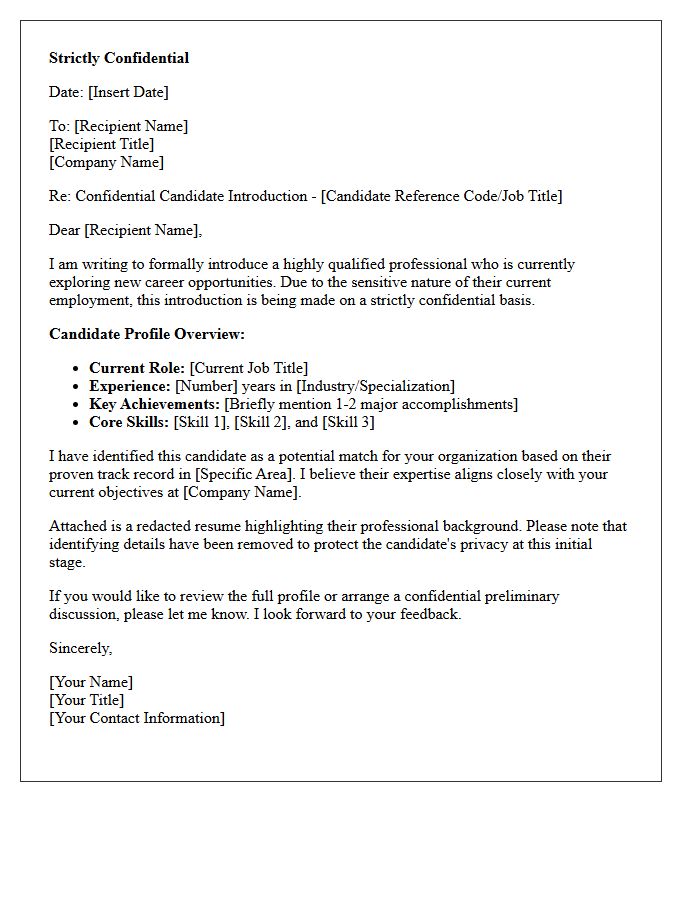
A Confidential Candidate Introduction Letter is a strategic document used by recruiters to present a top-tier professional to a potential employer while maintaining anonymity. It highlights key achievements, skills, and value propositions without revealing the candidate's name or current employer. This approach protects the individual's privacy during a sensitive job search, ensuring current employment remains secure. By focusing purely on merit and qualifications, it piques interest and initiates high-level discussions before formal disclosures are made, facilitating a discreet and professional talent acquisition process.
Anonymous Professional Submittal Letter
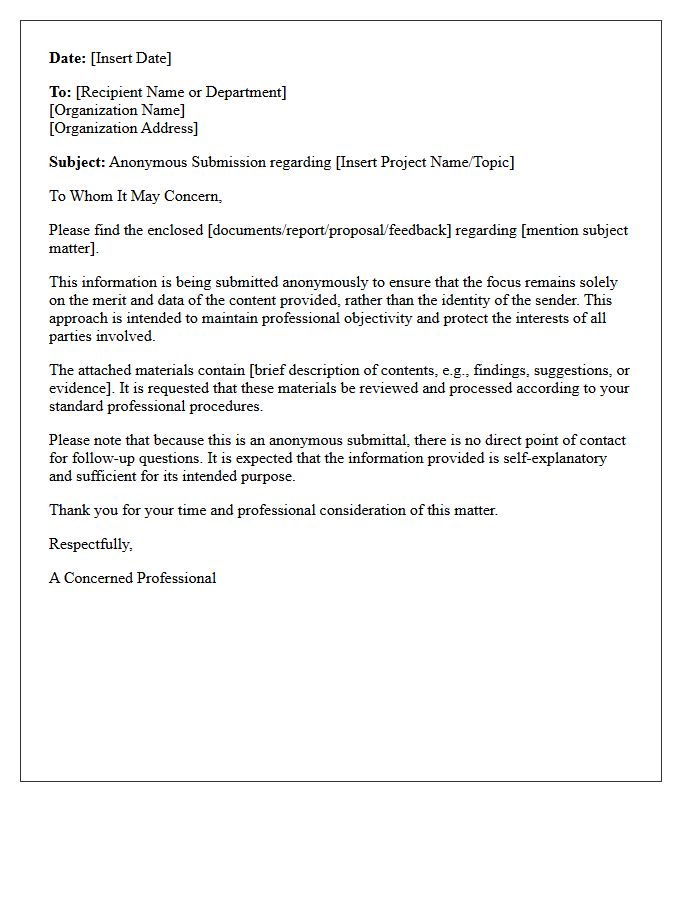
An Anonymous Professional Submittal Letter allows candidates to present qualifications to employers while protecting their identity. This document focuses exclusively on skills and achievements rather than personal data. It is an essential tool for passive candidates or those seeking confidentiality during a job search. By omitting names and current employers, applicants prevent potential retaliation or bias. Ensure the content remains highly professional and includes a secure method for future contact, such as a redacted resume or a private email address, to maintain privacy throughout the initial screening process.
Blind Resume Submission Letter
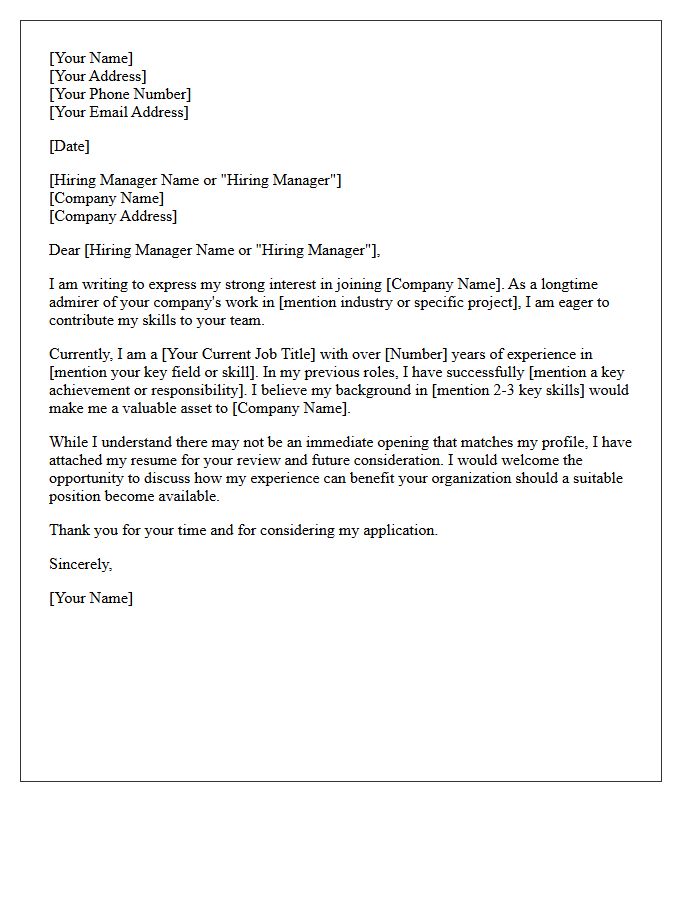
A blind resume submission letter is a proactive outreach tool used to contact companies that have not advertised specific job openings. To be effective, you must target the right hiring manager and clearly demonstrate how your skills solve their unique business challenges. By focusing on your value proposition rather than just asking for work, you create opportunities in the hidden job market. Keep the content concise, professional, and tailored to the organization's mission to make a memorable first impression without a formal invitation.
Executive Blind Profile Presentation Letter
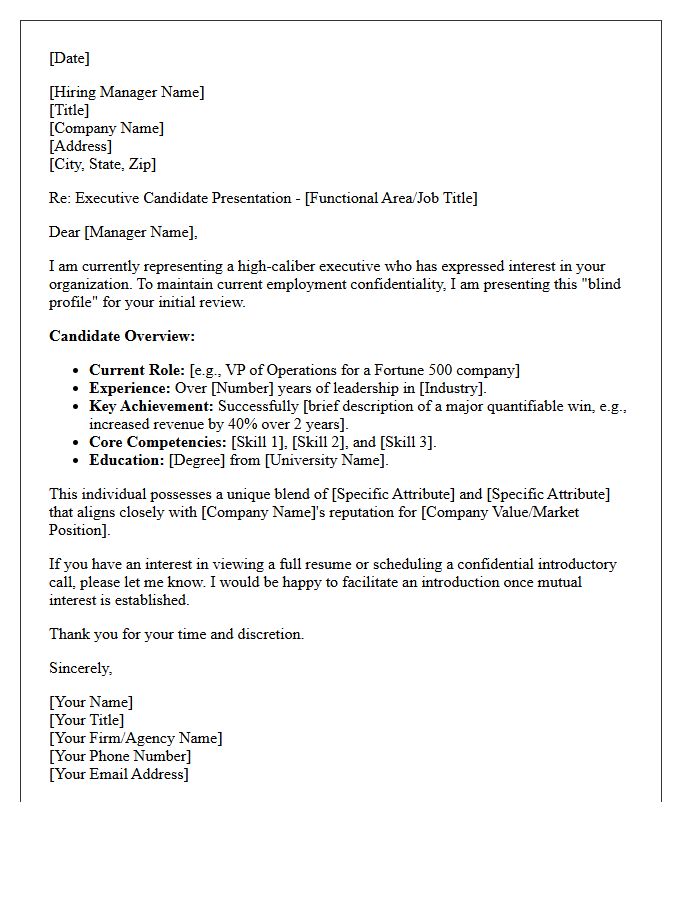
An Executive Blind Profile Presentation Letter is a strategic document used by recruiters to pitch high-level candidates while maintaining anonymity. It focuses on quantifiable achievements and core competencies without revealing personal identifiers. This approach protects the candidate's current employment status and prevents unconscious bias during the initial screening. By highlighting a proven track record and specific leadership value, the letter captures interest from potential employers, ensuring the executive's expertise speaks louder than their name or company history during the early stages of the hiring process.
Redacted Candidate Submittal Letter
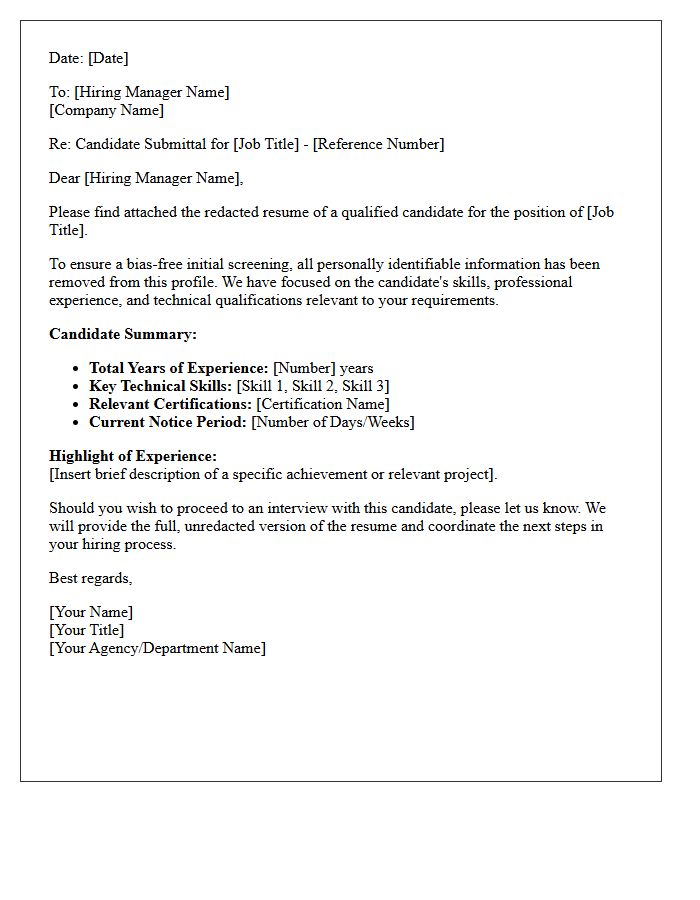
A Redacted Candidate Submittal Letter is a strategic document used by recruiters to present talent while protecting sensitive information. Its primary purpose is to prevent backdoor hiring by removing contact details, current employers, or specific identifiers. By focusing on qualifications and core competencies, it ensures the client evaluates the candidate based on merit. This process secures the recruiter's referral fee and maintains confidentiality during the initial vetting phase, allowing for a professional introduction that emphasizes skills over identity until a formal interview is requested.
Confidential Talent Introduction Letter
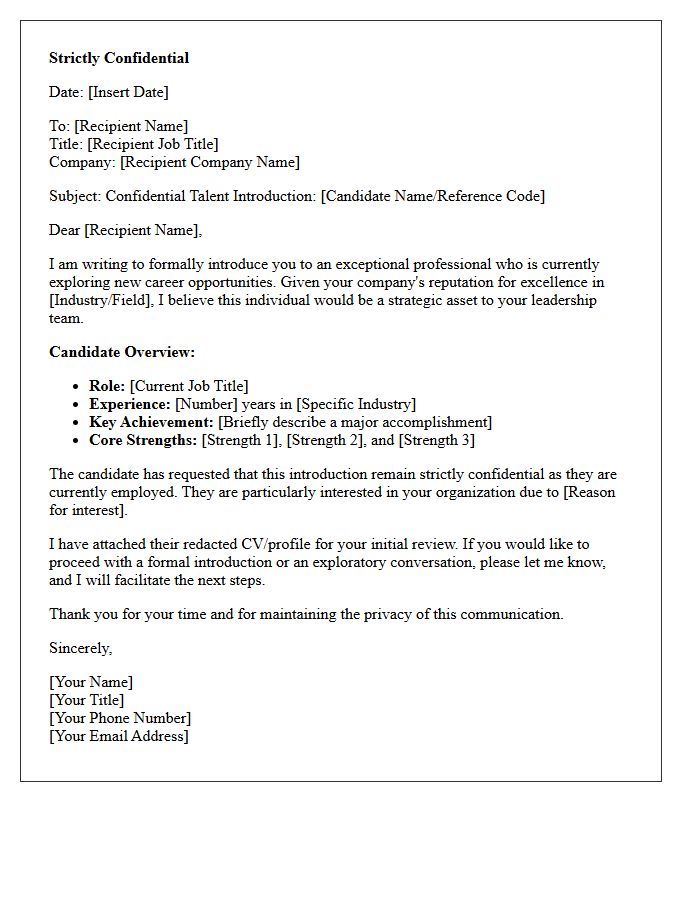
A Confidential Talent Introduction Letter is a strategic document used to recommend high-level candidates for exclusive roles while protecting their privacy. This formal referral ensures that sensitive professional transitions remain discreet, preventing current employers from discovering the job search. It highlights a candidate's core competencies and achievements directly to key decision-makers. Using this approach builds trust between recruiters and employers, facilitating a secure recruitment process for passive talent who require strict anonymity until a formal interview stage is reached.
Blind Applicant Profile Submittal Letter
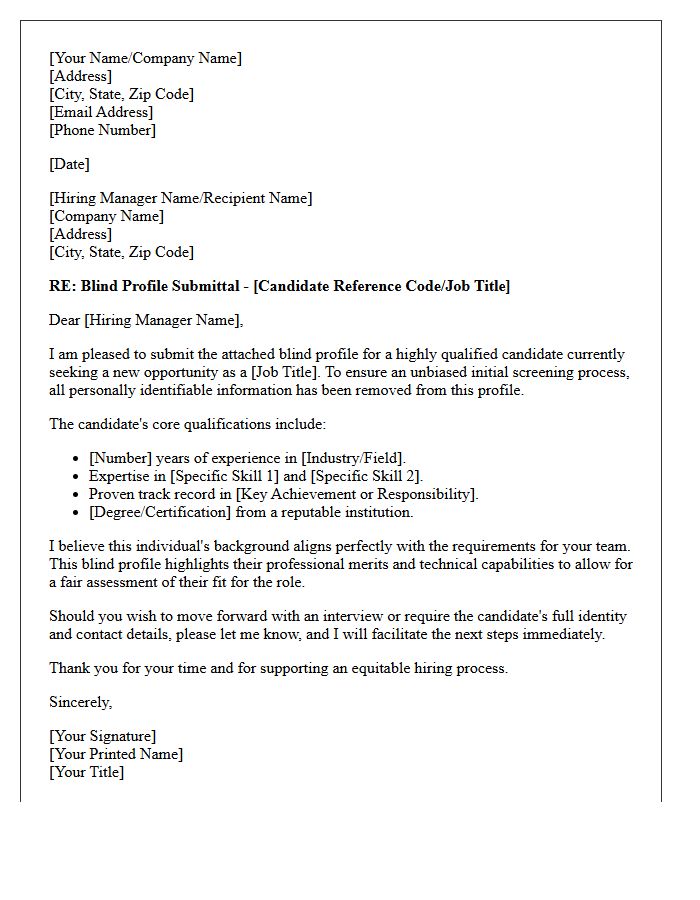
A Blind Applicant Profile Submittal Letter is a strategic document used to present a candidate to potential employers without revealing their identity or current workplace. This method, often employed by recruiters, focuses purely on qualifications, skills, and professional achievements to prevent bias. The primary goal is to generate interest based on merit while maintaining strict confidentiality. It allows hiring managers to evaluate the suitability of a high-value prospect before formal introductions occur, ensuring a neutral assessment of the applicant's expertise and value proposition within the industry.
Unnamed Candidate Overview Submittal Letter
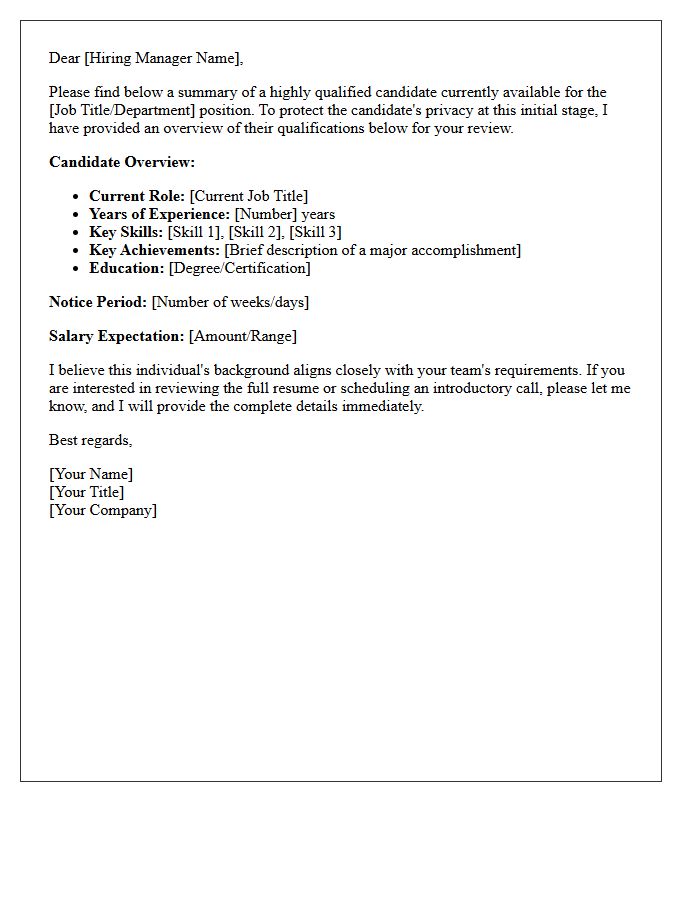
An Unnamed Candidate Overview Submittal Letter is a strategic blind profile used by recruiters to present top-tier talent to potential employers without disclosing the individual's identity. This confidential document focuses on key achievements, technical skills, and professional value propositions to generate interest while protecting candidate privacy. It serves as a powerful marketing tool to initiate interviews based on merit rather than personal data. By highlighting quantifiable results and core competencies, recruiters can effectively pitch high-quality prospects to hiring managers before a formal application is submitted.
Top Talent Blind Submittal Letter
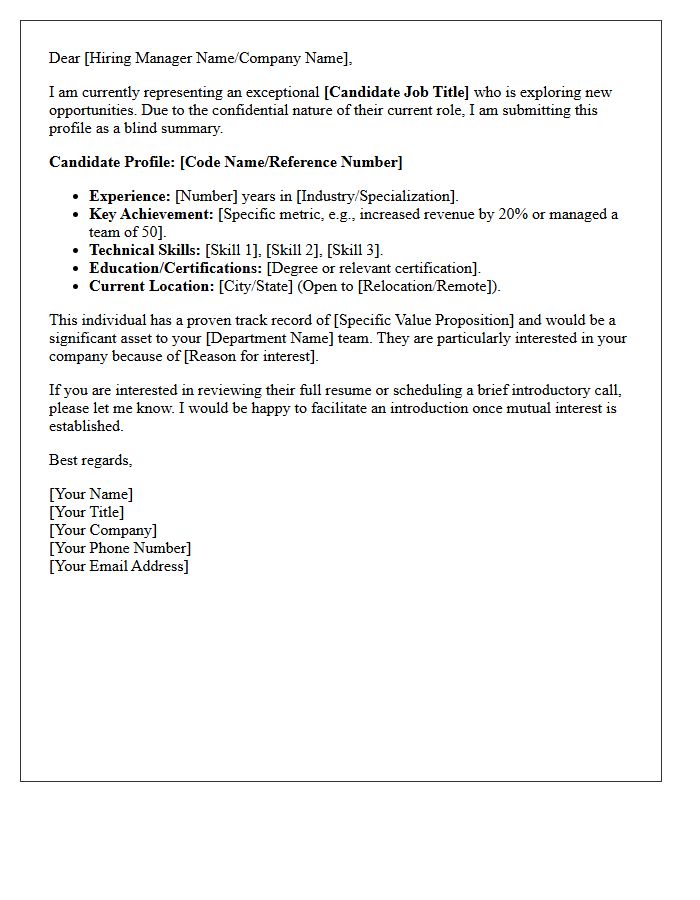
A Top Talent Blind Submittal Letter is a strategic recruitment tool used to present high-caliber candidates to potential employers without revealing their identity. This approach protects candidate privacy while focusing entirely on transferable skills, quantifiable achievements, and cultural fit. By removing personal details, recruiters minimize unconscious bias and emphasize the candidate's value proposition. It is an effective method for proactive sourcing, allowing agencies to showcase premium talent to niche markets and secure interviews based solely on merit and professional excellence.
Confidential Candidate Qualifications Letter
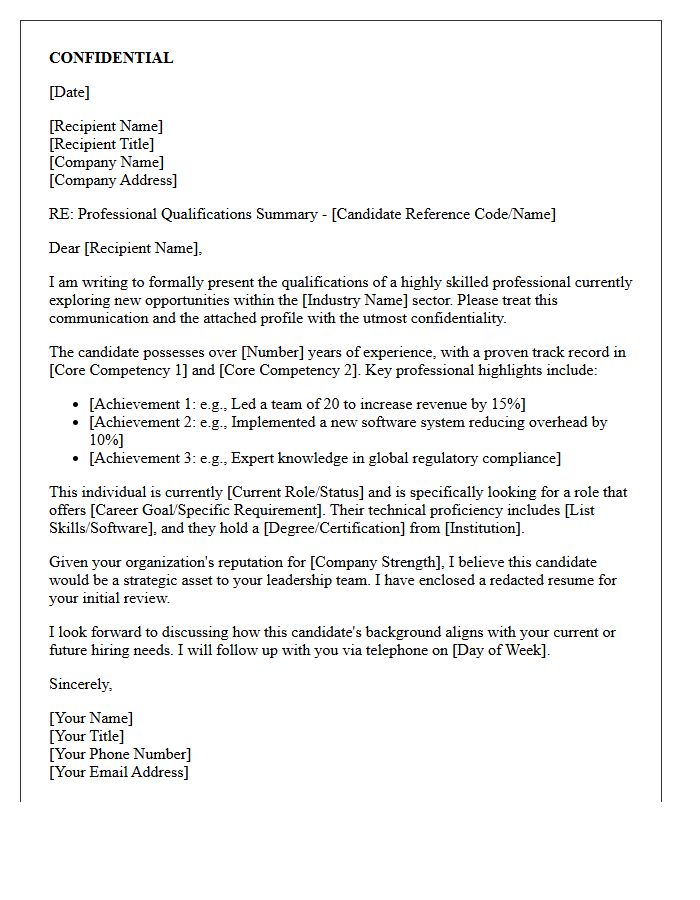
A Confidential Candidate Qualifications Letter is a strategic document used by recruiters to present a high-caliber professional to potential employers without revealing their identity. This anonymized summary focuses exclusively on core competencies, achievements, and career milestones to pique interest while protecting the candidate's current employment status. It serves as a pre-screening tool that highlights technical expertise and cultural fit, allowing companies to evaluate talent objectively based on merit. This approach ensures privacy throughout the initial hiring stages until a formal interview is requested.
Anonymous Candidate Representation Letter
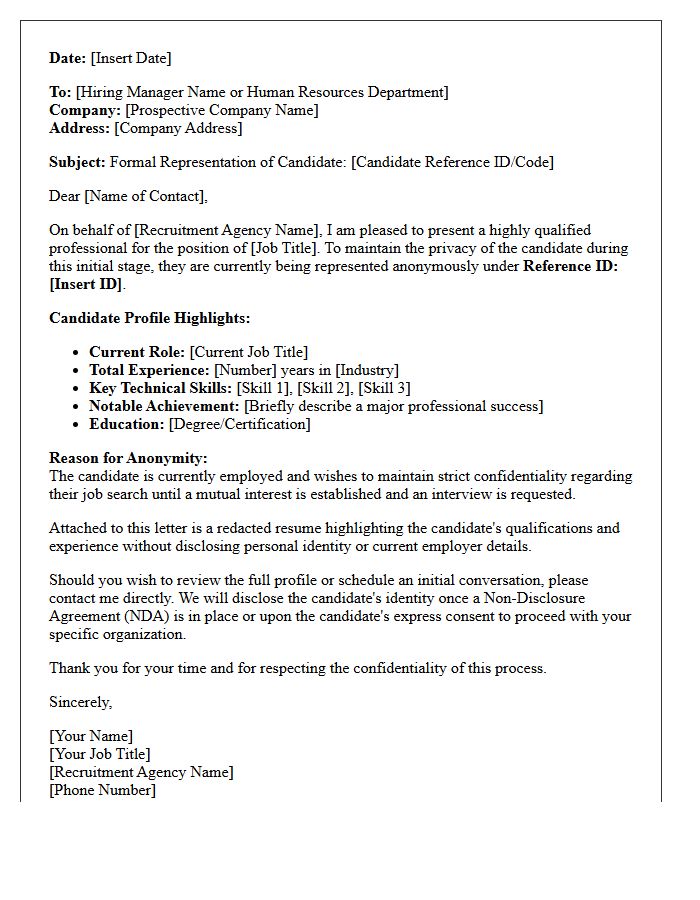
An Anonymous Candidate Representation Letter is a formal document used by recruitment agencies to introduce a qualified professional to a potential employer without disclosing their identity. This protects candidate privacy while showcasing specific skills and achievements. It grants the recruiter legal authorization to represent the individual, ensuring ownership of the introduction. For employers, it offers a summarized profile to evaluate fit before initiating a formal interview process. This method is essential for confidential searches, safeguarding the candidate's current employment status during the initial talent acquisition phase.
What is a blind profile candidate submittal letter?
A blind profile candidate submittal letter is a document used by recruiters to present a qualified candidate to a potential employer without revealing identifying information, such as their name, current employer, or contact details, to protect the recruiter's ownership of the referral.
What key information should be included in a blind candidate submittal?
The letter should focus on the candidate's core competencies, professional achievements, years of industry experience, educational background, and specific technical skills that align with the employer's current job requirements.
How does a blind submittal letter protect a recruiter's commission?
By withholding identifying details, the letter ensures that the hiring company cannot bypass the recruiter to contact the candidate directly, thereby securing the recruiter's role in the hiring process and guaranteeing their placement fee.
Why do employers accept blind candidate profiles?
Employers review blind profiles because it allows them to evaluate a candidate's qualifications and "fit" based purely on merit and experience, while also maintaining a diverse and unbiased initial screening process.
How should a blind profile submittal be formatted for maximum impact?
The profile should be formatted with a clear summary header, followed by a bulleted list of high-impact accomplishments and a brief concluding statement that explains why this specific candidate is an ideal match for the organization's needs.


Comments