
A First Week Check-In Survey Letter is an essential tool for gauging new employee satisfaction and identifying early challenges. Sending this brief questionnaire helps HR teams improve the onboarding experience and boost long-term retention by addressing concerns immediately. It fosters a culture of open communication from day one. To help you get started, below are some ready to use template.
Image cover: Connecting with Your New Hires: First Week Check-In Survey Templates and Samples
Letter Samples List
- First Week Check-In Survey Letter
- Candidate Onboarding Welcome Letter
- Interview Feedback Request Letter
- Client Satisfaction Survey Letter
- First Month Placement Review Letter
- Probation Period Completion Letter
- Offer Acceptance Confirmation Letter
- End of Contract Feedback Letter
- Pre-Employment Screening Update Letter
- Candidate Talent Pool Invitation Letter
- Temporary Assignment Extension Letter
- Post-Placement Quality Assurance Letter
First Week Check-In Survey Letter
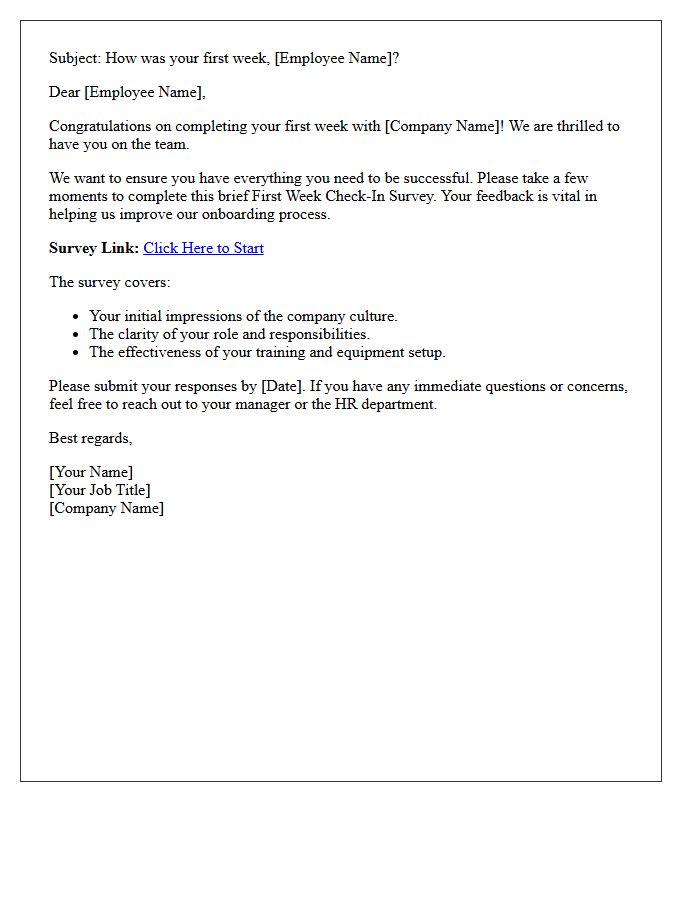
A First Week Check-In Survey Letter is a vital communication tool used to evaluate new hire integration and early engagement. It helps management identify potential roadblocks, gather immediate feedback on the onboarding process, and ensure cultural alignment. By addressing concerns early, organizations significantly improve employee retention and long-term satisfaction. This brief outreach demonstrates a supportive work environment and provides actionable insights to refine training strategies. Sending this survey promptly ensures that new team members feel valued and heard during their critical first days of employment.
Candidate Onboarding Welcome Letter
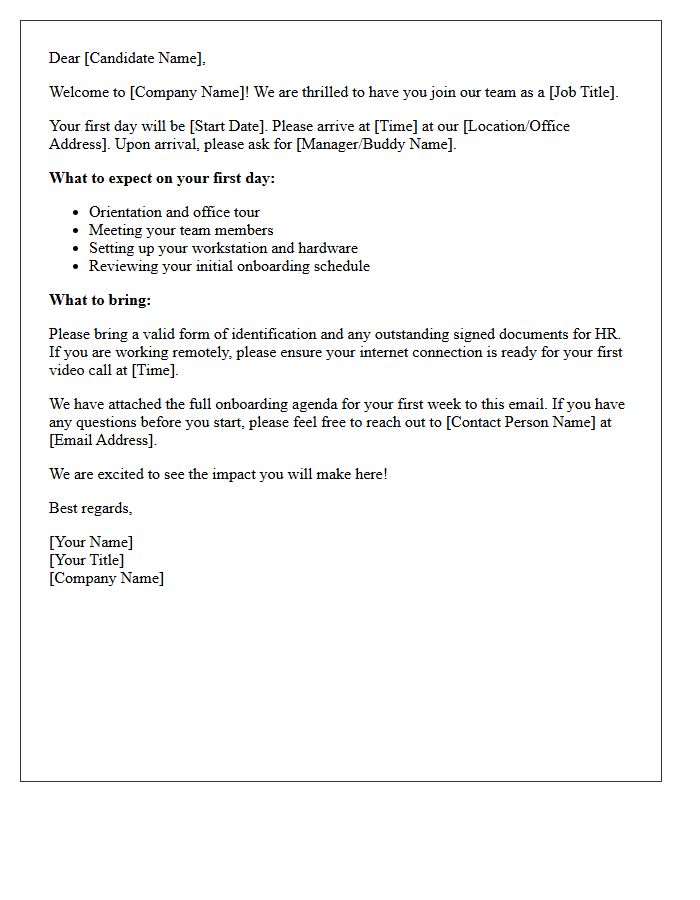
A candidate onboarding welcome letter is a vital document that sets the tone for a new hire's integration into the company culture. It should clearly outline the first-day logistics, including start time, location, and reporting manager. Beyond logistics, expressing genuine enthusiasm helps reduce pre-boarding anxiety. Providing a brief orientation schedule or list of required documents ensures the new employee feels prepared and valued. This professional introduction reinforces your employer brand while establishing clear expectations for a successful transition into their new role.
Interview Feedback Request Letter
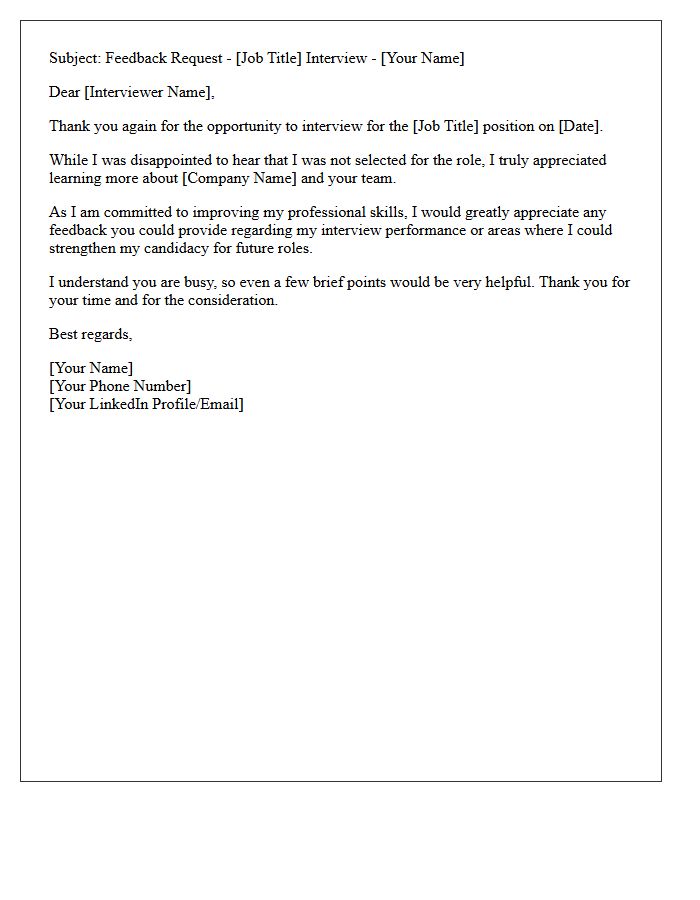
An Interview Feedback Request Letter is a professional follow-up sent after receiving a rejection. The primary goal is to gain constructive insights into your performance and identify areas for improvement. When drafting this message, keep it brief, grateful, and objective. Express appreciation for the opportunity while politely asking for specific observations regarding your qualifications or interview technique. This practice demonstrates professional growth, resilience, and a commitment to self-development, helping you refine your strategy for future career opportunities and networking within your target industry.
Client Satisfaction Survey Letter
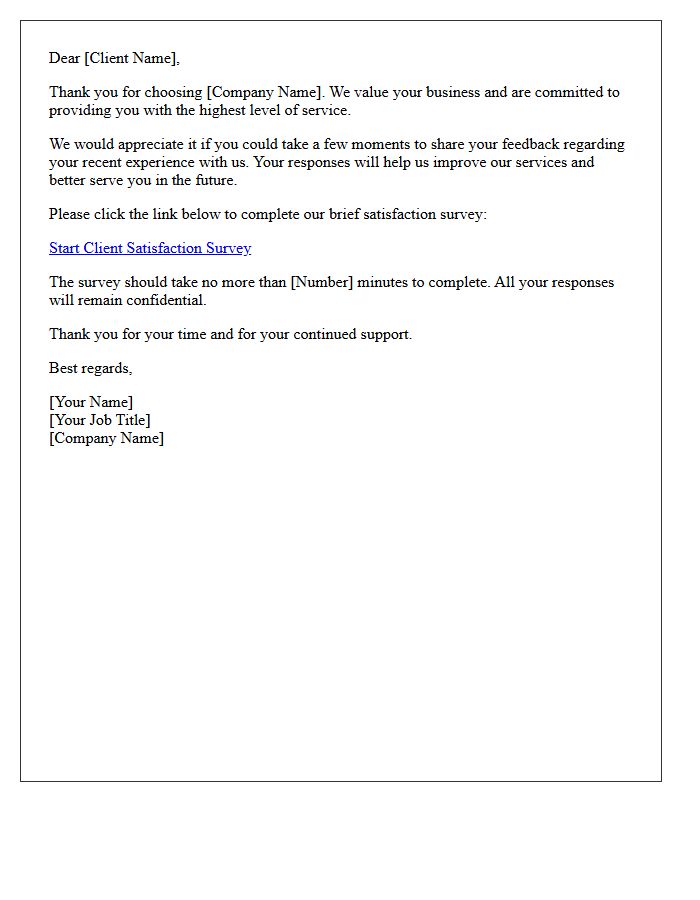
A Client Satisfaction Survey Letter is a strategic tool designed to gather actionable feedback regarding a customer's experience. To ensure high response rates, the content must be concise, professional, and transparent about the time commitment involved. Clearly explaining how their input will improve service quality encourages participation. Always include a direct link to the survey and a sincere appreciation note. This process builds long-term client loyalty by demonstrating that your organization values their voice and is committed to continuous improvement based on their specific needs.
First Month Placement Review Letter
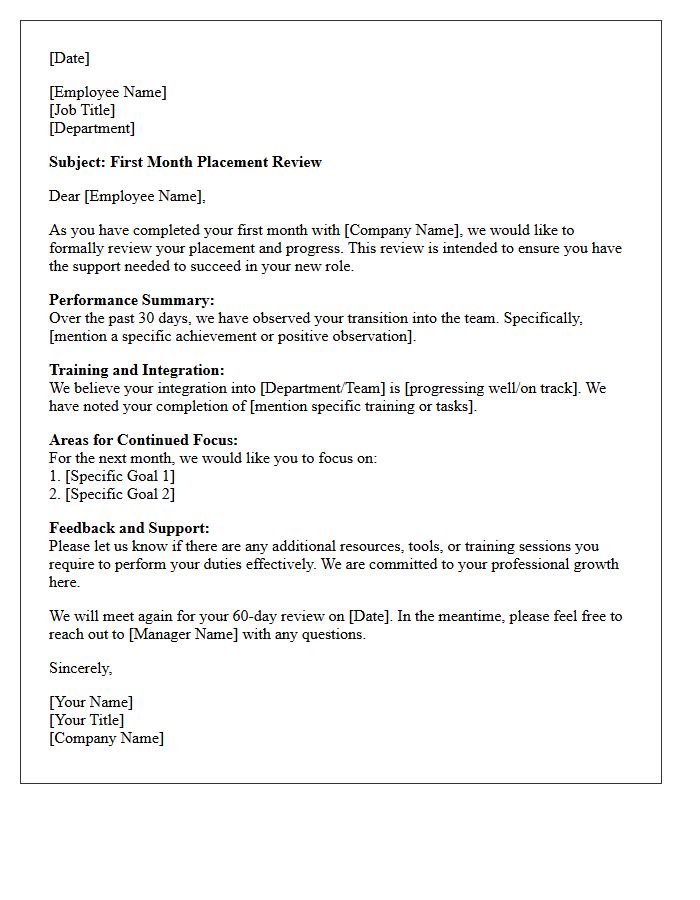
A First Month Placement Review Letter is a formal document assessing a new employee's initial performance and cultural fit. It provides structured feedback, highlighting early achievements and addressing any immediate training gaps. This communication ensures that expectations align between the employer and the hire, serving as a vital record for the probationary period. Receiving this letter allows for transparent dialogue, helping to secure long-term success by clarifying goals and professional objectives within the organization during the critical first thirty days of employment.
Probation Period Completion Letter
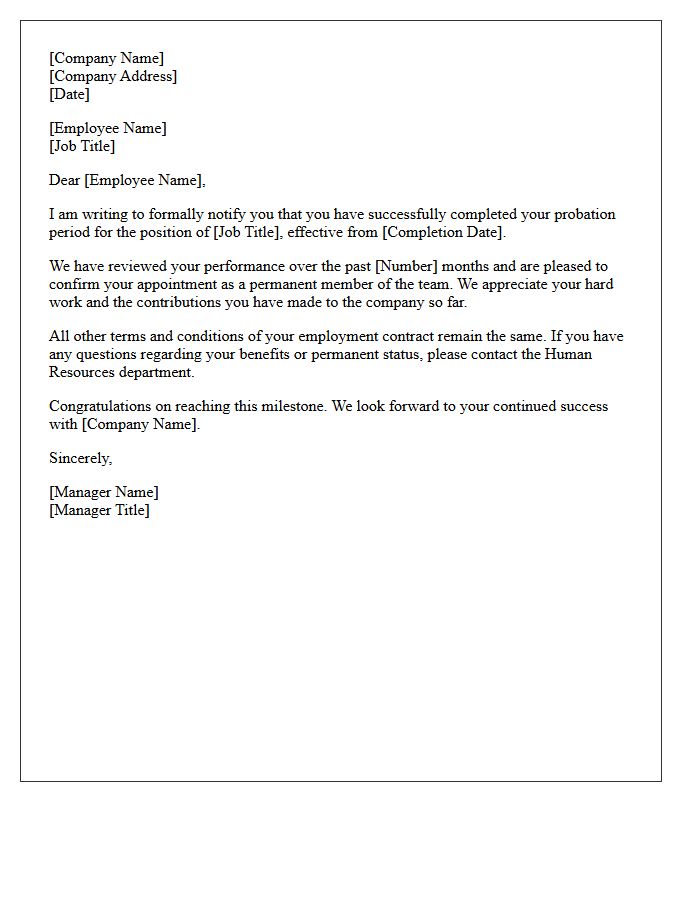
A Probation Period Completion Letter is a formal document confirming that an employee has successfully met performance standards. This employment confirmation serves as official notice that the trial phase has ended, granting the staff member permanent status and full access to company benefits. It is essential for career documentation, as it outlines updated terms, salary adjustments, or notice periods. Receiving this letter provides job security and validates professional competence within the organization, marking a key milestone in a worker's tenure and legal employment record.
Offer Acceptance Confirmation Letter
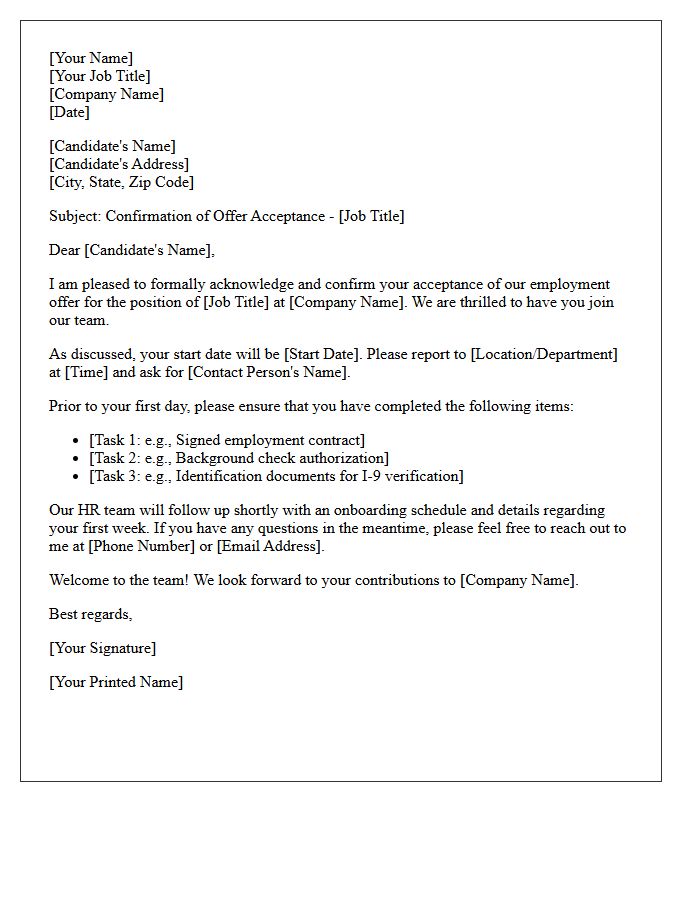
An Offer Acceptance Confirmation Letter serves as a formal written document that solidifies a candidate's intent to join an organization. It is a critical step in the hiring process, confirming essential details such as the job title, start date, salary, and benefits. This letter creates a professional record of agreement between the employer and the future employee, ensuring both parties are aligned before the first day. Providing this confirmation helps mitigate misunderstandings and establishes a clear foundation for a successful working relationship.
End of Contract Feedback Letter
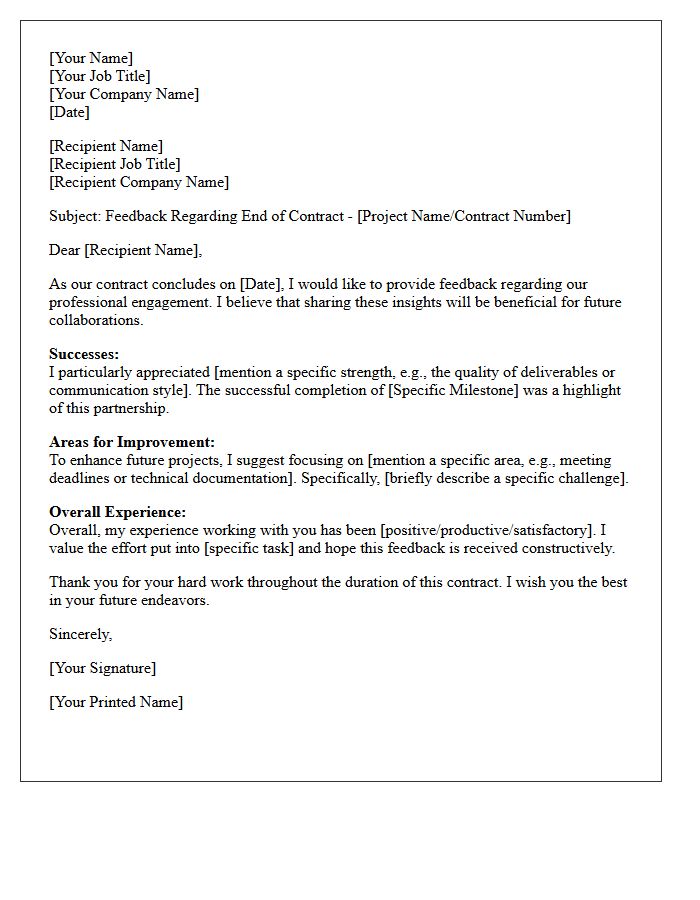
An End of Contract Feedback Letter is a professional document used to evaluate a working relationship upon completion. It provides a structured assessment of performance, highlights successful milestones, and identifies areas for growth. This communication ensures mutual transparency and helps both parties improve future operations. By formally documenting the experience, organizations can refine their procurement processes while contractors gain valuable testimonials. Clear feedback fosters professional bridges, turning a concluding agreement into a strategic opportunity for long-term networking and continuous service enhancement.
Pre-Employment Screening Update Letter
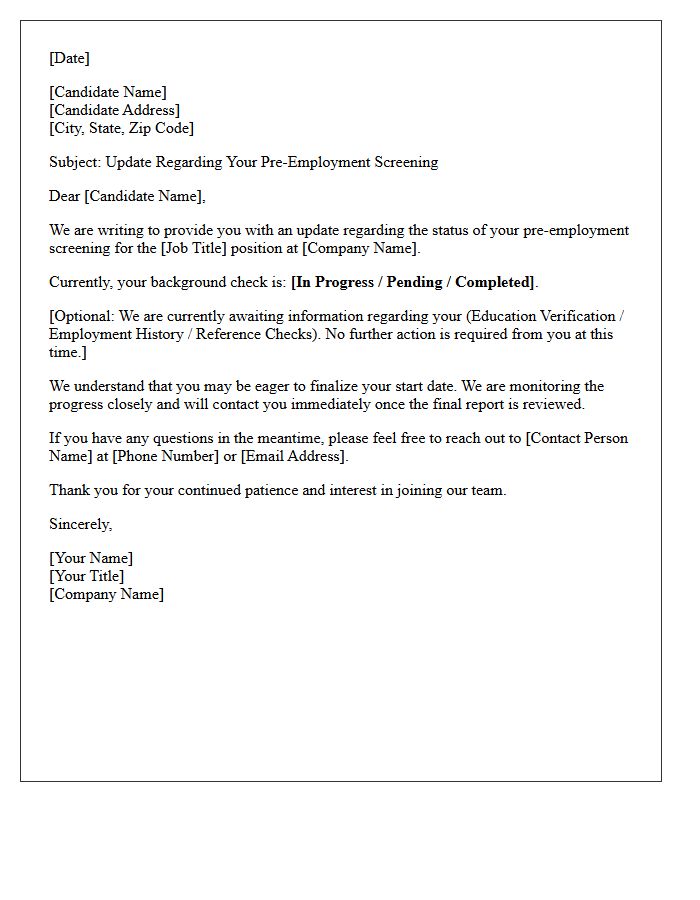
A Pre-Employment Screening Update Letter is a formal notification sent to candidates regarding the status of their background checks. It serves as an essential compliance tool, ensuring transparency throughout the hiring process. This document typically informs applicants if additional information is required or if there are delays in verification. Providing timely updates helps maintain a positive candidate experience and ensures legal adherence to fair hiring practices. Clear communication regarding background verification milestones reduces anxiety and strengthens the professional relationship between the employer and potential hire before their official start date.
Candidate Talent Pool Invitation Letter
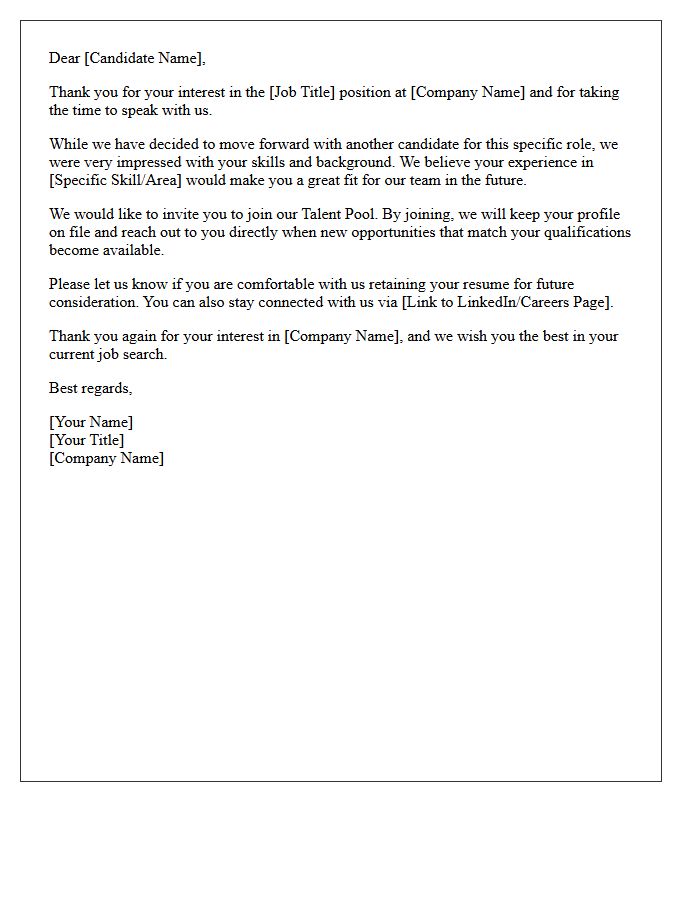
A candidate talent pool invitation letter is a strategic communication tool used to nurture relationships with qualified applicants for future job opportunities. This engagement strategy keeps your employer brand top-of-mind by inviting past candidates or silver medalists to join an exclusive database. A well-crafted letter should clearly explain the benefits of joining, such as early access to openings and industry updates. By maintaining this proactive pipeline, recruiters significantly reduce time-to-hire and improve candidate experience through personalized, ongoing professional outreach.
Temporary Assignment Extension Letter
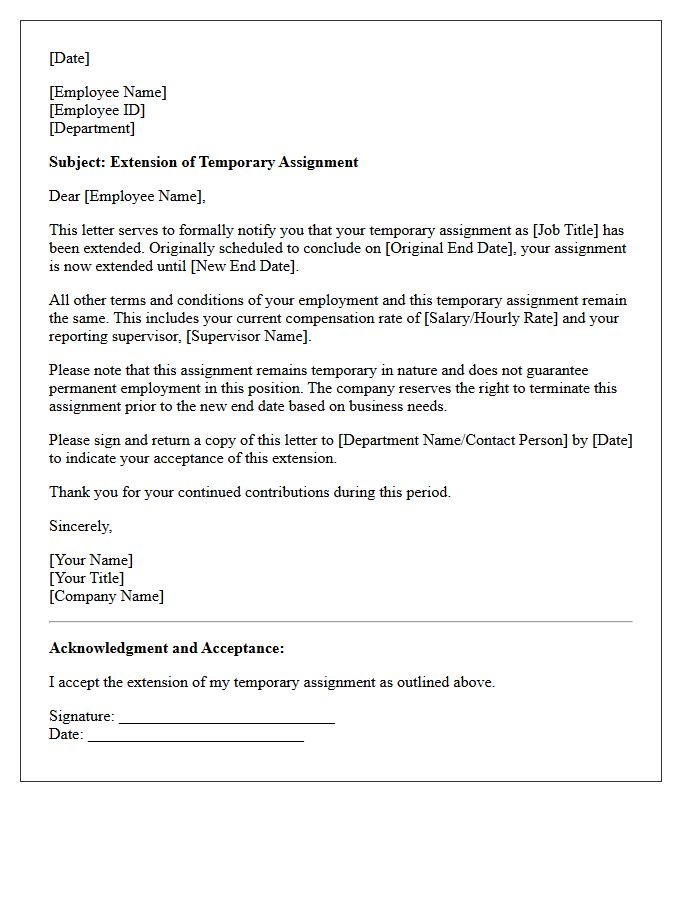
A Temporary Assignment Extension Letter is a formal document used to prolong a worker's current contract beyond its initial end date. This letter serves as a legal amendment to the existing employment terms, ensuring continuity in payroll and project responsibilities. It must clearly state the new completion date, any revised compensation, and updated job duties. Both parties should sign this agreement to maintain compliance and clear communication. Securing this written extension protects the rights of both the employer and the employee during the additional period of service.
Post-Placement Quality Assurance Letter
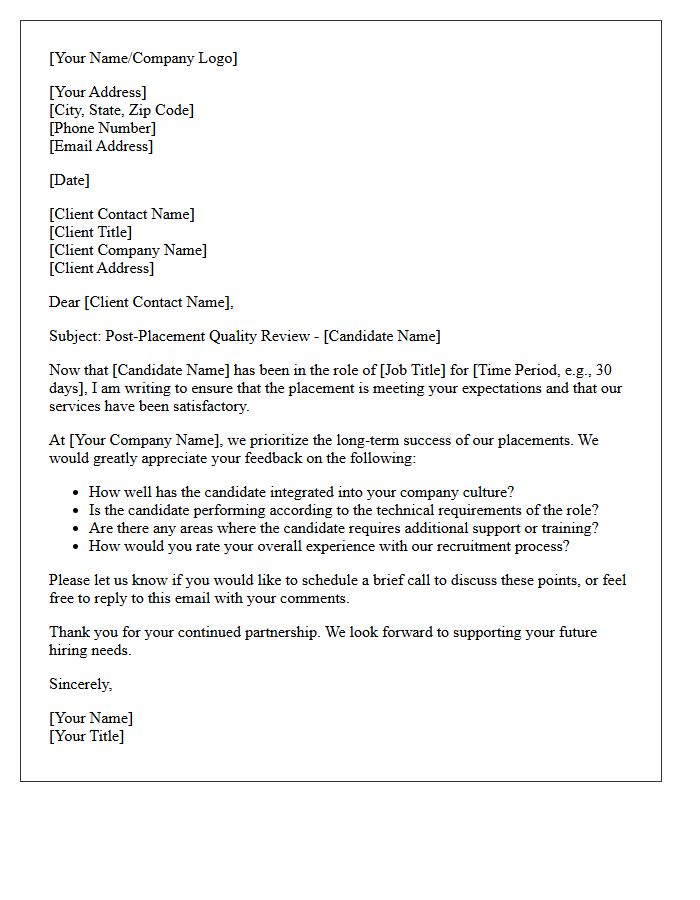
A Post-Placement Quality Assurance Letter is a critical document used to verify that a hired candidate meets the specific expectations of the employer. It serves as a formal validation of the recruitment process, ensuring the placement is successful and sustainable. This letter typically requests feedback regarding the employee's initial performance and cultural fit. By identifying potential issues early, companies can improve retention rates and refine their hiring strategies. It acts as a professional bridge between the agency and the client to maintain high service standards and long-term satisfaction.
What is the purpose of the First Week Check-In Survey?
The First Week Check-In Survey is designed to gather early feedback from new hires regarding their onboarding experience, ensuring they have the necessary resources and support to succeed in their new role.
When should the First Week Check-In Survey letter be sent?
The letter should ideally be sent on the fourth or fifth day of the employee's first week to capture fresh impressions while allowing them enough time to settle into their daily tasks.
What key questions should be included in a first-week survey?
Effective surveys typically ask if the job role matches the initial description, if the employee has received adequate training, and if they feel welcomed by their immediate team and manager.
How does a check-in letter improve employee retention?
By reaching out in the first week, organizations can identify and resolve potential issues early, demonstrating a commitment to employee success and fostering a sense of belonging from day one.
Is the feedback provided in the first-week survey anonymous?
While anonymity depends on company policy, many organizations allow identified feedback so that HR or managers can directly address specific concerns or technical hurdles raised by the new hire.

Comments