
Professional communication is essential when notifying unsuccessful applicants for temporary roles. Sending a Seasonal Position Rejection Letter helps maintain your brand reputation and keeps the door open for future hiring needs. Delivering clear, polite feedback ensures a positive candidate experience even when the outcome is disappointing. To simplify your recruitment process, below are some ready to use template options.
Image cover: Professional Seasonal Hiring: Rejection Letter Templates and Best Practices
Letter Samples List
- Standard Seasonal Position Rejection Letter
- General Seasonal Staffing Agency Rejection Letter
- Client Specific Seasonal Role Rejection Letter
- Closed Seasonal Assignment Rejection Letter
- Future Seasonal Opportunities Roster Rejection Letter
- Insufficient Experience Seasonal Placement Rejection Letter
- Late Submission Seasonal Position Rejection Letter
- Post Interview Seasonal Agency Rejection Letter
- Unsuccessful Screening Seasonal Position Rejection Letter
- Temporary Pool Seasonal Candidate Rejection Letter
- Skill Mismatch Seasonal Assignment Rejection Letter
- Alternate Candidate Selected Seasonal Rejection Letter
- Holiday Peak Season Placement Rejection Letter
Standard Seasonal Position Rejection Letter
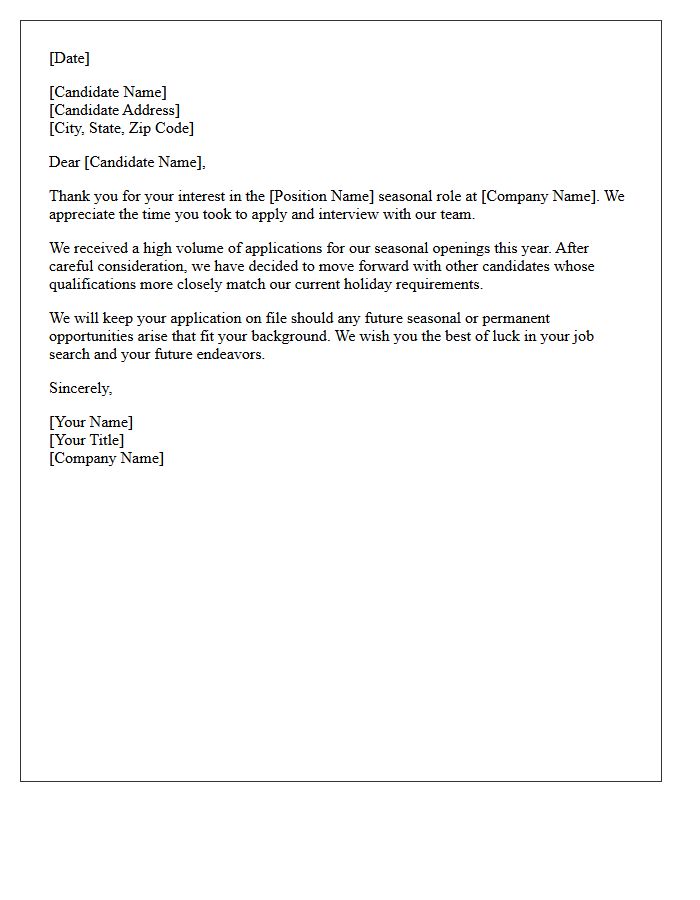
A standard seasonal position rejection letter is a formal notification informing applicants they were not selected for temporary employment. The candidate experience remains the top priority, as seasonal staff often transition into year-round customers. It is essential to maintain a professional tone while clearly stating the decision without disclosing specific internal reasons. Sending these updates promptly helps protect your employer brand and ensures a positive reputation within the local community. Personalizing the message with the applicant's name and expressing gratitude for their interest provides a respectful conclusion to the recruitment cycle.
General Seasonal Staffing Agency Rejection Letter
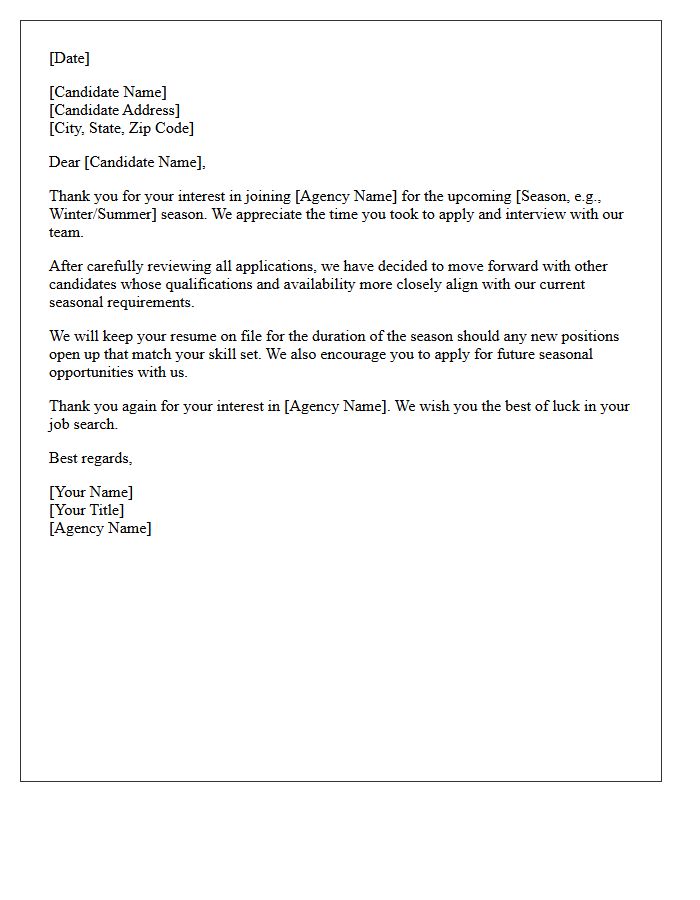
A General Seasonal Staffing Agency Rejection Letter notifies candidates that they were not selected for temporary roles. The most critical element is professionalism, as it maintains the agency's brand reputation. To ensure clarity, the letter should be transparent about the high volume of applicants. It is beneficial to state whether the agency will keep the candidate's resume on file for future peak periods. Providing a polite, brief explanation helps manage expectations while encouraging engagement for upcoming seasonal opportunities or different operational shifts.
Client Specific Seasonal Role Rejection Letter
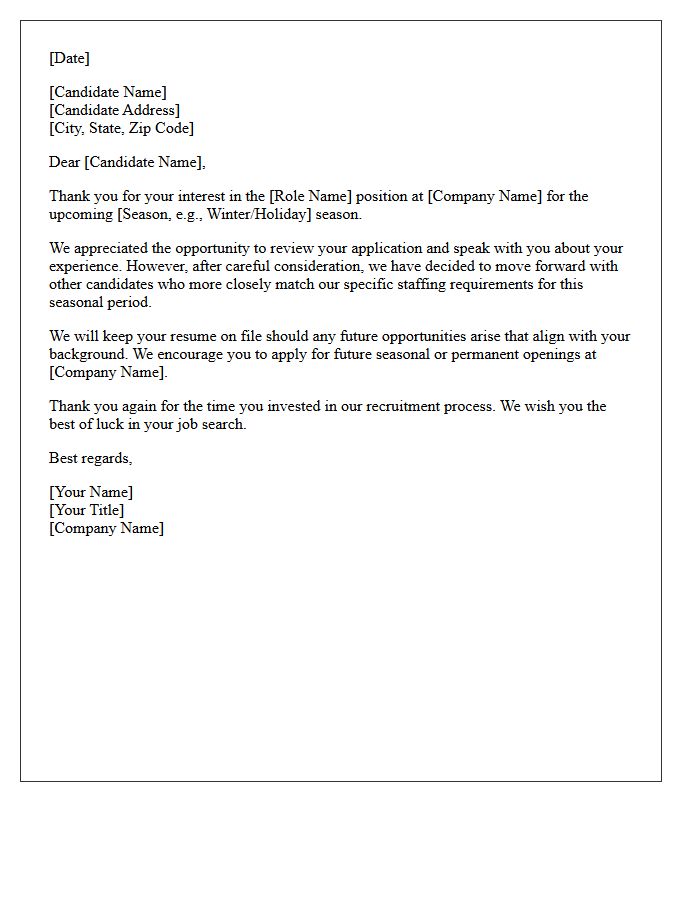
A client-specific seasonal role rejection letter should maintain a professional tone while clearly stating the decision. It is essential to express gratitude for the candidate's interest during the high-volume hiring period. Briefly mention that while their skills are valued, the current seasonal requirements led to selecting other applicants. Providing a positive closing encourages them to apply for future permanent openings or upcoming cycles. This approach protects your employer brand and ensures a respectful candidate experience, even when seasonal staffing needs change rapidly.
Closed Seasonal Assignment Rejection Letter
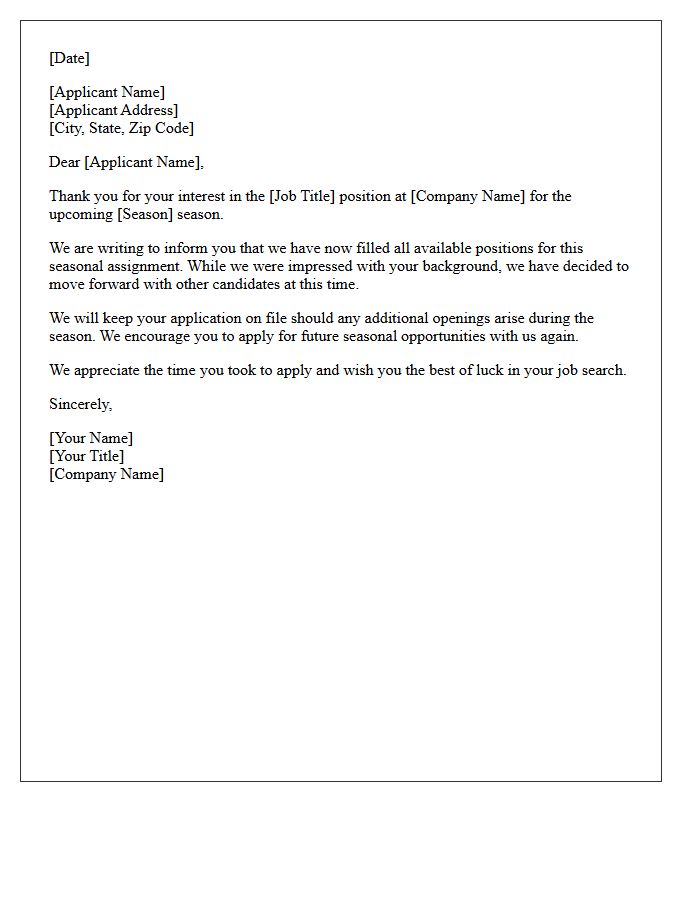
A Closed Seasonal Assignment Rejection Letter is a formal notification sent to applicants when a temporary position has been filled or the hiring cycle has ended. It is crucial to maintain professional communication and protect your employer brand. Clearly state that the seasonal recruitment is concluded, express gratitude for their interest, and encourage future applications. Providing a prompt response helps candidates move forward while ensuring your talent pool remains engaged for future peak periods or upcoming seasonal needs.
Future Seasonal Opportunities Roster Rejection Letter
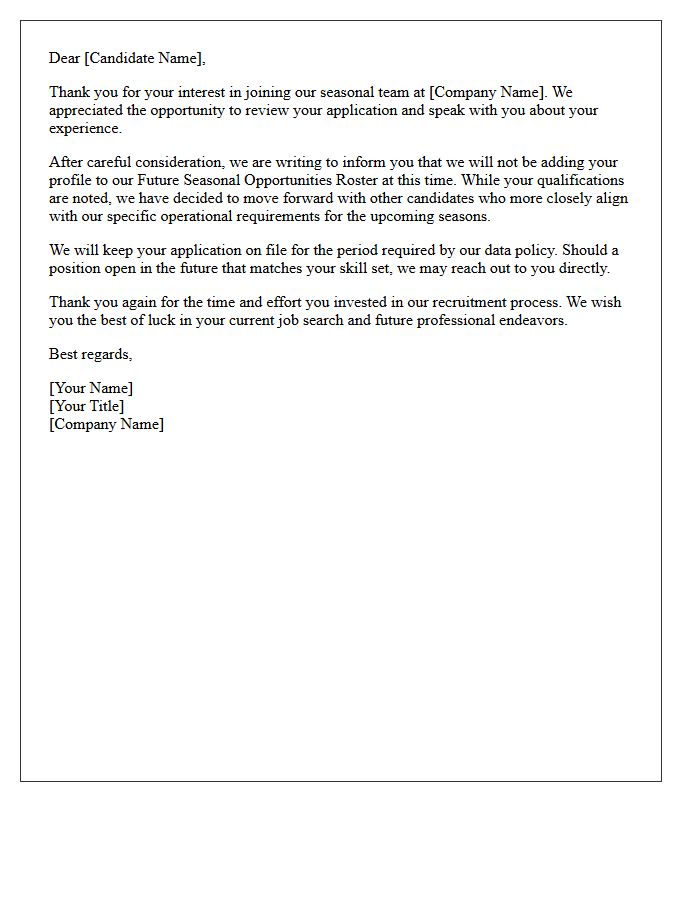
Receiving a Future Seasonal Opportunities Roster Rejection Letter means you were not selected for the current intake but your profile may remain in a talent pool. It is essential to review the eligibility criteria and feedback provided to improve future applications. Being placed on a roster does not guarantee a job offer; it simply signifies you are a pre-qualified candidate for upcoming vacancies. Continue to enhance your professional skills and monitor application status updates regularly to capitalize on future recruitment cycles when seasonal demands increase.
Insufficient Experience Seasonal Placement Rejection Letter
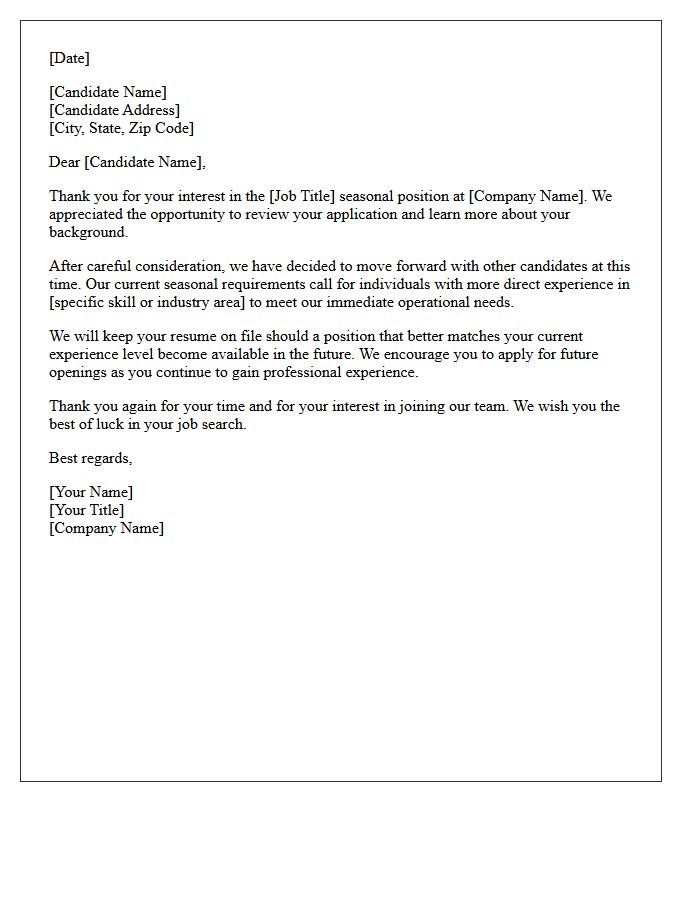
Receiving an insufficient experience rejection letter for a seasonal placement indicates that while your profile is noted, the role requires specific prior skills or faster onboarding. It is vital to professionally acknowledge the decision to maintain a positive relationship with the employer. Use this feedback to identify skill gaps and seek entry-level opportunities to build your resume. Seasonal roles are highly competitive; staying proactive and expanding your practical knowledge will improve your chances for future applications within the industry.
Late Submission Seasonal Position Rejection Letter
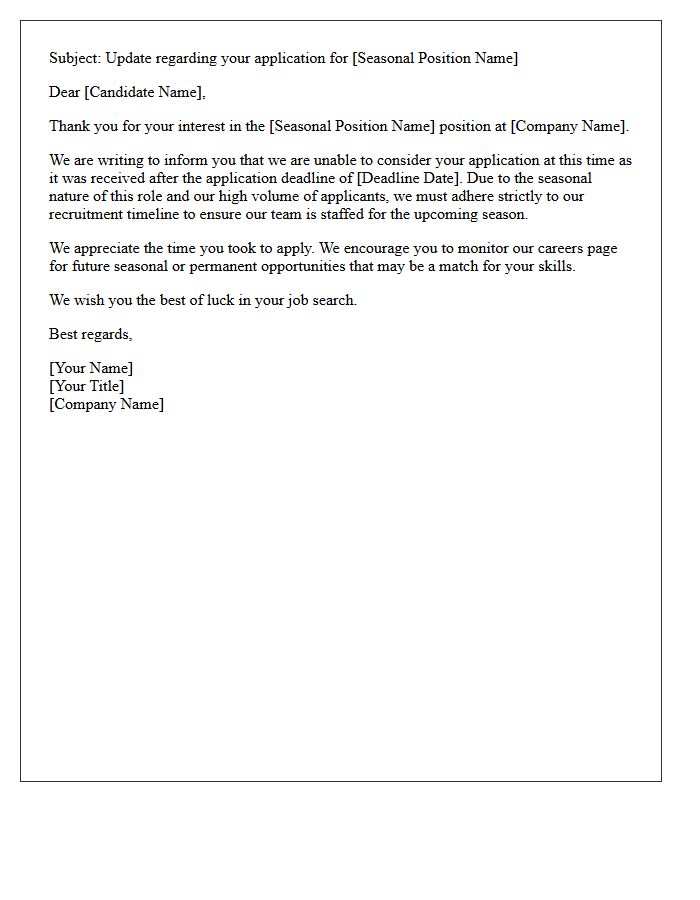
A late submission seasonal position rejection letter informs applicants that their candidacy cannot proceed because the application deadline has passed. For high-volume seasonal hiring, companies strictly adhere to timelines to ensure staffing is finalized before peak periods. Receiving this notice typically means your profile was not reviewed due to timing rather than qualifications. To improve future outcomes, candidates should set alerts for recruitment windows and submit materials early. While disappointing, this formal notification allows you to pivot quickly toward other open employment opportunities before the season begins.
Post Interview Seasonal Agency Rejection Letter
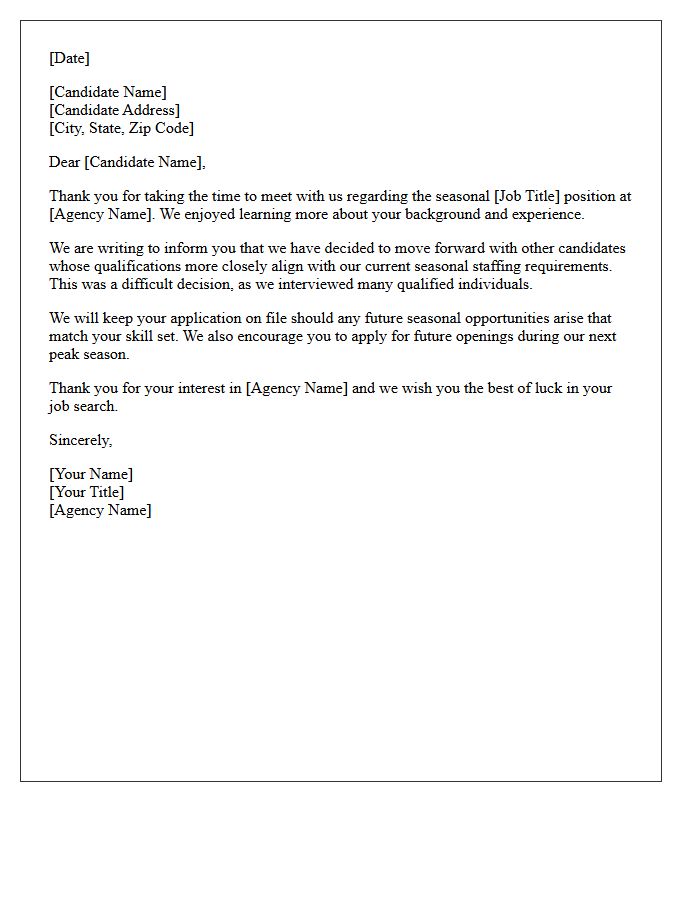
Receiving a post-interview seasonal agency rejection letter is a standard part of the high-volume recruitment cycle. It typically signifies that while your qualifications were reviewed, the agency has finalized its temporary roster. The most important action is to maintain professionalism by sending a brief thank-you note. This keeps your profile active for future peak season opportunities. Often, agencies keep resumes on file for last-minute openings if initial hires decline. Do not view this as a permanent setback, but rather an opportunity to refine your interview technique for the next hiring wave.
Unsuccessful Screening Seasonal Position Rejection Letter
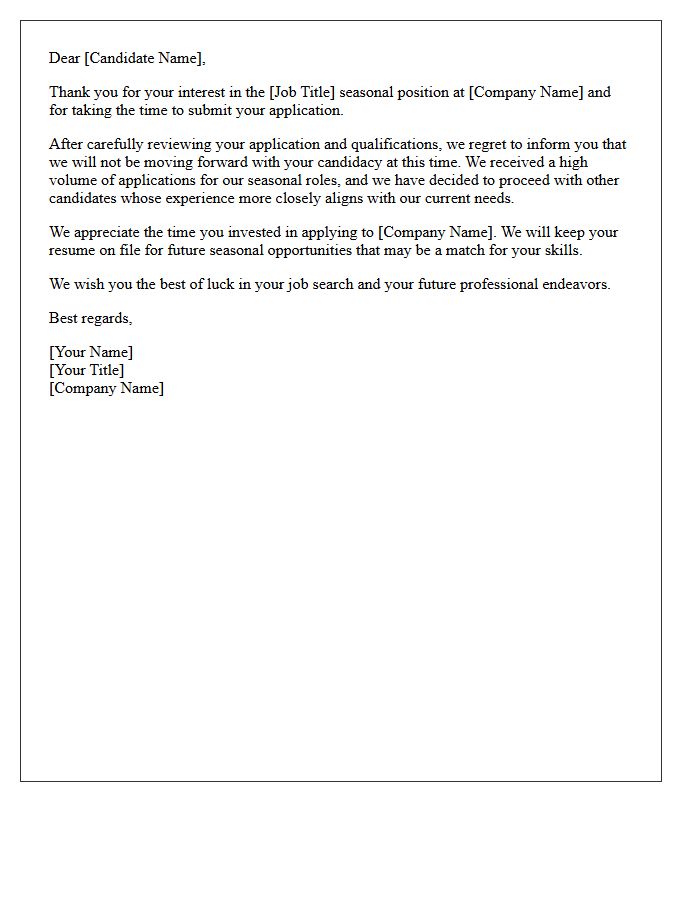
An Unsuccessful Screening Seasonal Position Rejection Letter is a professional document informing candidates they will not advance in the hiring process. It is crucial to maintain a positive employer brand by providing a timely and respectful response. The letter should clearly state the decision without being overly detailed, while thanking the applicant for their interest. Since seasonal roles often attract high volumes of applicants, using an automated yet personalized template ensures efficiency. This communication leaves the door open for future opportunities, preserving a pool of potential talent for upcoming peak seasons.
Temporary Pool Seasonal Candidate Rejection Letter
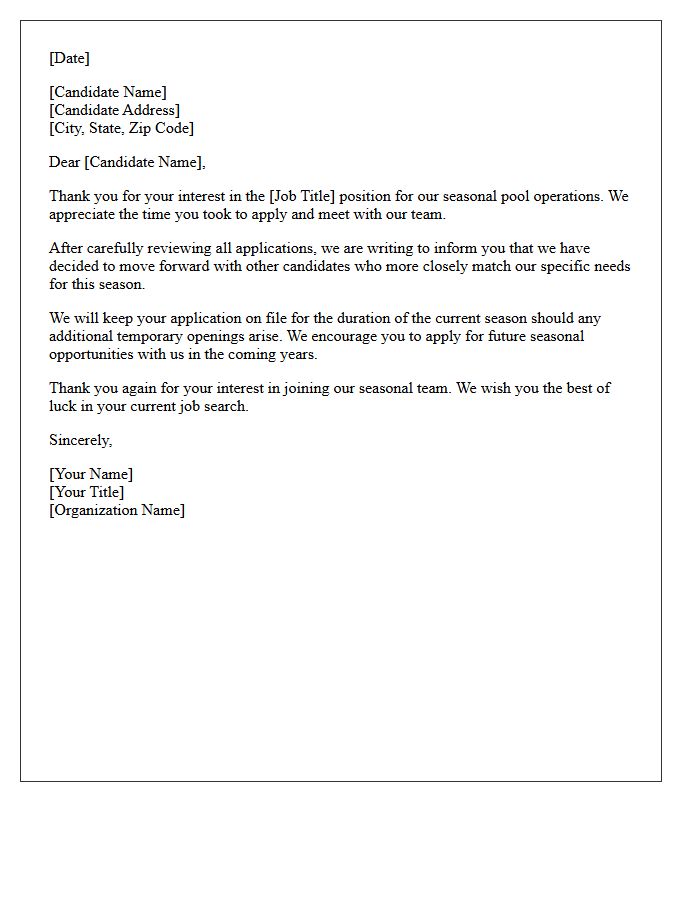
When sending a Temporary Pool Seasonal Candidate Rejection Letter, prioritize clear communication and professional courtesy. Express gratitude for their interest in the seasonal position while stating that other candidates were selected for the current pool. Keeping the tone positive is essential for employer branding, as seasonal applicants often apply again. Encourage them to monitor future temporary openings and maintain their profile in your talent database. Providing a prompt response ensures a respectful candidate experience, fostering goodwill even when a job offer is not extended during this hiring cycle.
Skill Mismatch Seasonal Assignment Rejection Letter
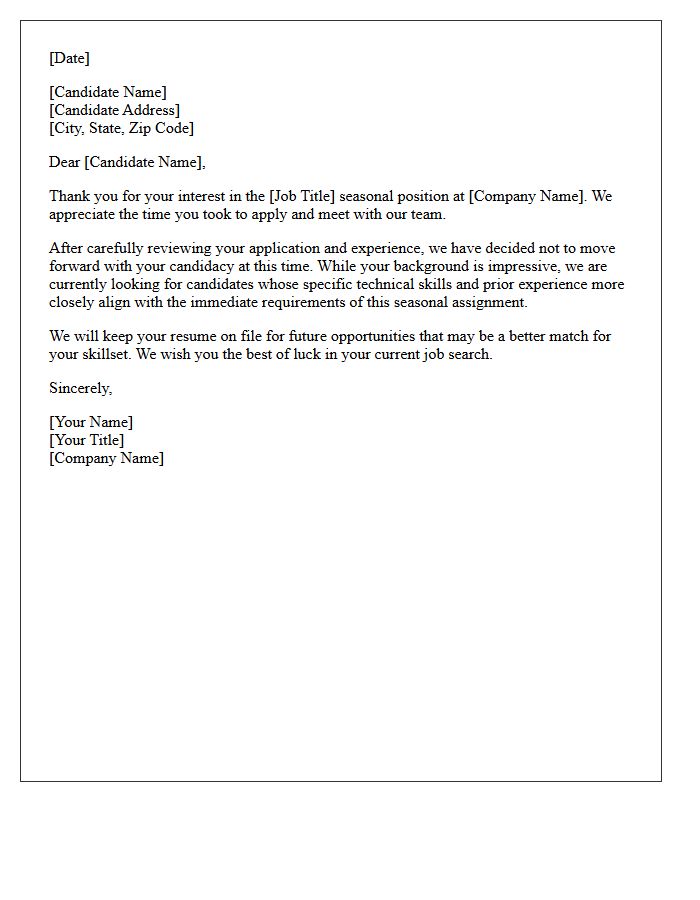
A Skill Mismatch Seasonal Assignment Rejection Letter professionally informs applicants that their current abilities do not align with specific temporary operational needs. This document is essential for maintaining a positive brand reputation during high-volume hiring periods. It should clearly state that while their background is impressive, other candidates possess more direct technical alignment for the short-term role. Providing a concise explanation helps candidates understand the decision, while encouraging them to apply for future permanent positions that better fit their unique professional expertise and career trajectory.
Alternate Candidate Selected Seasonal Rejection Letter
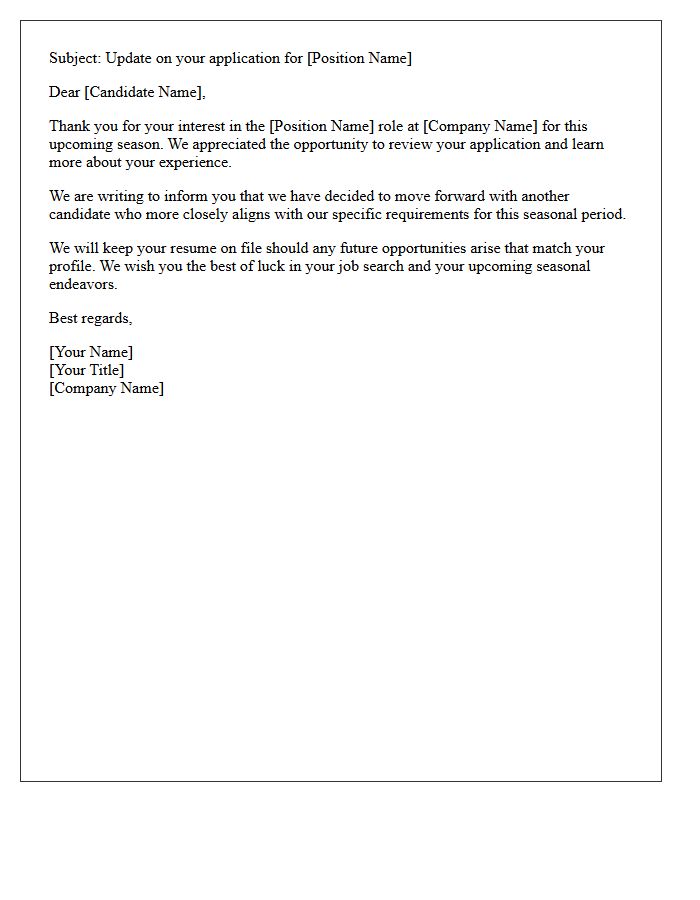
An Alternate Candidate Selected status means you were a qualified finalist, but the company chose another applicant for the current seasonal peak. This seasonal rejection is often temporary rather than a reflection of poor performance. Since high-volume hiring fluctuates, recruiters frequently revisit this talent pool for future openings or unexpected vacancies. It is essential to remain professional and reapply during the next hiring cycle, as your previous status as a top-tier candidate makes you a priority lead for upcoming seasonal roles.
Holiday Peak Season Placement Rejection Letter
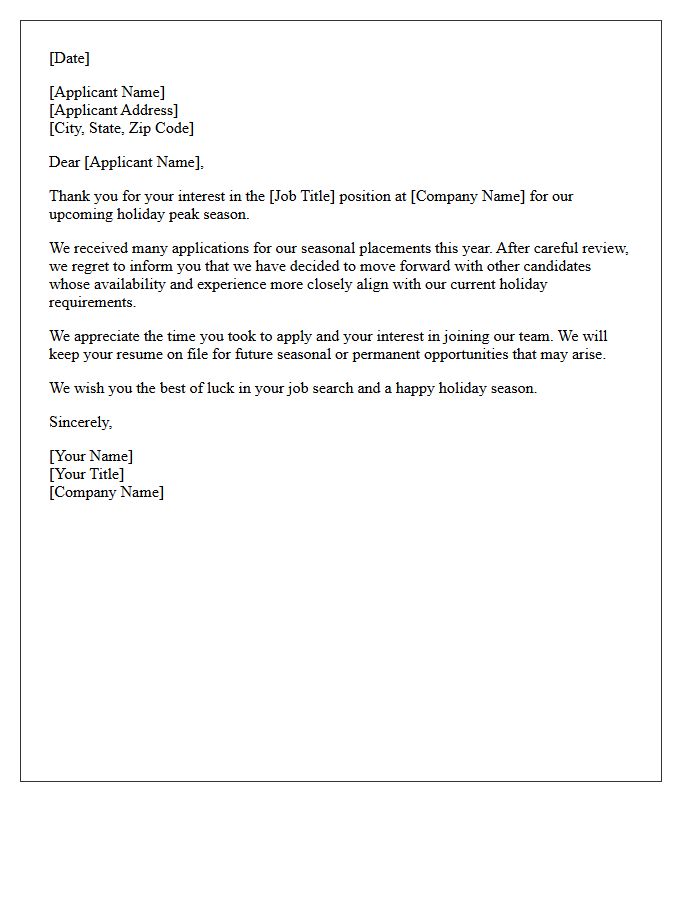
A holiday peak season placement rejection letter informs applicants that their candidacy will not proceed during the high-volume recruitment period. Receiving this notice often means the organization has met its immediate seasonal capacity or found a profile better suited for short-term operational demands. It is important to remain professional, as these roles are fast-paced and competitive. Candidates should view this as a temporary setback rather than a permanent disqualification. Often, maintaining a positive relationship can lead to future permanent employment opportunities once the peak demand stabilizes or new vacancies arise.
When will I receive a seasonal position rejection letter?
Most candidates receive a seasonal rejection letter within two to four weeks after the application deadline or completion of the interview process. If the hiring season is fast-paced, notifications may be sent sooner to allow candidates to seek other holiday or summer opportunities.
What does a typical seasonal rejection letter include?
A standard seasonal rejection letter includes a thank you for your interest, a clear statement that the company is not moving forward with your application for the current season, and often an invitation to apply for future seasonal peaks or permanent roles.
Can I apply for a permanent role if I received a seasonal rejection letter?
Yes, receiving a rejection for a seasonal position does not disqualify you from permanent roles. Often, seasonal hiring criteria are based on specific availability and short-term experience, which may differ from the requirements of a full-time, year-round position.
How should I respond to a seasonal employment rejection?
While not required, sending a brief professional response can leave a positive impression. Thank the hiring manager for their time and express your continued interest in being considered for future seasonal openings or busy periods.
Why was my application for a seasonal role declined?
Common reasons for seasonal rejection include a lack of availability during peak hours (such as weekends or holidays), the position being filled by a candidate with more immediate experience, or the seasonal hiring quota being met before your application was processed.

Comments