
A Broker-Dealer Audit Representation Letter is a critical compliance document provided to independent auditors to confirm the accuracy of financial statements and internal controls. It ensures transparency and fulfills regulatory requirements under SEC and FINRA standards. Navigating these legal obligations is essential for maintaining your firm's standing. To help you streamline this process, below are some ready to use templates.

Image cover: Mastering Your Broker-Dealer Audit Representation Letter: Expert Templates and Best Practices
Letter Samples List
- Broker-Dealer Management Representation Letter
- Regulatory Exemption Provision Representation Letter
- Customer Protection Rule Compliance Letter
- Net Capital Computation Representation Letter
- Anti-Money Laundering Compliance Representation Letter
- Related Party Transactions Representation Letter
- Internal Control Over Compliance Representation Letter
- Securities Investor Protection Corporation Assessment Letter
- Financial Responsibility Rules Representation Letter
- Going Concern Evaluation Representation Letter
- Subsequent Events Audit Representation Letter
- Fraud And Noncompliance Representation Letter
- Service Organization Control Representation Letter
Broker-Dealer Management Representation Letter
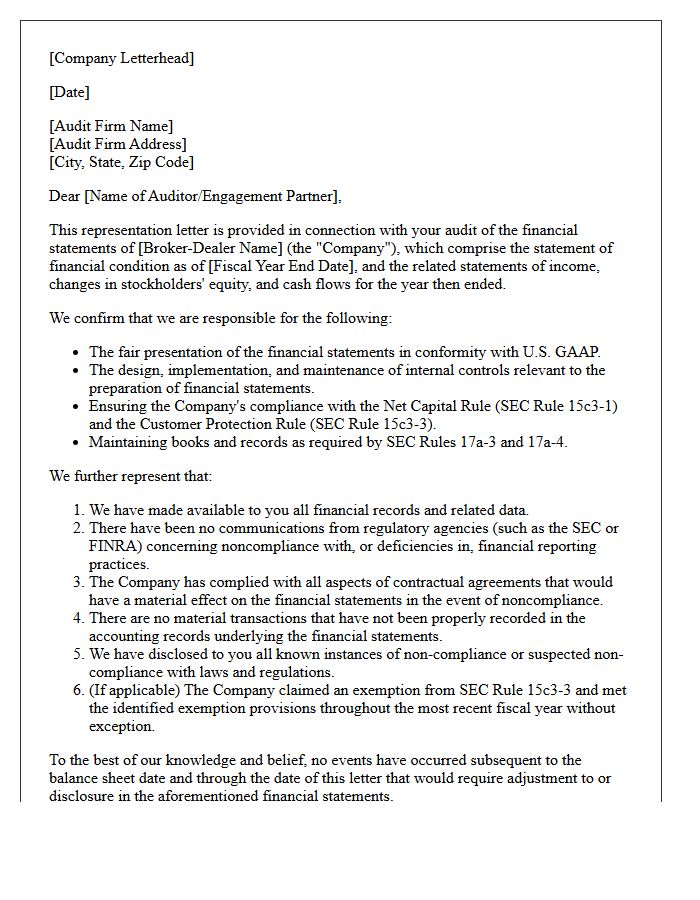
A Broker-Dealer Management Representation Letter is a mandatory document provided by executive management to external auditors during an annual audit. It serves as a formal written confirmation that all financial statements and regulatory reports are accurate, complete, and compliant with SEC and FINRA rules. By signing this letter, management acknowledges their primary responsibility for establishing effective internal controls and ensuring the truthfulness of disclosures regarding net capital requirements and customer protection. This document bridges the accountability gap between auditors and firm leadership, protecting the integrity of the financial markets.
Regulatory Exemption Provision Representation Letter
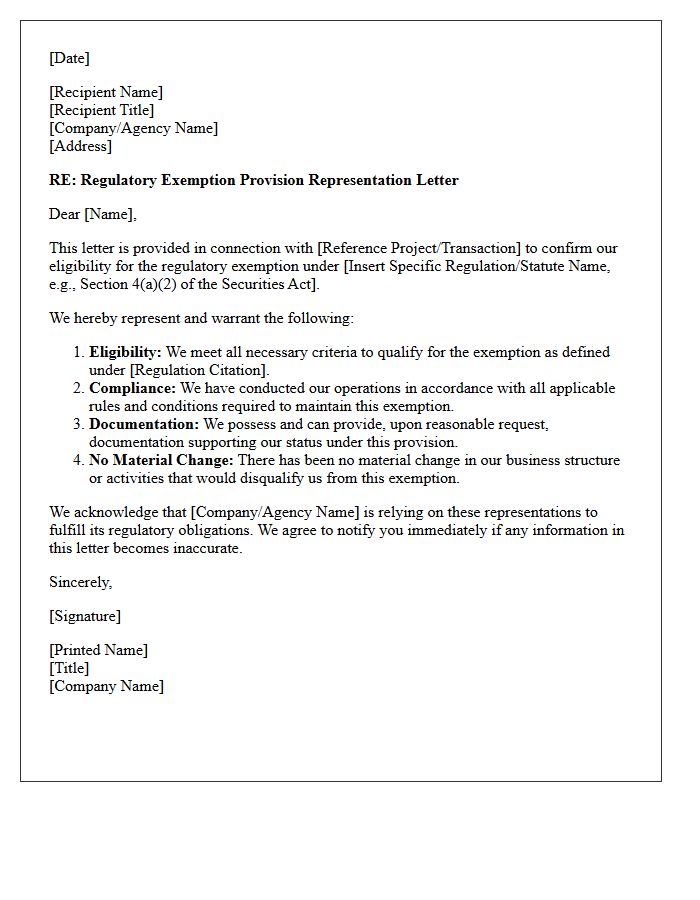
A Regulatory Exemption Provision Representation Letter is a legal document used to confirm that a transaction qualifies for specific legal exemptions under securities or financial regulations. It serves as formal evidence that an entity meets the necessary criteria, such as being an accredited investor or a qualified institutional buyer, to bypass standard registration requirements. This letter protects parties by documenting compliance and mitigating regulatory risks during private placements or complex financial dealings. It ensures that all participants verify their eligibility status to maintain the validity of the regulatory safe harbor.
Customer Protection Rule Compliance Letter
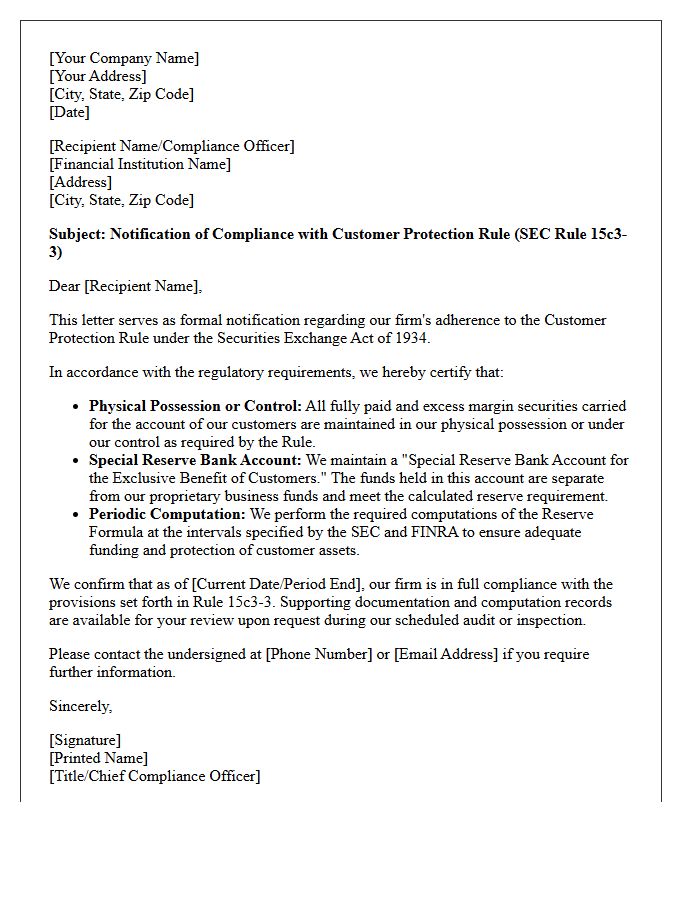
A Customer Protection Rule Compliance Letter verifies that a financial institution adheres to SEC Rule 15c3-3. This essential document confirms the segregation of client assets from firm funds, ensuring investor protection. It serves as formal evidence that the broker-dealer maintains adequate reserves and properly safeguards fully paid securities. Compliance ensures that in the event of firm insolvency, client holdings remain protected and accessible. Understanding this letter is vital for auditing, regulatory oversight, and maintaining trust within the financial markets.
Net Capital Computation Representation Letter
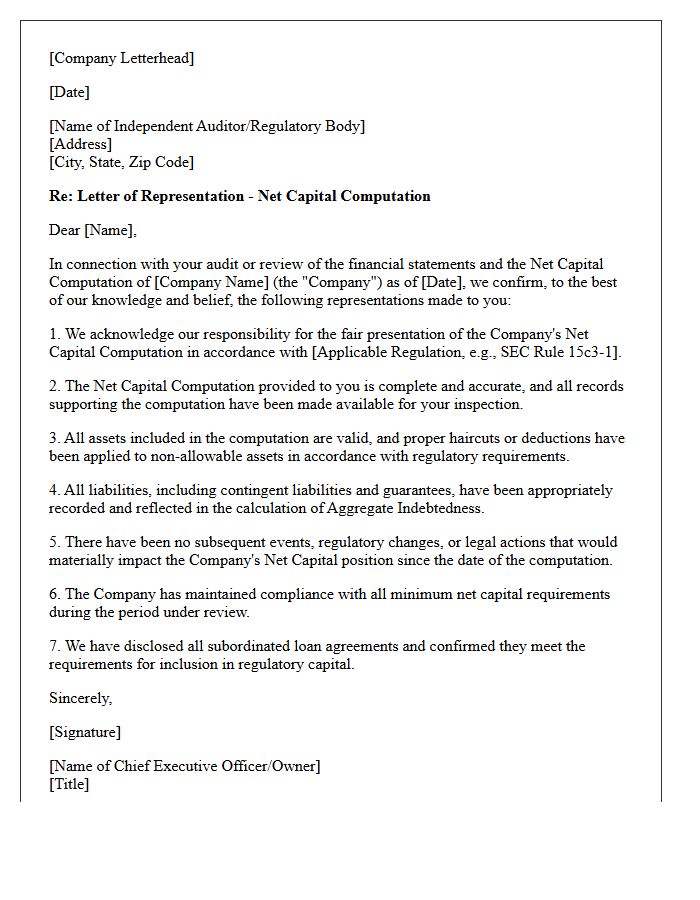
A Net Capital Computation Representation Letter is a formal document where brokerage management confirms the accuracy of financial statements to auditors. It serves as a legal affirmation that the firm complies with SEC and FINRA net capital rules. This letter ensures that all liabilities and assets are properly recorded to maintain market liquidity. It acts as a critical internal control, protecting investors by verifying that the firm holds sufficient regulatory capital to meet its financial obligations and absorb potential operational losses during market volatility.
Anti-Money Laundering Compliance Representation Letter
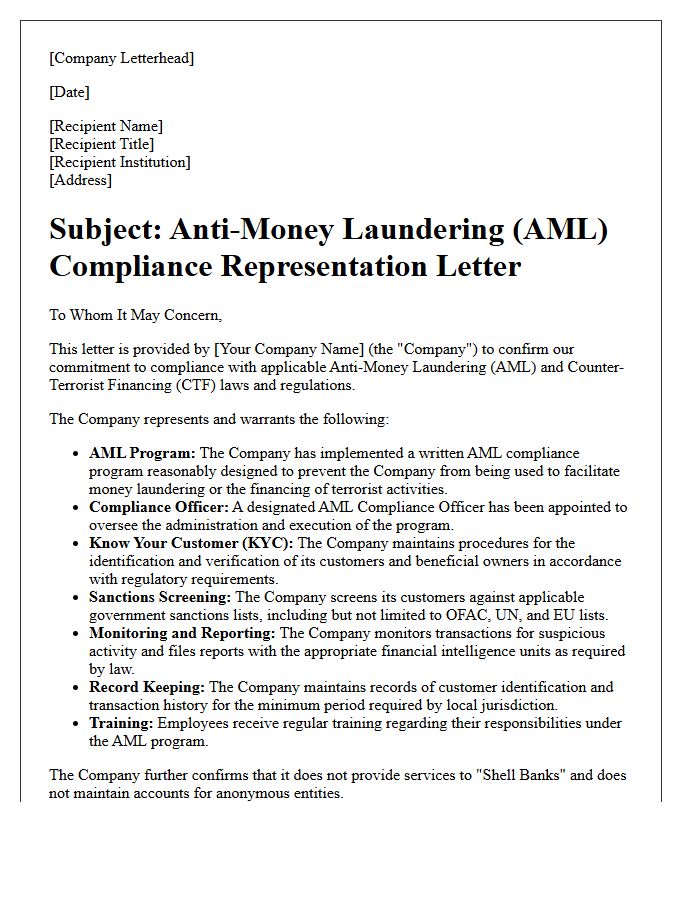
An Anti-Money Laundering Compliance Representation Letter is a formal document where a client confirms to a financial institution that their funds originate from legitimate sources. It serves as critical legal evidence that the entity adheres to global financial regulations and maintains robust internal controls. This letter mitigates risk by verifying that transactions are not linked to criminal activities or terrorism financing. Providing accurate information is essential to maintain regulatory standing and ensure uninterrupted access to banking services while fulfilling due diligence requirements under international law.
Related Party Transactions Representation Letter
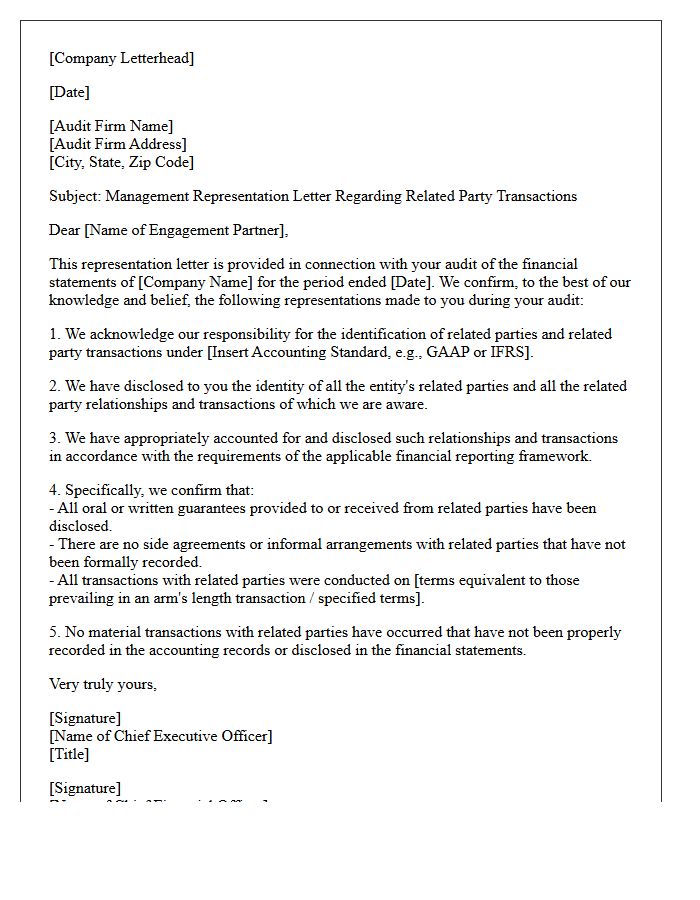
A Related Party Transactions Representation Letter is a formal document provided by management to auditors during an audit. Its primary purpose is to confirm the completeness of disclosed relationships and dealings with affiliates, directors, or significant shareholders. This letter ensures that all material transactions have been properly identified, authorized, and recorded according to financial reporting frameworks. By signing this, management accepts responsibility for the integrity of disclosures, helping auditors assess potential conflicts of interest or risks of financial misstatement that could arise from non-arm's length agreements.
Internal Control Over Compliance Representation Letter
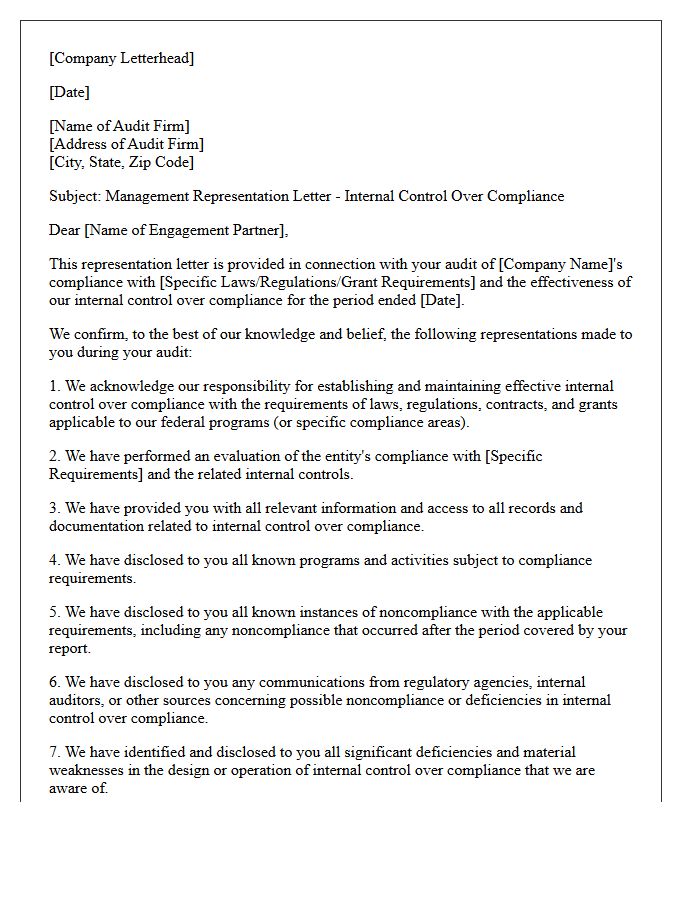
An Internal Control Over Compliance Representation Letter is a formal document signed by management to confirm their responsibility for maintaining effective controls over federal awards. It serves as crucial audit evidence, asserting that the organization has complied with specific laws, regulations, and provisions of contracts or grants. By providing this written confirmation, management acknowledges their accountability for detecting noncompliance and ensuring internal systems function as intended. This letter is essential for auditors to finalize their assessment under Uniform Guidance requirements and validate the integrity of the compliance reporting process.
Securities Investor Protection Corporation Assessment Letter
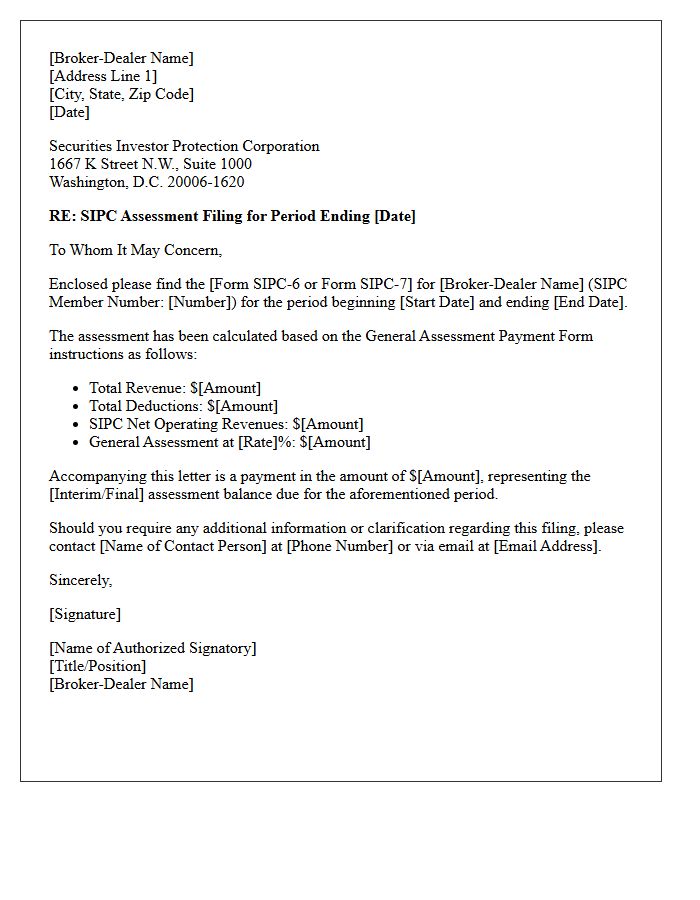
The SIPC Assessment Letter is a mandatory filing used by broker-dealers to calculate and remit quarterly assessments to the Securities Investor Protection Corporation. These payments fund the SIPC protection pool, which safeguards customer assets in the event of a firm's insolvency. Firms must accurately report their net operating revenues to determine the specific fee owed. Timely submission is crucial for maintaining regulatory compliance and ensuring investor confidence within the financial markets. Failure to file can lead to significant penalties or loss of membership status.
Financial Responsibility Rules Representation Letter
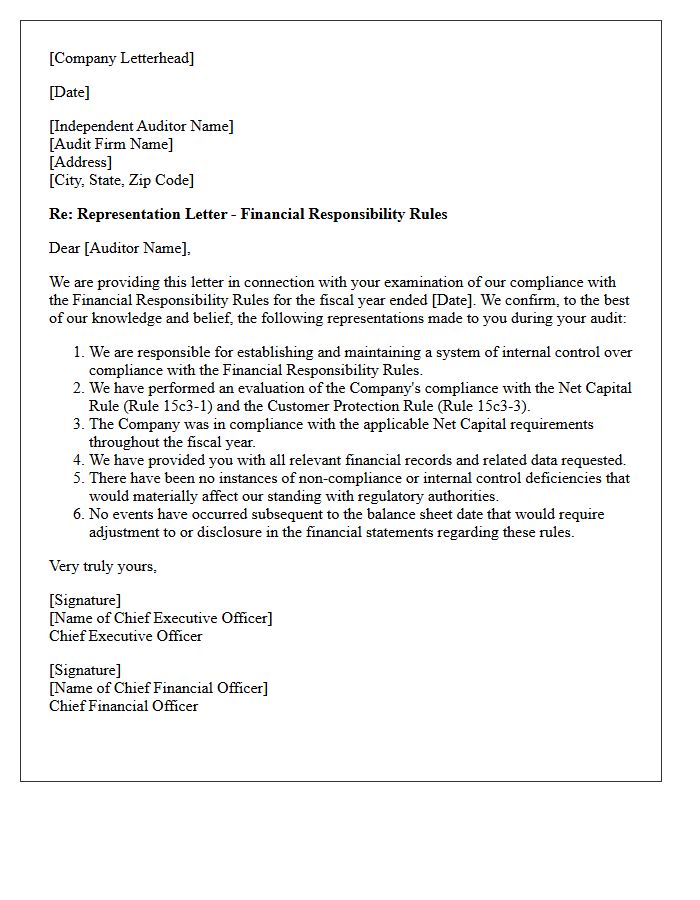
A Financial Responsibility Rules Representation Letter is a critical compliance document for broker-dealers. It confirms that a firm maintains Net Capital and follows customer protection protocols as mandated by the SEC. This letter serves as a formal assertion to auditors that the firm has established internal controls to safeguard client assets and meet liquidity requirements. Ensuring the accuracy of these representations is vital for regulatory oversight and maintaining financial integrity within the securities industry. Failure to provide accurate disclosures can lead to severe legal penalties and loss of operational licenses.
Going Concern Evaluation Representation Letter
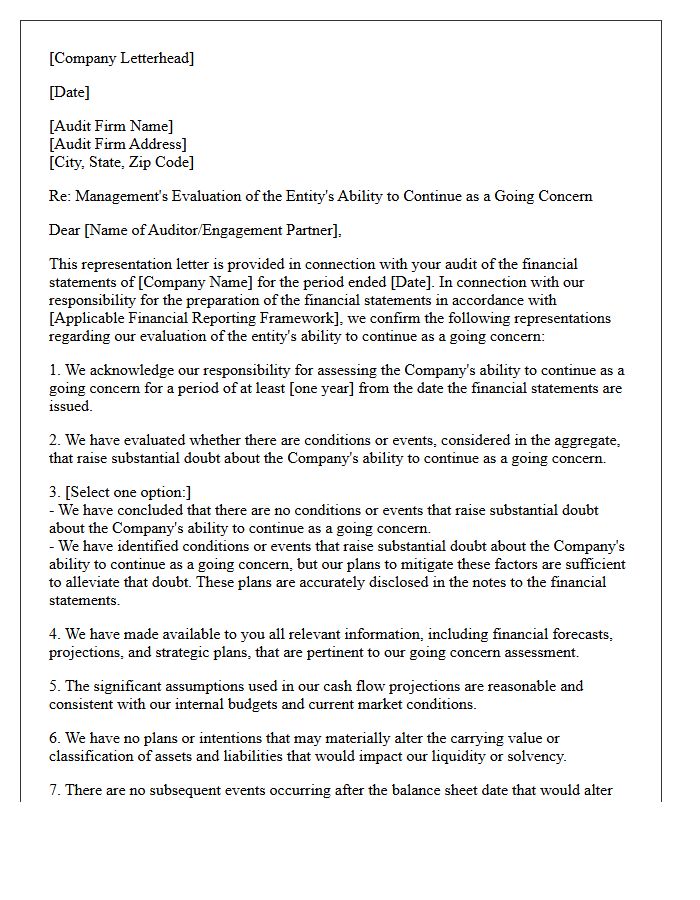
A Going Concern Evaluation Representation Letter is a formal document provided by management to auditors during a financial review. Its primary purpose is to confirm the entity's ability to continue operations for at least twelve months. The letter details mitigation plans for any identified financial distress, such as liquidity risks or debt defaults. By signing this, management acknowledges their responsibility for assessing sustainability and provides a written basis for the audit opinion regarding the company's long-term viability and potential liquidity issues.
Subsequent Events Audit Representation Letter
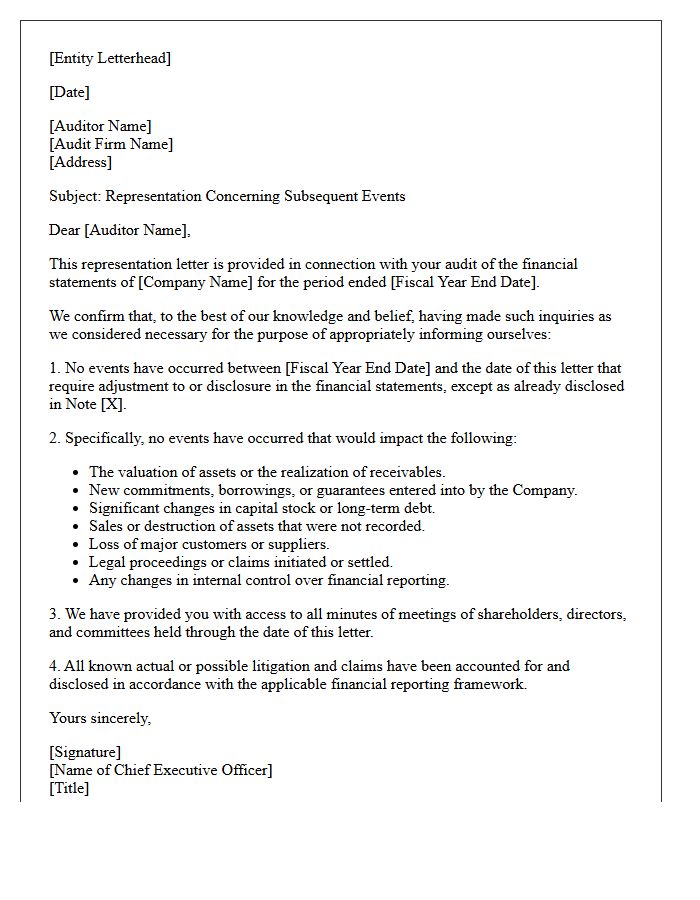
A Subsequent Events Audit Representation Letter confirms that management has disclosed all significant occurrences between the balance sheet date and the audit report issuance. This document is essential for financial statement accuracy, as it identifies material events requiring adjustments or footnote disclosures. Auditors rely on these formal assertions to ensure the financial reporting reflects the company's current solvency and risk profile. Failing to report these events can lead to misleading valuations and audit non-compliance, making this letter a critical component of the final verification process.
Fraud And Noncompliance Representation Letter
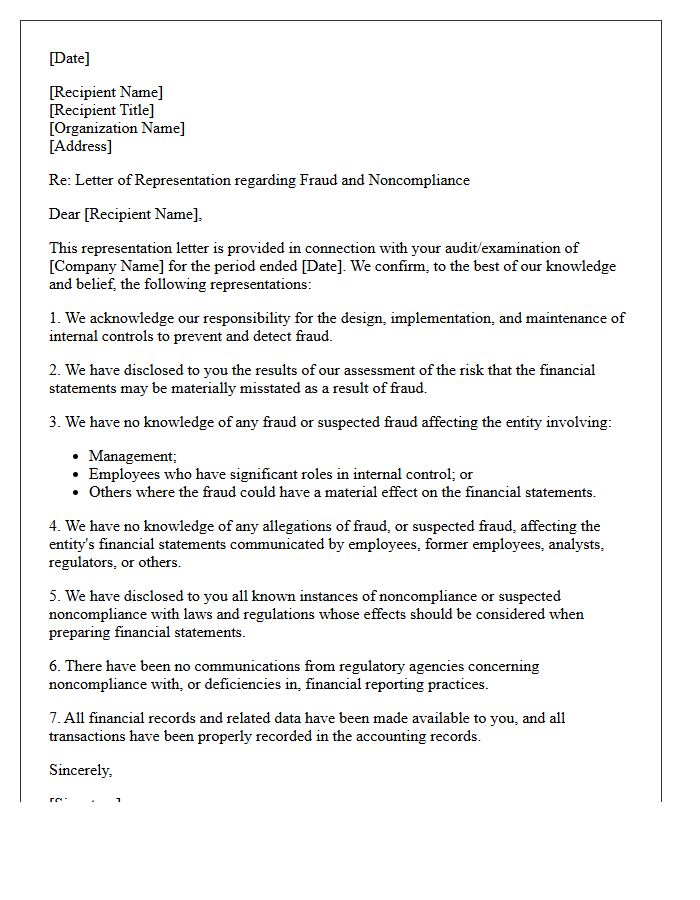
A Fraud and Noncompliance Representation Letter is a formal document provided by management to auditors during a financial review. This letter confirms that leadership has disclosed all known instances of legal violations, fraudulent activities, or suspected irregularities within the organization. Its primary purpose is to establish management's accountability for internal controls and financial integrity. By signing this document, officials acknowledge their responsibility for preventing misconduct and ensuring regulatory compliance, thereby reducing the auditor's risk by documenting official claims regarding the company's ethical and operational standing.
Service Organization Control Representation Letter
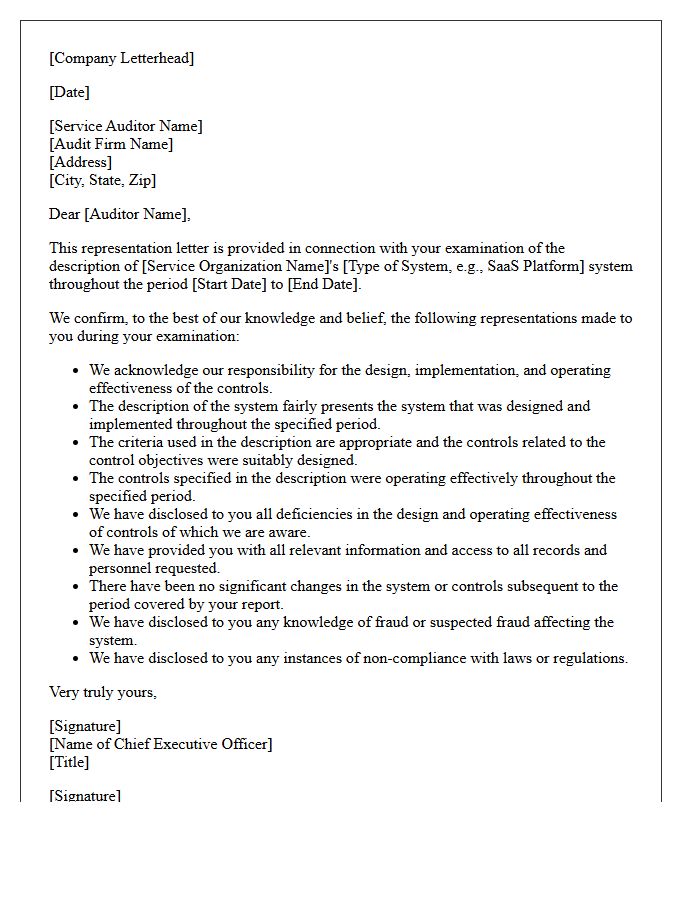
A Service Organization Control Representation Letter is a formal document provided by management to auditors during a SOC audit. It confirms that the organization has fulfilled its responsibilities in maintaining internal controls and providing accurate information regarding their system. This letter serves as an official assertion that all significant changes, security incidents, and relevant data were disclosed truthfully. By signing this document, management accepts accountability for the control environment, ensuring the final report reflects a reliable assessment of the company's operational integrity and data protection standards.
What is a Broker-Dealer Audit Representation Letter?
A Broker-Dealer Audit Representation Letter is a formal document provided by management to external auditors confirming the accuracy, completeness, and integrity of the financial statements and compliance reports submitted during the annual audit process.
Why is a management representation letter required for SEC Rule 17a-5 compliance?
Under SEC Rule 17a-5, auditors must obtain written representations from broker-dealer management to fulfill PCAOB auditing standards, ensuring management acknowledges its responsibility for internal controls and the fair presentation of financial results.
What specific assertions are included in a Broker-Dealer Audit Representation Letter?
The letter typically includes assertions regarding the Net Capital Rule (SEC Rule 15c3-1), the Customer Protection Rule (SEC Rule 15c3-3), the availability of all financial records, and the absence of unrecorded transactions or undisclosed liabilities.
Who is responsible for signing the Broker-Dealer Audit Representation Letter?
The letter must be signed by the broker-dealer's senior management, typically the Chief Executive Officer (CEO) and the Chief Financial Officer (CFO) or Financial and Operations Principal (FINOP), as they hold primary responsibility for the firm's regulatory reporting.
What are the consequences of refusing to sign an Audit Representation Letter?
A refusal to provide the signed representation letter constitutes a scope limitation, which prevents the auditor from issuing an unqualified opinion and may lead to regulatory disciplinary action or the termination of the audit engagement.


Comments