
After reporting identity theft, verifying your Confirmation of Placed Fraud Alert Status is a critical step in securing your credit report. This confirmation ensures that creditors must verify your identity before opening new accounts. Understanding how to track these alerts helps maintain long-term financial safety. To assist your correspondence with credit bureaus, below are some ready to use template.
Image cover: Verifying Your Fraud Alert: Confirmation Samples and Templates
Letter Samples List
- Confirmation of Initial Fraud Alert Placement Letter
- Extended Identity Theft Fraud Alert Confirmation Letter
- Active Duty Military Fraud Alert Status Letter
- Credit Card Account Fraud Alert Activation Letter
- Checking Account Fraud Alert Confirmation Letter
- Business Banking Fraud Alert Placement Letter
- Joint Account Fraud Alert Status Notification Letter
- Compromised Debit Card Fraud Alert Confirmation Letter
- Temporary Fraud Alert Placement Acknowledgment Letter
- Permanent Fraud Alert Status Confirmation Letter
- Vulnerable Customer Fraud Alert Placement Letter
- Credit Bureau Fraud Alert Synchronization Letter
Confirmation of Initial Fraud Alert Placement Letter
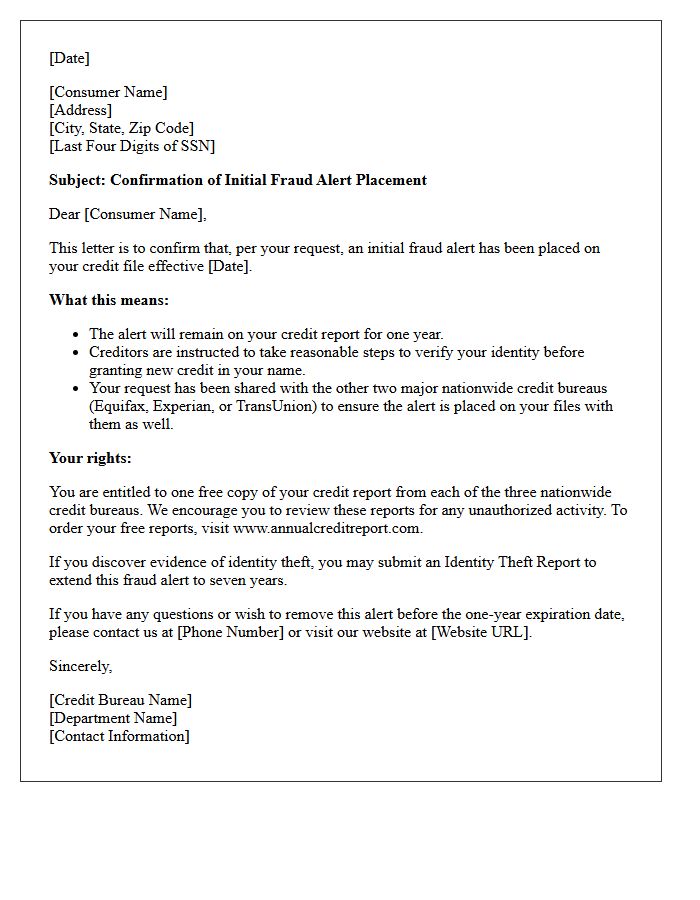
A Confirmation of Initial Fraud Alert Placement Letter is a vital document sent by credit bureaus after you report potential identity theft. This notification confirms that a 90-day alert has been added to your credit file, requiring lenders to verify your identity before granting new credit. It ensures extra security while you monitor your accounts for suspicious activity. Always review this letter to ensure your contact information is correct, as it serves as your official proof of protection during the initial fraud recovery process.
Extended Identity Theft Fraud Alert Confirmation Letter
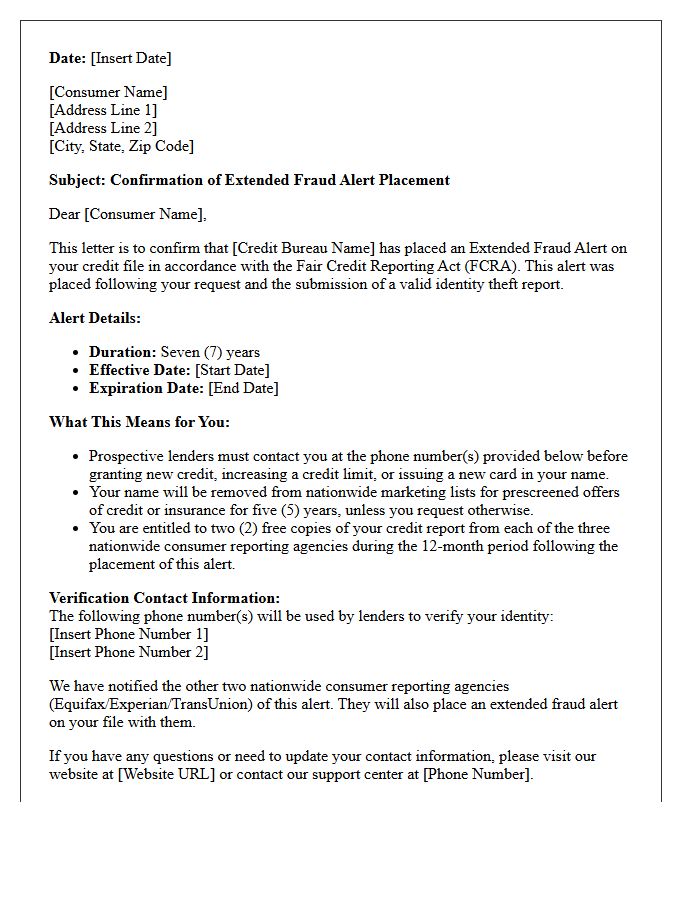
An Extended Identity Theft Fraud Alert Confirmation Letter serves as official verification that a seven-year protection period has been activated on your credit report. This document confirms that Equifax, Experian, or TransUnion has processed your identity theft report. It is a critical security layer requiring creditors to verify your identity before issuing new credit. Retain this letter as proof of your victim status, as it also grants you two free credit disclosures within twelve months and helps remove fraudulent information from your financial records permanently.
Active Duty Military Fraud Alert Status Letter
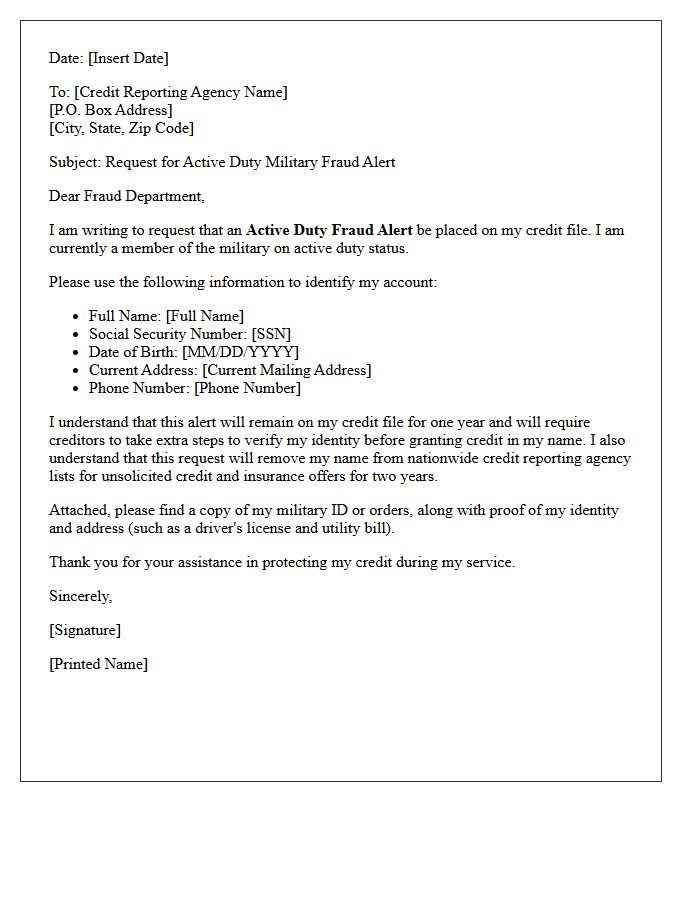
An Active Duty Military Fraud Alert Status Letter is a formal document issued by credit bureaus confirming that a security flag has been placed on your credit file. This protection is a legal right for deployed service members under the Fair Credit Reporting Act. It requires creditors to verify your identity before opening new accounts, effectively preventing identity theft during deployment. The letter serves as proof of your protected status, lasts for one year, and automatically removes your name from pre-screened credit card solicitation lists to further enhance security.
Credit Card Account Fraud Alert Activation Letter
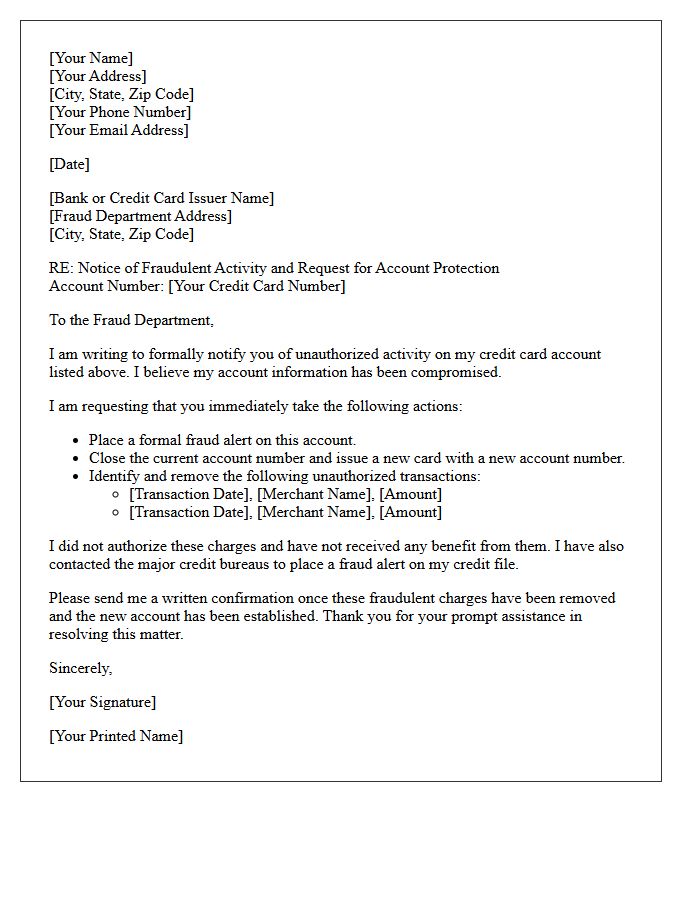
A Credit Card Account Fraud Alert Activation Letter is a formal notification confirming that a security flag has been placed on your credit profile. This alert requires lenders to verify your identity before approving new credit applications, significantly reducing the risk of identity theft. It is essential to review the letter for accuracy and understand that this protection typically lasts for one year unless extended. Always keep this document for your records to ensure your financial accounts remain secure against unauthorized access or fraudulent activities.
Checking Account Fraud Alert Confirmation Letter
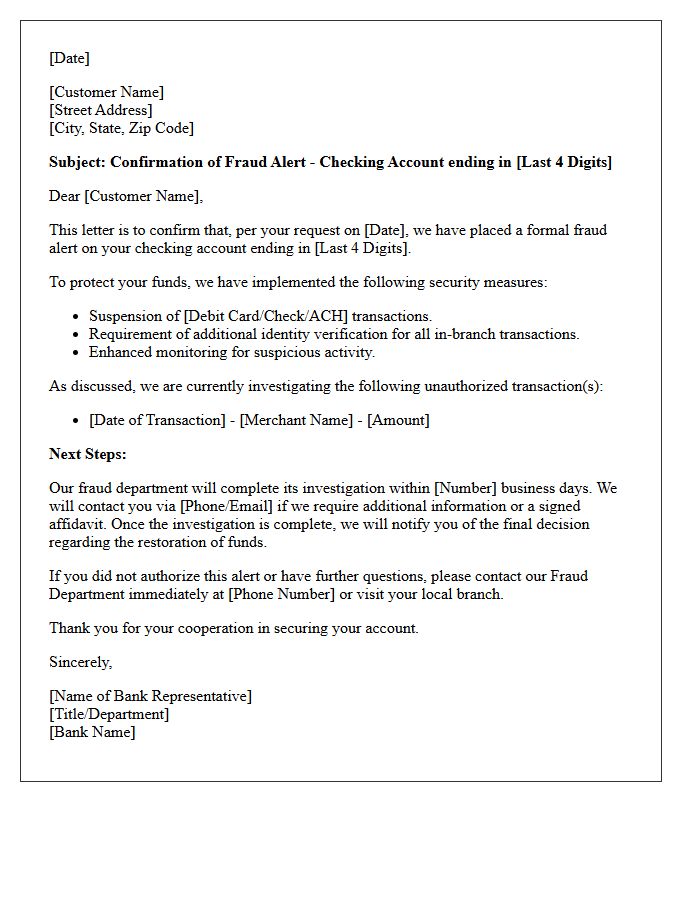
A Checking Account Fraud Alert Confirmation Letter serves as formal verification that your financial institution has acknowledged potential unauthorized activity. This document outlines the specific transactions flagged and confirms the protective measures taken, such as freezing your account or issuing new credentials. It is a critical component of your identity theft records, providing a paper trail for legal and recovery purposes. Always review the letter carefully to ensure all fraudulent charges are correctly identified and follow any requested steps to secure your personal information immediately.
Business Banking Fraud Alert Placement Letter
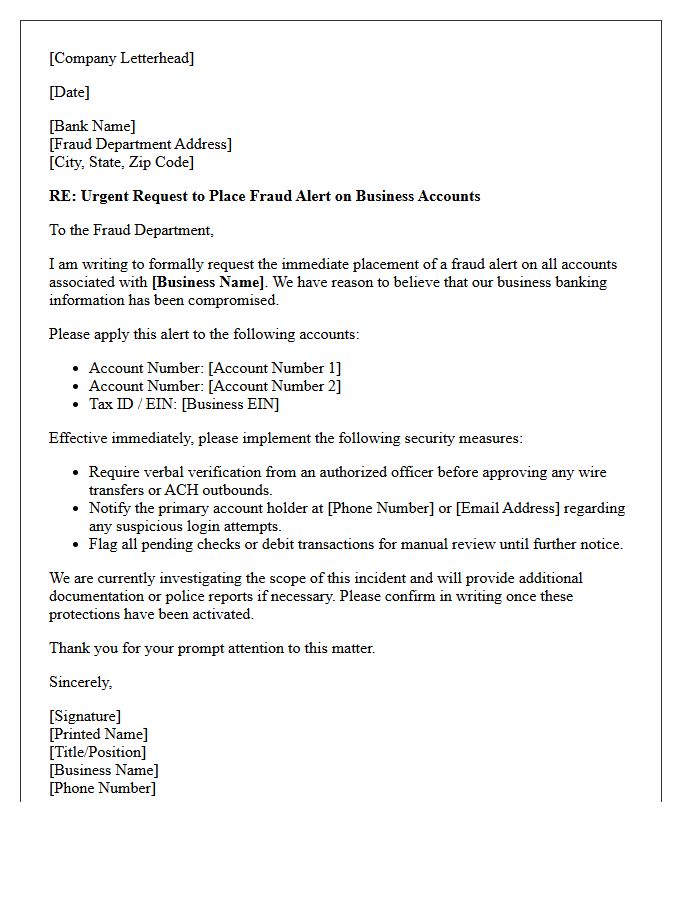
A Business Banking Fraud Alert Placement Letter is a formal notification confirming that a security restriction has been applied to your commercial account. This document serves as a critical verification measure to prevent unauthorized transactions following suspected identity theft or suspicious activity. It outlines the specific steps required to confirm your identity and legal authority to manage funds. Businesses must respond promptly to these notices to ensure financial protection and restore full account functionality while mitigating potential losses from fraudulent actors or cybersecurity breaches.
Joint Account Fraud Alert Status Notification Letter
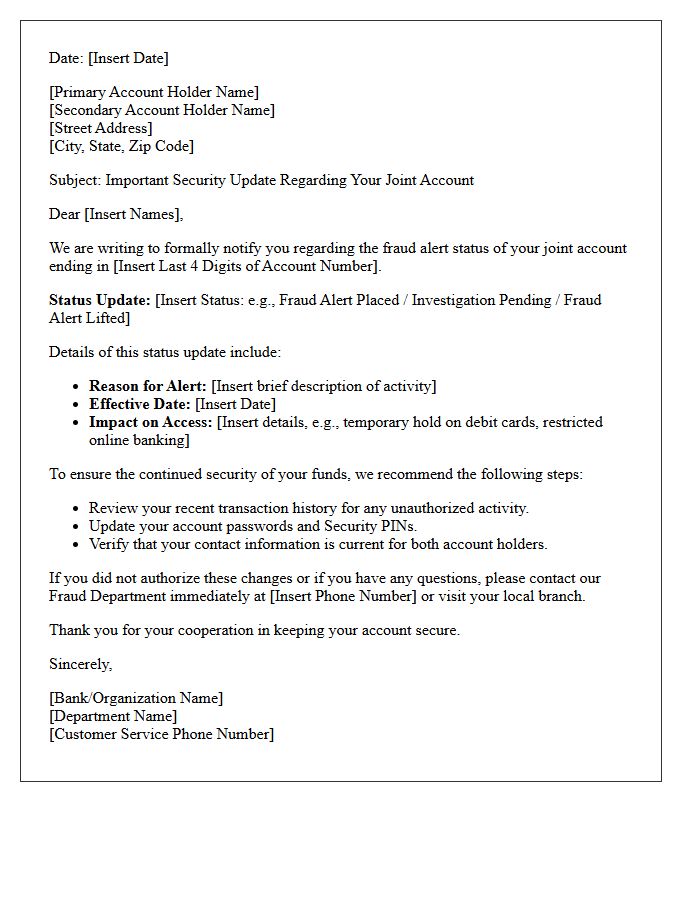
A Joint Account Fraud Alert Status Notification Letter is a formal communication sent to all co-owners regarding suspicious activity on their shared finances. This document confirms that a protective fraud alert has been placed on the account to prevent unauthorized transactions. It is essential to review the details immediately to verify identity and secure remaining assets. If you did not initiate this request, contact your financial institution instantly to dispute potential identity theft and update your security credentials to maintain account integrity and shared liability protection.
Compromised Debit Card Fraud Alert Confirmation Letter
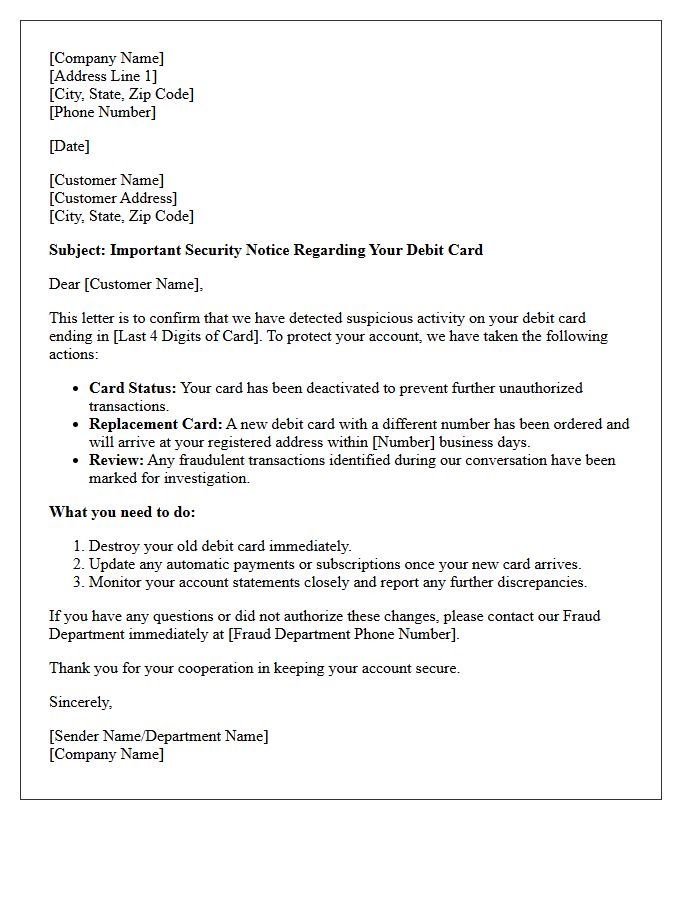
Receiving a Compromised Debit Card Fraud Alert Confirmation Letter indicates your bank detected unauthorized activity or a potential data breach. This formal notice confirms your old card is permanently deactivated to prevent further financial loss. It is crucial to review your recent transaction history for discrepancies and activate your replacement card immediately. Always verify the letter's authenticity by contacting your bank through their official customer service number. Promptly updating automatic payment settings linked to the old card ensures uninterrupted service and maintains your account's security integrity after a security incident.
Temporary Fraud Alert Placement Acknowledgment Letter
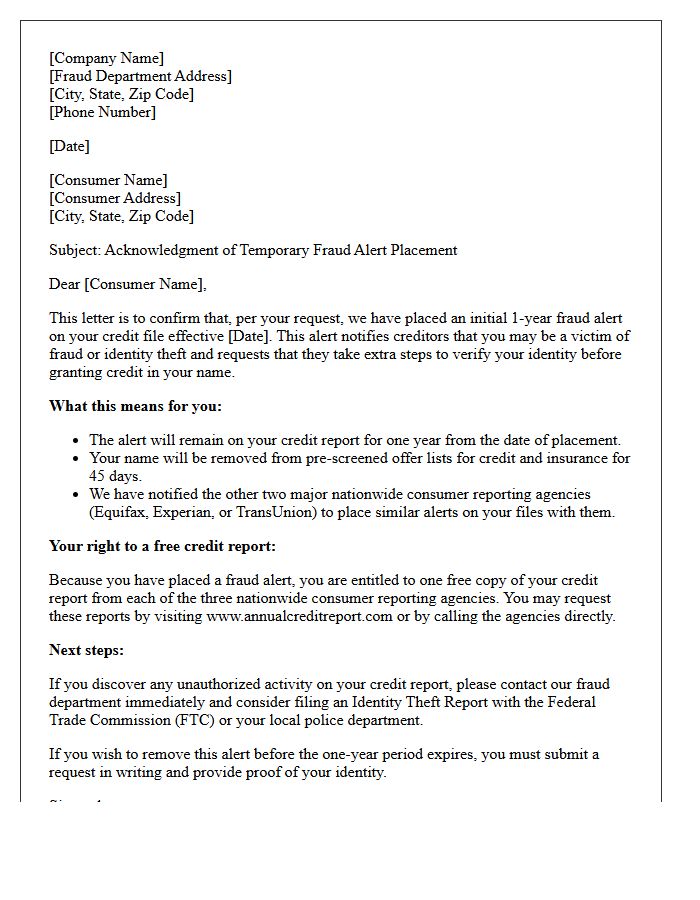
A Temporary Fraud Alert Placement Acknowledgment Letter is a formal confirmation from a credit bureau that an initial 90-day or one-year security alert has been added to your credit profile. This document serves as legal proof that creditors must take extra steps to verify your identity before extending credit. It is a critical tool for identity theft protection, notifying you that the bureau has also alerted other major agencies. Retain this letter for your records to ensure your personal financial data remains secure while you resolve potential fraudulent activity.
Permanent Fraud Alert Status Confirmation Letter
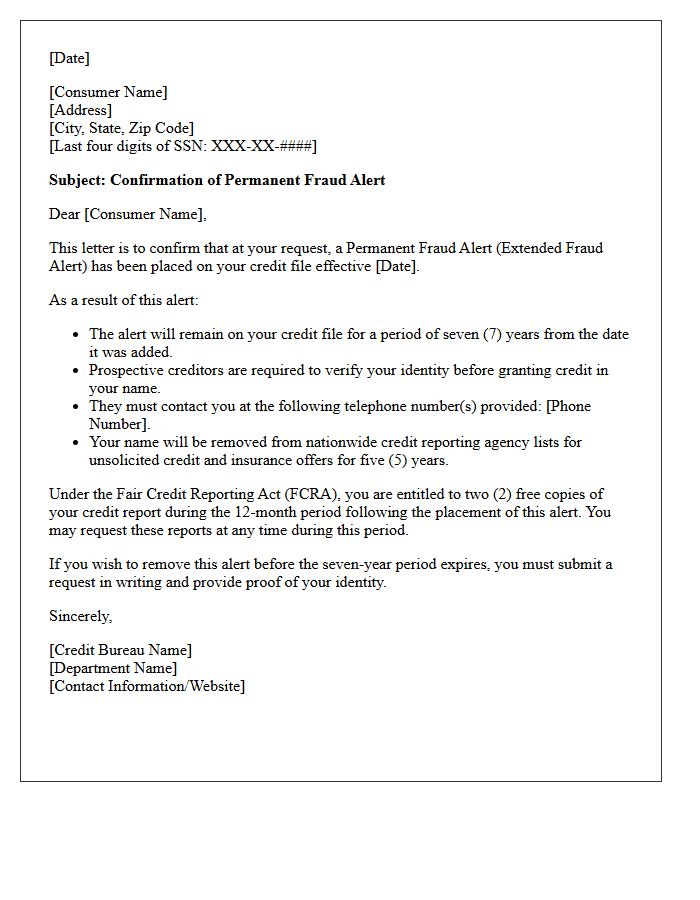
A Permanent Fraud Alert Status Confirmation Letter is a formal document issued by credit bureaus verifying that a long-term security layer is active on your credit report. This seven-year protection requires lenders to verify your identity before granting new credit, significantly reducing the risk of identity theft. It is typically granted to victims of fraud who provide a valid police report. Keeping this letter is essential for your records, as it serves as legal proof that your financial profile is monitored against unauthorized access and fraudulent applications.
Vulnerable Customer Fraud Alert Placement Letter
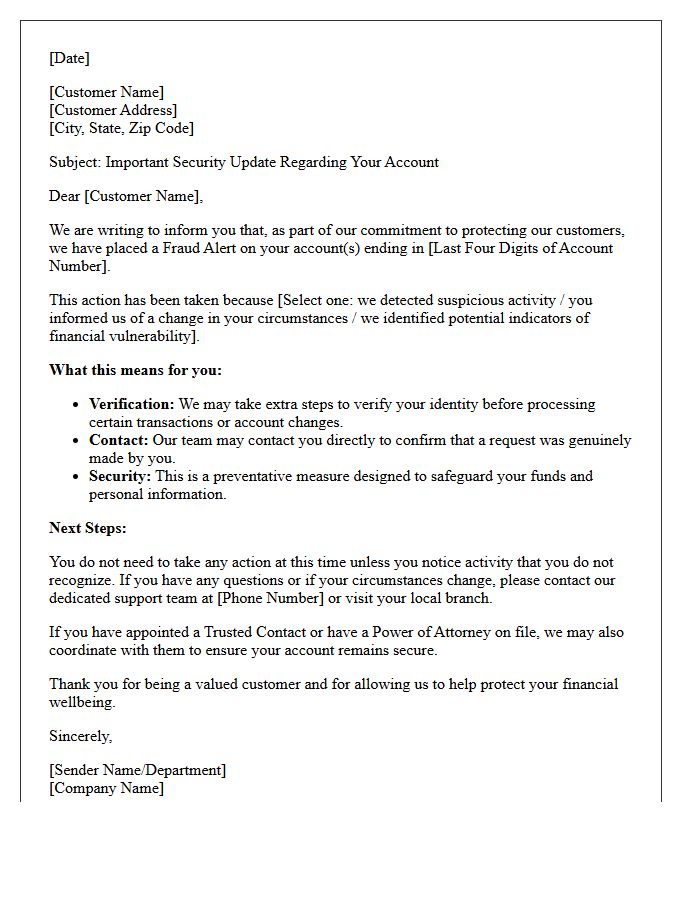
A Vulnerable Customer Fraud Alert Placement Letter serves as a formal notification that a protective layer has been added to a consumer's credit file. This document confirms the implementation of a victim of fraud alert, typically used when individuals are at higher risk due to age, disability, or mental health factors. It informs the recipient that creditors must now perform enhanced identity verification before granting new credit. This essential safeguard helps prevent financial exploitation while ensuring that identity theft protection measures are clearly communicated to the vulnerable individual or their legal representative.
Credit Bureau Fraud Alert Synchronization Letter
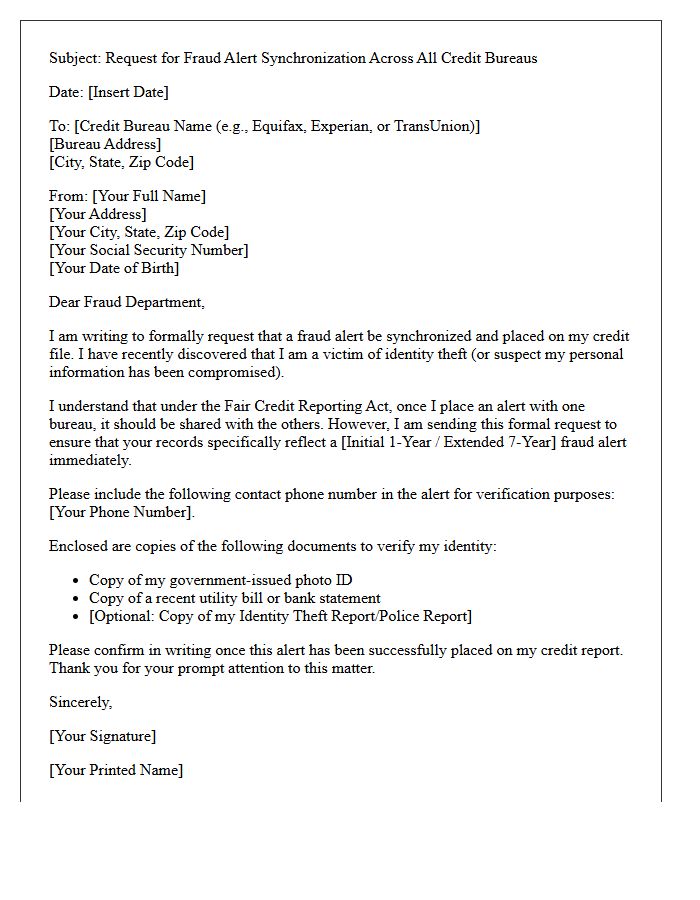
A Credit Bureau Fraud Alert Synchronization Letter is a formal request sent to Equifax, Experian, and TransUnion to ensure security alerts are consistent across all files. Under the Fair Credit Reporting Act, notifying one bureau should trigger others, but manual synchronization guarantees identity theft protection is active everywhere. This letter confirms that a fraud alert or credit freeze is properly implemented, preventing unauthorized accounts. Using this document helps maintain financial security by verifying that all major credit reporting agencies have updated your status to reflect potential fraudulent activity accurately.
How can I verify if a fraud alert has been successfully placed on my credit report?
To confirm your fraud alert status, you should log in to the online member portal of any of the three major credit bureaus (Equifax, Experian, or TransUnion) or check the confirmation letter sent via mail or email after your initial request.
Do I need to contact all three credit bureaus to confirm my fraud alert?
No, you only need to confirm with one bureau. By law, when you place a fraud alert with one credit reporting agency, they are required to notify the other two bureaus to implement the alert on your behalf automatically.
How long does it take for a fraud alert confirmation to appear on my credit file?
Once requested, a fraud alert is typically active within 24 to 48 hours. You can verify the "Active" status and the expiration date by viewing your personal credit report or checking your account dashboard on the bureau's website.
What documentation serves as official proof of a placed fraud alert?
The official confirmation is usually provided as a downloadable PDF or a physical letter sent to your registered address. This document contains the start date, the duration of the alert (typically one year for initial alerts), and instructions on how to remove it.
Can I use my annual credit report to confirm my fraud alert status?
Yes, your free annual credit report will display a "Statement" or "Fraud Alert" section if the status is active. If you do not see a fraud victim statement in the summary of your report, the alert may not have been processed correctly.


Comments