
A Notice of Beneficiary Rejection of Amendment is a formal document issued when a beneficiary declines proposed changes to a letter of credit. This refusal ensures the original financial terms remain binding until a mutual agreement is reached. Understanding this process is vital for secure international trade. To help you draft your response, below are some ready to use templates.

Image cover: Formal Rejection of Proposed Amendments: Beneficiary Notice Templates and Guides
Letter Samples List
- Letter of Notice of Beneficiary Rejection of Amendment
- Official Letter Regarding Beneficiary Rejection of Credit Amendment
- Beneficiary Rejection Letter for Letter of Credit Amendment
- Formal Letter of Rejection of Amendment by Beneficiary
- Banking Letter of Notice for Beneficiary Amendment Rejection
- Irrevocable Letter of Credit Beneficiary Amendment Rejection Letter
- Letter of Notification of Beneficiary Refusal of Amendment
- Beneficiary Letter of Rejection of Proposed Banking Amendment
- Trade Finance Letter of Beneficiary Amendment Rejection Notice
- Standby Letter of Credit Amendment Rejection Letter by Beneficiary
- Documentary Credit Beneficiary Amendment Rejection Letter
- Letter Denying Beneficiary Consent to Amendment Notice
- Bank Guarantee Amendment Rejection Letter from Beneficiary
- Trust Beneficiary Notice of Amendment Rejection Letter
- Commercial Banking Letter of Beneficiary Amendment Rejection
Letter of Notice of Beneficiary Rejection of Amendment
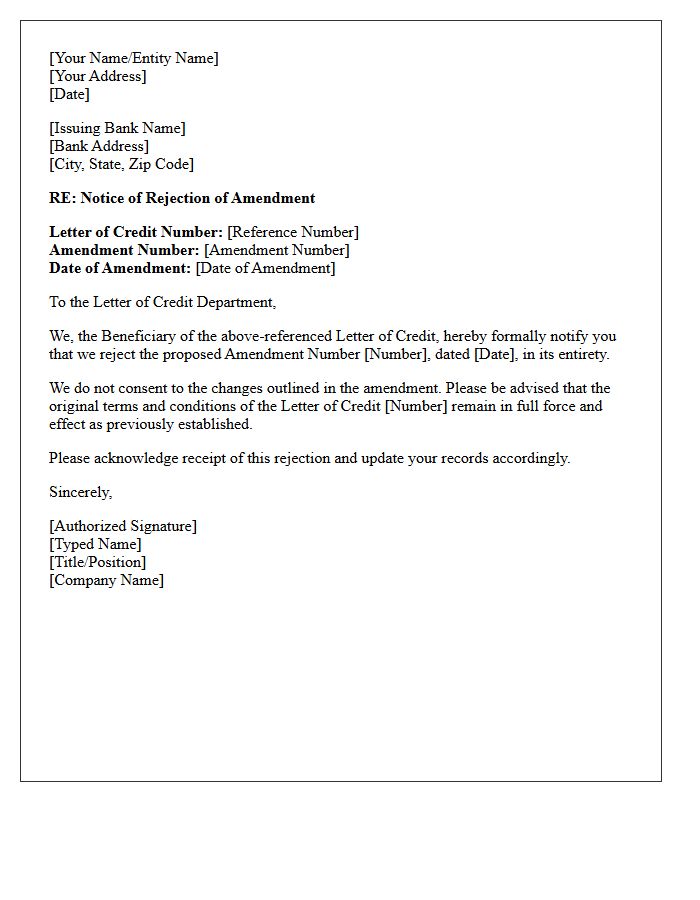
A Letter of Notice of Beneficiary Rejection of Amendment is a formal legal document used by a trust or policy beneficiary to formally decline proposed changes to an existing legal instrument. This notification is critical because it prevents unilateral modifications that could negatively impact the beneficiary's rights or asset distribution. By issuing this rejection, the individual ensures that the original terms remain enforceable unless a mutual agreement is reached. Timely delivery is essential to maintain legal protections and prevent the contested amendment from becoming binding under governing laws.
Official Letter Regarding Beneficiary Rejection of Credit Amendment
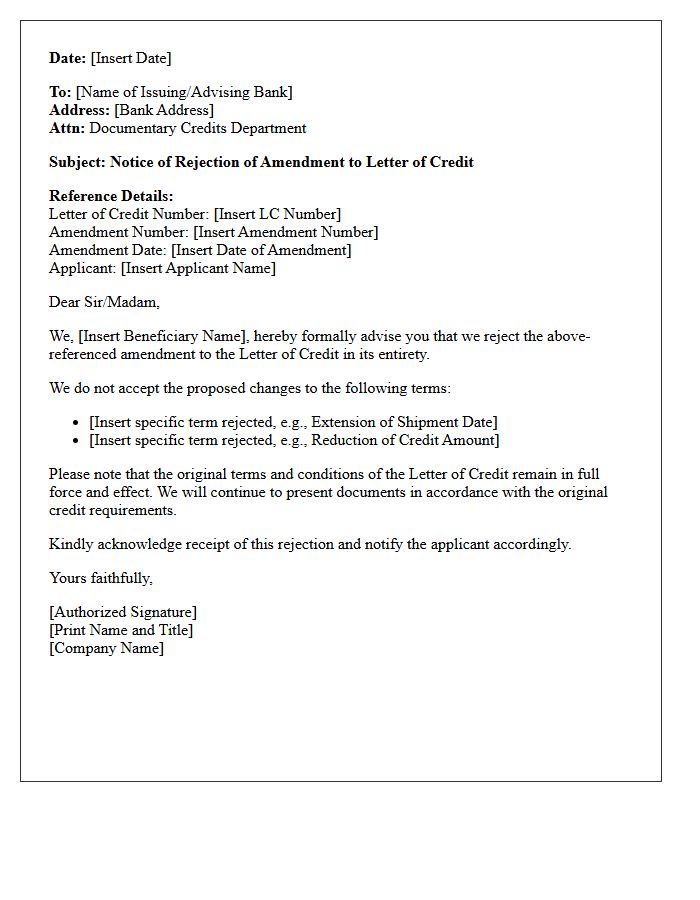
An official letter regarding beneficiary rejection confirms that the recipient refuses proposed changes to an existing letter of credit. According to UCP 600 standards, an amendment is only valid if all parties agree; therefore, a formal rejection ensures the original terms remain legally binding. The document must clearly state the amendment reference and the specific reasons for non-acceptance. Timely communication is essential to maintain transaction security and avoid contractual discrepancies between the issuing bank, applicant, and beneficiary during international trade settlements.
Beneficiary Rejection Letter for Letter of Credit Amendment
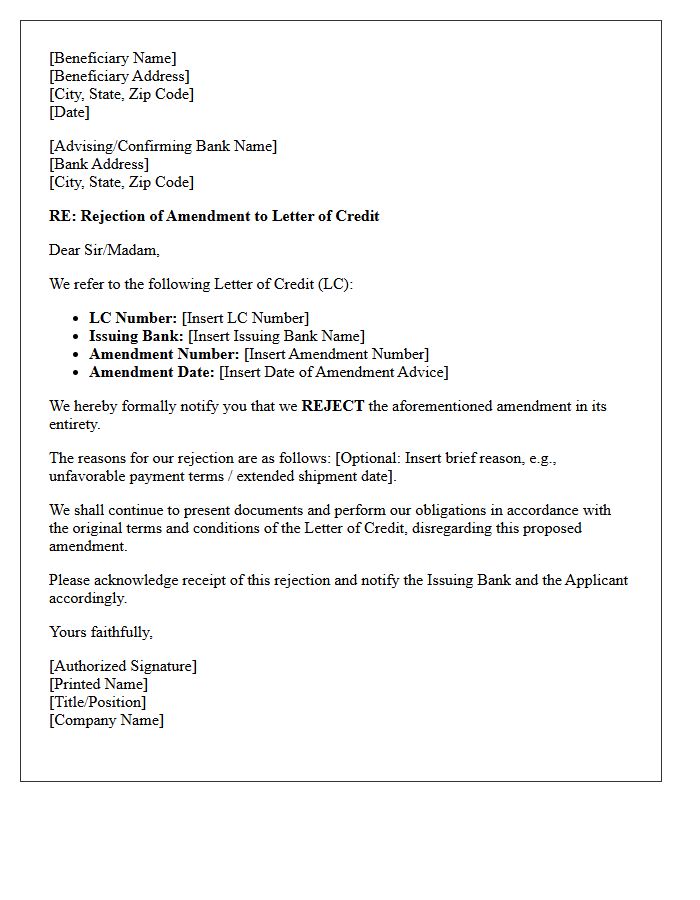
A Beneficiary Rejection Letter is a formal notice issued when a beneficiary declines proposed changes to a documentary credit. Under UCP 600 rules, an amendment is not binding until the beneficiary provides explicit notification of rejection or presents documents complying solely with the original terms. It is vital to communicate this decision promptly to the issuing bank to ensure the original credit terms remain legally enforceable. Failure to reject clearly may lead to operational delays or discrepancies during the payment negotiation process.
Formal Letter of Rejection of Amendment by Beneficiary
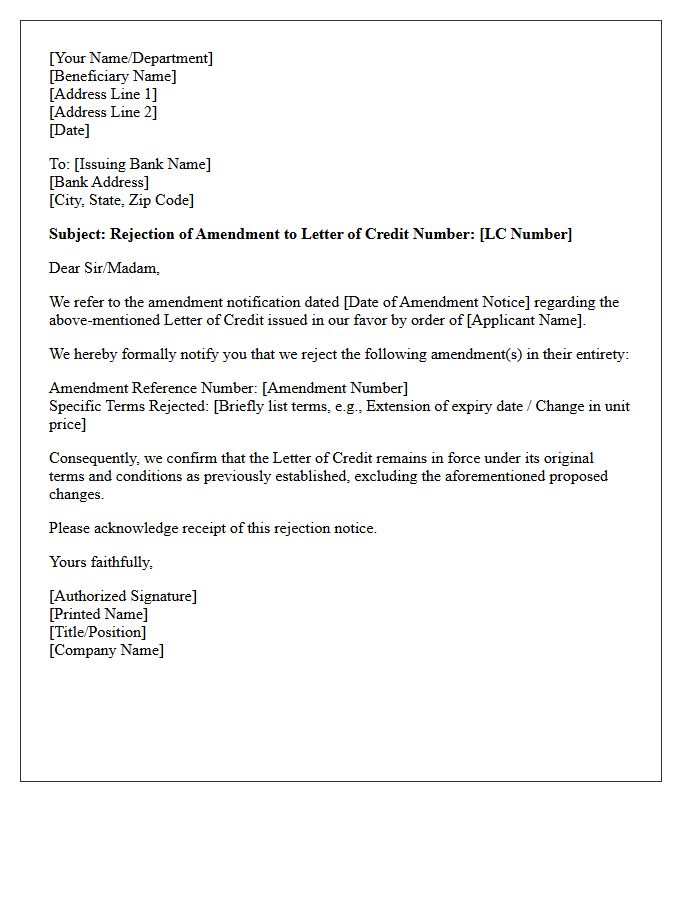
A formal rejection of amendment occurs when a beneficiary declines proposed changes to a letter of credit. Under UCP 600 rules, an amendment is not effective unless the beneficiary provides express acceptance. Remaining silent or failing to notify the bank can lead to discrepancies during document presentation. To ensure legal clarity, the beneficiary must issue a written notice to the advising bank formally rejecting the specific terms. This action preserves the integrity of the original credit terms, protecting the seller's right to payment under the previously agreed conditions.
Banking Letter of Notice for Beneficiary Amendment Rejection
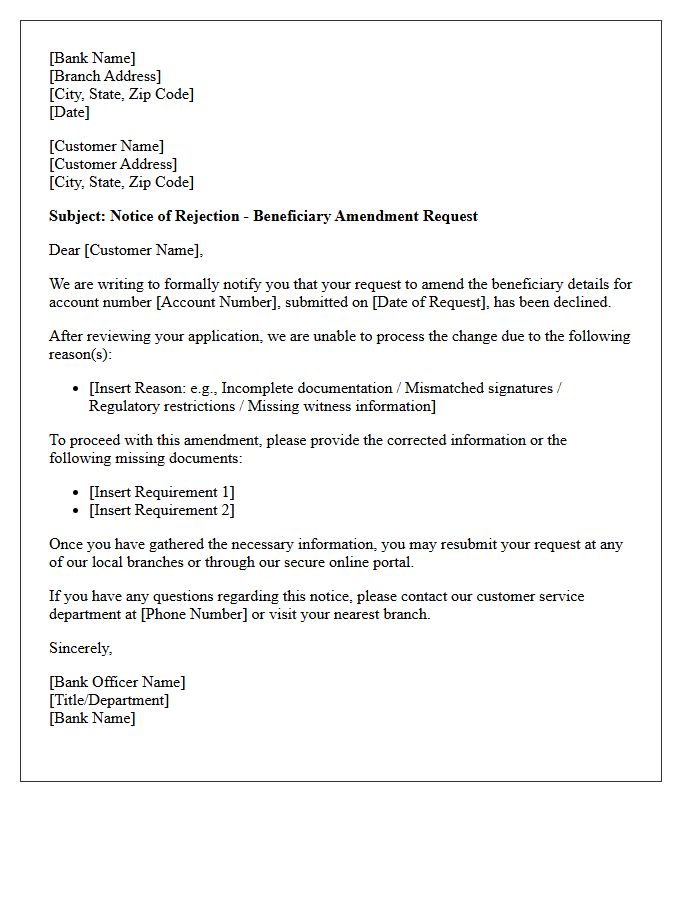
A Banking Letter of Notice for Beneficiary Amendment Rejection is a formal document issued when a bank declines a request to change the recipient details on a financial instrument or account. This rejection often occurs due to incomplete documentation, mismatched information, or potential security risks. It is critical to review the specific reasons provided to ensure regulatory compliance and prevent fraud. To resolve the issue, the applicant must typically submit supplementary evidence or a corrected application to verify the legitimacy of the new beneficiary and maintain transaction integrity.
Irrevocable Letter of Credit Beneficiary Amendment Rejection Letter
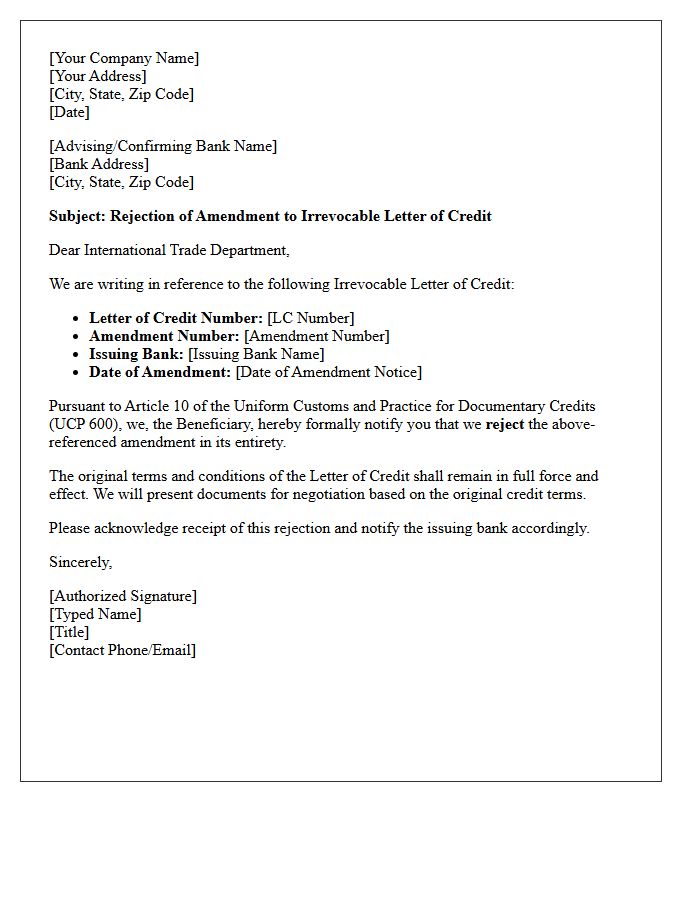
An Irrevocable Letter of Credit Beneficiary Amendment Rejection Letter is a formal document issued when a seller declines proposed changes to credit terms. Since the instrument is irrevocable, any modification requires the unanimous consent of all parties involved. If the beneficiary finds new conditions unfavorable-such as extended shipping deadlines or reduced payment amounts-they must officially notify the bank. This rejection ensures the original terms remain legally binding and enforceable, protecting the beneficiary's right to payment under the initial agreement without compromise.
Letter of Notification of Beneficiary Refusal of Amendment
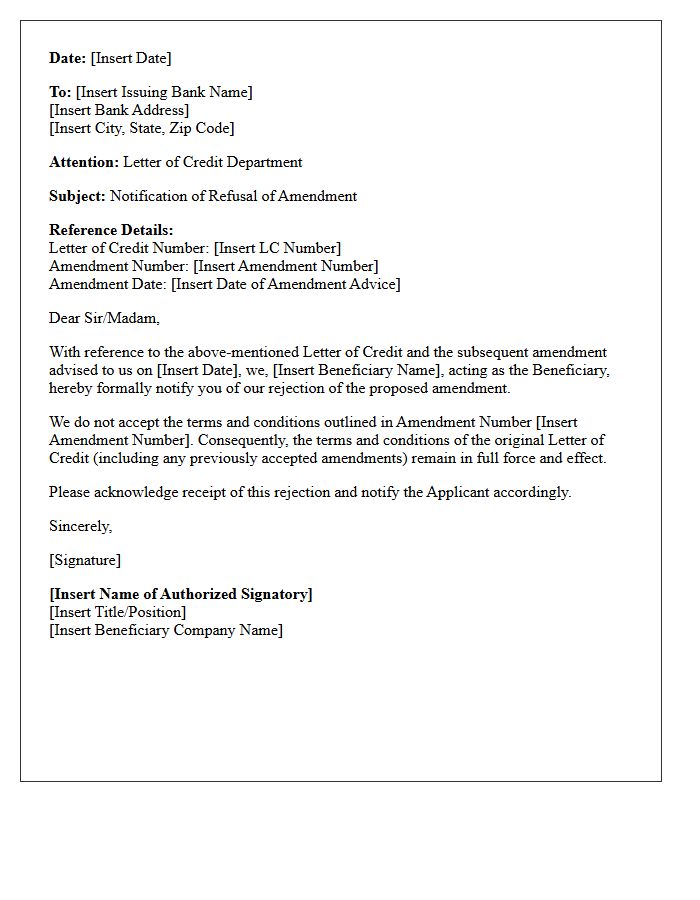
A Letter of Notification of Beneficiary Refusal of Amendment is a formal document used when a beneficiary rejects proposed changes to a Letter of Credit. Under standard banking practices, any modification to an irrevocable credit requires the explicit consent of all parties. If the beneficiary finds the new terms unfavorable, they must formally communicate their rejection to the issuing bank. Without this notification or an official acceptance, the original terms remain legally binding, ensuring the beneficiary maintains their guaranteed payment security under the existing agreement.
Beneficiary Letter of Rejection of Proposed Banking Amendment
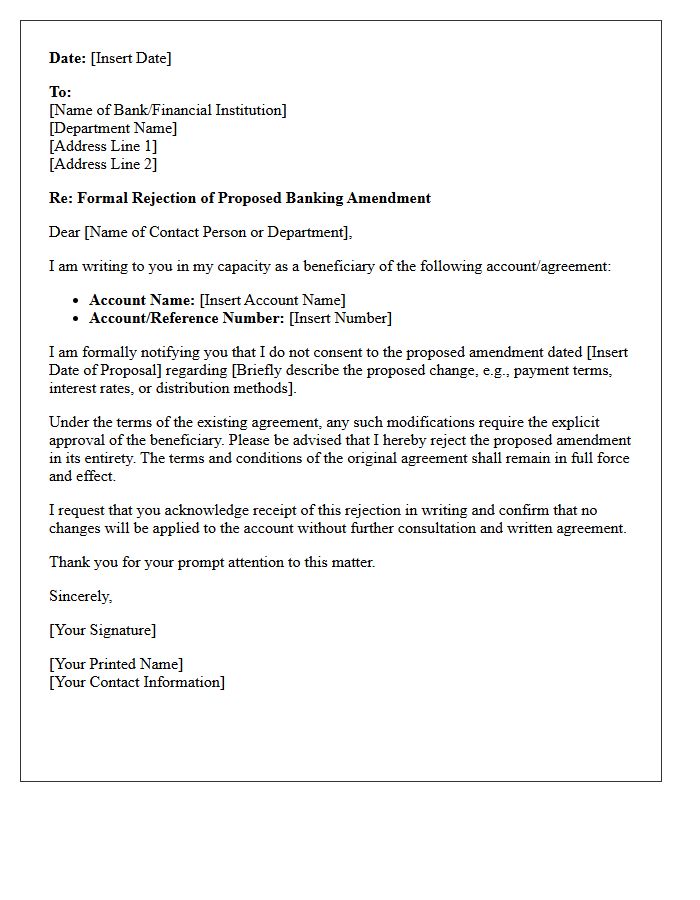
A Beneficiary Letter of Rejection is a formal document used to decline unfavorable changes to the terms of a Letter of Credit. Since a credit represents a binding contract, any proposed banking amendment requires the explicit consent of the beneficiary to become effective. If the new terms increase costs, extend deadlines, or add risks, the beneficiary must issue a written rejection promptly. This ensures the original terms remain legally enforceable, protecting the seller's financial interests and ensuring guaranteed payment under the initial conditions agreed upon during the transaction.
Trade Finance Letter of Beneficiary Amendment Rejection Notice
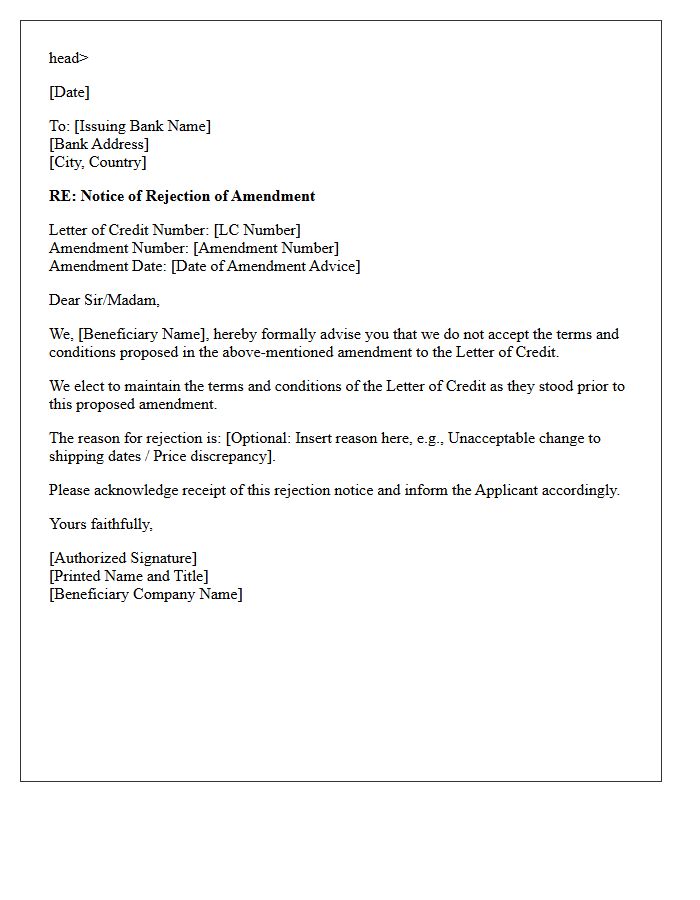
A Trade Finance Letter of Beneficiary Amendment Rejection Notice is a formal notification issued when a beneficiary declines proposed changes to an existing Letter of Credit. This document is critical because it ensures the original terms remain legally binding until a mutual agreement is reached. Organizations must process this rejection notice promptly to avoid logistical delays or payment discrepancies. Understanding this refusal helps maintain contractual integrity and ensures that all parties involved in international trade operations remain aligned with the established financial obligations and shipping schedules.
Standby Letter of Credit Amendment Rejection Letter by Beneficiary
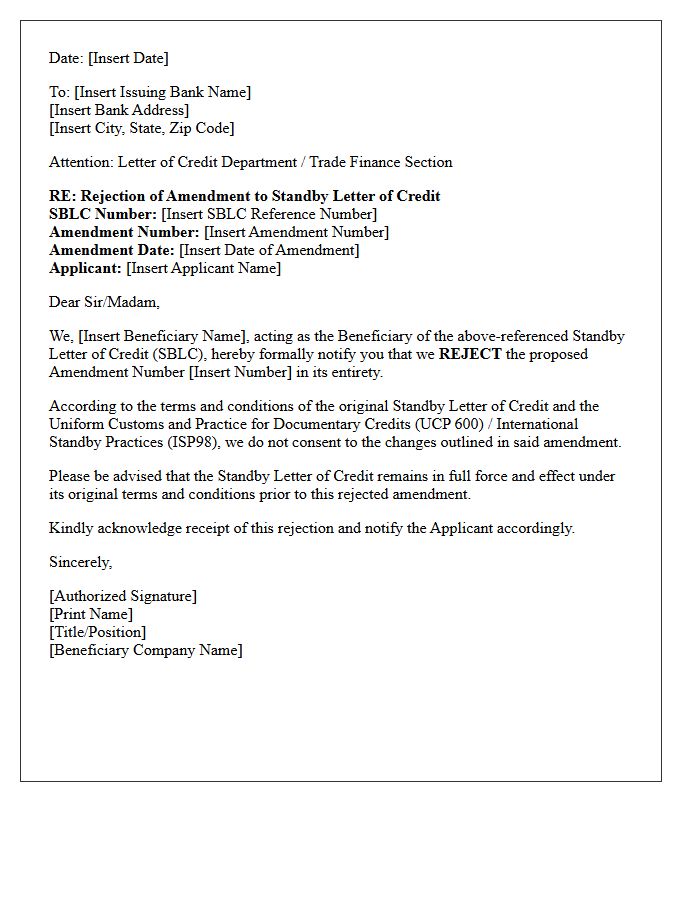
A beneficiary may issue a Standby Letter of Credit Amendment Rejection Letter if proposed changes negatively impact their financial security or payment terms. To maintain the original irrevocable commitment, the beneficiary must formally decline the issuer's notification. If the rejection is not communicated clearly and timely, the amendment may remain pending, causing legal uncertainty. It is vital to specify the exact amendment reference and state that all prior terms must remain in full force to ensure the guarantee remains enforceable and the underlying contract is protected against unfavorable modifications.
Documentary Credit Beneficiary Amendment Rejection Letter
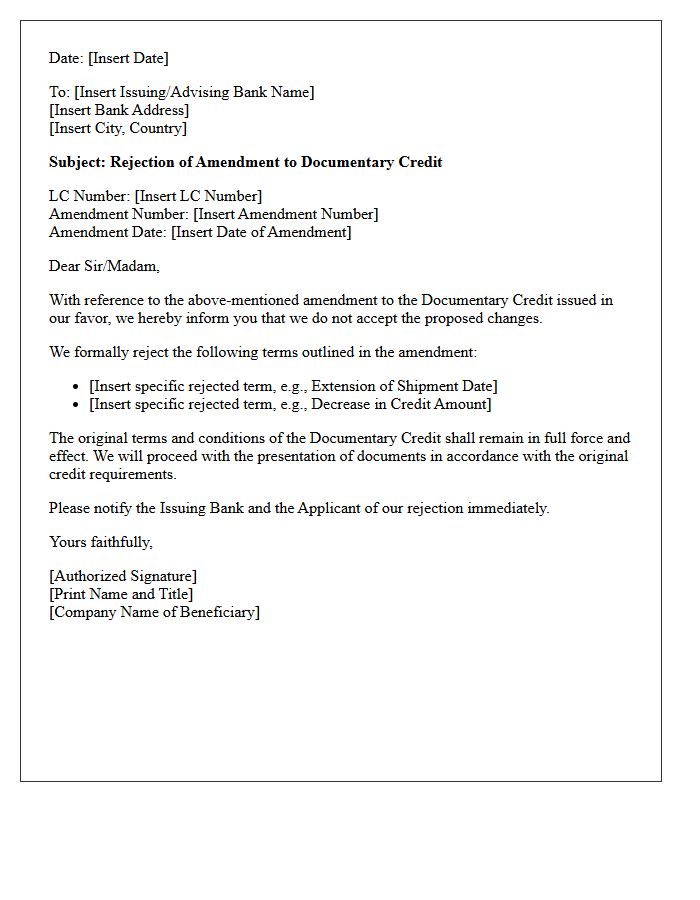
A Documentary Credit Beneficiary Amendment Rejection Letter is a formal notice issued when a seller declines proposed changes to an existing letter of credit. The beneficiary must explicitly state their refusal to ensure the original terms remain legally binding. This document is critical because unanimous consent is required from all parties to modify a credit under UCP 600 rules. Promptly sending this rejection prevents unintended acceptance by conduct and protects the exporter's right to payment based on the initial, agreed-upon conditions of the financial instrument.
Letter Denying Beneficiary Consent to Amendment Notice
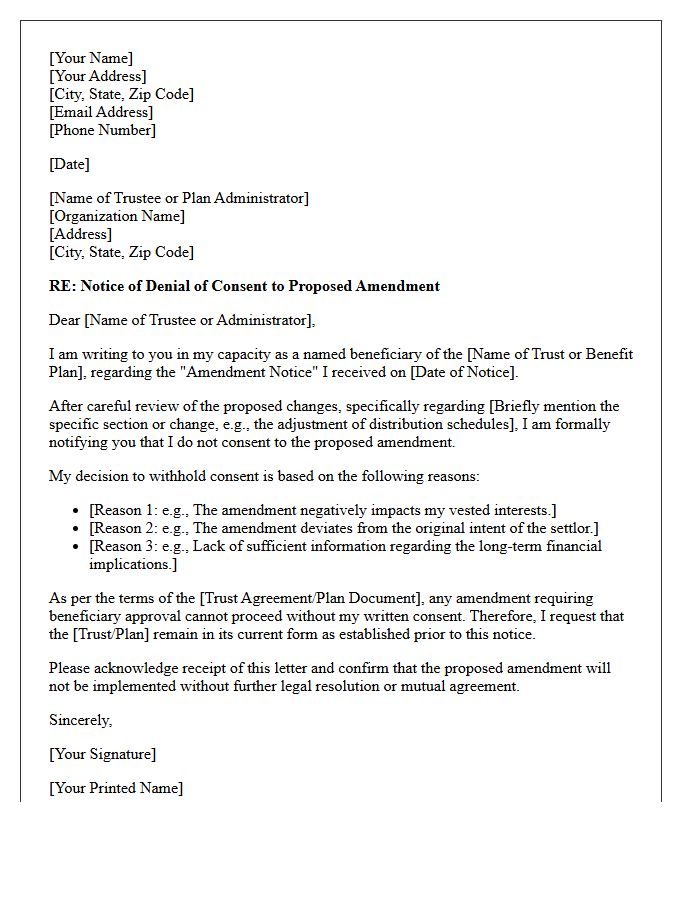
A Letter Denying Beneficiary Consent to Amendment Notice is a critical legal document used when a trust beneficiary formally rejects proposed changes to a trust's terms. This notice prevents the trustee from modifying the agreement without unanimous approval or court intervention. Understanding your rights is essential, as withholding consent preserves your original inheritance entitlements and protects your financial interests. If you receive an amendment proposal you disagree with, responding promptly with this formal denial ensures your legal objections are officially recorded, maintaining the integrity of the original trust structure.
Bank Guarantee Amendment Rejection Letter from Beneficiary
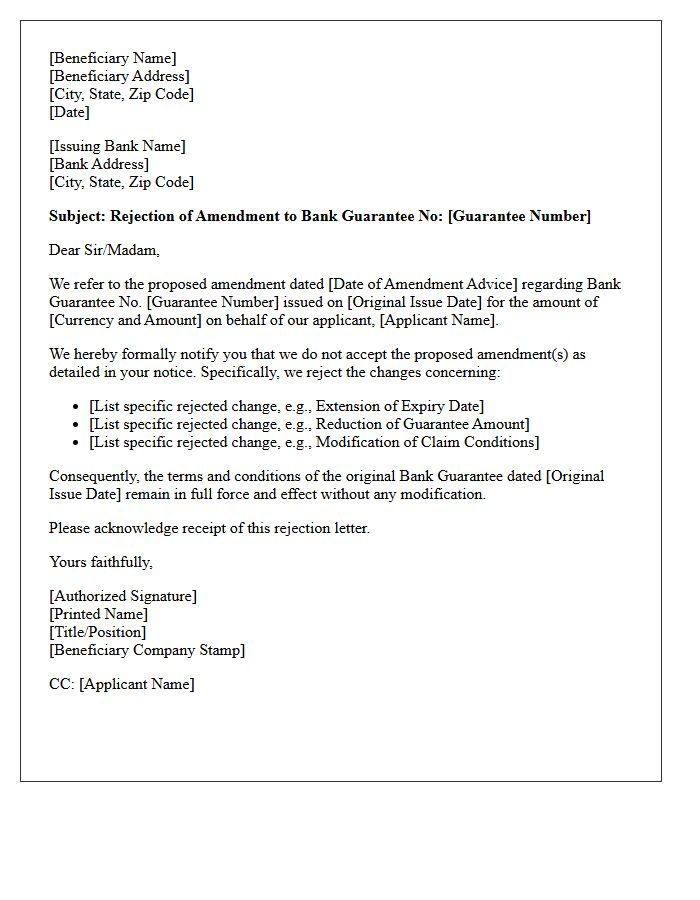
A Bank Guarantee Amendment Rejection Letter is a formal notification from the beneficiary declining proposed changes to an existing guarantee. It is crucial to understand that consent is mandatory for any modification to be legally binding. If the new terms reduce security or extend deadlines unfavorably, the beneficiary must issue a written rejection to maintain the original instrument's integrity. Clear communication ensures the original terms remain in full force, preventing legal ambiguity and protecting the beneficiary's financial interests during the underlying contractual execution.
Trust Beneficiary Notice of Amendment Rejection Letter
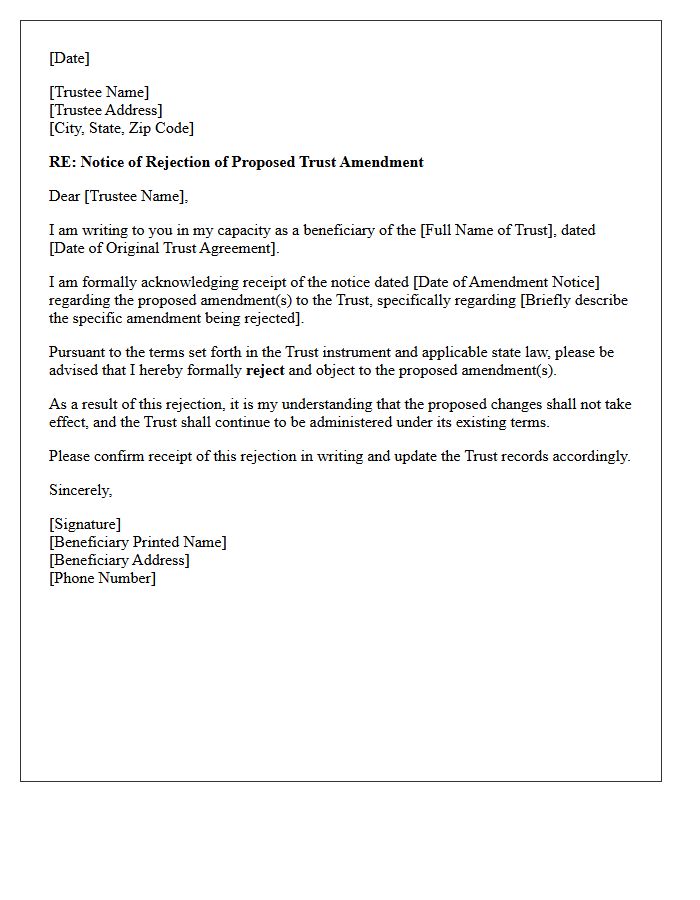
A Trust Beneficiary Notice of Amendment Rejection Letter is a formal legal document used by a beneficiary to officially contest or decline changes made to a trust agreement. This notice ensures that your legal disagreement is documented, preventing implied consent to new terms that may reduce your inheritance or rights. It is a critical tool for protecting beneficiary interests during disputes with trustees. Timely delivery is essential to preserve your right to pursue further litigation or mediation regarding the validity of the trust's modifications.
Commercial Banking Letter of Beneficiary Amendment Rejection
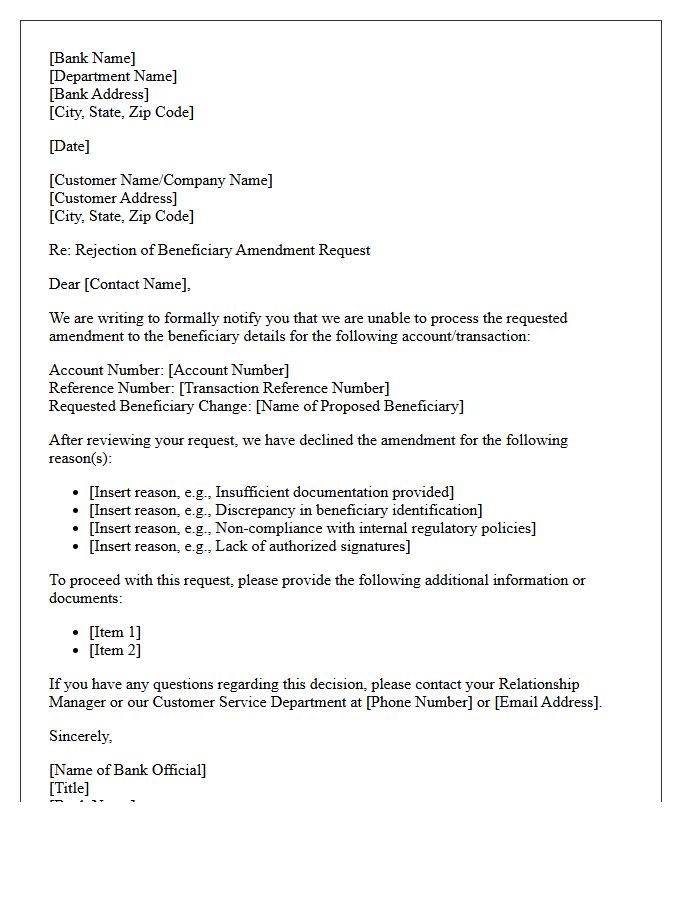
A Commercial Banking Letter of Beneficiary Amendment Rejection is a formal notice issued when a bank refuses a requested change to a financial instrument, such as a Letter of Credit. This typically occurs due to non-compliance with internal policies, missing documentation, or lack of consent from all involved parties. It is crucial to understand that amendments are not automatic; they require strict adherence to international banking standards. Failure to resolve these discrepancies promptly can lead to payment delays or the total voidance of the underlying trade transaction and financial security.
What is a Notice of Beneficiary Rejection of Amendment?
A Notice of Beneficiary Rejection of Amendment is a formal legal document issued by a named beneficiary expressing their refusal to accept proposed changes to a trust, insurance policy, or legal contract. This notification signifies that the beneficiary does not consent to the modified terms, effectively maintaining the status quo of the original agreement.
When should a beneficiary issue a formal rejection of an amendment?
A beneficiary should issue a formal rejection as soon as they receive notice of a proposed amendment that negatively impacts their rights, reduces their distribution, or alters the conditions of their inheritance. Timely submission is critical, as many legal instruments have a specific window-often 30 to 90 days-within which an objection must be filed before the amendment becomes binding.
What are common reasons for a beneficiary to reject a trust amendment?
Common reasons include a reduction in the beneficiary's share of assets, the addition of restrictive distribution conditions, the appointment of an unfavorable trustee, or concerns regarding the grantor's mental capacity or susceptibility to undue influence at the time the amendment was drafted.
Is a Notice of Beneficiary Rejection legally binding?
Yes, if the governing document requires unanimous beneficiary consent for changes, a formal rejection can legally block the amendment. In cases where the grantor has the unilateral right to amend (such as a revocable trust), the rejection serves as a formal protest that may provide the legal basis for a future court challenge or litigation regarding the validity of the change.
What happens after a Notice of Beneficiary Rejection of Amendment is filed?
Once the notice is filed, the amendment process typically halts until the dispute is resolved. Parties may enter into mediation to reach a compromise, the grantor may choose to withdraw the amendment, or the matter may proceed to probate court where a judge will determine the validity and enforceability of the proposed changes.


Comments