
Receiving a legal notice requires a structured response to ensure compliance and mitigate risks. A Cease and Desist Order Remediation Plan Letter outlines the specific actions your organization will take to address alleged violations and prevent future occurrences. This formal document demonstrates good faith and proactive resolution to authorities or opposing parties. To help you get started, below are some ready to use template.
Image cover: Formal Response Templates and Remediation Strategies for Cease and Desist Orders
Letter Samples List
- Initial Cease and Desist Remediation Plan Submission Letter
- Board of Directors Resolution and Remediation Plan Approval Letter
- Monthly Remediation Plan Compliance and Progress Update Letter
- Request for Deadline Extension on Remediation Plan Milestones Letter
- Regulatory Feedback Response and Remediation Plan Revision Letter
- Appointment of Chief Compliance Officer and Remediation Oversight Letter
- Independent Third-Party Audit Engagement and Remediation Review Letter
- Bank Secrecy Act and Anti-Money Laundering Remediation Strategy Letter
- Capital Adequacy and Liquidity Restoration Plan Submission Letter
- Notice of Remediation Plan Milestone Completion and Verification Letter
- Internal Controls and Risk Management Enhancement Notification Letter
- Final Remediation Plan Implementation and Order Termination Request Letter
Initial Cease and Desist Remediation Plan Submission Letter
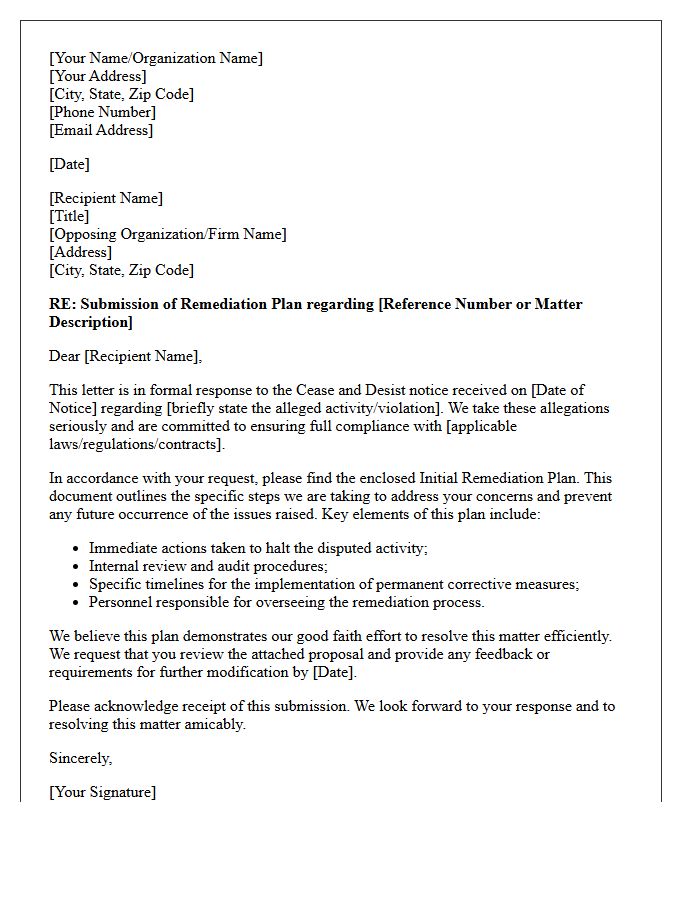
The Initial Cease and Desist Remediation Plan Submission Letter is a critical regulatory document responding to a formal enforcement action. This formal communication outlines specific corrective actions and strategic timelines designed to address identified compliance failures or illegal activities. It serves as a procedural roadmap to demonstrate a firm's commitment to restoring legal standing. Timely and comprehensive submission is essential to avoid further legal penalties, showing authorities that the entity is actively mitigating risks and implementing robust internal controls to ensure long-term operational integrity and regulatory adherence.
Board of Directors Resolution and Remediation Plan Approval Letter
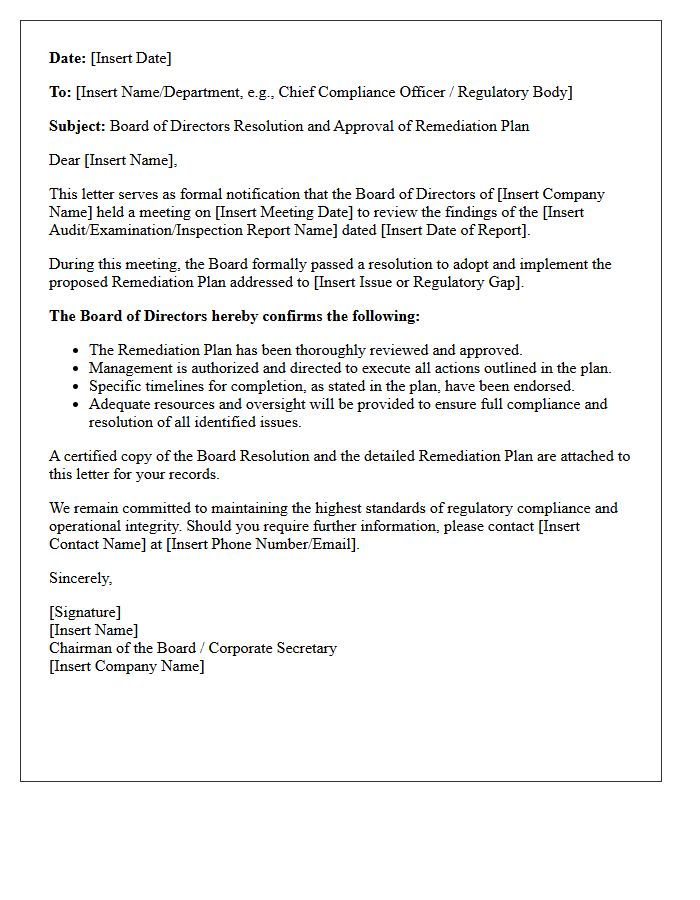
A Board of Directors Resolution and Remediation Plan Approval Letter is a formal document confirming that the governing body has reviewed and authorized specific actions to correct compliance deficiencies or operational failures. It serves as legal evidence that leadership acknowledges identified risks and commits to a structured corrective action plan. This letter is critical during regulatory audits, as it demonstrates accountability and proactive governance. By formally approving the remediation steps, the board ensures that resources are allocated to resolve issues effectively and maintain organizational integrity.
Monthly Remediation Plan Compliance and Progress Update Letter
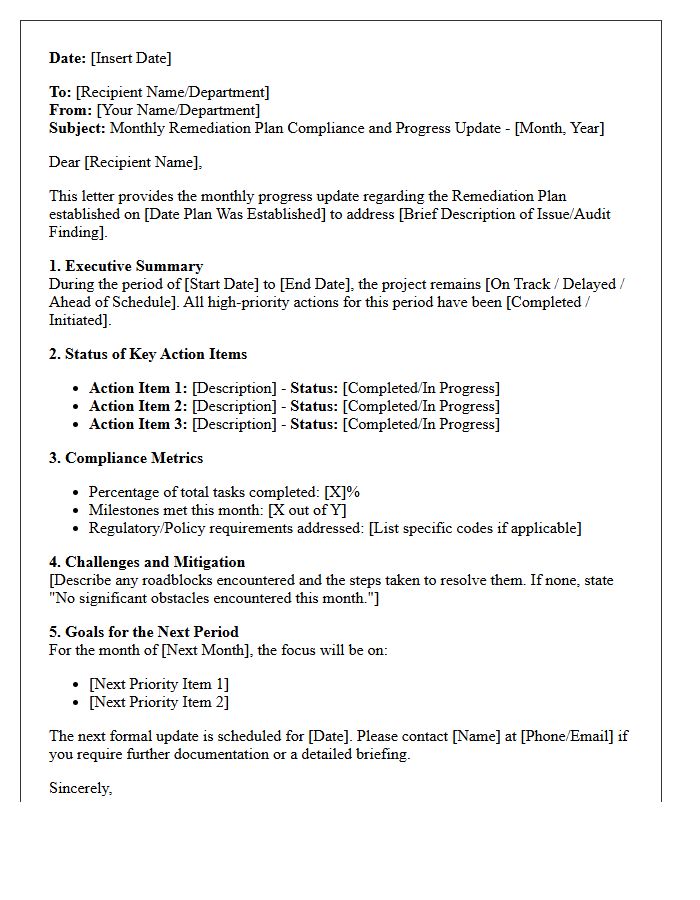
The Monthly Remediation Plan Compliance and Progress Update Letter is a critical regulatory document used to track the rectification of identified deficiencies. It provides stakeholders with an objective status report on corrective actions, ensuring accountability and transparency. Key components include milestones achieved, remaining gaps, and updated timelines for full resolution. Consistently submitting these updates demonstrates a commitment to compliance standards and risk mitigation. This formal communication is essential for maintaining trust with oversight bodies and ensuring that operational improvements remain on schedule to meet legal or institutional requirements.
Request for Deadline Extension on Remediation Plan Milestones Letter
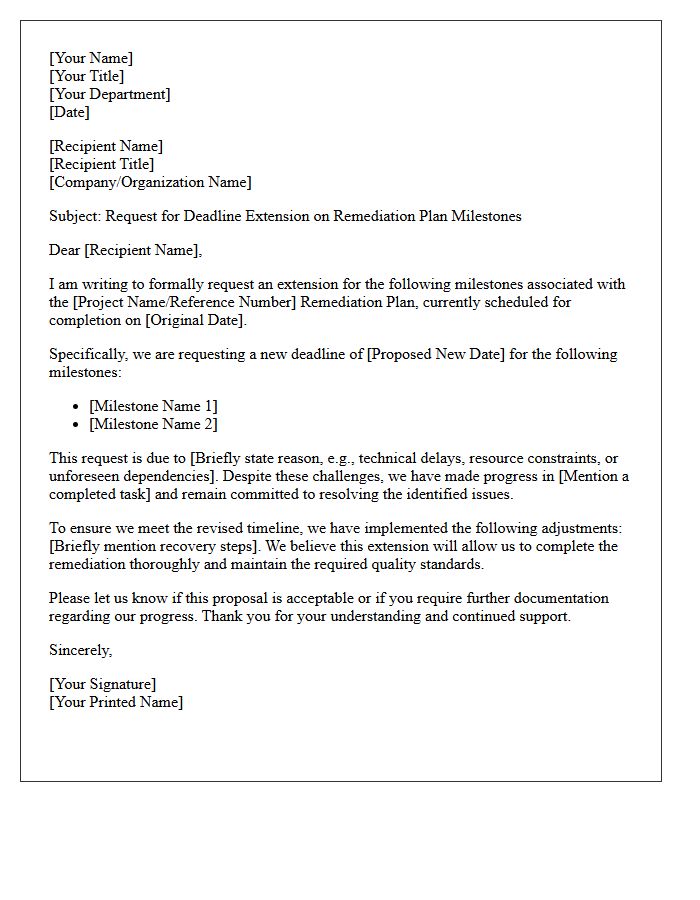
A Request for Deadline Extension on remediation plan milestones is a formal letter sent to regulators or management to justify schedule adjustments. It must clearly explain the root cause of the delay, such as unforeseen technical challenges or resource shortages. The document should propose revised timelines while demonstrating continued commitment to compliance. Providing a detailed progress report on completed actions strengthens the request and maintains transparency. Proactive communication ensures stakeholders remain informed, minimizing the risk of penalties while ensuring the final remediation objectives are effectively and safely achieved.
Regulatory Feedback Response and Remediation Plan Revision Letter
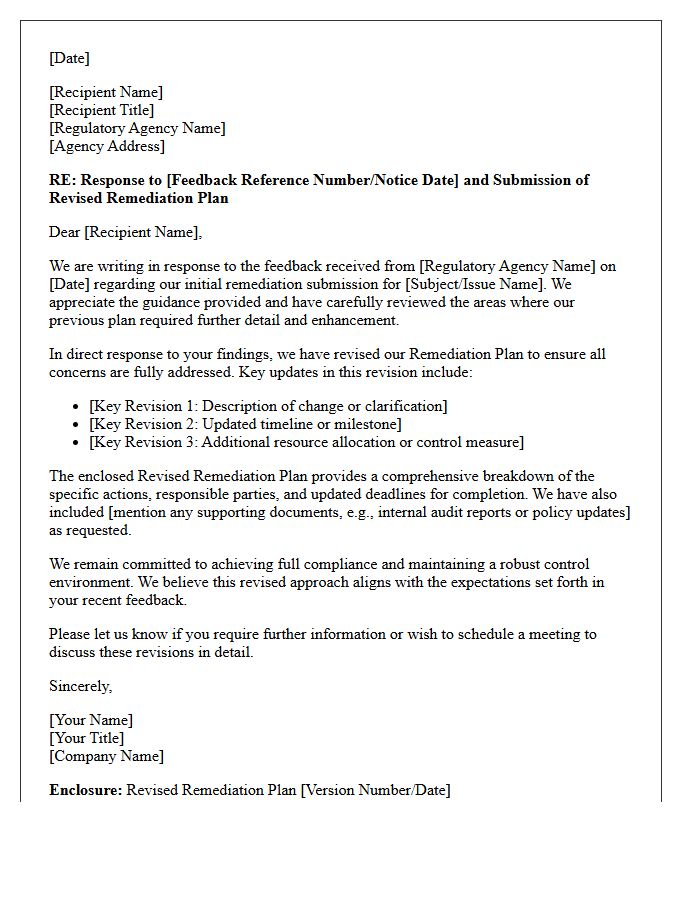
A Regulatory Feedback Response and Remediation Plan Revision Letter is a formal document addressing deficiencies identified by oversight bodies. It outlines specific actions to correct non-compliance and strengthen internal controls. This letter must detail clear timelines, resource allocation, and measurable milestones to satisfy regulatory expectations. Effective responses demonstrate transparency and a commitment to risk mitigation, ensuring the organization aligns with legal standards. Timely submission is critical to avoid further penalties and restore institutional credibility through a structured, verifiable approach to operational improvements.
Appointment of Chief Compliance Officer and Remediation Oversight Letter
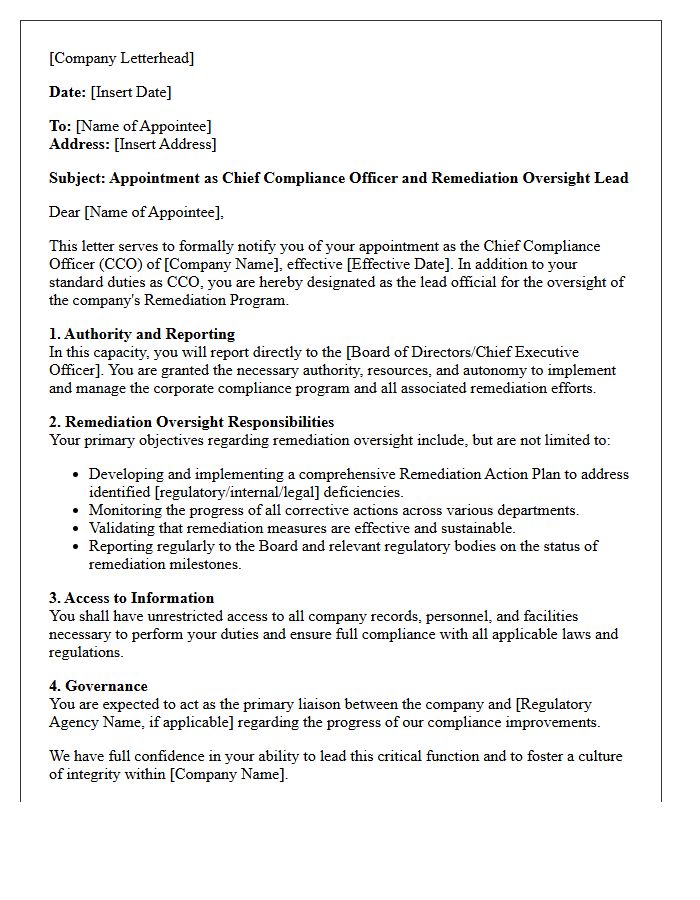
The appointment of a Chief Compliance Officer (CCO) is a critical regulatory requirement following a Remiation Oversight Letter. This document outlines specific failures identified by regulators, necessitating a dedicated leader to oversee corrective actions. The CCO must ensure the organization adheres to legal standards and internal policies while reporting directly to the board. This structural change guarantees accountability and a systematic approach to resolving compliance deficiencies, ultimately mitigating future regulatory risks and restoring institutional integrity through rigorous monitoring and documented remediation efforts.
Independent Third-Party Audit Engagement and Remediation Review Letter
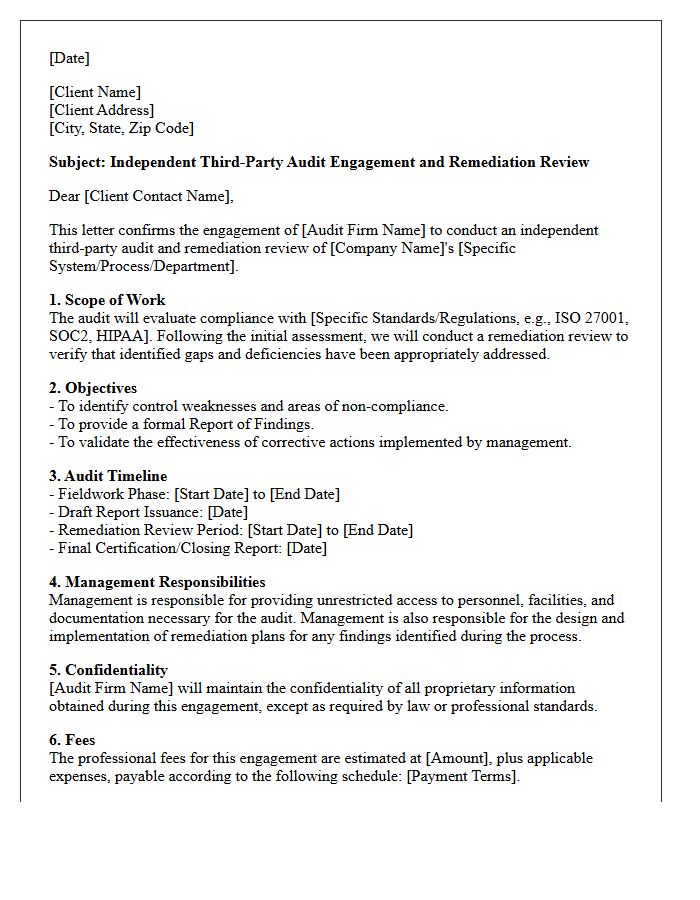
An Independent Third-Party Audit Engagement provides an objective evaluation of an organization's internal controls and compliance frameworks. Following the assessment, a Remediation Review Letter serves as a critical document confirming that previously identified vulnerabilities or deficiencies have been effectively resolved. This process ensures accountability and builds stakeholder trust by verifying that corrective actions meet industry standards. Engaging an unbiased auditor guarantees that the remediation is thorough, reducing operational risks and ensuring long-term regulatory compliance within the business infrastructure.
Bank Secrecy Act and Anti-Money Laundering Remediation Strategy Letter
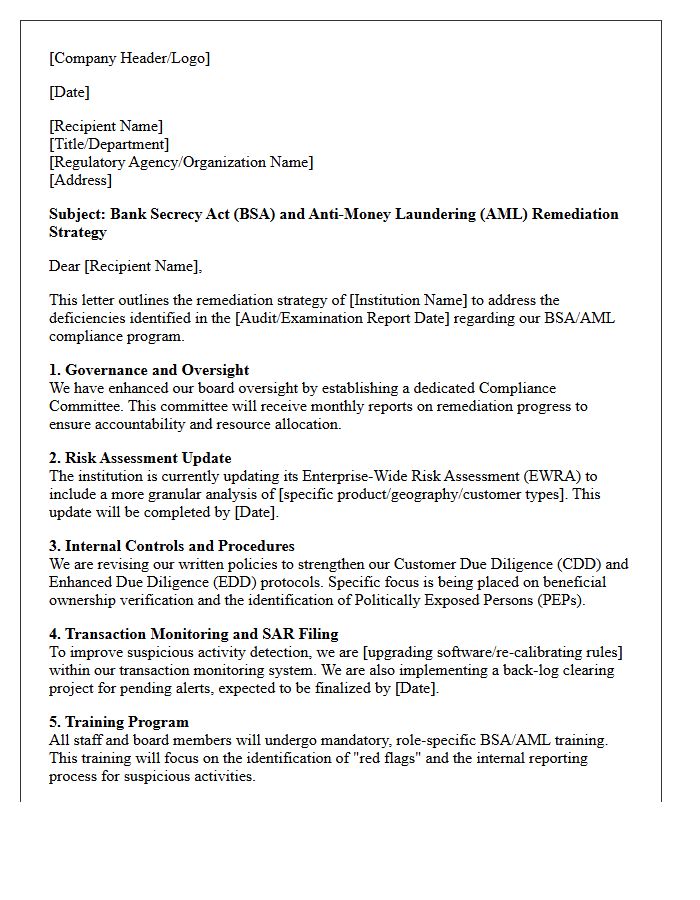
A Bank Secrecy Act (BSA) and Anti-Money Laundering (AML) Remediation Strategy Letter is a formal document addressing regulatory deficiencies identified during financial examinations. It outlines a structured plan to correct compliance failures, such as weak internal controls or inadequate suspicious activity monitoring. Financial institutions use this letter to demonstrate commitment to regulatory standards and risk mitigation. Effectively managing this strategy is essential to avoid severe penalties, legal action, and reputational damage while ensuring the integrity of the global financial system against illicit activities like money laundering and terrorist financing.
Capital Adequacy and Liquidity Restoration Plan Submission Letter
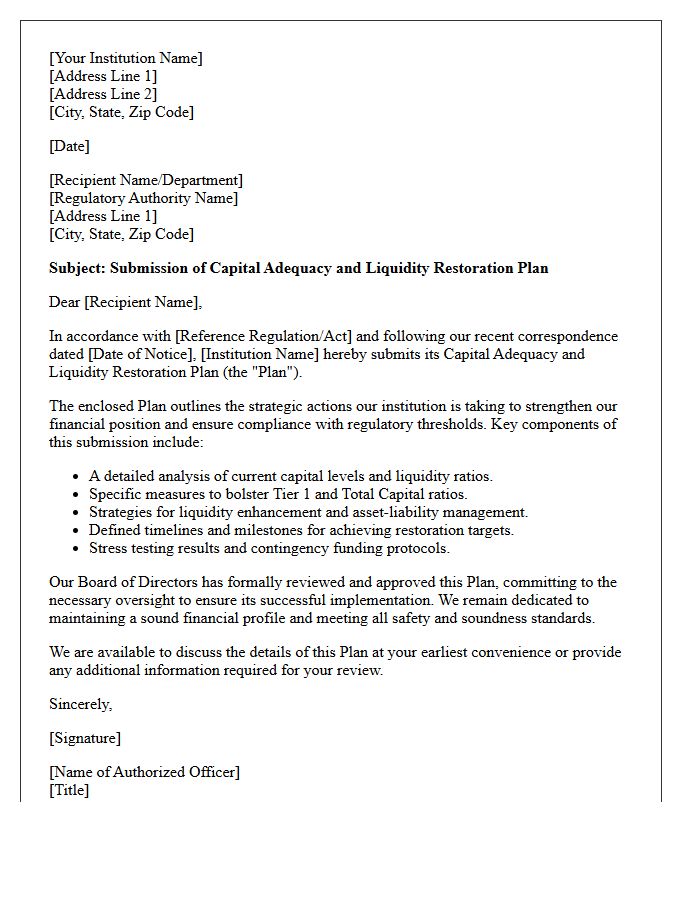
The Capital Adequacy and Liquidity Restoration Plan is a critical regulatory document submitted by financial institutions to demonstrate their strategy for recovery during financial distress. This submission letter formalizes the bank's commitment to restoring minimum capital levels and maintaining sufficient liquid assets. Regulators review these plans to ensure the entity can absorb losses and meet obligations without external support. It serves as a recapitalization roadmap, detailing specific management actions, asset sales, or capital raises necessary to maintain long-term solvency and financial stability within the broader banking system.
Notice of Remediation Plan Milestone Completion and Verification Letter
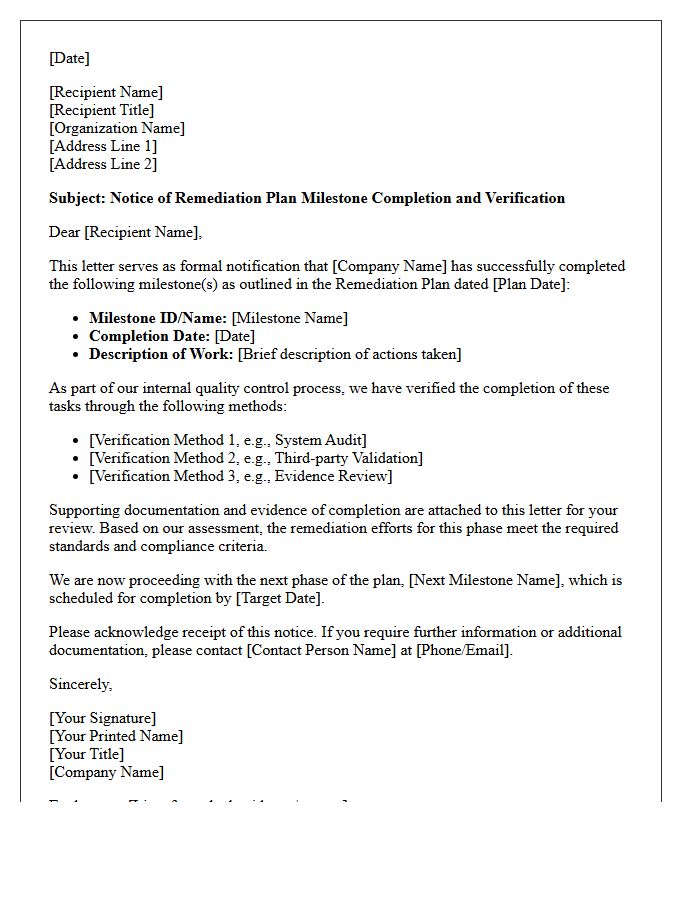
A Notice of Remediation Plan Milestone Completion and Verification Letter is a formal document confirming that specific environmental cleanup targets have been successfully reached. This letter serves as official verification that a party has met required standards for a particular phase of a remediation project. It is crucial for regulatory compliance, as it provides documented evidence to oversight agencies that corrective actions are effective. Receiving this notice validates technical progress and often allows a project to proceed to the next stage of environmental restoration and legal closure.
Internal Controls and Risk Management Enhancement Notification Letter
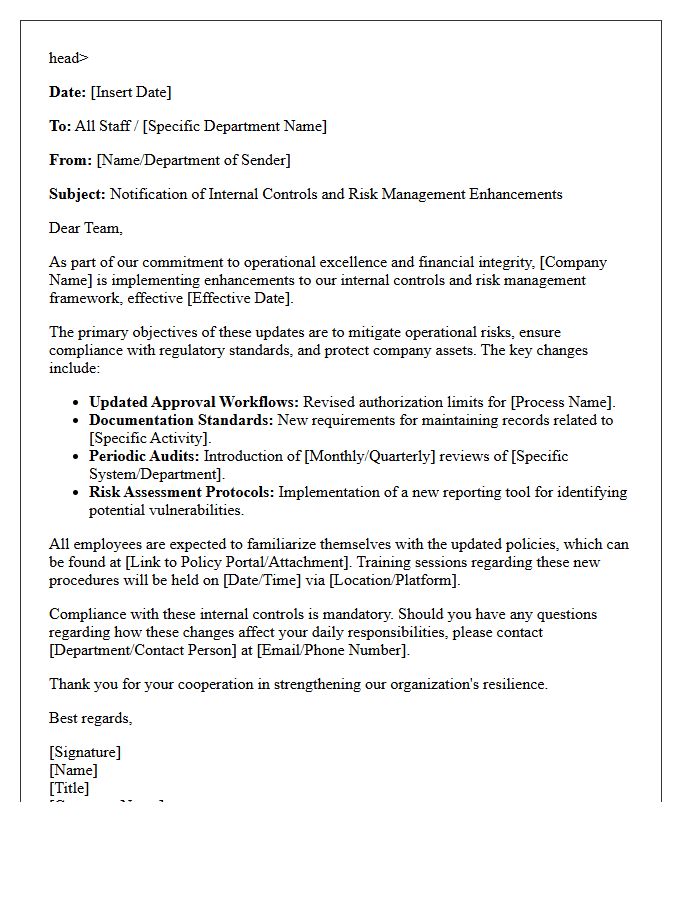
An Internal Controls and Risk Management Enhancement Notification Letter is a formal document issued to stakeholders regarding upgrades to organizational safety nets. It highlights remediation strategies designed to mitigate identified vulnerabilities and ensure regulatory compliance. The primary objective is to communicate the transition toward more robust financial oversight and operational integrity. By outlining specific protocol adjustments, the letter fosters transparency and reassures partners that the entity is proactively minimizing potential threats. Understanding this notice is vital for maintaining corporate governance standards and protecting institutional assets from systemic failures or fraud.
Final Remediation Plan Implementation and Order Termination Request Letter
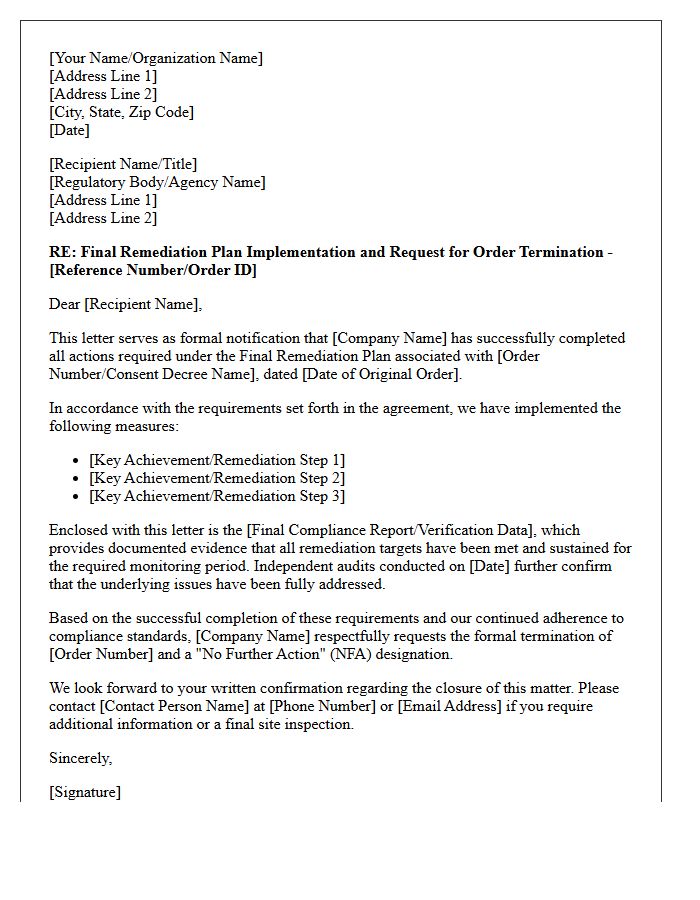
A Final Remediation Plan Implementation letter formally notifies regulators that all corrective actions regarding environmental or compliance issues are complete. This document serves as a critical verification of closure, presenting evidence that identified hazards are mitigated. Accompanying this is the Order Termination Request, which asks authorities to officially release the entity from legal mandates or consent decrees. Ensuring data accuracy in these documents is vital for achieving a No Further Action status, effectively ending oversight and restoring the property or business to full regulatory standing.
What is a Cease and Desist Order Remediation Plan Letter?
A Cease and Desist Order Remediation Plan Letter is a formal document submitted to a regulatory body outlining the specific actions, timelines, and internal controls a company will implement to correct violations and comply with a legal order.
What key elements should be included in a remediation plan letter?
The letter should include a detailed root cause analysis of the violation, a step-by-step description of corrective actions, assigned responsible parties, specific deadlines for completion, and a framework for monitoring ongoing compliance.
How do you demonstrate compliance in a remediation plan?
Compliance is demonstrated by providing measurable benchmarks, updated standard operating procedures (SOPs), evidence of staff training, and the establishment of independent auditing processes to ensure the violation does not recur.
What is the typical timeline for submitting a remediation plan after a Cease and Desist Order?
The submission deadline is strictly dictated by the issuing regulatory agency, typically ranging from 30 to 90 days. Failure to submit a viable plan within the specified timeframe can result in further legal action or financial penalties.
Can a Cease and Desist Order be lifted after the remediation plan is implemented?
Yes, once all corrective actions are verified through a follow-up exam or audit and the regulatory agency determines that the firm is in full compliance with the law, the order may be terminated or transitioned to a "closed" status.

Comments