
A Memorandum of Understanding Transmittal Letter serves as a formal cover document used to deliver an MOU for review or signature. It outlines the purpose of the agreement, highlights key terms, and establishes clear next steps between collaborating parties to ensure mutual alignment. This professional introduction streamlines the legal process. To assist your workflow, below are some ready to use template options.
Image cover: Official Templates and Samples for Your Memorandum of Understanding Transmittal Letter
Letter Samples List
- Commercial Banking Partnership Memorandum Of Understanding Transmittal Letter
- Interbank Syndicated Loan Memorandum Of Understanding Transmittal Letter
- Cross-Border Remittance Agreement Memorandum Of Understanding Transmittal Letter
- Financial Technology Integration Memorandum Of Understanding Transmittal Letter
- Retail Banking Joint Venture Memorandum Of Understanding Transmittal Letter
- Regulatory Compliance Information Sharing Memorandum Of Understanding Transmittal Letter
- Corporate Merger And Acquisition Memorandum Of Understanding Transmittal Letter
- Co-Branded Credit Card Program Memorandum Of Understanding Transmittal Letter
- Secure Financial Data Sharing Memorandum Of Understanding Transmittal Letter
- Agency Banking Network Expansion Memorandum Of Understanding Transmittal Letter
- Investment Banking Syndicate Memorandum Of Understanding Transmittal Letter
- Central Bank Liquidity Facility Memorandum Of Understanding Transmittal Letter
- Anti-Money Laundering Collaborative Framework Memorandum Of Understanding Transmittal Letter
Commercial Banking Partnership Memorandum Of Understanding Transmittal Letter
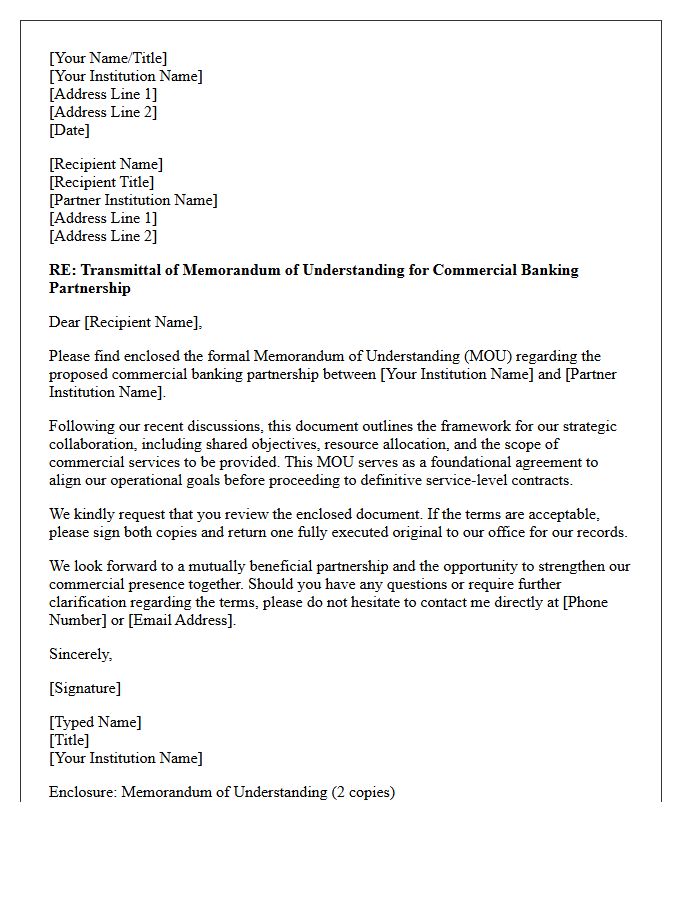
A Commercial Banking Partnership Memorandum of Understanding (MOU) transmittal letter is a formal document used to officially deliver proposed agreement terms between financial institutions. It serves as a strategic bridge, outlining the mutual intent to collaborate on lending, liquidity, or credit services. Key elements include identifying the parties, summarizing the partnership's scope, and defining preliminary obligations. This letter ensures clarity and professionalism before signing the final binding contract, fostering transparency in corporate alignment and securing institutional commitment for future commercial banking operations.
Interbank Syndicated Loan Memorandum Of Understanding Transmittal Letter
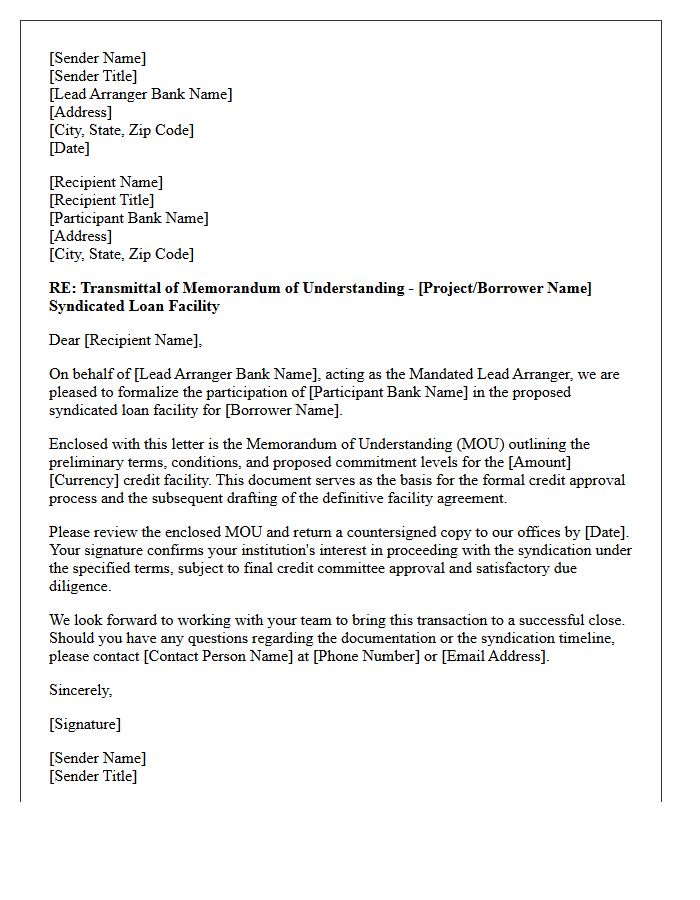
The Interbank Syndicated Loan Memorandum of Understanding Transmittal Letter serves as the formal delivery vehicle for preliminary credit agreements. It authorizes the distribution of confidential financial data between the lead arranger and participating lenders. This document is critical because it establishes the legal framework for information sharing, ensuring all parties adhere to strict confidentiality protocols before final execution. By defining the scope of the transaction and protecting proprietary disclosures, it mitigates risk during the early phases of large-scale corporate financing and multi-bank lending syndication.
Cross-Border Remittance Agreement Memorandum Of Understanding Transmittal Letter
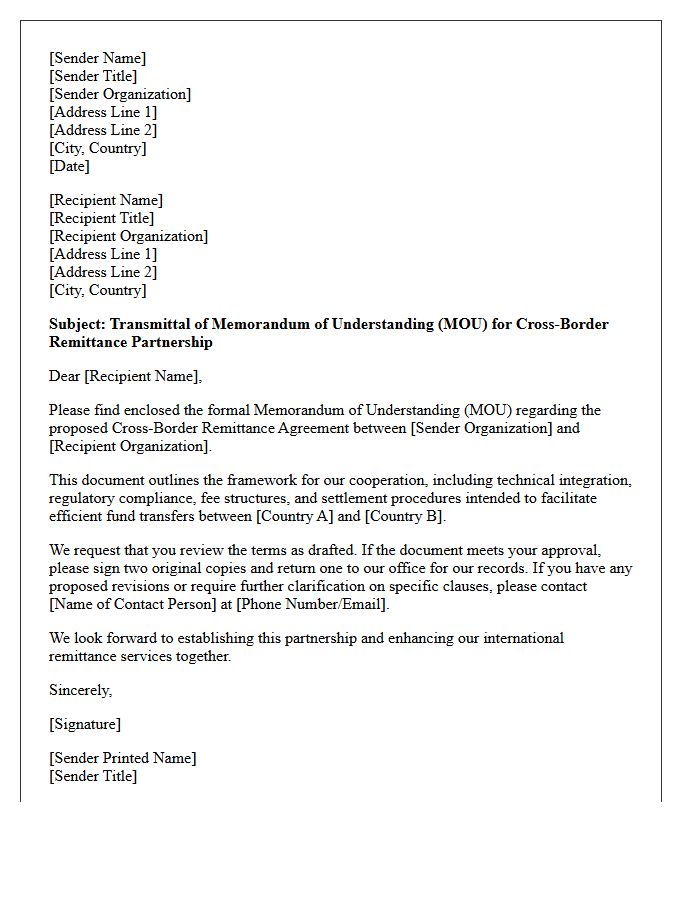
A cross-border remittance agreement memorandum of understanding transmittal letter is a formal document used to officially execute bilateral financial protocols. It serves as the primary legal record for transferring international payment terms between institutions. This letter outlines the scope of cooperation, regulatory compliance measures, and operational frameworks for moving funds across borders. Its main purpose is to ensure transparency and mutual consent regarding fee structures and security standards, acting as the essential bridge that validates the broader MOU and facilitates secure global capital flow.
Financial Technology Integration Memorandum Of Understanding Transmittal Letter
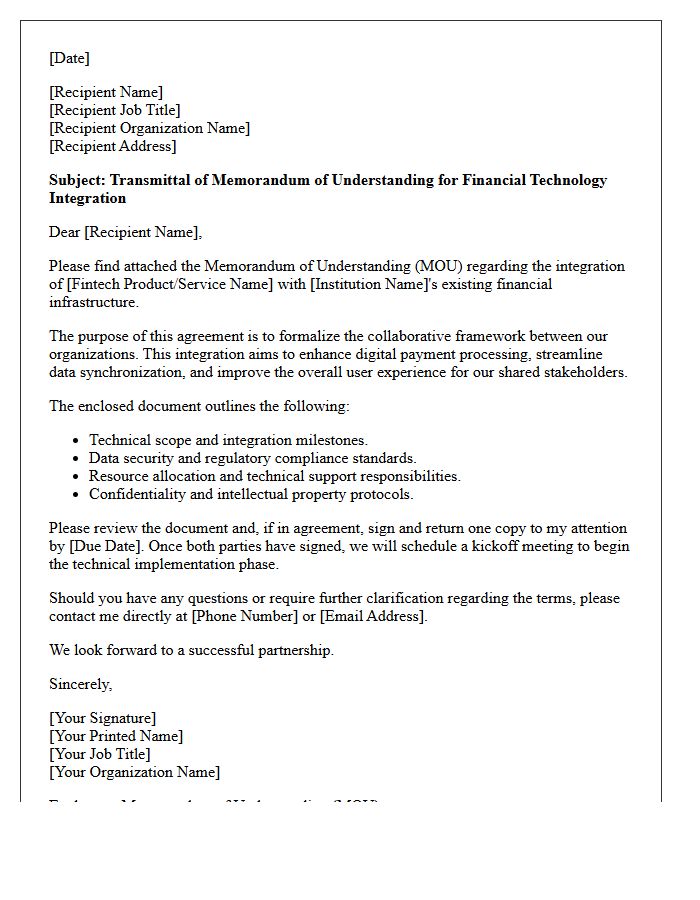
The Financial Technology Integration Memorandum of Understanding (MOU) Transmittal Letter serves as the formal bridge for adopting innovative digital systems. It officially documents the mutual commitment between organizations to align technical infrastructures and regulatory standards. This essential communication ensures that all parties understand their specific roles, liability frameworks, and data security protocols before execution. By formalizing the integration roadmap, the letter minimizes operational risks and establishes a clear legal foundation for collaborative financial innovation and seamless cross-platform functionality.
Retail Banking Joint Venture Memorandum Of Understanding Transmittal Letter
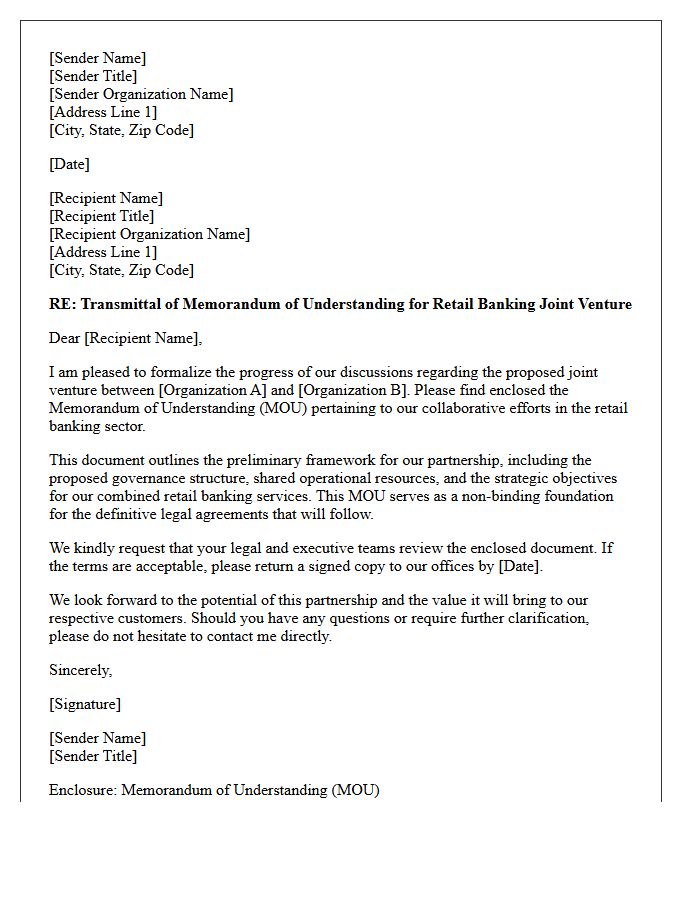
A Retail Banking Joint Venture Memorandum of Understanding Transmittal Letter is a formal document used to submit a preliminary agreement between financial institutions. It serves as a legal record that outlines the shared intent to collaborate on consumer services. The letter ensures all stakeholders receive the MOU framework, detailing governance, resource allocation, and strategic goals. This transmittal step is crucial for establishing clear communication channels and accountability before final contracts are signed, ensuring both parties align on operational integration and market expansion objectives within the competitive retail banking sector.
Regulatory Compliance Information Sharing Memorandum Of Understanding Transmittal Letter
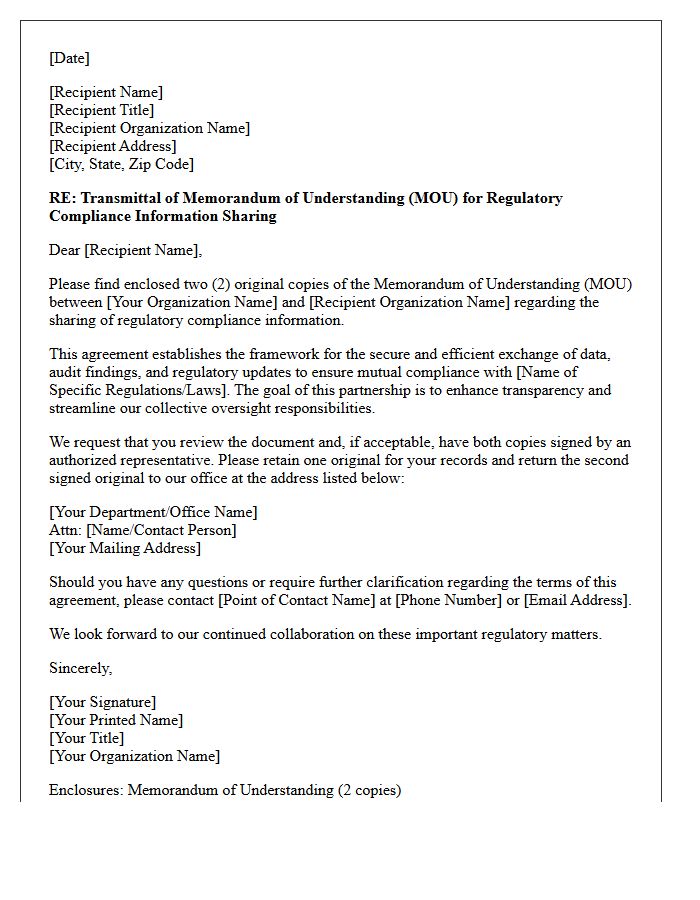
A Regulatory Compliance Information Sharing Memorandum of Understanding (MOU) Transmittal Letter serves as the formal authorizing document that establishes a framework for inter-agency cooperation. It officially delivers the agreement terms, ensuring all parties adhere to legal standards while exchanging sensitive data. This letter validates the mutual commitment to transparency and risk management. By clearly defining the scope of oversight and confidentiality protocols, it facilitates seamless information flow, reduces duplication of effort, and ensures strictly governed regulatory alignment between organizations or governmental bodies involved in the partnership.
Corporate Merger And Acquisition Memorandum Of Understanding Transmittal Letter
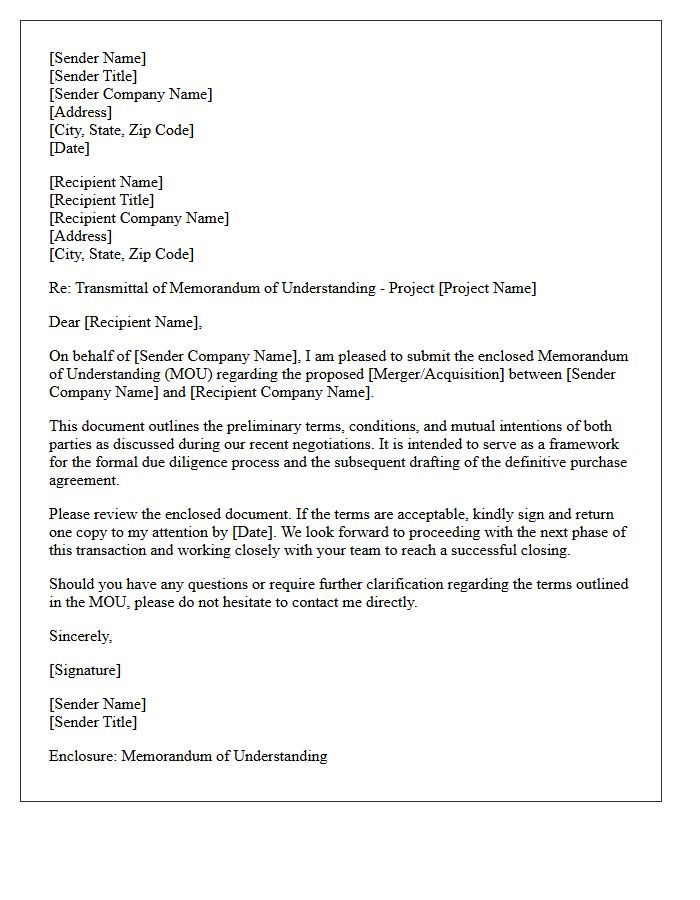
A transmittal letter for a Corporate Merger and Acquisition Memorandum of Understanding serves as a formal introduction for the preliminary agreement. It clarifies the intent to negotiate and outlines the primary deal structure before final binding contracts. This document ensures that both parties acknowledge the proposed terms, confidentiality requirements, and exclusivity periods. Efficiently drafted, it establishes a professional tone, setting the stage for due diligence while documenting the official delivery of the MOU to key stakeholders and legal representatives.
Co-Branded Credit Card Program Memorandum Of Understanding Transmittal Letter
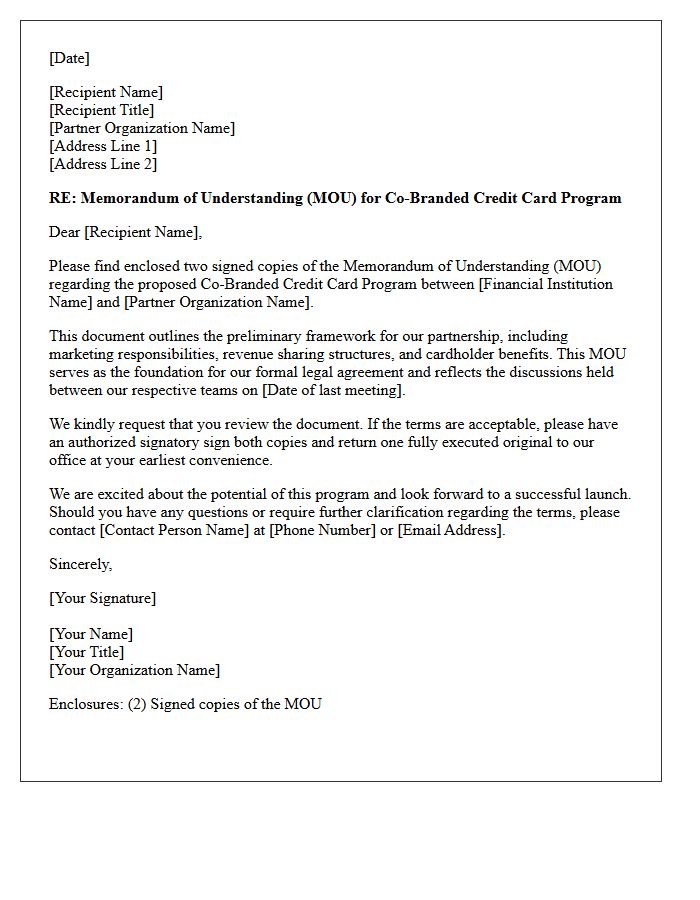
A Co-Branded Credit Card Program Memorandum of Understanding Transmittal Letter is a formal document used to submit a preliminary agreement between a financial institution and a partner brand. It outlines the strategic intent, key roles, and high-level commercial terms of the partnership. This letter serves as a legal bridge, ensuring both parties align on revenue sharing, marketing responsibilities, and data ownership before signing a final contract. Effectively, it formalizes the transition from initial negotiations to the implementation phase of a joint credit card product.
Secure Financial Data Sharing Memorandum Of Understanding Transmittal Letter
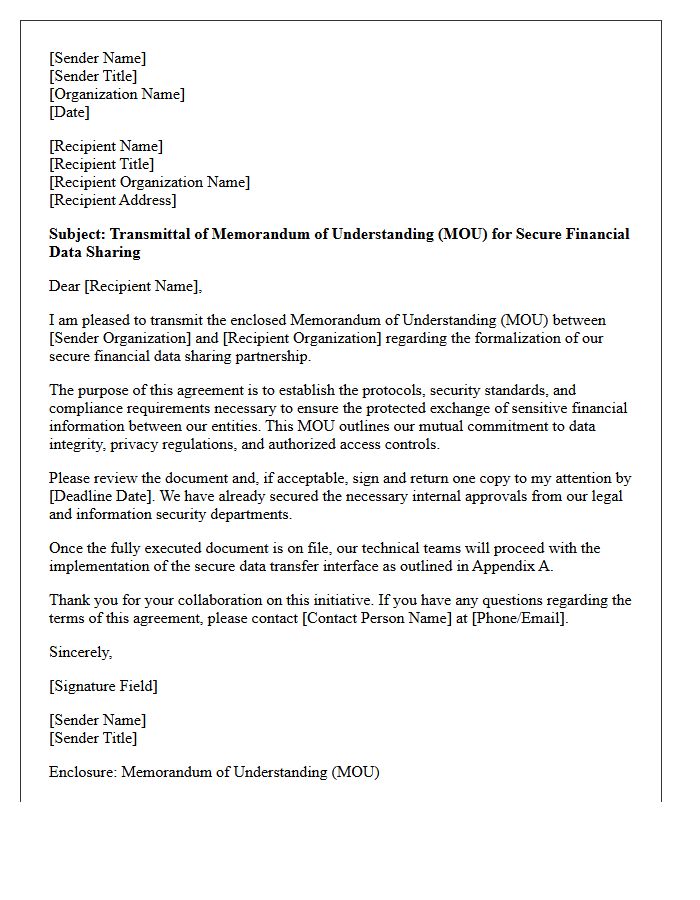
A Secure Financial Data Sharing Memorandum of Understanding (MOU) Transmittal Letter is a formal document used to officially deliver and track the exchange of sensitive information protocols. Its primary purpose is to ensure data security and regulatory compliance between financial institutions. This letter outlines the scope of the agreement, defines confidentiality obligations, and establishes clear accountability for all parties involved. By documenting the legal transfer of terms, it mitigates risk and ensures that shared financial intelligence remains protected under agreed-upon encryption standards and privacy frameworks.
Agency Banking Network Expansion Memorandum Of Understanding Transmittal Letter
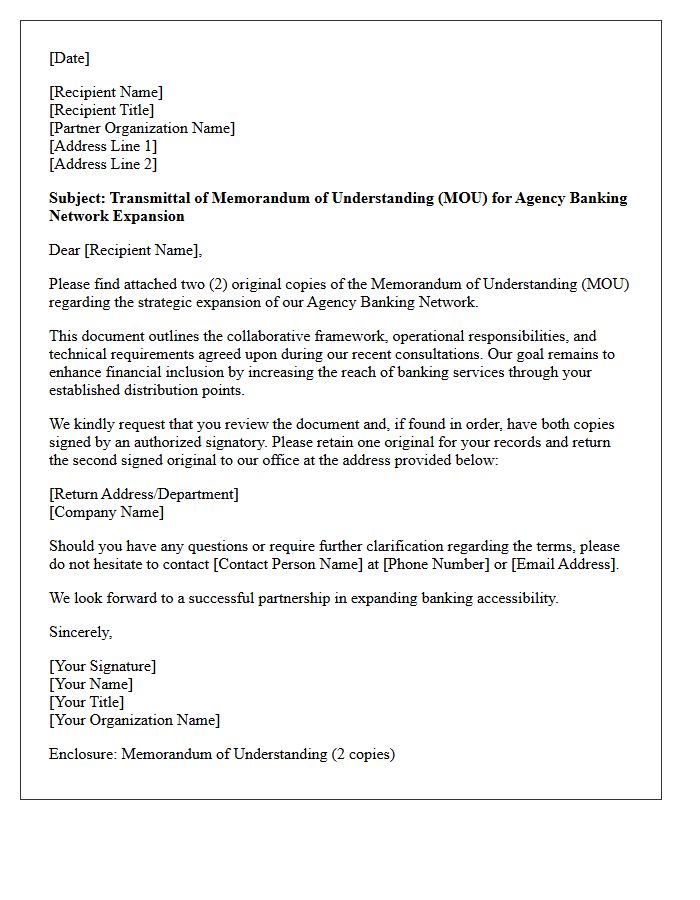
The Agency Banking Network Expansion Memorandum of Understanding (MoU) Transmittal Letter serves as the official formal record for distributing partnership agreements. It facilitates the strategic integration of financial services into underserved regions by formalizing terms between banks and third-party agents. This document ensures legal compliance, outlines operational roles, and tracks the delivery of binding commitments. Using a clear transmittal letter streamlines the onboarding process, minimizes administrative delays, and strengthens the governance framework necessary for expanding digital financial inclusion across diverse retail networks effectively.
Investment Banking Syndicate Memorandum Of Understanding Transmittal Letter
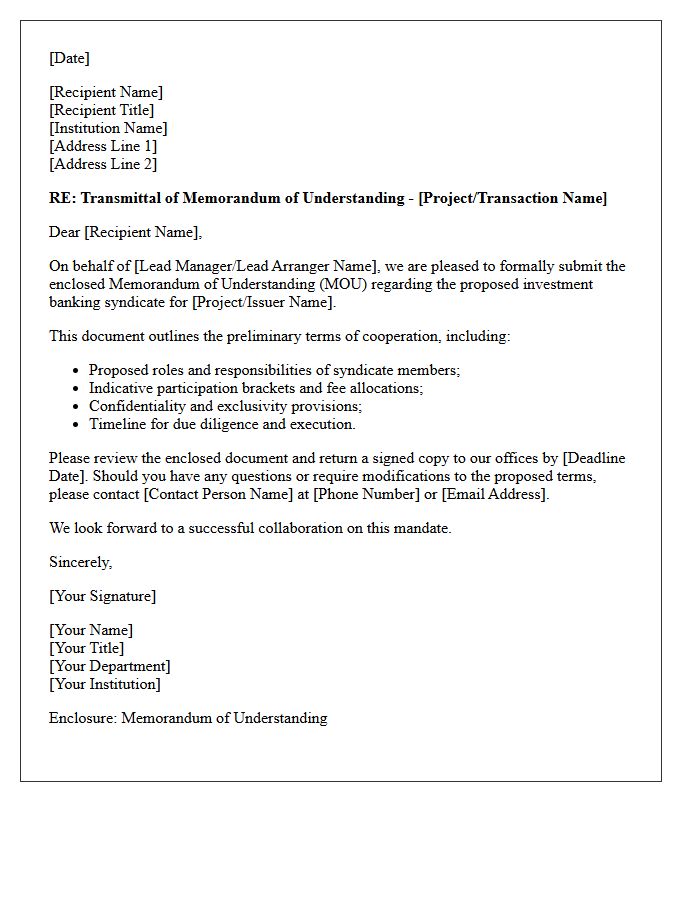
The Investment Banking Syndicate Memorandum of Understanding Transmittal Letter serves as the formal delivery vehicle for critical deal terms. It officially communicates the underwriting commitments, fee structures, and liability allocations between syndicate members. This document ensures legal clarity and alignment of interests before executing complex financial transactions. By outlining specific roles and regulatory compliance requirements, the transmittal letter minimizes operational risk and formalizes the inter-bank relationship during the capital raising process. It is a vital instrument for ensuring all participants adhere to the agreed-upon syndication framework and distribution strategies.
Central Bank Liquidity Facility Memorandum Of Understanding Transmittal Letter
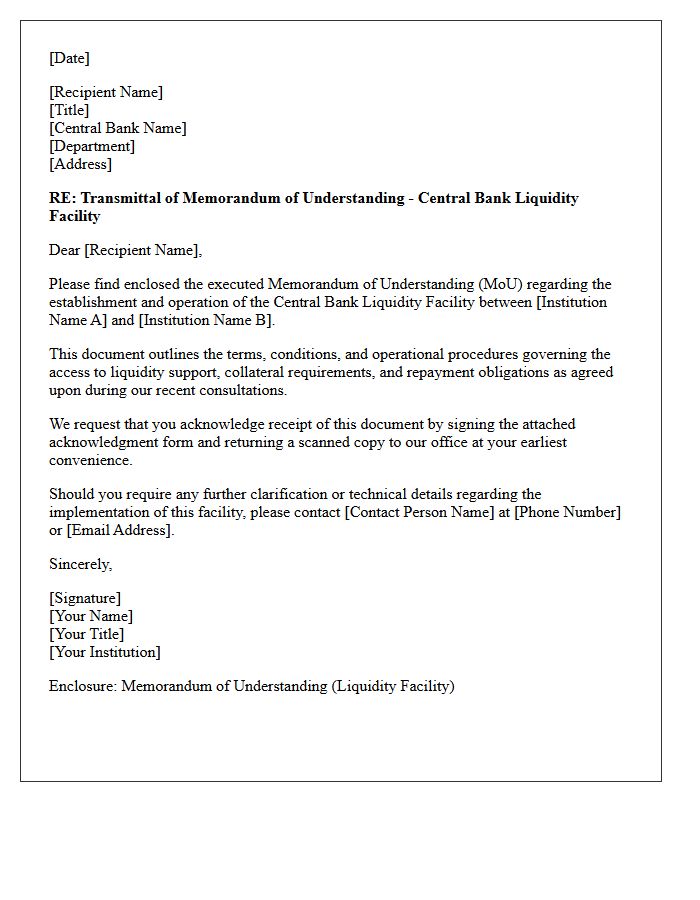
The Central Bank Liquidity Facility Memorandum of Understanding Transmittal Letter is a formal document facilitating emergency funding coordination. It outlines the operational framework between financial institutions and the central bank, ensuring clear communication protocols during liquidity stress. This letter serves as a vital legal bridge, establishing the terms for collateral eligibility and repayment obligations. Understanding this transmittal is essential for maintaining market stability, as it formalizes the procedures for accessing critical capital reserves to prevent systemic failures within the global financial architecture.
Anti-Money Laundering Collaborative Framework Memorandum Of Understanding Transmittal Letter
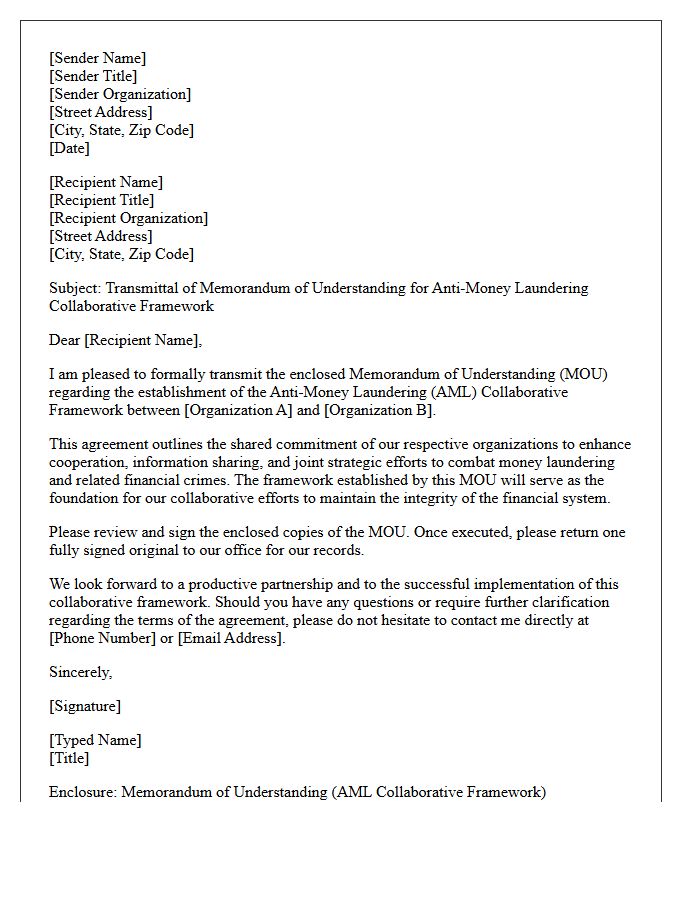
The Anti-Money Laundering Collaborative Framework Memorandum of Understanding establishes a formal information-sharing protocol between financial institutions and regulatory bodies. The Transmittal Letter serves as the official document authorizing the exchange of sensitive data to detect financial crimes. It ensures compliance with legal standards while enhancing collective intelligence against illicit activities. This framework streamlines inter-agency cooperation, providing a structured approach to risk management and the mitigation of money laundering threats across global financial networks.
What is a Memorandum of Understanding (MOU) transmittal letter?
A Memorandum of Understanding (MOU) transmittal letter is a formal cover document used to accompany a proposed agreement. It introduces the MOU, outlines the purpose of the partnership, and provides instructions for the next steps in the signing or review process.
What should be included in a transmittal letter for an MOU?
A professional transmittal letter should include the date, contact information for both parties, a reference to the specific MOU, a brief summary of the agreed-upon terms, any required deadlines for signature, and the contact details of the person handling the negotiations.
Why is a transmittal letter necessary when sending an MOU?
The transmittal letter serves as an official record of delivery, providing context for the recipient and ensuring the document is routed to the correct department. It also establishes a professional tone and clarifies whether the attached MOU is a final version for signature or a draft for further comments.
How do I format a transmittal letter for a legal memorandum?
The letter should follow a standard business format, using a formal salutation and a clear subject line. The body should be concise, typically consisting of three paragraphs: the introduction of the document, a brief explanation of its importance, and a call to action regarding the execution or return of the signed agreement.
Is an MOU transmittal letter legally binding?
Generally, the transmittal letter itself is not legally binding; it is an administrative document intended to facilitate communication. However, it can be used as evidence in a court of law to prove when an agreement was sent, received, or what the parties' intentions were at the time of delivery.

Comments