
Receiving a Supervisory Rating Notification Letter is a critical milestone in the performance management cycle, documenting an employee's official evaluation and achievement levels. This formal communication ensures transparency, aligns expectations, and provides a basis for future professional growth or administrative actions. To help you draft professional correspondence efficiently, below are some ready to use template.
Image cover: Official Supervisory Rating Notification: Sample Letters and Templates
Letter Samples List
- Annual CAMELS Supervisory Rating Notification Letter
- Community Reinvestment Act Supervisory Rating Notification Letter
- Commercial Bank Supervisory Rating Notification Letter
- Targeted Risk Assessment Supervisory Rating Notification Letter
- Information Technology Supervisory Rating Notification Letter
- Bank Secrecy Act Supervisory Rating Notification Letter
- Wealth Management Supervisory Rating Notification Letter
- Consumer Compliance Supervisory Rating Notification Letter
- Credit Risk Examination Supervisory Rating Notification Letter
- Capital Adequacy Supervisory Rating Notification Letter
- Holding Company Supervisory Rating Notification Letter
- Interim Audit Supervisory Rating Notification Letter
Annual CAMELS Supervisory Rating Notification Letter
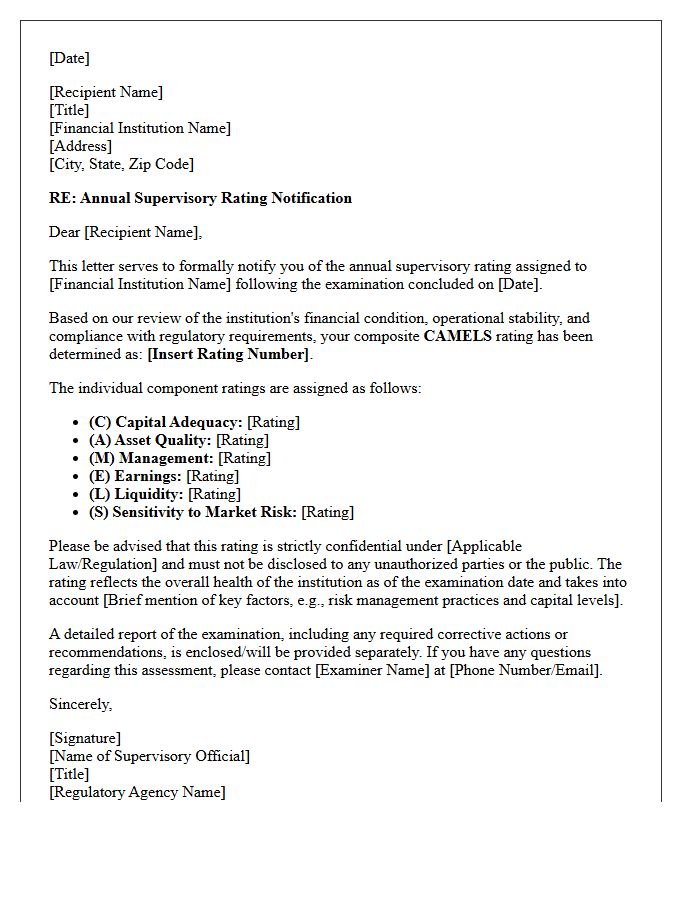
The Annual CAMELS Supervisory Rating Notification Letter is a critical document issued by regulators to assess a financial institution's overall health. It utilizes the CAMELS rating system to evaluate capital adequacy, assets, management, earnings, liquidity, and sensitivity to market risk. This confidential score determines the intensity of oversight and deposit insurance premiums. A poor rating may trigger corrective actions or formal enforcement orders. Understanding these results is essential for risk management and ensuring long-term operational stability within the regulatory framework of the banking industry.
Community Reinvestment Act Supervisory Rating Notification Letter
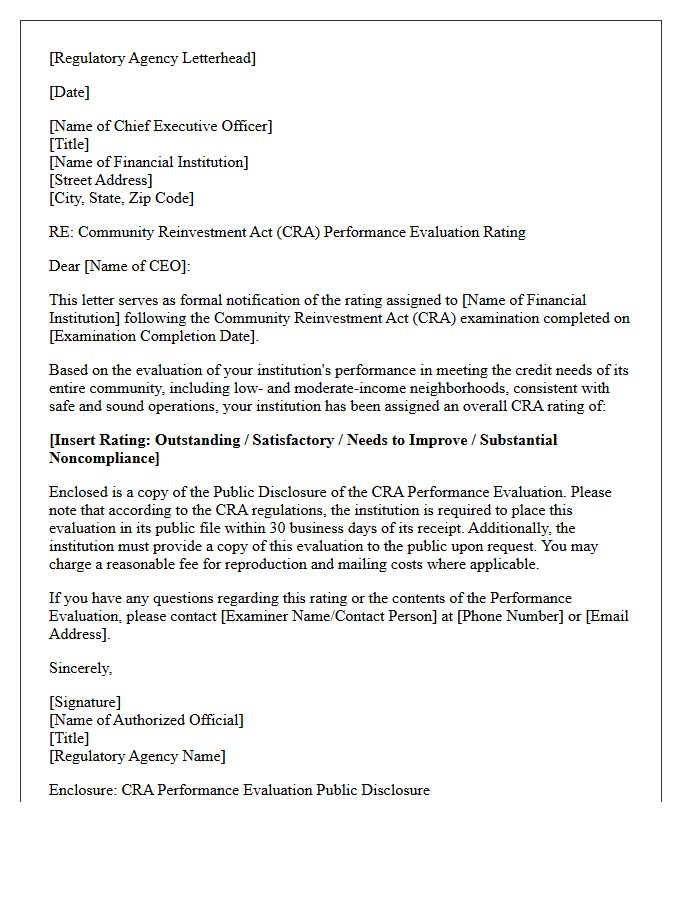
A Community Reinvestment Act Supervisory Rating Notification Letter is an official document sent by federal regulators to inform a financial institution of its CRA performance rating. This letter follows a formal examination assessing how well the bank meets the credit needs of its entire community, including low-income neighborhoods. The assigned rating-Outstanding, Satisfactory, Needs to Improve, or Substantial Noncompliance-is critical because it impacts the bank's ability to pursue mergers, acquisitions, or branch expansions. Banks must typically include this rating in their public comment files for transparency.
Commercial Bank Supervisory Rating Notification Letter
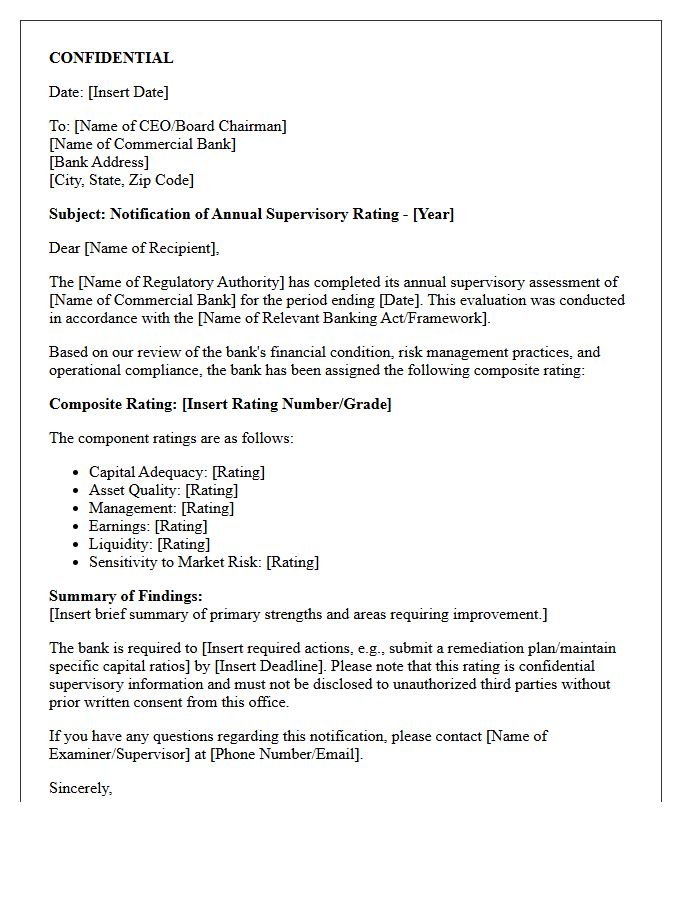
A Commercial Bank Supervisory Rating Notification Letter is a confidential document issued by regulators to inform a financial institution of its CAMELS rating. This formal communication evaluates capital adequacy, asset quality, management, earnings, liquidity, and sensitivity to market risk. It highlights critical deficiencies or operational strengths discovered during examinations. Banks must treat this information as strictly privileged and non-public. Understanding this letter is essential for management to address regulatory concerns, implement corrective actions, and ensure the long-term stability and legal compliance of the banking institution within the financial system.
Targeted Risk Assessment Supervisory Rating Notification Letter
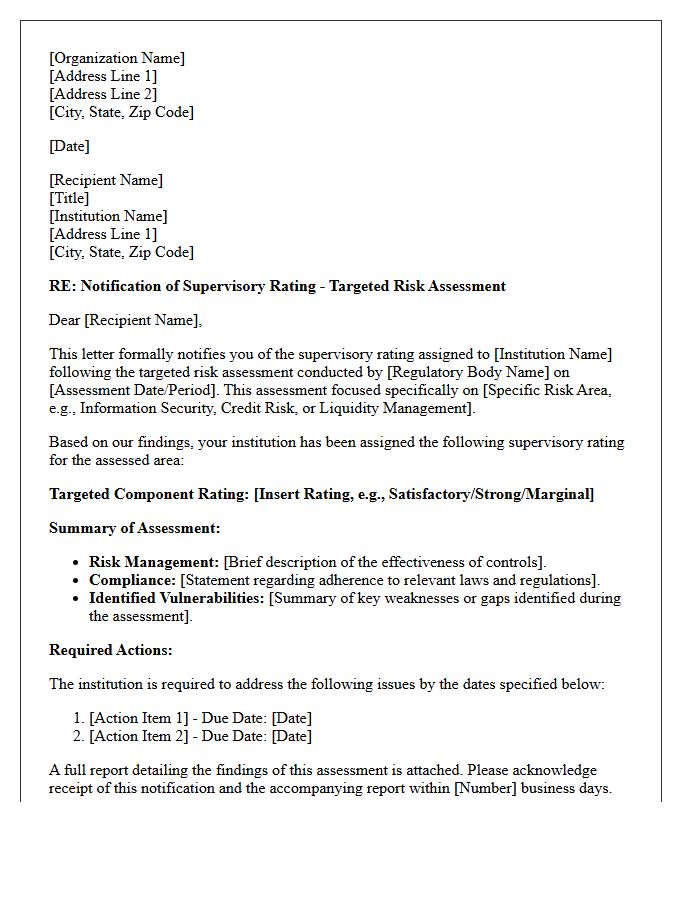
A Targeted Risk Assessment Supervisory Rating Notification Letter is a formal communication from financial regulators detailing specific supervisory ratings and safety concerns. This document highlights deficiencies identified during examinations, focusing on operational, credit, or market risks. Financial institutions must treat this letter as a critical directive for risk management improvements. Understanding the assigned ratings is essential, as they directly impact regulatory oversight intensity and potential enforcement actions. Timely remediation of noted issues is mandatory to ensure institutional stability and maintain regulatory compliance within the global banking framework.
Information Technology Supervisory Rating Notification Letter
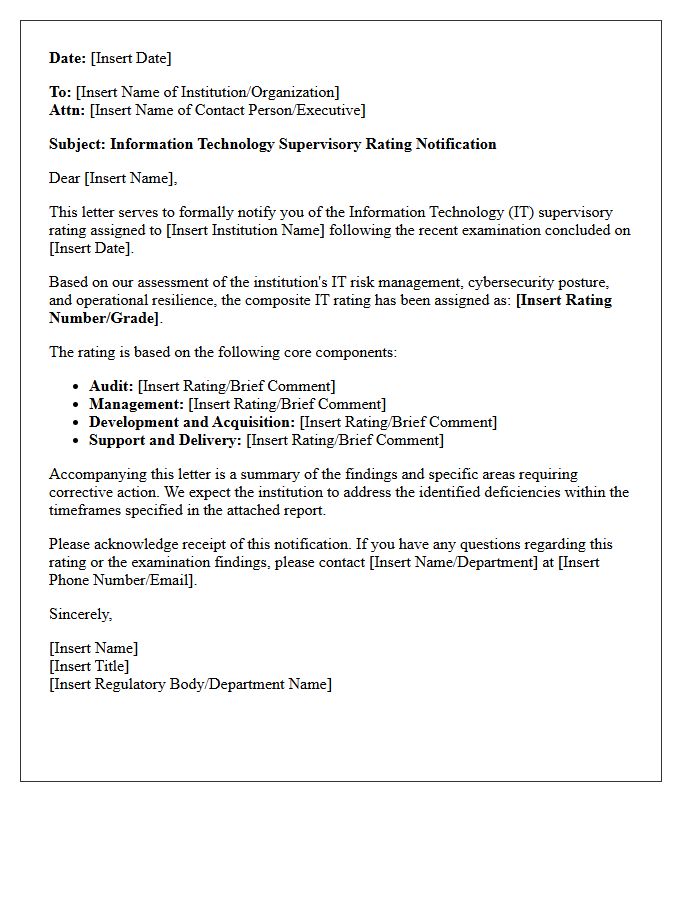
An Information Technology Supervisory Rating Notification Letter is a formal document issued by financial regulators to disclose a bank's Composite IT Rating. It summarizes the findings from a recent examination based on the Uniform Rating System for Information Technology. This letter evaluates critical areas like audit quality, management oversight, development, and support operations. It serves as an essential regulatory communication tool, identifying specific vulnerabilities and required corrective actions. Understanding this letter is vital for maintaining compliance, ensuring robust cybersecurity posture, and addressing systemic operational risks within the financial institution.
Bank Secrecy Act Supervisory Rating Notification Letter
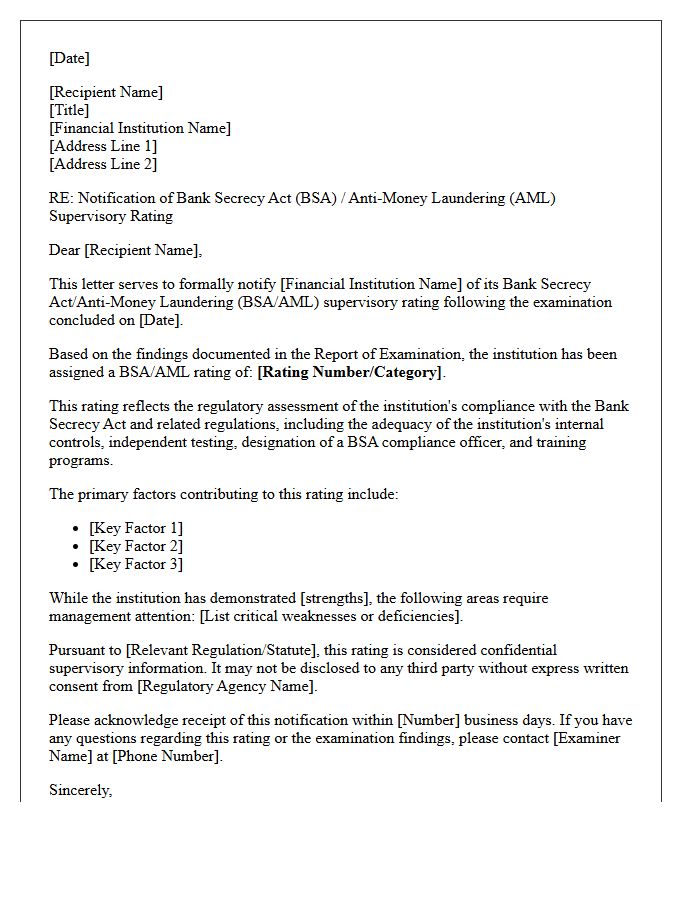
A Bank Secrecy Act Supervisory Rating Notification Letter is a formal document issued by regulators to inform a financial institution of its BSA/AML compliance grade. This letter highlights specific deficiencies or strengths within an institution's internal controls, risk management, and reporting systems. Receiving this notification is critical as it dictates the level of regulatory oversight and potential enforcement actions. Institutions must address identified weaknesses immediately to ensure financial integrity and maintain good standing with federal examiners during subsequent audits and safety and soundness examinations.
Wealth Management Supervisory Rating Notification Letter
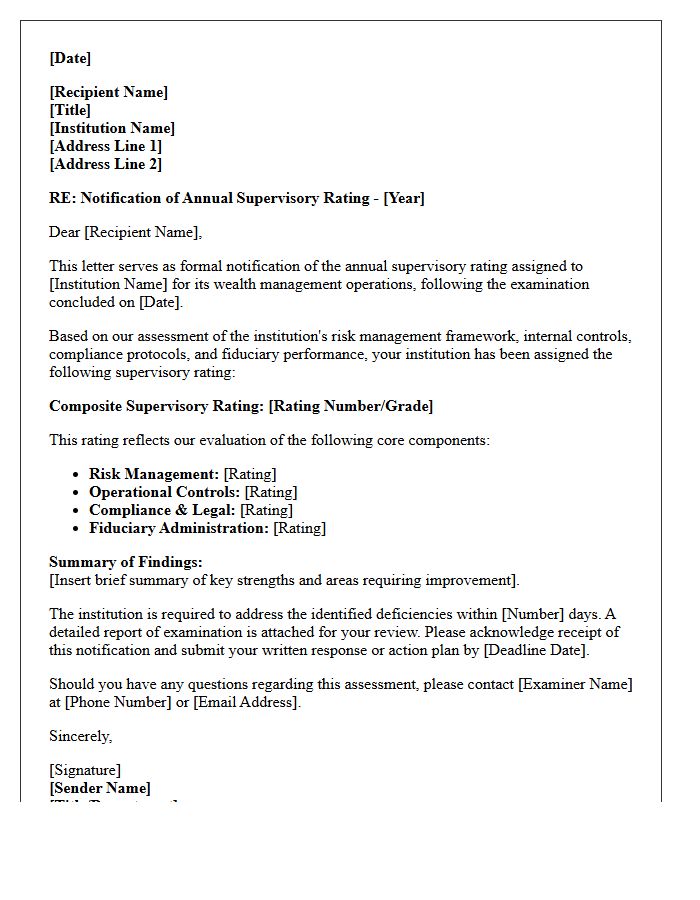
A Wealth Management Supervisory Rating Notification Letter is a formal document issued by financial regulators to disclose a firm's assigned risk rating. This confidential score evaluates operational health, compliance, and governance. It is critically important for management to review the findings, as a poor rating can trigger strict oversight, limit business expansion, or mandate immediate corrective actions. Recipients must treat this information as non-public and use it to enhance internal controls and ensure long-term regulatory compliance within the wealth management sector.
Consumer Compliance Supervisory Rating Notification Letter
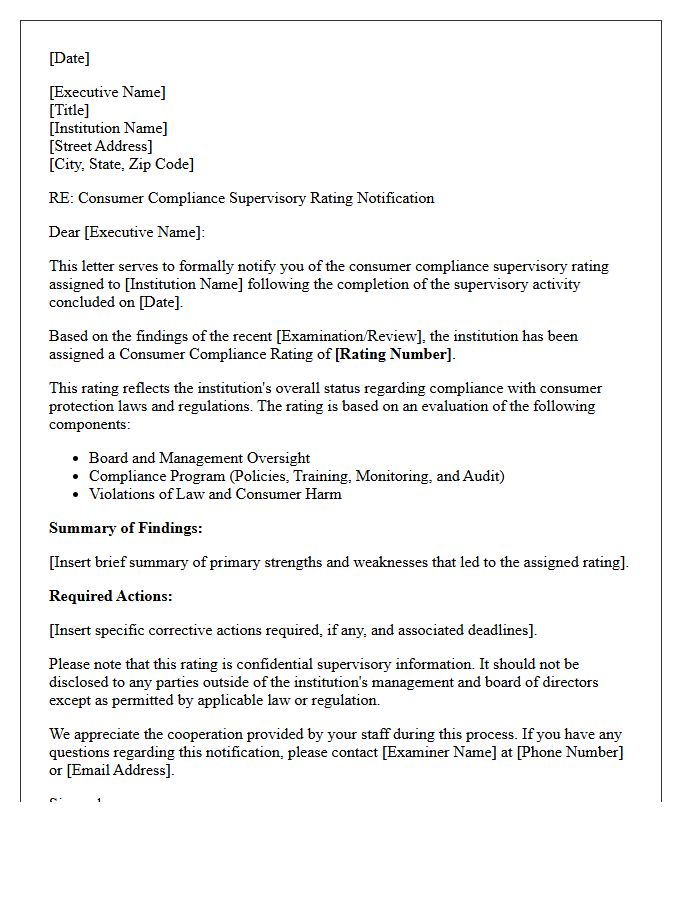
The Consumer Compliance Supervisory Rating Notification Letter is a confidential document issued by regulators to disclose a financial institution's assigned rating. This formal communication evaluates how effectively a firm manages its compliance risk and adheres to consumer protection laws. It highlights specific deficiencies, corrective actions required, and the overall health of the institution's Compliance Management System (CMS). Receiving this letter is a critical regulatory event, as a poor rating can lead to enforcement actions, increased oversight, or restrictions on future business expansion and merger activities.
Credit Risk Examination Supervisory Rating Notification Letter
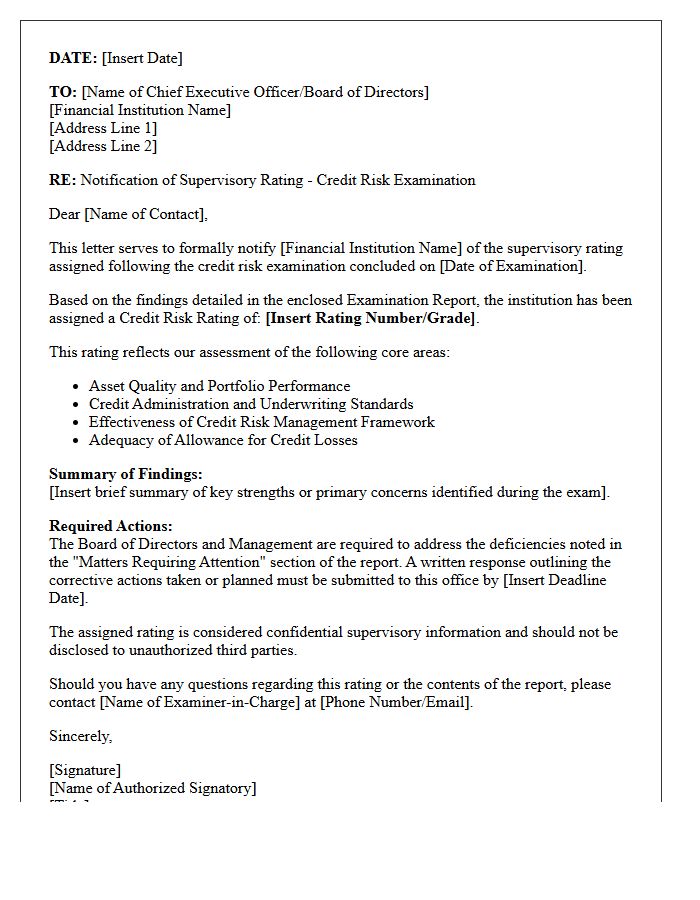
A Credit Risk Examination Supervisory Rating Notification Letter is a formal communication from regulators disclosing a financial institution's composite rating. This document outlines critical deficiencies in asset quality, underwriting standards, and risk management practices identified during an audit. It serves as a legal notice requiring immediate board attention and corrective action plans. Understanding these findings is essential for maintaining compliance and preventing enforcement actions that could restrict banking operations or growth. Financial institutions must treat this letter as a primary roadmap for improving their credit risk profile and overall safety and soundness.
Capital Adequacy Supervisory Rating Notification Letter
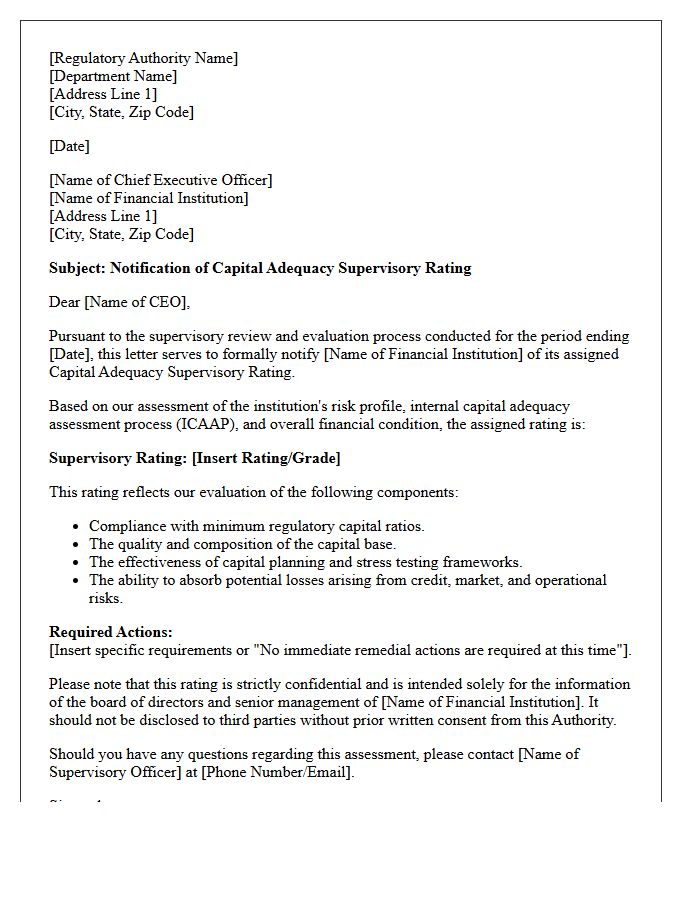
A Capital Adequacy Supervisory Rating Notification Letter is a formal document issued by financial regulators to inform a bank of its assigned risk rating based on capital reserves. This communication highlights the institution's ability to absorb potential losses and maintain financial stability. It often specifies mandatory actions if capital levels fall below regulatory requirements. Understanding this letter is crucial for stakeholders as it dictates dividend distributions, growth limits, and overall compliance status within the banking sector. It serves as a definitive assessment of a firm's solvency and operational health.
Holding Company Supervisory Rating Notification Letter
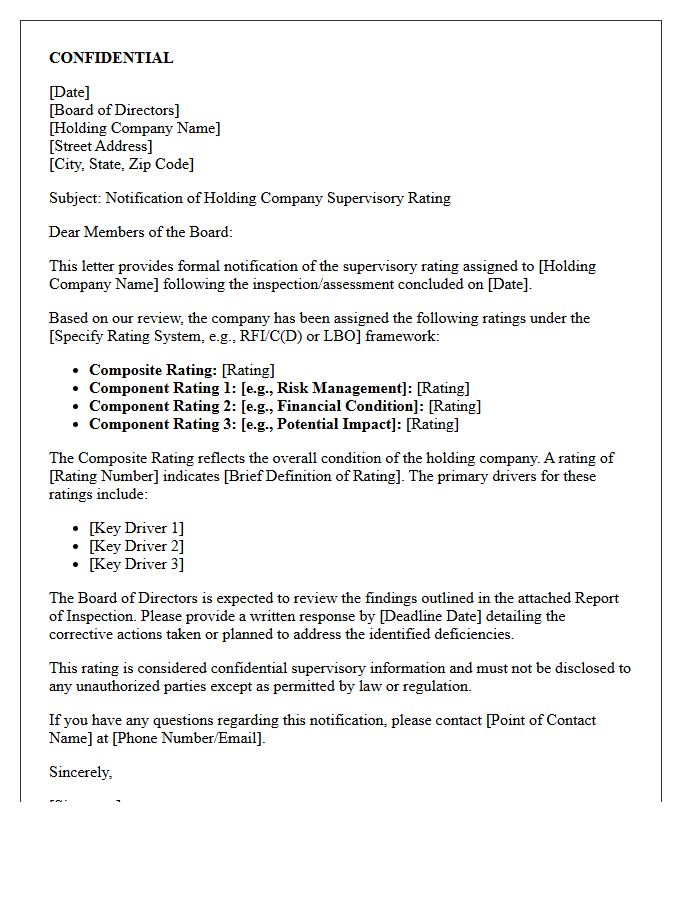
A Holding Company Supervisory Rating Notification Letter is a formal communication from regulators, such as the Federal Reserve, disclosing the assigned supervisory ratings to a financial institution. This document outlines the organization's overall condition, focusing on risk management, financial strength, and board oversight. It is critical for executives to review because it identifies deficiencies that require immediate remediation. Since these ratings are highly confidential, they influence the company's ability to pursue mergers, pay dividends, or expand operations. Understanding these findings is essential for maintaining regulatory compliance and ensuring long-term operational stability.
Interim Audit Supervisory Rating Notification Letter
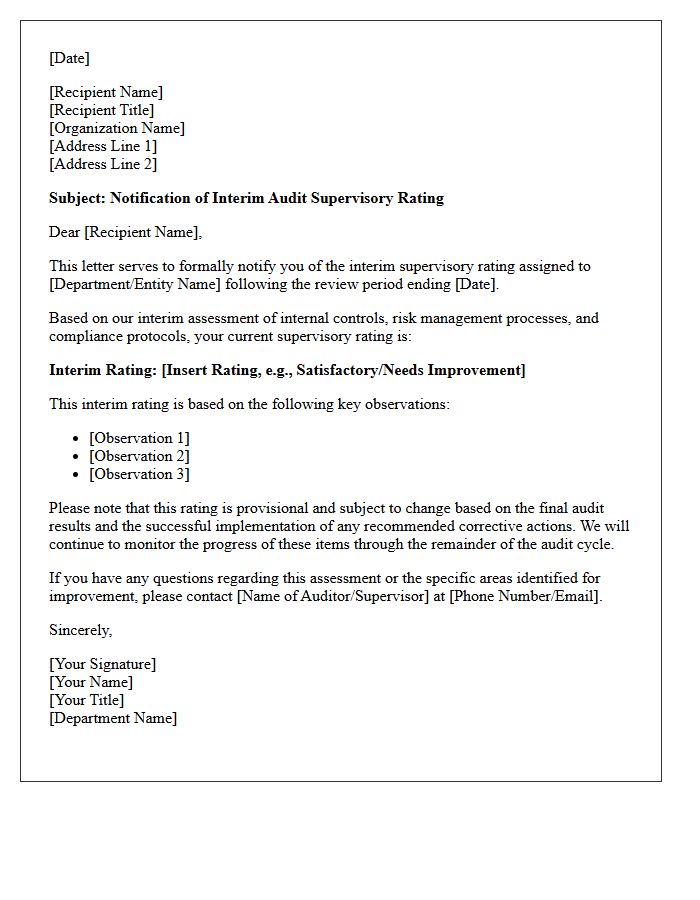
The Interim Audit Supervisory Rating Notification Letter is a formal communication issued by regulators to provide a provisional assessment of a financial institution's operational health. It highlights critical deficiencies, risk management gaps, and compliance status before the final report. This document is essential for management to initiate remediation efforts promptly. Understanding these preliminary ratings allows organizations to address supervisory concerns early, potentially influencing the final year-end grade and ensuring continuous alignment with regulatory expectations and safety standards.
What is a Supervisory Rating Notification Letter?
A Supervisory Rating Notification Letter is an official formal communication issued by financial regulatory authorities to inform a bank or financial institution of its assigned supervisory rating (such as CAMELS or ROCA) following a safety and soundness examination.
When should a financial institution expect to receive a rating notification?
Institutions typically receive the rating notification letter within 30 to 60 days after the completion of an onsite examination or a periodic offsite surveillance review by regulatory examiners.
What key information is included in a Supervisory Rating Notification Letter?
The letter contains the composite rating, individual component ratings (e.g., Capital, Asset Quality, Management), a summary of the examiner's findings, and any mandatory corrective actions or enforcement milestones required to address identified deficiencies.
Are supervisory ratings provided in these letters confidential?
Yes, supervisory ratings are strictly confidential and are considered Non-Public Regulated Information. Financial institutions are generally prohibited by law from disclosing the contents of the letter or the specific rating to the public or unauthorized third parties.
How should a Board of Directors respond to a Supervisory Rating Notification?
The Board of Directors must formally review the letter, acknowledge the findings in the board minutes, and develop a comprehensive remediation plan to address any supervisory concerns or "Matters Requiring Attention" (MRAs) outlined in the notification.


Comments