
A software subscription failed payment can disrupt essential services and impact customer retention. This initial notice serves as a polite reminder to users to update their billing information and resolve transaction errors quickly. Professional communication ensures continuity while maintaining a positive relationship. To help you manage dunning processes effectively, below are some ready to use templates.
Image cover: Failed Payment Notice: Software Subscription Templates and Samples
Letter Samples List
- Initial Software Subscription Failed Payment Notice Letter
- First Notice of Declined Payment for Software Subscription Letter
- Unsuccessful Software Subscription Billing Initial Debt Collection Letter
- Action Required Software Subscription Past Due Initial Letter
- Software Account Suspension Warning and Failed Payment Letter
- Initial Debt Collection Letter for Missed Software Subscription Payment
- Software Service Interruption and Initial Failed Payment Letter
- First Attempt Debt Recovery Letter for Software Subscription
- Outstanding Software Subscription Balance Initial Demand Letter
- Notice of Default on Software Subscription Payment Letter
- Initial SaaS Subscription Unpaid Invoice Collection Letter
- Declined Credit Card for Software Subscription Initial Notice Letter
- Software License Revocation and Failed Payment Initial Letter
- Initial Grace Period Expiration Software Subscription Collection Letter
Initial Software Subscription Failed Payment Notice Letter
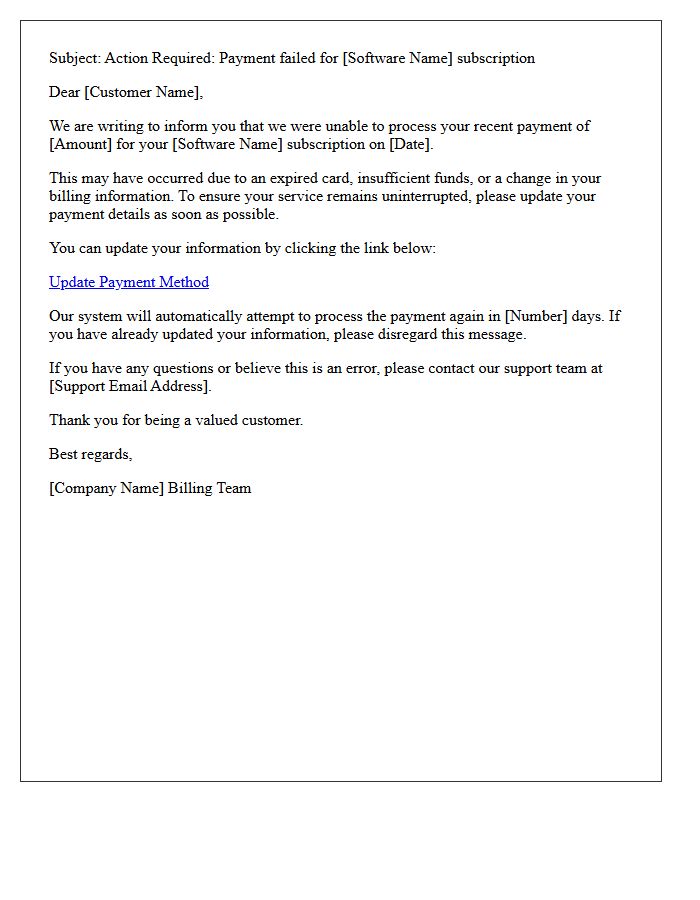
An Initial Software Subscription Failed Payment Notice Letter is a critical communication sent to users when a recurring billing attempt fails. Its primary purpose is to prevent service disruption by alerting the customer to issues like expired credit cards or insufficient funds. This notice should clearly state the reason for failure and provide a direct link for updating payment information. Timely notification encourages retention and ensures continuous access to the software while maintaining a positive relationship through proactive customer support and transparent billing transparency.
First Notice of Declined Payment for Software Subscription Letter
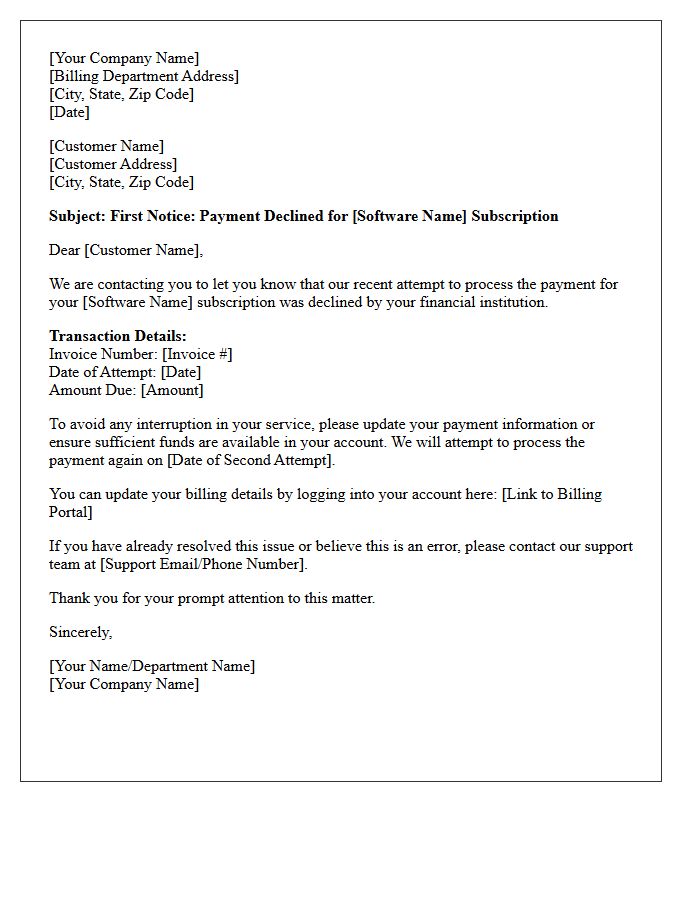
A First Notice of Declined Payment is a critical alert indicating a failed transaction for your software subscription. This formal communication highlights a payment processing error, often caused by expired credit cards, insufficient funds, or bank security blocks. It is essential to act promptly to prevent service interruption or loss of data access. Users should immediately verify their billing information and update payment methods via the secure customer portal. Addressing this notice quickly ensures uninterrupted software functionality and maintains your current subscription status without incurring additional late fees or account suspension.
Unsuccessful Software Subscription Billing Initial Debt Collection Letter
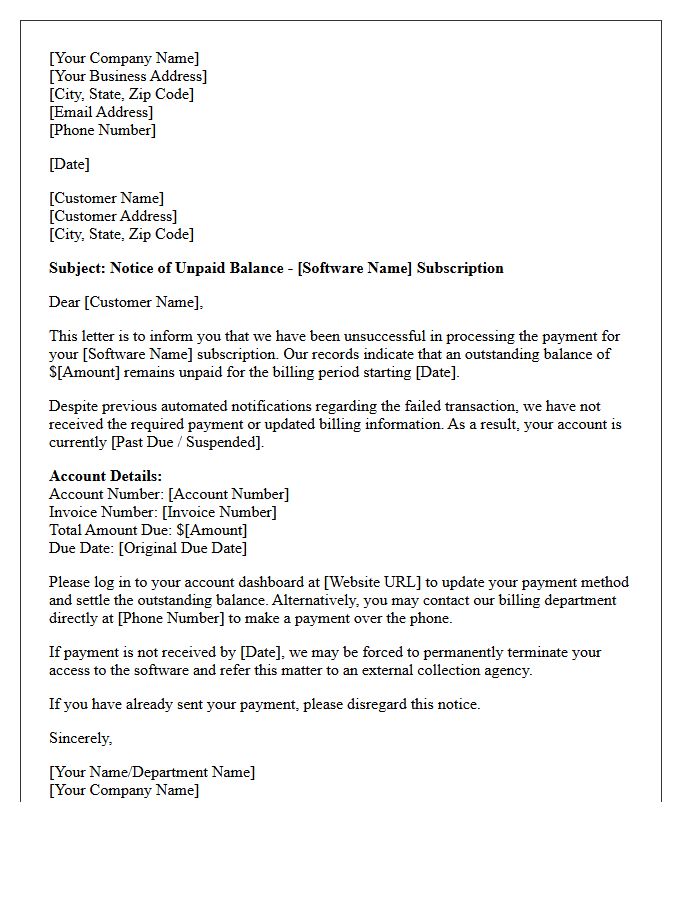
An initial debt collection letter for an unsuccessful software subscription serves as a formal notice of overdue payment. This document marks the transition from standard billing reminders to recovery actions, clearly stating the outstanding balance, original due date, and applicable late fees. It is essential to ensure the letter complies with legal compliance standards to avoid disputes. Providing transparent payment options and a deadline for resolution helps prevent service termination or escalation to external agencies. Addressing these failed transactions promptly maintains business cash flow and clarifies the subscriber's ongoing contractual obligations.
Action Required Software Subscription Past Due Initial Letter
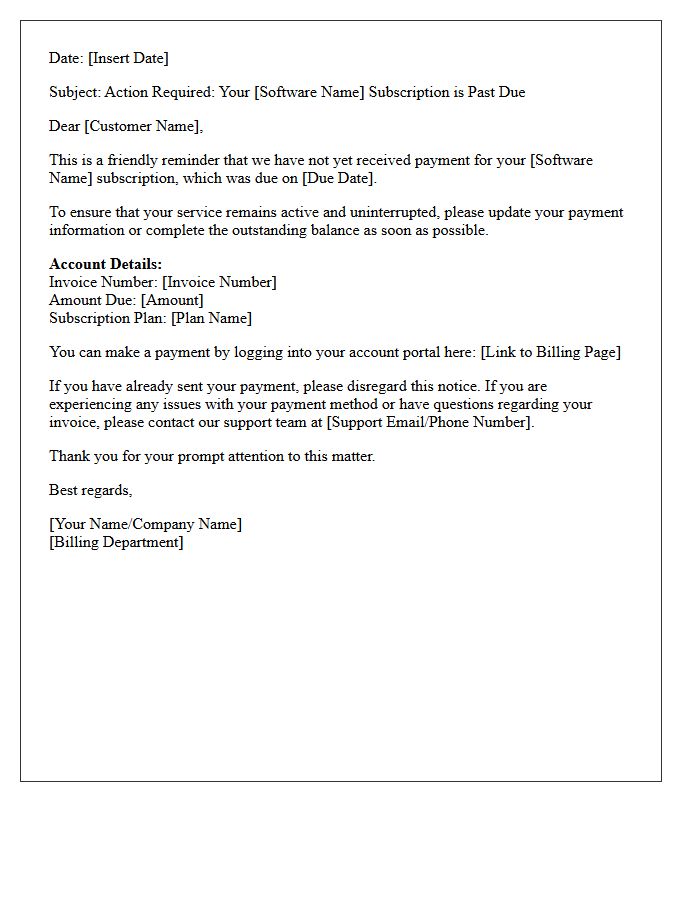
Receiving an Action Required notification indicates your software subscription is past due. To prevent immediate service interruption, you must update your payment method or clear the outstanding balance. This initial letter serves as a formal reminder to ensure continuous access to your tools and data. Failure to resolve this may lead to account suspension. Please log into your billing portal promptly to verify details and maintain your subscription status. Taking quick action avoids late fees and ensures your professional workflow remains undisrupted during this grace period.
Software Account Suspension Warning and Failed Payment Letter
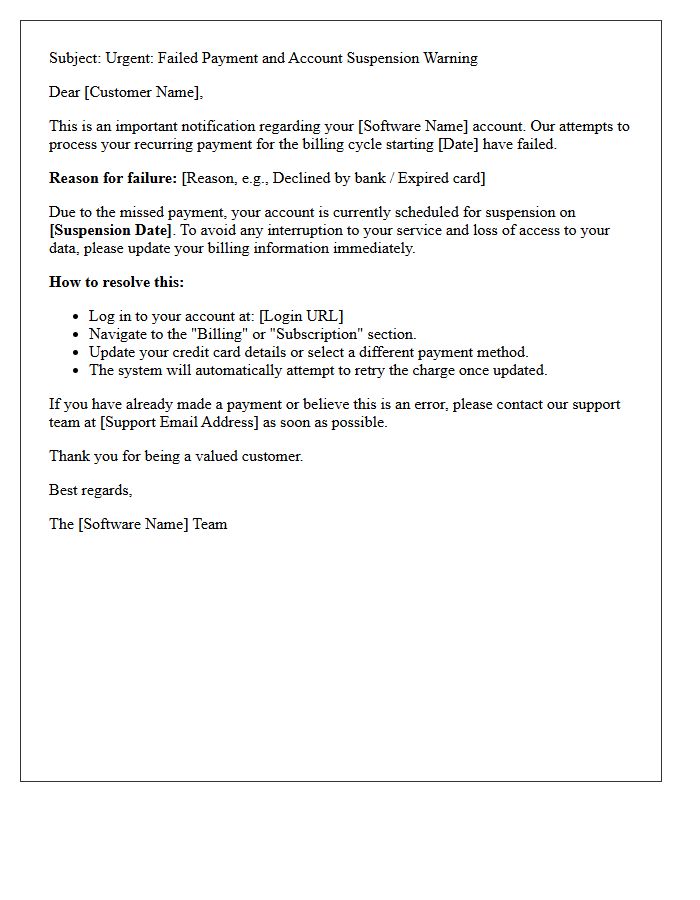
Receiving a software account suspension warning typically indicates a failed payment or expired billing details. To maintain uninterrupted access to your tools and data, you must update your payment method immediately. These notices serve as a critical grace period before services are restricted. Always verify the sender's email address to avoid phishing scams. Resolving the outstanding balance promptly prevents service disruption and potential data loss associated with account termination. Reviewing your billing portal ensures your subscription remains active and secure.
Initial Debt Collection Letter for Missed Software Subscription Payment
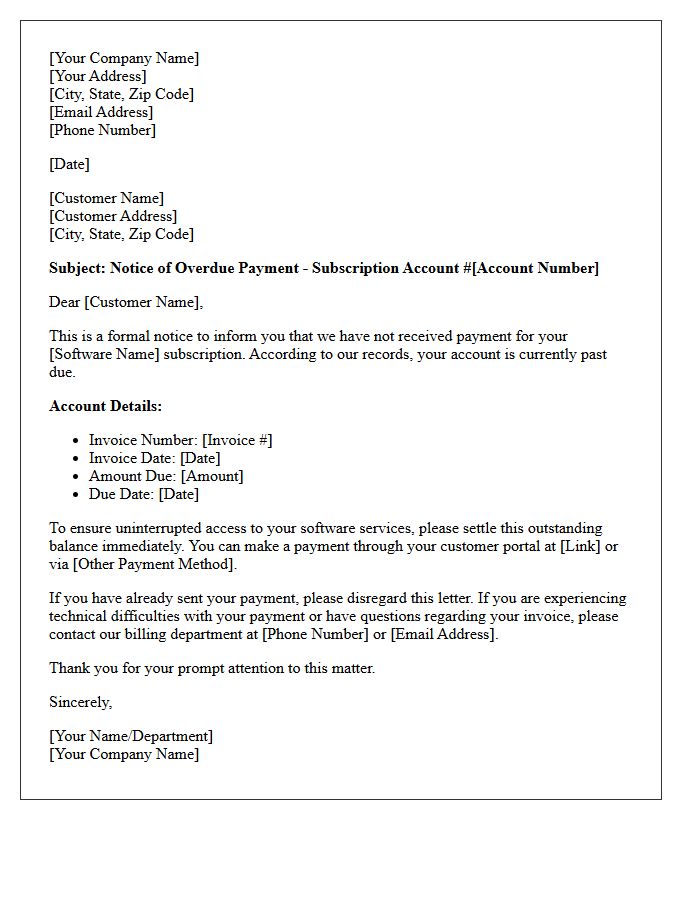
Receiving an initial debt collection letter for a missed software subscription is a formal notice that your account is past due. It serves as a validation notice, legally requiring the agency to state the exact amount owed and the original creditor's name. You have a 30-day window to dispute the debt in writing if the charges are inaccurate. Promptly addressing this letter is essential to prevent service termination, additional late fees, or potential damage to your credit score. Always verify the agency's legitimacy before making payments.
Software Service Interruption and Initial Failed Payment Letter
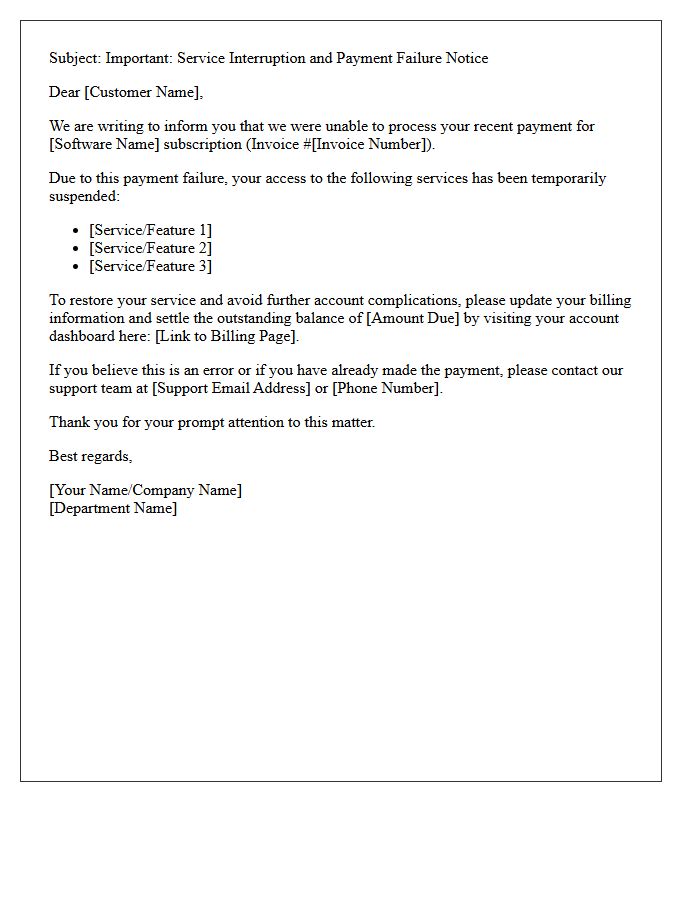
A software service interruption notification informs users of temporary downtime, ensuring transparency during technical issues. Conversely, an initial failed payment letter alerts customers to a billing error, such as an expired card or insufficient funds. Promptly addressing these alerts is essential to prevent service suspension. Effective communication should clearly explain the cause, provide a resolution timeline, and offer direct links to update payment methods. Proactive management of these notifications maintains business continuity and fosters customer trust by resolving disruptions before they impact productivity or result in permanent account termination.
First Attempt Debt Recovery Letter for Software Subscription
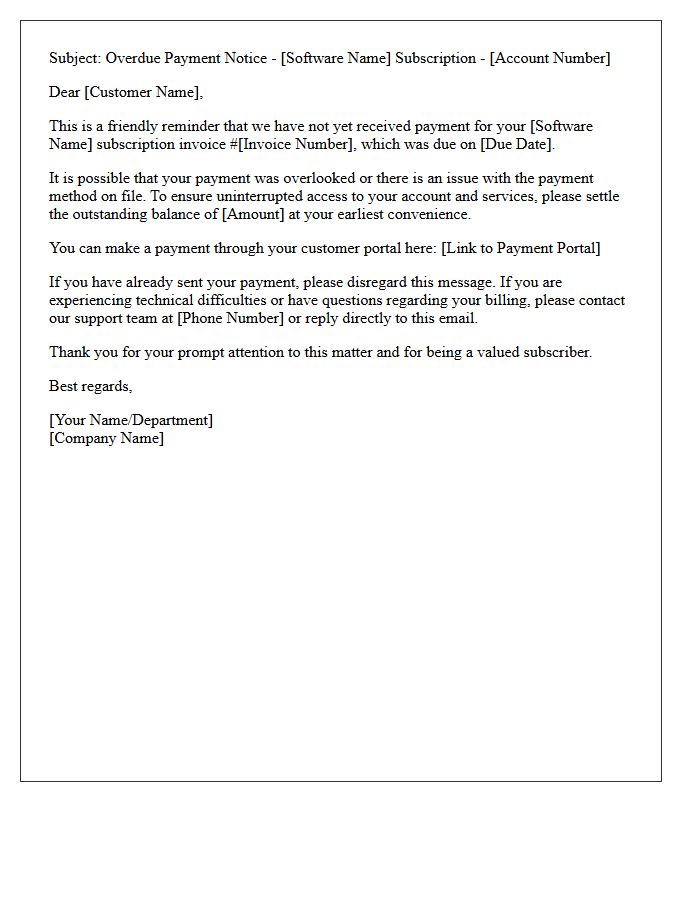
A first attempt debt recovery letter for a software subscription serves as a formal payment reminder to resolve an outstanding balance. This initial communication should remain professional, clearly stating the invoice number, total amount due, and the original deadline. It is essential to provide a direct link for immediate settlement and update contact information for billing inquiries. Promptly addressing delinquent accounts helps maintain service continuity and preserves the professional relationship between the vendor and the subscriber before escalating to further collection actions or service suspension.
Outstanding Software Subscription Balance Initial Demand Letter
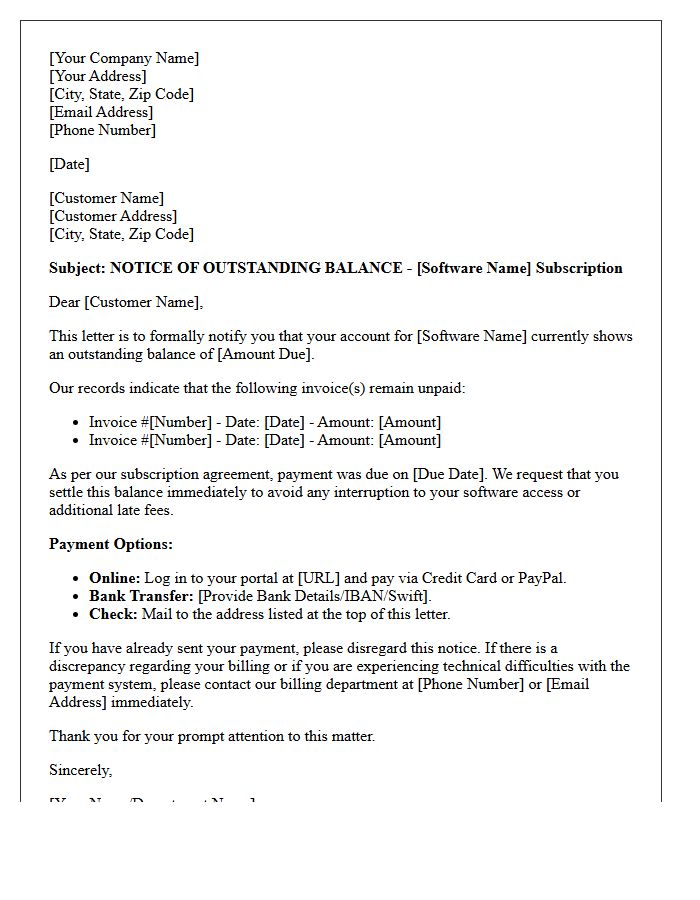
An Outstanding Software Subscription Balance Initial Demand Letter serves as a formal notification to a client regarding unpaid licensing fees. This document professionally outlines the specific software services provided, the total amount overdue, and the original payment deadline. It functions as a critical legal record for debt collection while offering a final opportunity for amicable resolution before escalating to service suspension. Clear communication of payment terms and potential consequences helps maintain business relationships while ensuring your company secures its rightful revenue and contract compliance.
Notice of Default on Software Subscription Payment Letter
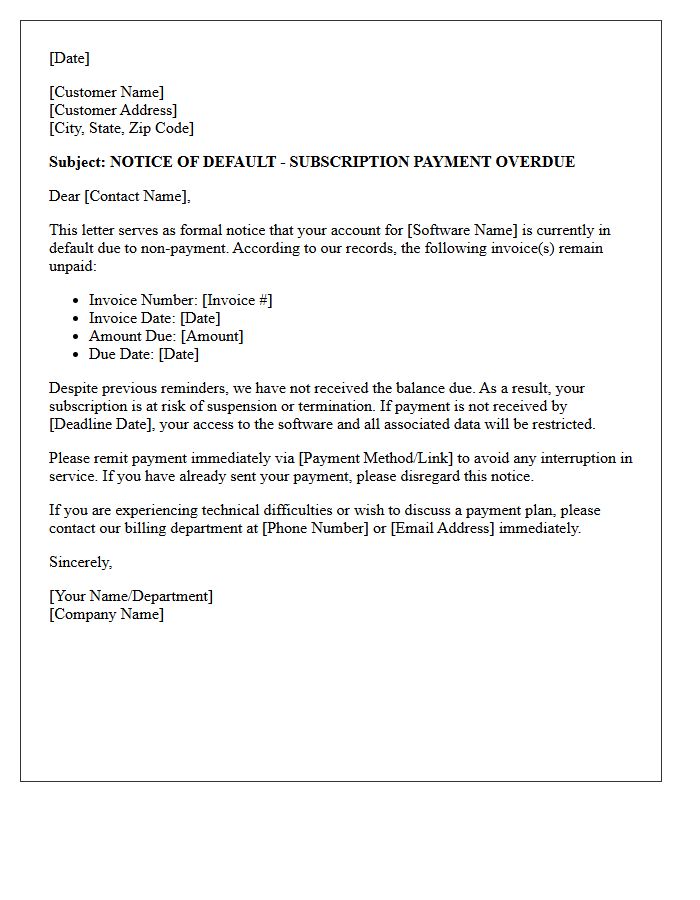
Receiving a Notice of Default on a software subscription is a critical warning that your payment is overdue. This formal document serves as a final alert before the termination of services or legal action. It typically specifies the outstanding balance, the breach of contract terms, and a strict deadline to cure the debt. Failing to resolve the payment immediately can lead to permanent data loss, software lockouts, and negative impacts on your business operations or credit rating. Always verify the invoice details and contact the provider promptly to maintain software access.
Initial SaaS Subscription Unpaid Invoice Collection Letter
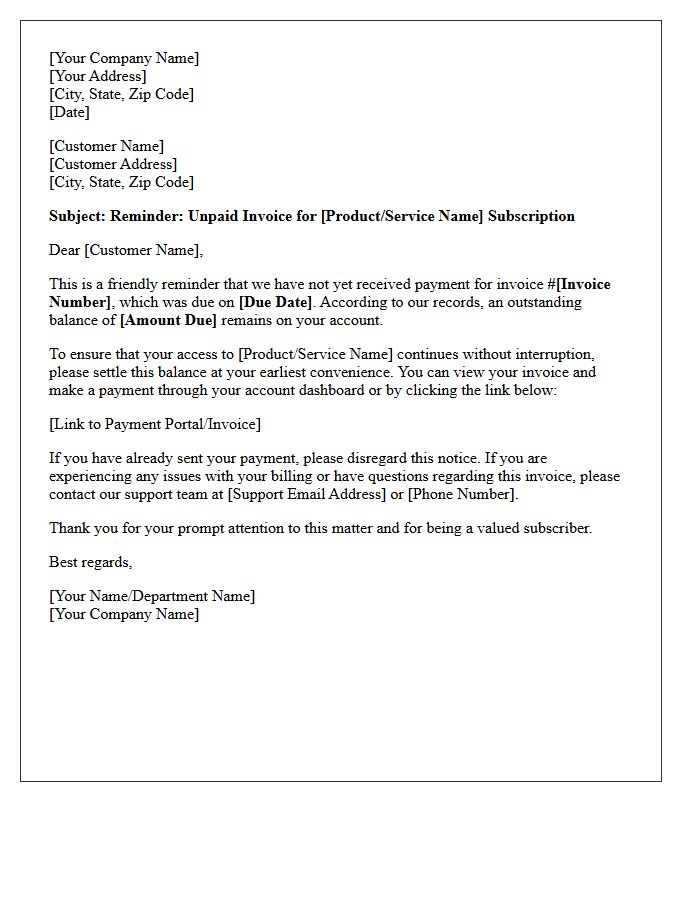
When sending an Initial SaaS Subscription Unpaid Invoice Collection Letter, prioritize a professional tone to maintain the customer relationship. Clearly state the outstanding balance, invoice number, and due date to avoid confusion. Providing a direct payment link or multiple payment methods within the email significantly increases conversion rates. Mentioning a brief grace period or upcoming service suspension encourages immediate action without being overly aggressive. Timely communication is essential to protecting your recurring revenue and reducing churn caused by failed billing cycles or expired credit cards.
Declined Credit Card for Software Subscription Initial Notice Letter
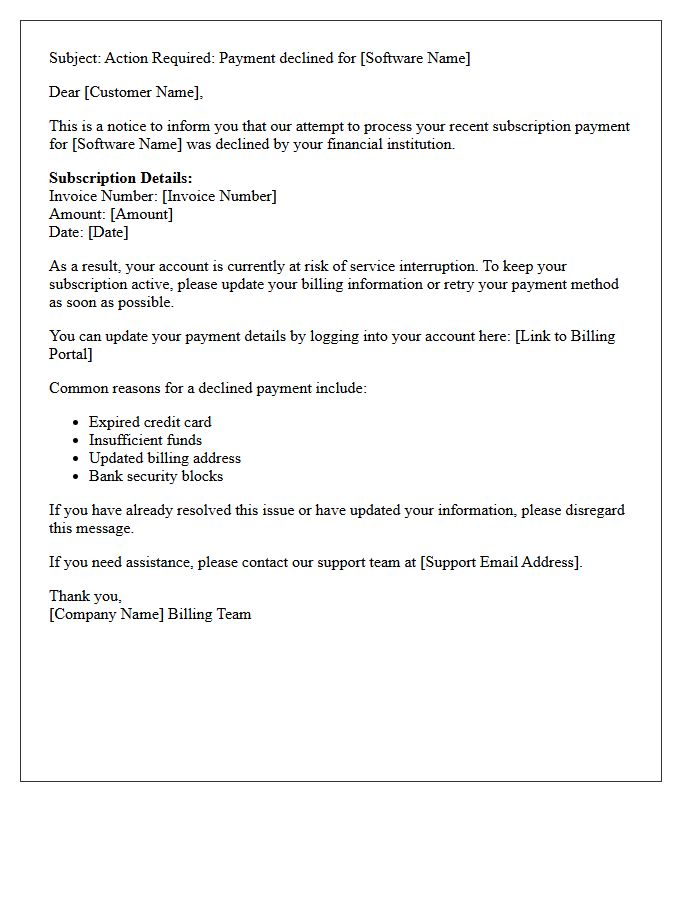
A declined credit card notice for a software subscription is a critical billing alert sent to prevent service disruption. This initial letter informs the user that a payment failure occurred, often due to expired details or insufficient funds. It typically provides a direct link to update payment information within a specific grace period. Promptly addressing this notice is essential to maintain uninterrupted access to your tools and protect stored data. Always verify the sender's authenticity to avoid phishing attempts while ensuring your subscription remains active and your account status stays current.
Software License Revocation and Failed Payment Initial Letter
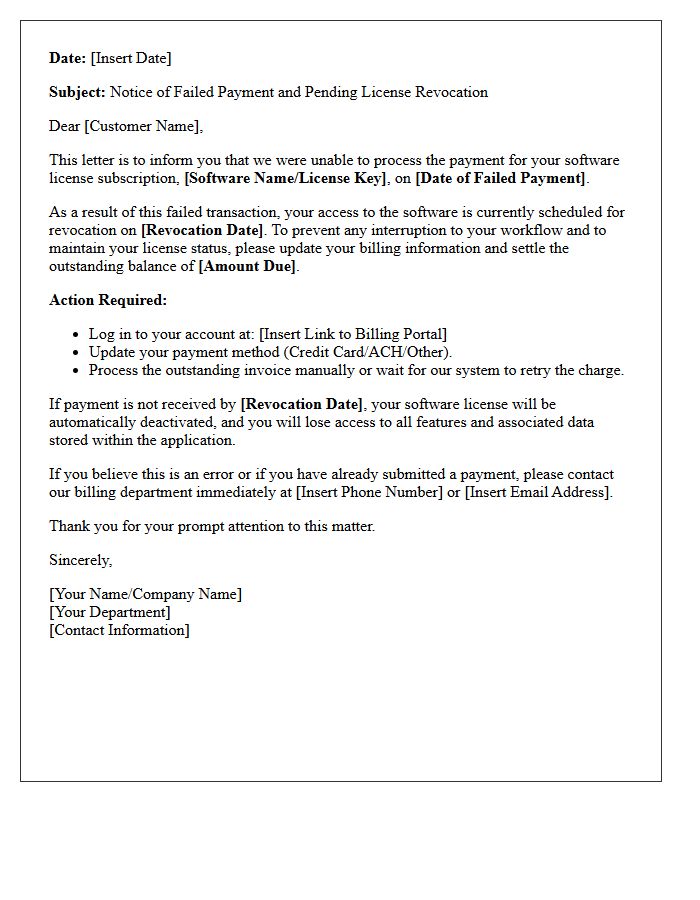
When a subscription payment fails, a Software License Revocation notice serves as the final warning before access is disabled. This initial letter informs the user of a billing discrepancy and provides a grace period to update payment details. It is essential to act promptly to avoid operational downtime or loss of data access. Organizations should treat this notice as a critical priority to maintain service continuity and ensure compliance with the end-user license agreement, preventing the permanent termination of essential digital tools and professional software seats.
Initial Grace Period Expiration Software Subscription Collection Letter
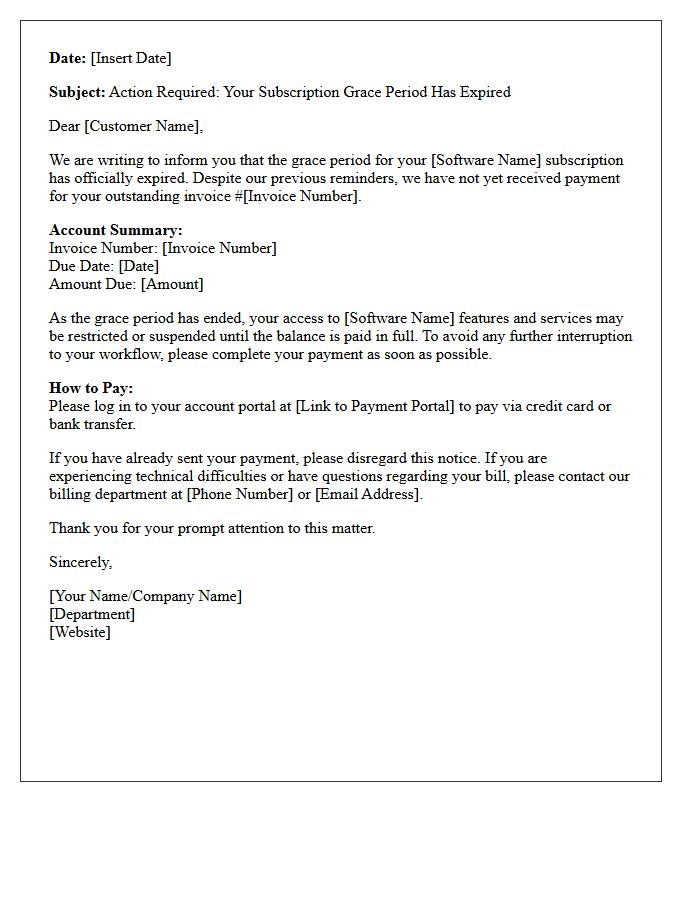
An Initial Grace Period Expiration notice is a critical communication sent when a software subscription remains unpaid after the primary deadline. This letter informs the subscriber that the complimentary extension has ended, leading to imminent service suspension. It serves as a final opportunity to settle outstanding balances before the account enters debt collection or faces permanent termination. To maintain uninterrupted access to essential tools and protect your credit standing, you must prioritize immediate payment or contact the provider to resolve billing discrepancies before the software features are disabled.
Why did my software subscription payment fail?
Most subscription payments fail due to expired credit card details, insufficient funds, or security flags raised by your issuing bank. Please check your payment method status to ensure it is active and authorized for recurring international or digital transactions.
How can I update my billing information to prevent service interruption?
You can update your billing details by logging into your account dashboard and navigating to the 'Billing' or 'Subscription' section. Once you enter your new payment information, our system will automatically attempt to process the outstanding balance.
Will my access to the software be cut off immediately after a failed payment?
No, we typically provide a grace period of 3 to 7 days following the initial failed payment notice. During this time, you will maintain full access to the software while you resolve the billing issue.
When will the next payment retry attempt occur?
Our system is scheduled to automatically retry the transaction 24 hours after the initial failure. We will make up to three retry attempts over the next week before the subscription is officially marked as 'Past Due' and access is restricted.
Who should I contact if my payment continues to fail despite having valid funds?
If your payment details are correct and funds are available, please contact your bank to authorize the transaction for our service. If the issue persists, contact our support team via the help center for manual billing assistance.

Comments