
A Deed of Trust Reconveyance is a critical legal document issued once a mortgage is fully paid. It officially transfers the property title from the trustee back to the borrower, clearing the lien from public records. Alongside this, a release letter confirms your debt satisfaction. To simplify your documentation process, below are some ready to use templates.
Image cover: Essential Templates and Samples for Deed of Trust Reconveyance and Release Letters
Letter Samples List
- Full Payment Reconveyance Letter
- Partial Release of Deed of Trust Letter
- Mortgage Payoff and Release Letter
- Request for Reconveyance Letter
- Substitution of Trustee and Reconveyance Letter
- Notice of Deed of Trust Release Letter
- Zero Balance Reconveyance Letter
- Satisfaction of Mortgage Release Letter
- Commercial Loan Reconveyance Letter
- Residential Deed of Trust Release Letter
- Escrow Payoff Reconveyance Letter
- Trustee Authorization for Release Letter
- Beneficiary Demand for Reconveyance Letter
Full Payment Reconveyance Letter
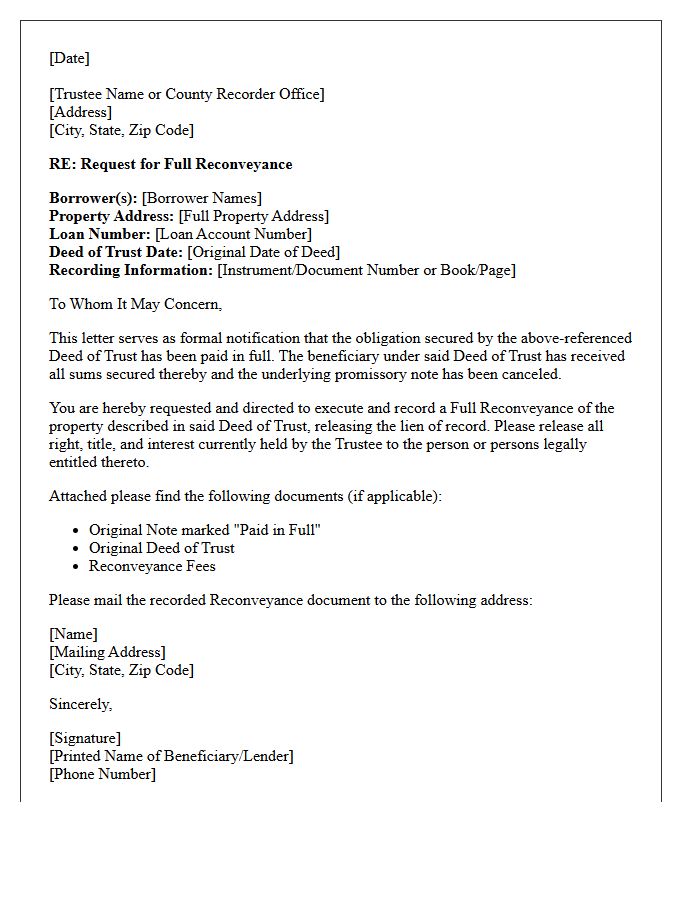
A Full Payment Reconveyance Letter is a legal document issued by a mortgage lender once a loan is completely satisfied. Its primary purpose is to release the lien held against the property, officially transferring the clear title back to the homeowner. This deed must be recorded with the local county office to prove the debt is extinguished. Without this formal filing, the property remains encumbered, potentially complicating future sales or refinancing. Always verify that your lender has filed this reconveyance to ensure your ownership rights are fully protected and documented.
Partial Release of Deed of Trust Letter
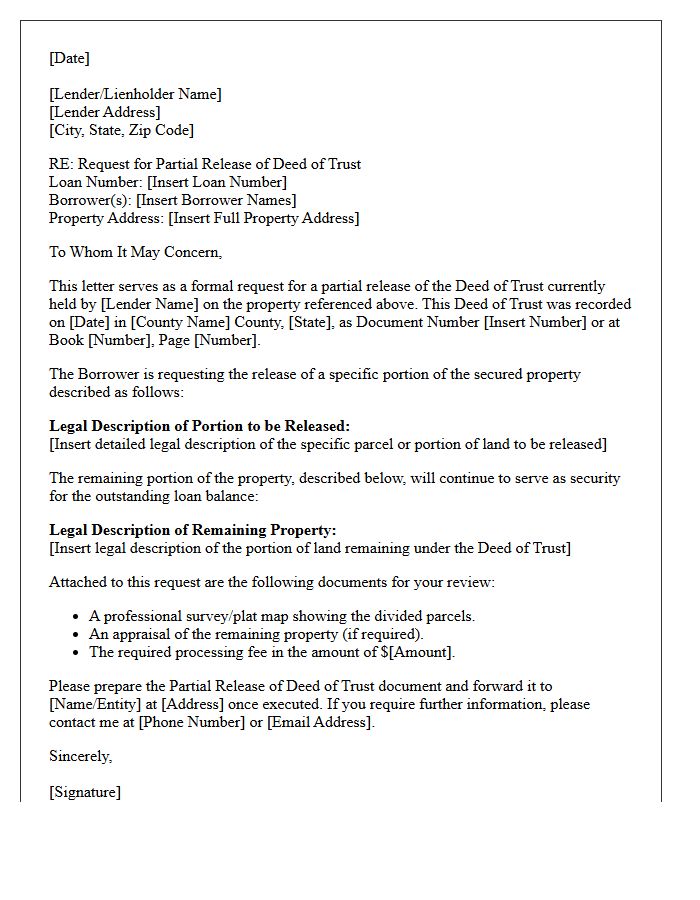
A Partial Release of Deed of Trust Letter is a formal document used to release a specific portion of collateral from a mortgage lien while keeping the remaining property secured. This process is essential for developers or owners seeking to sell individual parcels or subdivided lots. To execute this, the lender must provide written consent, confirming that the remaining equity satisfies the outstanding debt. Once notarized and recorded with the county, it clears the title for the released portion, allowing for its independent transfer or sale.
Mortgage Payoff and Release Letter
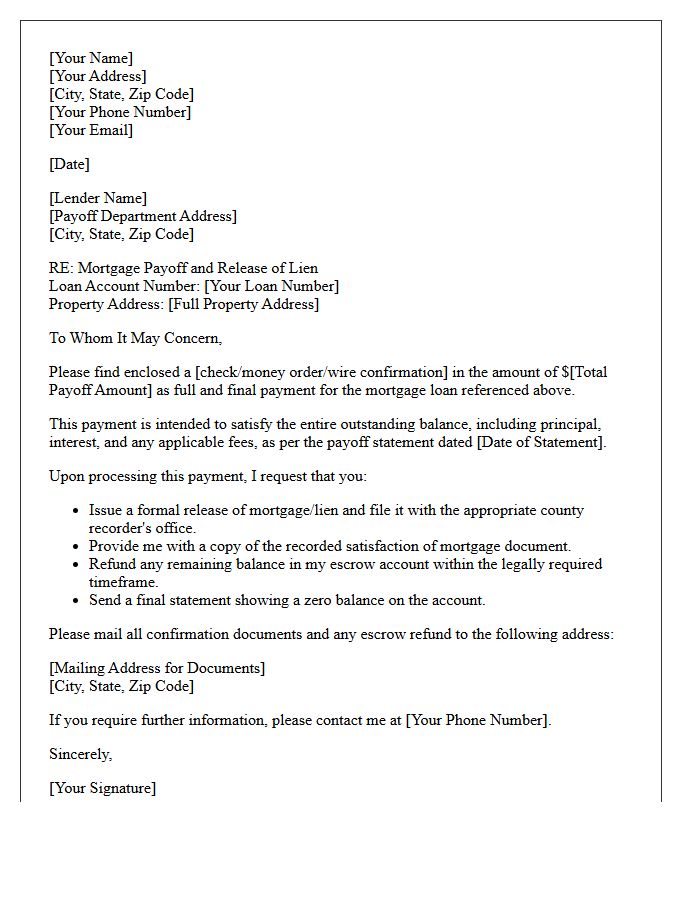
A Mortgage Payoff Statement is a formal document from your lender specifying the exact amount required to fully satisfy your debt, including prorated interest. Once the final payment is processed, the lender must issue a Release of Mortgage or Satisfaction of Mortgage. This crucial legal instrument proves the lien is extinguished and clears your property's title. It is essential to ensure this release is recorded with your local land records office to provide public notice that you officially own the home free and clear of the previous encumbrance.
Request for Reconveyance Letter
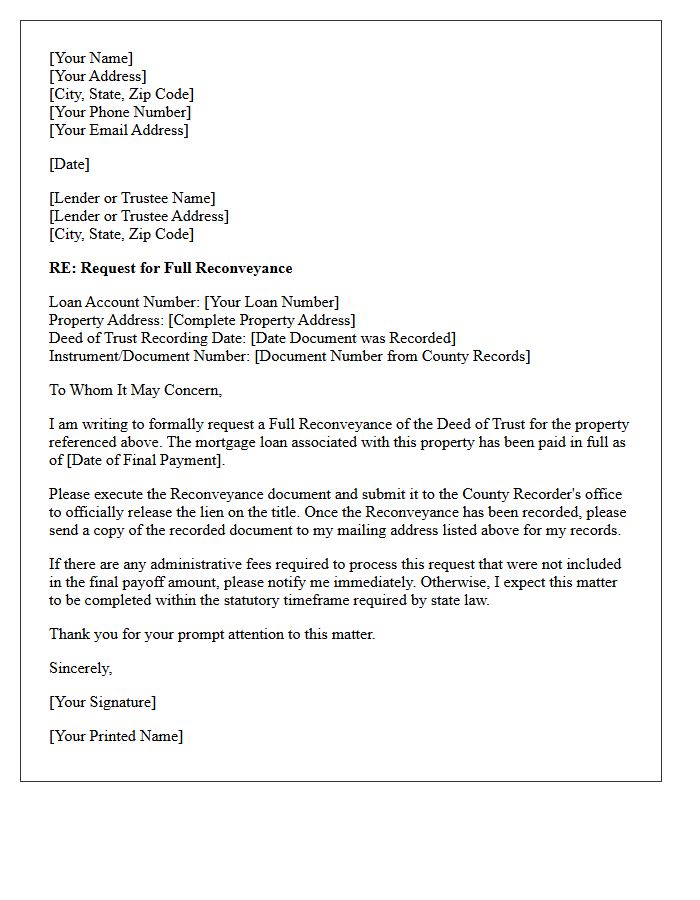
A Request for Reconveyance Letter is a formal document sent to a trustee or lender after a mortgage or deed of trust is fully satisfied. Its primary purpose is to demand the transfer of legal title back to the borrower. Once processed, the trustee issues a Full Reconveyance, which is recorded with the county to publicly prove the lien is removed. Ensuring this letter is sent is essential for establishing clear property ownership and removing encumbrances that could otherwise prevent a future sale or refinancing of the home.
Substitution of Trustee and Reconveyance Letter
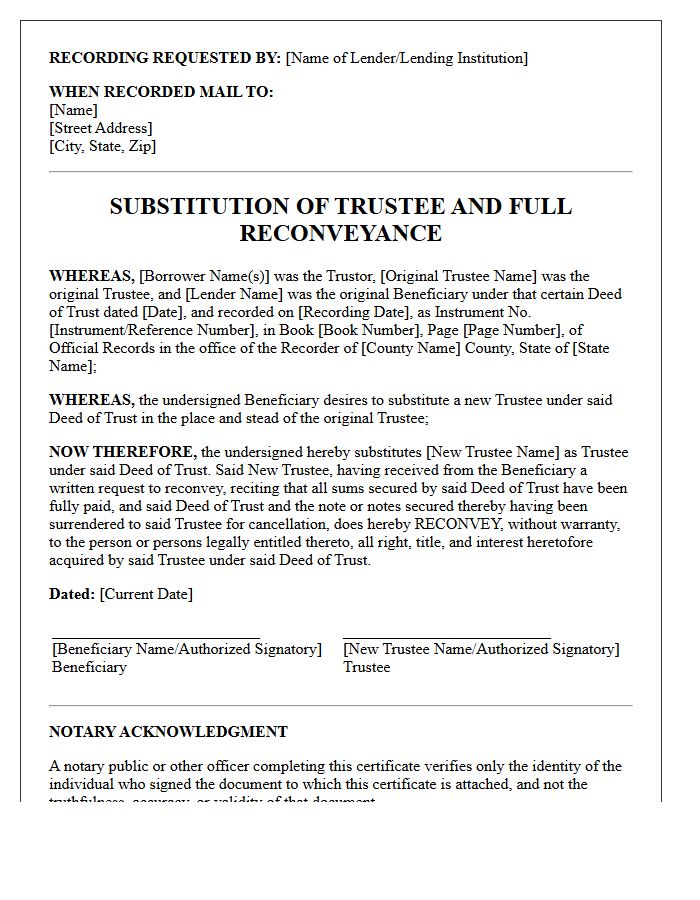
A Substitution of Trustee and Reconveyance is a legal document issued when a mortgage or deed of trust is fully paid. This process officially replaces the original trustee with a new entity to execute the reconveyance, which releases the lender's lien against the property. Once recorded with the county, it clears the title, proving the homeowner has satisfied the debt and owns the property free and clear. It is the essential final step to ensure a marketable title and prevent future legal complications regarding property ownership.
Notice of Deed of Trust Release Letter
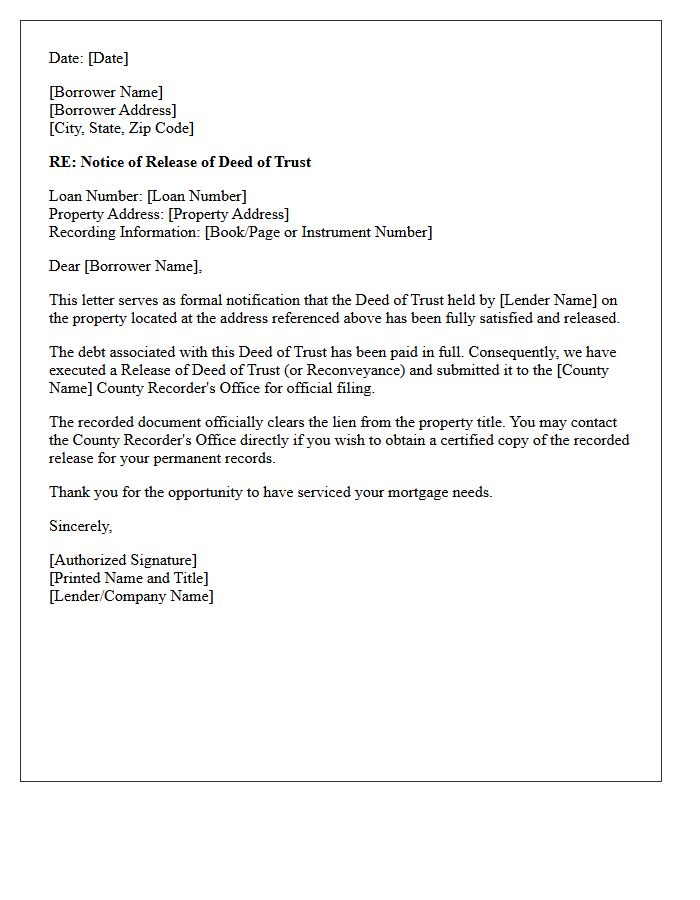
A Notice of Deed of Trust Release Letter is a formal document confirming that a mortgage loan has been fully satisfied. Once the debt is paid, the lender must issue this reconveyance to officially clear the property title. It is crucial to ensure this document is recorded with the local county clerk to remove the lien. Homeowners should verify this filing to guarantee marketable title, which is essential for future sales or refinancing. Always retain a copy as permanent proof of ownership and debt cancellation.
Zero Balance Reconveyance Letter
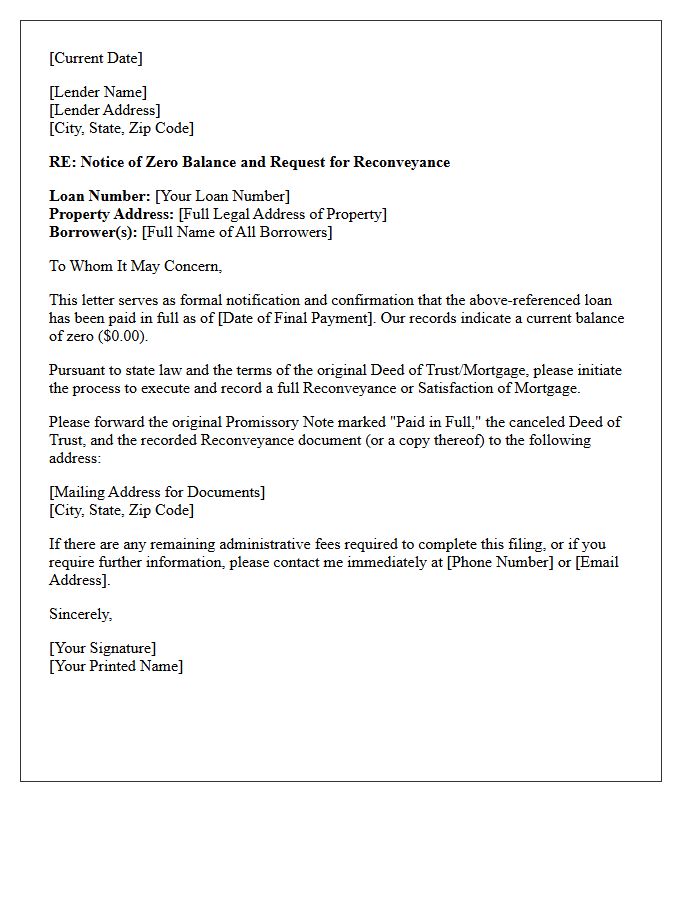
A Zero Balance Reconveyance Letter is a formal legal document issued by a lender once a mortgage or deed of trust is fully repaid. This instrument serves as official proof that the debt is satisfied and the lien is released. It is crucial to ensure this document is recorded with the local county clerk or recorder's office to clear the property title. Without this legal discharge, the owner may face significant obstacles when trying to sell or refinance the home, as the public record would still show an active encumbrance.
Satisfaction of Mortgage Release Letter
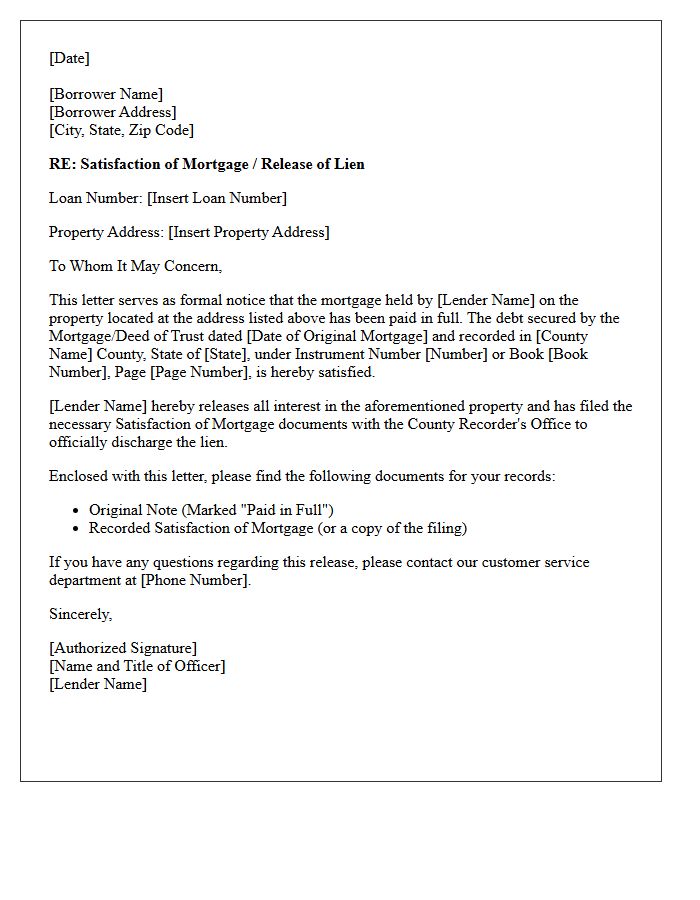
A Satisfaction of Mortgage is a legal document confirming a home loan is fully repaid. Once the final payment is cleared, the lender issues this release letter to relinquish their lien on the property. It is critical to record this document with the local county clerk or recorder's office to update public records. This process ensures a clear title, allowing the owner to sell or refinance the property without encumbrances. Always verify the document is filed promptly to prove full legal ownership and financial freedom from the debt.
Commercial Loan Reconveyance Letter
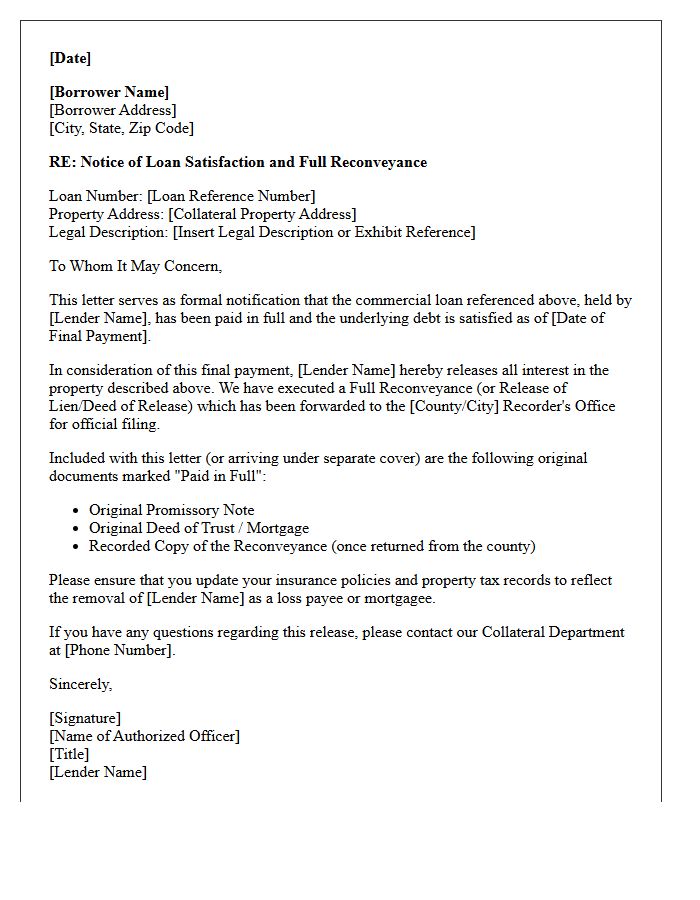
A Commercial Loan Reconveyance Letter is a critical legal document issued by a lender once a business mortgage is fully repaid. This instrument officially releases the lien held against the commercial property, transferring the clear title back to the borrower. It must be recorded with the local county clerk or recorder's office to update public records. Without this formal reconveyance, the property remains encumbered, potentially preventing future sales or refinancing opportunities. Always verify that the lender executes and files this document promptly after the final debt satisfaction.
Residential Deed of Trust Release Letter
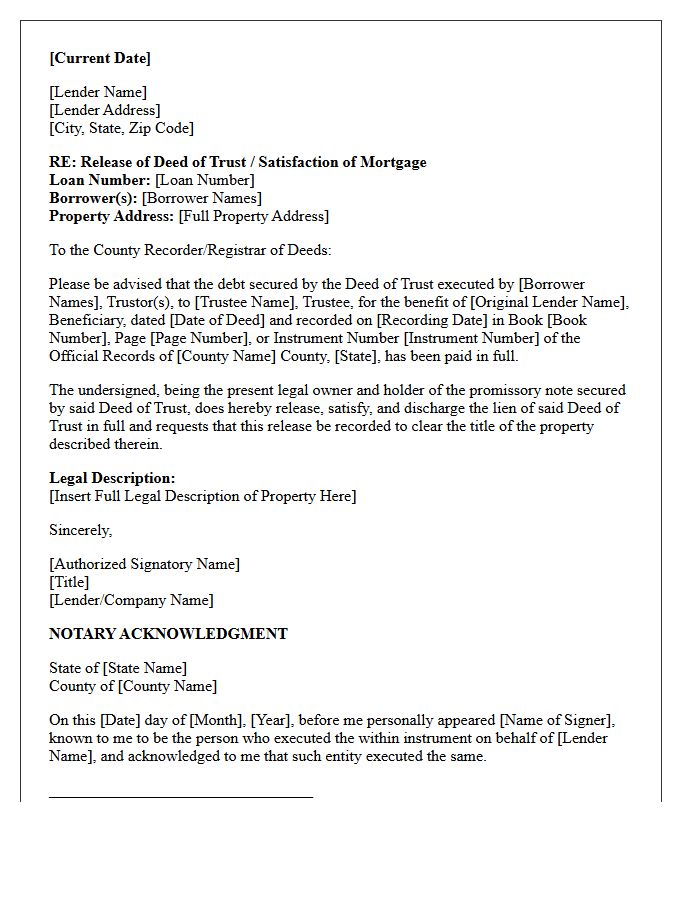
A Residential Deed of Trust Release Letter, often called a Reconveyance Deed, is a legal document confirming that a mortgage has been paid in full. Once the debt is satisfied, the lender must record this release with the local county clerk to clear the property title. This process officially removes the lender's lien, granting the homeowner full legal ownership. It is crucial to verify this filing to ensure a clear title, which is necessary for any future property sale or refinancing activities.
Escrow Payoff Reconveyance Letter
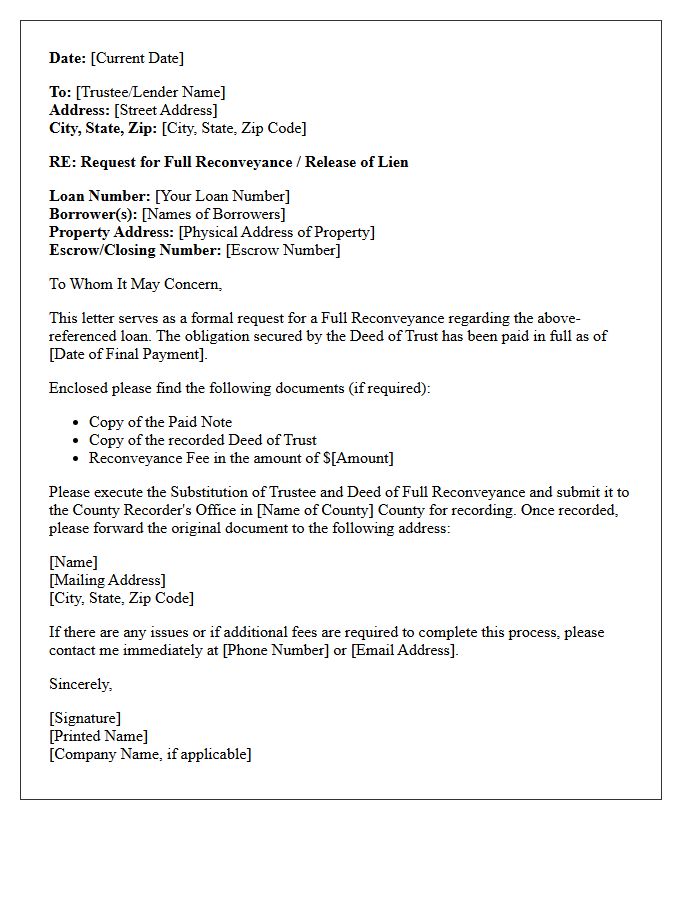
An Escrow Payoff Reconveyance Letter is a legal document confirming that a mortgage loan has been fully satisfied. Once the final payment is processed, the lender issues this notice to release their lien on the property. This essential step ensures the title is clear, officially transferring full ownership to the borrower. Homeowners must verify that this document is recorded with the local county office to prevent future legal hurdles during a sale or refinance. It serves as definitive proof of your debt cancellation and financial freedom from the lender.
Trustee Authorization for Release Letter
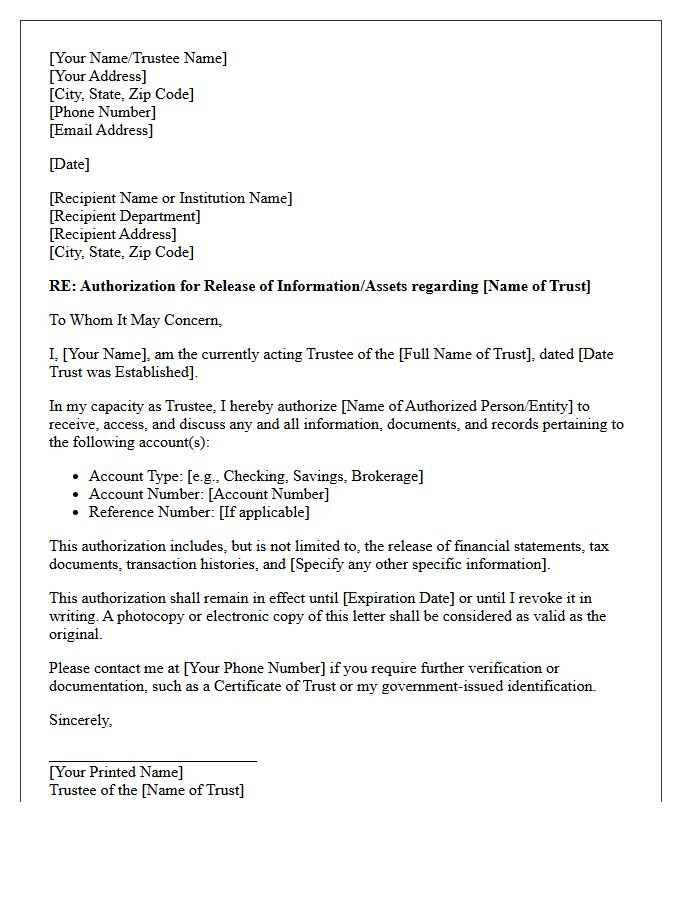
A Trustee Authorization for Release Letter is a critical legal document that grants a trustee the formal power to share confidential trust information with third parties. This letter acts as written permission for banks, attorneys, or financial advisors to disclose sensitive records. It ensures legal compliance and protects the privacy of the beneficiaries. By clearly defining the scope of shared data, it facilitates smooth asset management and administrative transparency, allowing authorized professionals to assist in the fiduciary duties required for effective estate oversight and tax reporting.
Beneficiary Demand for Reconveyance Letter
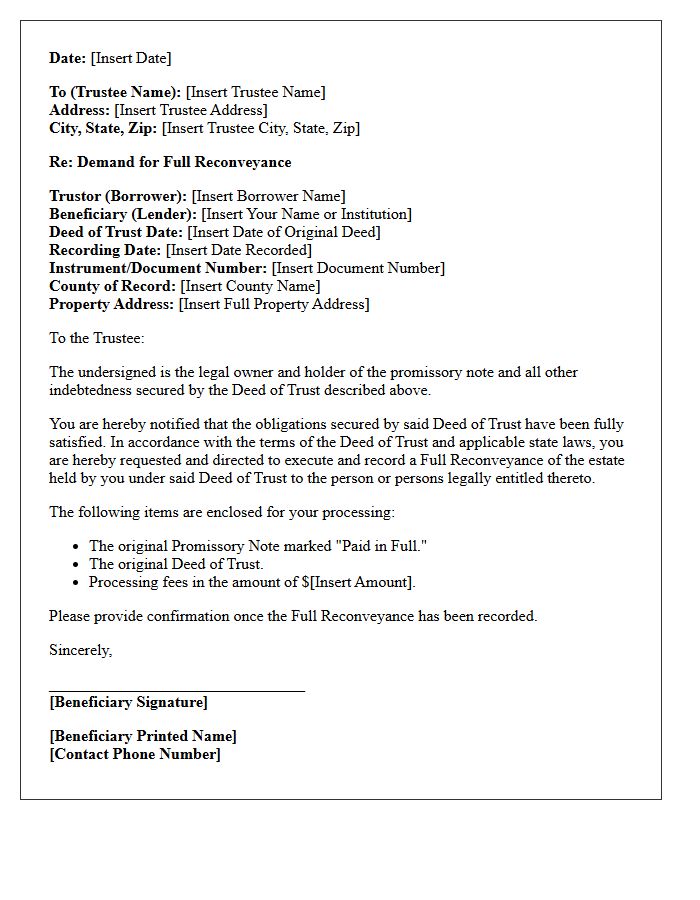
A Beneficiary Demand for Reconveyance Letter is a formal request sent to a trustee once a mortgage or deed of trust is fully paid. This document instructs the trustee to release the lien against the property, officially clearing the title. It is crucial for homeowners because it initiates the legal process of proving the debt is satisfied. Timely submission ensures the reconveyance deed is recorded with the county, protecting your ownership rights and allowing for future property sales or refinancing without legal encumbrances.
What is a Deed of Trust Reconveyance?
A Deed of Trust Reconveyance is a legal document issued by a trustee that transfers the title of a property back to the borrower once a mortgage or loan has been paid in full, officially clearing the lien from the public record.
What is a Release Letter in real estate?
A Release Letter, often called a payoff satisfaction letter, is a formal notification from a lender confirming that a debt has been satisfied and that they no longer hold a legal claim or security interest in the property.
How long does it take to receive a Reconveyance after final payment?
The timeline varies by state law, but typically a lender must request the trustee to execute a Reconveyance within 30 to 60 days after the final mortgage payment has been verified.
What is the difference between a Reconveyance and a Mortgage Satisfaction?
While both serve the same purpose of clearing a title, a Deed of Trust Reconveyance is used in states that utilize Deeds of Trust, whereas a Mortgage Satisfaction (or Discharge) is used in states that utilize judicial mortgages.
How do I record a Deed of Trust Reconveyance?
The document must be signed by the trustee, notarized, and then filed with the County Recorder's Office where the property is located to ensure the public title reflects that the loan is paid off and the lien is released.

Comments