
A Release of Liability Letter is a legal document that protects individuals or businesses from legal claims after an incident or transaction. By signing this waiver, a party agrees to forgo their right to sue for damages or injuries. Understanding its structure is essential for risk management and legal protection. To help you get started, below are some ready to use templates.
Image cover: Proven Release of Liability Templates and Professional Letter Samples
Letter Samples List
- Mortgage Assumption Release of Liability Letter
- Divorce Settlement Mortgage Release Letter
- Short Sale Deficiency Release Letter
- Deed in Lieu of Foreclosure Release Letter
- Co-Signer Liability Release Letter
- Guarantor Mortgage Release Letter
- Promissory Note Liability Release Letter
- Mortgage Satisfaction and Release Letter
- Property Lien Release Letter
- Post-Foreclosure Liability Release Letter
- Mortgage Novation Release Letter
- Joint Tenant Liability Release Letter
- Commercial Mortgage Release of Liability Letter
Mortgage Assumption Release of Liability Letter
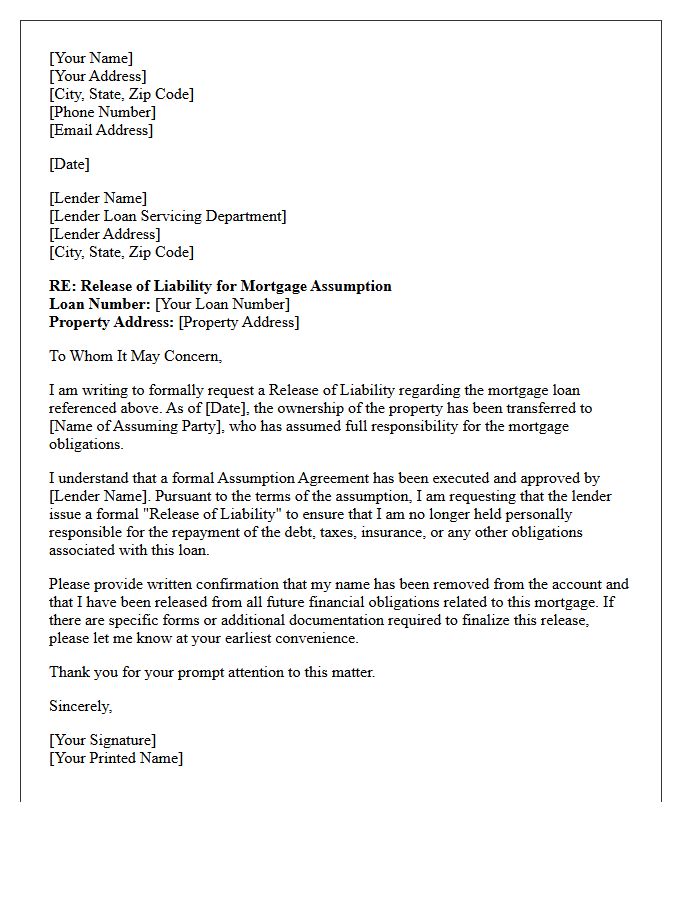
A mortgage assumption release of liability letter is a critical document that legally exonerates the original borrower from future debt obligations. When a mortgage assumption occurs, the new homeowner takes over the existing loan terms. Without a formal Release of Liability issued by the lender, the initial seller remains financially responsible if the buyer defaults. This letter protects your credit score and ensures you are no longer tied to the property's financial encumbrances after the transfer of ownership is finalized through the servicer's formal approval process.
Divorce Settlement Mortgage Release Letter
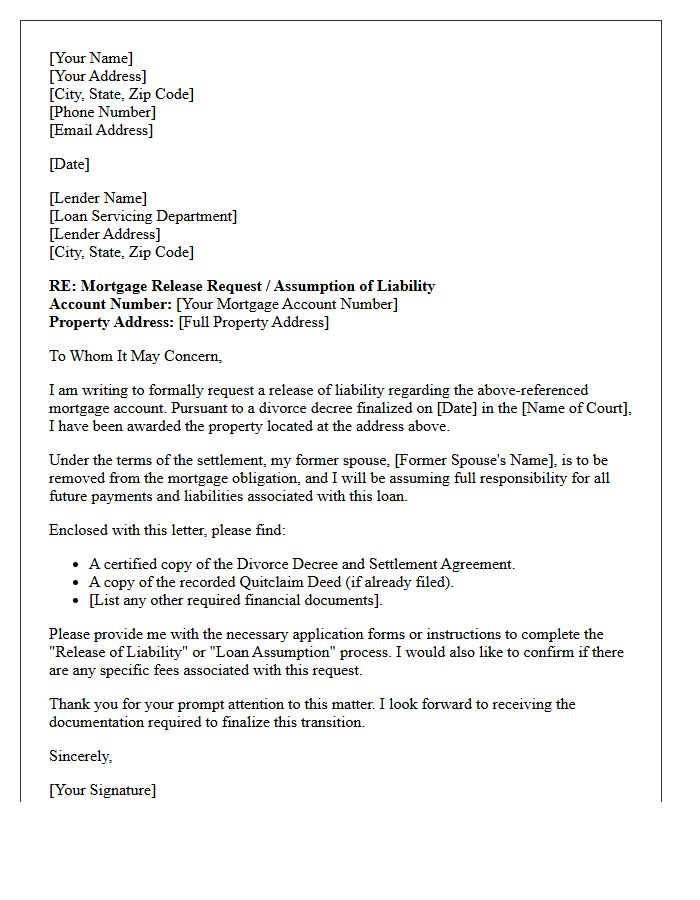
A Divorce Settlement Mortgage Release Letter is a critical legal document confirming that one spouse has been formally released from financial liability for a shared home loan. After a quitclaim deed transfers property ownership, this letter proves the lender has removed the departing party's name from the debt obligations. It is essential for protecting your credit score and ensuring the departing spouse can qualify for future financing. Without this official release, you remain legally responsible for mortgage payments, regardless of what your private divorce decree states.
Short Sale Deficiency Release Letter
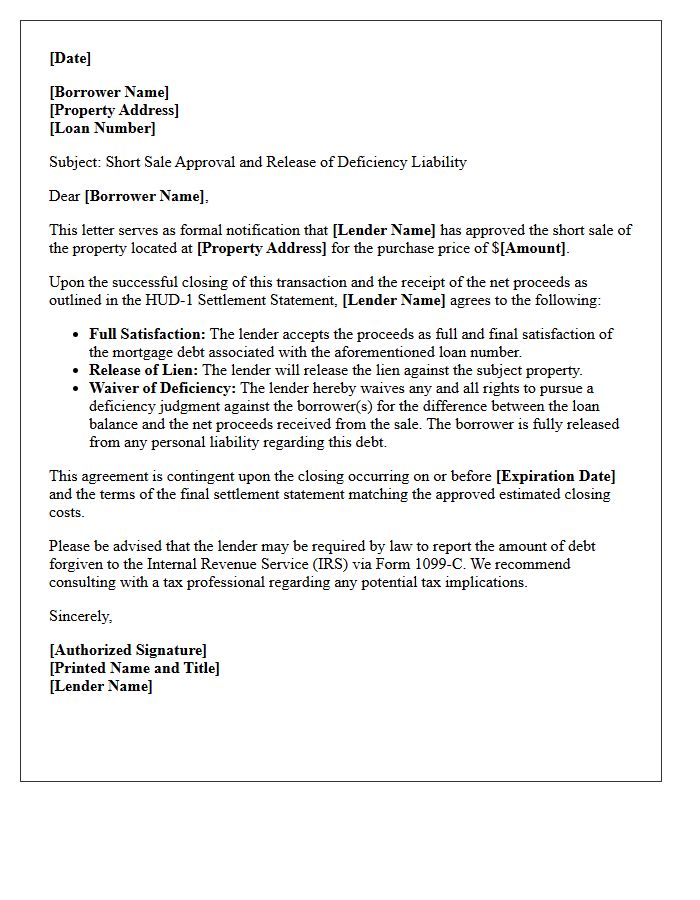
A Short Sale Deficiency Release Letter is a critical legal document issued by a mortgage lender after a short sale. It confirms that the debt is settled in full and explicitly waives the bank's right to pursue a deficiency judgment for the remaining unpaid balance. Without this written release of liability, homeowners may still be legally responsible for the financial gap between the sale price and the original loan amount. Always ensure the language specifies that the debt is "fully satisfied" to protect your future financial security.
Deed in Lieu of Foreclosure Release Letter
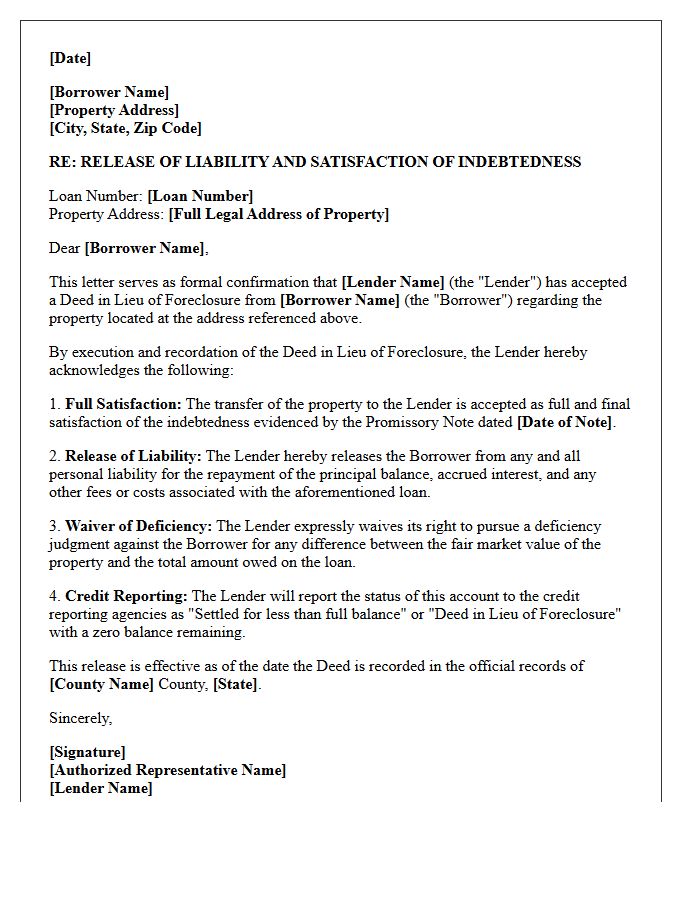
A Deed in Lieu of Foreclosure Release Letter is a critical legal document confirming that a lender has accepted the property title to satisfy a defaulted mortgage. Its primary purpose is to grant a full deficiency waiver, ensuring the borrower is no longer personally liable for the remaining loan balance. Without this formal release, lenders might pursue legal action for financial shortfalls. Homeowners must verify the letter explicitly states the debt is "cancelled" or "satisfied" to protect their future credit and prevent ongoing collection efforts after surrendering the home.
Co-Signer Liability Release Letter
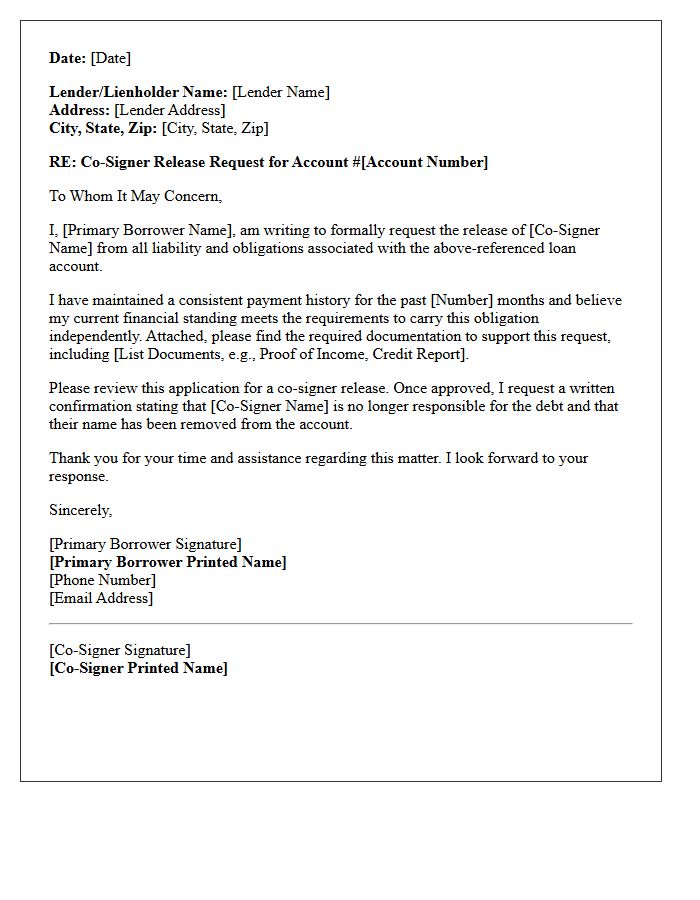
A Co-Signer Liability Release Letter is a formal document requested from a lender to legally terminate a guarantor's financial obligation. To secure this, the primary borrower must typically demonstrate a history of on-time payments and meet specific credit score requirements. Once approved, the co-signer is no longer responsible for the debt, and the obligation is removed from their credit report. This process is essential for protecting the guarantor's financial health and improving their debt-to-income ratio for future personal borrowing needs.
Guarantor Mortgage Release Letter
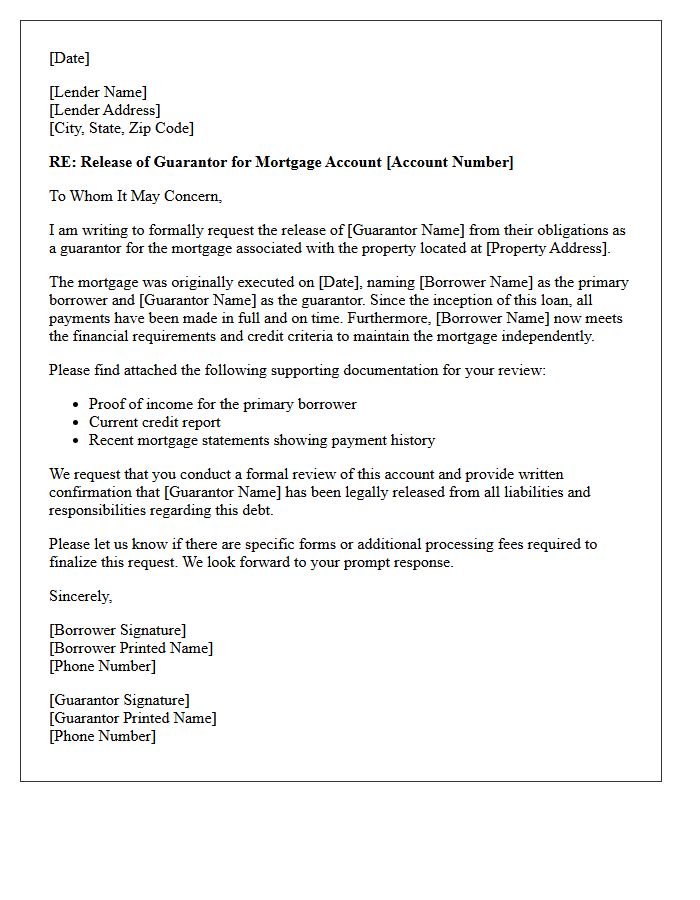
A Guarantor Mortgage Release Letter is a formal document issued by a lender confirming that an individual is no longer legally responsible for a borrower's debt. This occurs once specific conditions are met, such as the borrower achieving sufficient equity or demonstrating financial stability. Receiving this letter is crucial because it removes the legal liability from the guarantor's credit profile, freeing up their borrowing capacity. Always ensure the document is signed and dated by the financial institution to serve as definitive proof that all guarantee obligations have officially concluded.
Promissory Note Liability Release Letter
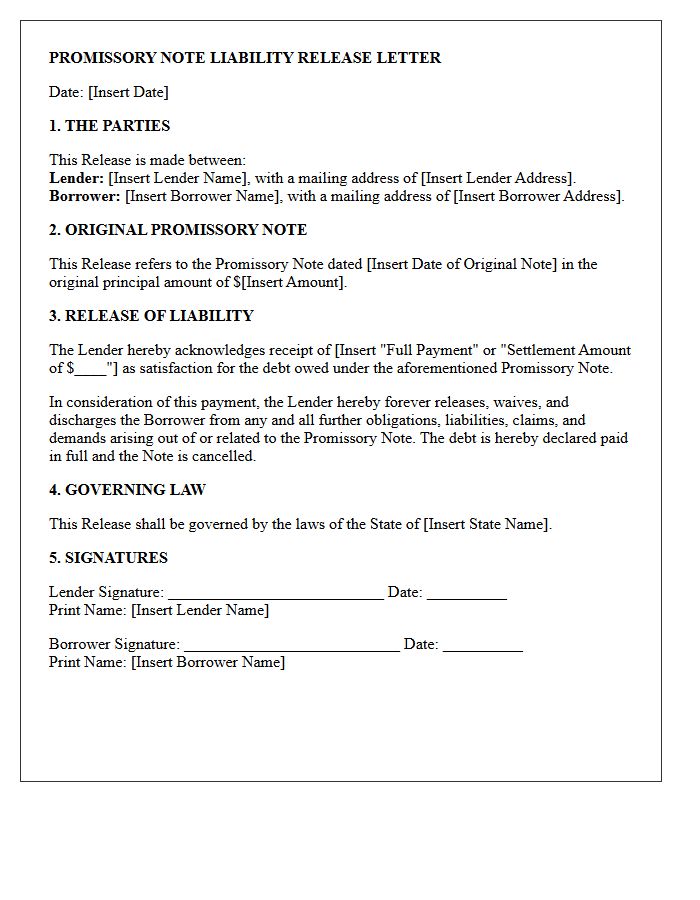
A Promissory Note Liability Release Letter is a formal legal document confirming that a borrower has fulfilled their repayment obligations. It serves as official proof that the debt is fully discharged, preventing future claims by the lender. Once signed, the borrower is legally absolved from further financial responsibility under the original note. It is essential to ensure the letter specifies the loan amount, payment date, and a clear statement of full release. Keeping this document securely is vital for maintaining a clean financial record and protecting against potential legal disputes or credit reporting errors.
Mortgage Satisfaction and Release Letter
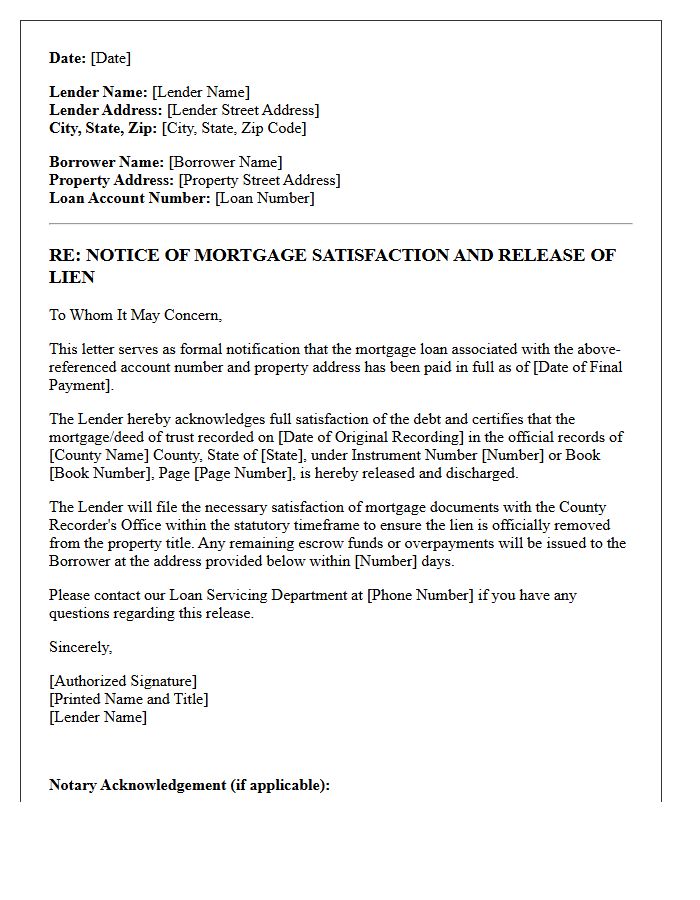
A Mortgage Satisfaction, also known as a release of mortgage, is a legal document confirming your loan is fully repaid. Once you settle the debt, the lender must file this release letter with the local land records office to clear the title. This process officially removes the lien from your property, proving you hold unencumbered ownership. Always verify that the document is recorded to ensure a smooth future property sale or title transfer, as an unreleased mortgage can cause significant legal delays.
Property Lien Release Letter
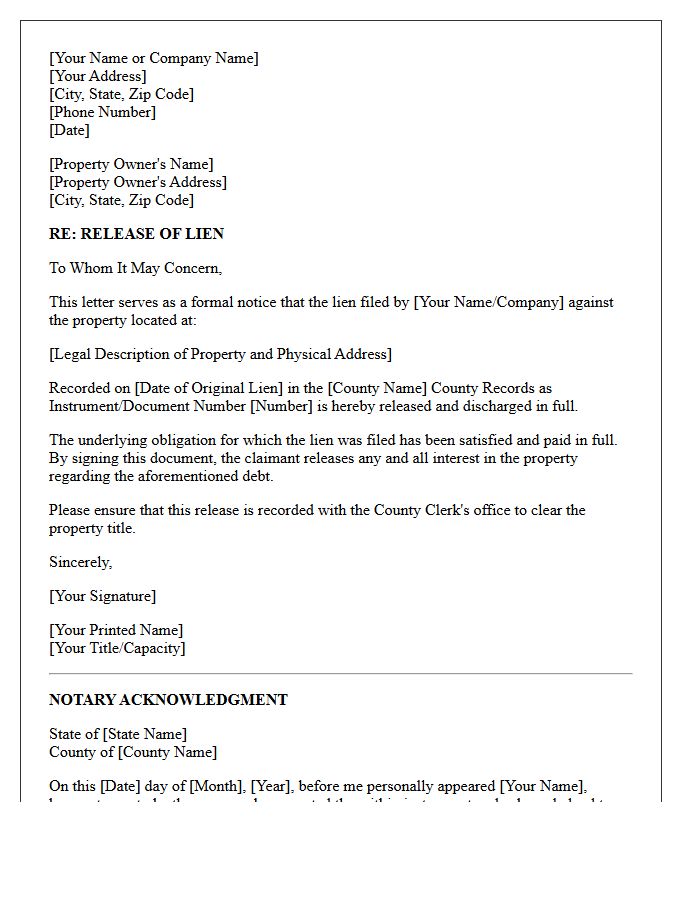
A Property Lien Release Letter is a legal document confirming that a debt secured by real estate has been fully satisfied. Once a creditor receives final payment, they must issue this formal discharge to relinquish their legal claim on the asset. It is crucial to record this document with the local county clerk or recorder's office to clear the property title. Without a filed release, the lien remains public record, potentially preventing future sales, refinancing, or legal transfers of ownership. Always verify that all notarized signatures are present for legal validity.
Post-Foreclosure Liability Release Letter
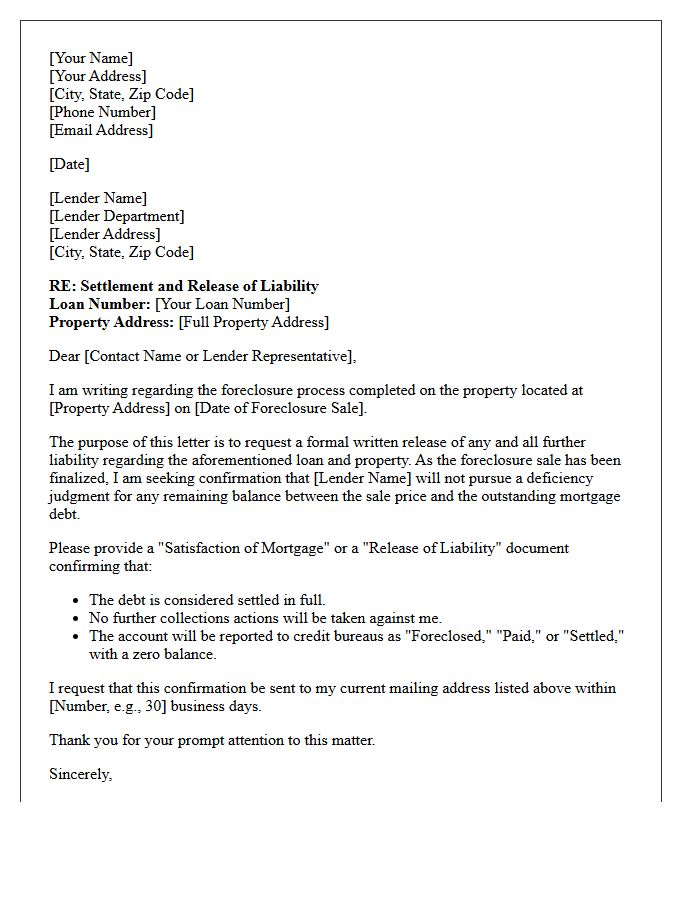
A Post-Foreclosure Liability Release Letter is a critical legal document confirming that a borrower is no longer responsible for any deficiency judgment. After a property sale, if the proceeds do not cover the loan balance, lenders may pursue the remaining debt. Obtaining this written waiver ensures the lender has formally released their claim to outstanding balances. This document is essential for financial recovery, as it prevents future collection actions and allows for accurate credit reporting. Always verify that the release is "with prejudice" to ensure the debt is permanently extinguished.
Mortgage Novation Release Letter
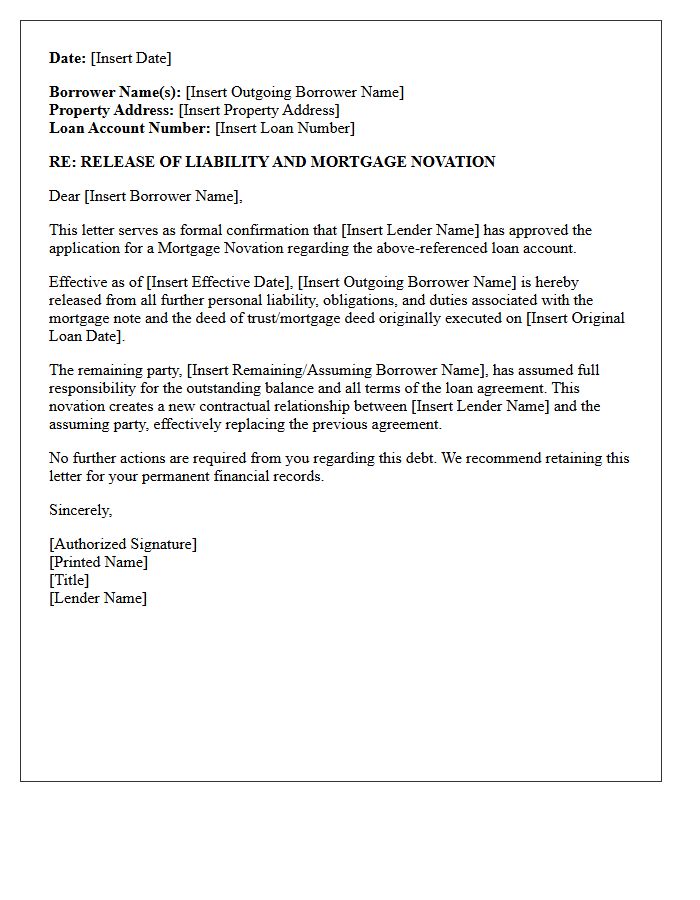
A mortgage novation release letter is a legal document confirming that a departing borrower has been formally released from all liabilities associated with a home loan. This occurs when a new party assumes the debt, or an existing co-borrower takes full responsibility. It is essential for protecting your credit score and financial future, as it proves you are no longer accountable for future payments or defaults. Always ensure the lender provides this written confirmation to finalize the legal transfer of obligation and update public records accordingly.
Joint Tenant Liability Release Letter
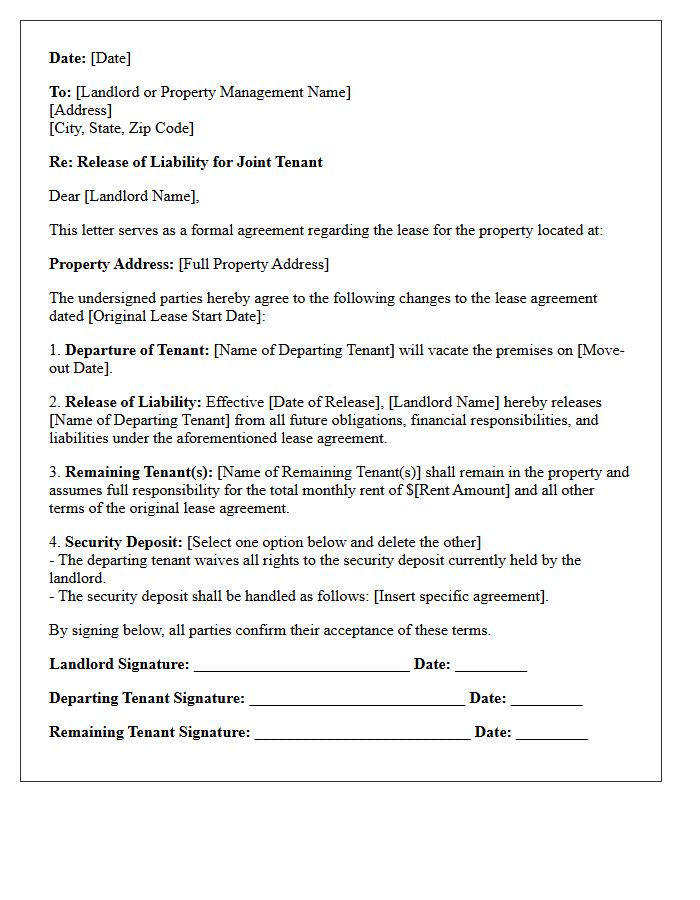
A Joint Tenant Liability Release Letter is a legal document used to formally remove a specific individual from a shared lease agreement. This mutual agreement ensures the departing tenant is no longer responsible for future rent payments or property damages. To be legally binding, it typically requires the written consent of the landlord and all remaining co-tenants. Obtaining this release is essential for protecting your financial credit and preventing legal disputes after moving out, effectively severing your contractual obligations to the original tenancy agreement.
Commercial Mortgage Release of Liability Letter
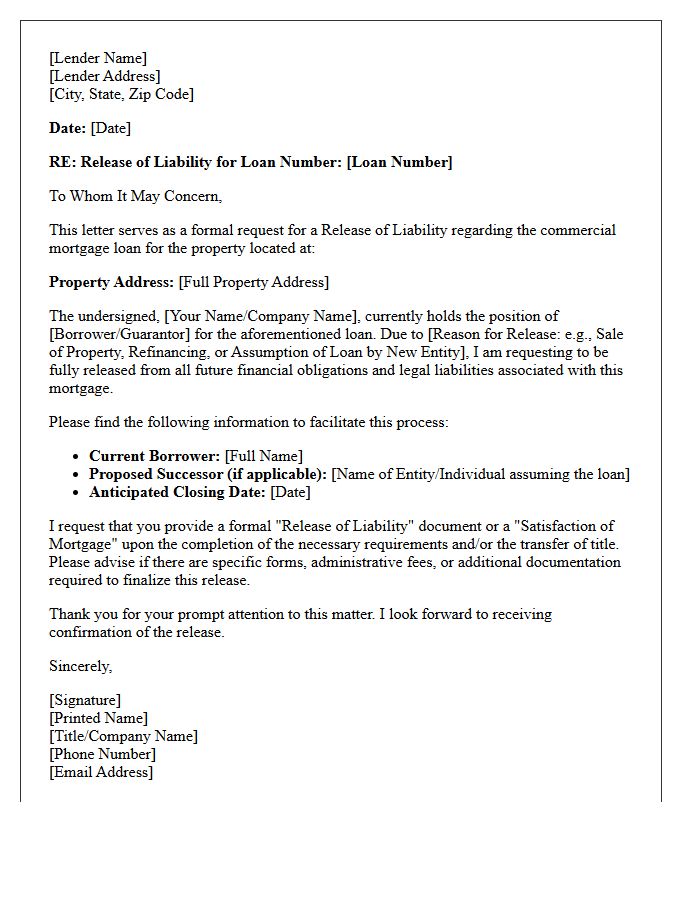
A Commercial Mortgage Release of Liability Letter is a legal document confirming that a borrower is no longer responsible for a debt. This is essential during property sales or loan assumptions, ensuring the original debtor is protected from future claims. Without this formal release, you remain legally liable for the balance even after transferring ownership. It effectively terminates the lender's lien and updates the public record, safeguarding your credit and financial standing. Always verify that the lender has formally executed this document to guarantee a complete legal discharge of all obligations.
What is a Release of Liability Letter?
A Release of Liability Letter, also known as a liability waiver or hold harmless agreement, is a legal document where one party (the releasor) agrees not to sue another party (the releasee) for damages, injuries, or losses sustained during a specific activity or transaction.
When should I use a Release of Liability form?
You should use a Release of Liability form whenever you are selling a vehicle, hosting a high-risk event, providing physical services, or settling a legal dispute to ensure you are protected from future financial claims or lawsuits related to the incident or property.
Is a Release of Liability letter legally binding?
Yes, a Release of Liability letter is legally binding provided it is signed voluntarily by both parties, contains clear and unambiguous language, and does not violate local public policy or laws regarding gross negligence.
What is the difference between a Release of Liability and a Hold Harmless Agreement?
While often used interchangeably, a Release of Liability focuses on surrendering the right to sue for past or future injuries, whereas a Hold Harmless Agreement is a promise to indemnify the other party and pay for any losses or legal fees incurred from third-party claims.
What happens if I don't file a Release of Liability after selling a car?
If you fail to file a Release of Liability with your local DMV after selling a vehicle, you may remain legally responsible for parking tickets, registration fees, and even civil liability if the new owner is involved in an accident.

Comments