
Receiving a Notice of Eviction Court Hearing is a critical legal step in the rental process. This formal document notifies tenants of a scheduled legal proceeding regarding property possession. Understanding your rights and preparing a solid defense is essential for a favorable outcome. To assist your response, below are some ready to use template.
Image cover: Understanding Your Eviction Court Hearing: Templates and Notice Samples
Letter Samples List
- Notice of Eviction Court Hearing Letter
- Tenant Eviction Court Hearing Reminder Letter
- Pre-Eviction Court Hearing Notification Letter
- Eviction Court Hearing Summons Cover Letter
- Final Eviction Court Hearing Warning Letter
- Property Management Eviction Court Hearing Letter
- Post-Eviction Court Hearing Outcome Letter
- Eviction Court Hearing Rescheduling Notice Letter
- Notice of Imminent Eviction Court Hearing Letter
- Eviction Court Hearing Default Judgment Letter
- Eviction Court Hearing Appearance Instruction Letter
- Notice of Eviction Court Hearing Cancellation Letter
- Landlord Eviction Court Hearing Authorization Letter
Notice of Eviction Court Hearing Letter
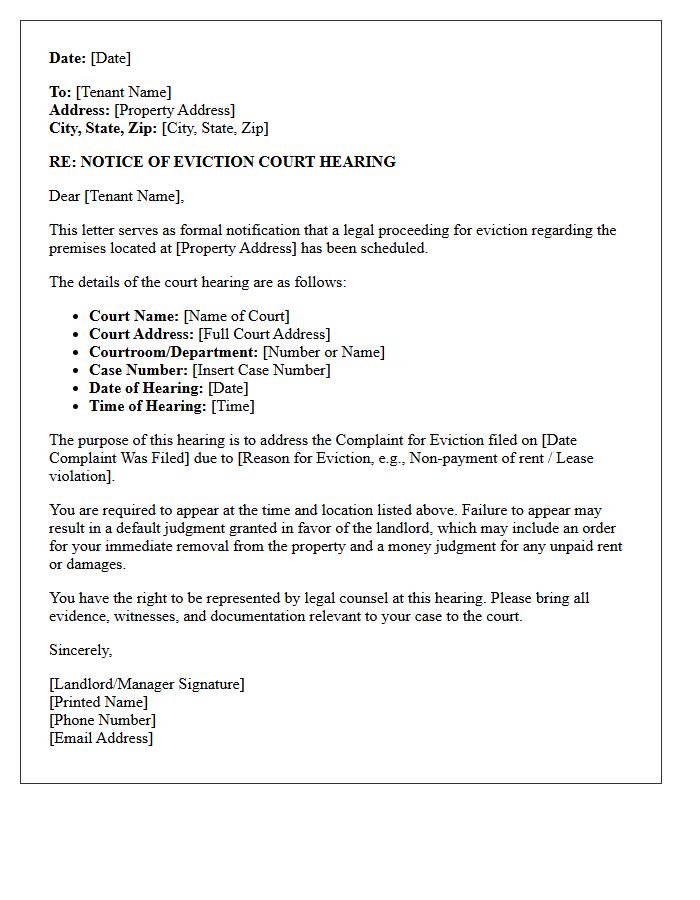
A Notice of Eviction Court Hearing is a critical legal document informing you that a landlord has filed a lawsuit to regain possession of a property. It specifies the date, time, and location of your court appearance. Failure to attend this hearing often results in an automatic default judgment, leading to immediate removal. You must review the claims carefully and prepare a legal defense or seek mediation. Responding promptly is essential to protect your housing rights and potentially avoid a permanent eviction record on your background check.
Tenant Eviction Court Hearing Reminder Letter
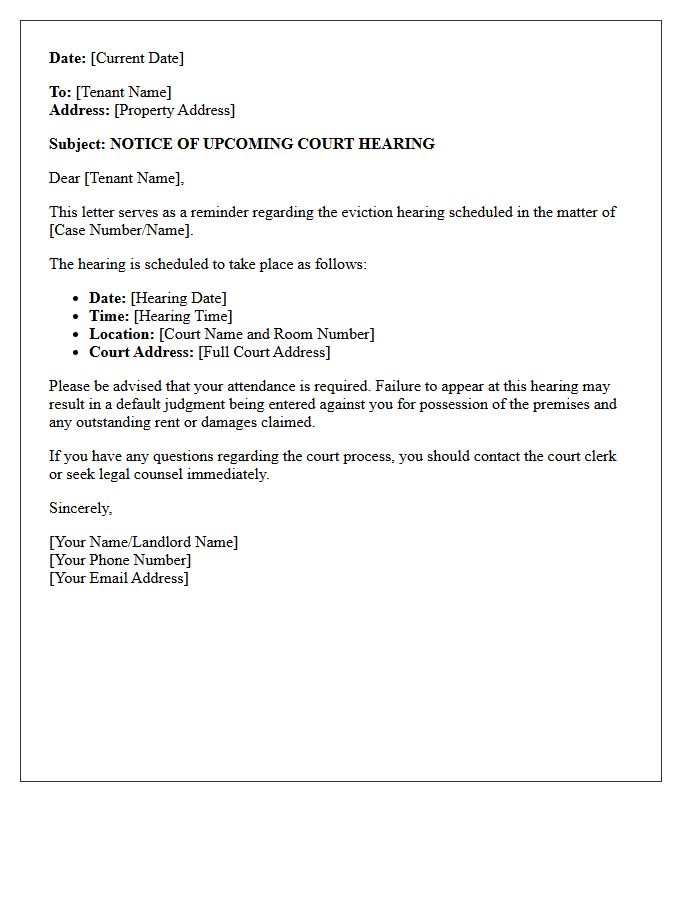
A Tenant Eviction Court Hearing Reminder Letter is a formal notice sent to ensure all parties attend the scheduled legal proceedings. It is crucial to include the exact date, time, and courtroom location to prevent a default judgment. This document serves as a final alert to prepare necessary evidence, such as lease agreements and payment records. Timely delivery reinforces the legal process and ensures both landlords and tenants understand their rights. Missing this hearing can lead to immediate eviction orders or the loss of legal claims within the housing court system.
Pre-Eviction Court Hearing Notification Letter
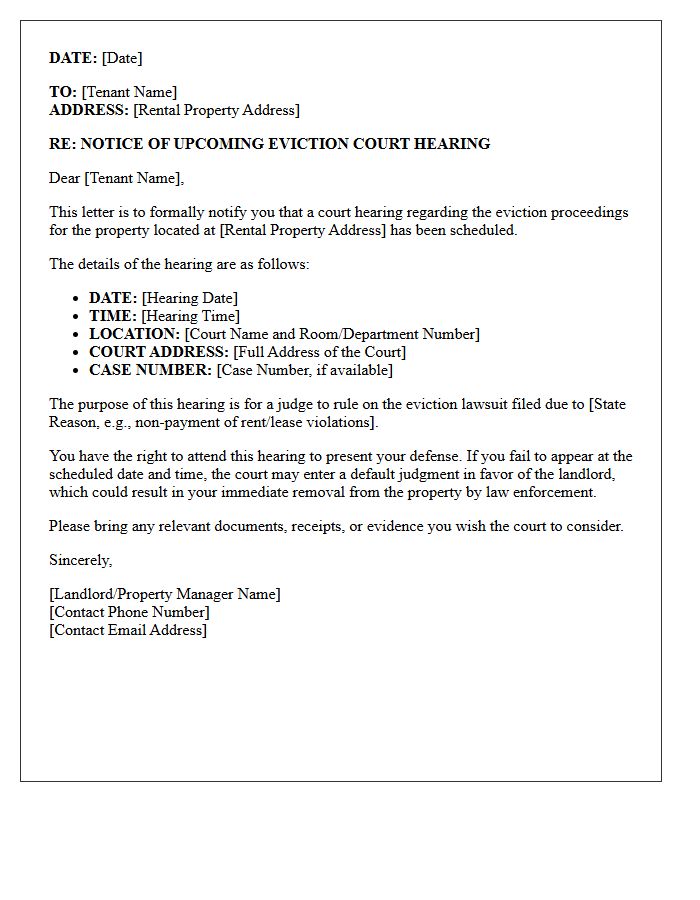
A Pre-Eviction Court Hearing Notification Letter is a formal legal document informing a tenant of scheduled legal proceedings. It serves as mandatory notice that a landlord has filed an unlawful detainer action to regain property possession. This letter specifies the date, time, and location of the court hearing where a judge will decide on the eviction. Understanding this document is critical, as failing to appear may result in an automatic default judgment, leading to immediate removal and potential financial liabilities for unpaid rent or legal fees.
Eviction Court Hearing Summons Cover Letter
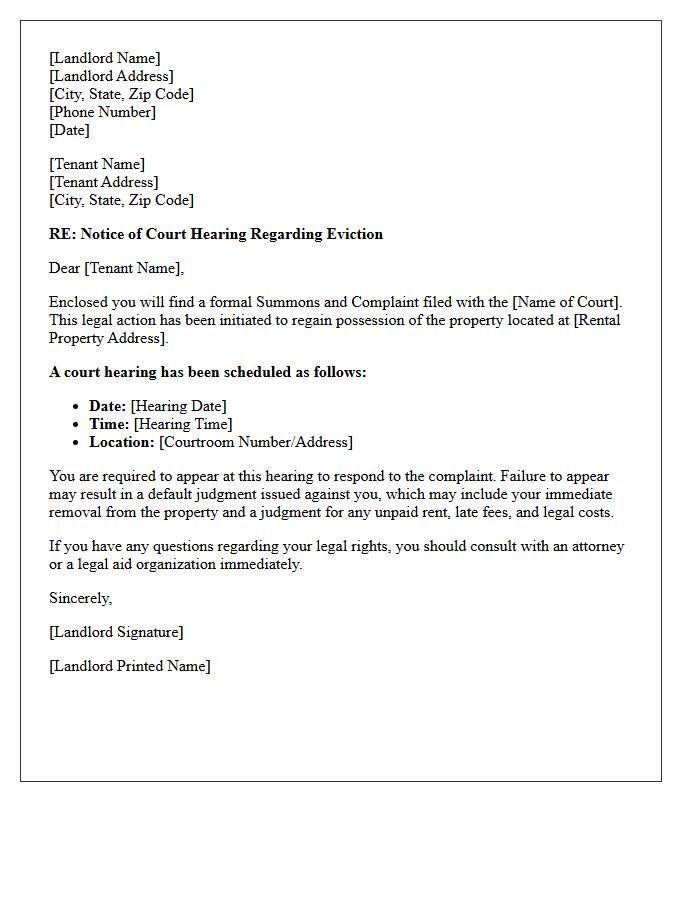
An eviction court hearing summons cover letter is a critical legal document notifying a tenant of a pending lawsuit filed by their landlord. This letter explains the specific legal grounds for the eviction, such as non-payment of rent or lease violations. It is essential to read the hearing date carefully, as missing the court appearance often results in an automatic default judgment against the tenant. Understanding these documents is vital for protecting housing rights and preparing a proper legal defense before the scheduled trial begins.
Final Eviction Court Hearing Warning Letter
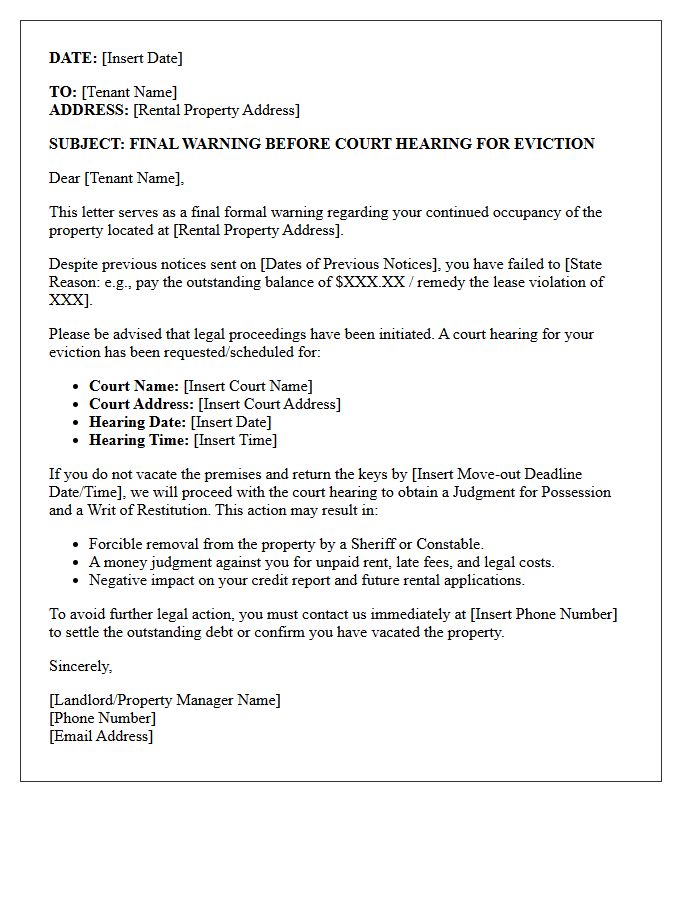
A Final Eviction Court Hearing Warning Letter is a critical legal notice issued to tenants before formal litigation begins. This document serves as a final demand for outstanding rent or compliance with lease terms to avoid displacement. Receiving this letter indicates that the landlord is prepared to file a summons and complaint in court. To protect your rights, you must respond immediately or vacate the premises to prevent a permanent eviction judgment on your public record, which can severely damage your future housing eligibility and credit score.
Property Management Eviction Court Hearing Letter
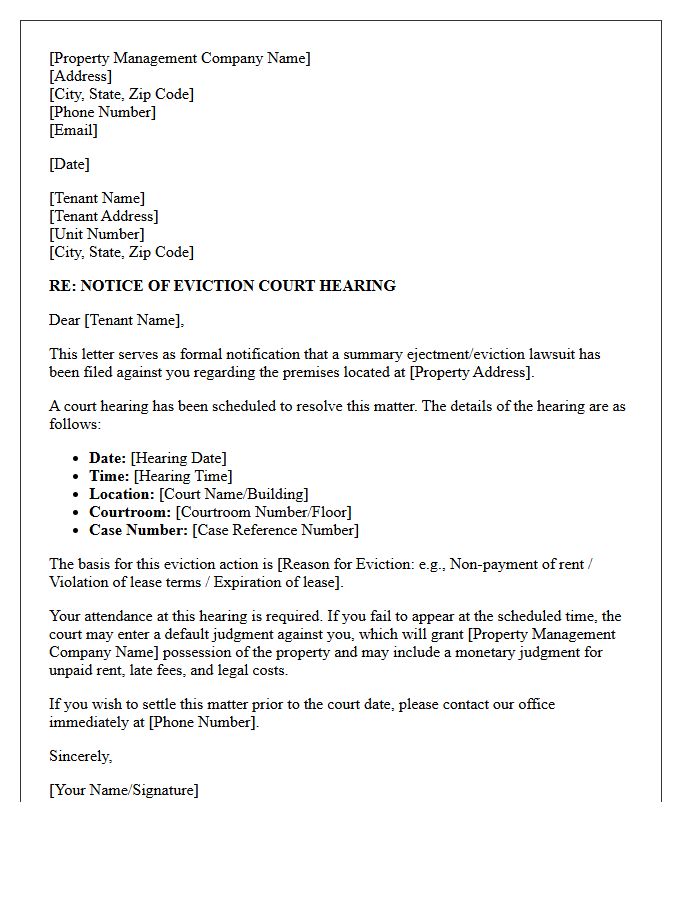
A property management eviction court hearing letter is a formal notice notifying tenants of a scheduled legal proceeding. This document serves as official service, outlining the date, time, and location of the trial regarding unpaid rent or lease violations. It is crucial for landlords to provide accurate evidence and follow local jurisdictional rules to ensure a valid case. Tenants must receive this notification to exercise their right to a defense. Failure to appear often results in a default judgment, leading to legal possession of the property and formal removal by authorities.
Post-Eviction Court Hearing Outcome Letter
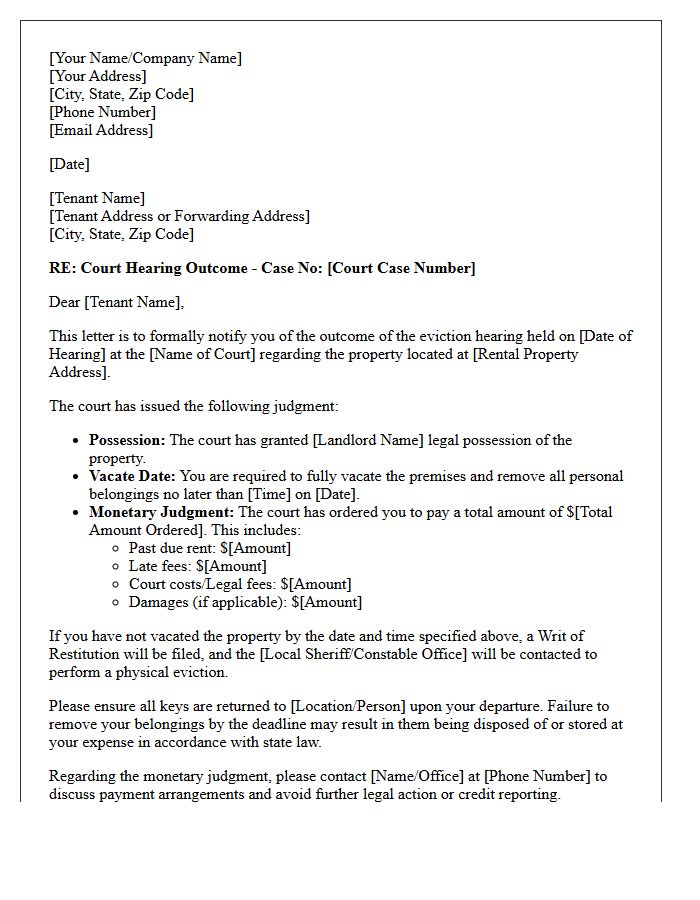
A Post-Eviction Court Hearing Outcome Letter is a formal document summarizing the judge's final decision regarding a landlord-tenant dispute. It serves as official legal notice detailing whether an eviction was granted, the deadline for vacating the property, and any monetary judgments awarded for unpaid rent. This letter is crucial for record-keeping, as it outlines the legal obligations of both parties and provides a basis for potential appeals or enforcement by local authorities. Understanding this outcome is essential for managing future housing applications and financial recovery processes.
Eviction Court Hearing Rescheduling Notice Letter
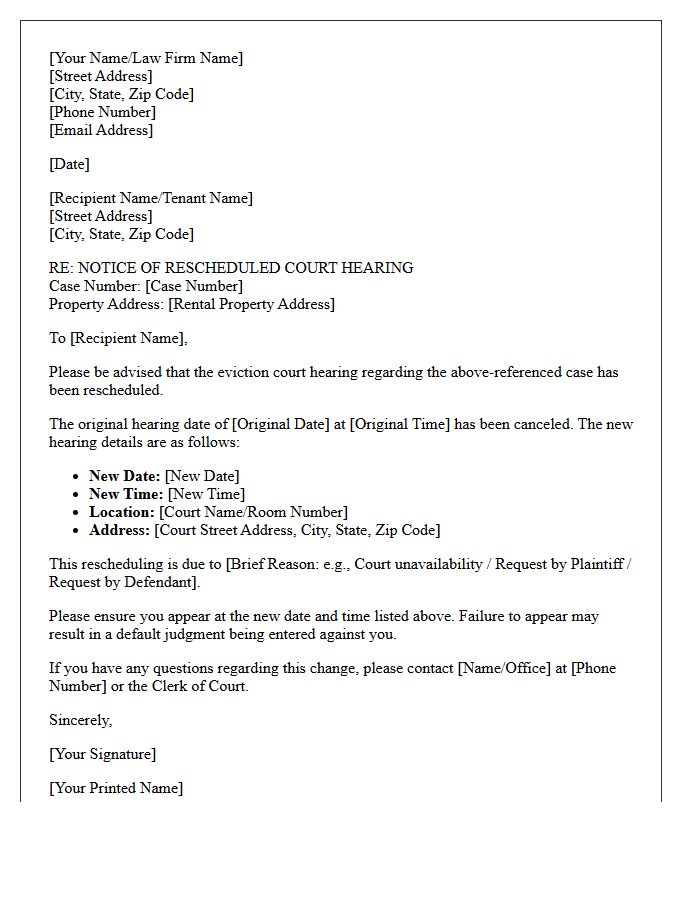
An Eviction Court Hearing Rescheduling Notice Letter is a formal document used to officially change the date or time of a scheduled legal proceeding. It is essential to file this request promptly with the court and serve it to the opposing party to ensure due process. Providing a legitimate reason, such as a medical emergency or legal conflict, increases the likelihood of approval. Failure to attend or properly reschedule can lead to a default judgment, resulting in immediate loss of the case and property possession.
Notice of Imminent Eviction Court Hearing Letter
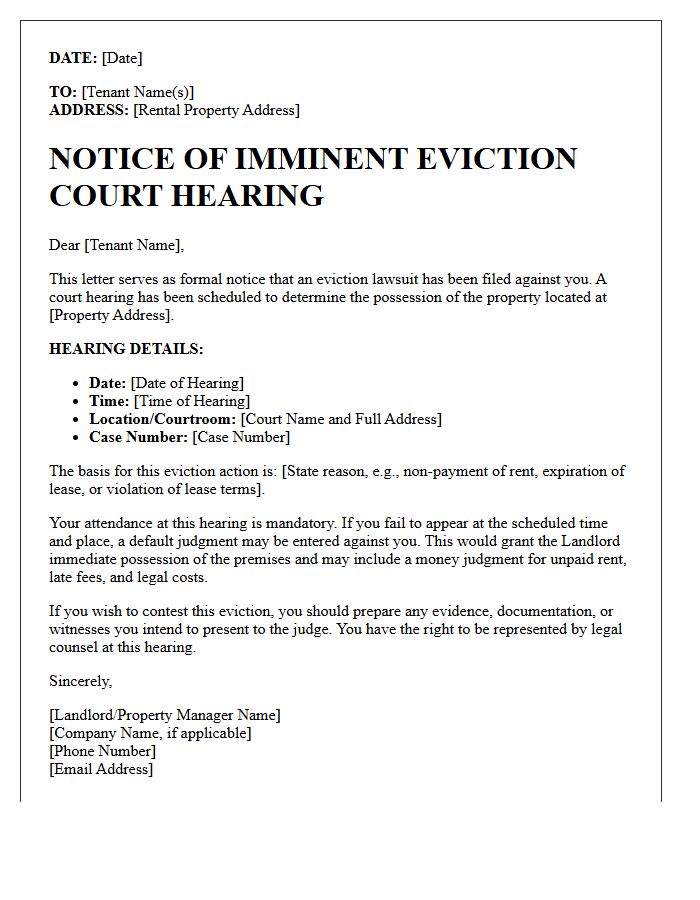
A Notice of Imminent Eviction Court Hearing is a critical legal document informing a tenant that their landlord has filed an unlawful detainer lawsuit. This notice provides the specific court date and location where a judge will decide the right to possession of the property. It is essential to attend this hearing to present a defense and avoid an automatic default judgment. Missing this date typically results in a fast-track eviction order. Seeking immediate legal counsel or mediation can help protect your housing rights before the final judgment is issued.
Eviction Court Hearing Default Judgment Letter
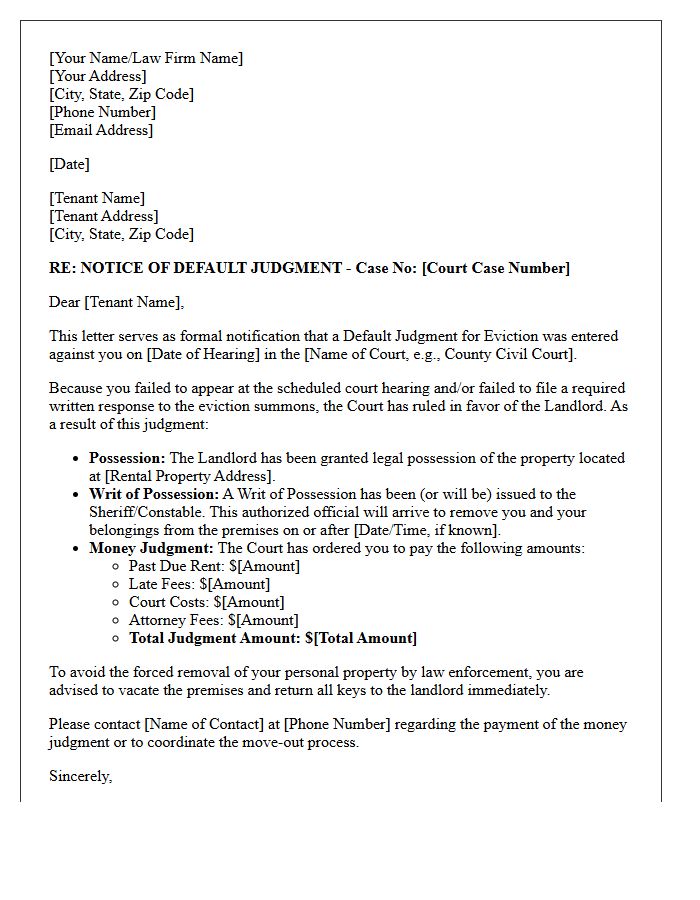
An Eviction Court Hearing Default Judgment Letter is a formal legal notice issued when a tenant fails to appear in court. This document signifies that the judge has ruled in favor of the landlord by default, granting them legal possession of the property. Once this judgment is entered, the tenant typically loses the right to contest the case and must vacate within a specified timeframe. Receiving this letter is a critical legal alert, as it precedes a formal writ of possession and physical removal by law enforcement officers.
Eviction Court Hearing Appearance Instruction Letter
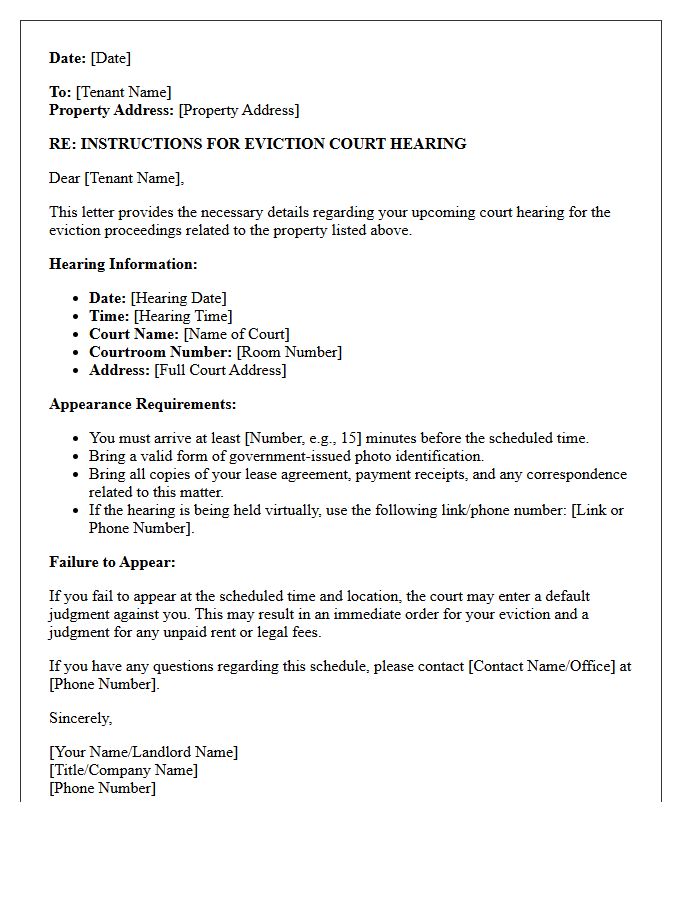
An Eviction Court Hearing Appearance Instruction Letter provides essential legal guidance for tenants or landlords regarding upcoming litigation. It outlines the specific date, time, and location of the hearing, whether held in person or remotely. This document serves as a formal notification to ensure due process and includes instructions on presenting evidence or securing legal counsel. Failure to follow these requirements can lead to a default judgment, resulting in immediate property possession for the owner. Always review the procedural rules mentioned to protect your legal rights during the proceedings.
Notice of Eviction Court Hearing Cancellation Letter
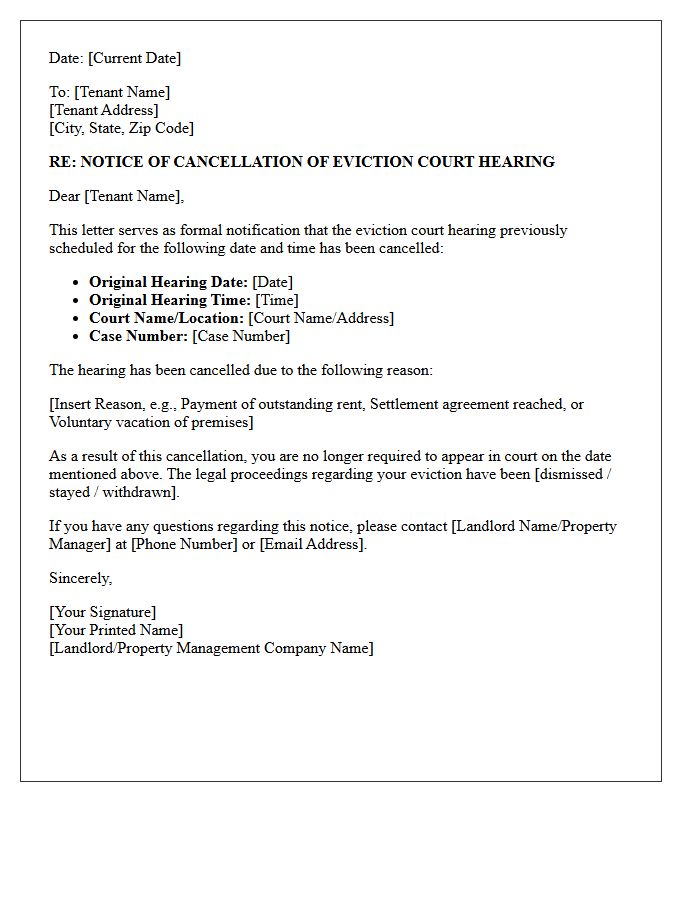
A Notice of Eviction Court Hearing Cancellation Letter is a formal document confirming that a scheduled eviction lawsuit has been legally withdrawn or postponed. This letter serves as vital proof that the legal proceedings against a tenant are no longer active on the specified date. Tenants should verify this status directly with the court clerk to ensure the case dismissal is officially recorded. Retaining a copy is essential for protecting your housing record and preventing future credit issues or wrongful removal from the property.
Landlord Eviction Court Hearing Authorization Letter
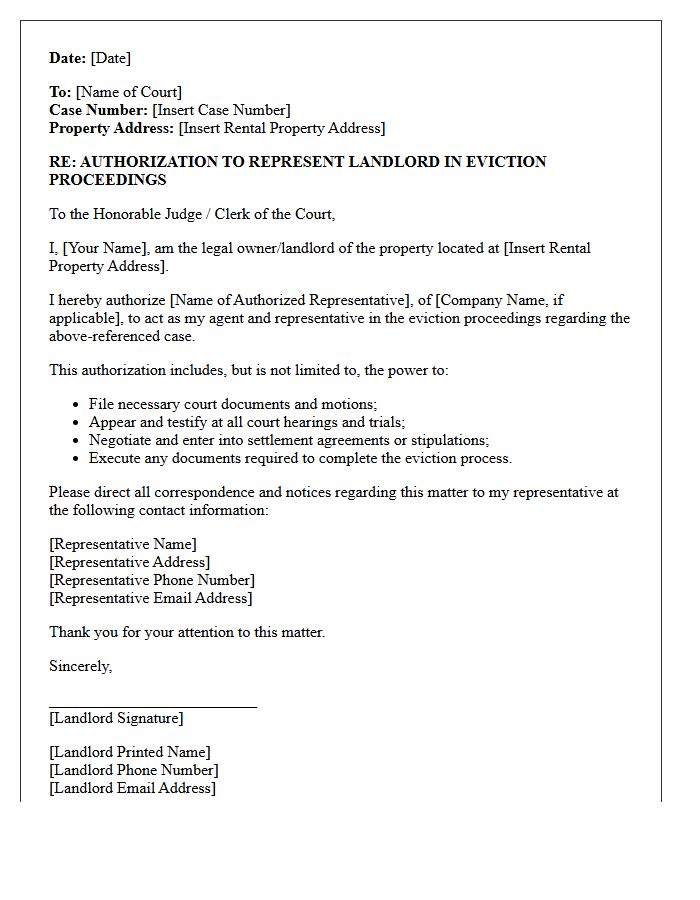
A Landlord Eviction Court Hearing Authorization Letter is a legal document granting a designated representative the authority to act on a property owner's behalf during legal proceedings. This written mandate is essential when landlords cannot attend personally, ensuring the representative can present evidence and negotiate settlements. The letter must clearly state the authorized agent's identity, the specific property details, and the scope of their power. Proper documentation prevents procedural delays and ensures the court recognizes the representative's standing to resolve the eviction case effectively and legally.
What is a Notice of Eviction Court Hearing?
A Notice of Eviction Court Hearing is an official legal document served to a tenant notifying them of the specific date, time, and location where a judge will hear the landlord's legal case to regain possession of the rental property.
What should I do after receiving an eviction hearing notice?
Upon receiving a notice, you should immediately review the hearing date, seek legal counsel or contact local legal aid services, and prepare your evidence or defenses to present before the court on the scheduled date.
Do I have to attend the eviction court hearing?
Yes, attending the hearing is critical. Failure to appear usually results in a "default judgment" in favor of the landlord, which allows them to proceed with the eviction and potentially obtain a money judgment against you without further testimony.
What happens during an eviction court hearing?
During the hearing, the landlord presents evidence for why the tenant should be removed, and the tenant has the opportunity to present a defense. The judge then reviews the facts and local landlord-tenant laws to decide whether to issue an order of eviction.
Can an eviction be stopped at the court hearing?
An eviction may be stopped if the tenant successfully proves a legal defense, such as illegal retaliation, breach of the warranty of habitability, or if the landlord failed to follow proper legal procedures and notice requirements prior to the hearing.


Comments