
A Notice to Cure or Quit is a formal legal document issued by landlords when a tenant breaches specific lease terms. This notice provides a mandatory timeframe for the tenant to either fix the violation or vacate the premises to avoid eviction proceedings. Understanding your legal rights is essential for effective property management. Below are some ready to use templates.
Image cover: Professional Notice to Cure Lease Violation or Quit: Templates and Legal Samples
Letter Samples List
- Notice to Cure Unauthorized Pet Lease Violation or Quit Letter
- Notice to Cure Excessive Noise Lease Violation or Quit Letter
- Notice to Cure Unapproved Occupant Lease Violation or Quit Letter
- Notice to Cure Property Alteration Lease Violation or Quit Letter
- Notice to Cure Illegal Subletting Lease Violation or Quit Letter
- Notice to Cure Indoor Smoking Lease Violation or Quit Letter
- Notice to Cure Improper Waste Disposal Lease Violation or Quit Letter
- Notice to Cure Unauthorized Vehicle Parking Lease Violation or Quit Letter
- Notice to Cure Home Business Operation Lease Violation or Quit Letter
- Notice to Cure Lawn Maintenance Lease Violation or Quit Letter
- Notice to Cure Utility Disconnection Lease Violation or Quit Letter
- Notice to Cure HOA Rule Infraction Lease Violation or Quit Letter
Notice to Cure Unauthorized Pet Lease Violation or Quit Letter
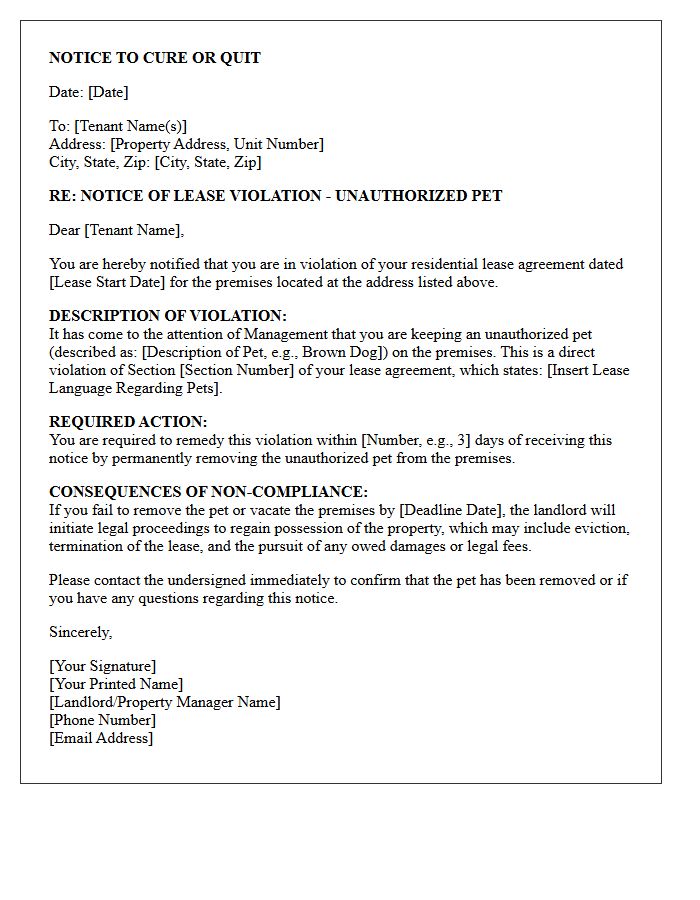
A Notice to Cure Unauthorized Pet Lease Violation is a legal document issued by a landlord when a tenant keeps an animal without permission. This notice acts as a formal warning, demanding the tenant either remove the pet or vacate the premises within a specified timeframe. It is the essential first step in the eviction process for lease non-compliance. Tenants must respond promptly to avoid further legal action, while landlords must ensure the notice adheres to local housing laws to be enforceable in court.
Notice to Cure Excessive Noise Lease Violation or Quit Letter
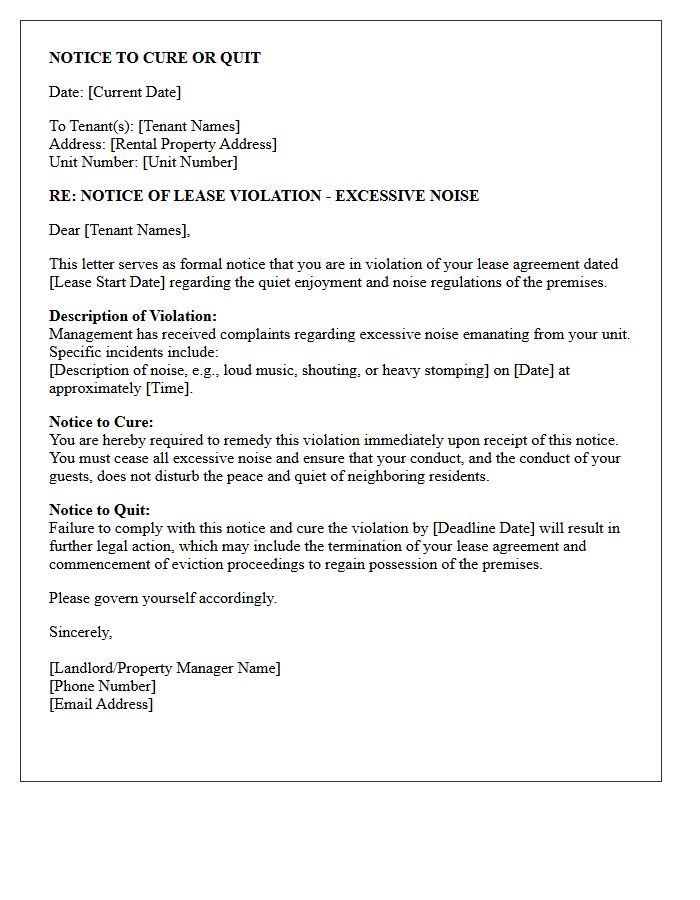
A Notice to Cure Excessive Noise is a formal legal document issued by a landlord to a tenant. This lease violation notice serves as an official warning that the tenant's noise levels are disturbing the peaceful enjoyment of neighbors. To comply, the tenant must immediately reduce the volume or face further action. If the disruption persists after the specified cure period, the landlord may initiate an eviction process, often referred to as a "quit" notice. Timely resolution is essential to maintain residency and avoid legal consequences under the rental agreement.
Notice to Cure Unapproved Occupant Lease Violation or Quit Letter
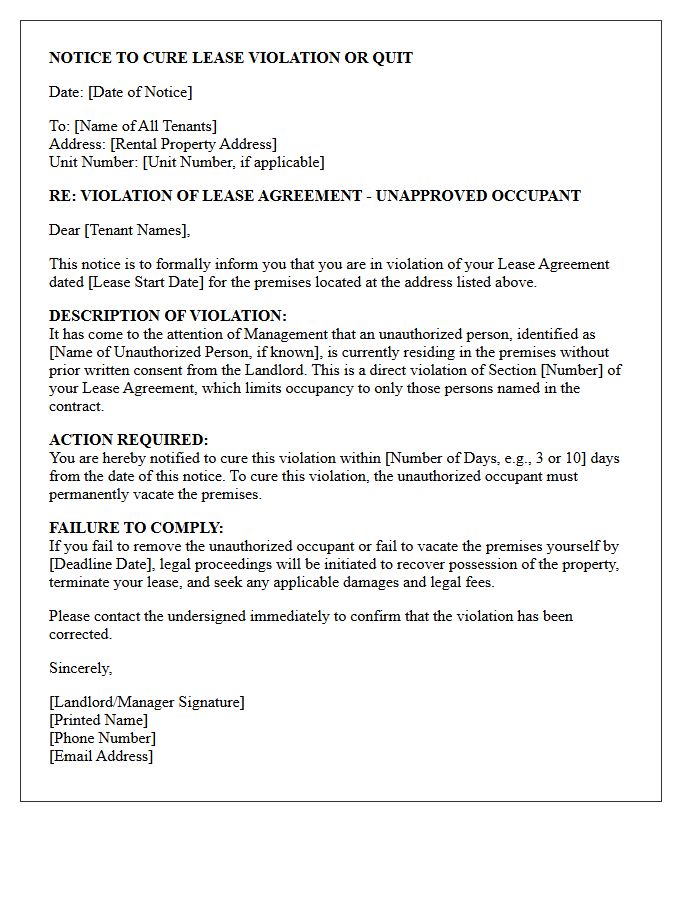
A Notice to Cure Unapproved Occupant Lease Violation is a formal legal document issued by a landlord when a tenant allows an unauthorized person to live on the premises. This notice demands that the tenant remove the unauthorized resident within a specific timeframe to comply with the lease agreement. Failure to rectify this lease violation allows the landlord to initiate eviction proceedings. It serves as a critical warning, giving the tenant a final opportunity to remedy the breach or voluntarily vacate the property to avoid further legal action.
Notice to Cure Property Alteration Lease Violation or Quit Letter
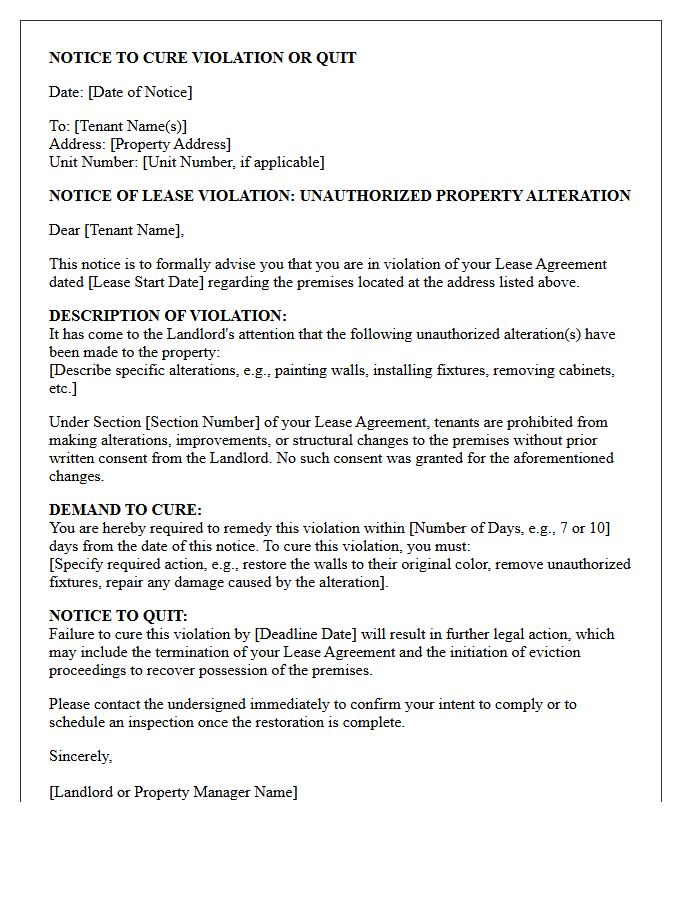
A Notice to Cure Property Alteration is a formal legal document issued by a landlord when a tenant modifies a unit without written consent. This notice identifies the specific unauthorized alteration and provides a strict deadline to restore the property to its original state. Failure to rectify the breach within the specified timeframe can lead to a lease termination or an immediate notice to quit. It serves as a final warning to resolve the lease violation before formal eviction proceedings are initiated in court.
Notice to Cure Illegal Subletting Lease Violation or Quit Letter
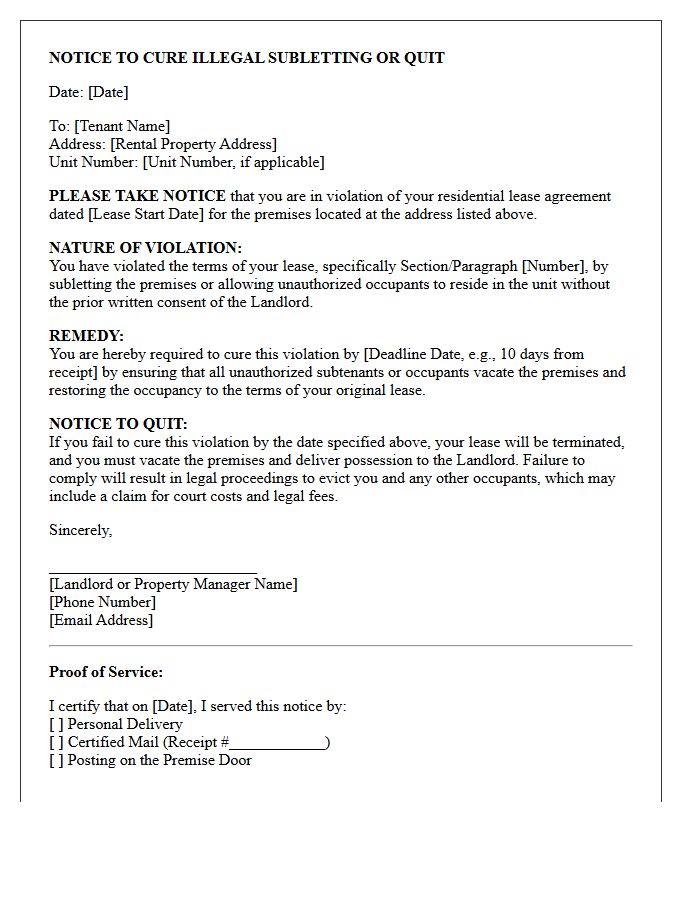
A Notice to Cure Illegal Subletting is a formal legal document issued by a landlord when a tenant rents their unit to an unauthorized person. This letter informs the tenant of a lease violation regarding unapproved occupancy. It provides a specific deadline to remove the subtenant or vacate the premises. Compliance is essential to avoid an eviction lawsuit. Tenants must either restore the legal occupancy status or quit the property within the timeframe defined by state law and the rental agreement to prevent further legal action.
Notice to Cure Indoor Smoking Lease Violation or Quit Letter
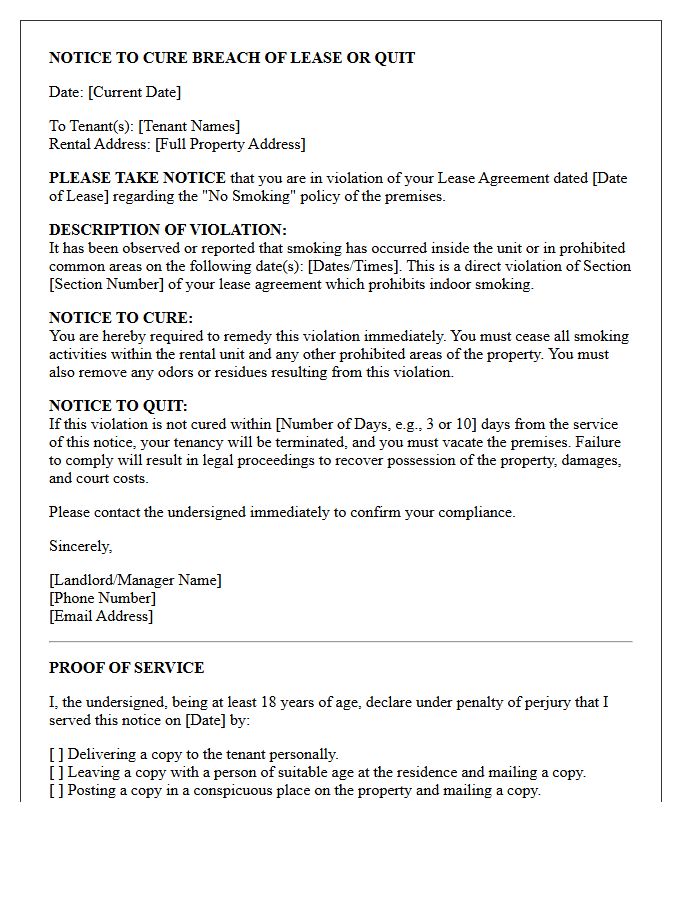
A Notice to Cure Indoor Smoking or Quit is a formal legal demand issued by a landlord when a tenant violates a lease agreement's non-smoking policy. This document provides a specific timeframe to remedy the breach by ceasing all indoor smoking activities. Failure to comply can lead to lease termination and formal eviction proceedings. It serves as essential evidence that the landlord attempted to resolve the issue before seeking court intervention. Tenants must strictly follow the notice terms to maintain their housing security and avoid financial penalties for property damage.
Notice to Cure Improper Waste Disposal Lease Violation or Quit Letter
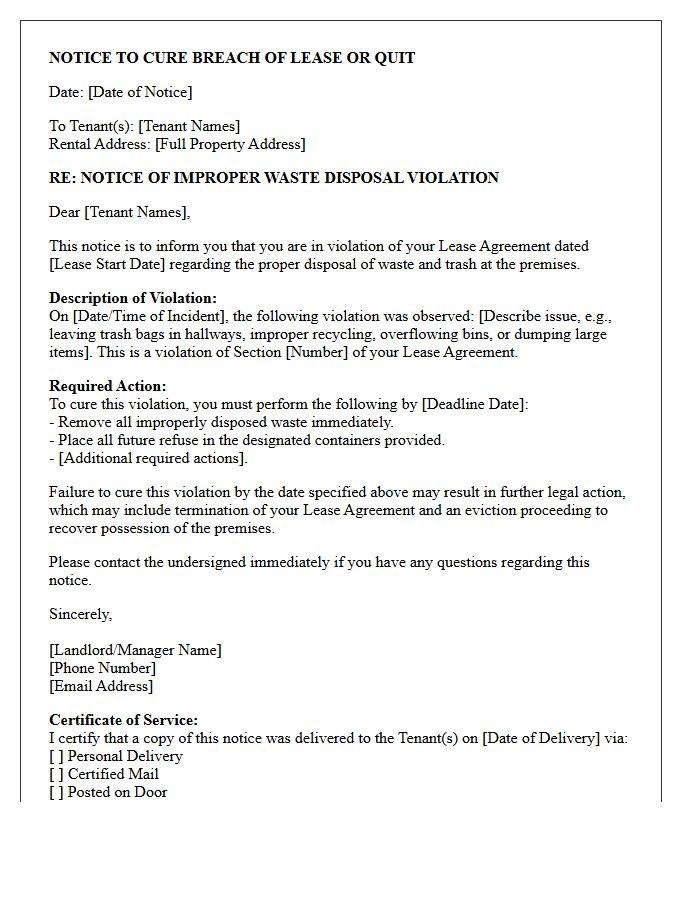
A Notice to Cure Improper Waste Disposal is a formal legal document issued by a landlord to a tenant violating sanitation policies. This Lease Violation notice warns that failure to manage trash correctly threatens property hygiene and safety. Tenants must immediately remedy the breach by following disposal rules or face eviction proceedings. This letter serves as a final opportunity to comply with lease terms or quit the premises. It provides legal documentation essential for potential court actions, ensuring the landlord protects the property from pests, odors, and local health code penalties.
Notice to Cure Unauthorized Vehicle Parking Lease Violation or Quit Letter
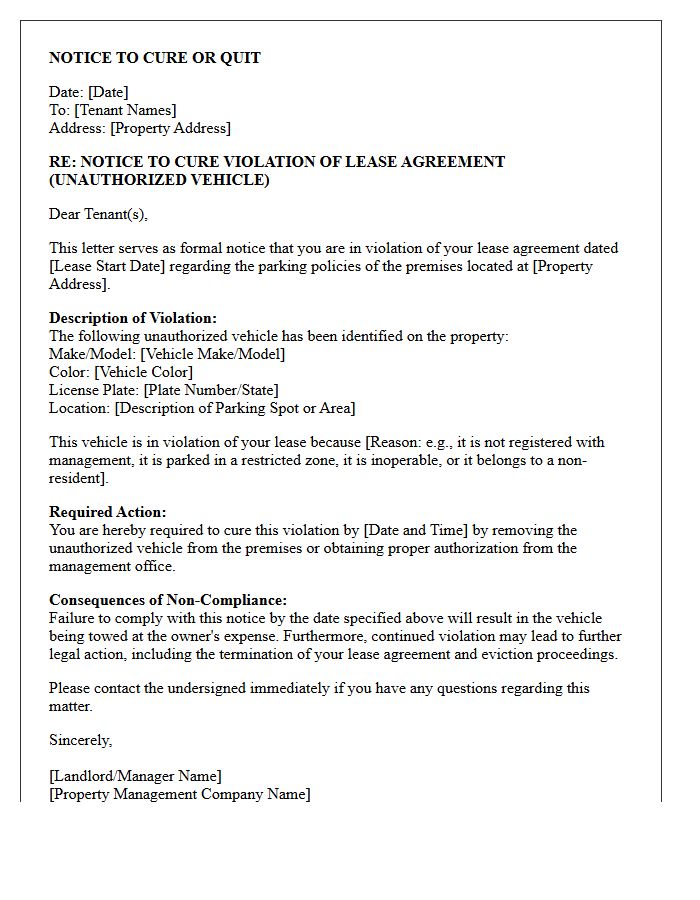
A Notice to Cure Unauthorized Vehicle Parking is a formal legal document issued by a landlord when a tenant violates lease terms regarding parking regulations. This letter serves as a mandatory warning, requiring the tenant to remove the unauthorized vehicle or remedy the violation within a specific timeframe. Failing to comply may result in a formal notice to quit, potentially leading to eviction proceedings. It is essential for protecting property rights and ensuring safety. Tenants should respond immediately to avoid further legal action or the loss of their housing agreement.
Notice to Cure Home Business Operation Lease Violation or Quit Letter
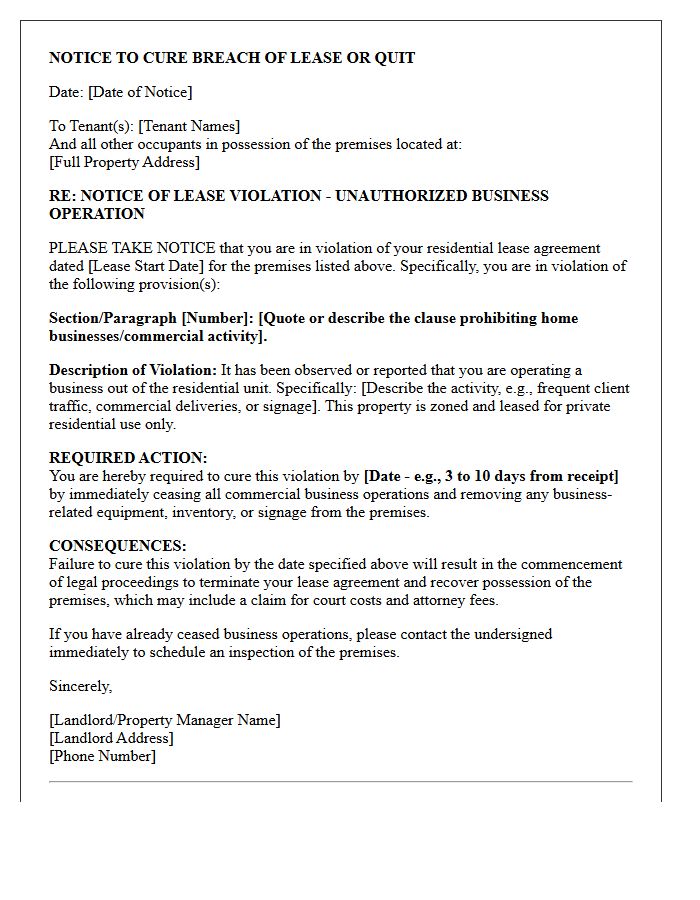
A Notice to Cure or Quit for a home business violation is a legal document issued by a landlord when a tenant operates an unauthorized commercial activity from a residential property. This notice informs the tenant they are in breach of contract and must cease operations within a specific timeframe. Failure to resolve the issue or vacate the premises can lead to formal eviction proceedings. It is essential to review local zoning laws and the original lease agreement to determine if any professional usage is permitted before responding to the landlord.
Notice to Cure Lawn Maintenance Lease Violation or Quit Letter
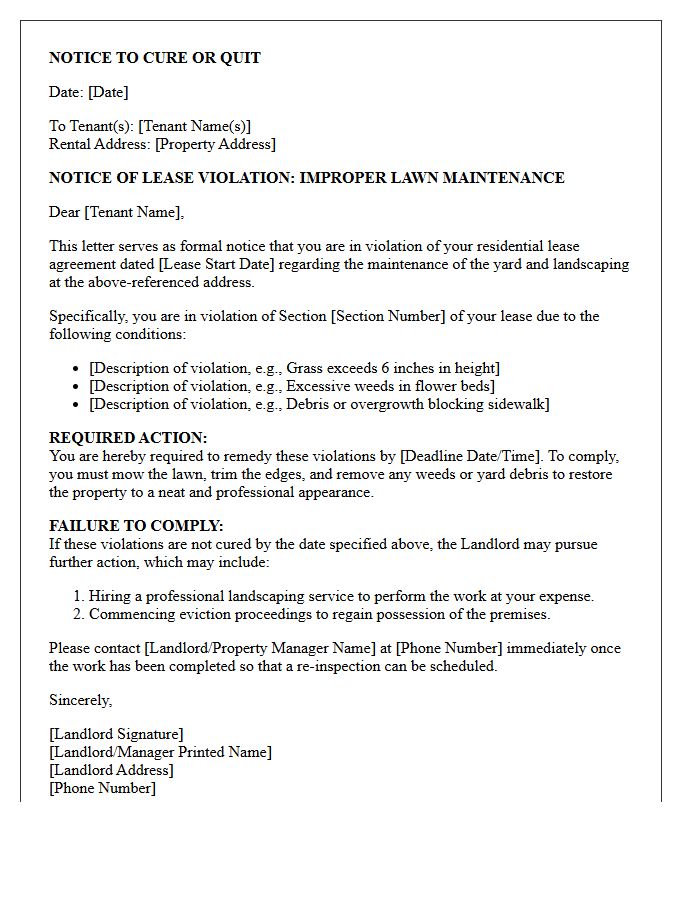
A Notice to Cure Lawn Maintenance is a formal legal document notifying a tenant that their property's upkeep violates lease terms. To avoid lease termination or potential eviction, the tenant must perform the required remediation, such as mowing, weeding, or debris removal, within a specific timeframe. This notice serves as a final warning to restore the premises to the agreed-upon standards. Failure to comply allows the landlord to initiate a quit notice, effectively ending the tenancy due to a breach of the maintenance covenant established in the rental agreement.
Notice to Cure Utility Disconnection Lease Violation or Quit Letter
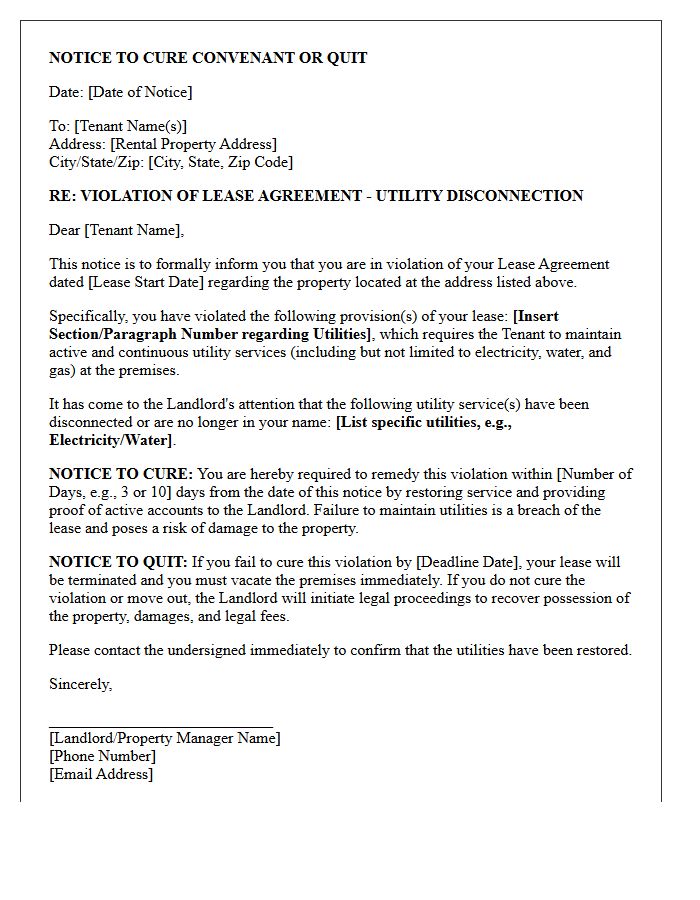
A Notice to Cure Utility Disconnection is a formal legal document issued by a landlord when a tenant fails to maintain essential services. This lease violation occurs when utilities under the tenant's responsibility are shut off, potentially damaging the property or violating safety codes. The notice provides a specific timeframe to restore services. Failure to comply typically leads to a Notice to Quit, initiating the eviction process. It is critical to address this immediately to prevent legal action and ensure the premises remain habitable and compliant with the rental agreement.
Notice to Cure HOA Rule Infraction Lease Violation or Quit Letter
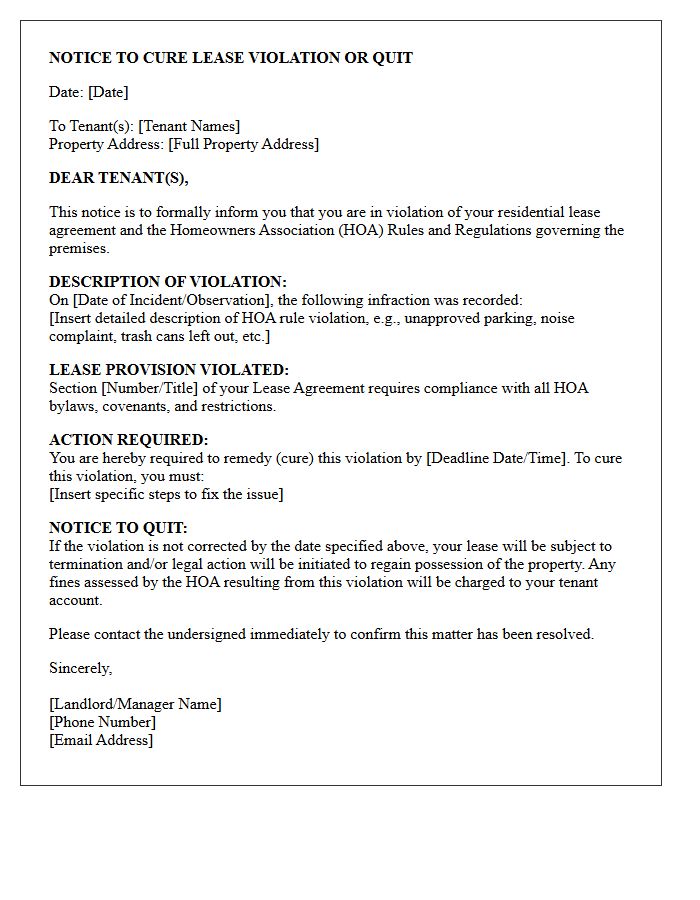
A Notice to Cure or Quit is a formal legal document issued when a tenant violates specific terms of a lease or HOA regulations. This letter provides a mandatory compliance period to fix the infraction, such as resolving noise complaints or unauthorized pets. If the violation remains uncorrected after the deadline, the landlord may initiate eviction proceedings. It serves as essential written evidence of due process, ensuring tenants are informed of their breach and the required actions to maintain their residency and avoid lease termination.
What is a Notice to Cure Lease Violation or Quit?
A Notice to Cure Lease Violation or Quit is a formal legal document sent by a landlord to a tenant demanding they fix a specific lease violation within a set timeframe or vacate the property. It serves as the initial step in the eviction process for non-monetary breaches of a rental agreement.
How many days does a tenant have to fix a lease violation?
The time period allowed to cure a violation varies by state law and the specific terms of the lease, typically ranging from 3 to 30 days. You must check local jurisdictional requirements to ensure the notice provides the legally mandated minimum "cure period."
What happens if a tenant ignores a Notice to Cure or Quit?
If the tenant fails to remedy the violation or move out by the deadline, the landlord gains the legal right to file an unlawful detainer (eviction) lawsuit in court. The notice acts as the prerequisite evidence that the tenant was given a fair opportunity to comply with lease terms.
What are common reasons for issuing a Notice to Cure?
Common reasons include unauthorized pets, unauthorized occupants, excessive noise complaints, failure to maintain the property in a sanitary condition, or illegal subletting. It is used for any breach of lease terms other than the non-payment of rent.
What information must be included in a Notice to Cure or Quit?
To be legally valid, the notice must clearly identify the specific lease clause being violated, provide a detailed description of the non-compliant behavior, state the exact date by which the cure must be completed, and explain that failure to comply may lead to eviction proceedings.


Comments