
If a tenant violates a lease by keeping an unapproved animal, a Notice to Remove Unauthorized Pet or Quit is a critical legal step. This formal document notifies the occupant to either rehome the animal or vacate the premises to avoid eviction. Ensuring compliance protects property standards and lease integrity. Below are some ready to use template options to assist you.

Image cover: Unauthorized Pet Notice: Official Removal or Lease Termination Templates
Letter Samples List
- Initial Warning Letter for Unauthorized Pet
- Notice to Remove Unauthorized Pet or Quit Letter
- Lease Violation Letter for Unauthorized Animal
- First Notice Letter to Remove Unapproved Pet
- Final Warning Letter for Unauthorized Pet Removal
- Cure or Quit Letter for Unauthorized Pet
- Three Day Notice to Remove Pet or Quit Letter
- Seven Day Notice Letter for Unauthorized Pet Removal
- Eviction Warning Letter for Unregistered Pet
- Breach of Lease Letter for Unauthorized Pet
- Demand Letter to Remove Unauthorized Pet or Vacate
- Unapproved Animal Violation Letter and Notice to Quit
- Official Property Management Letter for Unauthorized Pet
Initial Warning Letter for Unauthorized Pet
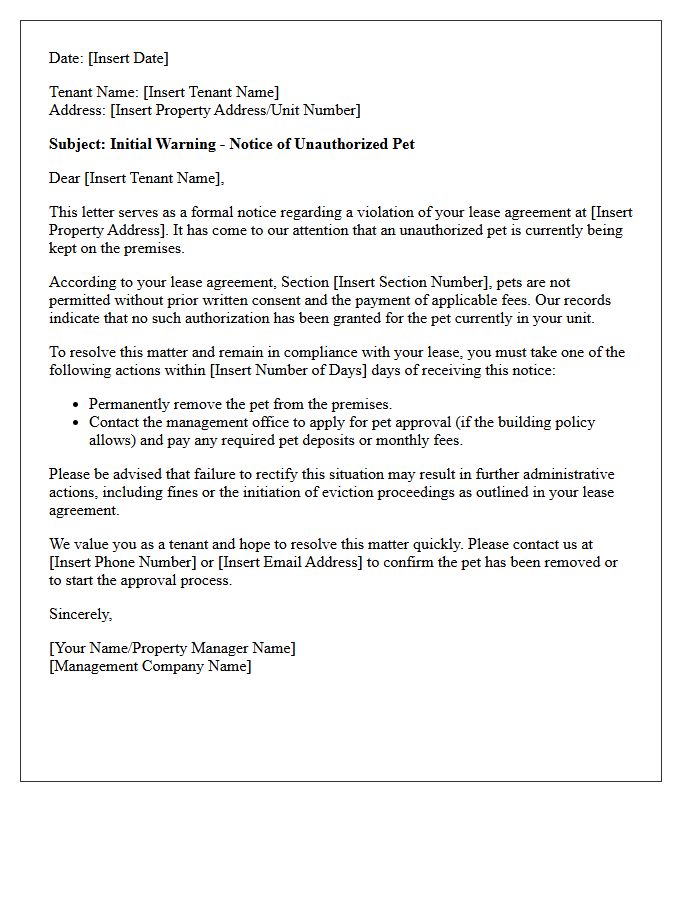
An Initial Warning Letter is a formal notice issued by a landlord when an unauthorized pet is discovered on the premises. This document serves as a legal record of a lease violation, specifically regarding pet policies or "no-pet" clauses. It outlines required actions, such as removing the animal or paying a fine, within a specific timeframe. Receiving this letter is a critical step in the eviction process; failing to comply or resolve the issue promptly can lead to lease termination and legal proceedings. Always review your rental agreement to understand your rights and obligations.
Notice to Remove Unauthorized Pet or Quit Letter
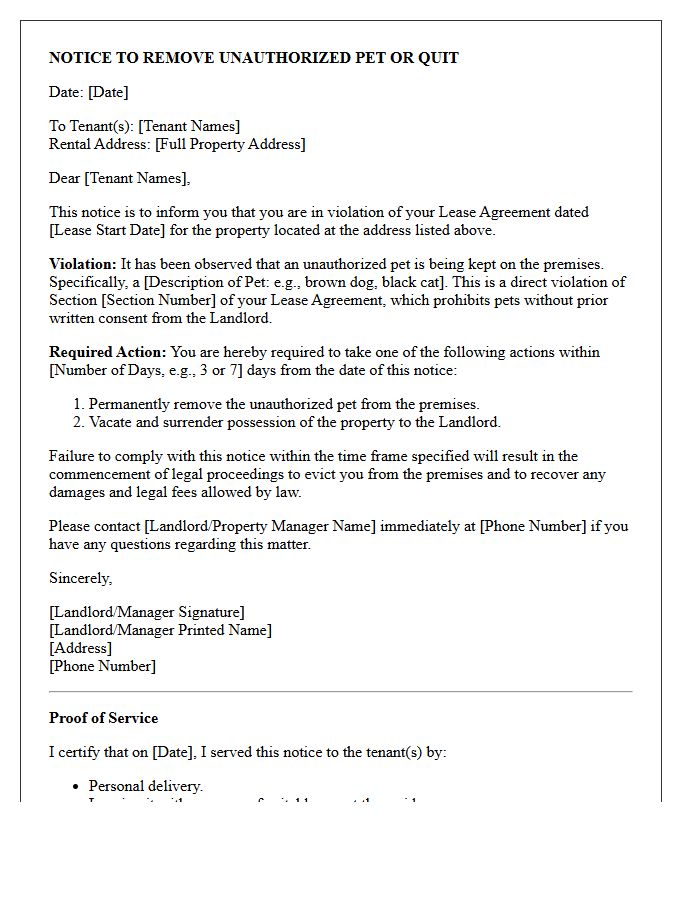
A Notice to Remove Unauthorized Pet or Quit is a formal legal document issued by a landlord when a tenant violates a lease by keeping an unapproved animal. This written warning demands that the tenant either remove the pet within a specific timeframe or vacate the premises. Failing to comply can lead to eviction proceedings. It is essential to verify local laws and lease terms, as some jurisdictions provide protections for service animals or emotional support animals, which may exempt them from standard "no-pet" policies.
Lease Violation Letter for Unauthorized Animal
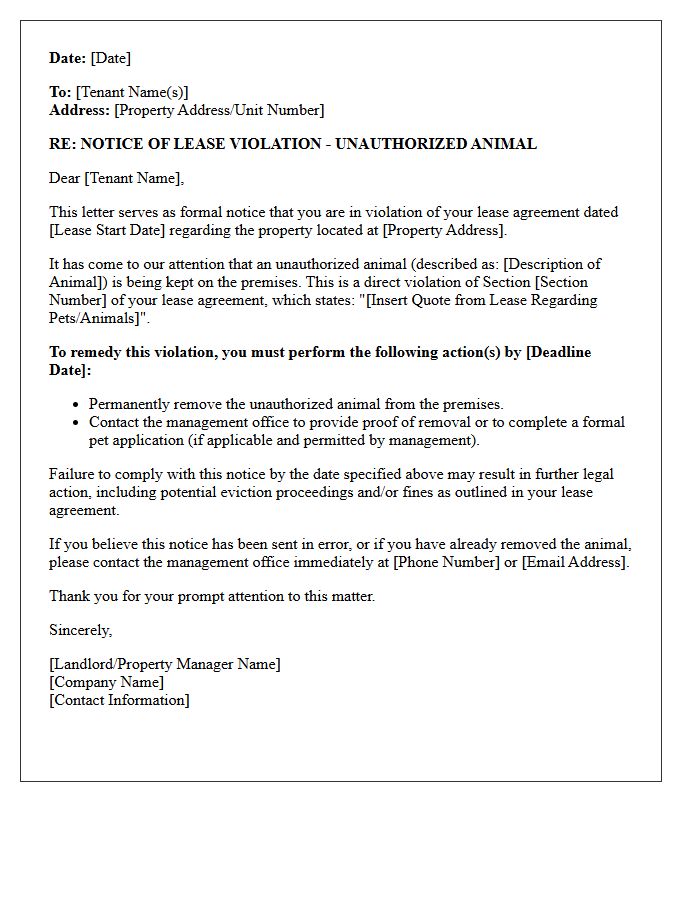
A lease violation letter for an unauthorized animal is a formal notice informing a tenant that they have breached their rental agreement by keeping a pet without permission. This legal document clearly identifies the specific lease clause violated and outlines necessary corrective actions. It typically requires the tenant to either remove the animal immediately or formalize the pet's status through an official addendum and paid fees. Providing clear deadlines and potential consequences, such as eviction, ensures effective communication and protects the landlord's property rights and insurance compliance.
First Notice Letter to Remove Unapproved Pet
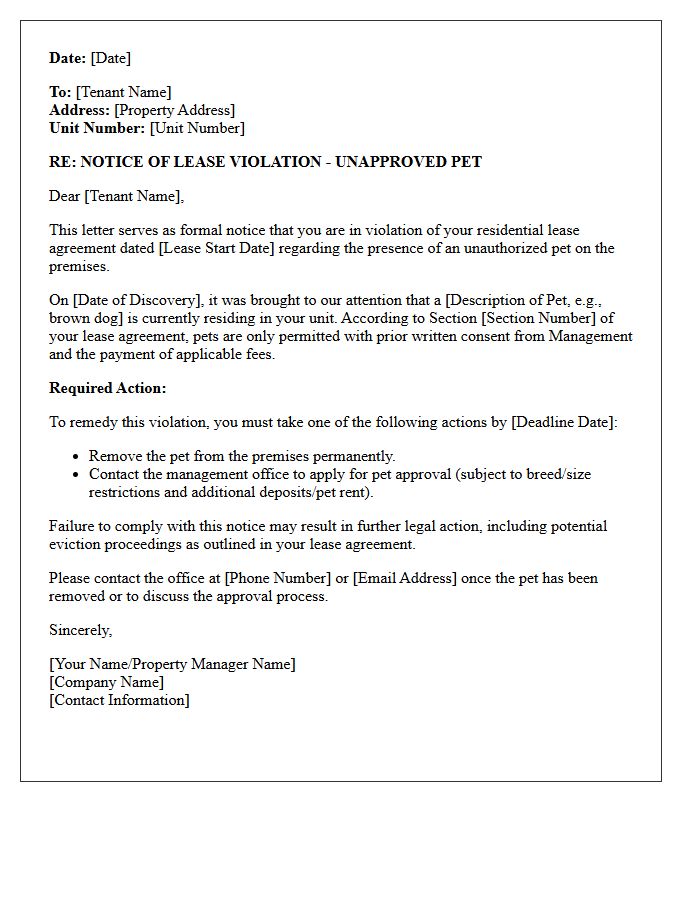
A First Notice Letter to Remove Unapproved Pet serves as a formal warning regarding a lease violation. It informs the tenant that an unauthorized animal has been identified on the premises, breaching the rental agreement. This compliance notice outlines a specific deadline for the pet's removal to avoid further legal action or eviction. It is a critical step in document trail creation, ensuring the tenant understands their obligation to adhere to pet policies while providing an opportunity to rectify the breach before formal lease termination proceedings begin.
Final Warning Letter for Unauthorized Pet Removal
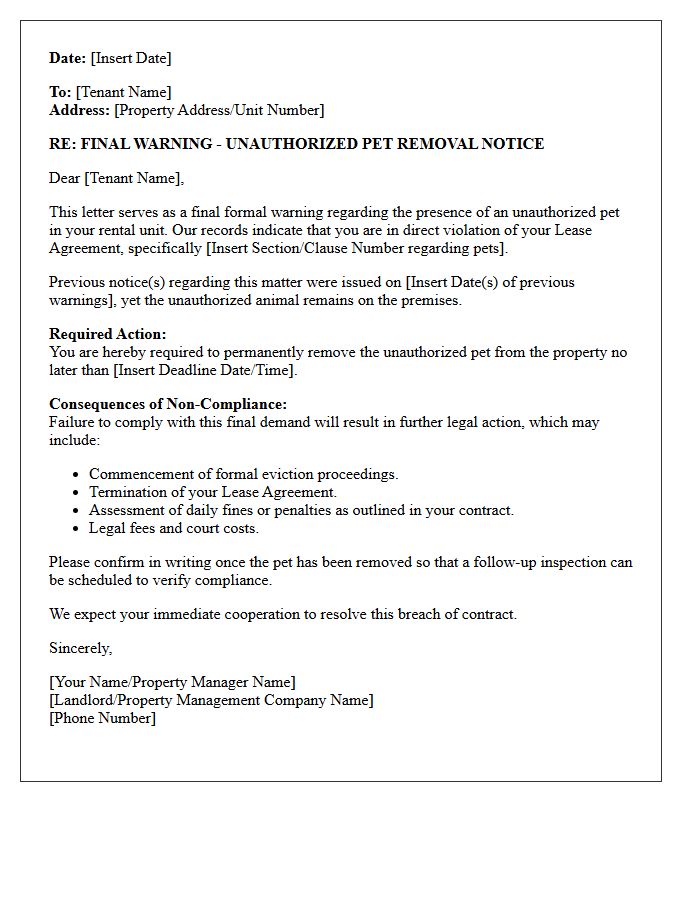
A final warning letter for unauthorized pet removal serves as a formal notice before eviction proceedings begin. This document informs the tenant they have breached the lease agreement by keeping an unapproved animal on the premises. It provides a strict deadline to remove the pet permanently to avoid legal action. Failure to comply usually results in lease termination and potential court costs. Tenants must provide proof of removal or request reasonable accommodation if the animal is a documented service or emotional support animal to resolve the dispute.
Cure or Quit Letter for Unauthorized Pet
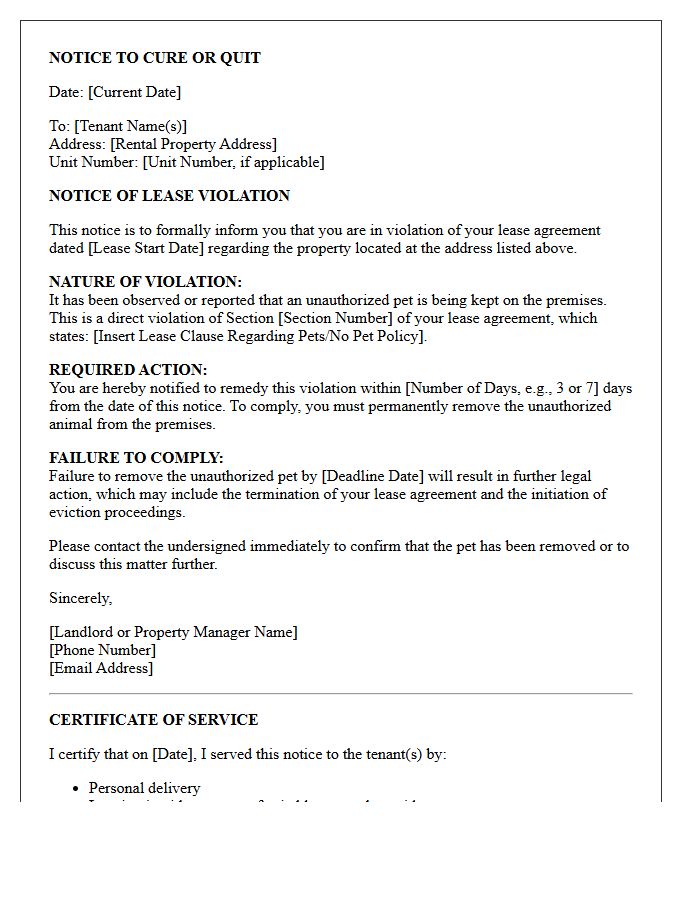
A Cure or Quit Letter is a formal legal notice issued by a landlord when a tenant keeps an unauthorized pet in violation of their lease agreement. This document demands that the tenant either "cure" the lease violation by permanently removing the animal or "quit" the premises by moving out within a specified timeframe. Failure to comply typically grants the landlord grounds to initiate eviction proceedings. It is essential for tenants to review their rental contract and address the notice immediately to avoid legal action or lease termination.
Three Day Notice to Remove Pet or Quit Letter
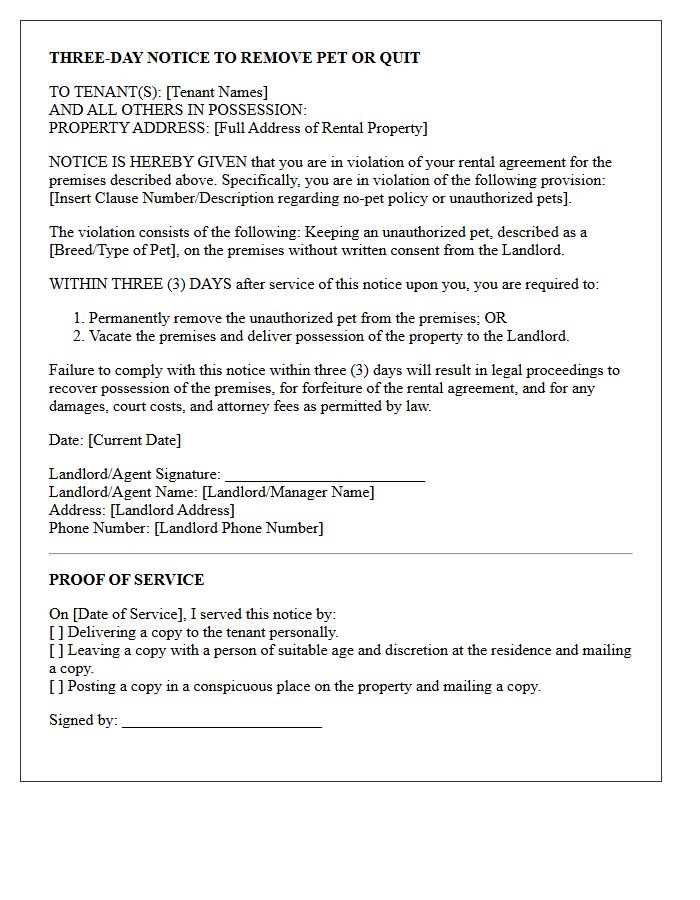
A Three Day Notice to Remove Pet or Quit is a formal legal demand issued by a landlord when a tenant violates a "no pets" policy or lease agreement. To avoid eviction, the tenant must either permanently remove the animal or vacate the premises within seventy-two hours. Failure to comply allows the landlord to file an unlawful detainer lawsuit. It is essential to verify if the animal qualifies as a Service Animal or Emotional Support Animal under the FHA, as these are generally exempt from standard pet restrictions and fees.
Seven Day Notice Letter for Unauthorized Pet Removal
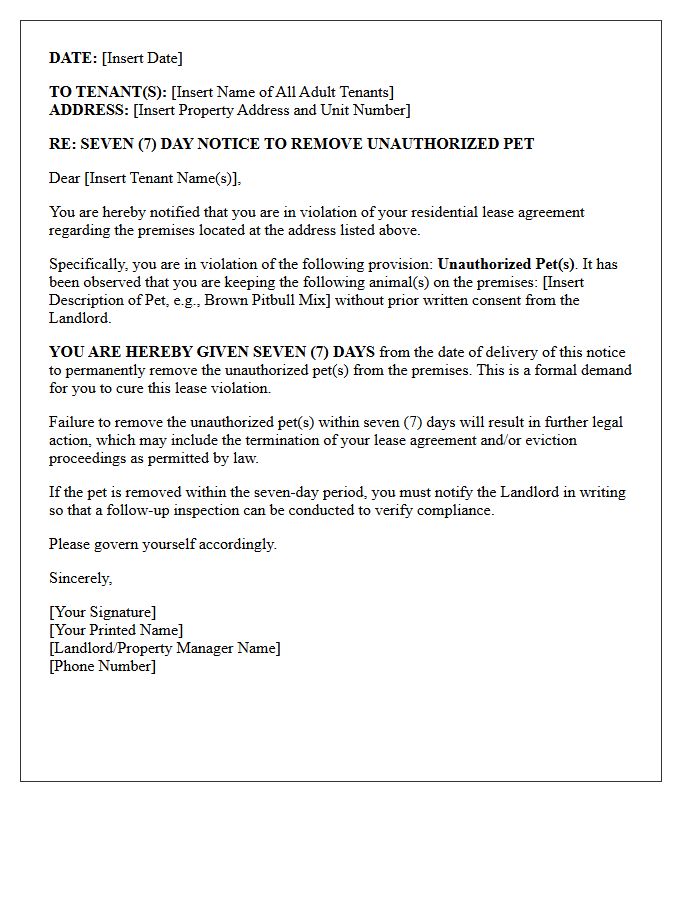
A Seven Day Notice Letter serves as a formal legal warning to tenants violating a "no pets" policy. This notice to cure provides a specific timeframe to permanently remove the animal or vacate the premises. It is legally required before a landlord can initiate an eviction lawsuit. To be valid, the document must clearly describe the lease violation and state the deadline for compliance. Landlords should ensure proper service of the notice to maintain legal standing if the tenant fails to remove the unauthorized pet within the seven-day period.
Eviction Warning Letter for Unregistered Pet
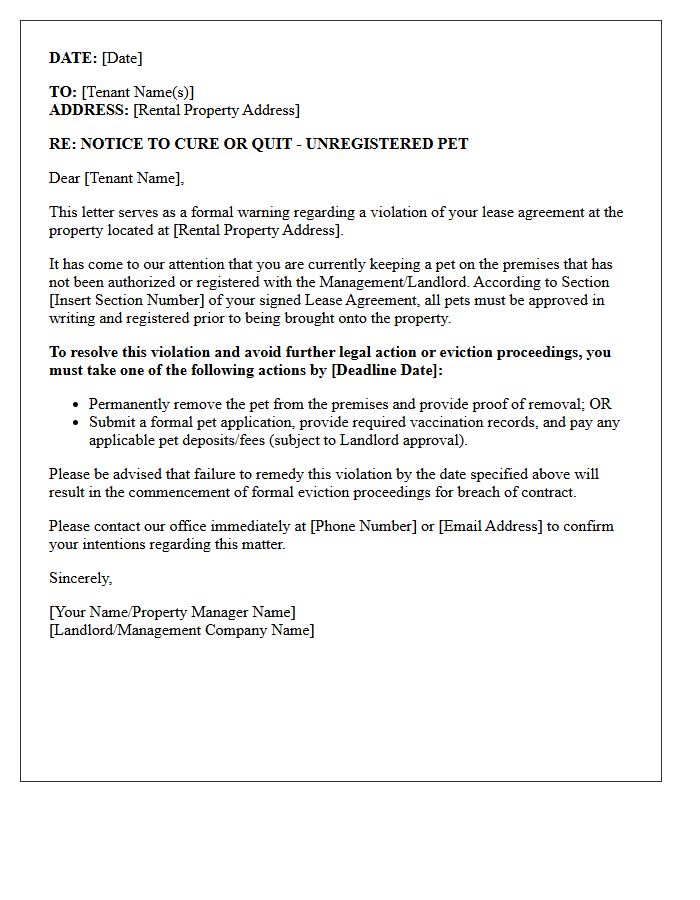
An Eviction Warning Letter for Unregistered Pet is a formal notice issued by a landlord when a tenant violates a lease by keeping an unauthorized animal. This document serves as a legal warning, granting the tenant a specific timeframe to either register the animal or remove it from the premises. Ignoring this notice can lead to formal eviction proceedings. It is crucial to verify your lease agreement and local housing laws, as some jurisdictions provide protections for service animals or emotional support animals regardless of initial registration status.
Breach of Lease Letter for Unauthorized Pet
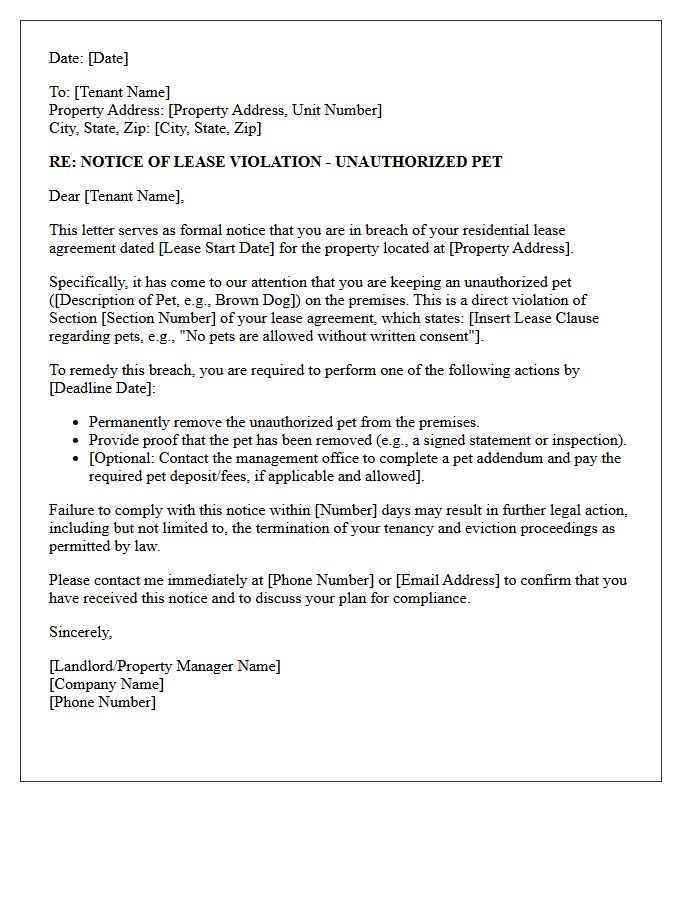
A breach of lease letter for an unauthorized pet is a formal notice sent by a landlord to a tenant who has violated rental agreements by keeping an animal without permission. This document must clearly identify the lease violation and specify a required remedy, such as removing the pet or paying a fine, within a set timeframe. It serves as essential legal documentation if further action, such as eviction, becomes necessary. Tenants should respond promptly to avoid legal consequences and potential loss of housing stability.
Demand Letter to Remove Unauthorized Pet or Vacate
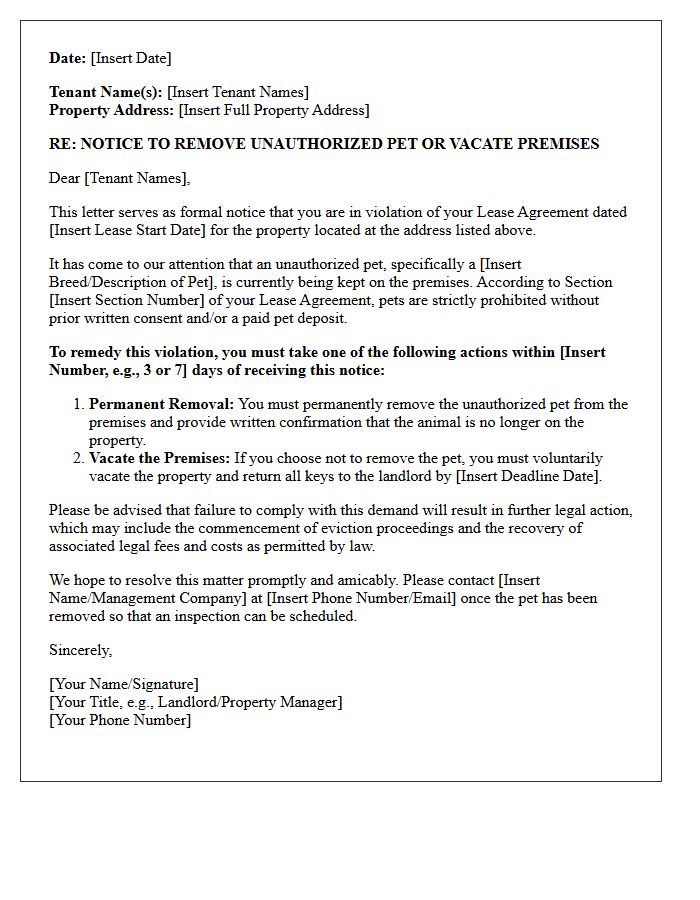
A Demand Letter to Remove Unauthorized Pet or Vacate is a formal legal notice issued by a landlord to a tenant violating lease terms. It explicitly states that an unapproved animal must be removed within a specific timeframe or the tenant must vacate the premises. This document serves as critical evidence for potential eviction proceedings, ensuring the owner protects property value and adheres to safety regulations. Failure to comply typically results in lease termination and legal action to recover possession of the property through a formal notice to quit.
Unapproved Animal Violation Letter and Notice to Quit
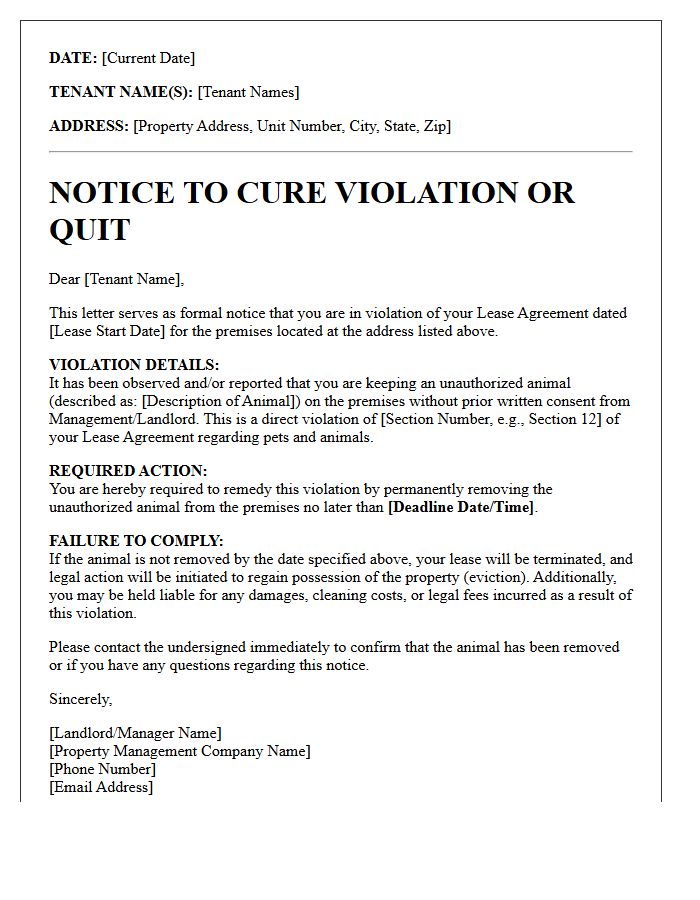
Receiving an Unapproved Animal Violation Letter is a formal warning that a pet breaches your lease agreement. It serves as a preliminary notice to remedy the violation by removing the animal or obtaining authorization. Failure to comply typically leads to a Notice to Quit, which legally demands you vacate the premises. To protect your tenancy, immediately review your lease terms, provide ESA documentation if applicable, or resolve the issue before formal eviction proceedings begin in court. Prompt communication with your landlord is essential to avoid permanent displacement.
Official Property Management Letter for Unauthorized Pet
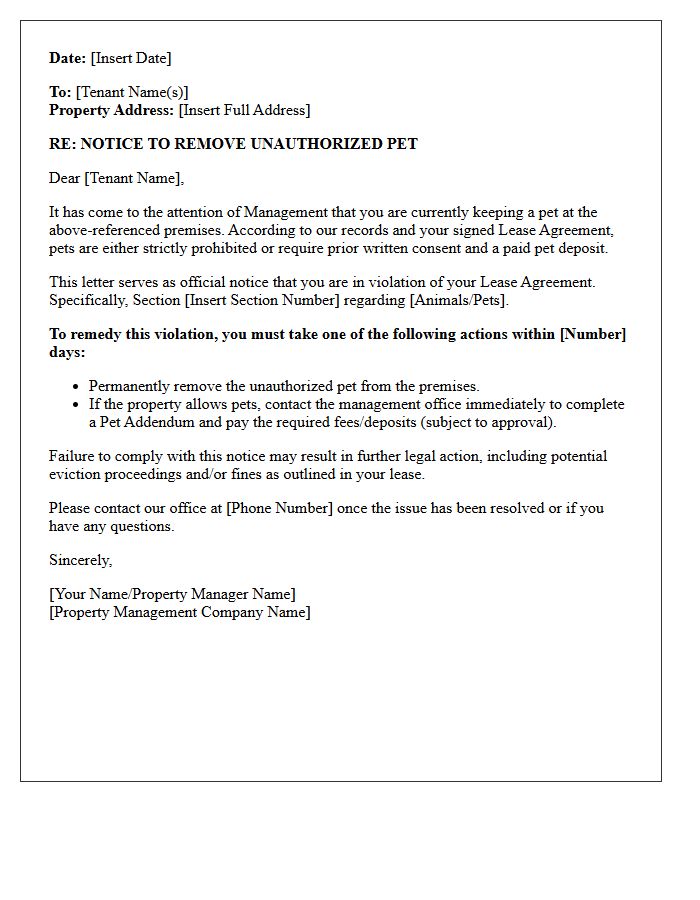
An official property management letter for an unauthorized pet serves as a formal notice to tenants regarding a lease violation. The most important term is the cure or quit directive, which requires the resident to either remove the animal or face potential eviction. This document must clearly cite the specific pet policy clause from the original agreement. Providing a deadline for compliance ensures legal protection for the landlord while maintaining property standards and safety. Professional communication helps resolve the conflict before pursuing formal court action or imposing associated lease violation fines.
What is a Notice to Remove Unauthorized Pet or Quit?
A Notice to Remove Unauthorized Pet or Quit is a formal legal document sent by a landlord to a tenant who is keeping a pet in violation of their lease agreement. It demands that the tenant either remove the animal within a specific timeframe or vacate the rental property.
How many days does a tenant have to remove an unauthorized pet?
The notice period varies by state and local laws, but typically ranges from 3 to 14 days. This "cure period" allows the tenant to rectify the lease violation by permanently removing the pet before the landlord can proceed with an eviction filing.
Can a landlord evict me for a service animal if there is a "no pets" policy?
No, under the Fair Housing Act, landlords cannot evict tenants for having a documented service animal or emotional support animal (ESA), even with a "no pets" policy. However, the tenant may still be required to provide proper documentation from a healthcare professional if the disability is not apparent.
What should be included in a formal Notice to Remove Unauthorized Pet?
The notice should include the date, the tenant's name and address, a specific description of the lease violation, the deadline to remove the pet (the cure date), and a statement that failure to comply will result in legal action or termination of the lease.
What happens if a tenant ignores a Notice to Remove Unauthorized Pet?
If the tenant fails to remove the animal or move out by the deadline specified in the notice, the landlord may file an unlawful detainer action (eviction lawsuit) in court to regain possession of the property and potentially seek damages for lease violations.

Comments