
Landlords can issue a Notice of Eviction for Repeated Late Payments when tenants consistently fail to pay rent on time. This formal document serves as legal notice to terminate the lease due to chronic delinquency, protecting your property rights and rental income. Understanding the correct legal procedure is essential for a valid eviction process. Below are some ready to use templates.
Image cover: Formal Notice of Eviction Due to Persistent Late Rent Payments: Templates and Guide
Letter Samples List
- First Warning Eviction Letter for Late Payments
- Notice of Eviction Letter for Chronic Late Rent
- Repeated Late Payment Eviction Notice Letter
- Final Eviction Letter for Habitual Late Payments
- Property Management Letter of Eviction for Unpaid Rent
- Lease Termination Letter for Repeated Late Payments
- Official Eviction Letter for Consecutive Late Rent
- Notice to Quit Letter for Repeated Late Payments
- Landlord Eviction Letter Due to Chronic Late Payments
- Breach of Lease Eviction Letter for Late Payments
- Demand for Possession Letter for Repeated Late Rent
- Thirty-Day Eviction Letter for Recurring Late Payments
First Warning Eviction Letter for Late Payments
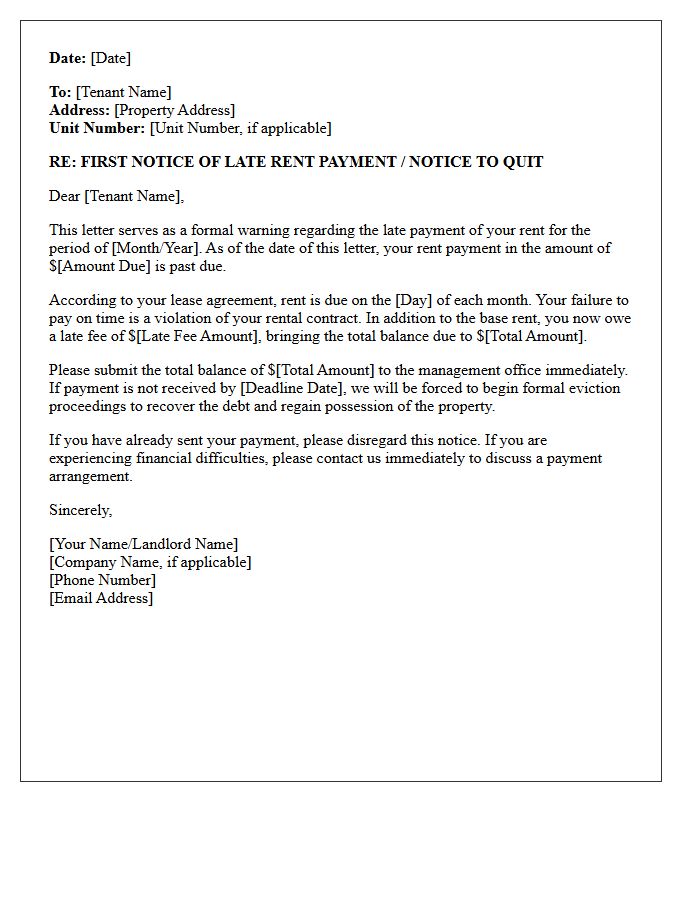
A first warning eviction letter serves as a formal notice to pay rent or vacate the premises. This legal document informs tenants that their payment is overdue, outlining the specific amount owed and a deadline for compliance. It is a crucial preliminary step in the legal eviction process, ensuring transparency and providing a final opportunity to resolve the debt. To protect your rights, always verify local housing laws, as specific notice periods and delivery methods are mandatory for the letter to be considered valid in court.
Notice of Eviction Letter for Chronic Late Rent
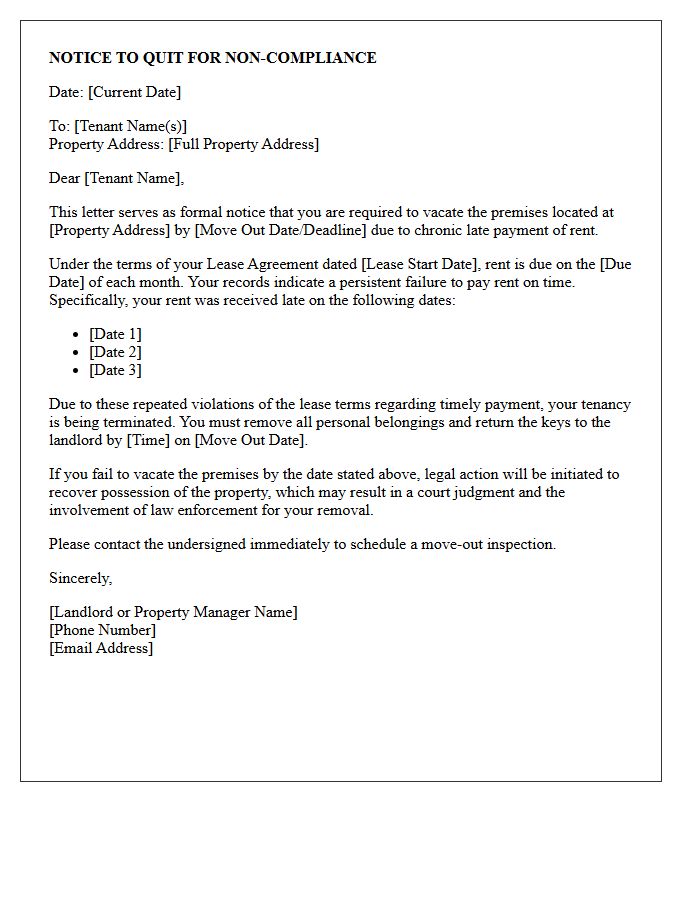
A Notice of Eviction Letter for chronic late rent is a formal legal document notifying a tenant of lease termination due to persistent payment delays. Unlike a standard "pay or quit" notice, this letter emphasizes a habitual breach of contract, often documented through repeated late fees. Landlords must ensure the notice complies with local housing laws regarding the required notice period. It serves as essential evidence for legal proceedings, proving the tenant received fair warning before an eviction lawsuit is filed in court for non-compliance.
Repeated Late Payment Eviction Notice Letter
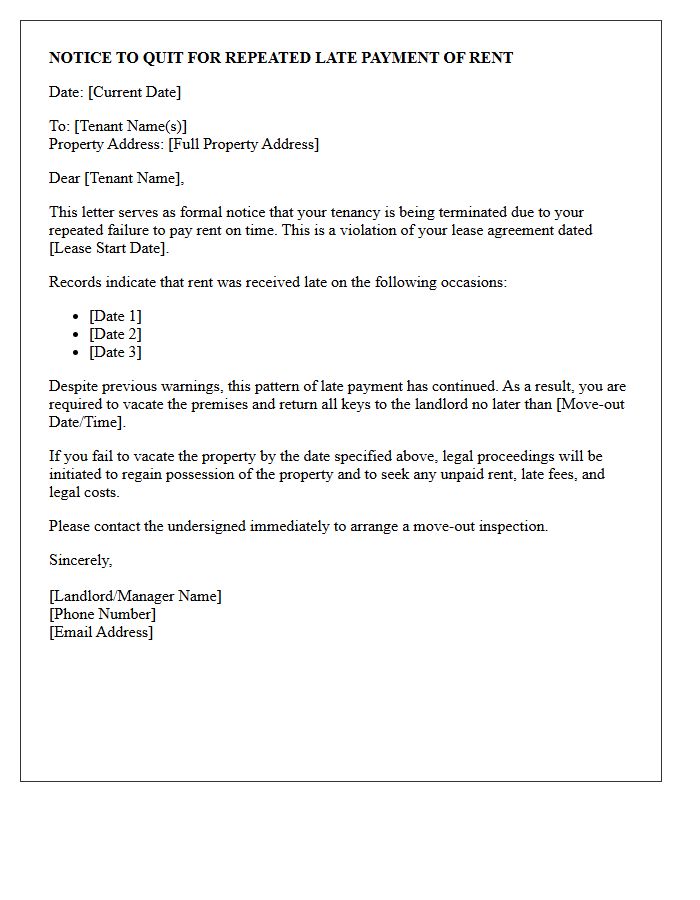
A Repeated Late Payment Eviction Notice is a formal legal document issued to tenants who habitually fail to pay rent on time. Unlike a standard notice to quit, this letter addresses chronic delinquency, often allowing landlords to terminate a lease even if the current balance is paid. It serves as critical legal evidence of a lease violation during court proceedings. Tenants receiving this notice should prioritize immediate communication or legal counsel, as frequent late payments undermine the rental agreement's integrity and provide statutory grounds for permanent removal from the property.
Final Eviction Letter for Habitual Late Payments
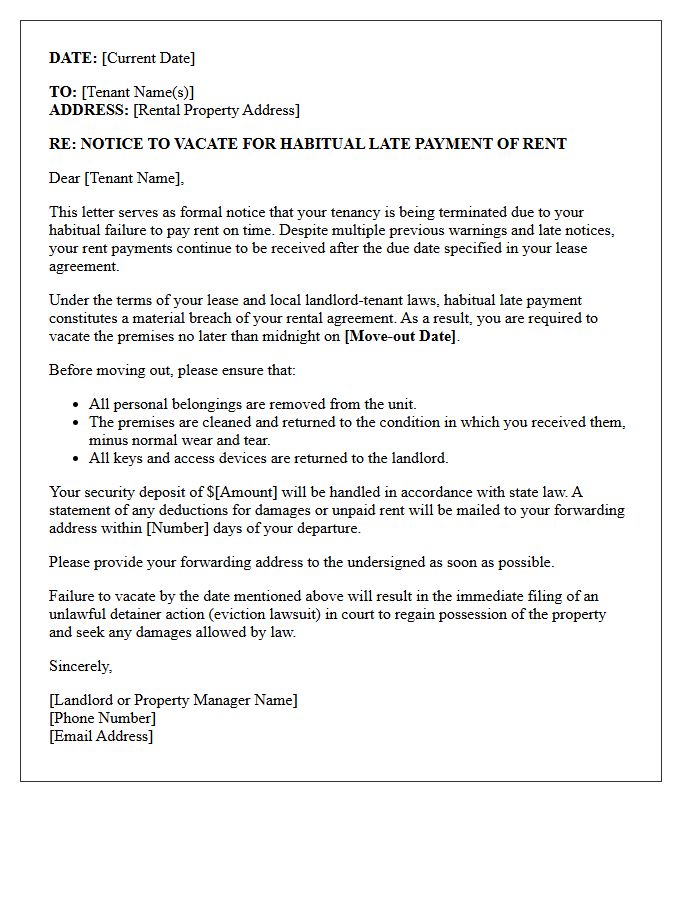
A final eviction letter for habitual late payments serves as a formal legal notice that the landlord is terminating the lease due to repeated non-compliance with rent deadlines. This document is crucial for establishing a paper trail in court, proving the tenant consistently failed to pay on time despite previous warnings. It must clearly state the total arrears, the specific lease violations, and a definitive move-out date. Proper delivery ensures the landlord meets legal requirements to regain possession of the property through an official eviction filing.
Property Management Letter of Eviction for Unpaid Rent
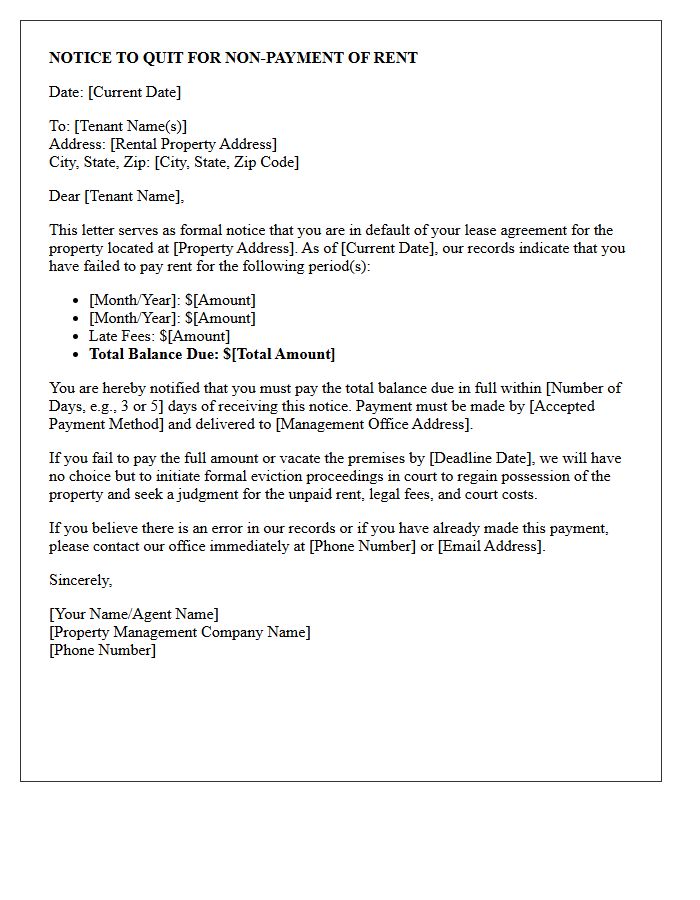
A property management letter of eviction for unpaid rent is a formal legal notice sent to tenants who breach their lease agreement. This document, often called a Pay or Quit notice, serves as the initial step in the eviction process. It must clearly state the total outstanding balance and provide a specific deadline for payment. Accuracy is vital; any errors in the notice period or debt calculation can lead to legal delays. Proper delivery ensures the landlord's right to regain possession of the property through judicial proceedings if the debt remains unpaid.
Lease Termination Letter for Repeated Late Payments
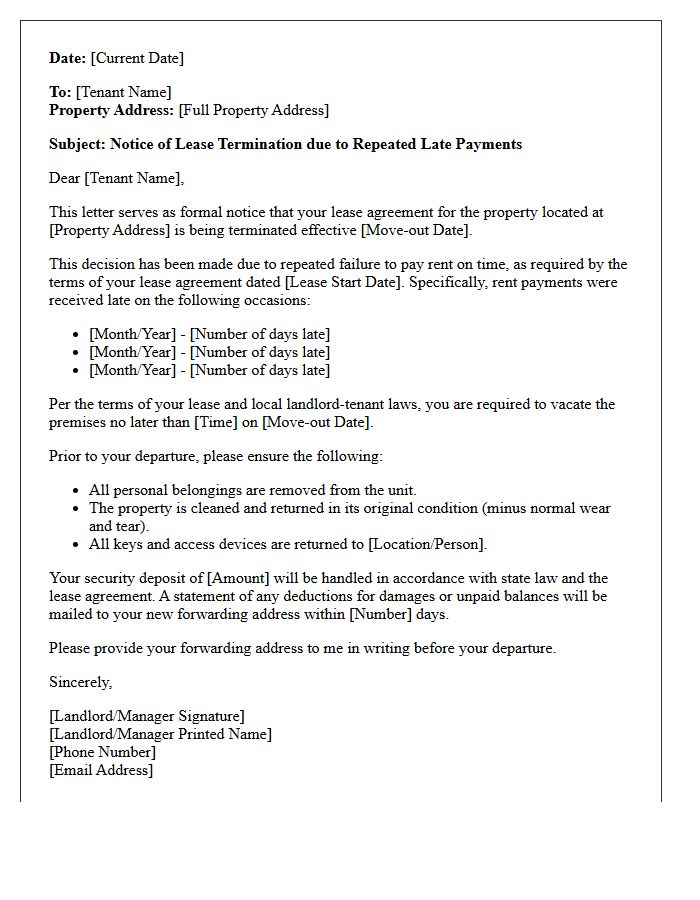
A lease termination letter for repeated late payments is a formal notice sent by a landlord to end a rental agreement due to chronic delinquency. This document must clearly state the specific lease violations, citing dates of missed deadlines and previous warnings. To be legally binding, it must adhere to local eviction laws and provide the required notice period. Explicitly outlining the grounds for termination ensures transparency and serves as vital evidence if legal proceedings or formal eviction filings become necessary to regain possession of the property.
Official Eviction Letter for Consecutive Late Rent
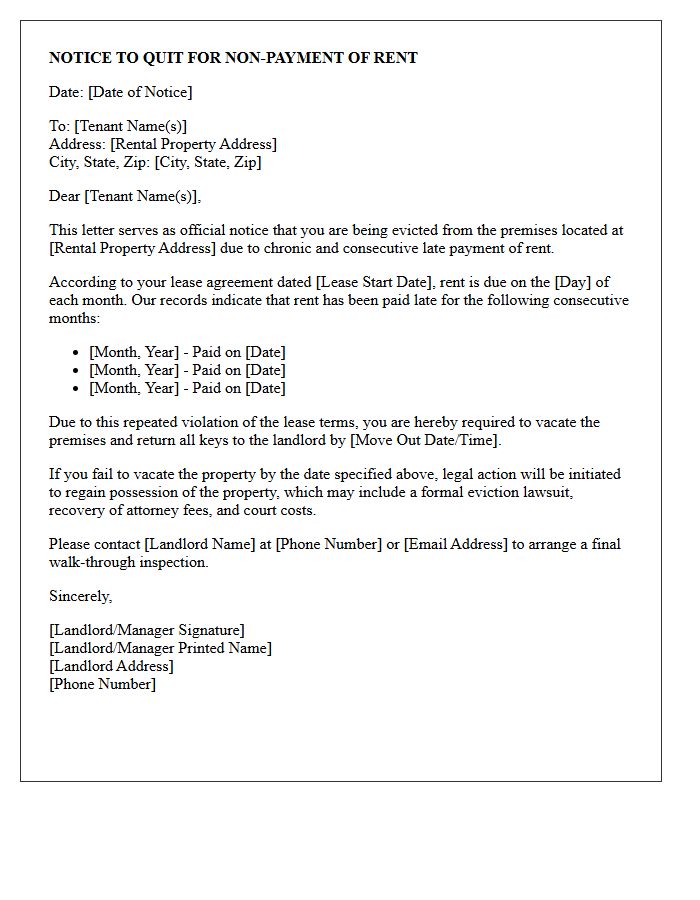
An Official Eviction Letter for consecutive late rent serves as a formal notice to quit, informing tenants of lease termination due to chronic payment delays. This legal document must clearly state the total overdue balance, specific late dates, and a deadline to vacate or cure the debt. Proper delivery is essential to satisfy local housing laws and provide evidence for future court proceedings. Landlords should ensure the notice adheres to state-specific statutes to remain legally enforceable and valid during an unlawful detainer lawsuit.
Notice to Quit Letter for Repeated Late Payments
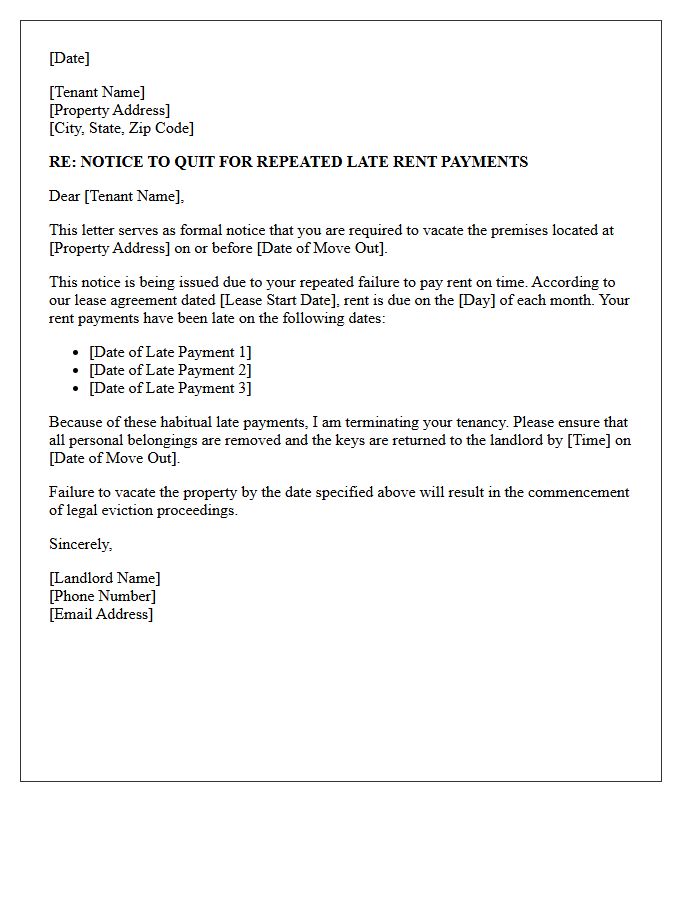
A Notice to Quit Letter for repeated late payments is a formal legal document issued by a landlord to a tenant who habitually fails to pay rent on time. This notice serves as a final warning or an eviction filing prerequisite, depending on local jurisdictional laws. It outlines the specific instances of non-compliance and establishes a deadline for the tenant to vacate the premises. Providing written proof of chronic delinquency is essential for protecting property rights and ensuring a successful legal transition or lease termination process.
Landlord Eviction Letter Due to Chronic Late Payments
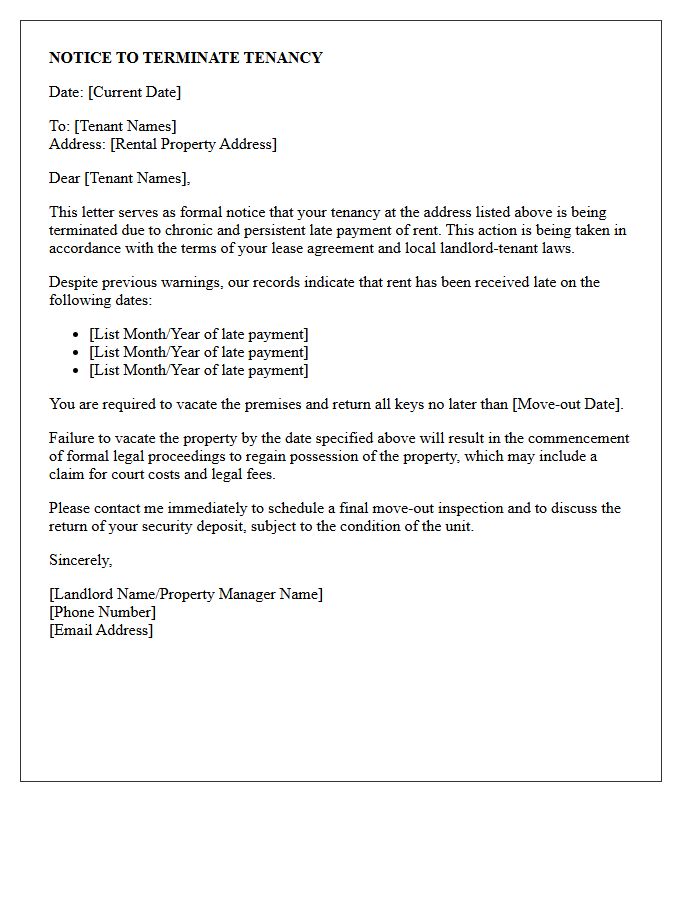
A landlord eviction letter due to chronic late payments serves as a formal legal notice to terminate a lease. It must clearly document the pattern of delinquent rent history to justify the action. Property owners must ensure the notice complies with local housing laws and includes the specific termination date. Providing accurate records of past due dates and unpaid balances is essential for a successful legal filing. Always deliver the notice via certified mail to maintain a verifiable paper trail for potential court proceedings regarding the tenant's repeated failure to pay on time.
Breach of Lease Eviction Letter for Late Payments
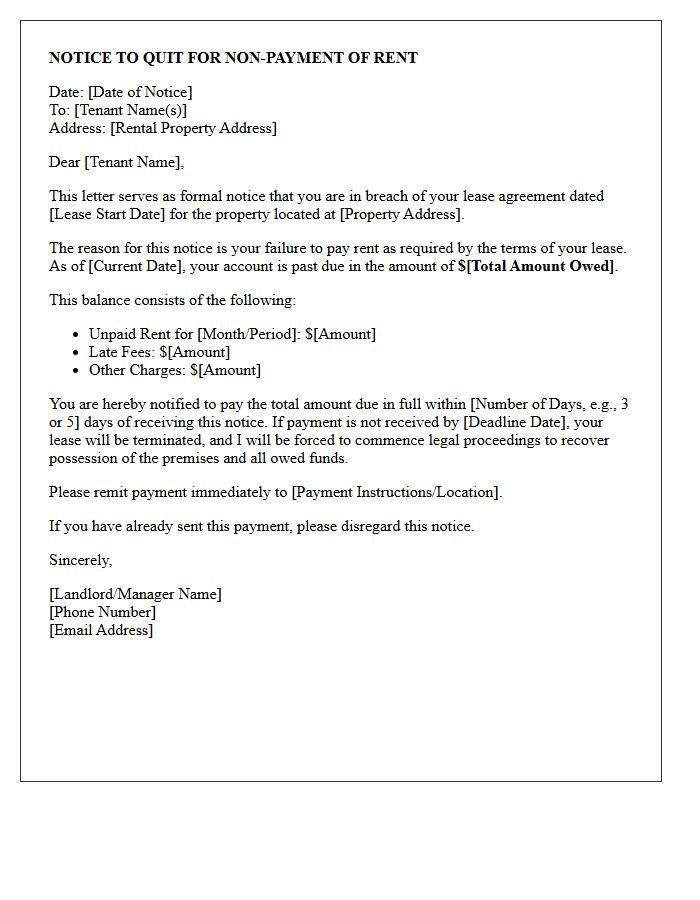
A Breach of Lease Eviction Letter is a formal legal notice issued when a tenant fails to pay rent on time. This document serves as an official demand, outlining the specific amount owed and providing a mandatory grace period to remedy the debt. It is the essential first step in the legal eviction process, ensuring landlords comply with local housing laws. If the tenant fails to pay within the specified timeframe, the landlord gains the legal right to terminate the rental agreement and pursue possession of the property through court action.
Demand for Possession Letter for Repeated Late Rent
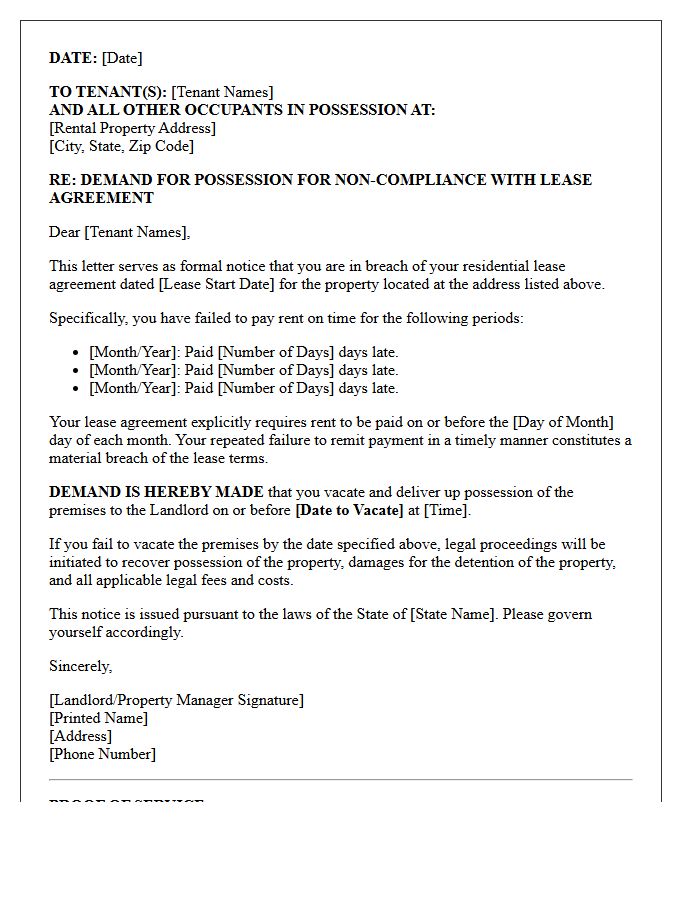
A Demand for Possession is a formal legal notice issued when a tenant chronically fails to pay rent on time. It serves as a final warning before an eviction lawsuit is filed. Landlords must specify the total overdue amount and provide a strict deadline for payment or vacancy. Following local statutory notice periods is critical to ensure the document remains legally valid in court. This letter documents the pattern of repeated late rent, establishing necessary evidence for a judge if the tenancy must be terminated for non-compliance.
Thirty-Day Eviction Letter for Recurring Late Payments
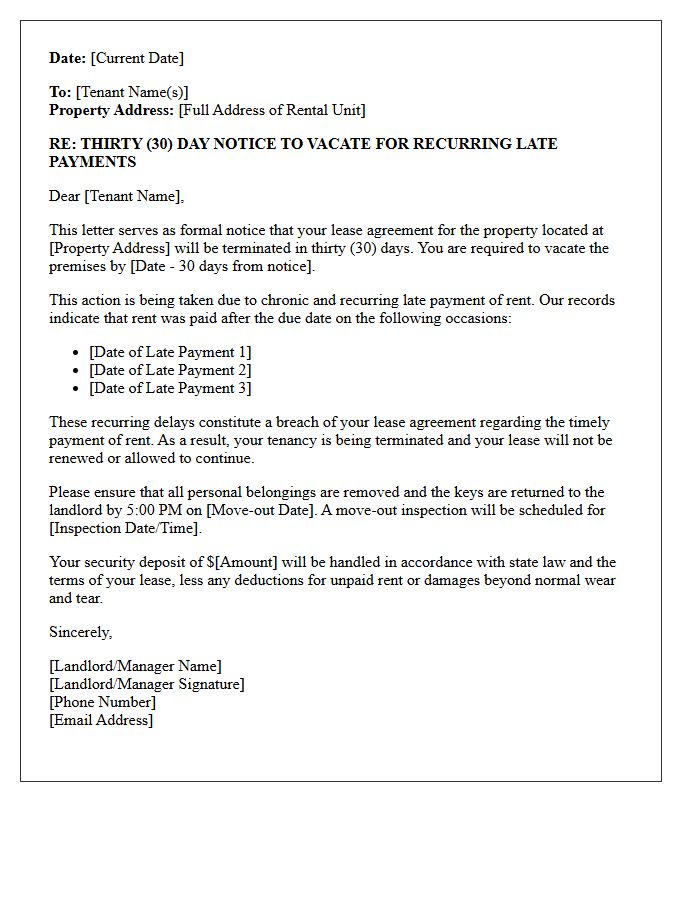
A thirty-day eviction letter for recurring late payments serves as a formal notice to quit, terminating a tenancy due to chronic delinquency. Unlike a standard "pay or quit" notice, this document addresses a persistent breach of contract, meaning the landlord may not be required to offer a chance to remedy the debt. It provides the legal timeline for a tenant to vacate the property. Landlords must ensure the notice strictly adheres to state laws and local regulations to remain valid during potential court proceedings and formal eviction filings.
What is a Notice of Eviction for Repeated Late Payments?
A Notice of Eviction for Repeated Late Payments is a formal legal document issued by a landlord to a tenant who consistently fails to pay rent on time. Unlike a standard "pay or quit" notice, this notice often serves as a termination of tenancy due to a chronic breach of the lease agreement regarding payment schedules.
How many late payments justify an eviction notice?
The number of late payments required to trigger an eviction depends on local state laws and the specific terms of the lease agreement. Generally, three or more instances of late payment within a 12-month period are legally recognized as "habitual late payment," providing the landlord grounds to terminate the lease.
Can I stop an eviction by paying the overdue rent?
In cases of repeated late payments, a landlord may issue an "unconditional quit notice," which does not give the tenant the option to stay by paying the balance. Whether you can cure the default depends on whether the notice is "curable" (giving you a chance to pay) or "incurable" (requiring you to vacate due to repeated violations).
What are the legal requirements for a valid eviction notice for late rent?
To be legally enforceable, the notice must be in writing, clearly state the reason for eviction (chronic delinquency), include the date the tenant must vacate, and be served according to state-specific service of process laws. Failure to follow these procedural requirements can result in the eviction case being dismissed in court.
Does a late payment eviction stay on my rental record?
Yes, if a landlord files an eviction lawsuit in court (an Unlawful Detainer action) due to repeated late payments, it becomes a matter of public record. This record can be flagged during future tenant screenings and background checks, significantly impacting your ability to secure housing in the future.


Comments