
A Notice of Intent to File for Eviction is a critical legal document informing tenants of overdue rent and pending legal action. This formal warning serves as a final opportunity for residents to settle debts before formal court proceedings begin. Clear documentation ensures compliance with local housing laws and protects landlord rights. To simplify this process, below are some ready to use template.
Image cover: Professional Notice of Intent to Evict for Nonpayment: Templates and Legal Guidance
Letter Samples List
- Notice of Intent to File for Eviction Due to Nonpayment Letter
- Final Warning and Intent to Evict for Unpaid Rent Letter
- Property Management Notice of Intent to Evict Letter
- Pre-Eviction Intent to File for Nonpayment Letter
- Notice of Intent to Initiate Eviction Proceedings Letter
- Delinquent Rent Notice of Intent to Evict Letter
- Formal Intent to File Eviction for Outstanding Balance Letter
- Notice of Pending Eviction Filing for Nonpayment Letter
- Tenant Warning and Intent to File Eviction Letter
- Intent to Terminate Lease and File Eviction Letter
- Past Due Rent Eviction Intent Notification Letter
- Notice of Intent to Pursue Legal Eviction Action Letter
Notice of Intent to File for Eviction Due to Nonpayment Letter
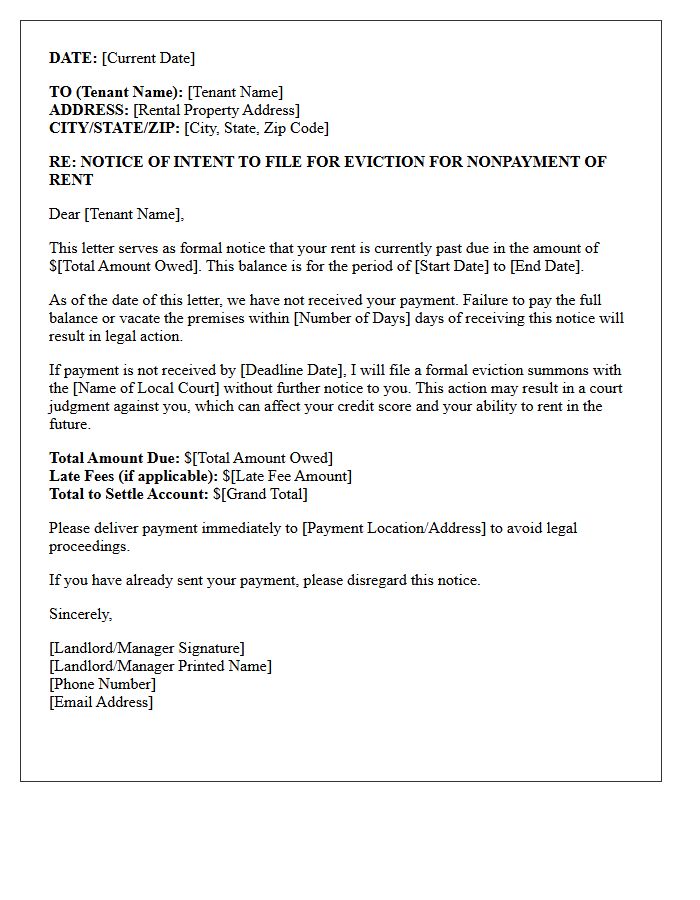
A Notice of Intent to File for Eviction is a formal legal document sent by a landlord to a tenant regarding unpaid rent. It serves as a final warning, informing the occupant that they must pay the outstanding balance or vacate the premises by a specific deadline. Providing this notice is often a mandatory legal requirement before a landlord can initiate legal proceedings in court. It protects the rights of both parties by offering a clear remedy period to resolve the delinquency and avoid a permanent eviction record.
Final Warning and Intent to Evict for Unpaid Rent Letter
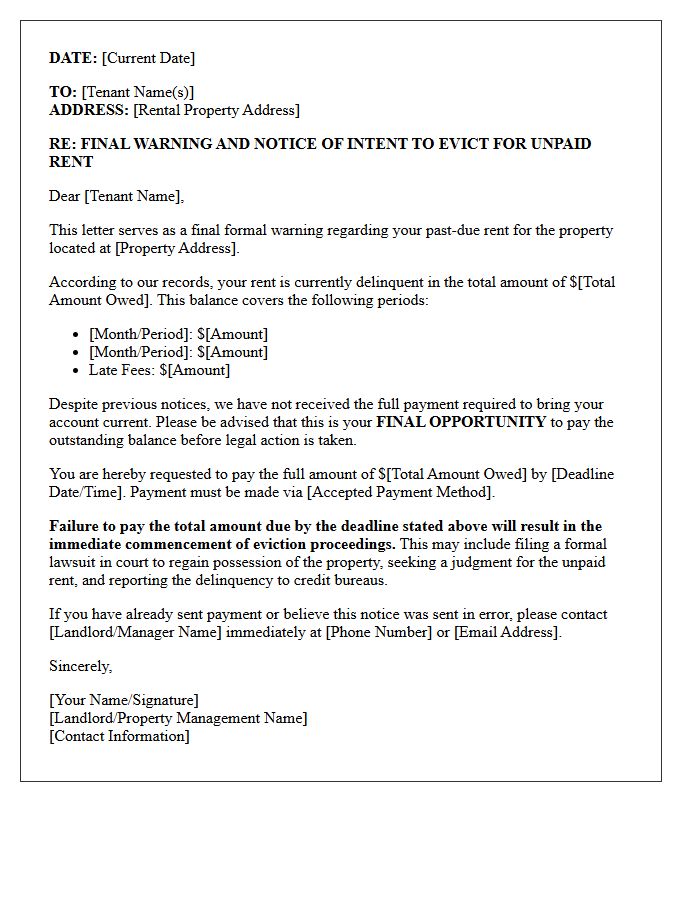
A final warning and intent to evict serves as a critical legal notice issued to tenants for unpaid rent. This formal document outlines the exact amount owed and provides a strict deadline for payment to avoid further action. It functions as a mandatory precursor to eviction proceedings, demonstrating the landlord's intent to regain possession through the court system. To protect your rights, ensure the letter adheres to local housing laws and clearly specifies the consequences of continued non-payment. Receiving this notice signifies the final opportunity to resolve the delinquency before a formal lawsuit is filed.
Property Management Notice of Intent to Evict Letter
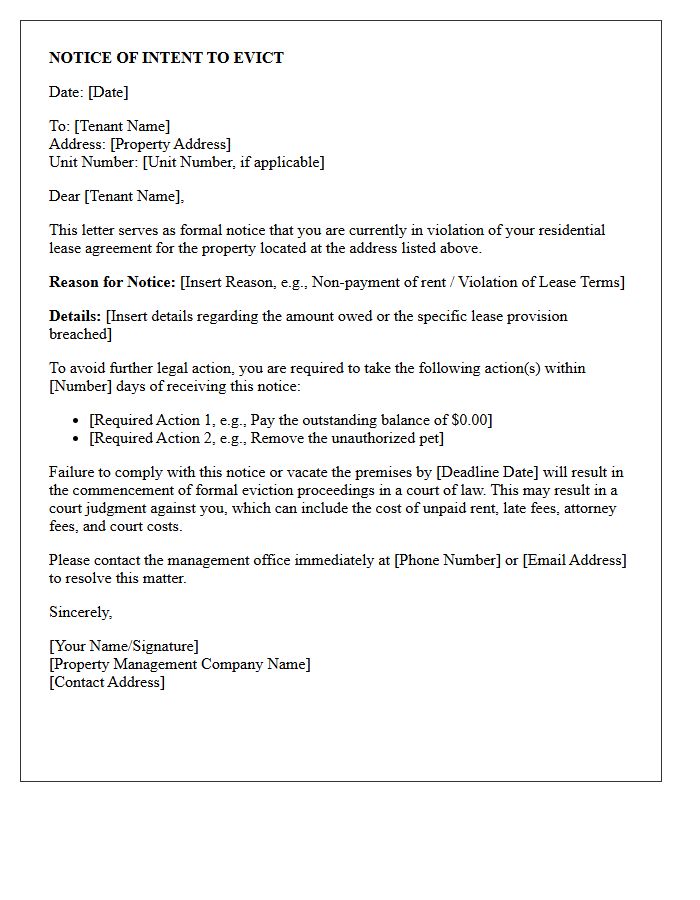
A Notice of Intent to Evict is a formal legal document issued by a property manager to inform a tenant of lease violations. This pre-eviction notice typically serves as a final warning, providing a specific timeframe to remedy issues like unpaid rent or behavioral breaches. It is the essential first step in the legal eviction process, ensuring compliance with local housing laws. Receiving this letter allows tenants a cure period to resolve the conflict before the landlord files a formal case in court to regain possession of the property.
Pre-Eviction Intent to File for Nonpayment Letter
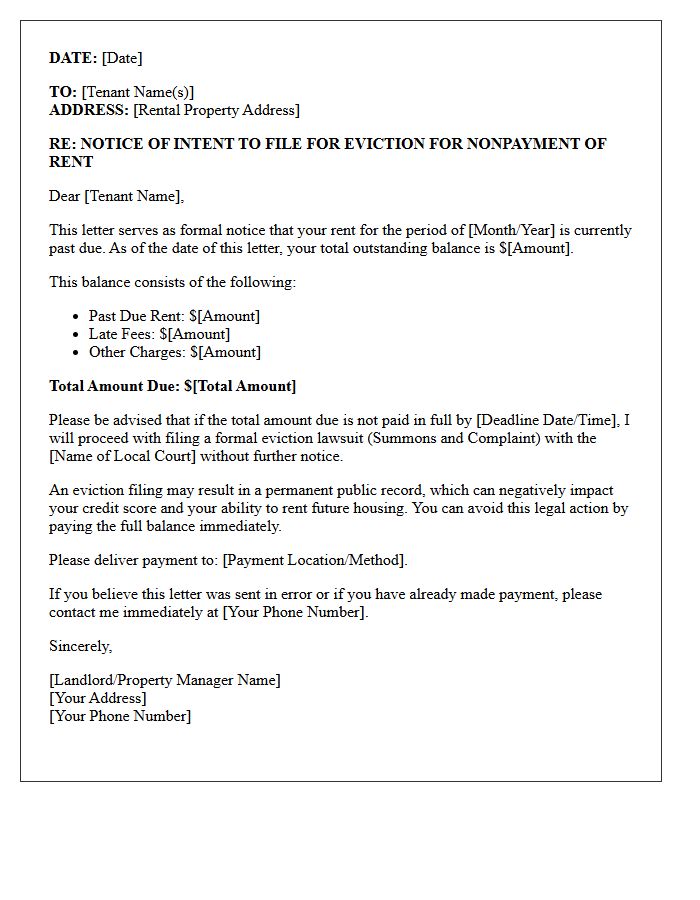
A Pre-Eviction Intent to File for Nonpayment Letter serves as a formal warning to tenants before legal action begins. This critical document notifies the occupant of overdue rent and provides a specific deadline to settle the balance. Issuing this notice is often a mandatory legal step required by local housing laws to establish a paper trail. By clearly outlining the amount owed and the consequences of noncompliance, landlords offer a final opportunity to resolve the debt through payment or a settlement agreement, potentially avoiding a costly and lengthy court eviction process.
Notice of Intent to Initiate Eviction Proceedings Letter
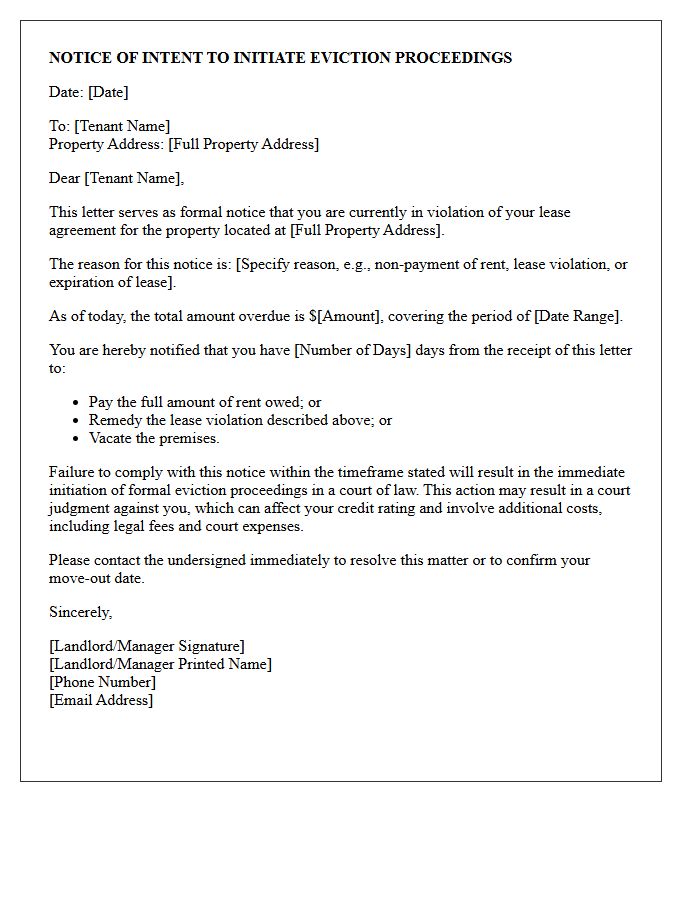
A Notice of Intent to Initiate Eviction Proceedings is a formal legal document notifying a tenant of a lease violation. It serves as a final warning before a landlord files a lawsuit in court. Common reasons include nonpayment of rent or property damage. This letter must specify the exact breach and provide a mandatory notice period for the tenant to cure the issue or vacate the premises. Accuracy is vital, as any errors in the document can lead to the dismissal of future legal actions and delay the recovery of the property.
Delinquent Rent Notice of Intent to Evict Letter
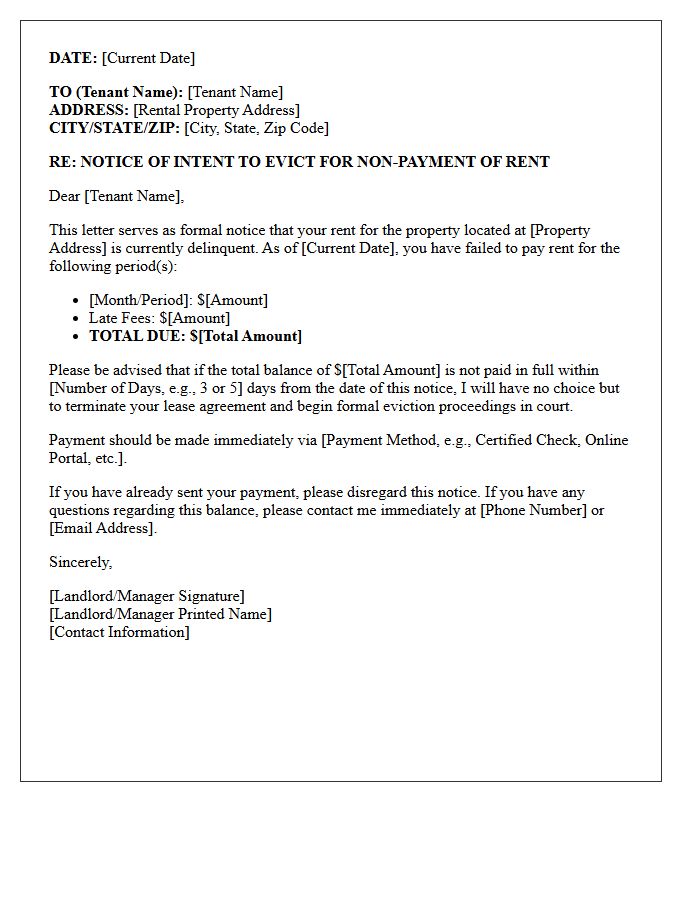
A Delinquent Rent Notice of Intent to Evict is a formal legal document notifying a tenant of overdue payments. This eviction notice serves as a final warning before a landlord initiates court proceedings. It must clearly state the total amount owed, the deadline for payment, and the specific actions required to avoid lease termination. Accuracy is vital, as any errors in dates or financial figures can delay the legal process. This letter is a critical prerequisite in most jurisdictions to protect the rights of both parties during property disputes.
Formal Intent to File Eviction for Outstanding Balance Letter
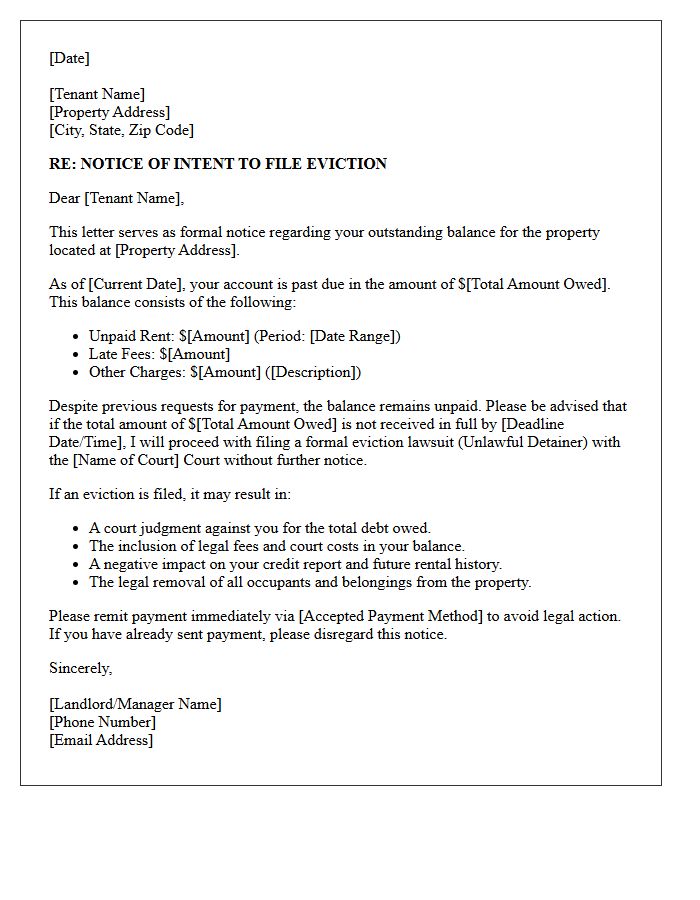
A formal intent to file eviction is a legal notice issued by a landlord to a tenant for unpaid rent. This document serves as a final warning, detailing the total outstanding balance and providing a specific deadline for payment. It is a critical step in the eviction process required by law before a case can be filed in court. Receiving this letter means the landlord is prepared to terminate the lease agreement unless the debt is settled immediately. Clear documentation of this notice is essential for any subsequent judicial proceedings.
Notice of Pending Eviction Filing for Nonpayment Letter
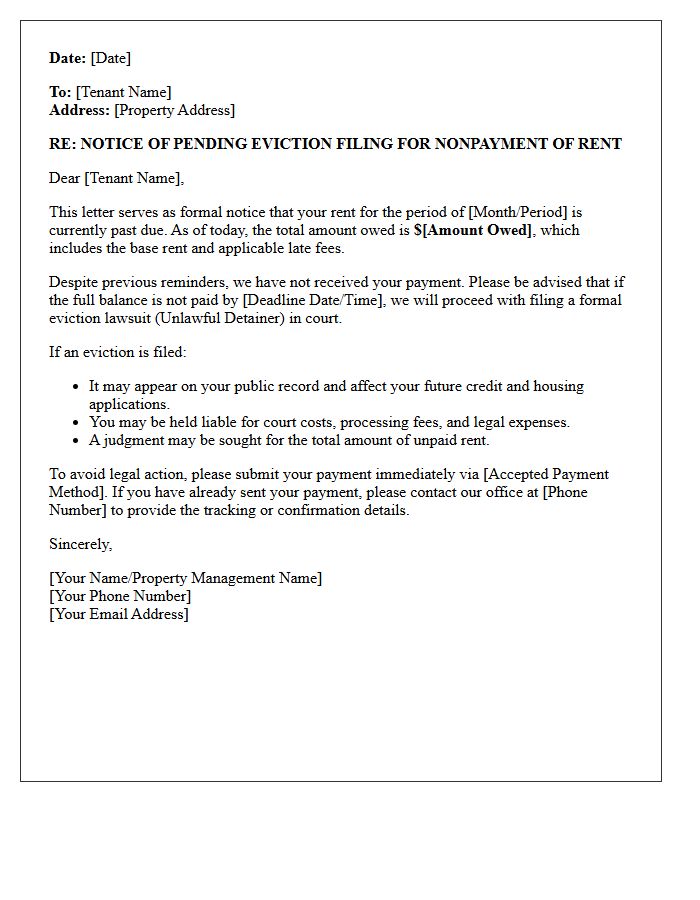
A Notice of Pending Eviction Filing is a critical legal warning issued when a tenant fails to pay rent. This formal communication serves as a final opportunity to resolve the debt before a landlord initiates a lawsuit. It typically specifies the total amount owed and provides a mandatory notice period to pay or vacate. Ignoring this letter can lead to an official court filing, which permanently impacts your credit score and future housing eligibility. Always seek legal advice or rental assistance immediately upon receipt to prevent an active eviction record.
Tenant Warning and Intent to File Eviction Letter
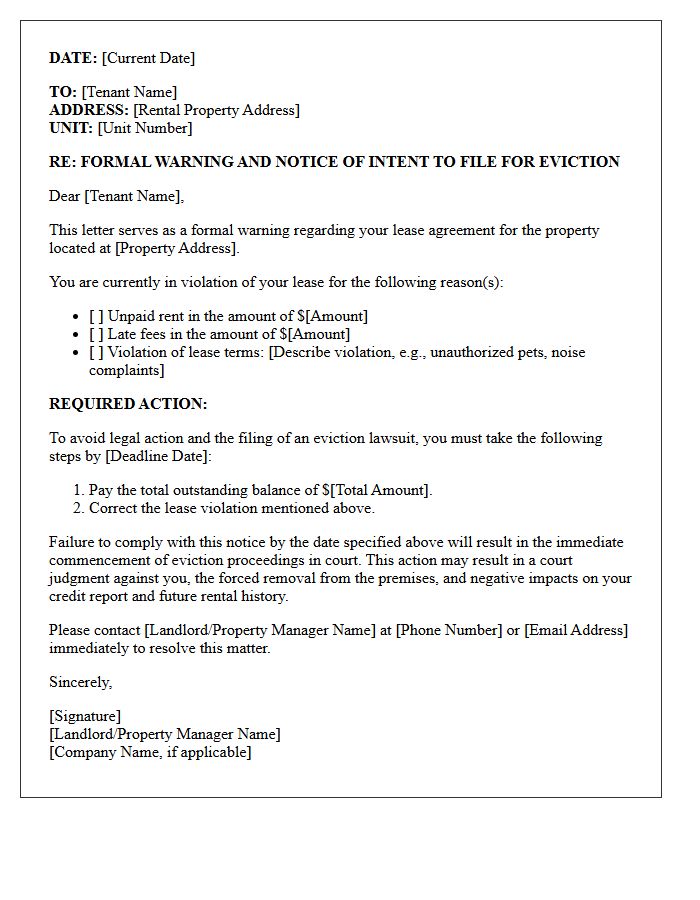
A Tenant Warning and Intent to File Eviction Letter serves as a formal notice that a lease violation or non-payment must be resolved immediately. This legal prerequisite informs the occupant of specific breaches and provides a strict deadline for compliance to avoid court action. Sending this document is a critical step in the eviction process, ensuring landlords adhere to local housing laws while providing tenants a final opportunity to remedy the situation before formal litigation begins. Proper documentation of this notice is essential for any future judicial proceedings.
Intent to Terminate Lease and File Eviction Letter
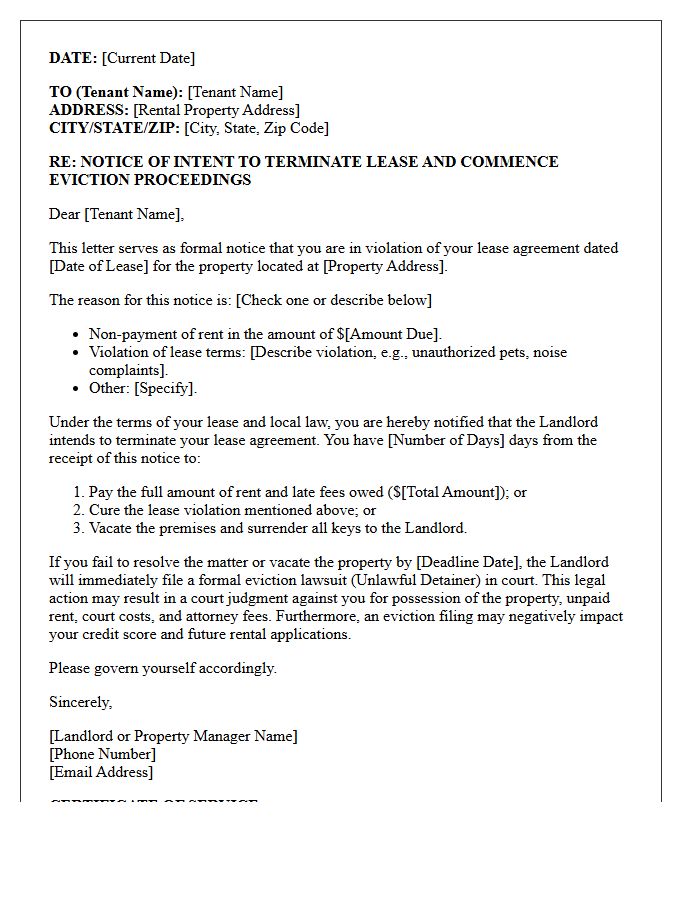
An Intent to Terminate Lease and File Eviction Letter serves as a formal legal notice from a landlord to a tenant. It explicitly states that the rental agreement will end due to lease violations or non-payment of rent. This document is a mandatory preliminary step before initiating formal court proceedings. It provides the tenant a final opportunity to remedy the breach or vacate the premises. Accuracy in dates, specific causes, and compliance with local eviction laws are essential to ensure the notice is legally enforceable during future litigation.
Past Due Rent Eviction Intent Notification Letter
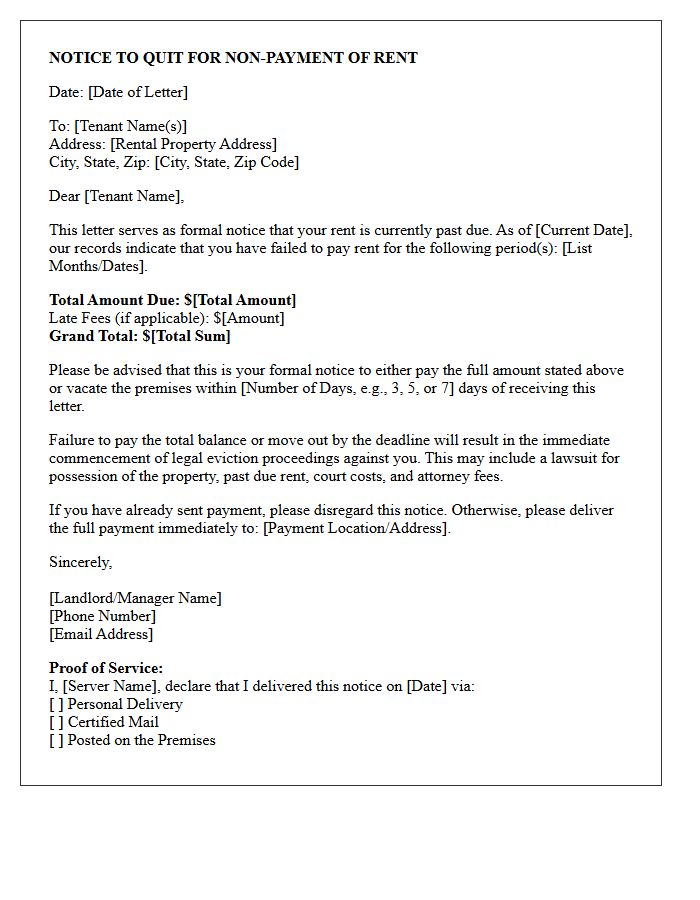
A Past Due Rent Eviction Intent Notification Letter is a formal legal document issued by a landlord when a tenant fails to pay rent. It serves as a final notice before legal action begins. This notice must clearly state the total amount owed and provide a specific deadline for payment to avoid eviction. Receiving this letter marks a critical period where the tenant can resolve the debt or negotiate a payment plan. Understanding this document is essential for protecting tenant rights and maintaining a clear legal record for potential court proceedings.
Notice of Intent to Pursue Legal Eviction Action Letter
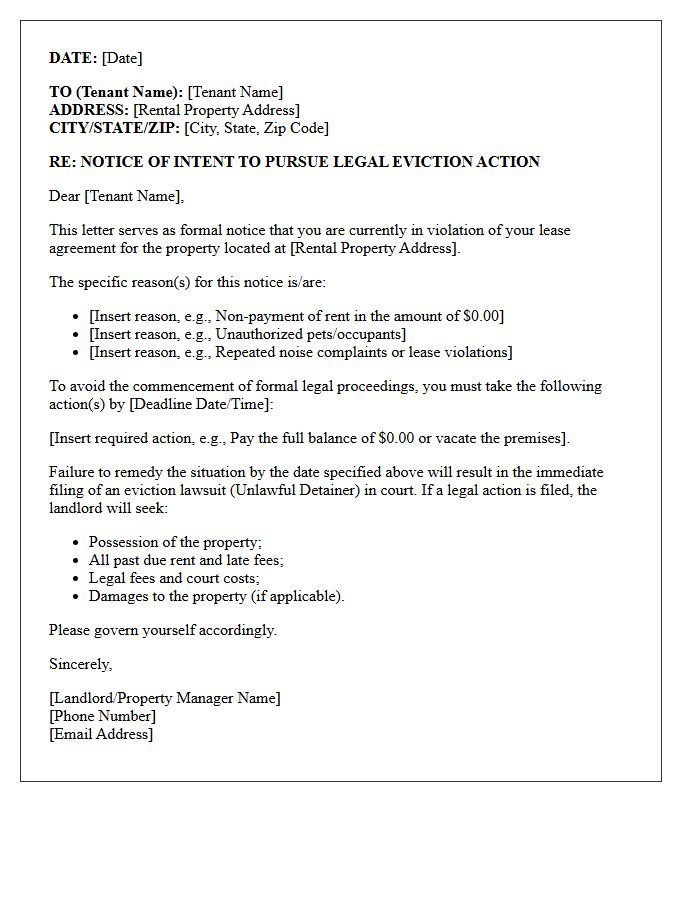
A Notice of Intent to Pursue Legal Eviction Action is a formal warning issued by a landlord to a tenant regarding lease violations or unpaid rent. This document serves as a pre-legal requirement, granting the tenant a final opportunity to remedy the breach before a lawsuit is filed in court. It must clearly outline the specific cause for eviction and the deadline for compliance. Receiving this letter is a critical stage in the eviction process, as failure to act typically results in a formal summons and permanent legal record.
What is a Notice of Intent to File for Eviction for nonpayment?
A Notice of Intent to File for Eviction is a formal written warning sent by a landlord to a tenant stating that legal action will be initiated if delinquent rent is not paid by a specific deadline. It serves as a final opportunity for the tenant to resolve the debt before a formal eviction lawsuit is filed in court.
How many days notice is required before an eviction can be filed?
The notice period varies by state and local jurisdiction, typically ranging from 3 to 14 days. You must consult your local landlord-tenant laws or the terms of your lease agreement to ensure the "Pay Rent or Quit" period complies with statutory requirements.
What information must be included in a Notice of Intent to File for Eviction?
To be legally valid, the notice should include the total amount of past-due rent, any applicable late fees, the deadline for payment, the specific property address, and a clear statement that failure to pay will result in legal proceedings and a request for possession of the property.
Can a tenant stop the eviction process by paying after receiving the notice?
Yes, in most jurisdictions, if the tenant pays the full amount demanded within the timeframe specified in the Notice of Intent, the landlord is legally required to accept the payment and cannot proceed with the eviction for that specific instance of nonpayment.
Does a Notice of Intent to File for Eviction count as an official court order?
No, a Notice of Intent is not a court order and does not give a landlord the right to physically remove a tenant or their belongings. It is a pre-litigation requirement; only a judge can issue a final Judgment for Possession or Writ of Restitution following a formal court hearing.


Comments