
Ending a long-term rental agreement requires strict legal compliance to ensure a smooth transition. A Ninety-Day Notice to Terminate Long-Term Tenancy is the standard requirement in many jurisdictions for leases exceeding one year. This formal document protects both parties by providing sufficient time for relocation and property inspections. To simplify your legal obligations, below are some ready to use template.
Image cover: Official Ninety-Day Notice Templates for Ending Long-Term Tenancies
Letter Samples List
- Standard Ninety-Day Notice To Terminate Long-Term Tenancy Letter
- Ninety-Day Lease Expiration And Tenancy Termination Notice Letter
- Month-To-Month Long-Term Tenancy Ninety-Day Termination Letter
- Owner Move-In Ninety-Day Tenancy Termination Notice Letter
- Property Sale Ninety-Day Notice To Terminate Tenancy Letter
- Major Renovation Ninety-Day Long-Term Tenancy Termination Letter
- No-Fault Ninety-Day Notice To Terminate Long-Term Tenancy Letter
- Withdrawal From Rental Market Ninety-Day Termination Letter
- Ninety-Day Notice Of Non-Renewal And Tenancy Termination Letter
- Unconditional Ninety-Day Notice To Terminate Long-Term Tenancy Letter
- Property Demolition Ninety-Day Tenancy Termination Notice Letter
- Property Use Conversion Ninety-Day Tenancy Termination Letter
Standard Ninety-Day Notice To Terminate Long-Term Tenancy Letter
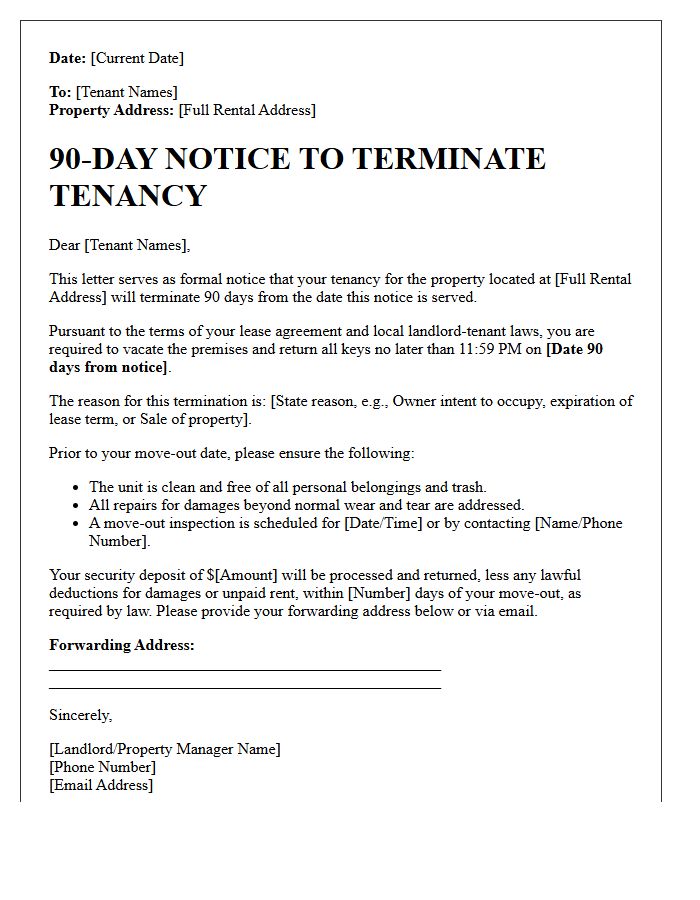
A Standard Ninety-Day Notice To Terminate Long-Term Tenancy Letter is a formal legal document used by landlords to end a residential lease that has lasted for over one year. Providing proper notice is a mandatory requirement to ensure the termination is legally enforceable. This letter must clearly state the final move-out date and comply with local landlord-tenant laws regarding delivery methods. Failure to provide the full ninety-day period or including inaccurate information can result in the dismissal of eviction proceedings and potential legal penalties for the property owner.
Ninety-Day Lease Expiration And Tenancy Termination Notice Letter
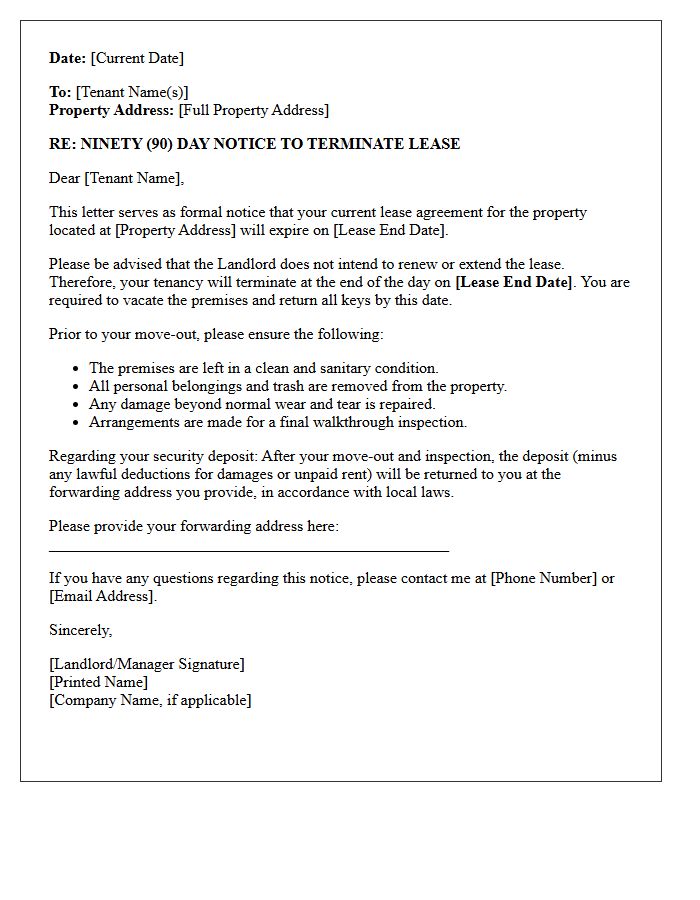
A Ninety-Day Lease Expiration and Tenancy Termination Notice Letter is a formal legal document used to end a rental agreement. Providing a ninety-day window ensures both parties have ample time to prepare for property transition. Landlords must include the specific move-out date, security deposit procedures, and inspection requirements to remain compliant with local housing laws. This extended notice period protects tenant rights while allowing owners to effectively manage turnover. Proper delivery of this written notice is essential to avoid automatic lease renewals or potential legal disputes regarding tenancy termination.
Month-To-Month Long-Term Tenancy Ninety-Day Termination Letter
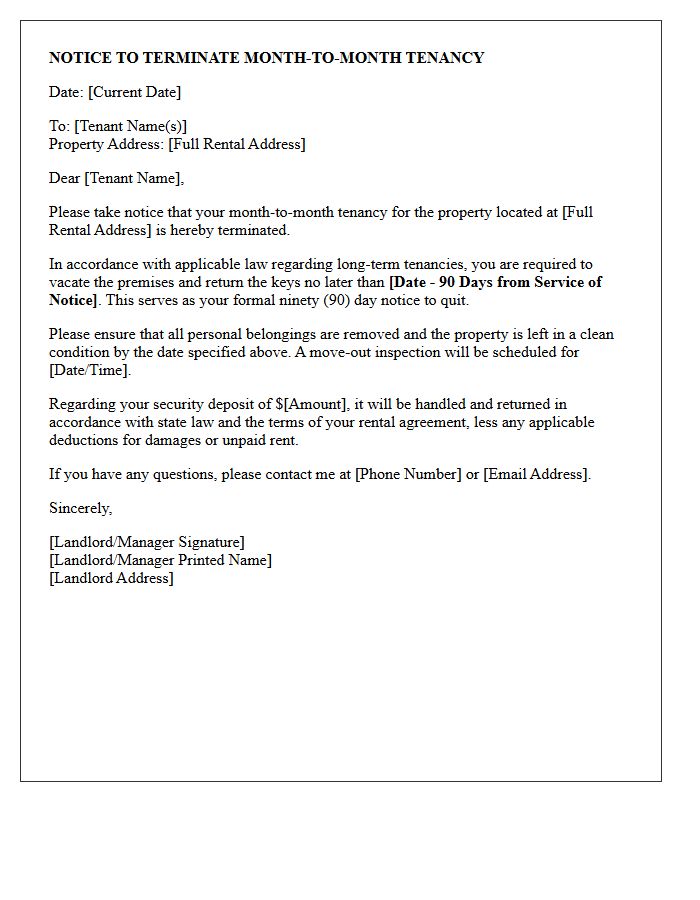
A Month-To-Month Long-Term Tenancy Ninety-Day Termination Letter is a formal legal notice used by landlords to end a rental agreement. In many jurisdictions, if a tenant has resided in a property for over one year, the law requires a longer notice period of ninety days rather than the standard thirty. This document must be served in writing, clearly stating the termination date and compliance with local tenant protection laws. Providing this extended timeframe ensures legal stability and allows occupants sufficient time to secure alternative housing during a long-term transition.
Owner Move-In Ninety-Day Tenancy Termination Notice Letter
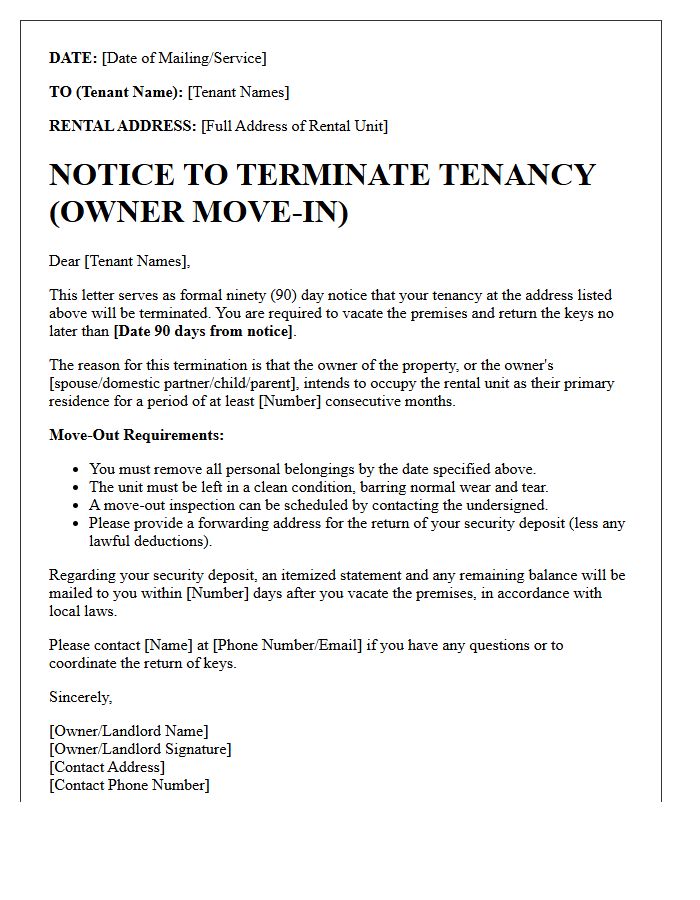
An Owner Move-In Ninety-Day Tenancy Termination Notice Letter is a legal document used by landlords to regain possession of a rental unit for their own use or for a close relative. To be valid, the owner must provide a 90-day notice period before the tenant is required to vacate. It is crucial to verify local just cause eviction laws, as many jurisdictions require specific language, proof of intent, and relocation assistance payments to the displaced tenant. Failure to follow strict procedural requirements can result in legal penalties or a voided notice.
Property Sale Ninety-Day Notice To Terminate Tenancy Letter
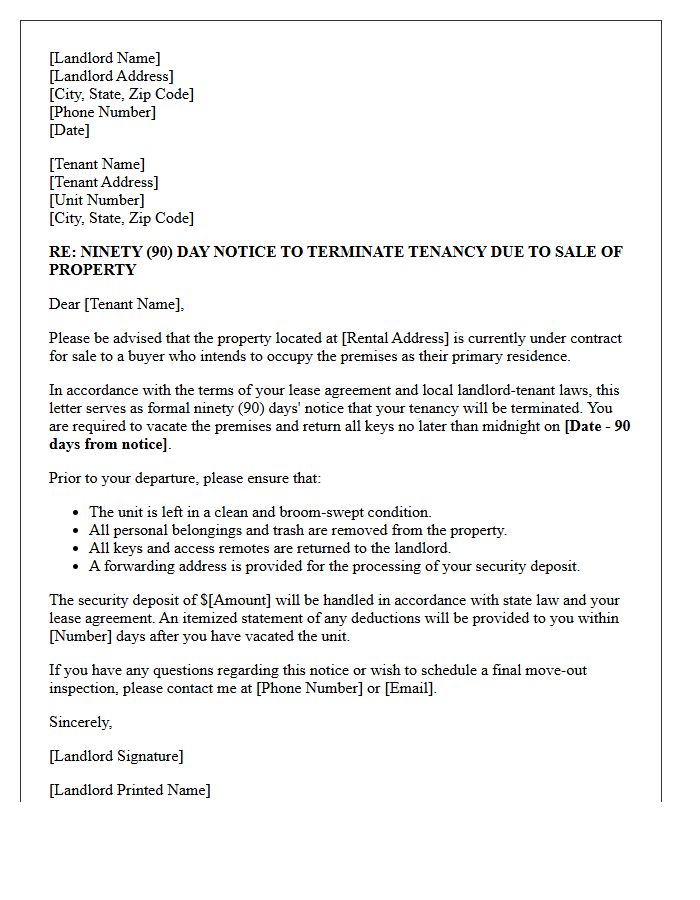
A Ninety-Day Notice To Terminate Tenancy is a legal document used by landlords to end a month-to-month lease due to a property sale. To be valid, the owner must have signed a contract with an independent buyer to sell the unit. This written notice provides tenants three months to vacate, ensuring a fair transition period. Compliance with local landlord-tenant laws is essential to ensure the document is enforceable. Proper service of this letter protects the rights of both parties during the real estate transaction process.
Major Renovation Ninety-Day Long-Term Tenancy Termination Letter
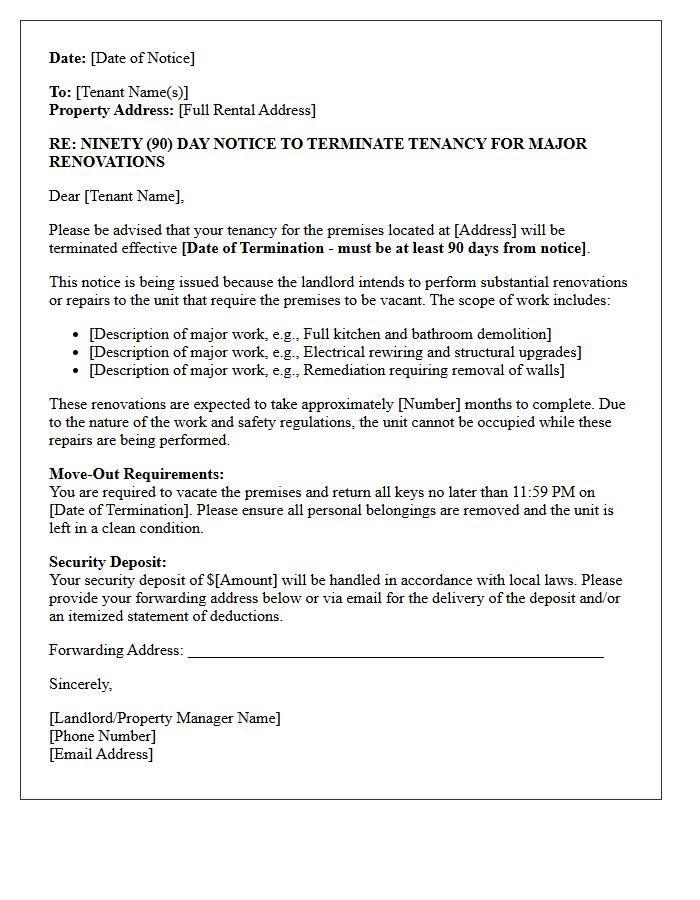
A Major Renovation Ninety-Day Long-Term Tenancy Termination Letter is a formal legal notice used by landlords to regain possession of a rental unit for substantial remodeling. This notice must provide a minimum ninety-day window before the move-out date. To be valid, the renovations must be extensive enough to require a building permit and necessitate the unit being vacant for safety or structural reasons. Landlords often must include proof of permits and may be required to pay relocation assistance to the tenant depending on local housing jurisdictions and rent control regulations.
No-Fault Ninety-Day Notice To Terminate Long-Term Tenancy Letter
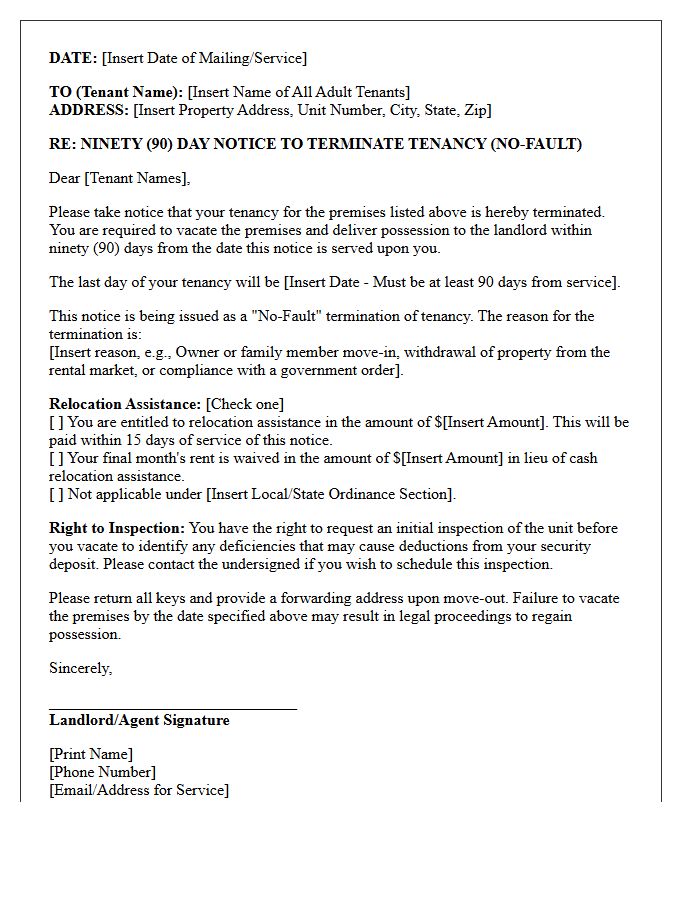
Under California law, a No-Fault Ninety-Day Notice to Terminate Long-Term Tenancy is mandatory for renters who have occupied a unit for at least one year. Landlords must provide a legal reason for removal, such as owner move-in or substantial renovations, as required by the Tenant Protection Act. This formal letter provides residents three months to relocate while ensuring compliance with just cause eviction protections. Failure to include specific statutory language or provide required relocation assistance can render the termination notice legally invalid in court.
Withdrawal From Rental Market Ninety-Day Termination Letter
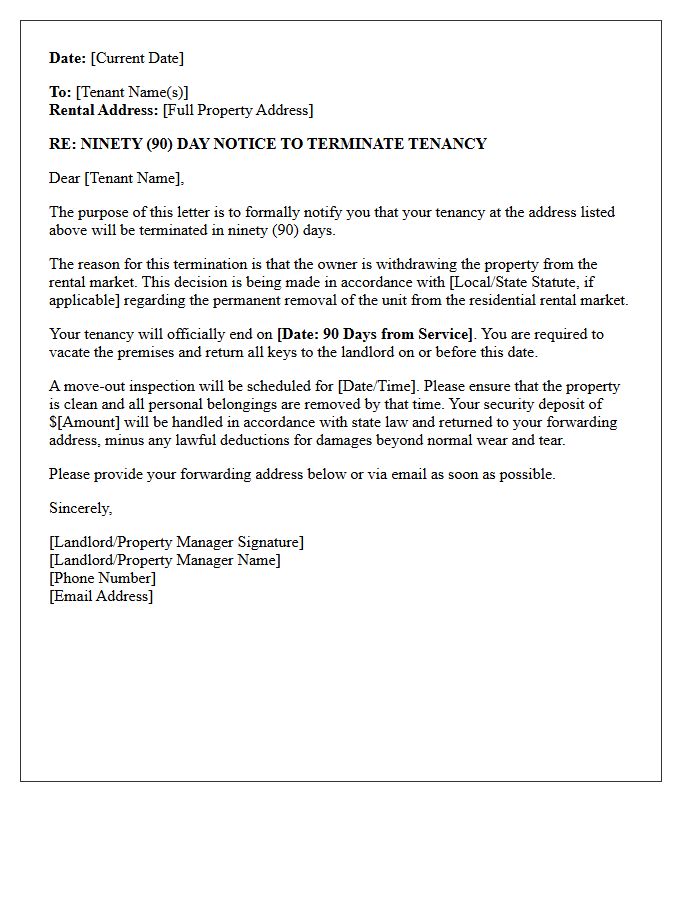
A Withdrawal From Rental Market Ninety-Day Termination Letter is a formal legal notice used by landlords to end a tenancy when permanently removing a property from the rental sector. Under specific local regulations like the Ellis Act, owners must provide tenants at least ninety days' notice to vacate. This document must clearly state the intent to withdraw the accommodations and comply with strict filing requirements. Failure to follow precise statutory procedures can invalidate the termination, potentially resulting in legal penalties or the inability to legally clear the unit for non-rental use.
Ninety-Day Notice Of Non-Renewal And Tenancy Termination Letter
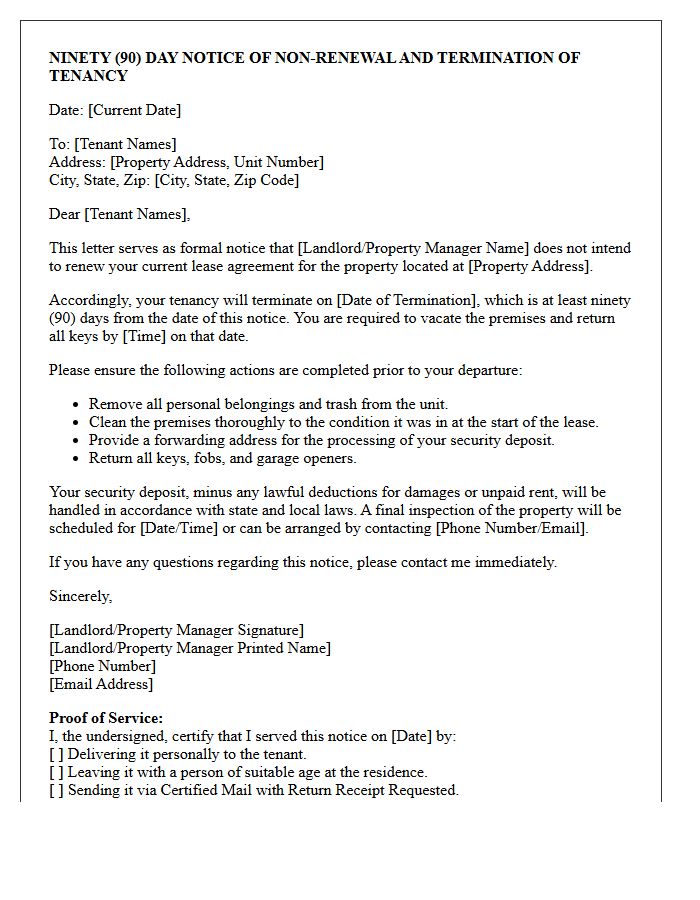
A Ninety-Day Notice Of Non-Renewal is a formal legal document used by landlords to terminate a lease agreement upon its expiration. Providing ninety days of lead time ensures compliance with specific state laws or local ordinances, granting tenants sufficient time to relocate. This written notice must clearly state the termination date and be delivered according to lease requirements. Failure to provide this timely communication may result in an automatic lease extension or legal penalties, making it essential for protecting the rights and obligations of both parties involved.
Unconditional Ninety-Day Notice To Terminate Long-Term Tenancy Letter
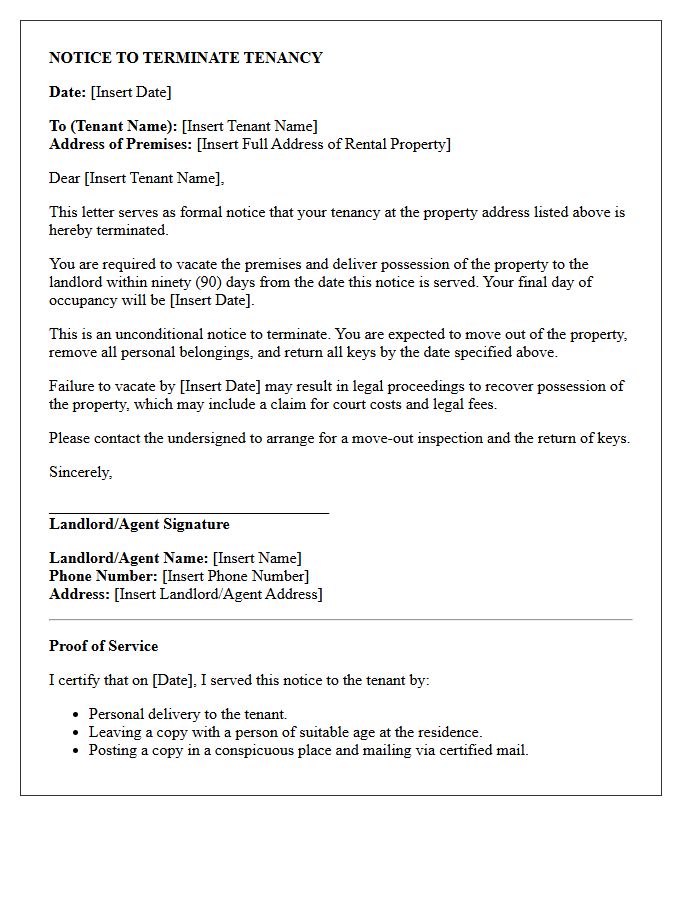
An Unconditional Ninety-Day Notice is a legal document used by landlords to terminate a long-term tenancy, typically when a tenant has resided in a property for over one year. Unlike conditional notices, this form does not provide an option to cure a lease violation. It serves as a formal notification that the rental agreement will end permanently after the ninety-day period. Landlords must strictly adhere to local eviction laws and notice requirements to ensure the document is legally binding and enforceable in court proceedings.
Property Demolition Ninety-Day Tenancy Termination Notice Letter
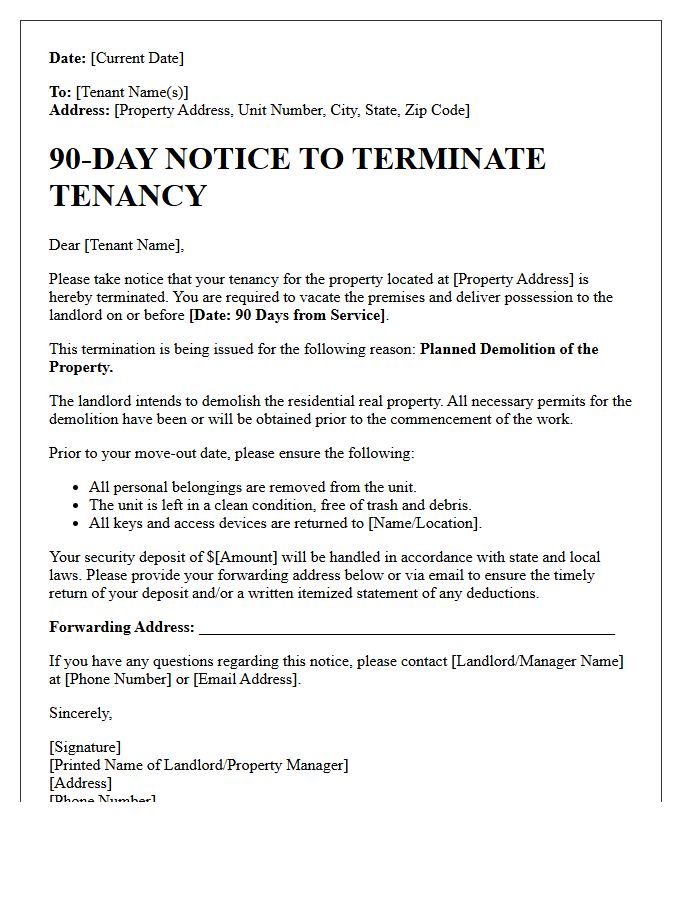
A Property Demolition Ninety-Day Tenancy Termination Notice is a legal document used by landlords to end a lease agreement because the building will be razed. This mandatory 90-day notice period provides tenants with sufficient time to secure new housing. It is essential that the letter clearly states the demolition plans and complies with local housing regulations to be enforceable. Tenants must receive this formal written communication before any structural removal begins, ensuring their rights are protected during redevelopment projects or major property transformations.
Property Use Conversion Ninety-Day Tenancy Termination Letter
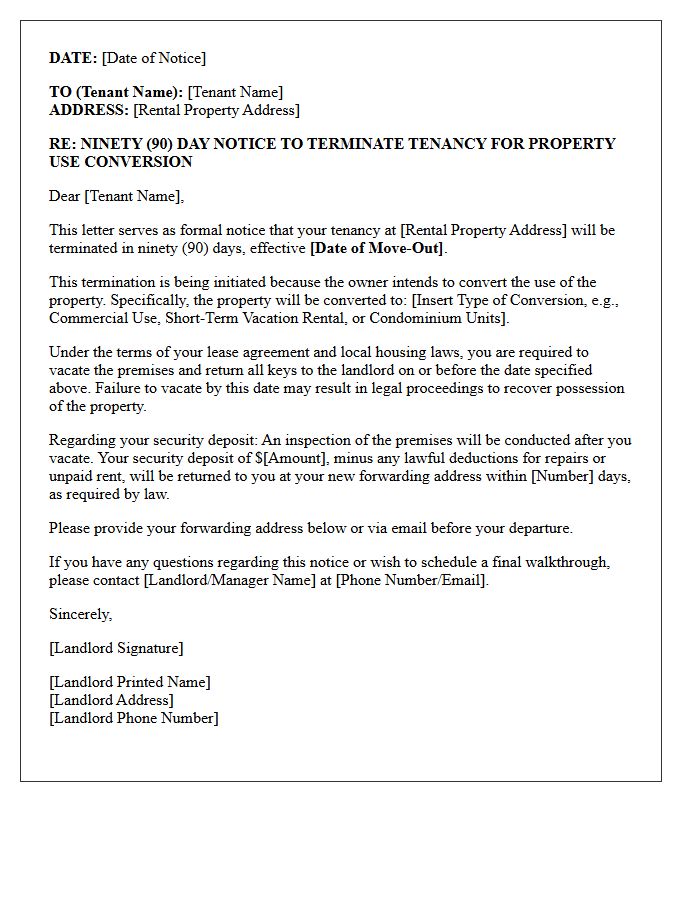
A Property Use Conversion Ninety-Day Tenancy Termination Letter is a formal notice issued when a landlord intends to change a residential unit into a non-residential use. This legal document must provide tenants with at least ninety days of notice before they are required to vacate. It is crucial for compliance with local housing laws, ensuring residents have sufficient time to find new housing. Landlords must clearly state the conversion intent and the specific termination date to avoid legal disputes during the property use conversion process.
What is a Ninety-Day Notice to Terminate Long-Term Tenancy?
A Ninety-Day Notice to Terminate Long-Term Tenancy is a formal legal document issued by a landlord to end a rental agreement with a tenant who has occupied a property for a significant duration, typically one year or more, depending on local jurisdiction laws.
Under what circumstances must a landlord provide a 90-day notice instead of 30 or 60 days?
A 90-day notice period is often required for subsidized housing (such as Section 8), specific state-mandated protections for long-term residents, or in cases where the property is being removed from the rental market under certain local rent control ordinances.
What information must be included in a valid 90-day termination notice?
The notice must be in writing and include the tenant's name, the property address, the specific date the tenancy will end, the legal reason for termination (if required by law), and a statement regarding the tenant's right to remain until the notice period expires.
How should a Ninety-Day Notice to Terminate Long-Term Tenancy be served to the tenant?
To be legally enforceable, the notice should be served via personal delivery, substituted service (leaving it with a responsible person at the residence), or certified mail with a return receipt requested, depending on specific state statutes.
Can a tenant contest a 90-day notice to terminate their tenancy?
Yes, a tenant can contest the notice if it was issued in retaliation, violates the Fair Housing Act, fails to meet local "just cause" eviction requirements, or if the landlord failed to follow proper legal procedures for service and notification.

Comments