
Protect your property and ensure tenant safety by issuing a formal Notice of Mold Inspection and Remediation. This essential document informs occupants about scheduled assessments, potential health risks, and the necessary cleanup steps to restore air quality. Proper communication helps maintain legal compliance and transparency during the removal process. To assist your management efforts, below are some ready to use template.
Image cover: Essential Mold Inspection and Remediation Notice Templates for Property Owners
Letter Samples List
- Notice Of Initial Mold Inspection Letter
- Routine Mold Inspection Notification Letter
- Emergency Mold Inspection And Assessment Letter
- Mold Inspection Findings And Next Steps Letter
- Notice Of Scheduled Mold Remediation Letter
- Tenant Preparation For Mold Remediation Letter
- Notice Of Temporary Relocation For Mold Remediation Letter
- Property Management Mold Remediation Authorization Letter
- Notice Of Active Mold Remediation Work Letter
- Post-Remediation Mold Clearance Inspection Letter
- Notice Of Successful Mold Remediation Completion Letter
Notice Of Initial Mold Inspection Letter
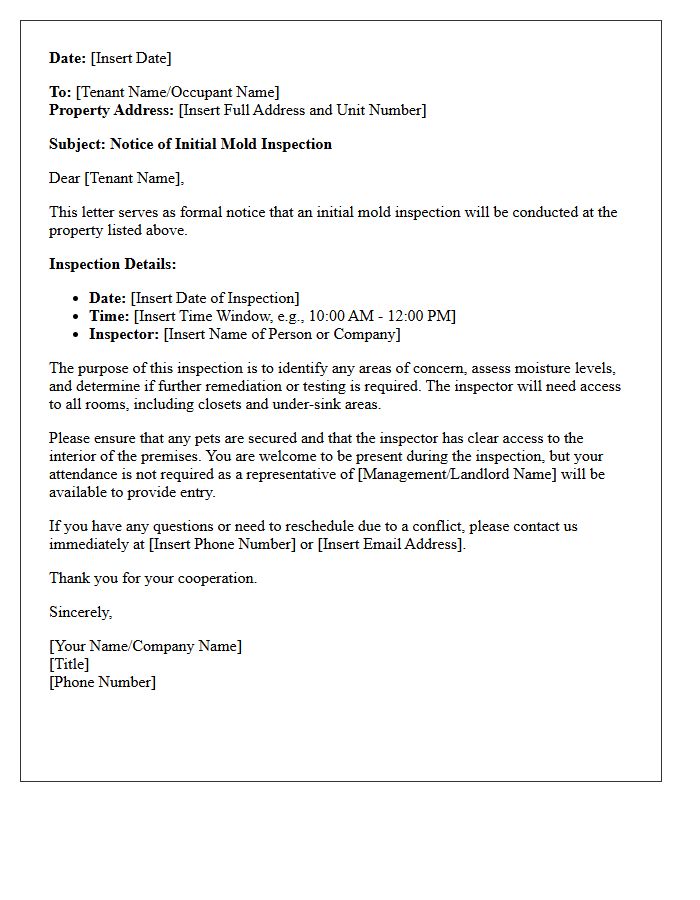
A Notice of Initial Mold Inspection is a formal document informing tenants or occupants that a professional assessment will occur to identify potential fungal growth. This letter is a critical legal requirement in many jurisdictions, ensuring transparency and providing advanced warning before inspectors enter a private residence. It outlines the scheduled date, time, and scope of the evaluation. Property owners must issue this notice to maintain regulatory compliance and protect occupant health. Understanding your rights during this process ensures that environmental hazards are addressed promptly while respecting your privacy rights and safety.
Routine Mold Inspection Notification Letter
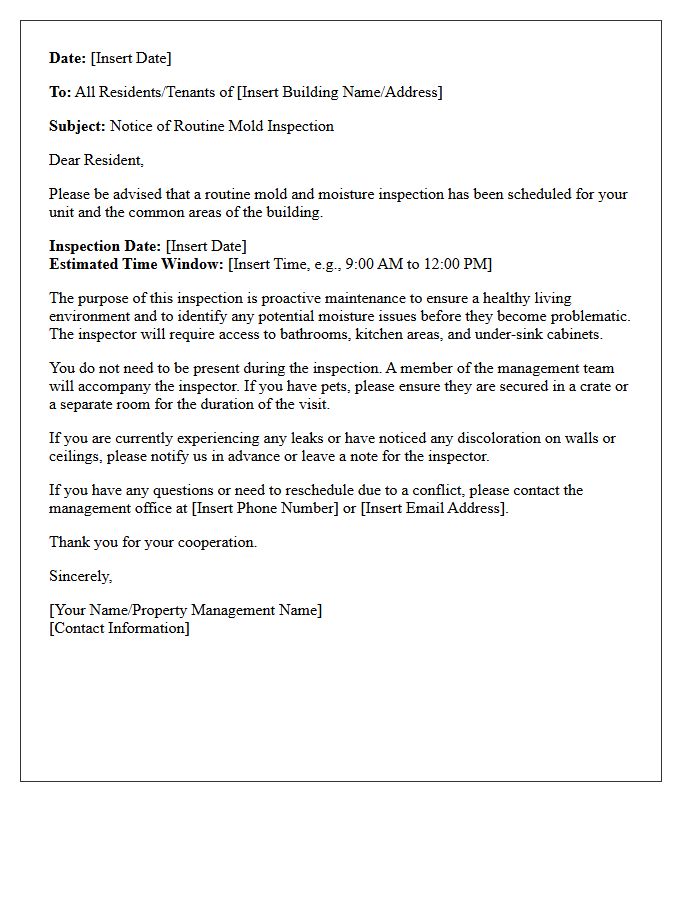
A Routine Mold Inspection Notification Letter is an essential legal document sent by property managers to residents. It provides formal notice of an upcoming environmental assessment to ensure indoor air quality and structural integrity. Key details include the scheduled date, time of entry, and necessary preparation steps for occupants. Timely communication helps prevent moisture-related issues and ensures compliance with local housing safety regulations. Receiving this notice allows tenants to arrange for pet safety or presence during the walkthrough, maintaining transparency and fostering a proactive approach to preventative maintenance.
Emergency Mold Inspection And Assessment Letter
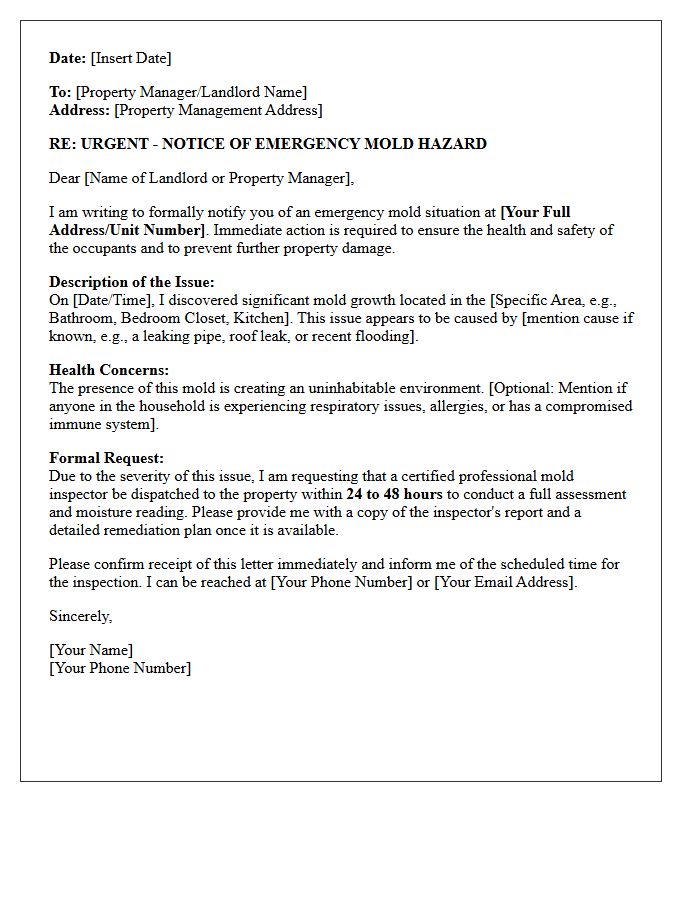
An Emergency Mold Inspection and Assessment Letter is a formal document issued by a licensed professional following an urgent site evaluation. It serves as critical evidence for insurance claims and legal compliance by detailing the extent of fungal growth, moisture sources, and immediate health risks. This report outlines mandatory remediation steps to prevent structural damage and ensure occupant safety. Having this certified assessment is essential for securing rapid restoration services and documenting property conditions for potential liability or reimbursement purposes after water damage incidents.
Mold Inspection Findings And Next Steps Letter
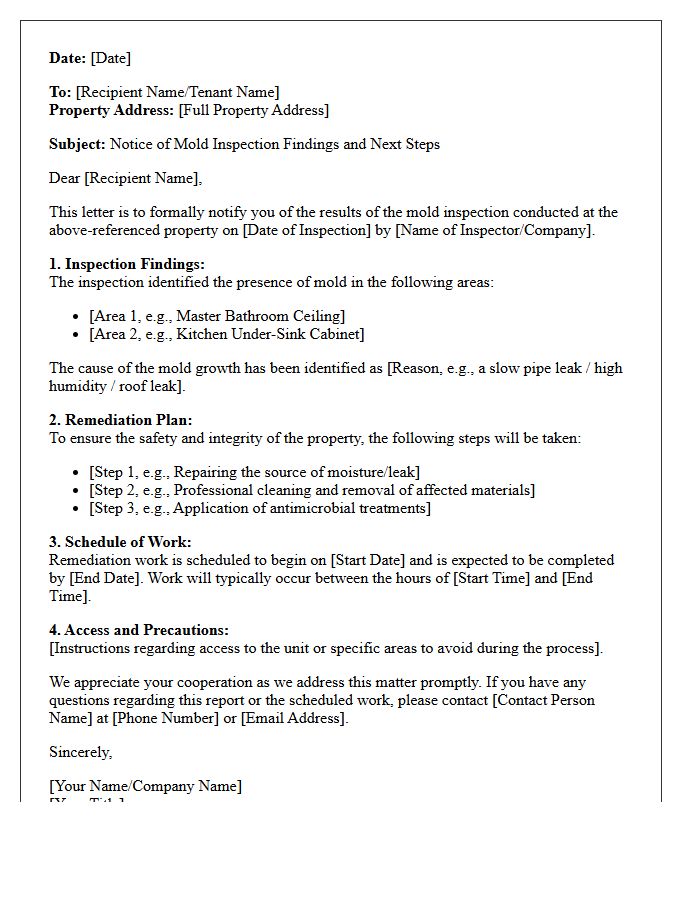
A Mold Inspection Findings and Next Steps Letter is a professional document detailing the fungal types and concentrations discovered during an assessment. It identifies moisture sources, evaluates air quality, and specifies the scope of structural damage. This report serves as a roadmap for remediation, outlining mandatory cleanup protocols to ensure safety. Property owners must use this letter to obtain accurate repair estimates and provide documentation for insurance claims or legal compliance. Following the prescribed corrective actions is essential to prevent recurring growth and protect occupant health from hazardous spore exposure.
Notice Of Scheduled Mold Remediation Letter
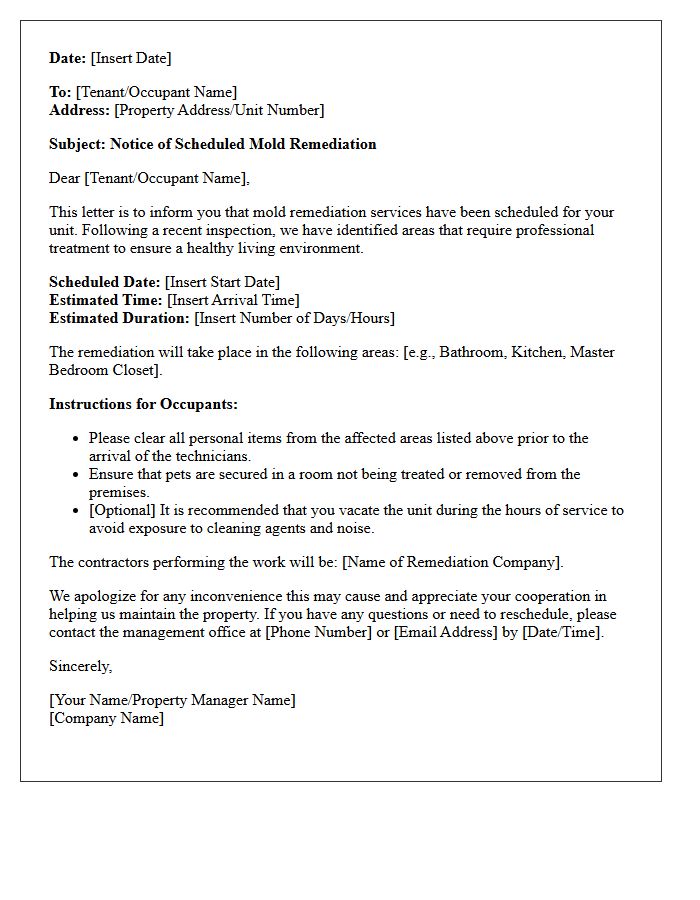
A Notice of Scheduled Mold Remediation is a formal document informing occupants about upcoming fungal cleanup. It must detail the specific work dates, affected areas, and necessary safety protocols to minimize spore exposure. Residents should follow instructions regarding property access and relocation of personal belongings to ensure an effective containment process. This notification serves as a critical communication tool for maintaining indoor air quality and ensuring legal compliance during professional abatement. Understanding these timelines helps residents prepare for temporary disruptions while prioritizing their long-term health and structural integrity.
Tenant Preparation For Mold Remediation Letter
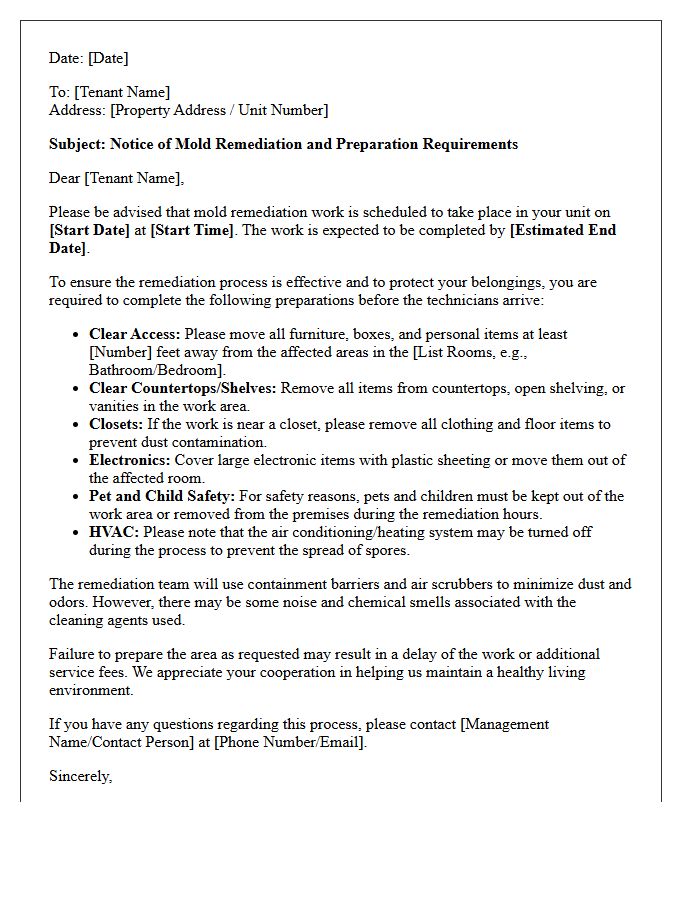
A Tenant Preparation For Mold Remediation Letter is a critical formal notice that outlines mandatory safety protocols and property access requirements. It serves as legal documentation ensuring residents understand their responsibilities, such as clearing work areas, securing pets, and temporary relocation if necessary. Providing clear instructions minimizes liability and ensures the remediation experts can effectively remove spores and prevent cross-contamination. Timely communication via this letter fosters cooperation, maintains regulatory compliance, and guarantees a swift return to a healthy living environment for all occupants involved in the restoration process.
Notice Of Temporary Relocation For Mold Remediation Letter
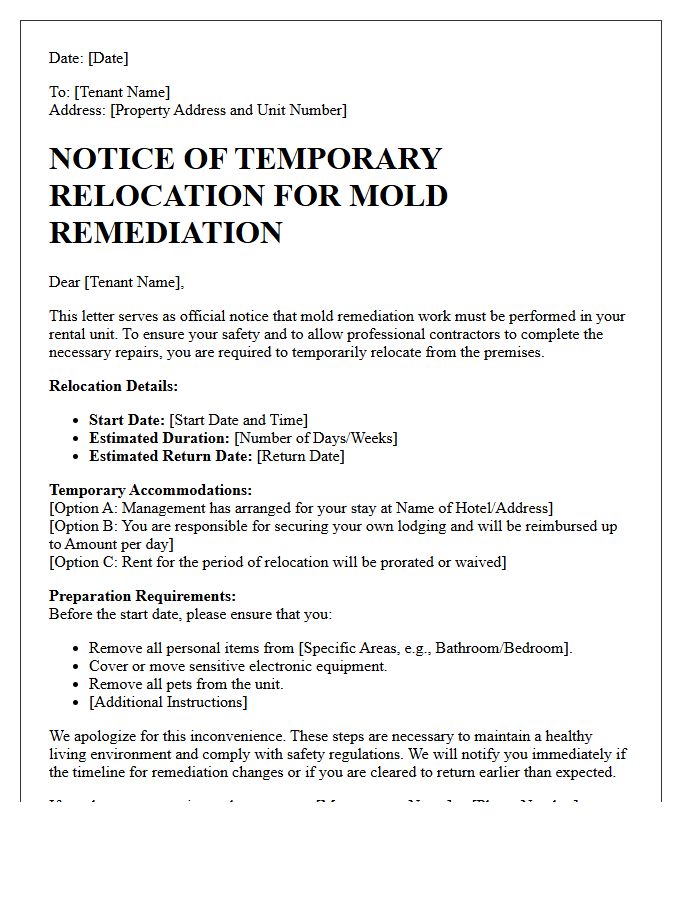
A Notice of Temporary Relocation informs tenants that they must vacate their unit for essential mold remediation. This formal letter outlines the expected start date, duration of repairs, and potential compensation or alternative housing arrangements. It is crucial to understand your tenant rights regarding lease obligations and the return to a safe environment. Clear communication ensures the property becomes habitable again while protecting your health and personal property during the professional cleaning process. Always keep a copy for your records to document the displacement period and any relocation expenses incurred.
Property Management Mold Remediation Authorization Letter
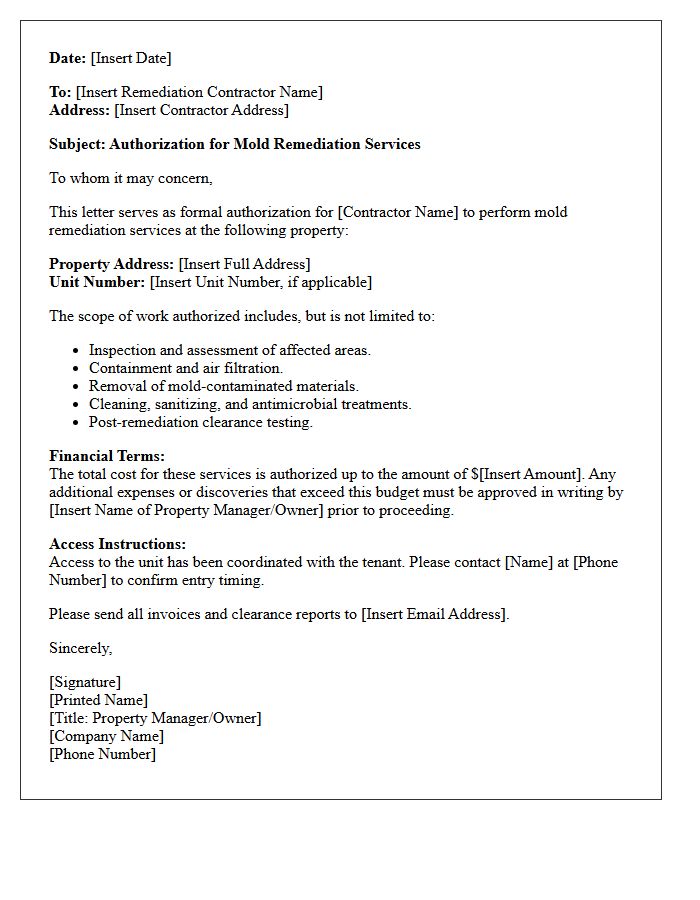
A Property Management Mold Remediation Authorization Letter is a legal document granting specialists permission to perform mold removal on a managed property. It establishes clear legal consent, outlines the scope of work, and specifies financial responsibility. This document is essential for liability protection, ensuring that property managers, owners, and contractors are aligned before cleaning begins. Having a signed authorization ensures compliance with health regulations and facilitates faster insurance claims processing, ultimately protecting the building's structural integrity and the safety of its occupants from toxic exposure.
Notice Of Active Mold Remediation Work Letter
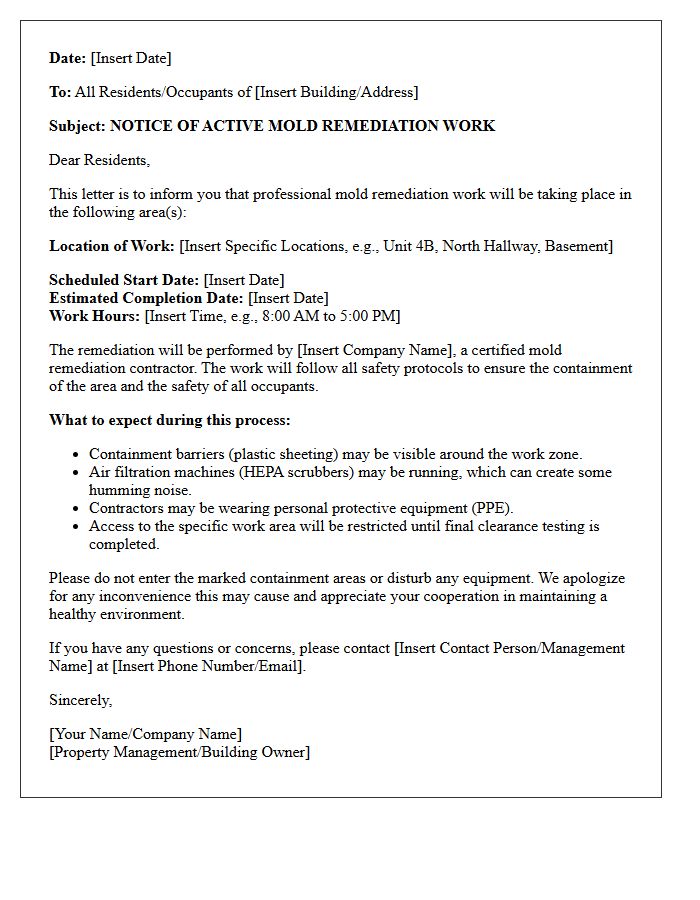
A Notice of Active Mold Remediation Work is a formal document informing occupants about ongoing mold removal procedures. It highlights essential safety protocols, such as the use of containment barriers and specialized air filtration systems to prevent spore dispersal. The letter typically outlines the expected project timeline, potential noise disruptions, and restricted access areas to ensure resident protection. Understanding this notice is crucial for maintaining health compliance and ensuring that the remediation process follows industry standards to restore a safe, breathable indoor environment for all building inhabitants.
Post-Remediation Mold Clearance Inspection Letter
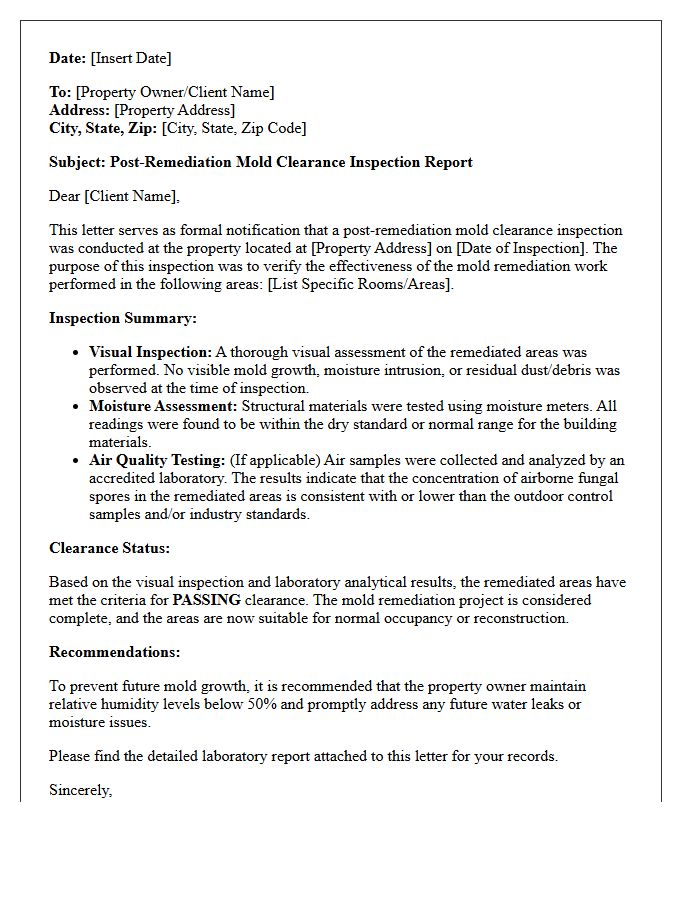
A Post-Remediation Mold Clearance Inspection Letter is a vital document confirming that a professional cleanup was successful. It serves as official proof that mold spore levels have returned to a safe, normal fungal ecology. This clearance report is essential for property owners to ensure structural safety and maintain real estate value. It typically includes visual assessments and air quality sampling results. Having this verification provides peace of mind and is often required by insurance companies or future buyers to certify that the remediation process met industry standards.
Notice Of Successful Mold Remediation Completion Letter
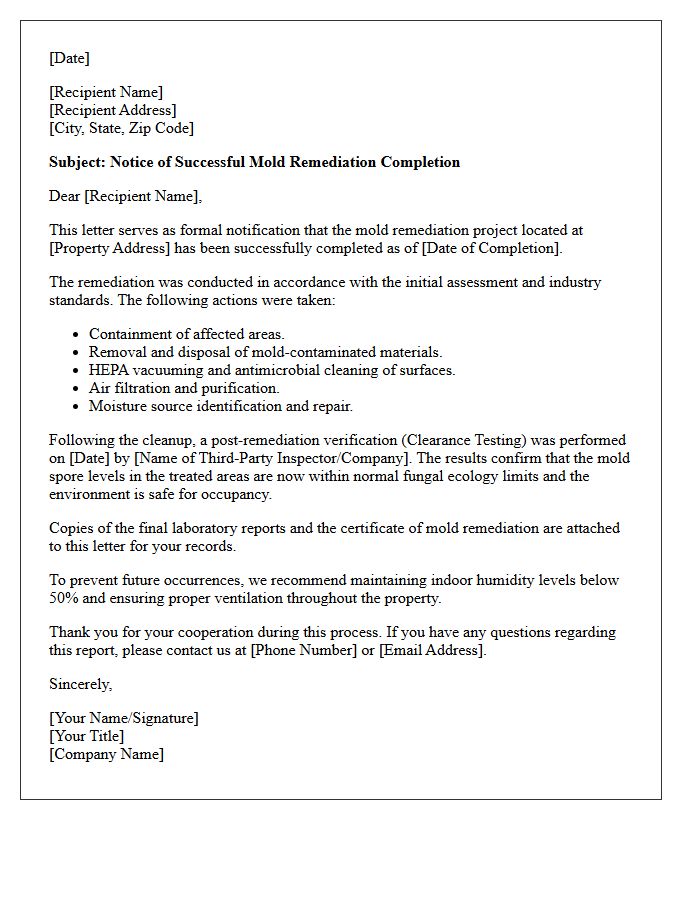
A Notice of Successful Mold Remediation Completion Letter is a critical document issued by a certified professional after final testing. It confirms that the property has been restored to a normal fungal ecology through rigorous cleaning and moisture control. This letter serves as formal clearance, protecting property value and ensuring occupant safety. For homeowners, this certificate is essential for real estate transactions and insurance compliance, proving that all hazardous growth was professionally addressed and that the indoor air quality now meets established health standards.
What is a Notice of Mold Inspection and Remediation?
A Notice of Mold Inspection and Remediation is a formal document issued to property occupants to inform them that a professional assessment or cleanup of mold growth is scheduled to take place within the building.
How much advance notice must a landlord provide before mold remediation?
Legal requirements vary by jurisdiction, but typically landlords must provide at least 24 to 72 hours of written notice before entering a tenant's unit for mold inspection or remediation services, except in emergency situations.
Does a mold remediation notice require tenants to vacate the premises?
Whether occupants must vacate depends on the severity of the infestation and the chemicals used; the notice should specify if temporary relocation is necessary for safety or if containment barriers will allow residents to remain in unaffected areas.
What information should be included in a formal mold remediation notice?
A comprehensive notice should include the scheduled dates and times of work, the specific areas being treated, the name of the licensed remediation contractor, and any safety precautions residents must follow during the process.
Can a tenant refuse entry for a scheduled mold inspection?
Generally, a tenant cannot refuse entry for mold inspection or remediation if the landlord has provided proper legal notice, as mold represents a potential health hazard and a threat to the structural integrity of the property.

Comments