
Terminating a month-to-month lease requires proper legal communication. A Sixty-Day Notice to Vacate is typically mandatory for long-term tenants to ensure a lawful transition. This guide explains legal requirements, notice delivery methods, and essential compliance steps for both landlords and tenants. To help you get started quickly, below are some ready to use template options for your convenience.
Image cover: Comprehensive 60-Day Notice to Vacate Templates for Month-to-Month Rental Agreements
Letter Samples List
- Sixty-Day Notice to Vacate Month-to-Month Tenancy Letter
- Standard Sixty-Day Notice to Vacate Letter
- Property Management Sixty-Day Lease Termination Letter
- Month-to-Month Rental Agreement Sixty-Day Termination Letter
- Landlord Sixty-Day Notice to Vacate Letter
- Sixty-Day Notice to Quit Month-to-Month Tenancy Letter
- No-Cause Sixty-Day Notice to Vacate Letter
- Property Manager Sixty-Day Lease Cancellation Letter
- Sixty-Day Notice of Non-Renewal Month-to-Month Tenancy Letter
- Commercial Month-to-Month Sixty-Day Notice to Vacate Letter
- Residential Month-to-Month Sixty-Day Notice to Vacate Letter
- Sixty-Day Move-Out Notice for Month-to-Month Tenancy Letter
Sixty-Day Notice to Vacate Month-to-Month Tenancy Letter
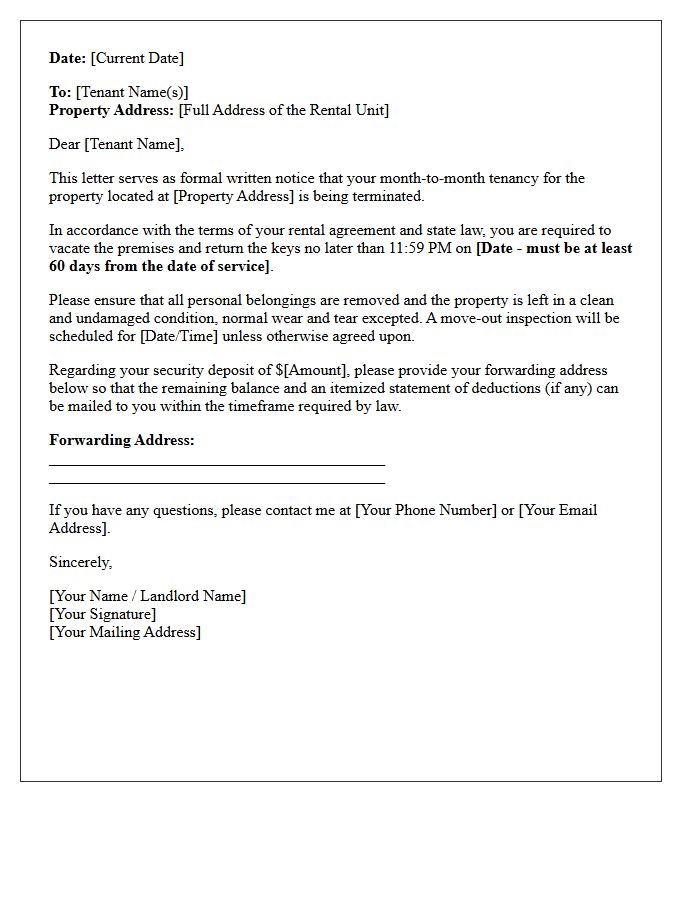
A Sixty-Day Notice to Vacate is a formal legal document used to terminate a month-to-month tenancy. In many jurisdictions, landlords must provide this extended notice period if a tenant has resided in the property for more than one year. It serves as a mandatory written notification to end the rental agreement without necessarily alleging a lease violation. Ensuring the letter includes the specific move-out date and is delivered via proper legal service is essential to maintain compliance with local housing laws and successfully regain possession of the unit.
Standard Sixty-Day Notice to Vacate Letter
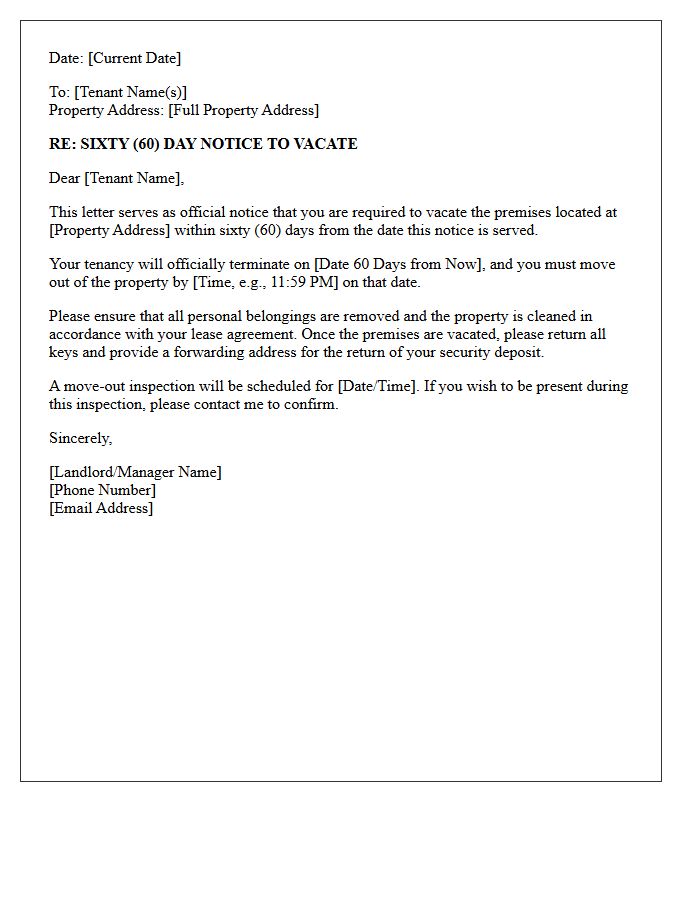
A standard sixty-day notice to vacate is a formal document used to terminate a month-to-month lease agreement. This written notice must be delivered at least sixty days before the intended move-out date to ensure legal compliance. It serves as an official record, protecting both landlords and tenants by outlining specific move-out expectations. Always include the property address, final date of residency, and a forwarding address for the security deposit. Following local housing laws during this notice period is essential to avoid potential legal disputes or financial penalties during the transition.
Property Management Sixty-Day Lease Termination Letter
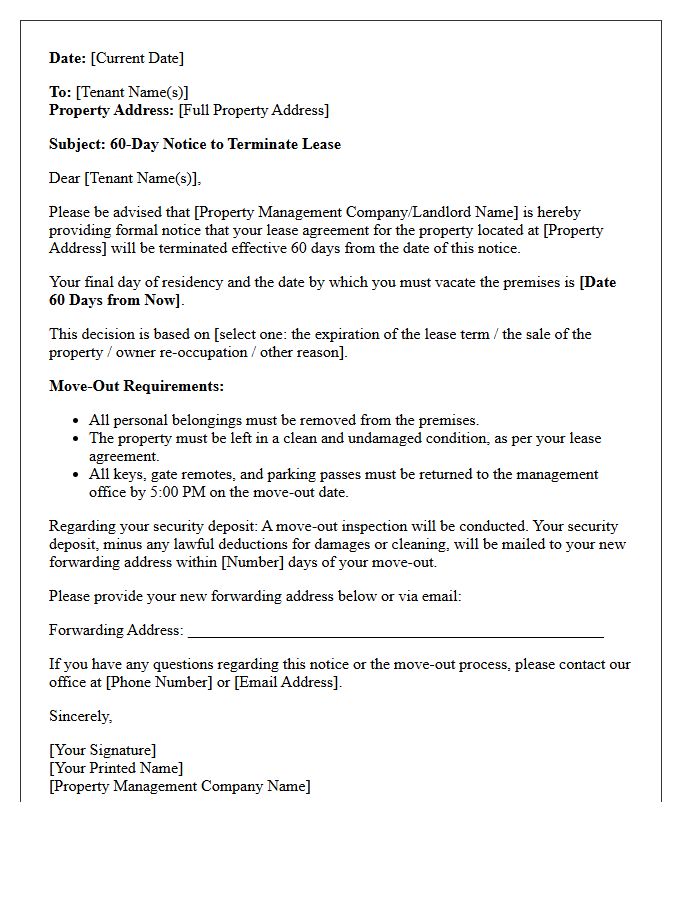
A Sixty-Day Lease Termination Letter is a formal legal notice used by landlords or property managers to end a month-to-month tenancy. In many jurisdictions, this specific sixty-day timeframe is mandatory for tenants who have resided in a property for over one year. The document must clearly state the move-out date and comply with local housing laws to be enforceable. Providing this extended notice ensures a smooth transition, allowing residents sufficient time to secure new housing while protecting the owner's right to regain possession of the real estate asset.
Month-to-Month Rental Agreement Sixty-Day Termination Letter
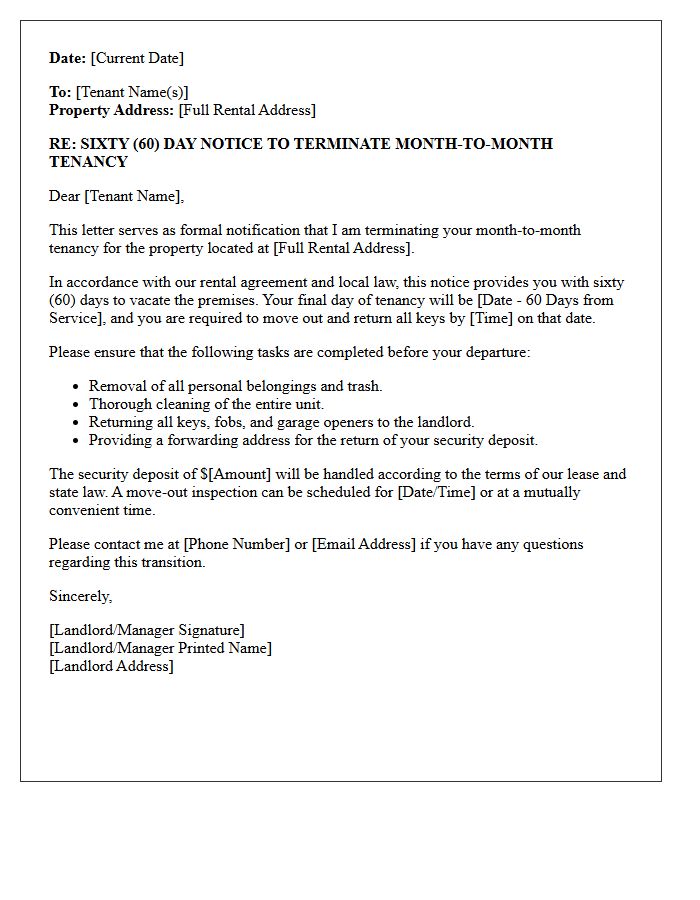
A sixty-day termination letter is a formal notice used to end a month-to-month rental agreement. In many jurisdictions, landlords must provide this extended 60-day notice if a tenant has resided in the property for more than one year. This document legally establishes the move-out date, ensuring both parties have adequate time to transition. It must be delivered in writing to satisfy legal requirements and avoid potential disputes. Always verify local landlord-tenant laws, as specific notice periods can vary based on residency duration and regional statutes.
Landlord Sixty-Day Notice to Vacate Letter
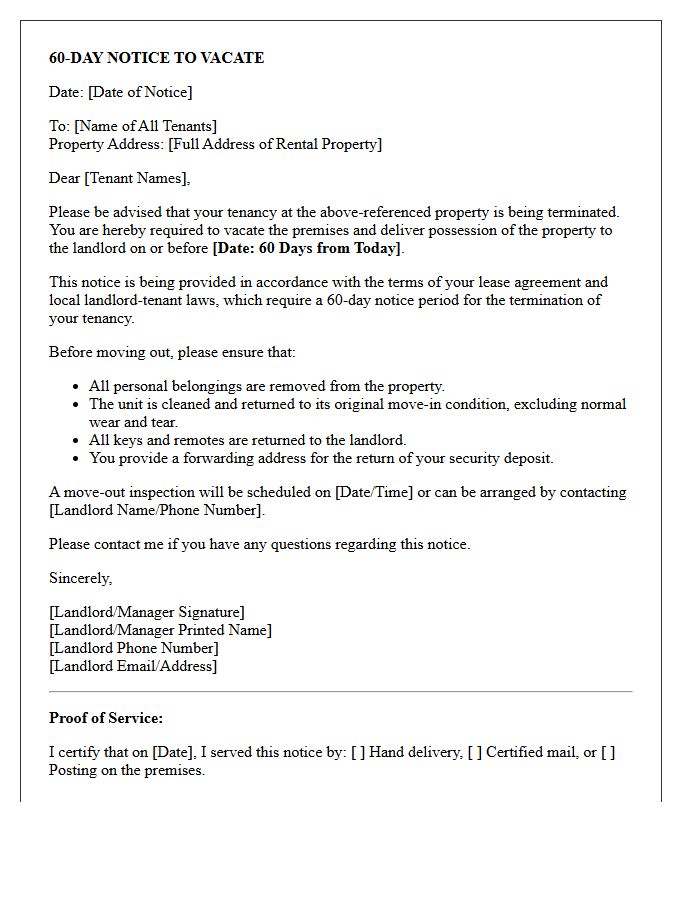
A Sixty-Day Notice to Vacate is a formal legal document used by landlords to terminate a month-to-month tenancy, typically required when a tenant has resided in the property for over one year. This written notice must clearly state the move-out date and comply with local eviction laws to be enforceable. It provides residents sufficient time to secure new housing. Landlords should ensure proper service of the letter, as failing to follow statutory requirements can delay the possession process or lead to legal complications in court.
Sixty-Day Notice to Quit Month-to-Month Tenancy Letter
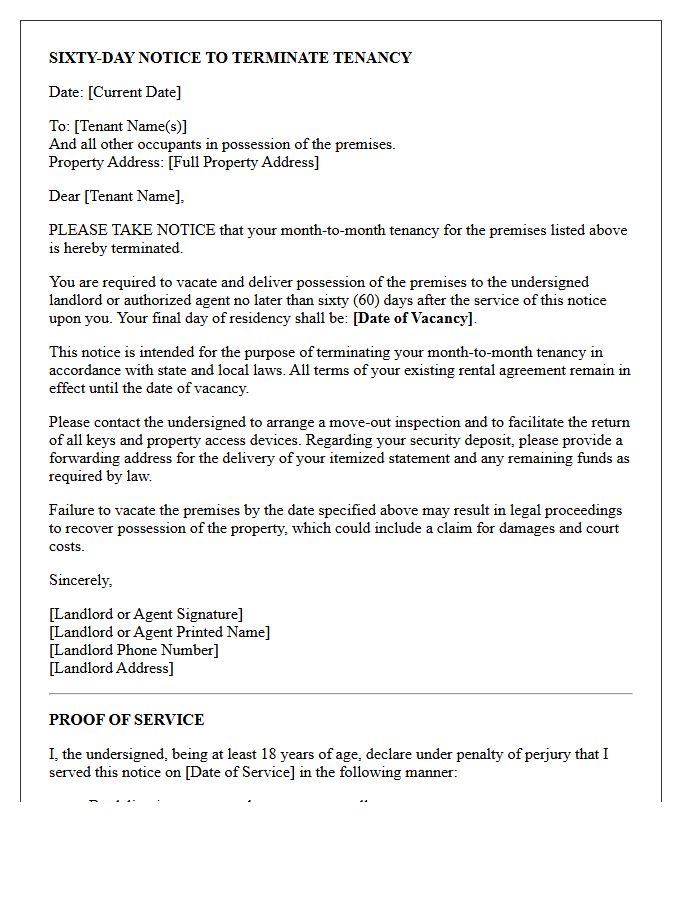
A Sixty-Day Notice to Quit is a formal legal document used in a month-to-month tenancy to terminate the rental agreement. In many jurisdictions, landlords must provide this written notice to tenants who have resided in a property for more than one year. It serves as a mandatory termination notice, granting the occupant sixty days to vacate the premises. Compliance with local landlord-tenant laws is essential to ensure the document is legally binding, as improper service or insufficient timing can delay the eviction process and legal proceedings.
No-Cause Sixty-Day Notice to Vacate Letter
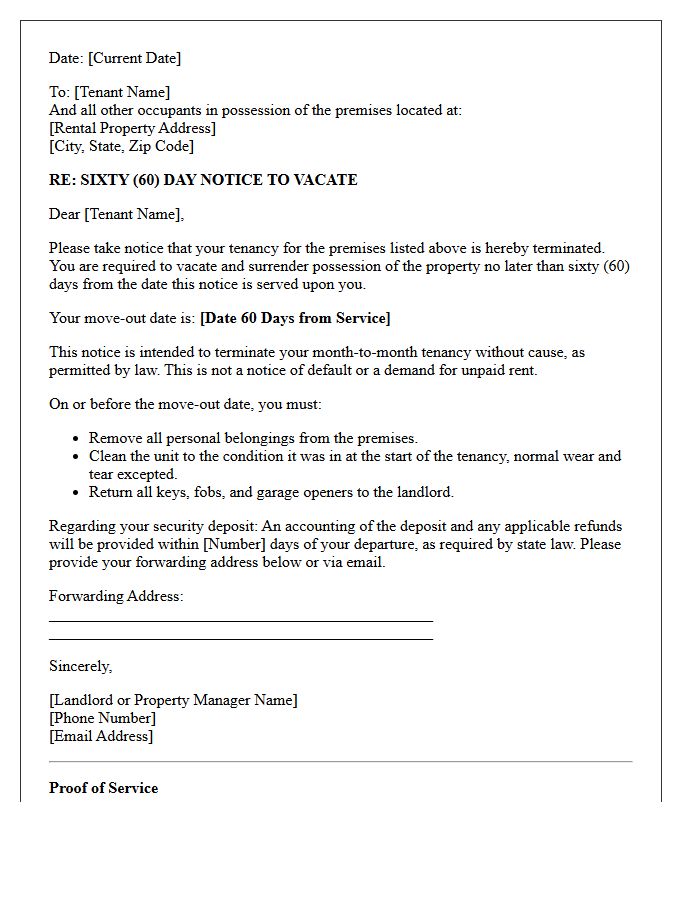
A No-Cause Sixty-Day Notice to Vacate is a formal legal document used by landlords to terminate a month-to-month tenancy without citing specific tenant misconduct. This sixty-day notice period is typically mandatory for tenants who have resided in a property for one year or longer. It provides residents with sufficient time to secure new housing. Landlords must ensure the letter complies with local landlord-tenant laws and is served correctly to be legally enforceable. However, state-specific just cause eviction regulations may limit a landlord's ability to issue these notices without a valid legal reason.
Property Manager Sixty-Day Lease Cancellation Letter
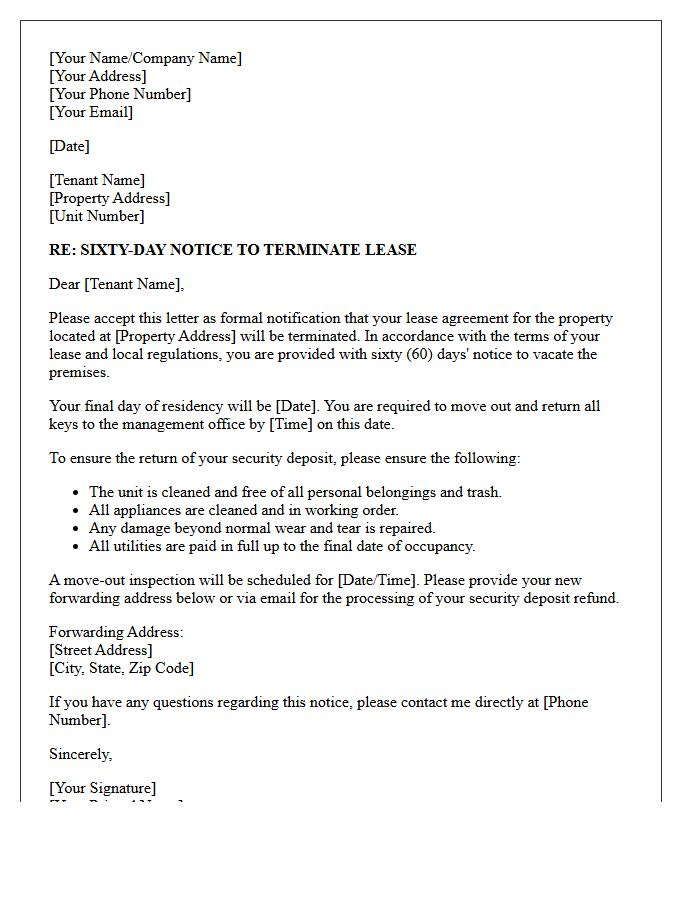
A property manager sixty-day lease cancellation letter is a formal written notice used to terminate a management agreement. To ensure a smooth transition, you must strictly adhere to the termination clause specified in your original contract. Providing sixty days allows sufficient time for the transfer of keys, security deposits, and financial records. Always send this document via certified mail to verify receipt. Clearly state the effective end date and request a final accounting statement to resolve outstanding fees, protecting both the landlord and the management agency from legal disputes.
Sixty-Day Notice of Non-Renewal Month-to-Month Tenancy Letter
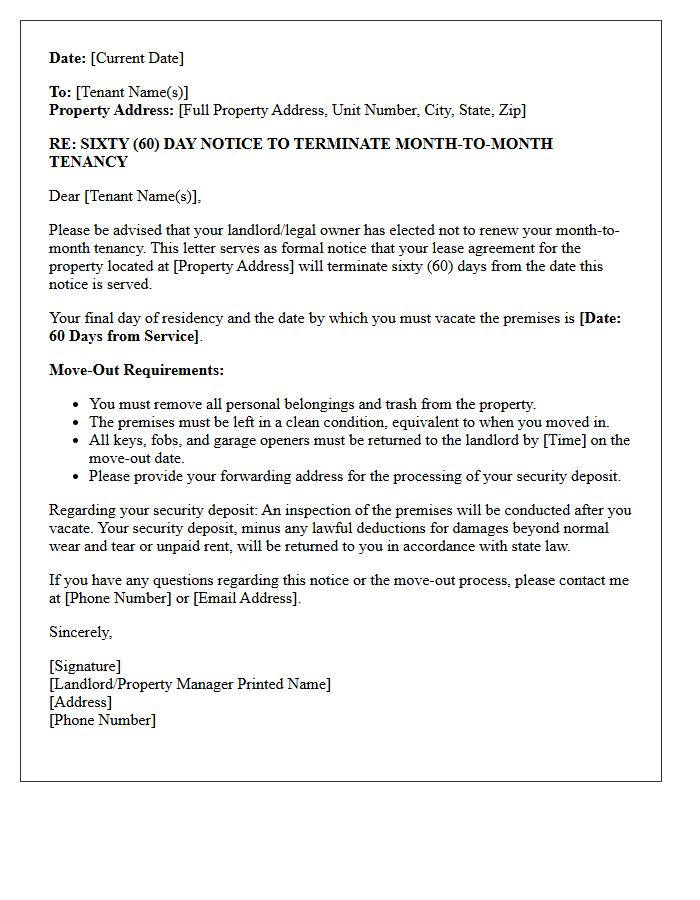
A Sixty-Day Notice of Non-Renewal is a formal legal document used to terminate a month-to-month tenancy. This written notification informs the tenant or landlord that the rental agreement will end in sixty days, providing ample time for relocation or vacancy preparations. Compliance with local landlord-tenant laws is essential to ensure the notice is valid and enforceable. It must clearly state the termination date and be delivered according to statutory service requirements to avoid legal disputes or unwanted lease extensions during the transition period.
Commercial Month-to-Month Sixty-Day Notice to Vacate Letter
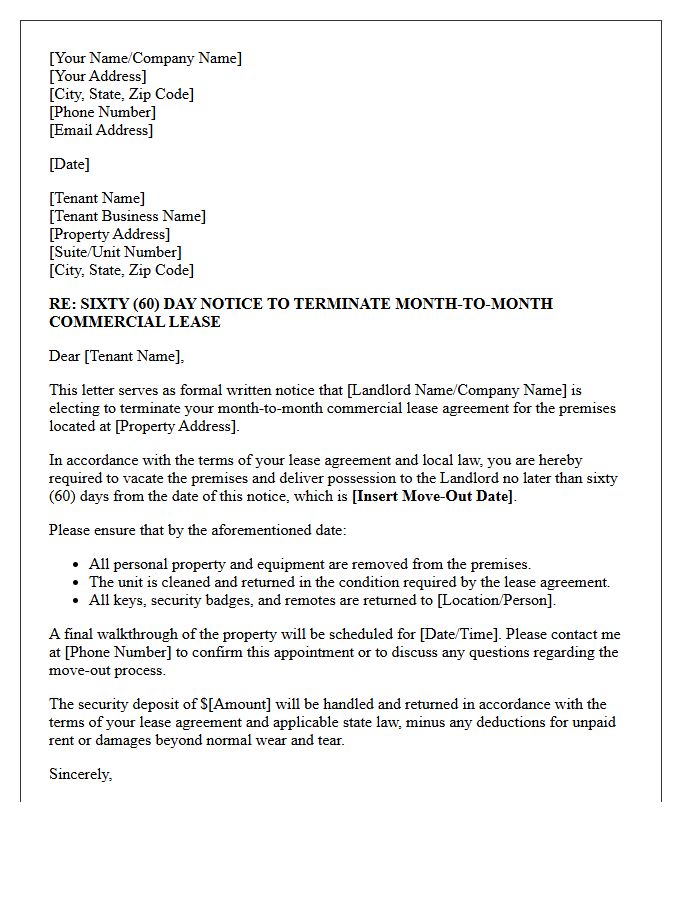
A Commercial Month-to-Month Sixty-Day Notice to Vacate Letter is a formal legal document used to terminate a periodic tenancy. Unlike standard residential agreements, commercial lease termination requirements often depend on specific state laws or contractual provisions. Providing a full sixty days allows both parties sufficient time for business relocation or securing a new tenant. To ensure legal validity, the notice must clearly state the vacate date and be delivered according to the service methods outlined in the original lease agreement to avoid potential holdover penalties or litigation.
Residential Month-to-Month Sixty-Day Notice to Vacate Letter
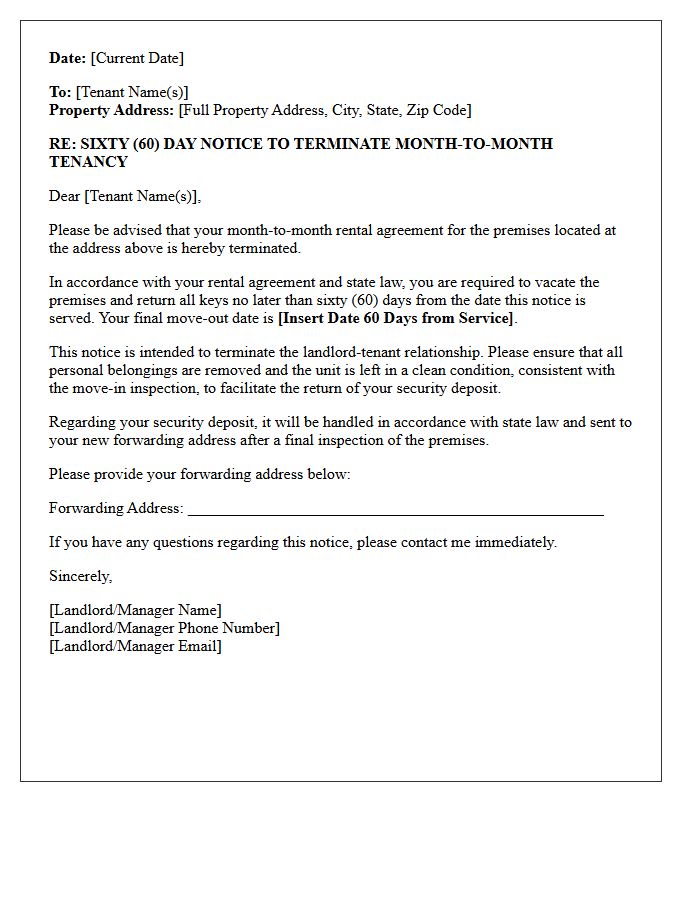
A Sixty-Day Notice to Vacate is a formal legal document used in residential month-to-month tenancies. In many jurisdictions, landlords must provide this extended notice if a tenant has resided in the property for over one year. This letter serves as official termination of the rental agreement, establishing a clear move-out deadline. To ensure legal validity, it must be properly served according to local statutes. Tenants should review state laws, as specific requirements for notice periods and delivery methods vary significantly depending on the duration of occupancy and location.
Sixty-Day Move-Out Notice for Month-to-Month Tenancy Letter
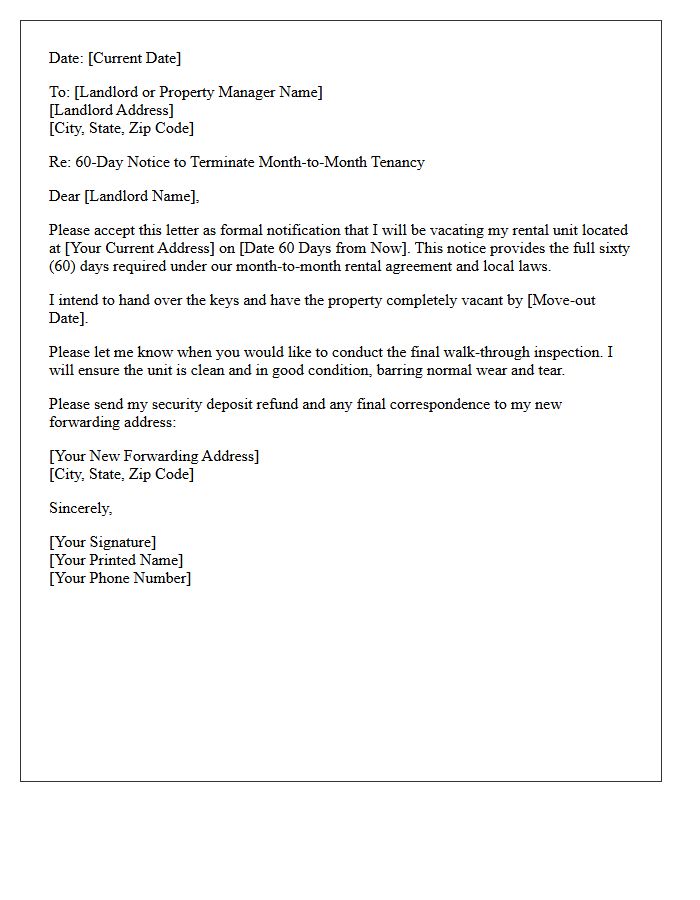
A Sixty-Day Move-Out Notice is a formal legal document used to terminate a month-to-month tenancy. Unlike standard agreements, this extended period is often required by state laws or specific lease clauses to provide ample transition time. It must clearly state the final move-out date and be delivered according to legal service of notice protocols. Providing written notification protects your security deposit and ensures compliance with landlord-tenant laws, preventing unexpected holdover fees or legal disputes during your relocation process.
What is a Sixty-Day Notice to Vacate for a month-to-month tenancy?
A Sixty-Day Notice to Vacate is a formal legal document issued by either a landlord or a tenant to terminate a month-to-month rental agreement. In many jurisdictions, this specific timeframe is required by law if a tenant has resided in the property for one year or longer.
When is a landlord required to provide a 60-day notice instead of 30 days?
In various states, such as California, a landlord must provide a 60-day notice if the tenant has occupied the unit for at least twelve consecutive months. If the tenancy has lasted less than one year, a 30-day notice is typically sufficient to terminate the agreement.
Does a Sixty-Day Notice to Vacate need to state a reason for moving?
In "no-fault" jurisdictions, a landlord may not need to state a specific reason for termination. However, under many local "just cause" eviction laws or the California Tenant Protection Act (AB 1482), a landlord may be required to provide a valid legal reason even when giving a 60-day notice.
How should a Sixty-Day Notice to Vacate be legally served?
To be legally enforceable, the notice should be served in writing. Standard methods include personal delivery to the recipient, substituted service (leaving it with a responsible person at the residence), or sending it via certified or registered mail with a return receipt requested.
What happens if a tenant stays past the expiration of the 60-day notice?
If a tenant remains in the property after the 60-day period expires, they are considered a "holdover tenant." At this point, the landlord can initiate formal eviction proceedings, known as an Unlawful Detainer lawsuit, to regain possession of the property.

Comments