
A Notice to Vacate for foreclosure occurs when a lender seizes a rental property, often terminating existing lease agreements. Tenants must understand their legal rights and state-specific protections during this transition to avoid immediate displacement. Understanding the timeline and formal requirements is essential for both owners and occupants. To assist you, below are some ready to use template.
Image cover: Foreclosure Notice to Vacate: Official Letter Templates and Tenant Guidelines
Letter Samples List
- Standard Foreclosure Notice to Vacate Letter
- Ninety-Day Notice to Vacate Foreclosed Property Letter
- Month-to-Month Tenant Foreclosure Vacate Letter
- Fixed-Term Lease Foreclosure Notice to Vacate Letter
- Post-Foreclosure Final Eviction Warning Letter
- Foreclosure Change of Ownership Notice to Vacate Letter
- Tenant Rights and Foreclosure Vacate Notice Letter
- Bank-Owned Rental Property Notice to Vacate Letter
- Property Management Foreclosure Lease Termination Letter
- Holdover Tenant Foreclosure Eviction Notice Letter
- New Owner Foreclosure Notice to Vacate Letter
- Cash for Keys Voluntary Move-Out Foreclosure Letter
Standard Foreclosure Notice to Vacate Letter
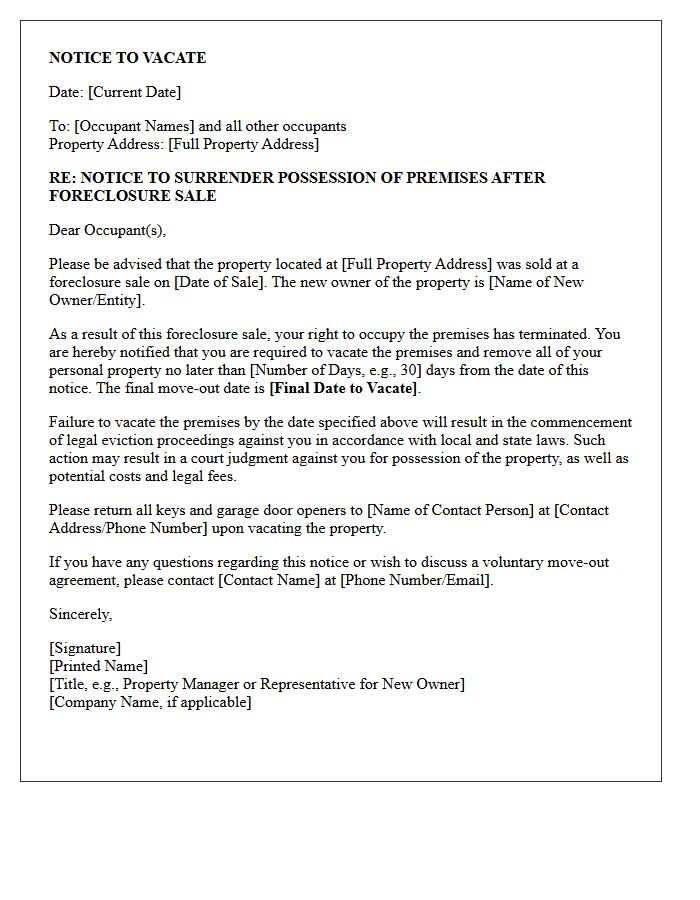
A Standard Foreclosure Notice to Vacate Letter is a legal document issued to occupants after a foreclosure sale. This formal notice signifies that the property has a new owner and establishes a specific deadline for residents to move out. It is a mandatory step before an eviction lawsuit can be filed. Depending on local laws and the occupant's status as a former owner or tenant, the notice period typically ranges from 3 to 90 days. Receiving this letter indicates that the legal right to possession has officially terminated.
Ninety-Day Notice to Vacate Foreclosed Property Letter
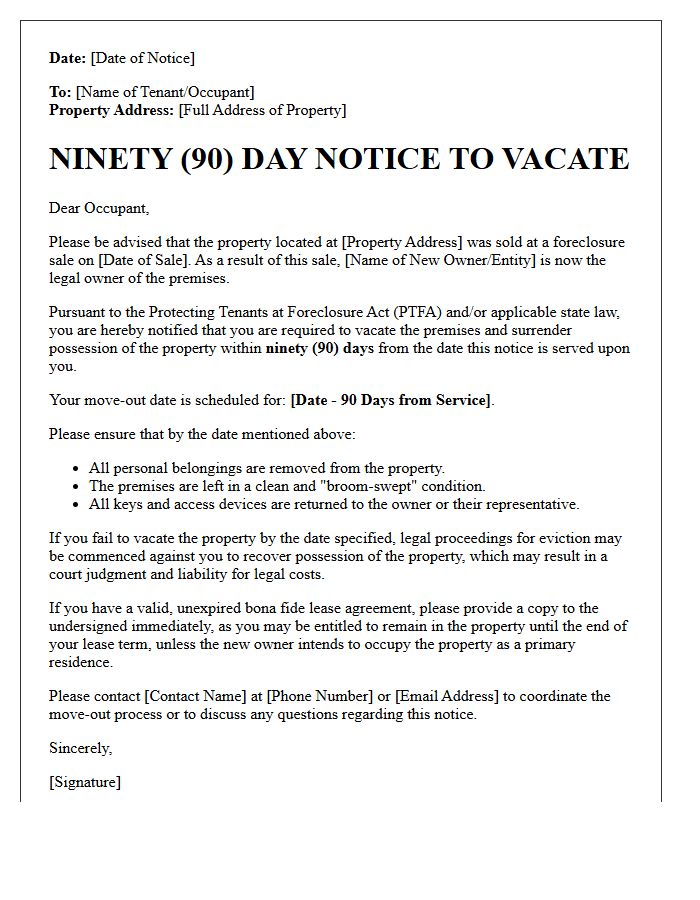
The Ninety-Day Notice to Vacate is a vital legal protection under the Protecting Tenants at Foreclosure Act. It requires new owners to provide bona fide tenants with at least ninety days' written notice before requiring them to leave a foreclosed property. This federal requirement ensures residents have sufficient time to secure new housing. If a lease exists, tenants may often stay until the lease term expires, unless the buyer intends to use the home as a primary residence. Always verify local laws for additional tenant rights and protections.
Month-to-Month Tenant Foreclosure Vacate Letter
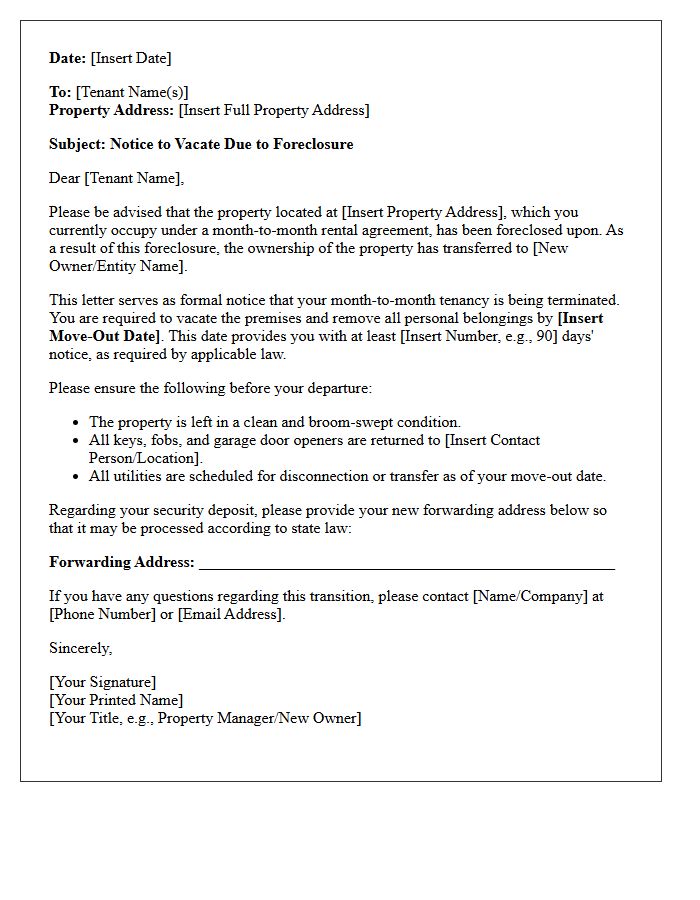
A month-to-month tenant foreclosure vacate letter is a formal notice informing occupants that the property has been sold at auction. Under the Protecting Tenants at Foreclosure Act, most bona fide tenants are entitled to a minimum 90-day notice before being required to move. However, if the new owner intends to occupy the unit as a primary residence, they may terminate the month-to-month lease earlier according to state laws. It is essential to verify local tenant rights and ensure the notice complies with specific legal requirements to be enforceable.
Fixed-Term Lease Foreclosure Notice to Vacate Letter
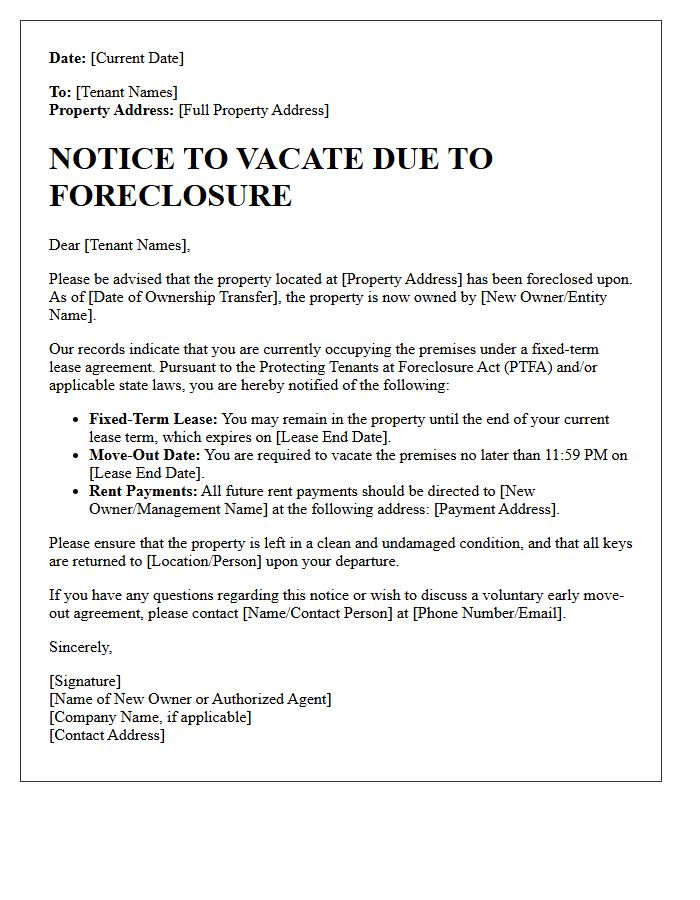
A Fixed-Term Lease Foreclosure Notice to Vacate is a formal document issued when a property changes ownership due to a trustee sale. Under federal laws like the Protecting Tenants at Foreclosure Act, most bona fide tenants are entitled to remain until their lease expires. However, if the new owner intends to occupy the unit as a primary residence, they may issue a 90-day notice to terminate the agreement. Understanding your rights regarding lease preservation and eviction protection is essential to ensure a legal transition during the foreclosure process.
Post-Foreclosure Final Eviction Warning Letter
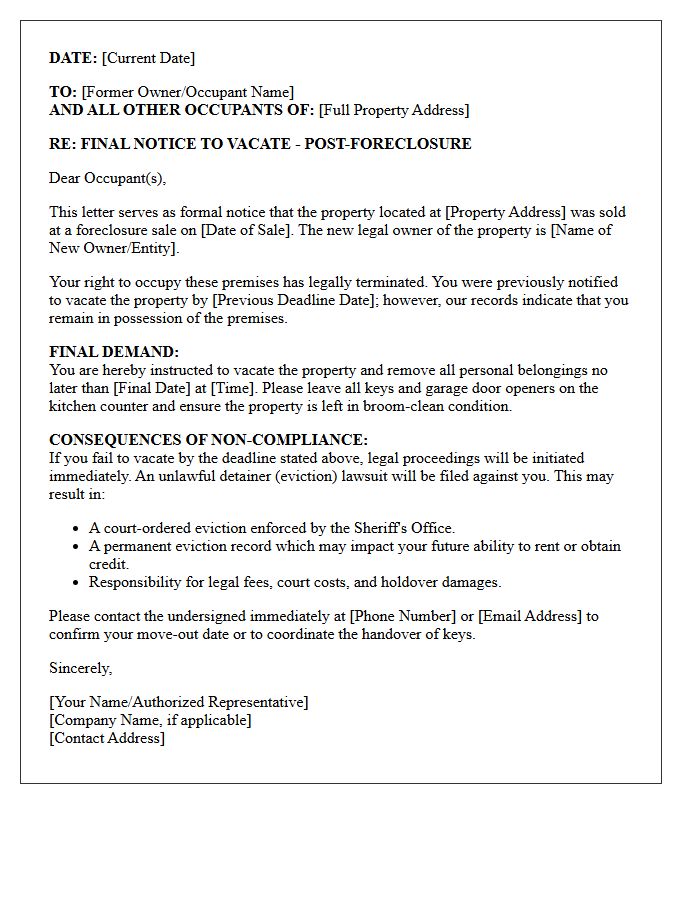
A Post-Foreclosure Final Eviction Warning Letter is a formal legal notice issued after a property sale. It serves as the last notification before authorities physically remove occupants. This document informs former owners or tenants they no longer hold legal title and must vacate by a specific deadline. Receiving this means the eviction process has reached its conclusion, and failure to comply typically results in a court-ordered writ of possession executed by the sheriff. It is the final opportunity to move belongings voluntarily before a forced lockout occurs.
Foreclosure Change of Ownership Notice to Vacate Letter
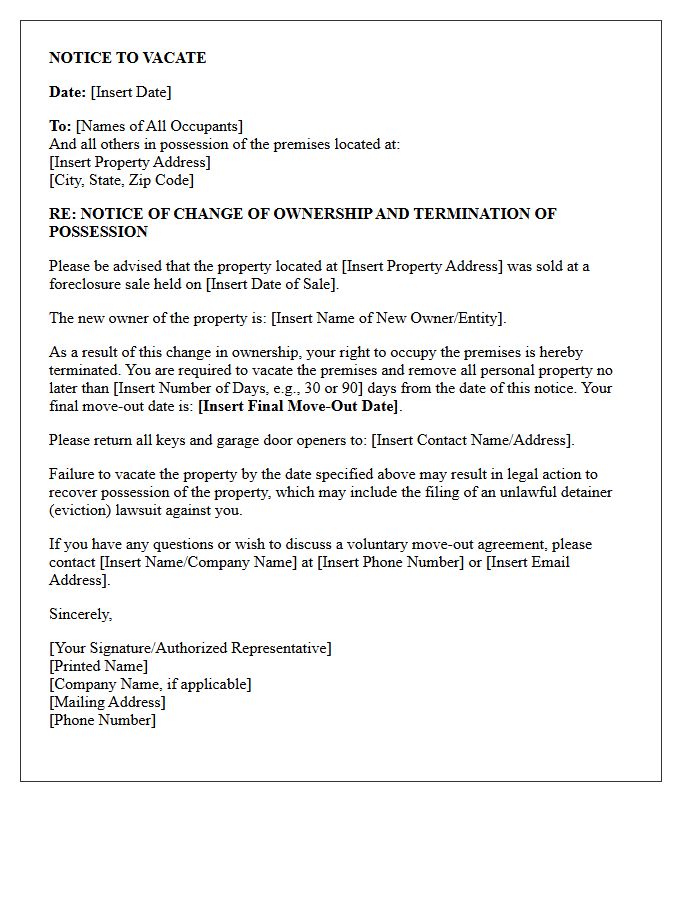
A Foreclosure Change of Ownership Notice to Vacate Letter is a formal legal document issued after a property sale. It informs occupants that the new owner now holds the title and requests the premises be vacated within a specific timeframe, often 90 days for legitimate tenants under federal law. This notice is a mandatory step before filing a formal eviction lawsuit. Recipients should immediately verify the ownership transfer and review local tenant protections to understand their rights regarding relocation assistance or lease termination during this transition period.
Tenant Rights and Foreclosure Vacate Notice Letter
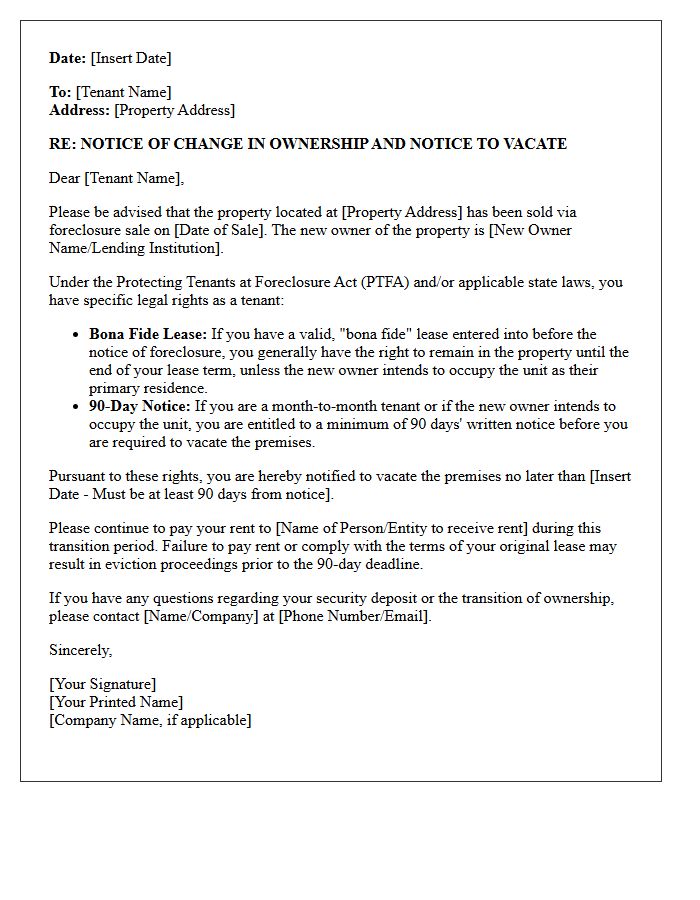
When a rental property faces foreclosure, tenants are often protected by the Protecting Tenants at Foreclosure Act. Generally, renters have the right to remain until the end of their lease, unless the new owner intends to occupy the home as a primary residence. In such cases, or if the lease is month-to-month, the law requires a 90-day notice to vacate. Tenants should continue paying rent to the current legal owner to avoid eviction and should seek legal counsel if they receive a Vacate Notice Letter before this mandatory period ends.
Bank-Owned Rental Property Notice to Vacate Letter
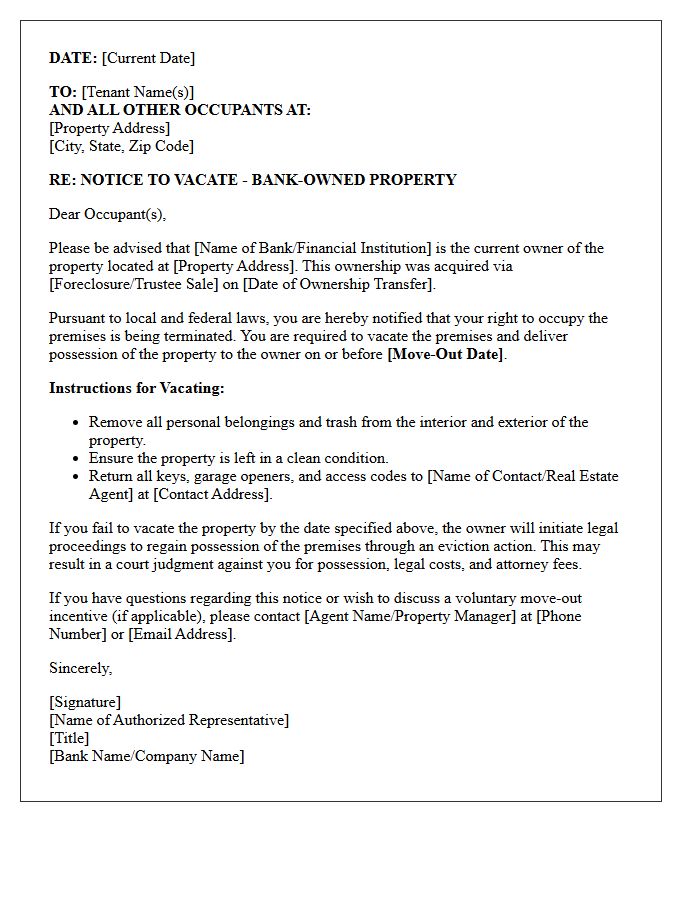
A Bank-Owned Rental Property Notice to Vacate Letter is a formal legal document issued after foreclosure. Under the Protecting Tenants at Foreclosure Act, most bona fide tenants are entitled to at least 90 days' notice before being required to move. If you have a valid fixed-term lease, you may typically stay until the lease expires, unless the new owner intends to occupy the unit as a primary residence. Always verify local state laws and keep records of all communications to ensure your tenant rights are protected during ownership transitions.
Property Management Foreclosure Lease Termination Letter
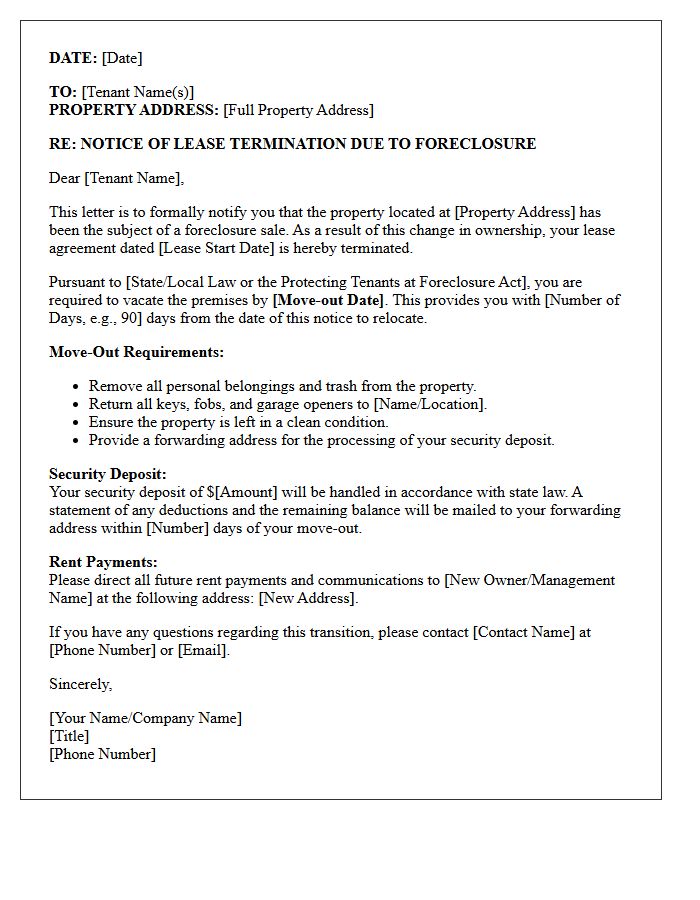
A Property Management Foreclosure Lease Termination Letter is a formal legal notice sent to tenants when a property undergoes foreclosure. It informs residents that the owner's rights have ended, potentially terminating the existing rental agreement. Under federal law, such as the Protecting Tenants at Foreclosure Act, most renters are entitled to at least a 90-day notice before being required to vacate. Understanding your local tenant protections is essential to ensure compliance with notice periods and to handle security deposit recovery during the transition of property ownership.
Holdover Tenant Foreclosure Eviction Notice Letter
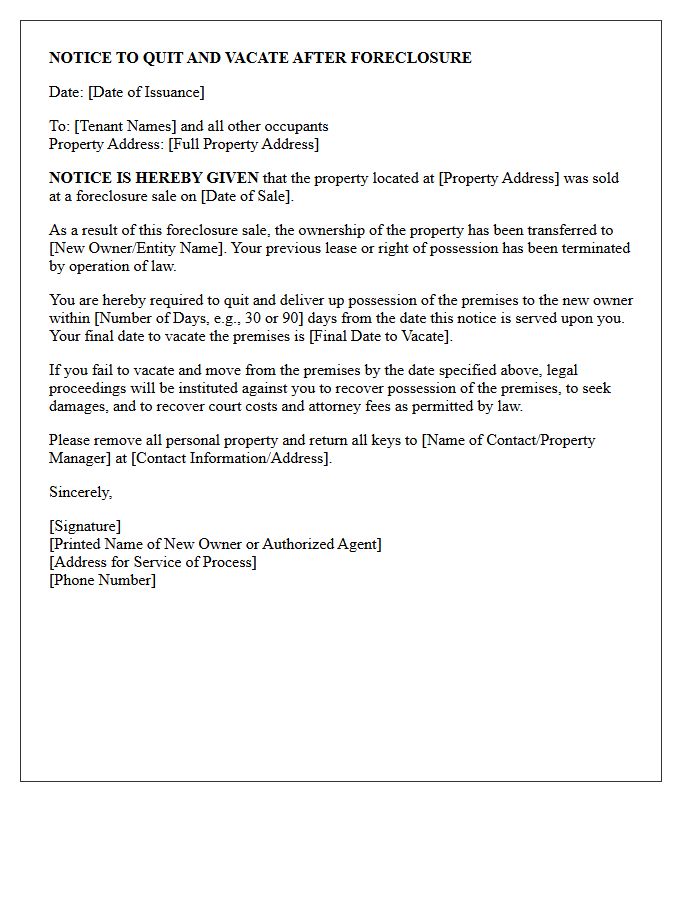
A Holdover Tenant Foreclosure Eviction Notice Letter is a formal legal document issued after a property sale. It informs occupants that their leasehold interest has terminated due to a change in ownership. Federal laws, such as the Protecting Tenants at Foreclosure Act, often grant bona fide tenants a specific notice period, typically 90 days, before they must vacate. Receiving this notice signifies the start of the eviction process, requiring occupants to either negotiate a new lease with the bank or relocate to avoid legal summary proceedings in court.
New Owner Foreclosure Notice to Vacate Letter
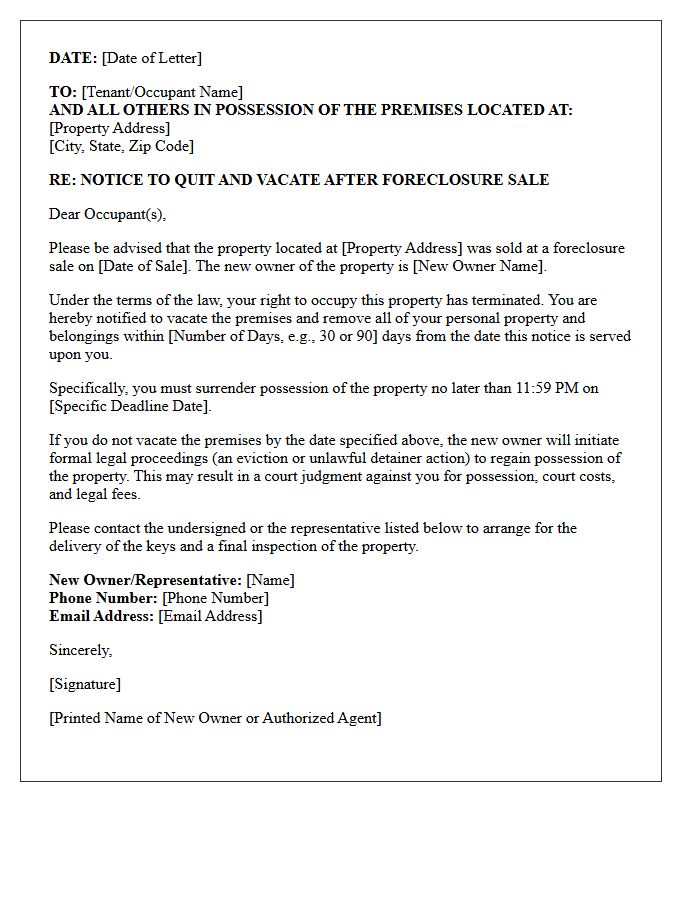
A New Owner Foreclosure Notice to Vacate Letter is a formal legal document sent to occupants after a property is sold at a foreclosure auction. This notice informs residents that ownership has transferred and establishes a mandatory deadline to move out. Under the federal Protecting Tenants at Foreclosure Act, bona fide tenants typically receive at least 90 days' notice, while former owners often get less time depending on state laws. It is the essential first step before a new owner can file for a formal eviction lawsuit in court.
Cash for Keys Voluntary Move-Out Foreclosure Letter
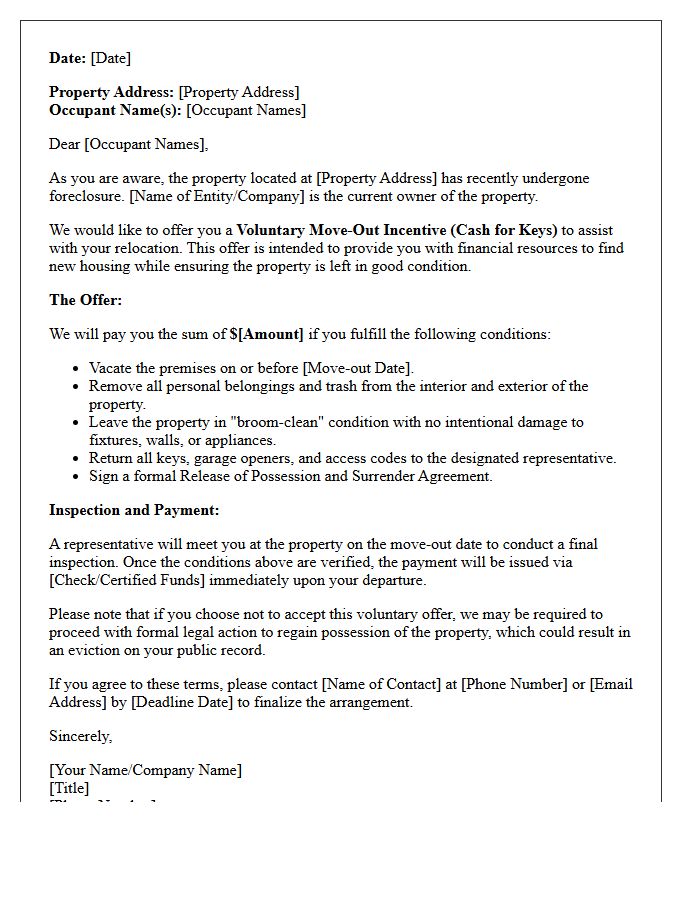
A Cash for Keys agreement is a voluntary move-out settlement between a lender and a homeowner during foreclosure. This legal contract offers the occupant a specific monetary payment in exchange for vacating the property by a set date and leaving it in "broom-clean" condition. It serves as an alternative to formal eviction, saving both parties time and legal expenses. Before signing, homeowners should ensure the written agreement clearly states the payment amount, move-out deadline, and confirms that the lender will waive further deficiency judgments regarding the mortgage debt.
What is a Notice to Vacate due to foreclosure?
A Notice to Vacate for foreclosure is a legal document issued to tenants informing them that the property they are renting has been foreclosed upon and they are required to move out within a specific timeframe, typically governed by the Protecting Tenants at Foreclosure Act (PTFA) or state law.
How much time do I have to move after a foreclosure notice?
Under the federal Protecting Tenants at Foreclosure Act, most "bona fide" tenants are entitled to at least 90 days' notice before they must vacate the premises. If the tenant has a fixed-term lease, they may be allowed to stay until the end of the lease term unless the new owner intends to occupy the property as a primary residence.
Do I still have to pay rent after receiving a foreclosure notice?
Yes, tenants are generally required to continue paying rent to the legal owner of the property. Following a foreclosure sale, the new owner (often a bank or an investor) becomes the landlord, and failure to pay rent can lead to an eviction proceeding separate from the foreclosure action.
What happens to my security deposit if my rental home is foreclosed?
The responsibility for returning a security deposit varies by state, but typically the original landlord is required to transfer the deposit to the new owner. If the deposit was not transferred, the tenant may need to seek a refund from the previous landlord, though some state laws hold the successor owner liable for the return of the deposit.
Can a new owner evict me immediately after a foreclosure sale?
No, a new owner cannot legally evict a tenant immediately without following proper legal procedures. They must provide the legally mandated notice period (usually 90 days for bona fide tenants) and, if the tenant does not leave, they must file a formal holdover eviction lawsuit in court rather than changing locks or shutting off utilities.

Comments