
A Standard Residential Rent Increase Notice Letter is a formal document used by landlords to inform tenants of upcoming rent changes. This essential legal notice ensures transparency and compliance with local housing regulations while maintaining professional landlord-tenant relationships. Clearly stating the new amount and effective date is crucial for legal protection. Below are some ready to use templates.
Image cover: Standard Residential Rent Increase Notice: Professional Templates and Samples
Letter Samples List
- Standard Residential Rent Increase Notice Letter
- Month-to-Month Tenancy Rent Increase Notice Letter
- Fixed-Term Lease Renewal Rent Increase Letter
- Annual Cost of Living Rent Increase Letter
- Property Improvement Rent Increase Notification Letter
- Fair Market Value Rent Increase Advisory Letter
- Advance Statutory Notice of Rent Increase Letter
- Friendly Tenant Rent Increase Communication Letter
- Lease Expiration and Proposed Rent Increase Letter
- Subsidized Housing Rent Increase Approval Letter
- Multi-Family Property Rent Increase Announcement Letter
- Utility Adjustment and Rent Increase Notice Letter
Standard Residential Rent Increase Notice Letter
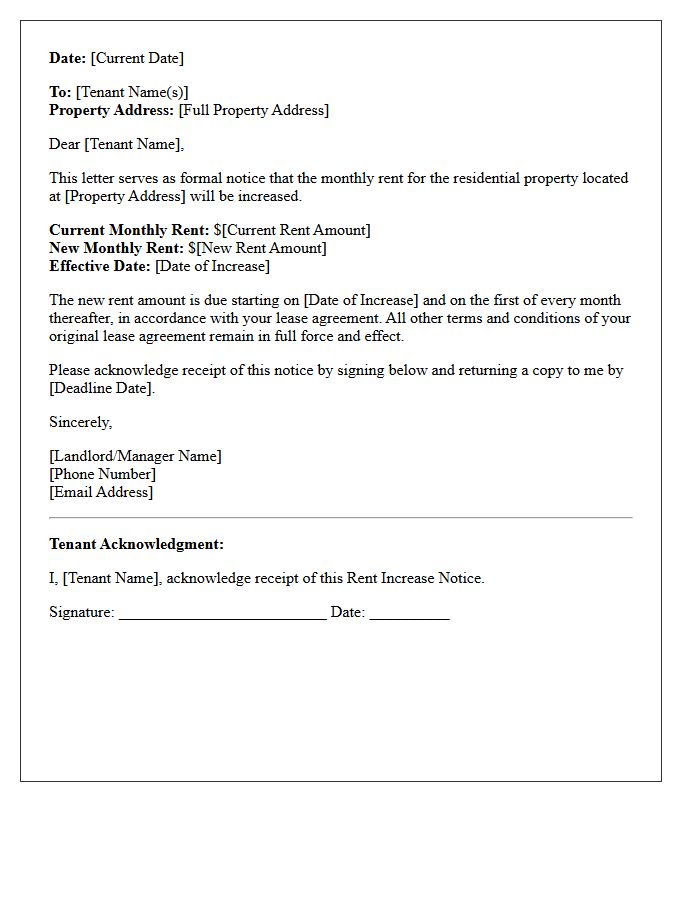
A Standard Residential Rent Increase Notice Letter is a formal document used by landlords to inform tenants of a price adjustment. To be legally valid, it must provide sufficient notice-typically 30 to 90 days-depending on local jurisdiction and lease terms. The letter should clearly state the new monthly amount, the effective date, and property details. Proper delivery ensures compliance with tenant rights and housing laws, preventing future disputes. Always verify if your area has rent control caps that limit the maximum percentage an owner can legally charge during a renewal period.
Month-to-Month Tenancy Rent Increase Notice Letter
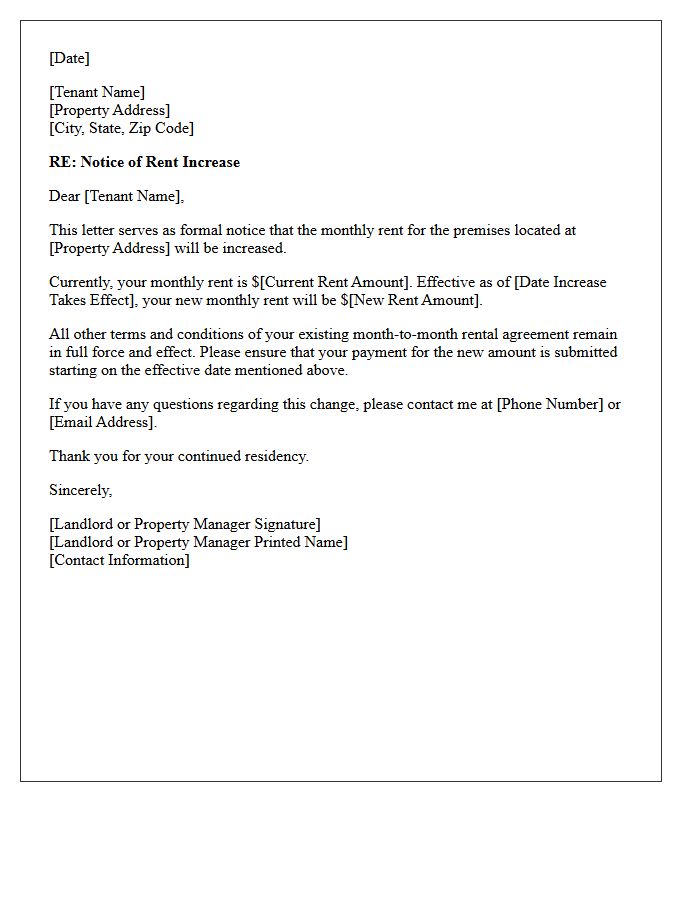
A Month-to-Month Tenancy Rent Increase Notice Letter is a formal document used by landlords to adjust rental rates. Unlike fixed-term leases, these agreements typically require a written notice period of 30 or 60 days, depending on local landlord-tenant laws. The letter must clearly state the new rent amount and the effective date. To ensure legal compliance and avoid disputes, landlords should deliver the notice via certified mail. Tenants should review their original agreement to confirm that the proposed rent hike follows statutory limits and notice requirements.
Fixed-Term Lease Renewal Rent Increase Letter
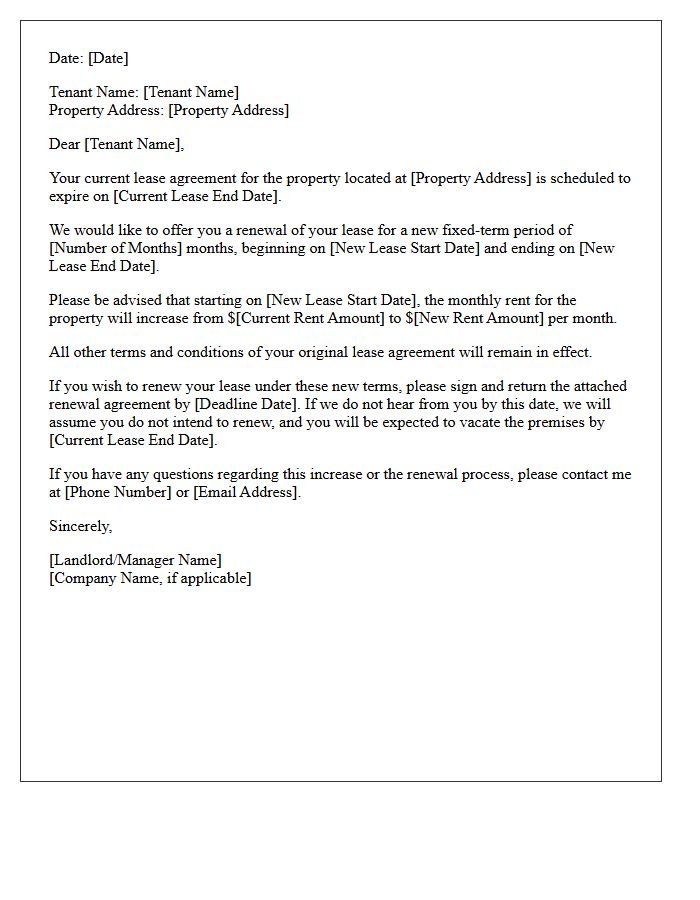
A Fixed-Term Lease Renewal Rent Increase Letter is a formal notice sent by landlords to tenants before an existing contract expires. It proposes new lease terms and specifies the updated monthly rent amount. To remain legally compliant, this document must adhere to local notice periods, typically 30 to 90 days. Tenants should review the offer to decide whether to accept the price adjustment, negotiate, or vacate. Clear communication ensures a smooth transition and maintains a professional rental relationship while securing a stable housing agreement for the upcoming term.
Annual Cost of Living Rent Increase Letter
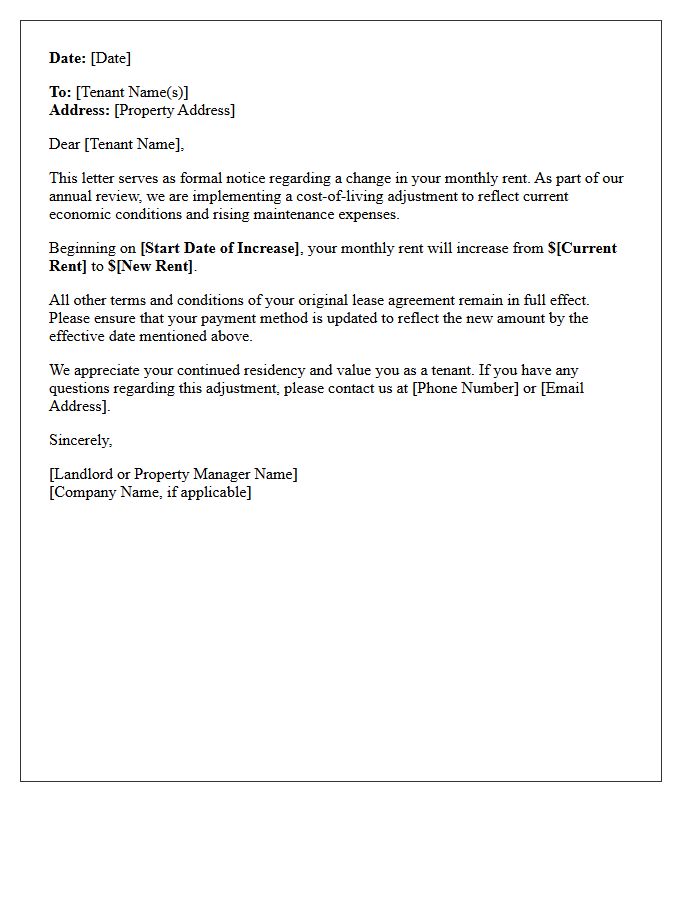
An Annual Cost of Living Rent Increase Letter is a formal notice sent by landlords to inform tenants of a price adjustment based on economic inflation. This document must comply with local rent control laws and typically requires a 30 to 90-day notice period before taking effect. It should clearly state the new monthly amount, the effective date, and the specific percentage increase applied. Understanding your lease agreement and local legal limits is essential for verifying if the proposed escalation is valid and lawful.
Property Improvement Rent Increase Notification Letter
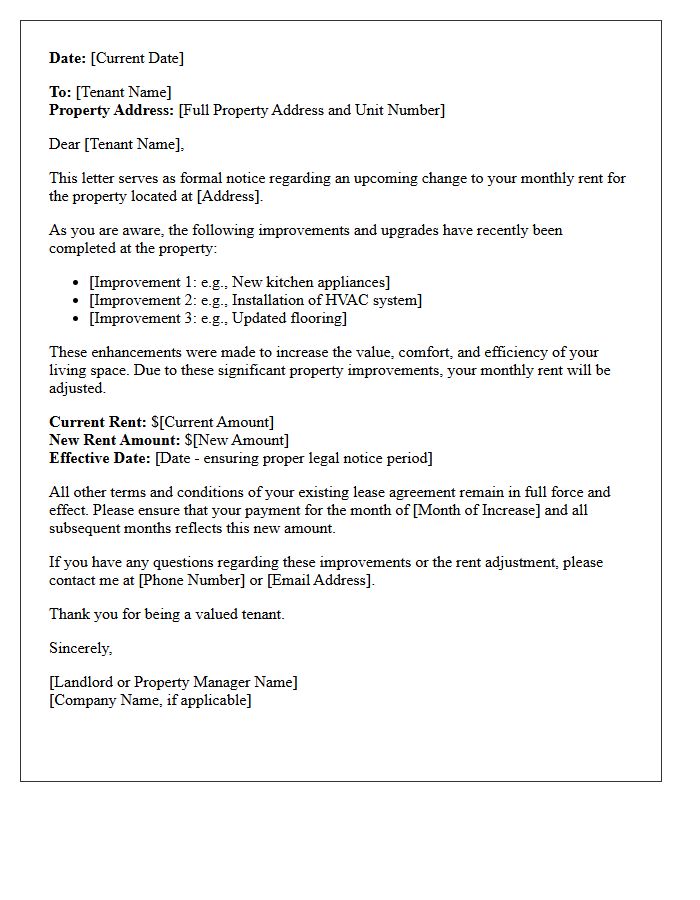
A Property Improvement Rent Increase Notification Letter is a formal document used to inform tenants of a rate hike following significant building upgrades. The most important term is ensuring the notice complies with local rent control regulations and statutory notice periods. Landlords must clearly detail the specific capital improvements made and provide the exact date the new rent becomes effective. Providing transparent documentation of costs helps justify the increase and maintains a positive landlord-tenant relationship while ensuring full legal compliance with housing ordinances.
Fair Market Value Rent Increase Advisory Letter
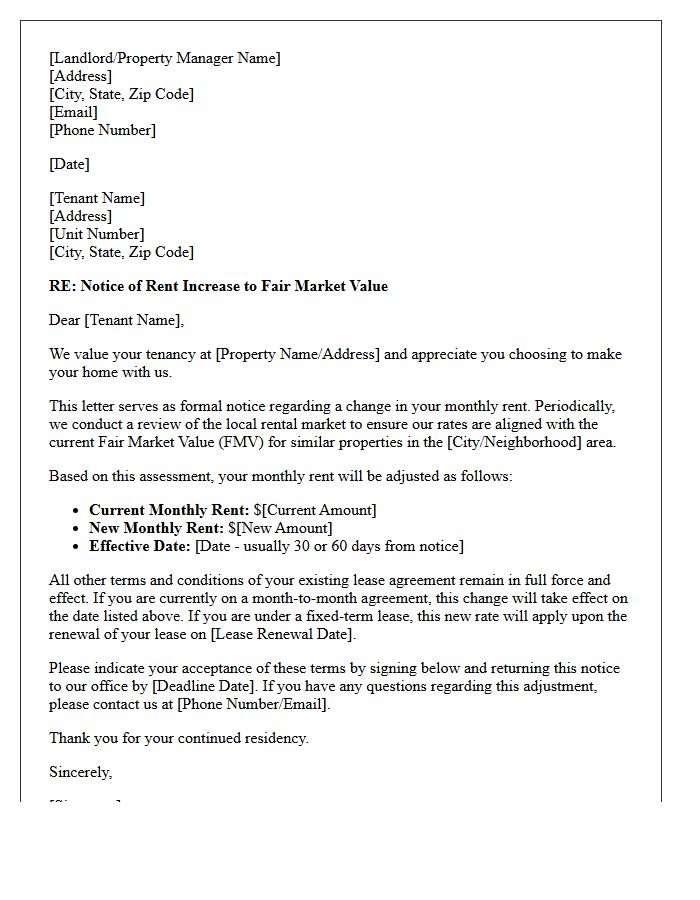
A Fair Market Value Rent Increase Advisory Letter is a formal notification informing tenants that their rent will adjust to align with current market rates. This document is essential for legal compliance, ensuring landlords provide adequate notice before changes take effect. It typically includes the new rental amount, the effective date, and comparable data justifying the increase. For residents, understanding this letter is crucial to evaluate local affordability and negotiate terms. Clear communication through this advisory helps maintain transparent landlord-tenant relationships while adhering to local housing regulations and rent control ordinances.
Advance Statutory Notice of Rent Increase Letter
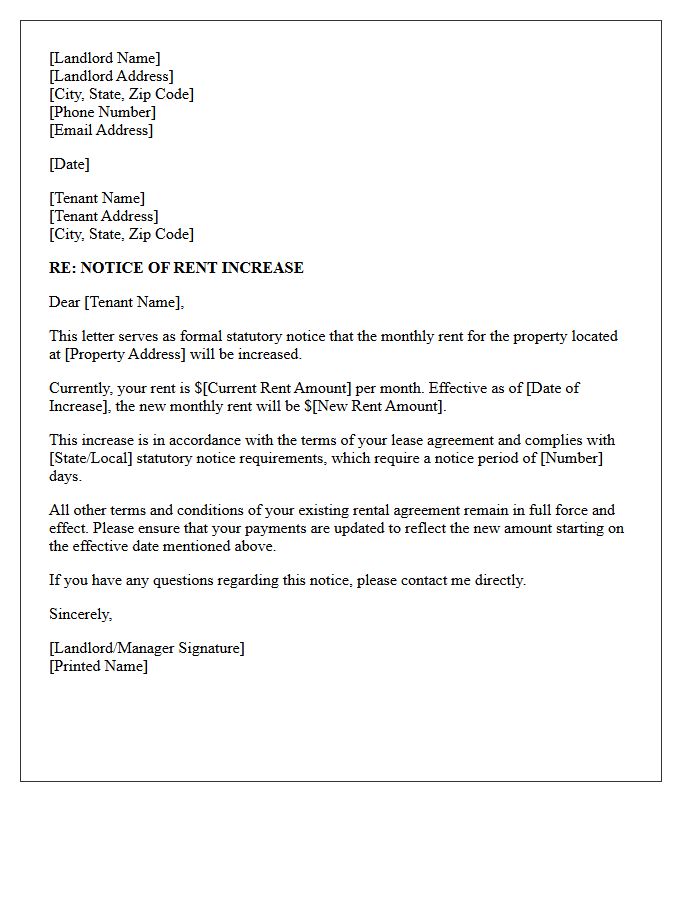
An Advance Statutory Notice of Rent Increase is a formal legal document landlords must serve to adjust tenant costs. It ensures compliance with local housing laws, typically requiring a specific notice period-often 30 to 90 days-before the new rate takes effect. To be valid, the letter must clearly state the new rent amount, the effective date, and follow prescribed state or regional formats. Providing this notice protects both parties by ensuring transparency and preventing sudden financial surprises, making it an essential component of professional property management and tenant rights.
Friendly Tenant Rent Increase Communication Letter
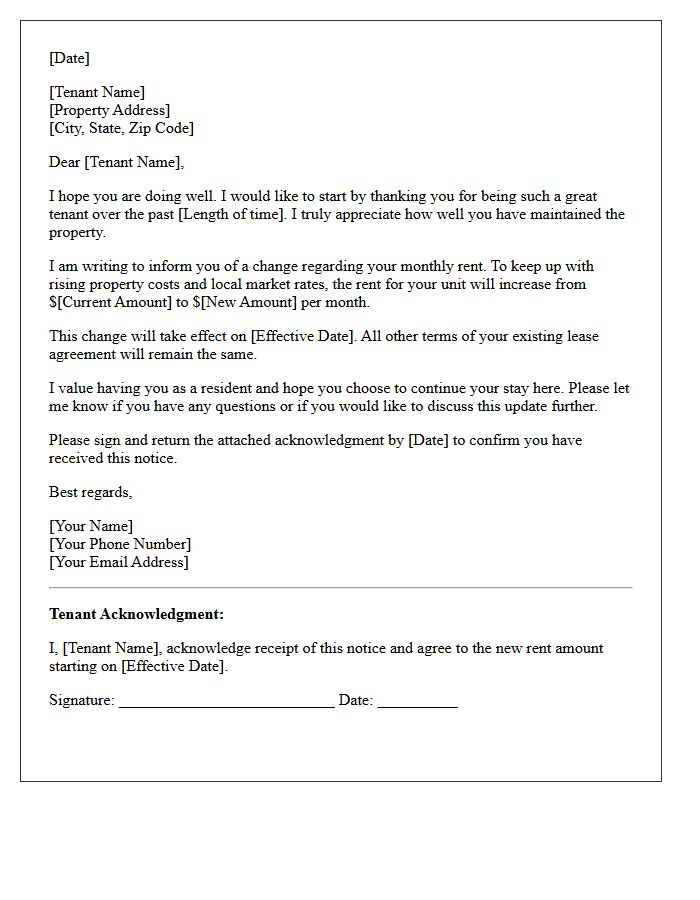
A friendly rent increase letter prioritizes clear communication to maintain a positive landlord-tenant relationship. It is essential to provide advance notice according to local housing laws, typically 30 to 60 days. The letter should professionally state the new rental amount and the effective date while briefly explaining the reason, such as rising property taxes or maintenance costs. Expressing appreciation for the tenant helps mitigate friction. Ensure the document includes contact information for any questions, ensuring the transition remains transparent, respectful, and legally compliant for both parties involved.
Lease Expiration and Proposed Rent Increase Letter
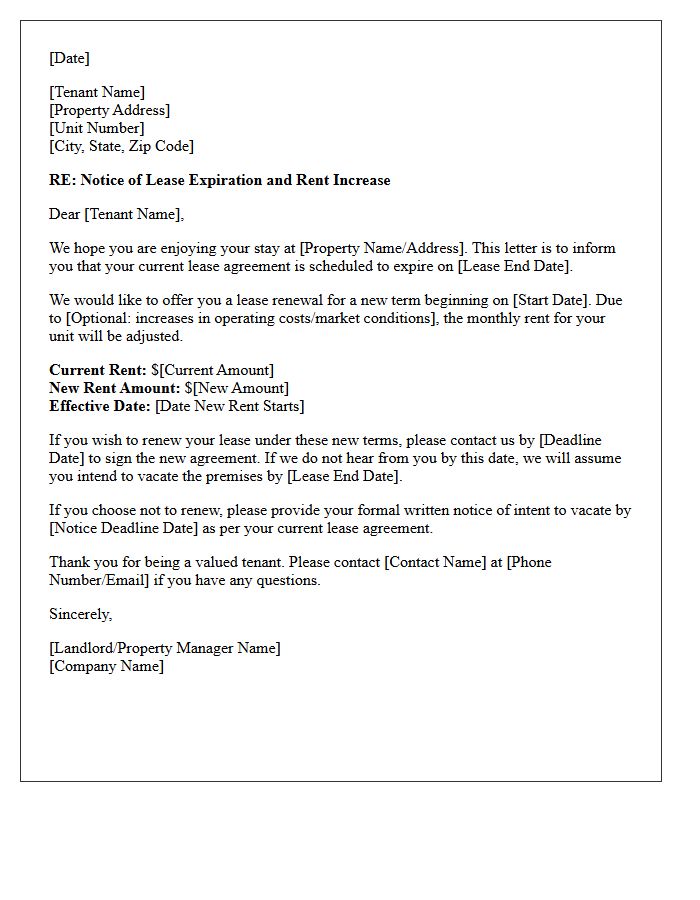
A lease expiration notice serves as a formal communication informing tenants that their current agreement is ending. This document typically includes a proposed rent increase, detailing new financial terms for a potential renewal. It is essential to review the notice period required by local laws to ensure compliance. Tenants should evaluate the market rate comparison provided to decide between negotiating terms, accepting the increase, or providing a notice to vacate. Timely responses are critical to avoid automatic month-to-month conversions or unexpected tenancy terminations.
Subsidized Housing Rent Increase Approval Letter
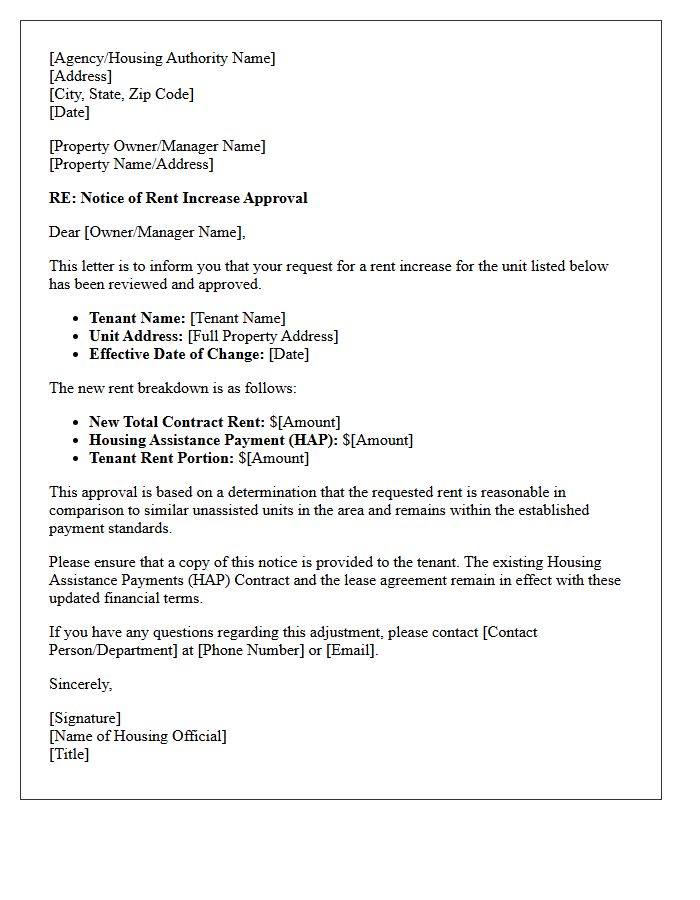
A Subsidized Housing Rent Increase Approval Letter is an official document confirming that a government agency has authorized a higher rent amount. This notice specifies the new contract rent, the adjusted tenant portion, and the effective date of the change. It ensures that the increase complies with program regulations and budget limits. Tenants should review this letter carefully to understand their updated monthly financial obligation and verify that the subsidy calculation remains accurate according to their reported household income and family composition.
Multi-Family Property Rent Increase Announcement Letter
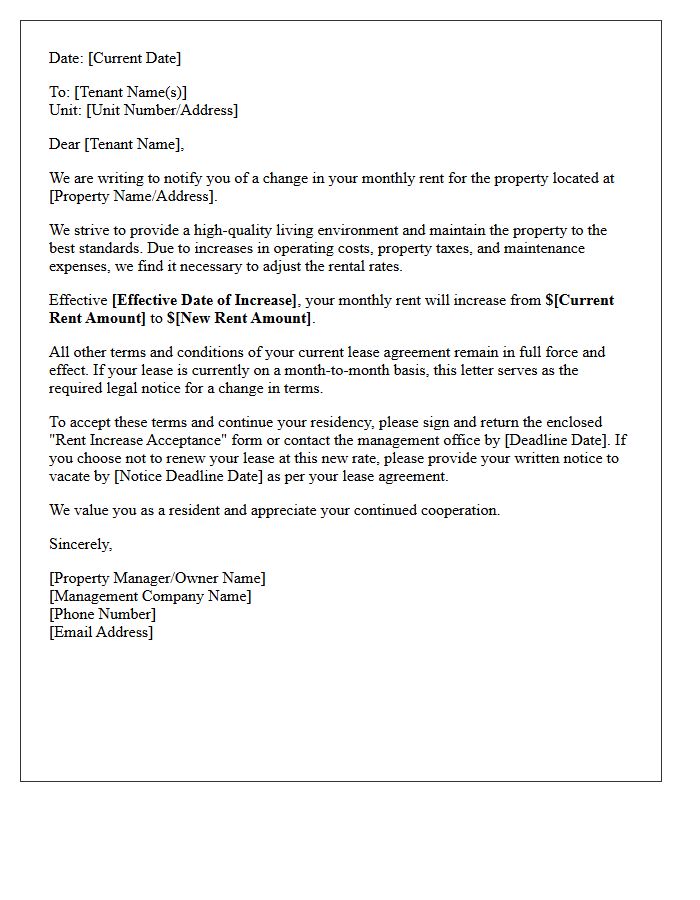
A Multi-Family Property Rent Increase Announcement Letter is a formal notice used to inform tenants of an upcoming adjustment in lease costs. To ensure legal compliance, it must be delivered according to local landlord-tenant laws, typically providing a 30 to 60-day notice period. The document should clearly state the new monthly rate, the effective date, and the reason for the change, such as rising market trends or maintenance costs. Clear communication helps maintain positive tenant relationships while ensuring the financial viability of the investment property.
Utility Adjustment and Rent Increase Notice Letter
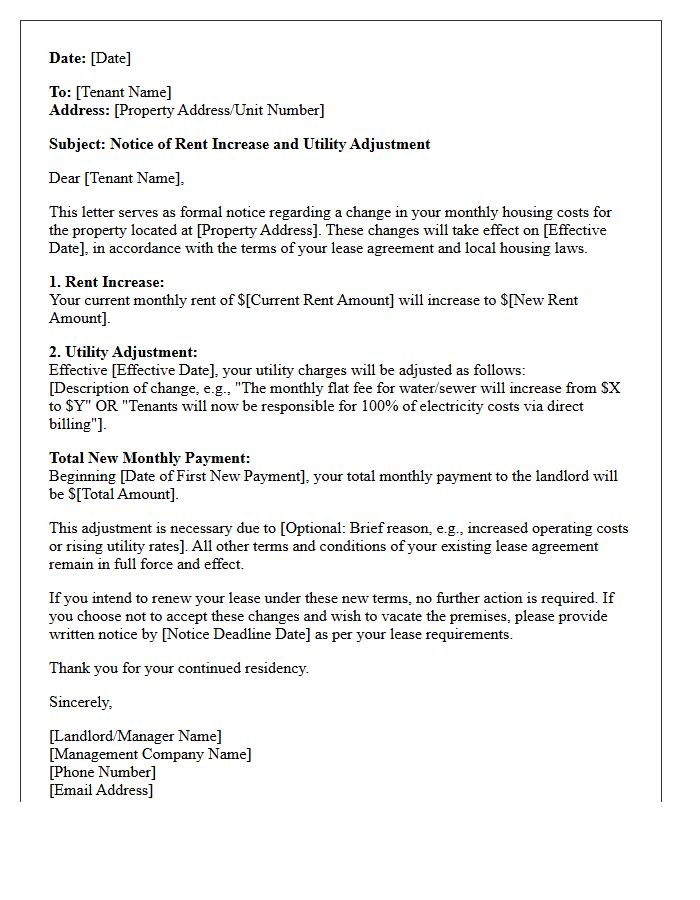
A Utility Adjustment and Rent Increase Notice Letter is a formal legal document used by landlords to notify tenants of changes in housing costs. It must clearly state the effective date of the new rate and the specific reason for the adjustment, such as rising operational expenses or utility fluctuations. To ensure compliance, property managers must adhere to local rent control laws and mandatory notice periods, typically 30 to 60 days. This written communication serves as an essential record to maintain transparency and prevent future legal disputes between parties.
What is a standard residential rent increase notice letter?
A residential rent increase notice is a formal written document sent by a landlord to a tenant informing them that the rent for their dwelling will be raised on a specific date. To be legally valid, it must typically include the new rent amount, the effective date, and be delivered within a specific timeframe required by local or state law.
How much notice must a landlord provide before increasing rent?
Most jurisdictions require a minimum of 30 to 60 days' written notice before a rent increase takes effect. For month-to-month tenancies, 30 days is common, while long-term leases usually require notice prior to the renewal period. Always check your local landlord-tenant laws as some areas require 90 days for increases exceeding 10%.
What information should be included in a rent increase letter?
A professional rent increase letter should include the date of the notice, the tenant's name and address, the current rent amount, the new rent amount, the date the increase begins, and the landlord or property manager's signature. It is also helpful to mention the lease provision that allows for the increase.
Can a landlord increase rent during a fixed-term lease?
Generally, a landlord cannot increase the rent during the middle of a fixed-term lease unless the lease agreement specifically contains a clause that allows for such an adjustment. In most cases, rent increases can only occur once the current lease term expires and a new agreement or renewal is signed.
Are there limits on how much rent can be increased?
Rent increase limits depend on local rent control or rent stabilization laws. In areas without these protections, landlords can often increase rent to market rates, provided they do not do so for discriminatory or retaliatory reasons. However, some states have passed "anti-price gouging" laws that cap annual increases at a certain percentage plus inflation.

Comments