
Professional follow-up is essential when a candidate shortlist is declined. Understanding specific pain points helps refine your talent search and strengthens the partnership. Use a formal Feedback Request Letter to uncover why candidates were unsuitable and improve future alignment. Professionalism ensures long-term success despite initial rejection. To help you draft the perfect response, below are some ready to use template.
Image cover: Effective Feedback Request Templates for Rejected Candidate Shortlists
Letter Samples List
- Feedback Request Letter Regarding Rejected Candidate Shortlist
- Client Feedback Request Letter For Unsuccessful Shortlist
- Post-Shortlist Rejection Feedback Request Letter
- Letter Requesting Client Feedback On Rejected Candidates
- Recruitment Shortlist Rejection Follow-Up Letter
- Letter To Client Regarding Rejected Shortlist Feedback
- Rejected Shortlist Candidate Profile Feedback Letter
- Client Alignment And Shortlist Feedback Letter
- Letter Requesting Review Of Rejected Shortlist
- Talent Shortlist Rejection Analysis Letter
- Letter Of Inquiry Regarding Shortlist Rejection
- Recruitment Search Recalibration And Feedback Letter
Feedback Request Letter Regarding Rejected Candidate Shortlist
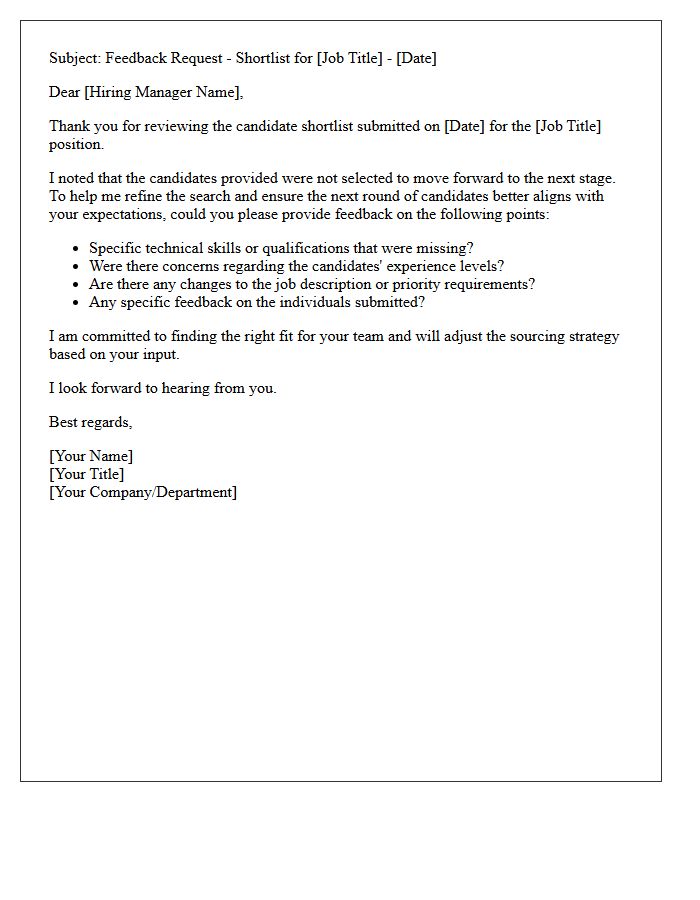
A feedback request letter is a professional tool used to understand why a candidate was excluded from a shortlist. To gain actionable insights, ensure your tone remains constructive and objective. Focus on identifying specific skill gaps or missing qualifications that influenced the decision. This communication helps refine your professional profile and demonstrates a commitment to continuous improvement. Keep the inquiry brief, expressing gratitude for the opportunity while seeking clarity on how to better align with the hiring criteria for future applications within the industry.
Client Feedback Request Letter For Unsuccessful Shortlist
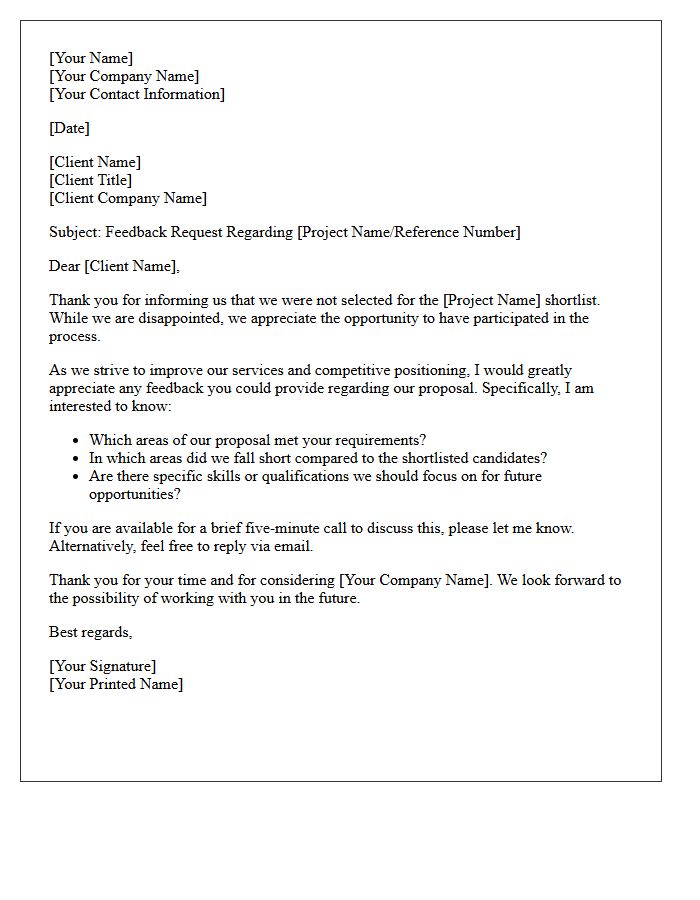
A client feedback request letter for an unsuccessful shortlist is a professional inquiry sent after a rejection to gain constructive insights. This communication helps you understand specific gaps in your proposal or interview performance. By asking for targeted feedback, you demonstrate growth mindset and maintain a positive relationship for future opportunities. Keep the tone polite, concise, and appreciative of their time. Use this information to refine your competitive advantage and improve your success rate in subsequent bidding processes.
Post-Shortlist Rejection Feedback Request Letter
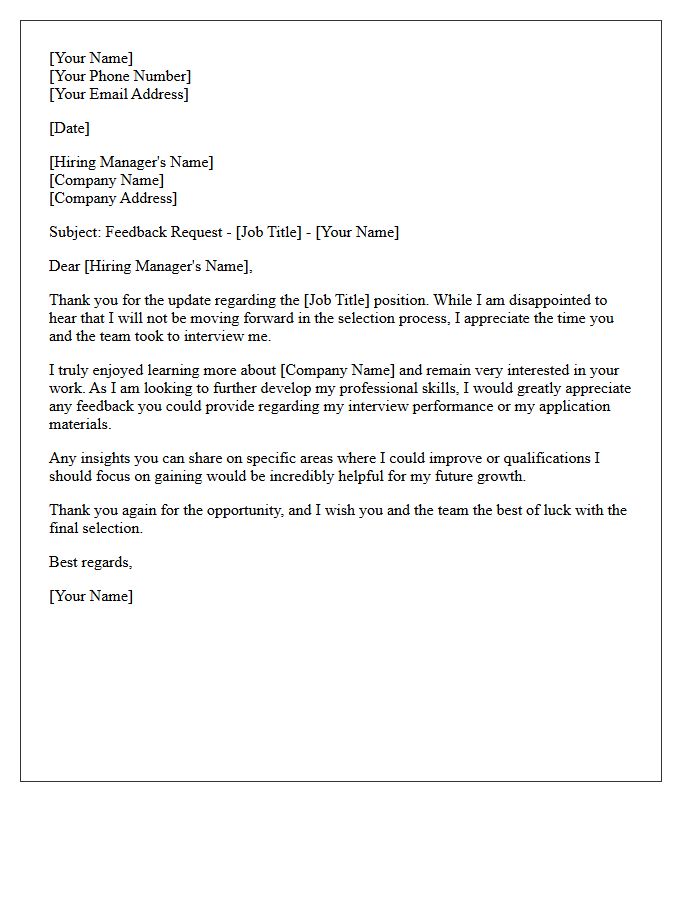
A professional post-shortlist rejection feedback request letter is a strategic tool for career growth. After reaching the interview stage, sending a polite follow-up email demonstrates your commitment to professional development. Express gratitude for the opportunity, then ask for constructive feedback regarding specific areas where your qualifications or performance could improve. This inquiry helps identify skill gaps and provides valuable market insights for future applications. Keep the tone respectful and concise to maintain a positive relationship with the employer, potentially keeping doors open for future opportunities within the organization.
Letter Requesting Client Feedback On Rejected Candidates

When sending a letter requesting client feedback on rejected candidates, the primary objective is to refine your recruitment search. Clearly list each candidate's name and specific interview stages they completed. Ask the hiring manager for detailed justifications regarding technical gaps or cultural fit issues. This constructive criticism allows you to calibrate your sourcing strategy and improve future submissions. Promptly gathering this data ensures a better candidate experience through timely updates and demonstrates your commitment to finding the ideal talent match for their team's unique requirements.
Recruitment Shortlist Rejection Follow-Up Letter
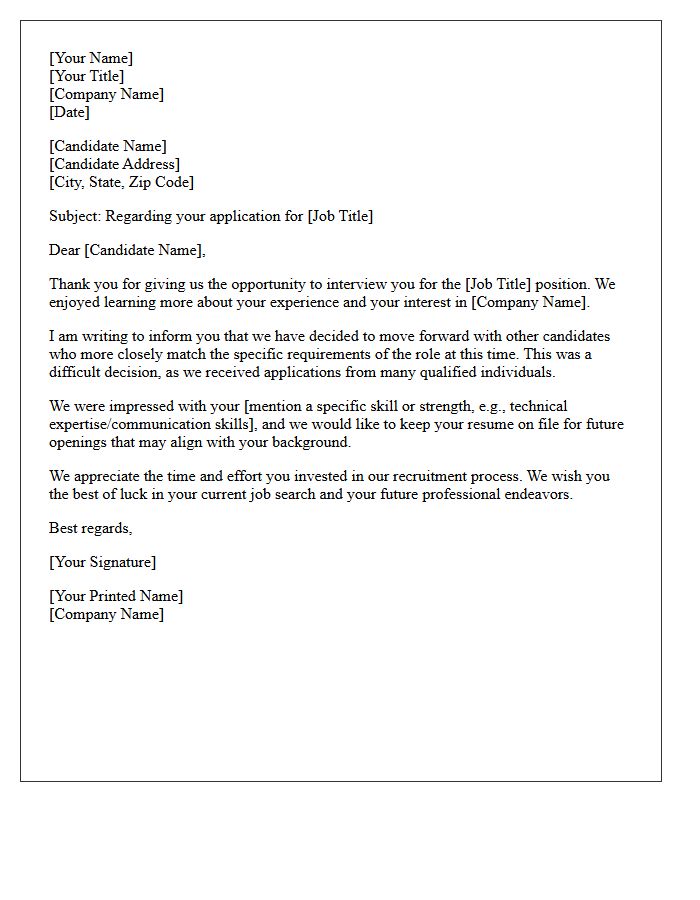
A recruitment shortlist rejection follow-up letter is a professional tool used to maintain your professional network after being cut from the final selection. The most important goal is to request constructive feedback regarding your interview performance or skill gaps. Keep the tone gracious and brief, expressing genuine gratitude for the opportunity. This strategic communication demonstrates resilience and high emotional intelligence, potentially keeping your profile active for future openings. By showing growth-oriented intent, you transform a rejection into a valuable learning opportunity for your long-term career advancement.
Letter To Client Regarding Rejected Shortlist Feedback
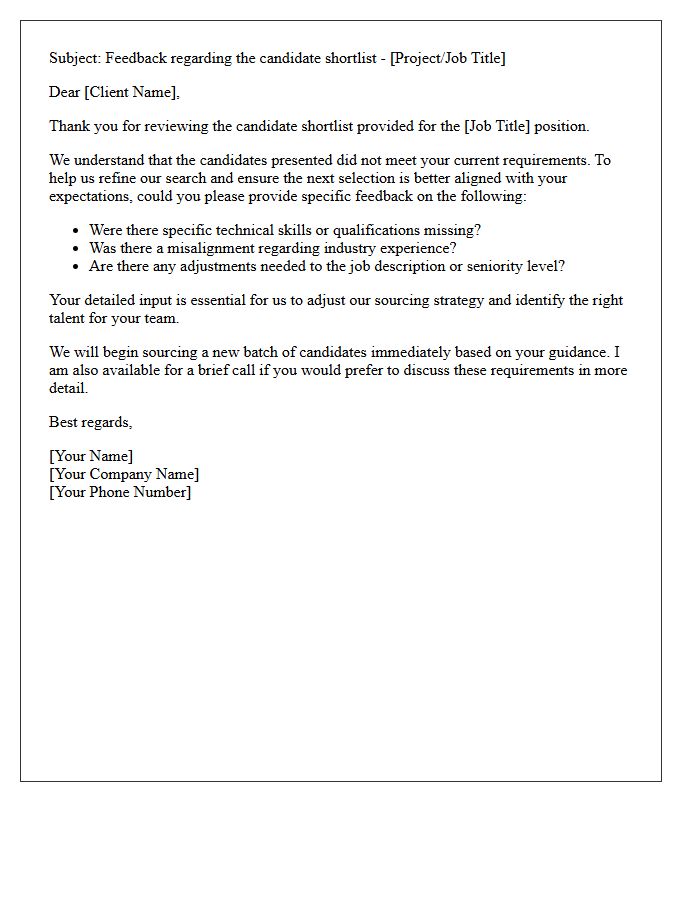
When sending a letter to client regarding rejected shortlist feedback, prioritize clarity and professionalism. It is crucial to request specific reasons for the rejection to refine future candidate searches. Understanding whether the issue was technical skills, cultural fit, or salary expectations helps align expectations. Maintain a positive partnership by demonstrating a commitment to quality and offering immediate strategic adjustments. Timely communication ensures the recruitment process remains momentum-driven while strengthening the consultant-client relationship through transparency and proactive problem-solving.
Rejected Shortlist Candidate Profile Feedback Letter
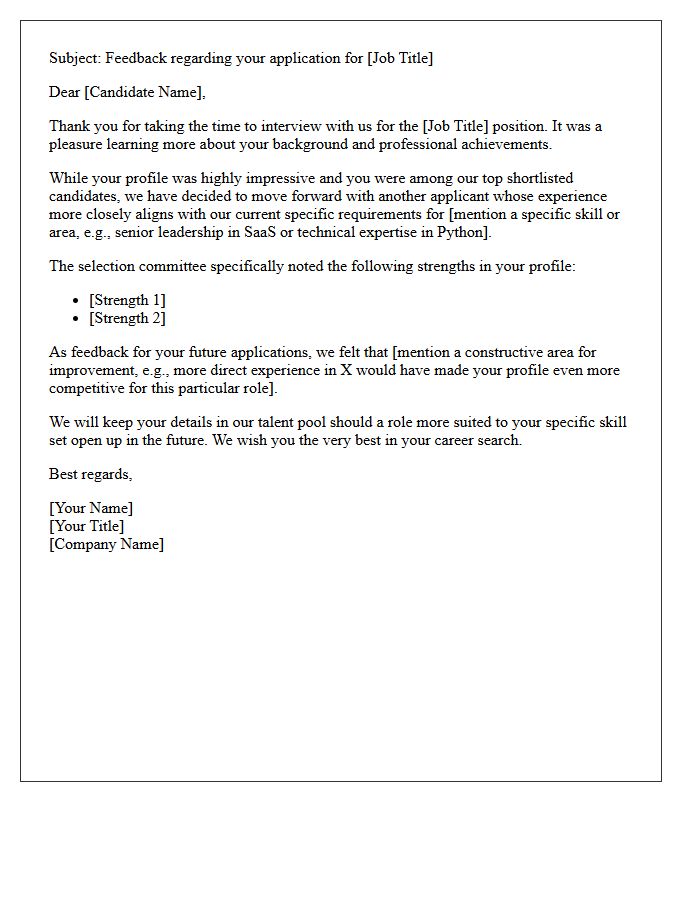
A Rejected Shortlist Candidate Profile Feedback Letter is a professional document providing specific, constructive insights to high-potential applicants. The most critical element is offering actionable feedback that highlights strengths while identifying precise areas for improvement. This transparent communication maintains your employer brand and ensures a positive candidate experience. By explaining why another profile was a better fit, you help talented professionals refine their skills for future opportunities, fostering a supportive talent community and minimizing potential frustration after intensive interview rounds.
Client Alignment And Shortlist Feedback Letter
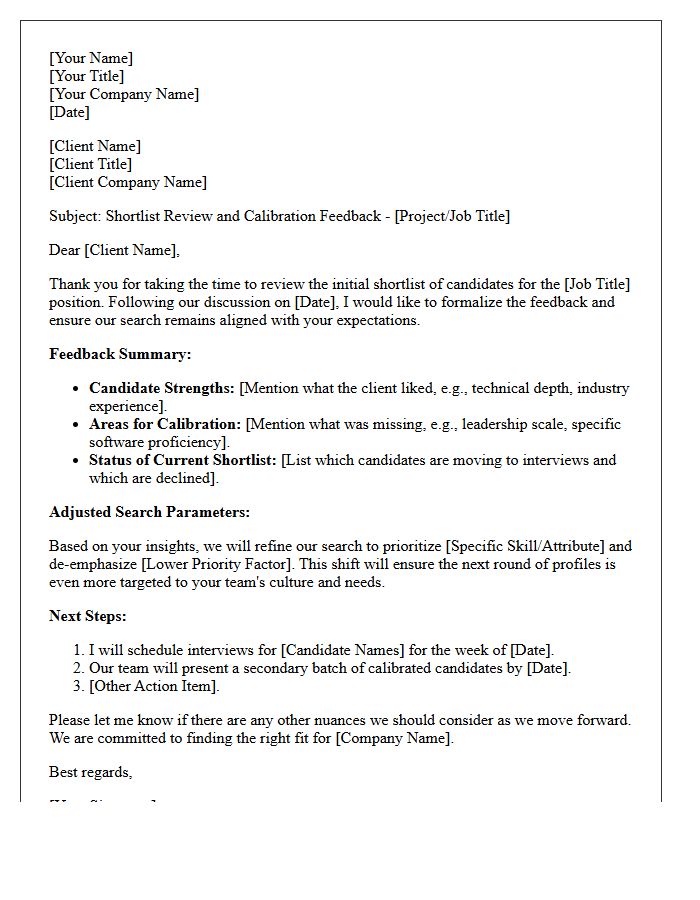
A Client Alignment And Shortlist Feedback Letter is a vital recruitment document used to refine search criteria. It summarizes why specific candidates were selected or rejected, ensuring mutual understanding between the recruiter and the hiring manager. By documenting feedback on candidate profiles, you optimize the talent pipeline and adjust sourcing strategies in real-time. This proactive communication reduces hiring time, improves candidate quality, and ensures that future submissions align perfectly with the client's expectations and technical requirements.
Letter Requesting Review Of Rejected Shortlist
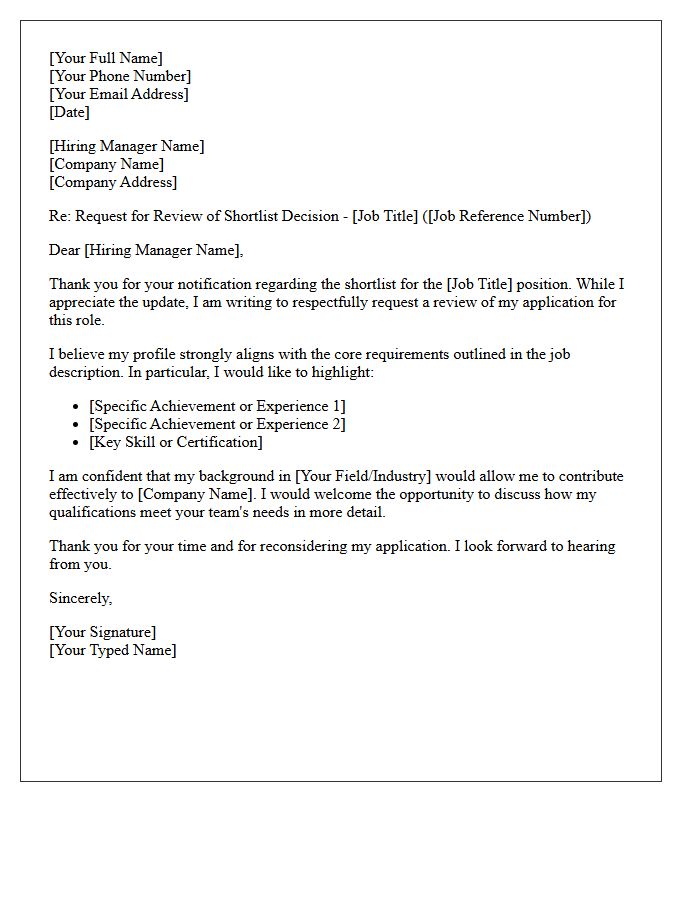
When drafting a letter requesting review of rejected shortlist, you must provide specific, evidence-based arguments to challenge the decision. Clearly align your qualifications and professional achievements with the original job criteria to demonstrate a potential oversight. Maintain a professional, objective tone throughout the document to ensure procedural fairness. Formal communication can prompt a reevaluation of your application if you highlight technical errors or missing information. This request serves as a vital step in recruitment transparency, allowing candidates to advocate for their professional suitability during the hiring process.
Talent Shortlist Rejection Analysis Letter
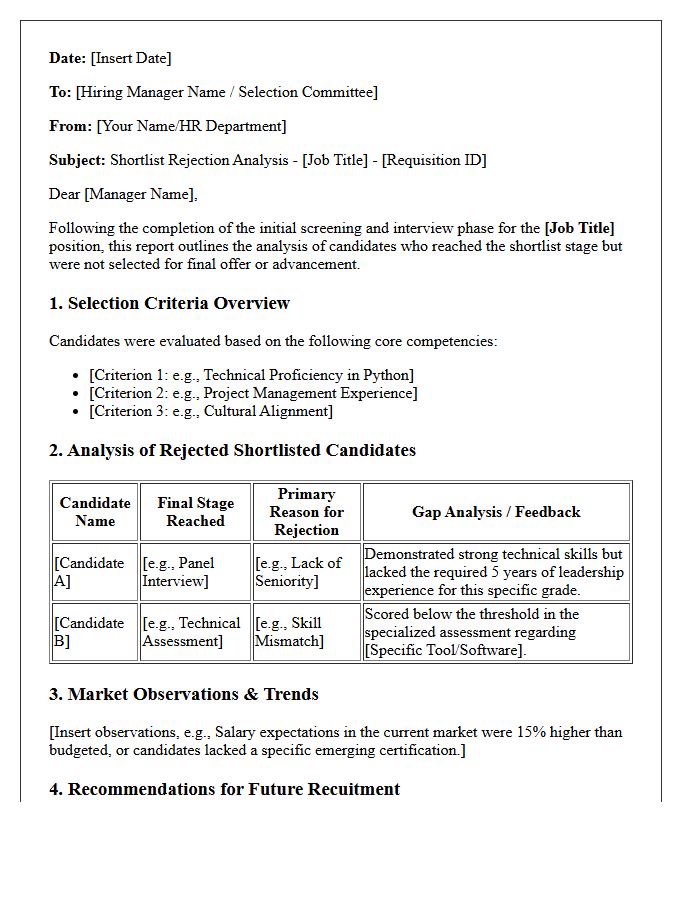
A Talent Shortlist Rejection Analysis Letter provides critical feedback to candidates not selected after reaching the final interview stages. Unlike standard rejections, this document offers constructive insights regarding specific skill gaps or cultural alignment. It maintains a positive employer brand by demonstrating professional transparency. For recruiters, analyzing these outcomes helps refine future sourcing strategies and improves the overall quality of the hiring funnel. Providing clear, empathetic data ensures candidates remain open to future opportunities while helping your organization optimize recruitment metrics and selection criteria effectively.
Letter Of Inquiry Regarding Shortlist Rejection
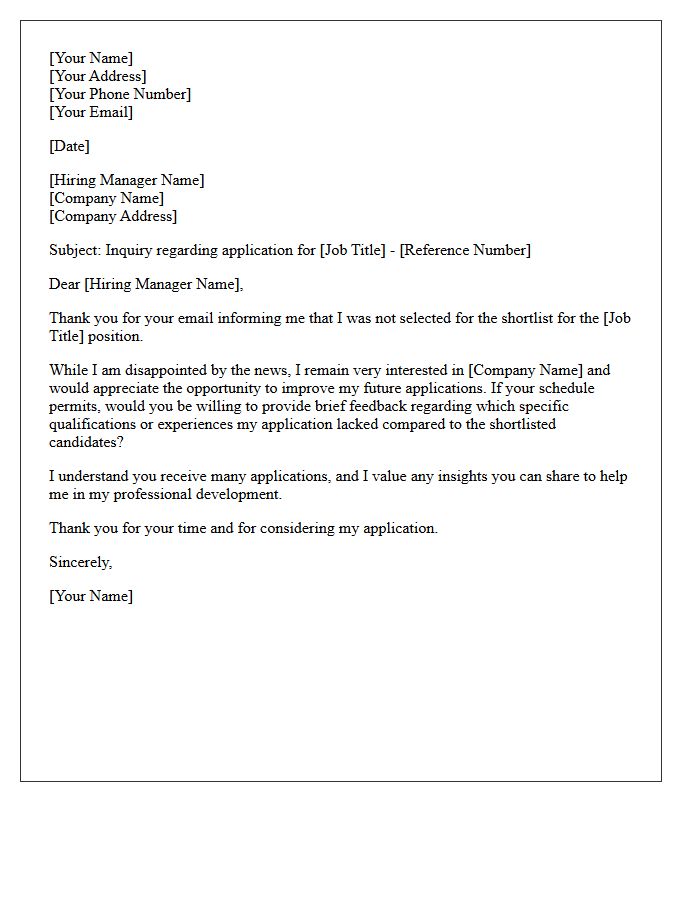
A Letter of Inquiry Regarding Shortlist Rejection is a professional tool used to seek constructive feedback after being excluded from a selection process. The primary goal is to understand specific skill gaps or qualitative deficiencies in your application. By maintaining a polite and growth-oriented tone, you demonstrate high emotional intelligence and persistence. This professional follow-up can provide invaluable insights for improving future proposals or resumes, helping you refine your approach and potentially keeping the door open for future opportunities within the same organization.
Recruitment Search Recalibration And Feedback Letter
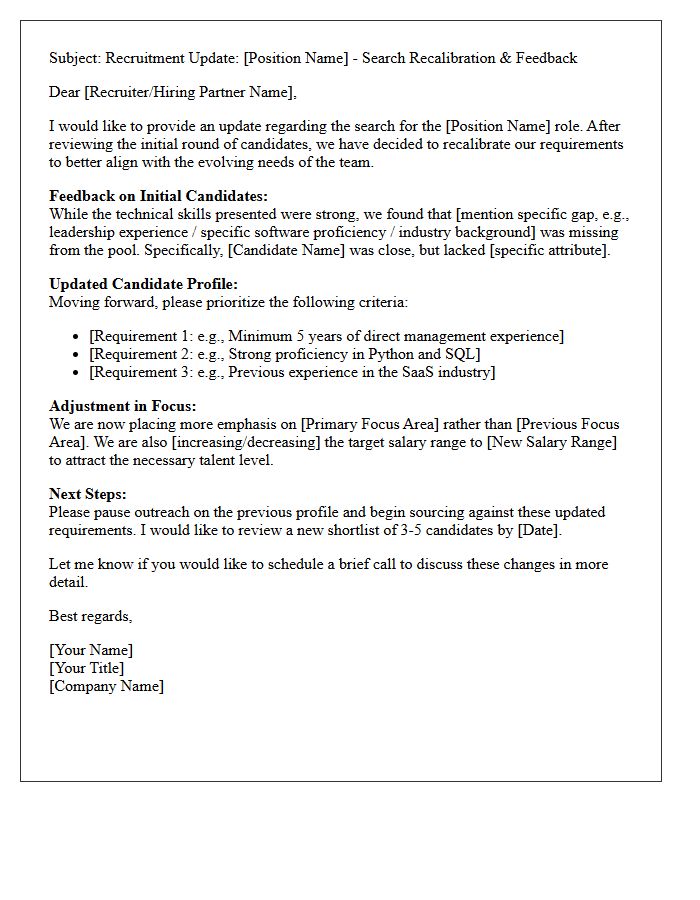
A recruitment search recalibration letter is a vital tool for aligning expectations between hiring managers and recruiters. When initial candidates miss the mark, this document provides formal feedback to refine candidate personas and adjust sourcing strategies. By clearly identifying skill gaps or culture fit issues, the letter ensures the search stays on track. Effective communication through this process optimizes talent acquisition, reduces time-to-hire, and clarifies evolving role requirements. Use this recalibration to document specific adjustments, ensuring the hiring criteria reflect current organizational needs for a successful placement.
Why should I send a feedback request letter after a candidate shortlist is rejected?
Sending a feedback request helps you understand the specific gaps between the candidates provided and the client's expectations. This clarity allows you to refine your search criteria, improve future submittals, and demonstrates your commitment to quality and partnership.
What key details should be included in a feedback request for a rejected shortlist?
Your request should include the specific job title or project reference, a polite acknowledgment of their decision, and targeted questions regarding the candidates' technical skills, cultural fit, or experience levels that failed to meet the mark.
How soon after a rejection should I ask the client for feedback?
You should ideally reach out within 24 to 48 hours of receiving the rejection. Prompt communication ensures the candidates and the requirements are still fresh in the client's mind, allowing for more accurate and actionable insights.
How can I encourage a client to provide detailed feedback if they are unresponsive?
To encourage a response, keep your email brief and use bulleted questions to make it easy for them to reply. Frame the request as a way to save them time in the long run by ensuring the next batch of candidates is perfectly aligned with their needs.
What is the best way to handle negative feedback regarding a rejected shortlist?
Handle negative feedback professionally by remaining objective and avoiding defensiveness. Acknowledge the client's concerns, ask clarifying questions if necessary, and explain the concrete steps you will take to adjust your sourcing strategy based on their input.


Comments