
Establishing a clear Code of Conduct and Ethics Letter is essential for maintaining integrity and professional standards within any organization. This document outlines core values, legal obligations, and behavioral expectations to ensure a transparent workplace culture. Defining these principles protects your reputation and guides employee decision-making effectively. To help you get started, below are some ready to use template.
Image cover: Professional Code of Conduct and Ethics: Sample Letters and Templates
Letter Samples List
- Candidate Confidentiality and Privacy Ethics Letter
- Anti-Discrimination and Equal Opportunity Code Letter
- Client Fee Transparency and Integrity Letter
- Conflict of Interest Disclosure Letter
- Bribery and Anti-Corruption Compliance Letter
- Fair and Unbiased Interviewing Conduct Letter
- Falsification of Candidate Qualifications Warning Letter
- Professional Boundaries and Harassment Prevention Letter
- Ethical Headhunting and Poaching Policy Letter
- Data Protection and GDPR Compliance Letter
- Recruitment Consultant Code of Conduct Agreement Letter
- Vendor and Third-Party Ethics Alignment Letter
- Whistleblower Protection and Reporting Letter
- Diversity, Equity, and Inclusion Commitment Letter
Candidate Confidentiality and Privacy Ethics Letter
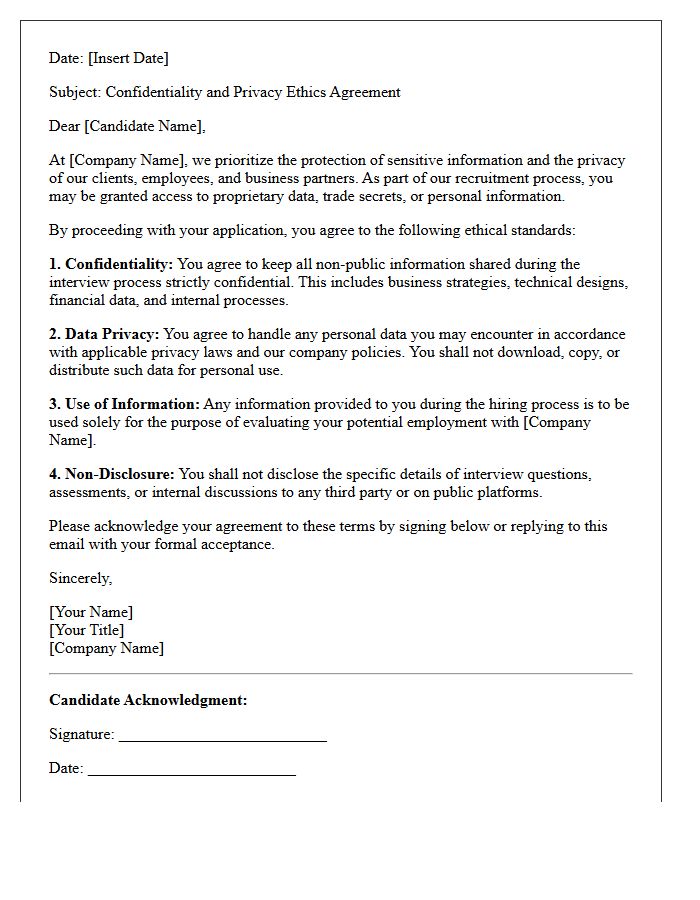
A Candidate Confidentiality and Privacy Ethics Letter is a formal agreement ensuring that data protection remains a priority during recruitment. It establishes informed consent regarding how personal information is stored and shared. This document protects sensitive applicant details from unauthorized disclosure while outlining the employer's legal obligations. Adhering to these privacy standards builds professional trust and ensures compliance with global regulations like GDPR. For candidates, it provides a guarantee that their career search remains private, preventing potential conflicts with current employers or third-party data harvesters.
Anti-Discrimination and Equal Opportunity Code Letter
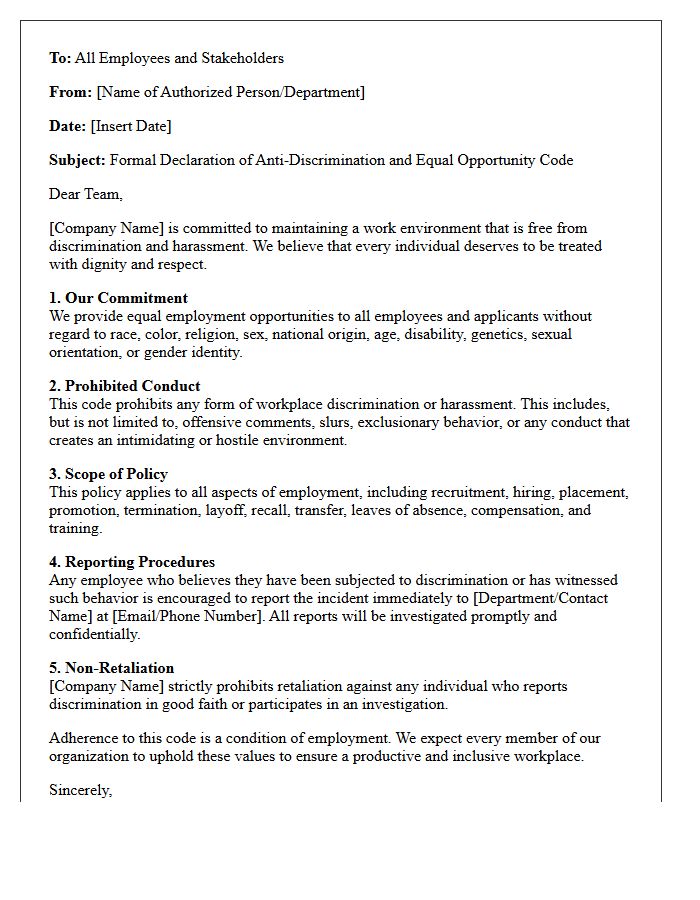
The Anti-Discrimination and Equal Opportunity Code Letter is a formal document outlining a commitment to fairness in the workplace. It serves as a regulatory framework to prevent bias based on race, gender, or disability. This letter ensures compliance with labor laws, promoting an inclusive environment where merit governs advancement. Understanding this code is essential for maintaining legal protection and fostering a diverse organizational culture. It acts as a primary reference for resolving grievances and upholding equity within any professional setting.
Client Fee Transparency and Integrity Letter
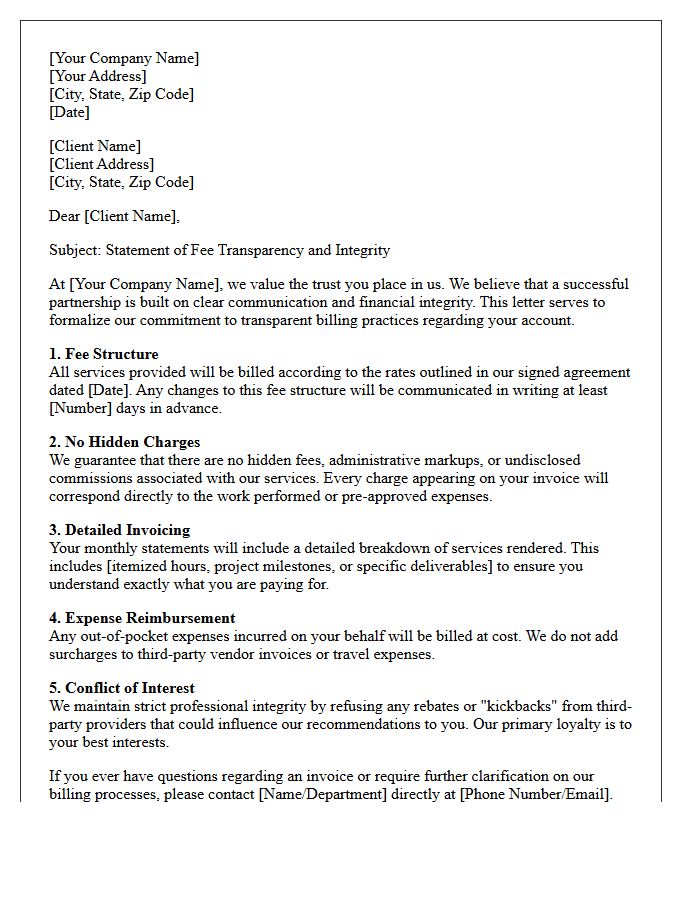
A Client Fee Transparency and Integrity Letter is a professional document designed to build trust by clearly outlining all costs associated with a service. It ensures full disclosure of commission structures, management fees, and potential conflicts of interest. By prioritizing accountability, this letter prevents hidden charges and aligns financial expectations between the provider and the consumer. Issuing this document demonstrates a commitment to ethical standards and regulatory compliance, fostering long-term relationships based on honesty and fiscal clarity.
Conflict of Interest Disclosure Letter
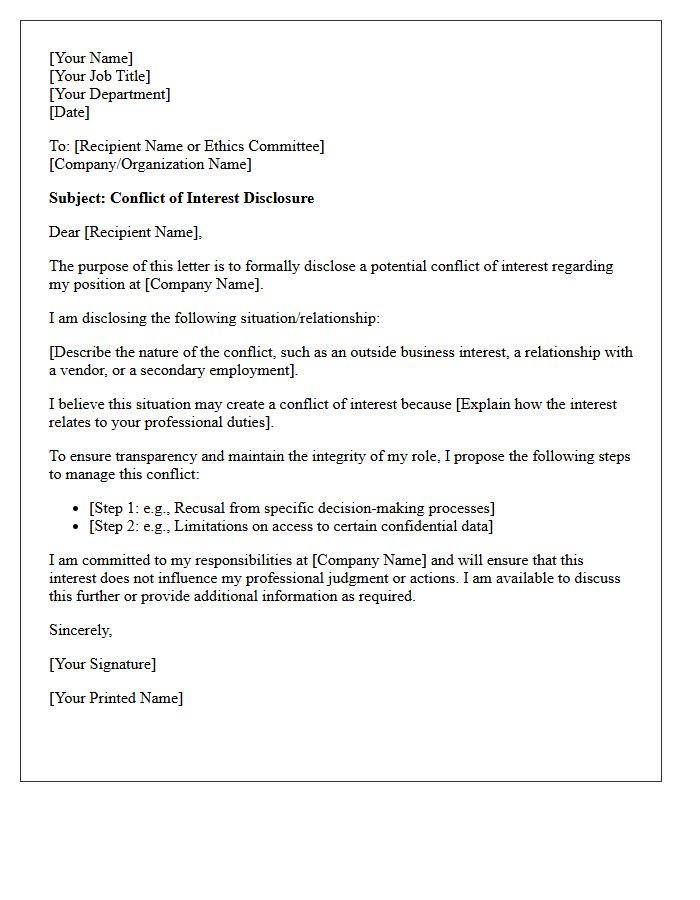
A Conflict of Interest Disclosure Letter is a formal document used to maintain transparency and ethical integrity within professional environments. It serves to identify potential overlaps between an individual's private interests and their official duties. By proactively declaring these financial or personal ties, you mitigate risks of bias and protect your reputation. Organizations use this disclosure to evaluate impartiality and implement necessary safeguards. Providing accurate details ensures legal compliance and fosters accountability, preventing future disputes and maintaining the overall credibility of the decision-making process.
Bribery and Anti-Corruption Compliance Letter
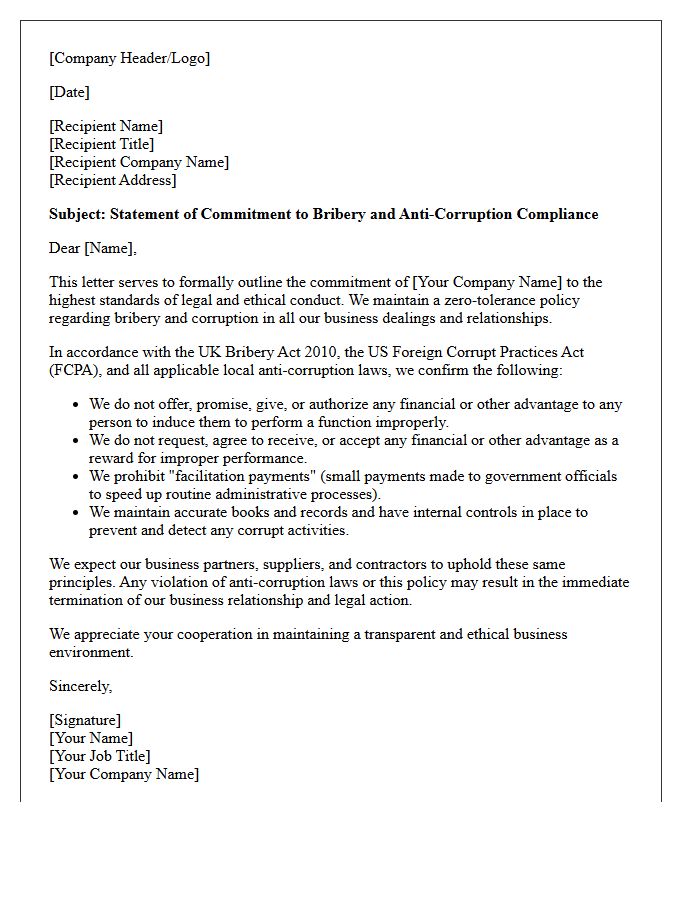
A Bribery and Anti-Corruption Compliance Letter is a formal document confirming that an organization strictly adheres to legal frameworks like the FCPA or UK Bribery Act. It serves as a binding assurance to partners and regulators that internal controls prevent unethical inducements. This letter is essential during due diligence to mitigate legal risks and maintain corporate integrity. By signing, entities verify they have robust policies to detect and prevent financial crimes, ensuring all business dealings remain transparent and legally compliant across international jurisdictions.
Fair and Unbiased Interviewing Conduct Letter
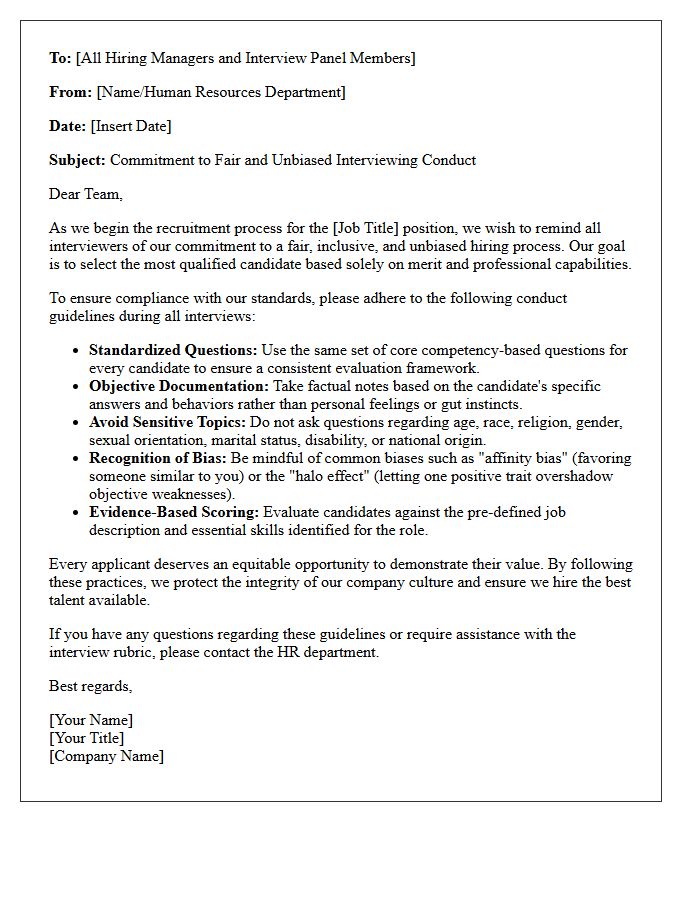
A Fair and Unbiased Interviewing Conduct Letter establishes a framework for equitable recruitment. It serves as a formal commitment to objective evaluation, ensuring all candidates are assessed solely on merit and predefined competencies. By outlining legal obligations and mitigating unconscious bias, the letter promotes a diverse workplace culture. It provides interviewers with clear guidelines on permissible questioning and professional behavior. Implementing this standard is essential to maintaining hiring integrity, protecting the organization from discrimination claims, and ensuring every applicant receives a consistent candidate experience regardless of their background.
Falsification of Candidate Qualifications Warning Letter
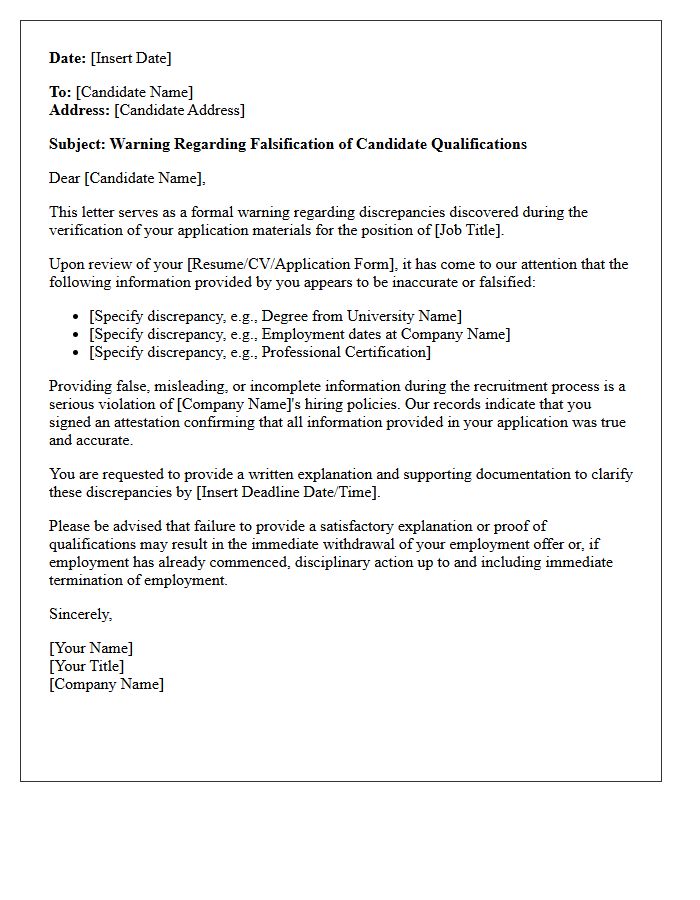
Receiving a Falsification of Candidate Qualifications Warning Letter is a serious disciplinary notice regarding misrepresentation on a resume or job application. This formal document alerts an individual that discrepancies were found in their professional history, such as fake degrees or inflated experience. Employers issue this warning to maintain hiring integrity and legal compliance. Consequences often include immediate termination of employment and potential legal action. It serves as a final opportunity for the candidate to provide verifiable evidence or face permanent dismissal for ethical misconduct.
Professional Boundaries and Harassment Prevention Letter
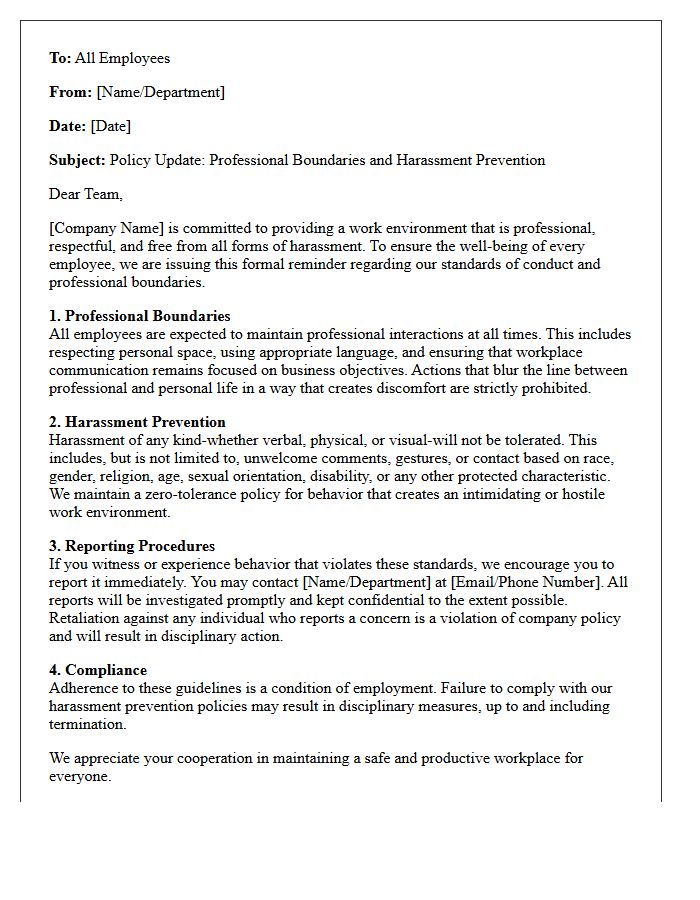
A Professional Boundaries and Harassment Prevention Letter is a formal document used to establish workplace conduct standards. It clearly outlines acceptable behaviors, legal definitions of misconduct, and the consequences of violations to ensure a safe environment. By proactively distributing this letter, employers reinforce a zero-tolerance policy against harassment and discrimination. This communication protects the organization from liability while fostering a culture of mutual respect. Understanding these guidelines is essential for maintaining professional integrity and ensuring all employees feel secure, valued, and legally protected within the professional setting.
Ethical Headhunting and Poaching Policy Letter
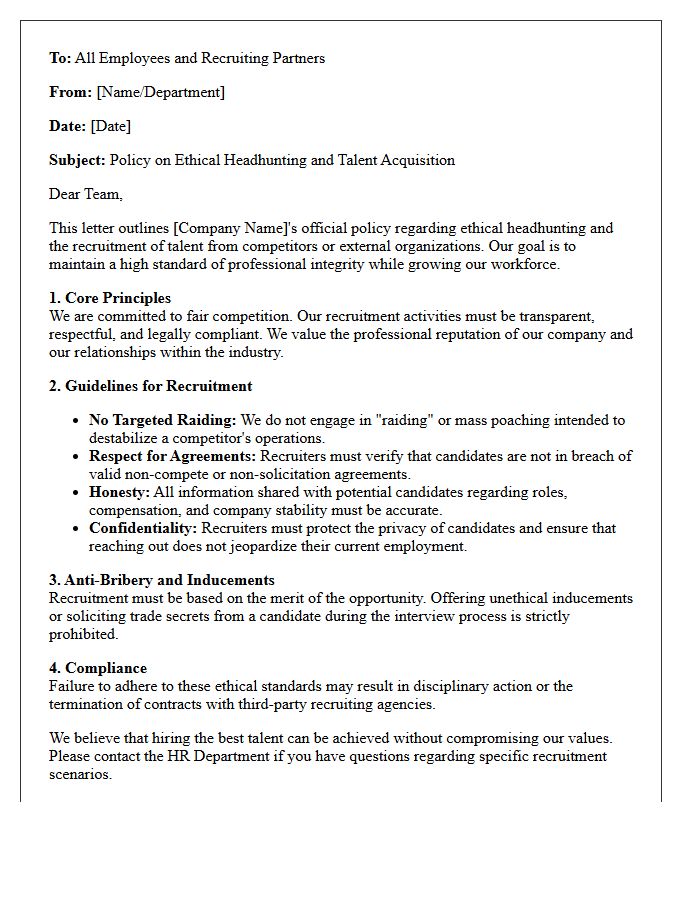
An Ethical Headhunting and Poaching Policy Letter establishes clear guidelines for professional talent acquisition. It defines boundaries for recruitment practices, ensuring transparency and respect between competing firms. By formalizing anti-poaching agreements or ethical standards, businesses prevent legal disputes and reputational damage. This document protects internal stability while fostering a fair marketplace for high-level candidates. Implementing such a policy promotes long-term industry integrity and ensures that executive search processes remain collaborative rather than predatory, ultimately safeguarding human capital and organizational relationships.
Data Protection and GDPR Compliance Letter
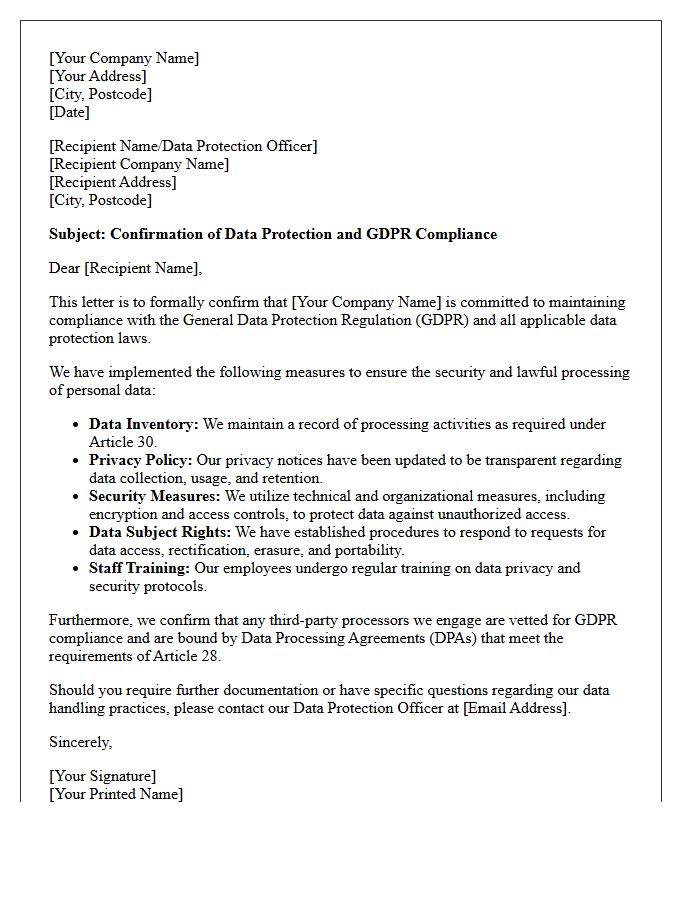
A GDPR compliance letter serves as formal documentation proving that an organization adheres to strict European Union data privacy standards. It confirms that personal information is processed legally, transparently, and securely. For businesses, providing this letter is essential to build trust with partners and clients by demonstrating robust data protection protocols. Key elements include details on data processing activities, security measures, and breach notification policies. Ensuring your business has a verified compliance statement is a legal requirement to avoid heavy fines and ensure long-term operational integrity in the global digital marketplace.
Recruitment Consultant Code of Conduct Agreement Letter
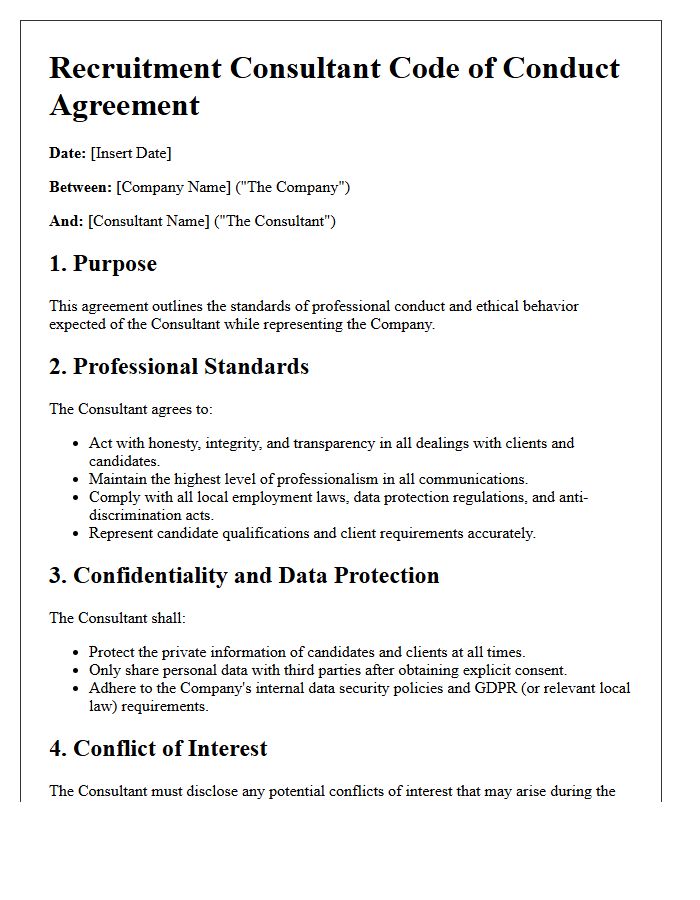
A Recruitment Consultant Code of Conduct Agreement Letter is a formal document establishing ethical standards and professional expectations. It ensures that consultants adhere to legal compliance, data privacy laws, and anti-discrimination policies. By signing, the recruiter commits to maintaining confidentiality for both clients and candidates while avoiding conflicts of interest. This agreement protects a firm's reputation and guarantees transparency throughout the hiring process. Understanding these guidelines is essential for fostering trust and ensuring all recruitment activities remain fair, accountable, and aligned with industry best practices.
Vendor and Third-Party Ethics Alignment Letter
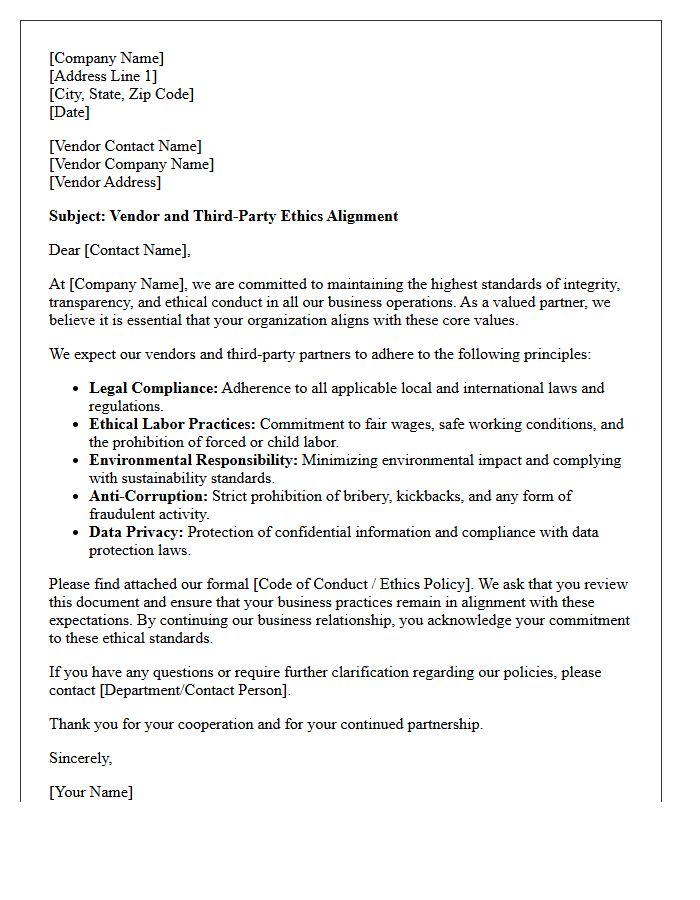
A Vendor and Third-Party Ethics Alignment Letter is a formal document ensuring that external partners adhere to a company's compliance standards and core values. It serves as a critical tool for risk management by establishing clear expectations regarding anti-corruption, labor practices, and data privacy. By signing this letter, vendors commit to ethical business conduct, protecting the hiring organization from legal liabilities and reputational damage. Aligning these standards creates a transparent supply chain and fosters long-term, accountable partnerships built on shared integrity and professional responsibility.
Whistleblower Protection and Reporting Letter
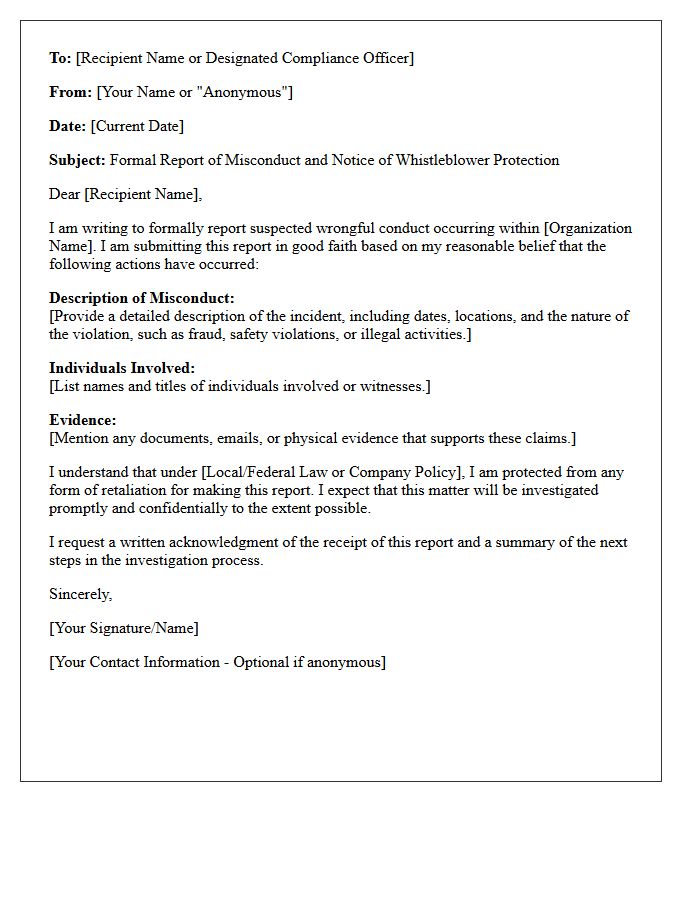
A Whistleblower Protection policy ensures employees can report unethical conduct without fear of retaliation. When drafting a Reporting Letter, it is crucial to include specific dates, names, and factual evidence of the alleged wrongdoing. These formal documents trigger legal safeguards under acts like Sarbanes-Oxley or OSHA. Confidentiality is a primary pillar, allowing individuals to disclose misconduct or safety violations securely. Understanding your rights ensures that anti-retaliation measures remain enforceable, protecting your professional status while promoting corporate transparency and accountability within the organization.
Diversity, Equity, and Inclusion Commitment Letter
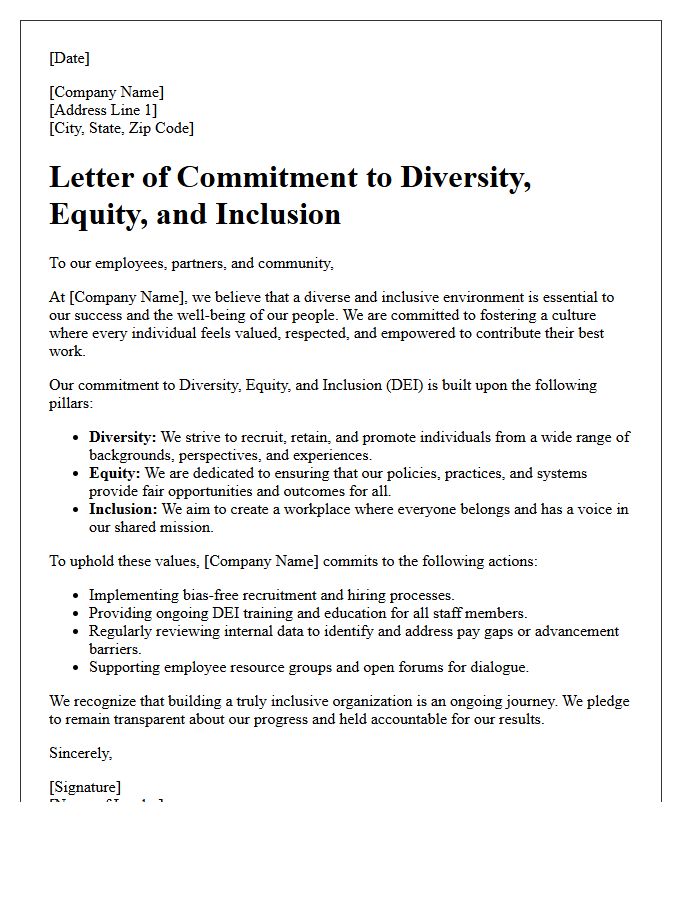
A Diversity, Equity, and Inclusion (DEI) Commitment Letter is a formal document outlining an organization's strategic pledge to foster a fair and representative workplace. It serves as a public declaration of accountability, detailing specific goals to eliminate systemic barriers. The most important term is accountability, as the letter defines how the leadership will measure progress and ensure transparency. By articulating core values and actionable steps, the letter builds trust with stakeholders and establishes a clear roadmap for creating a sustainable, inclusive culture where every individual can thrive regardless of their background.
What is the purpose of the Code of Conduct and Ethics Letter?
The Code of Conduct and Ethics Letter serves as a formal guide outlining the ethical standards, core values, and behavioral expectations that all employees and stakeholders must adhere to while representing the organization.
Who is required to comply with the Code of Ethics?
All employees, officers, directors, and third-party contractors are required to read, understand, and comply with the principles set forth in the Code of Conduct and Ethics Letter as a condition of their engagement.
How should a potential ethical violation be reported?
Potential violations should be reported through established internal channels, such as an immediate supervisor, the Human Resources department, or the organization's anonymous ethics reporting hotline.
What is the organization's policy on retaliation for reporting misconduct?
The organization maintains a strict non-retaliation policy, ensuring that no individual will face disciplinary action, harassment, or adverse employment consequences for reporting a perceived ethical violation in good faith.
What are the consequences of violating the Code of Conduct?
Violations of the Code of Conduct and Ethics are taken seriously and may result in disciplinary action, ranging from formal warnings and mandatory training to termination of employment and potential legal proceedings.


Comments