
Sending a professional Post-Phone Screening Rejection Letter is essential for maintaining a positive employer brand. It provides closure to candidates who did not meet the specific requirements while ensuring a respectful recruitment experience. Clear communication helps preserve your company's reputation and keeps the door open for future talent. To simplify your hiring process, below are some ready to use template.

Image cover: Professional Rejection Email Templates After a Phone Screen
Letter Samples List
- Standard Post-Phone Screening Rejection Letter
- Cultural Fit Mismatch Post-Phone Screening Rejection Letter
- Salary Expectations Discrepancy Post-Phone Screening Rejection Letter
- Insufficient Industry Experience Post-Phone Screening Rejection Letter
- Overqualified Candidate Post-Phone Screening Rejection Letter
- Client Cancellation Post-Phone Screening Rejection Letter
- Role Put on Hold Post-Phone Screening Rejection Letter
- Alternative Role Proposal Post-Phone Screening Rejection Letter
- Technical Skillset Incompatibility Post-Phone Screening Rejection Letter
- Availability or Schedule Conflict Post-Phone Screening Rejection Letter
- Future Opportunities Pipeline Post-Phone Screening Rejection Letter
- High Applicant Volume Post-Phone Screening Rejection Letter
Standard Post-Phone Screening Rejection Letter
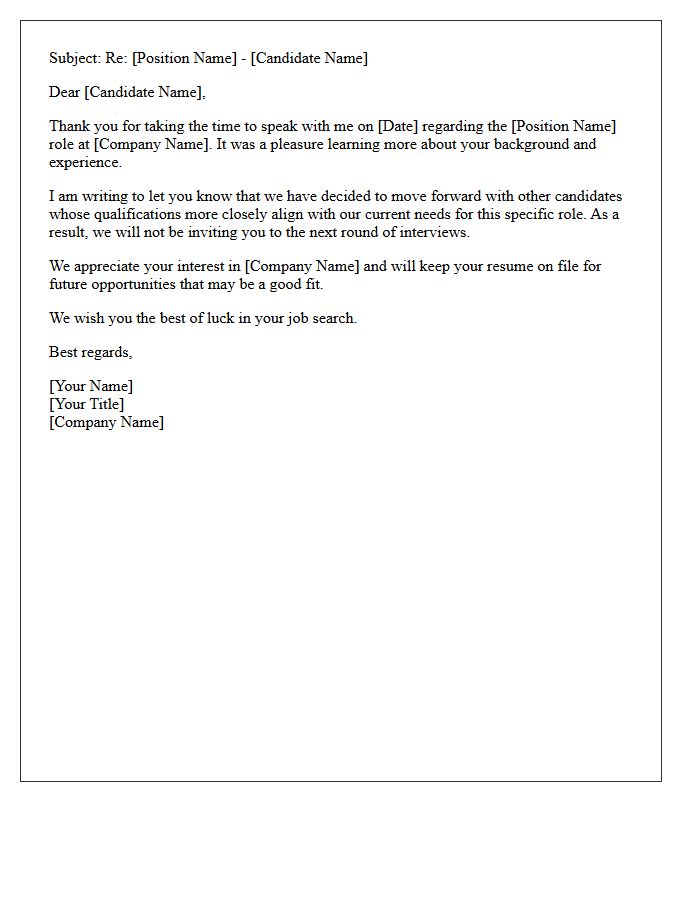
A standard post-phone screening rejection letter serves as a professional notification that a candidate will not advance to the next stage of the hiring process. It is a critical component of the candidate experience, maintaining a company's employer brand by providing closure. These emails should be brief, respectful, and express gratitude for the applicant's time. While often automated, including the specific job title ensures clarity. Timely communication prevents candidates from remaining in "application limbo," fostering a positive reputation for the organization even when delivering disappointing news.
Cultural Fit Mismatch Post-Phone Screening Rejection Letter
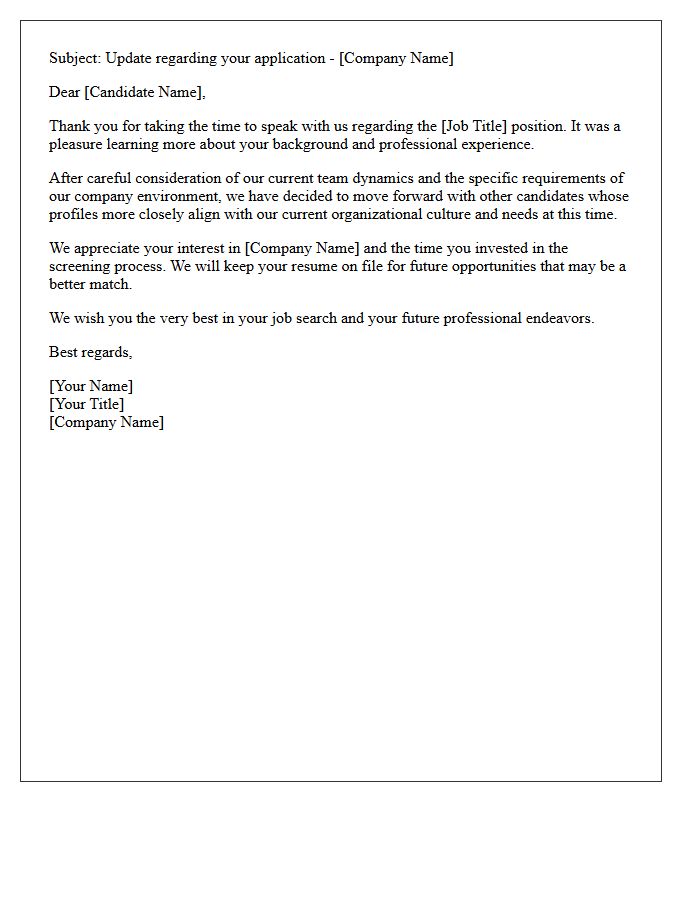
A Cultural Fit Mismatch rejection letter after a phone screening informs candidates that their core values or work styles do not align with the current team dynamics. It is crucial to remain professional and objective, focusing on the specific environmental needs of the role rather than personal traits. Providing a clear, transparent explanation helps maintain your employer brand while allowing the candidate to seek organizations where they can truly thrive. Keep the message brief and encouraging to ensure a positive candidate experience despite the decision.
Salary Expectations Discrepancy Post-Phone Screening Rejection Letter
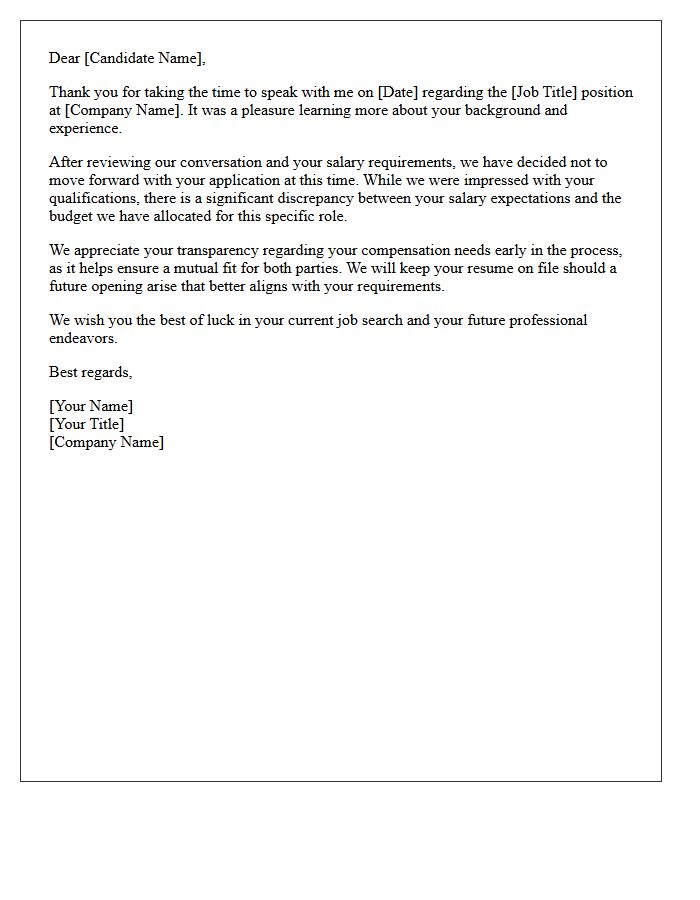
Receiving a rejection letter after a phone screening due to a salary expectations discrepancy highlights a misalignment between your requirements and the budget. It is essential to research market rates before interviewing to ensure your demands are competitive yet realistic. To avoid future rejections, clarify the compensation range early in the conversation. Sometimes, a firm rejection based on pay is a sign that the role lacks the necessary seniority or financial resources you require. Always maintain professionalism, as budgets may increase or new, higher-paying positions might open within the same company later.
Insufficient Industry Experience Post-Phone Screening Rejection Letter
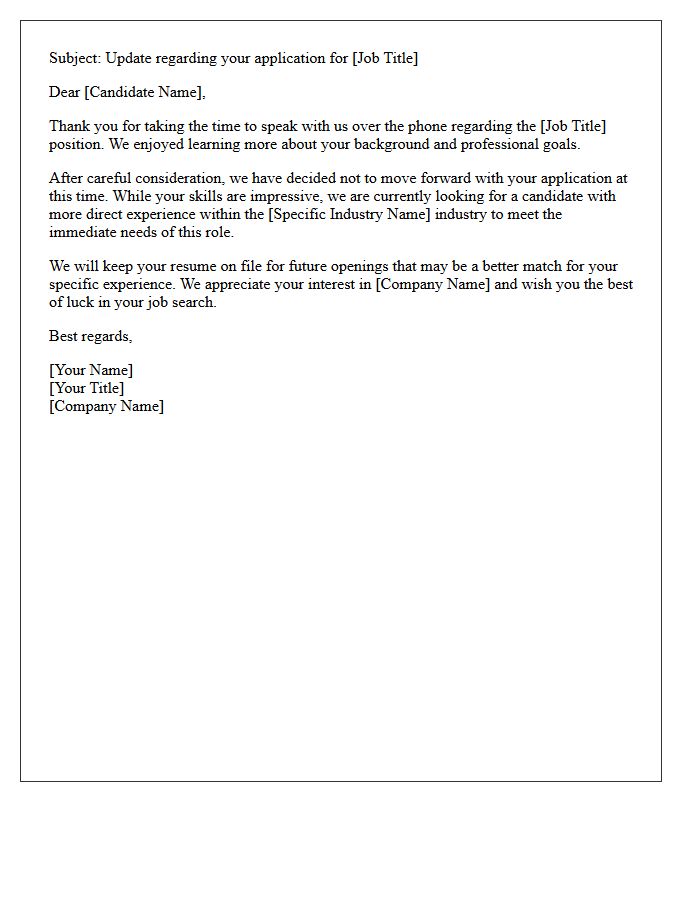
Receiving an Insufficient Industry Experience rejection after a phone screening indicates that while your personality and basic qualifications aligned, the role requires specific sector-specific expertise you currently lack. This feedback is valuable; it suggests you should focus on transferable skills or pursue niche certifications to bridge the gap. Use this stage to request specific feedback on which technical areas were missing. Maintaining a professional network with the recruiter is essential, as future openings may prioritize your unique background as the company's requirements evolve.
Overqualified Candidate Post-Phone Screening Rejection Letter
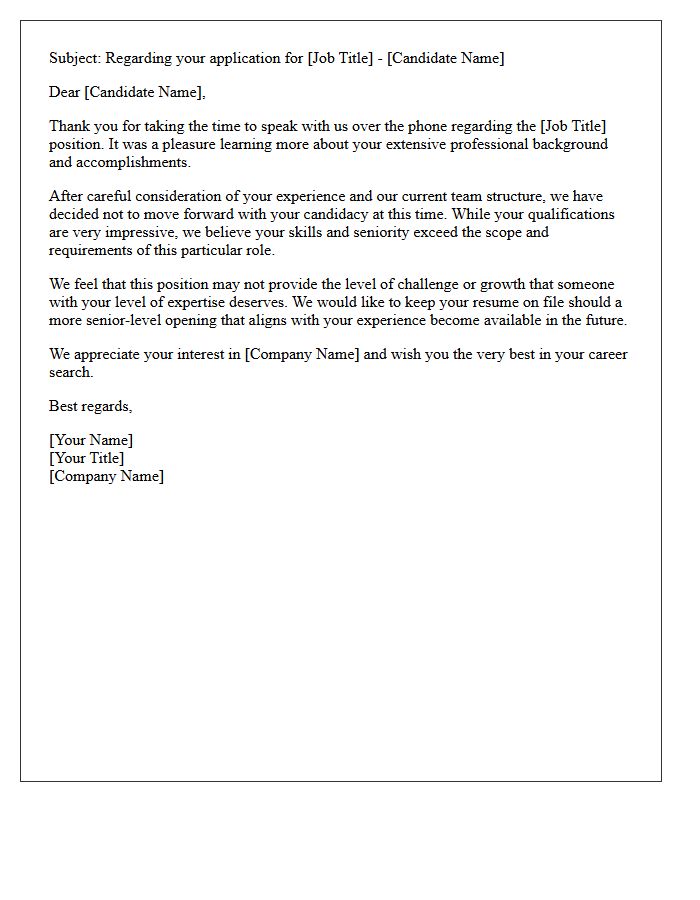
When drafting an overqualified candidate rejection letter after a phone screening, prioritize professionalism and clarity. Briefly explain that while their extensive experience is impressive, the role's current scope may not provide the long-term engagement they require. Express genuine appreciation for their time to maintain a positive employer brand. Avoid vague language; instead, emphasize alignment between candidate seniority and organizational needs. This approach minimizes resentment and keeps the door open for future, more senior opportunities that better match their distinguished professional background and skill set.
Client Cancellation Post-Phone Screening Rejection Letter
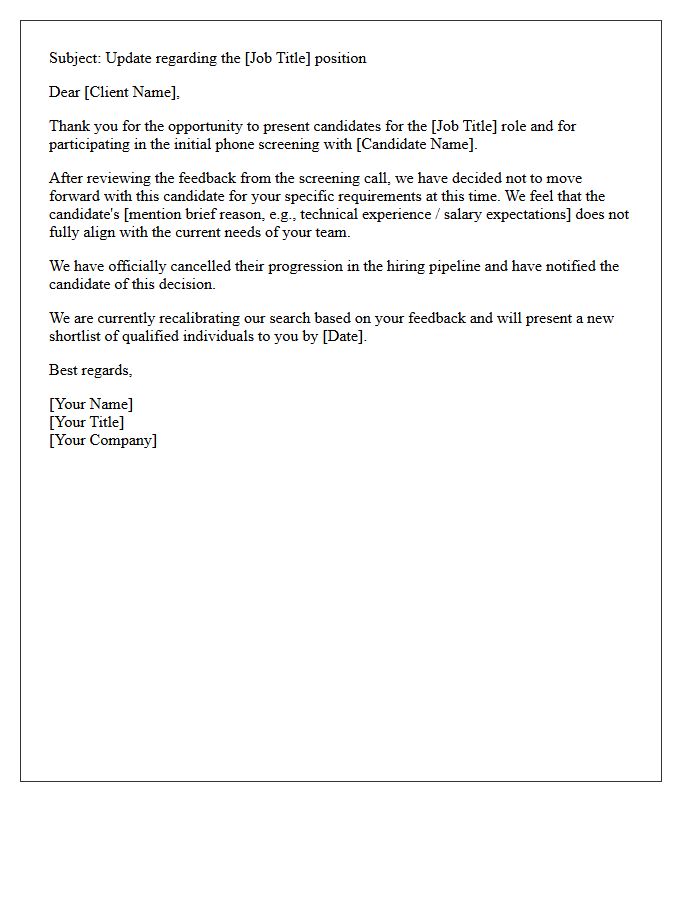
A client cancellation letter following a phone screening rejection is a professional notice informing candidates they will not move forward. It is crucial for maintaining a positive employer brand by providing clear closure. The communication should be courteous, brief, and appreciative of the candidate's time. Avoid sharing specific internal feedback to mitigate legal risks, but ensure the tone remains respectful. Delivering this update promptly prevents candidate frustration and ensures your hiring process remains transparent and efficient for all parties involved.
Role Put on Hold Post-Phone Screening Rejection Letter
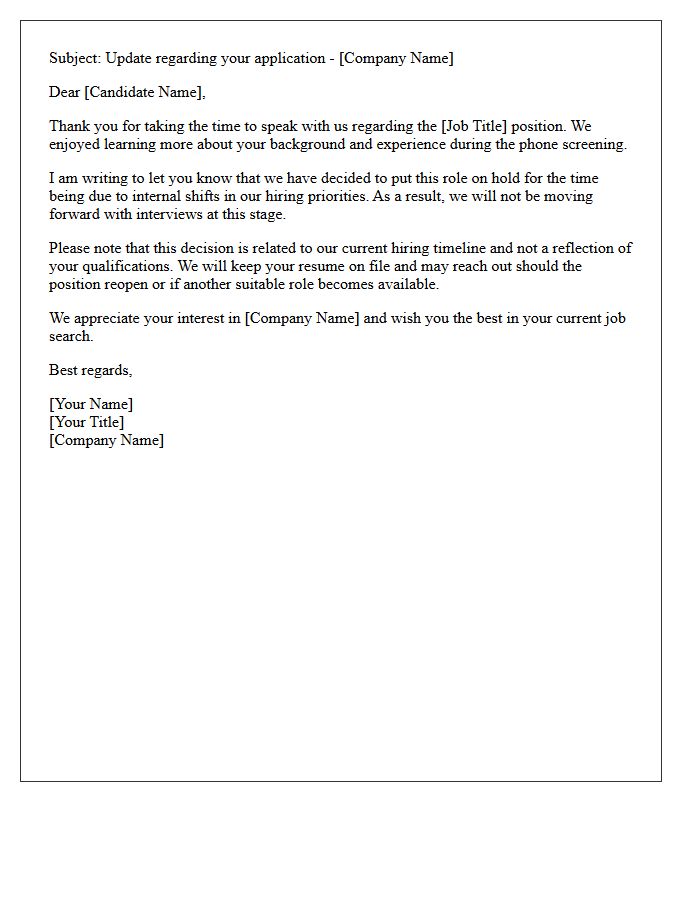
Receiving a Role Put on Hold notification after a phone screening indicates that while your qualifications were suitable, the company has paused hiring due to budgetary changes or internal restructuring. This is not a direct rejection of your skills, but a shift in organizational priorities. It is essential to maintain a professional connection by sending a brief thank-you note and requesting a timeline for future updates. Keeping the relationship positive ensures you remain a top candidate once the position is reopened or new opportunities arise within the firm.
Alternative Role Proposal Post-Phone Screening Rejection Letter
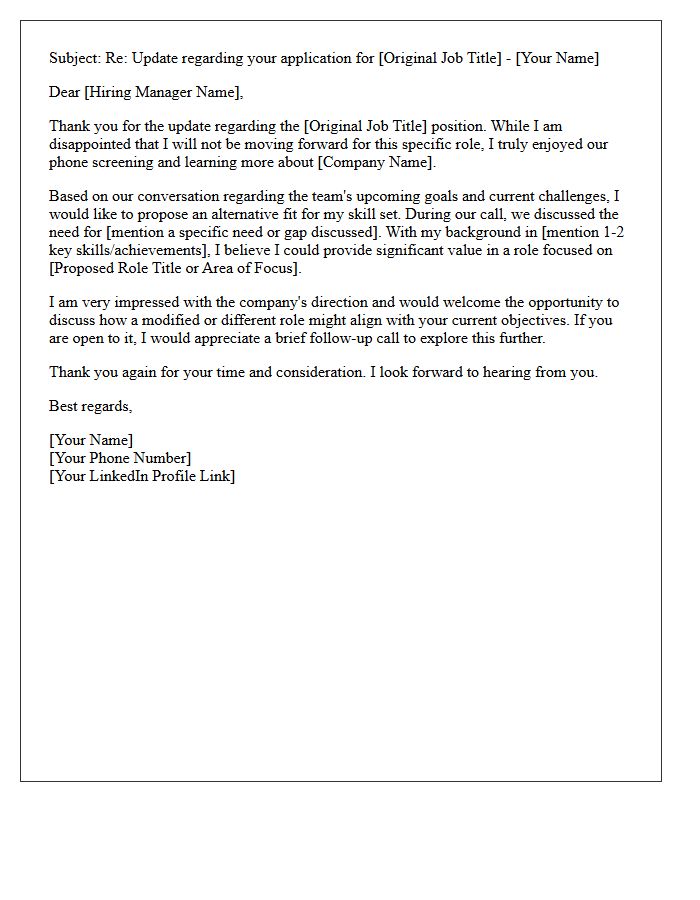
An Alternative Role Proposal is a strategic follow-up sent after a phone screening rejection. Instead of accepting the exit, you highlight your transferable skills and suggest a different department or position where your expertise aligns better with company needs. This professional letter demonstrates high initiative and cultural fit, transforming a standard rejection into a new networking opportunity. By pivoting your value proposition, you encourage recruiters to reconsider your candidacy for emerging vacancies, potentially bypassing the initial application phase for a more suitable career path within the organization.
Technical Skillset Incompatibility Post-Phone Screening Rejection Letter
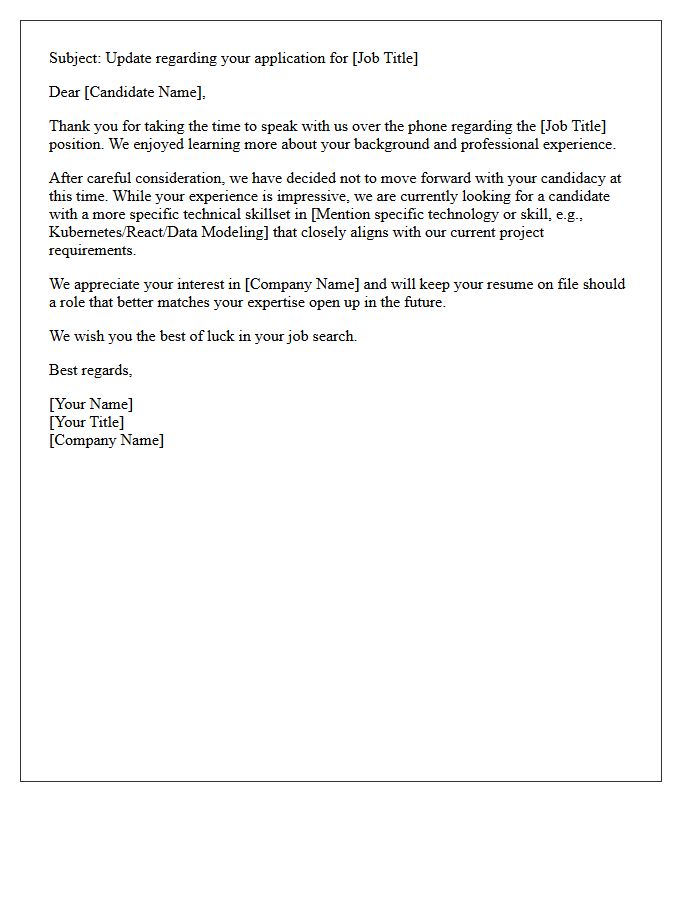
A technical skillset incompatibility rejection after a phone screening indicates a misalignment between your current proficiency and the role's specific requirements. Recruiters use these evaluations to ensure candidates possess the precise coding languages or frameworks necessary for immediate productivity. To improve, request specific feedback regarding the identified knowledge gaps. Use this insight to prioritize your professional development and bridge technical deficits. Understanding these discrepancies is essential for refining your application strategy and successfully navigating future technical assessments within the competitive software engineering landscape.
Availability or Schedule Conflict Post-Phone Screening Rejection Letter
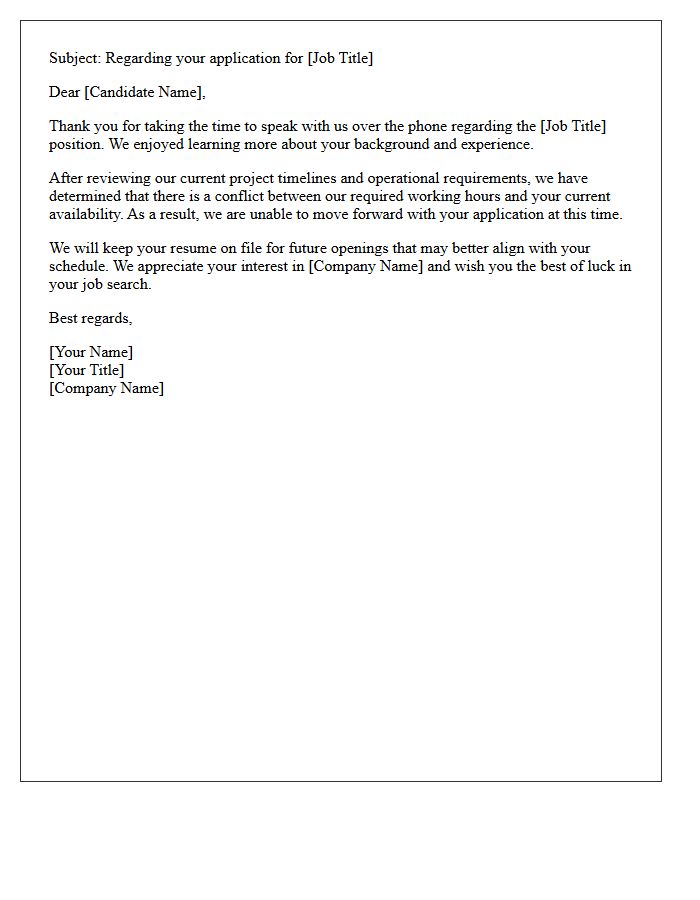
Receiving a rejection letter due to availability or a schedule conflict typically occurs when a candidate's time constraints do not align with operational needs. While your skills may meet the requirements, businesses prioritize operational consistency and immediate coverage. It is professional to respond by expressing continued interest and clarifying if your flexibility might change in the future. Maintaining a positive connection ensures you remain a viable candidate for future openings or different shifts that better suit your current time commitments and professional availability.
Future Opportunities Pipeline Post-Phone Screening Rejection Letter
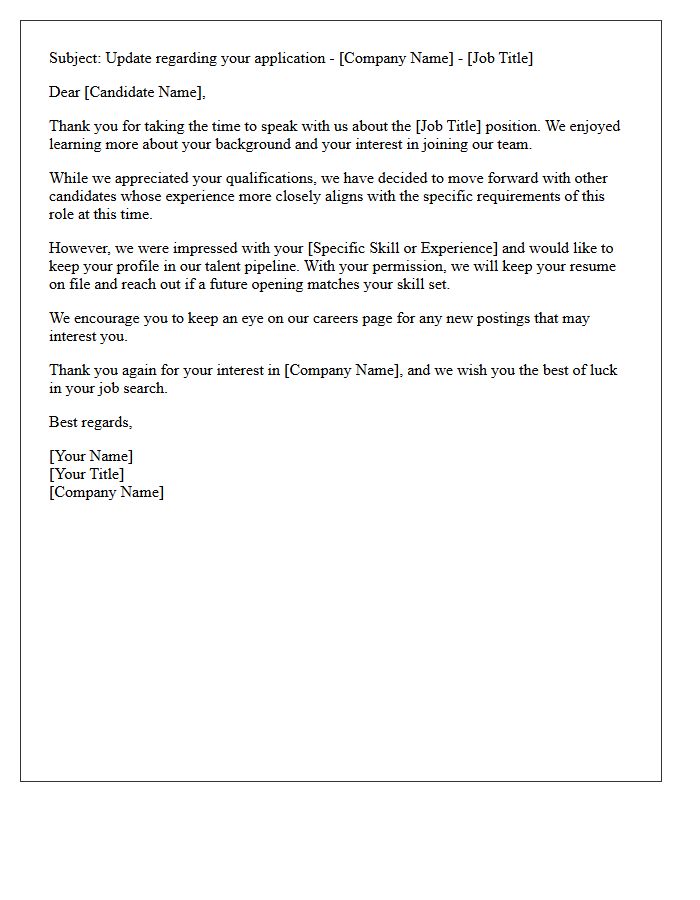
A rejection letter following a phone screen should strategically build a Future Opportunities Pipeline to maintain a professional network. By using a candidate rediscovery approach, recruiters can nurture talent for upcoming roles. This practice ensures a positive employer brand and reduces future sourcing costs. Always encourage applicants to join a talent community or follow company updates. Maintaining this talent pool allows for faster hiring cycles when a more suitable position opens, turning a temporary "no" into a long-term strategic asset for organizational growth.
High Applicant Volume Post-Phone Screening Rejection Letter
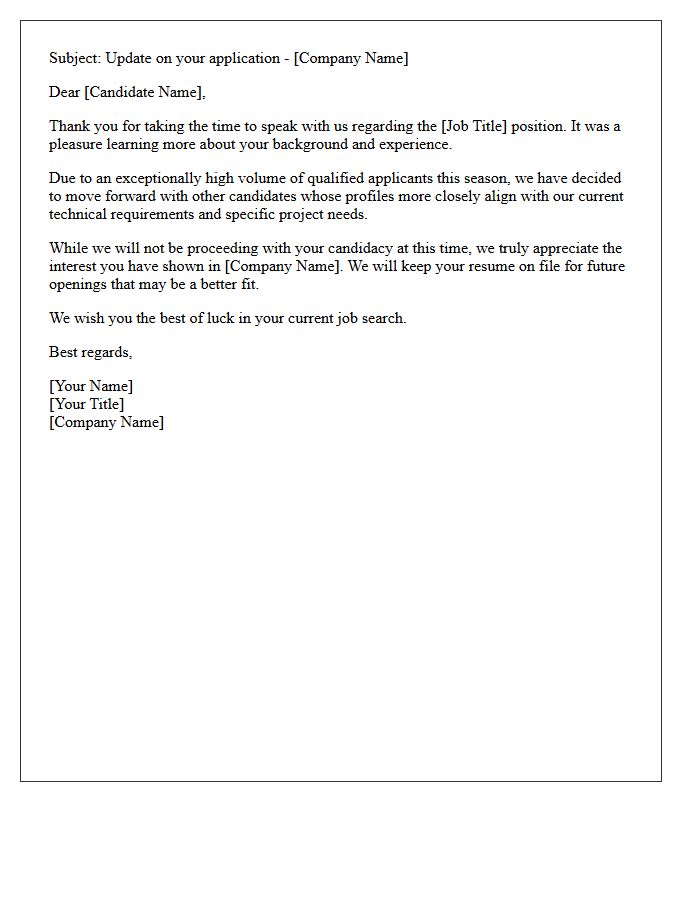
A rejection letter sent after a phone screening due to high applicant volume should remain professional and empathetic. It is vital to inform candidates promptly that while their qualifications were impressive, the competition was exceptionally strong. Briefly explain that the hiring team is moving forward with individuals whose profiles more closely align with current needs. Providing this closure maintains your employer brand and respects the candidate's time, ensuring a positive reputation in the talent market even when delivering disappointing news to high-potential applicants.
What should be included in a post-phone screening rejection letter?
A professional rejection letter after a phone interview should include a thank you for the candidate's time, a clear statement that the company is not moving forward, a brief explanation (such as a high volume of qualified applicants), and well wishes for their future career search.
How soon should I send a rejection email after a phone interview?
It is best practice to send a rejection email within 48 to 72 hours after the phone screening. Providing prompt feedback demonstrates respect for the candidate's time and allows them to focus their energy on other opportunities without uncertainty.
Should I provide specific feedback in a phone screen rejection letter?
While specific feedback is helpful, it is not legally required and can be time-consuming for high-volume roles. Most recruiters use a standard template that remains polite and professional while protecting the company from potential legal complications or lengthy debates regarding the decision.
Is it better to reject a candidate by phone or email after the initial screening?
For the initial phone screening stage, an email rejection is generally considered appropriate and professional. It allows the candidate to process the news privately. Phone call rejections are typically reserved for candidates who have reached the final interview stages or have completed an extensive assignment.
How do I tell a candidate they are overqualified after a phone interview?
When rejecting an overqualified candidate, emphasize that their experience and skills exceed the current requirements of the role. You can state that you are looking for a candidate whose career growth more closely aligns with the specific level of the position to ensure long-term satisfaction for both parties.

Comments