
A Distressed Asset Liquidation Advisory Letter provides strategic guidance for stakeholders navigating insolvency or underperforming investments. This document outlines recovery procedures, valuation assessments, and legal compliance to maximize residual value during forced sales. Expert oversight ensures transparency and mitigates financial risk for creditors and owners. To streamline your communication, below are some ready to use template.
Image cover: The Distressed Asset Liquidation Toolkit: Professional Letter Templates and Strategic Advisory Samples
Letter Samples List
- Initial Distressed Asset Liquidation Advisory Letter
- Non-Performing Loan Portfolio Valuation Advisory Letter
- Commercial Real Estate Collateral Liquidation Letter
- Liquidation Strategy and Execution Advisory Letter
- Market Timing and Asset Pricing Advisory Letter
- Regulatory Compliance and Capital Relief Advisory Letter
- Potential Buyer Identification and Outreach Letter
- Competitive Bidding Process Advisory Letter
- Liquidation Risk Assessment and Mitigation Letter
- Legal Structuring and Disposition Advisory Letter
- Asset Transfer and Final Liquidation Advisory Letter
- Post-Liquidation Financial Impact Advisory Letter
Initial Distressed Asset Liquidation Advisory Letter
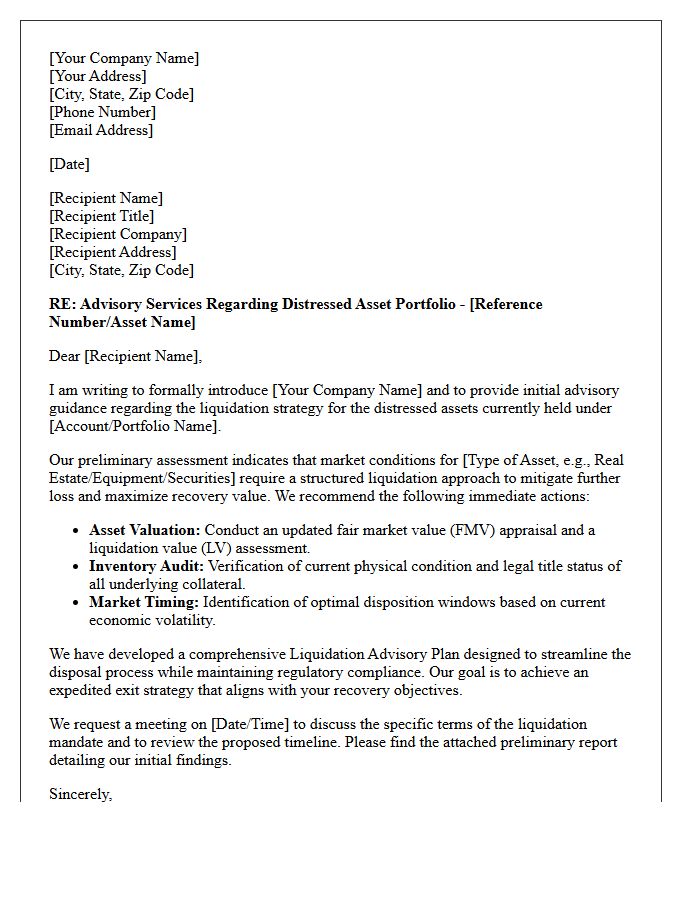
An Initial Distressed Asset Liquidation Advisory Letter serves as a formal notification sent to stakeholders regarding the recovery process of non-performing assets. It outlines the strategic plan for converting distressed inventory or collateral into cash to mitigate financial losses. This document provides transparency, detailing valuation methodologies, legal compliance, and proposed timelines for the sale. Understanding this letter is crucial for creditors and investors to evaluate potential capital recovery outcomes and ensure that the liquidation follows a structured, legally sound framework to maximize residual value.
Non-Performing Loan Portfolio Valuation Advisory Letter
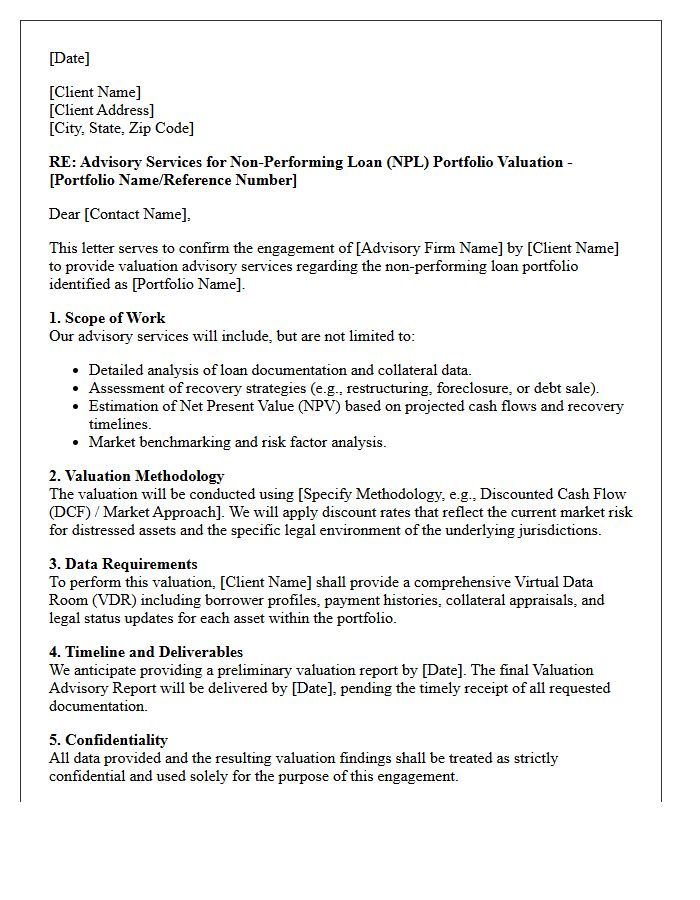
A Non-Performing Loan Portfolio Valuation Advisory Letter provides an independent fair value assessment for distressed debt. This formal document is essential for financial institutions to ensure regulatory compliance and financial reporting accuracy. It details the methodologies used, such as discounted cash flow or collateral analysis, to estimate recoverable amounts. By offering transparency on asset quality, it helps stakeholders mitigate risks during acquisitions, divestitures, or audits. This expert opinion serves as a critical benchmark for banks managing capital adequacy and balance sheet transparency in complex credit markets.
Commercial Real Estate Collateral Liquidation Letter
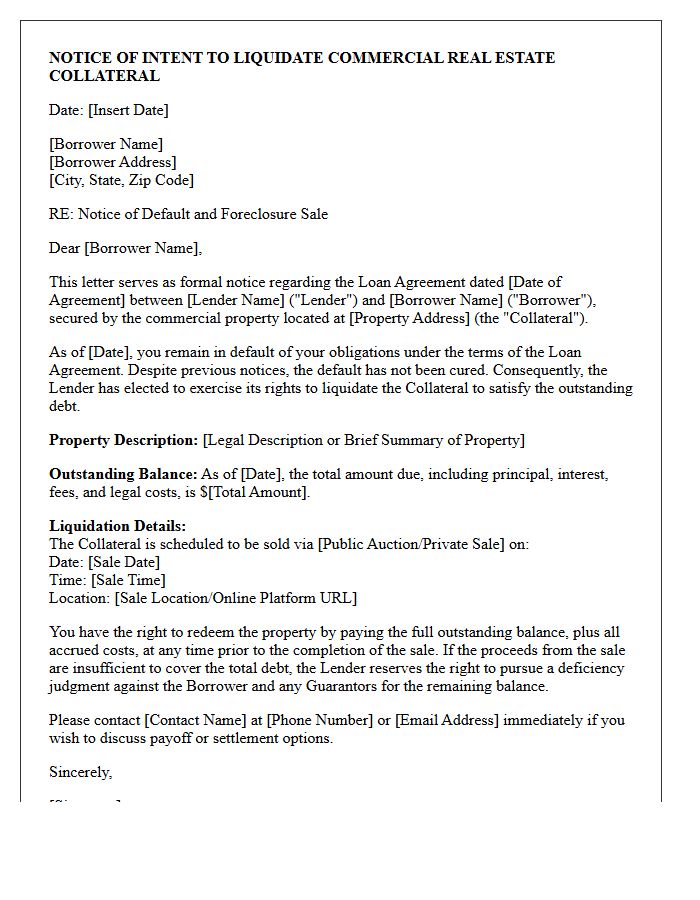
A Commercial Real Estate Collateral Liquidation Letter is a formal notification issued by a lender to a borrower following a default. This document serves as legal notice that the creditor intends to seize and sell the pledged assets to satisfy outstanding debt. It outlines the specific breach of contract, the total amount due, and the timeline for foreclosure or private sale. Understanding the redemption rights and deadlines mentioned is critical for borrowers seeking to prevent the permanent loss of property through refinancing or restructuring negotiations.
Liquidation Strategy and Execution Advisory Letter
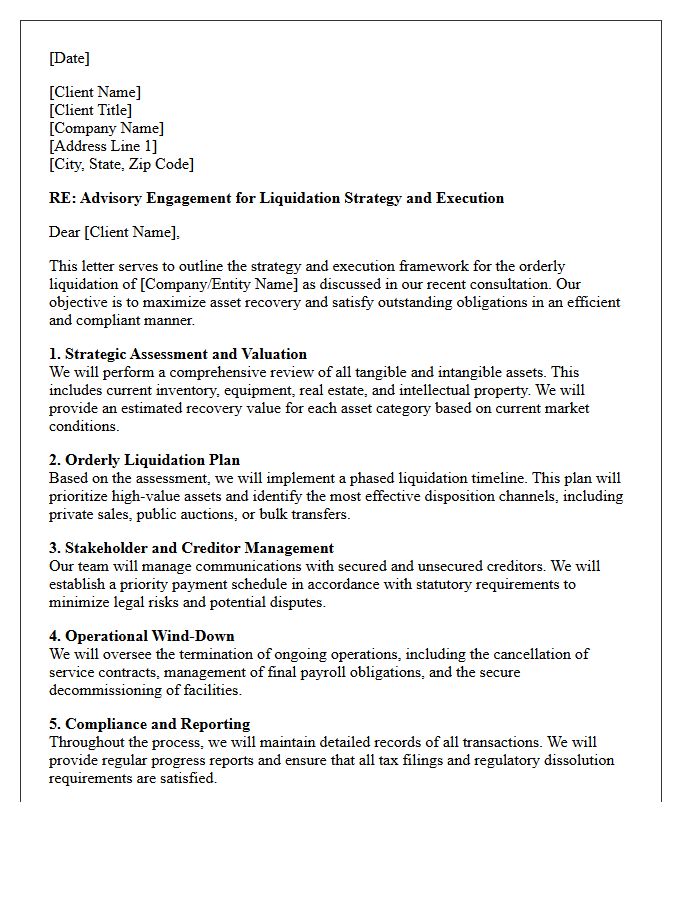
A Liquidation Strategy and Execution Advisory Letter provides a professional framework for wind-downs. It outlines the orderly disposal of corporate assets to maximize stakeholder recovery. This document details the legal obligations, valuation methodologies, and timeline management required during insolvency or restructuring. By securing expert fiduciary oversight, companies ensure compliance with regulatory standards while mitigating litigation risks. This letter serves as the strategic roadmap for converting inventory, equipment, or intellectual property into cash effectively, ensuring all creditor distributions follow priority protocols during the final dissolution phase.
Market Timing and Asset Pricing Advisory Letter
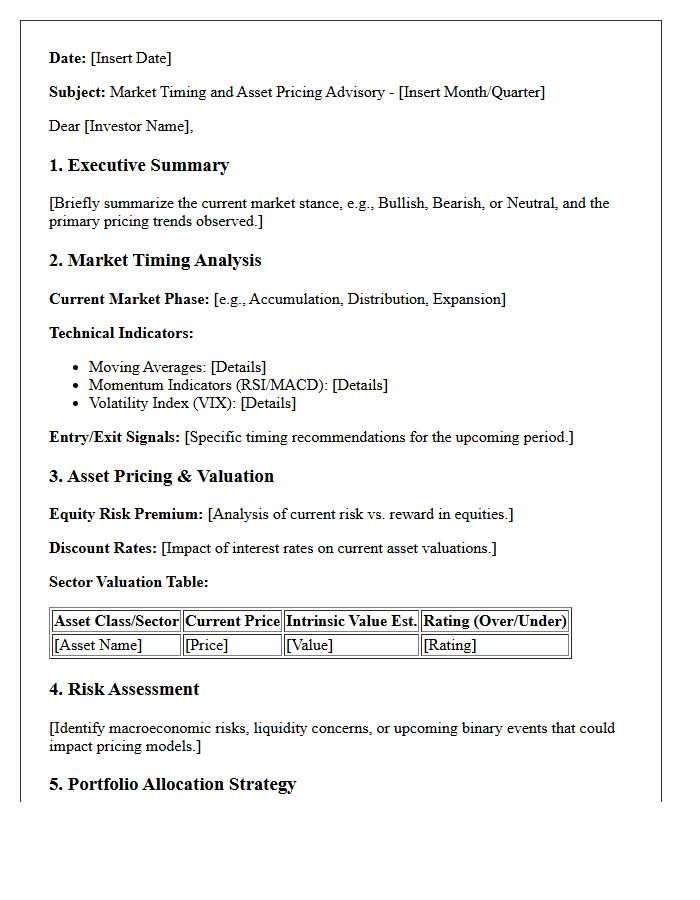
The Market Timing and Asset Pricing Advisory Letter provides strategic insights into market cycles and valuation metrics. By analyzing asset pricing anomalies and macroeconomic trends, the publication helps investors optimize entry and exit points. Subscribers receive data-driven guidance on risk management and portfolio allocation to enhance long-term returns. Understanding these quantitative models is essential for navigating volatile financial environments and identifying undervalued opportunities across diverse asset classes. This advisory serves as a professional tool for timing market shifts and adjusting investment strategies based on empirical evidence and rigorous financial analysis.
Regulatory Compliance and Capital Relief Advisory Letter
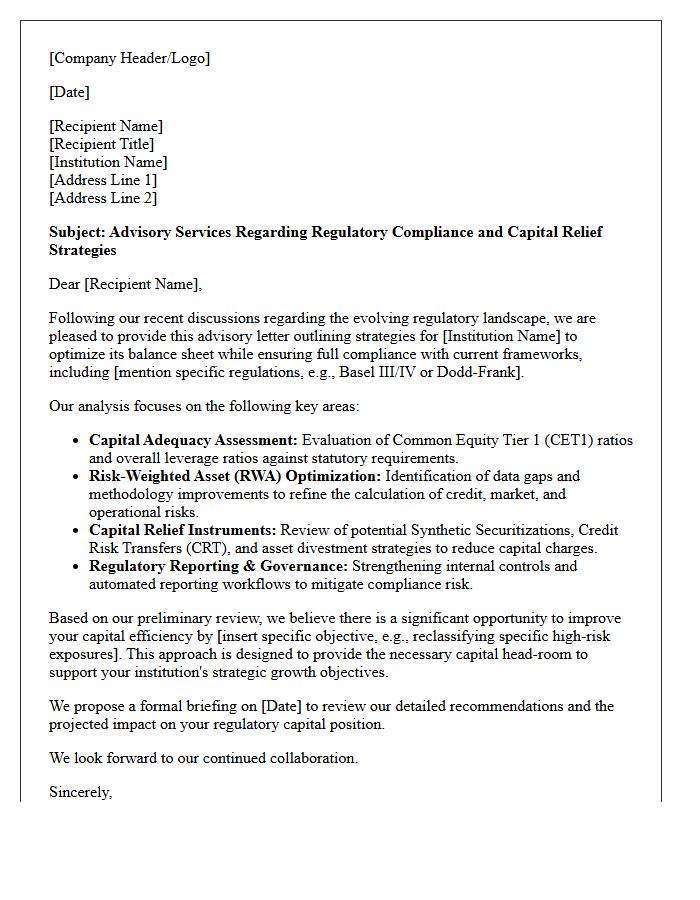
A Regulatory Compliance and Capital Relief Advisory Letter is a critical document used by financial institutions to optimize their balance sheet management. It provides formal guidance on restructuring assets to achieve capital relief, effectively lowering mandatory reserve requirements. By ensuring strict adherence to evolving Basel III or local standards, these letters mitigate legal risks while enhancing liquidity. They allow banks to reallocate capital toward higher-yield investments, balancing regulatory adherence with strategic financial growth. Understanding these directives is essential for maintaining a firm's solvency and operational efficiency within the global financial framework.
Potential Buyer Identification and Outreach Letter
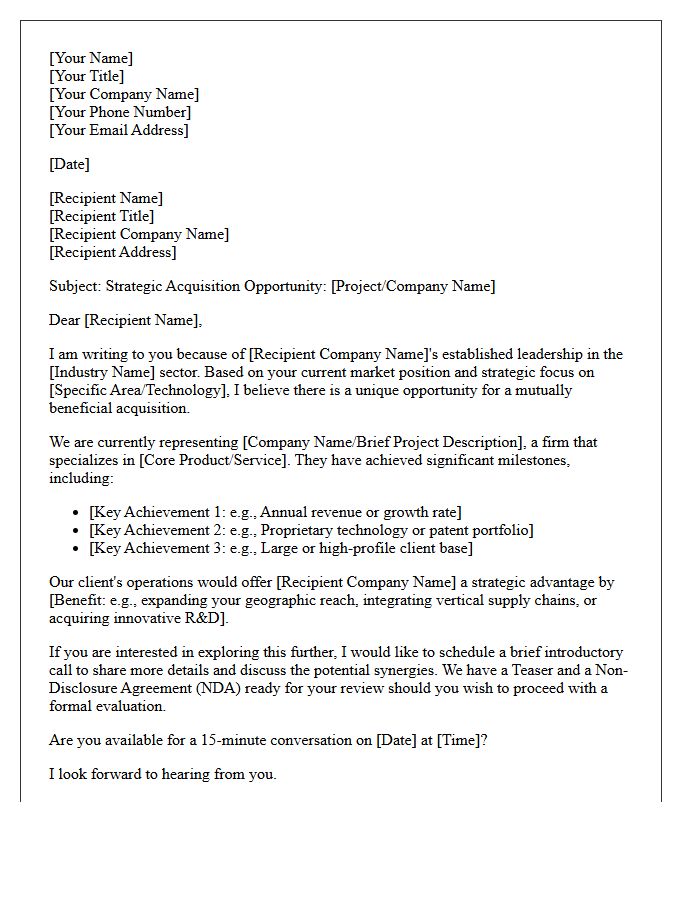
Effective Potential Buyer Identification requires analyzing market synergy and financial capability to target high-value prospects. Once identified, a strategic outreach letter must be crafted to capture interest without disclosing sensitive data. This initial contact should focus on value propositions and potential growth opportunities while maintaining strict confidentiality. Personalizing the message to align with the recipient's investment criteria ensures a higher response rate. Mastering this process is essential for initiating competitive merger and acquisition discussions and securing the best possible terms for a business sale.
Competitive Bidding Process Advisory Letter
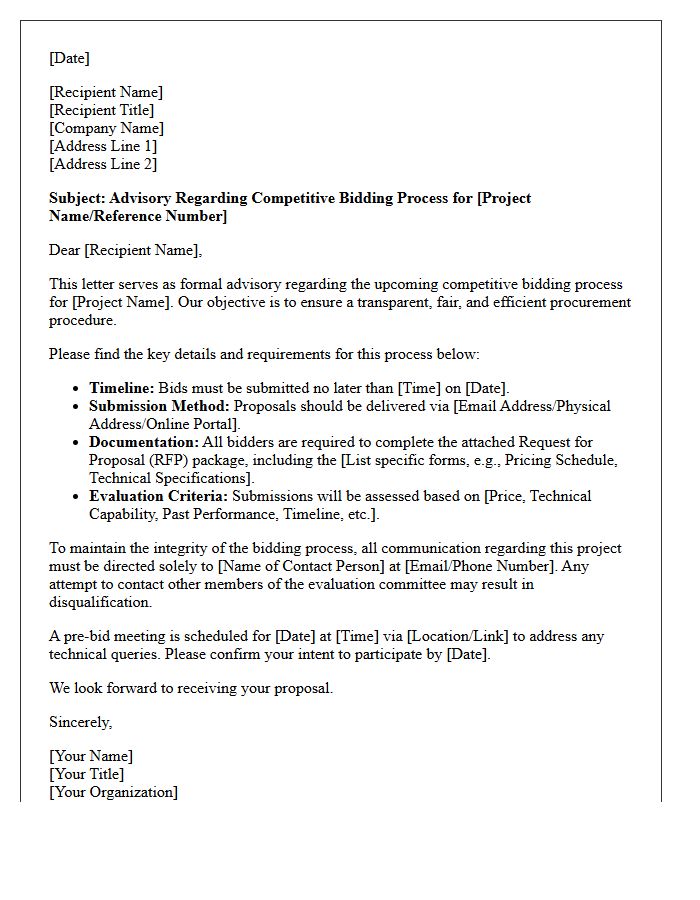
A Competitive Bidding Process Advisory Letter is a formal document used to ensure transparency and legal compliance during procurement. It outlines specific evaluation criteria, procedural rules, and submission deadlines for potential vendors. By providing a clear roadmap for the selection process, it minimizes risks of bias and potential legal disputes. Understanding this letter is essential for bidders to align their proposals with organizational requirements, ensuring a fair competition and securing the best value for stakeholders through structured, professional oversight.
Liquidation Risk Assessment and Mitigation Letter
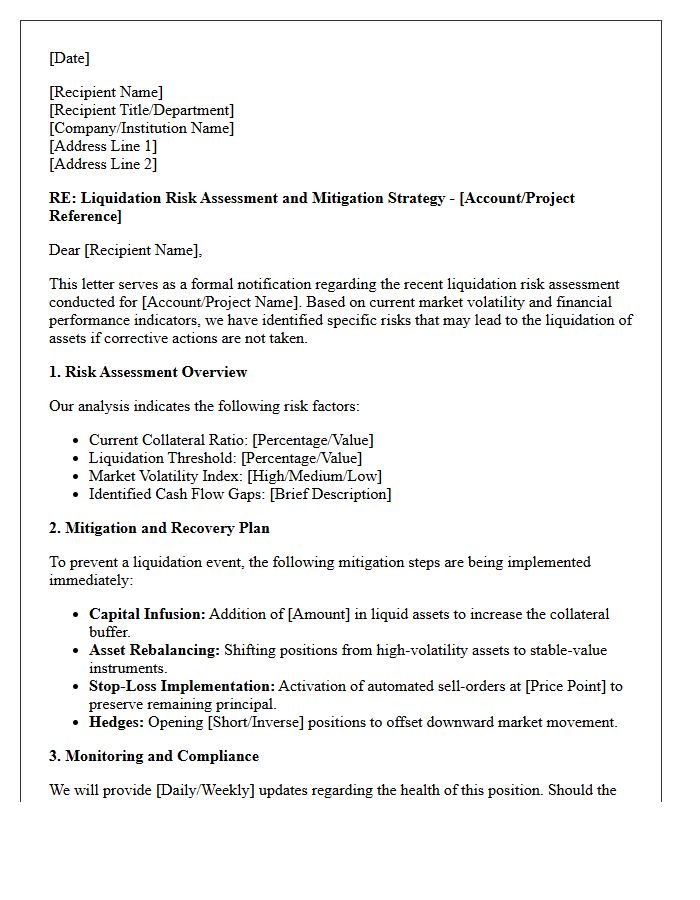
A Liquidation Risk Assessment and Mitigation Letter is a formal document used to evaluate the potential insolvency of a business. It identifies financial triggers that could lead to asset sell-offs and outlines strategic repayment plans to protect creditors. This letter serves as a critical risk management tool, demonstrating to stakeholders that the company has a proactive strategy to maintain solvency. By addressing liquidation vulnerability early, businesses can negotiate better terms, ensure legal compliance, and implement effective recovery measures to avoid total operational collapse.
Legal Structuring and Disposition Advisory Letter
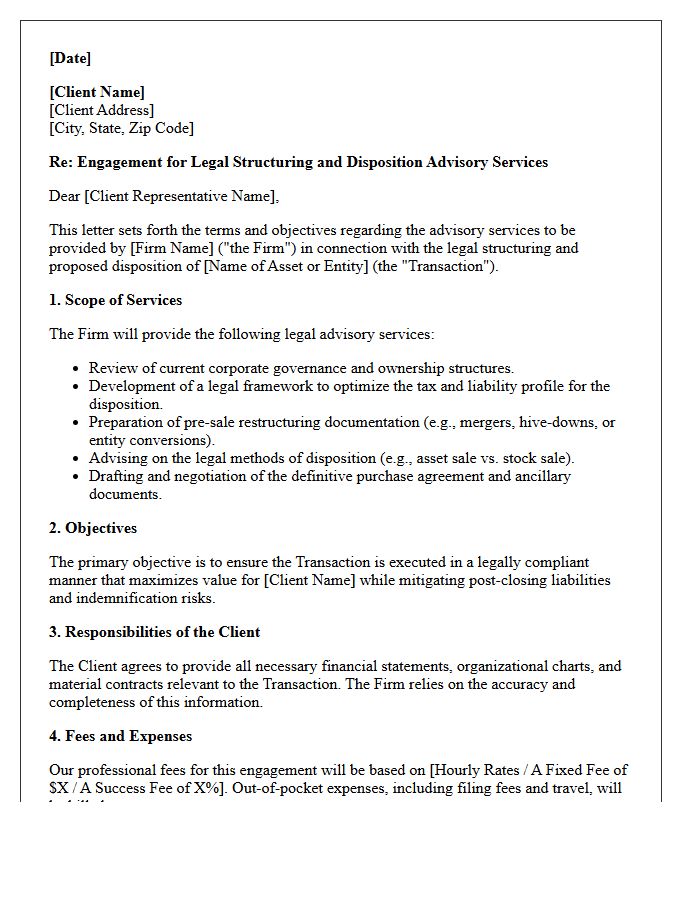
A Legal Structuring and Disposition Advisory Letter is a professional document providing strategic guidance on organizing business entities to maximize asset protection and tax efficiency. It outlines the legal framework for ownership and details the optimal methods for the divestiture or sale of interests. By analyzing regulatory risks and structural liabilities, this letter ensures a legally sound transition during a liquidity event. It serves as a vital roadmap for stakeholders to minimize exposure while enhancing the overall valuation of the enterprise throughout the disposition process.
Asset Transfer and Final Liquidation Advisory Letter
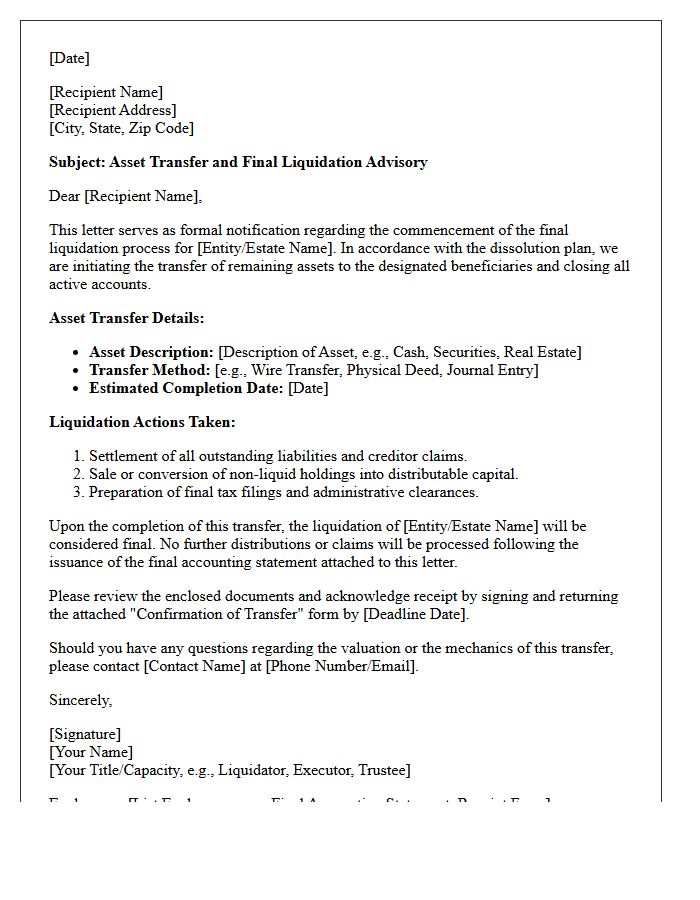
An Asset Transfer and Final Liquidation Advisory Letter is a formal document outlining the strategic distribution of remaining holdings. It provides crucial legal guidance on settling liabilities, closing accounts, and transferring titles to beneficiaries or entities. This letter ensures regulatory compliance and protects stakeholders by documenting the final dissolution of a fund, estate, or corporation. Following these instructions is vital to mitigate tax risks and ensure the orderly, transparent termination of all financial obligations during the liquidation process.
Post-Liquidation Financial Impact Advisory Letter
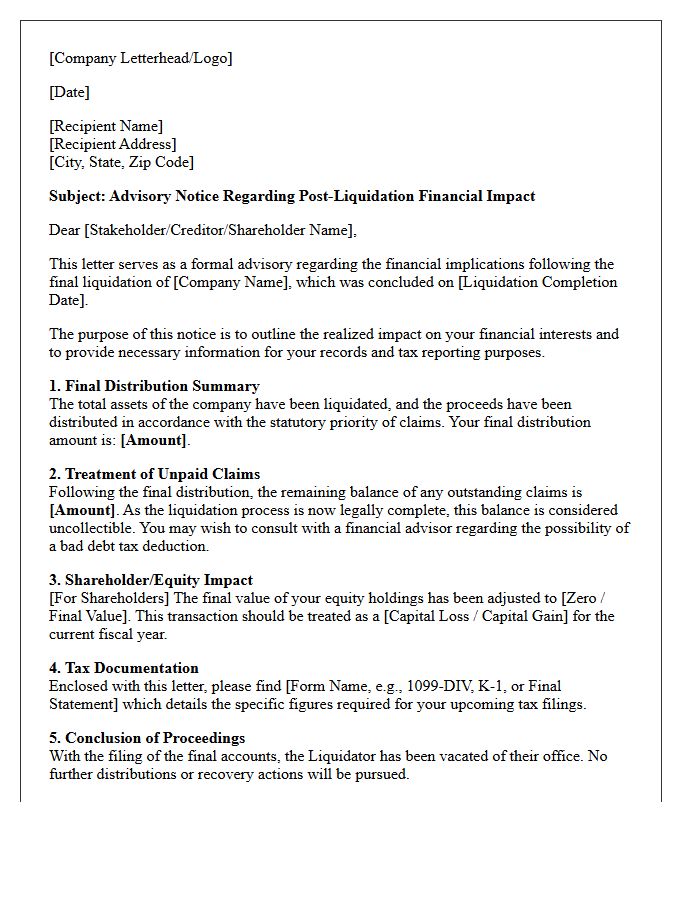
A Post-Liquidation Financial Impact Advisory Letter is a critical document that evaluates the residual fiscal consequences following a company's closure. This report outlines unpaid liabilities, potential tax implications, and director indemnities. It serves as an essential guide for stakeholders to understand their legal exposure and financial standing after asset distribution. Receiving this letter is vital for mitigating future risks and ensuring compliance with insolvency regulations. It provides a strategic roadmap for addressing any remaining creditor claims or surplus management, ensuring all parties achieve formal financial closure after the liquidation process ends.
What is a Distressed Asset Liquidation Advisory Letter?
A Distressed Asset Liquidation Advisory Letter is a formal document issued by financial consultants or legal experts outlining a strategic plan to sell underperforming or insolvent assets to recover maximum value for creditors and stakeholders.
Who typically receives a Distressed Asset Liquidation Advisory Letter?
These letters are primarily sent to secured creditors, bankruptcy trustees, corporate board members, and potential institutional investors involved in the restructuring or winding down of a distressed business entity.
What are the primary objectives of a liquidation advisory strategy?
The core objectives include mitigating further financial loss, ensuring compliance with insolvency laws, identifying high-value buyers through competitive bidding, and optimizing the timeline for asset disposition to maintain liquidity.
How does an advisory letter help in mitigating legal risks?
By providing a transparent, documented roadmap for asset disposal, the advisory letter ensures that the liquidation process follows fiduciary duties and statutory requirements, protecting directors and officers from claims of preferential treatment or undervaluation.
What types of assets are covered in a distressed liquidation plan?
The plan typically covers a broad range of holdings, including commercial real estate, machinery and equipment, intellectual property, accounts receivable, and remaining inventory, all evaluated based on their forced-sale versus fair-market value.

Comments