
A Cease and Desist Letter is a critical legal tool used to enforce wealth management non-compete clauses. It formally demands that a former employee stop soliciting clients or disclosing proprietary investment strategies in violation of their contract. This document serves as a final warning before pursuing litigation to protect your firm's book of business. Below are some ready to use templates.

Image cover: Protecting Your Assets: Wealth Management Non-Compete Cease and Desist Templates
Letter Samples List
- Cease and Desist Letter Regarding Breach of Wealth Management Non-Compete Agreement
- Official Cease and Desist Letter for Violation of Banking Non-Compete Clauses
- Wealth Management Non-Compete Violation Cease and Desist Letter
- Notice and Cease and Desist Letter for Financial Advisor Non-Compete Breach
- Cease and Desist Letter Concerning Wealth Management Client Solicitation
- Banking Institution Cease and Desist Letter for Non-Compete Infringement
- Formal Cease and Desist Letter for Wealth Manager Post-Employment Violation
- Cease and Desist Letter for Unauthorized Competition in Wealth Management
- Private Banking Non-Compete Violation Cease and Desist Letter
- Cease and Desist Letter for Breach of Restrictive Covenants in Banking
- Wealth Advisor Non-Compete Enforcement Cease and Desist Letter
- Cease and Desist Letter Regarding Unlawful Wealth Management Competition
- Financial Institution Cease and Desist Letter for Non-Compete Violation
Cease and Desist Letter Regarding Breach of Wealth Management Non-Compete Agreement
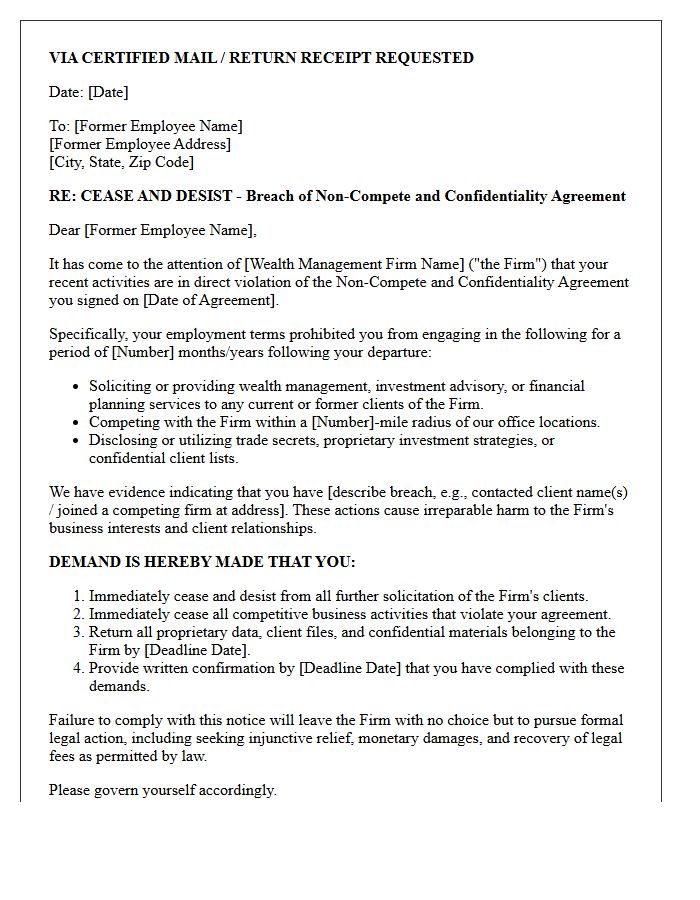
A cease and desist letter for breaching a wealth management non-compete agreement serves as a formal legal warning to a former advisor. It demands the immediate cessation of prohibited activities, such as soliciting prior clients or misappropriating proprietary trade secrets. This document outlines specific contractual violations and establishes a deadline for compliance to avoid escalating litigation. For financial professionals, receiving this notice signals that the previous firm is prepared to seek injunctive relief or monetary damages to protect its book of business and maintain industry regulatory standards.
Official Cease and Desist Letter for Violation of Banking Non-Compete Clauses
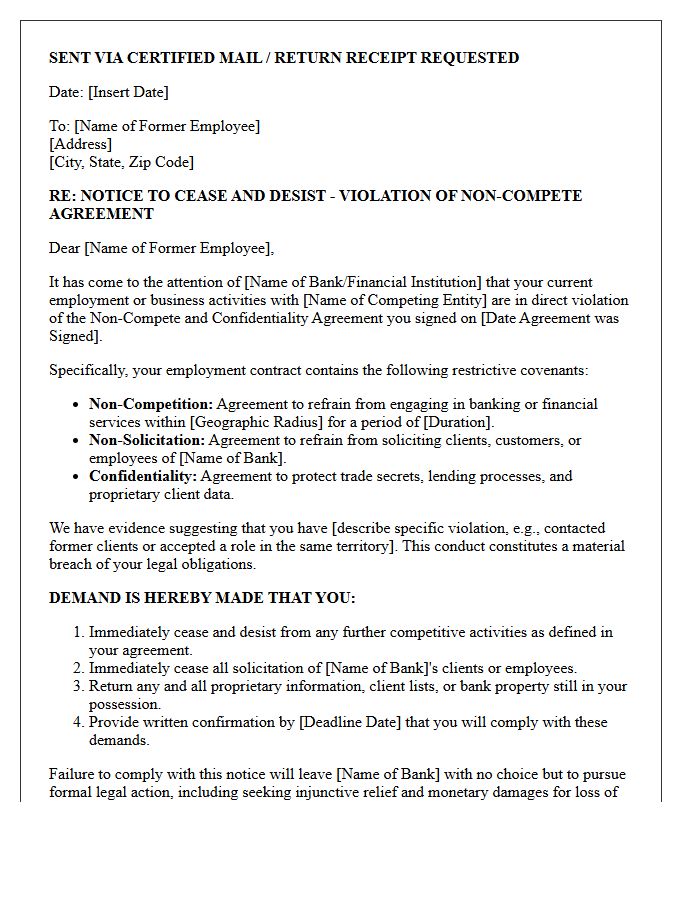
An official cease and desist letter serves as a formal legal warning to an individual or entity violating a banking non-compete clause. These restrictive covenants are designed to protect proprietary client data and trade secrets from being transferred to competitors. The letter demands the immediate cessation of prohibited professional activities to prevent financial litigation. Receiving such a notice requires urgent legal review, as non-compliance often leads to injunctive relief or significant monetary damages in a court of law. It is a critical tool for maintaining institutional integrity and market stability.
Wealth Management Non-Compete Violation Cease and Desist Letter
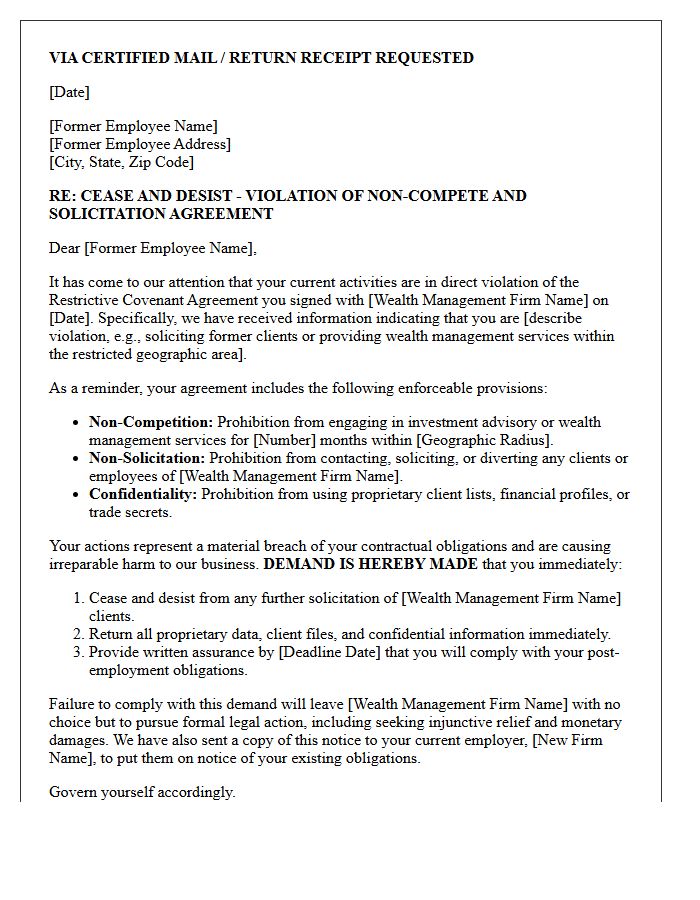
A wealth management cease and desist letter is a formal legal notice alleging a non-compete violation. Firms issue these when an advisor transitions to a competitor and attempts to solicit protected clients or use proprietary data. The document serves as a pre-litigation warning, demanding the immediate cessation of prohibited activities to prevent client attrition. Receiving one requires urgent attention, as non-compliance often leads to injunctive relief or FINRA arbitration. Understanding your specific employment contract's restrictive covenants is essential to navigating these legal threats and protecting your professional reputation.
Notice and Cease and Desist Letter for Financial Advisor Non-Compete Breach
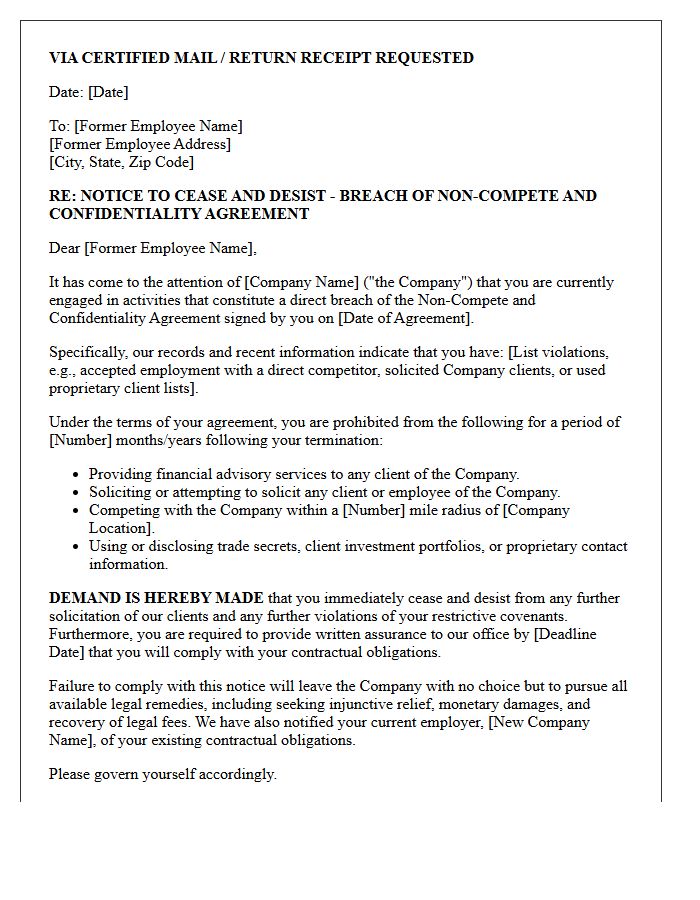
A Cease and Desist Letter is a formal legal notification sent when a financial advisor violates restrictive covenants, such as non-compete or non-solicitation agreements. This document demands an immediate halt to prohibited activities, including the misuse of trade secrets or poaching clients. Failing to comply often leads to emergency injunctive relief or costly litigation in court or FINRA arbitration. It serves as essential evidence that the firm attempted to mitigate damages and protect its proprietary interests before pursuing further legal action against the departing advisor.
Cease and Desist Letter Concerning Wealth Management Client Solicitation
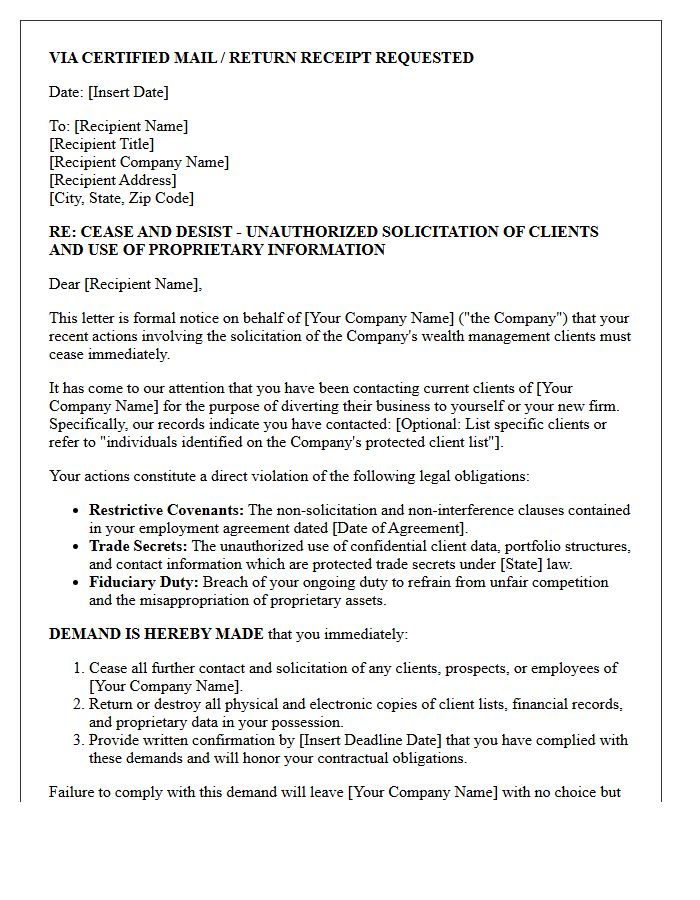
A Cease and Desist Letter is a formal legal notice demanding that a former advisor stop soliciting wealth management clients in violation of restrictive covenants. These letters typically cite specific non-solicitation or non-compete clauses within employment agreements. It is crucial to determine if the Protocol for Broker Recruiting applies, as this industry agreement permits departing advisors to take limited client information. Ignoring such a notice can lead to injunctive relief or costly litigation. Recipients should immediately review their contracts and preserve all communication logs to ensure legal compliance and protect their professional reputation.
Banking Institution Cease and Desist Letter for Non-Compete Infringement
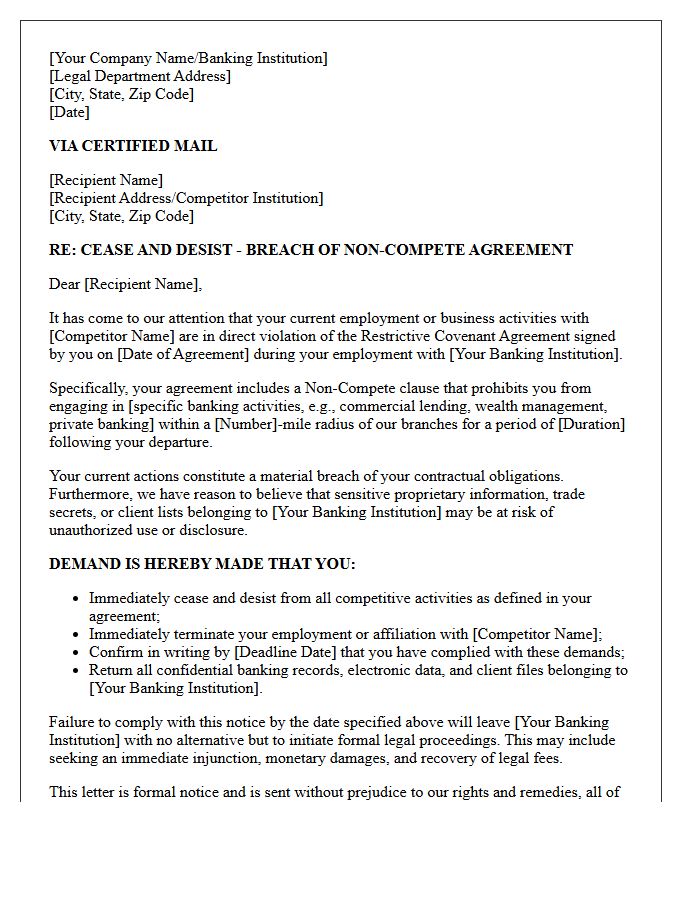
A banking institution Cease and Desist Letter for non-compete infringement is a formal legal demand to stop activities violating restrictive covenants. Banks use these to protect proprietary client data and trade secrets when employees move to competitors. Receiving one signals potential litigation for breach of contract or fiduciary duty. It typically demands an immediate halt to solicitation and the return of confidential materials. Understanding the specific geographic and temporal scope of your non-compete agreement is critical to determining the letter's enforceability and mitigating legal risks for both the individual and the hiring firm.
Formal Cease and Desist Letter for Wealth Manager Post-Employment Violation
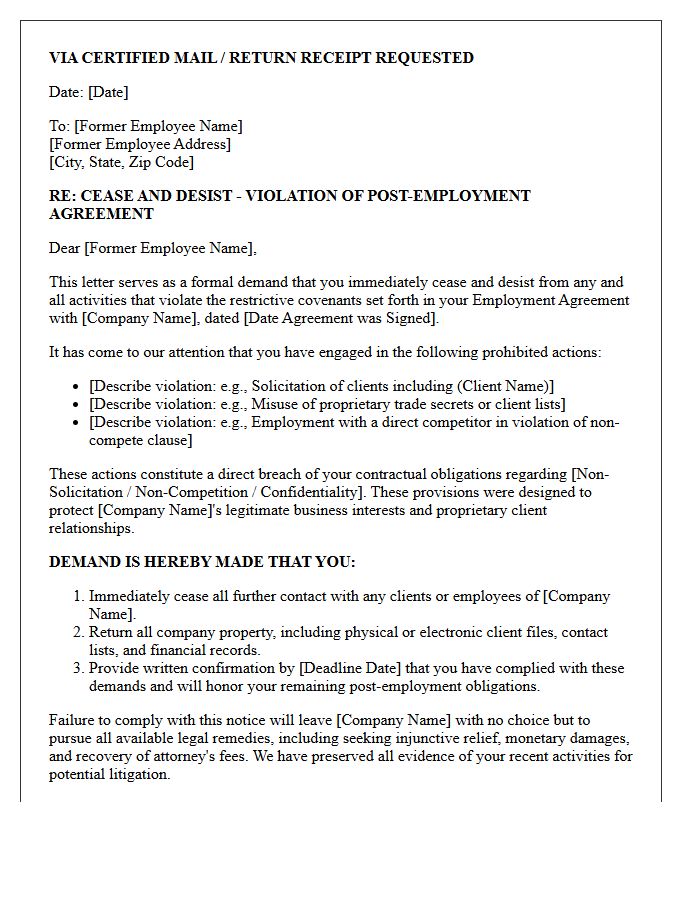
A formal Cease and Desist Letter serves as a legal warning to a wealth manager violating post-employment restrictive covenants. It demand immediate cessation of activities that breach non-compete, non-solicitation, or confidentiality agreements. This document is essential for protecting trade secrets, proprietary client lists, and firm assets from unlawful exploitation. Sending this notice establishes a formal record of the breach of contract, serving as a critical prerequisite for pursuing injunctive relief or monetary damages in court to mitigate fiduciary risks and safeguard the firm's competitive standing.
Cease and Desist Letter for Unauthorized Competition in Wealth Management
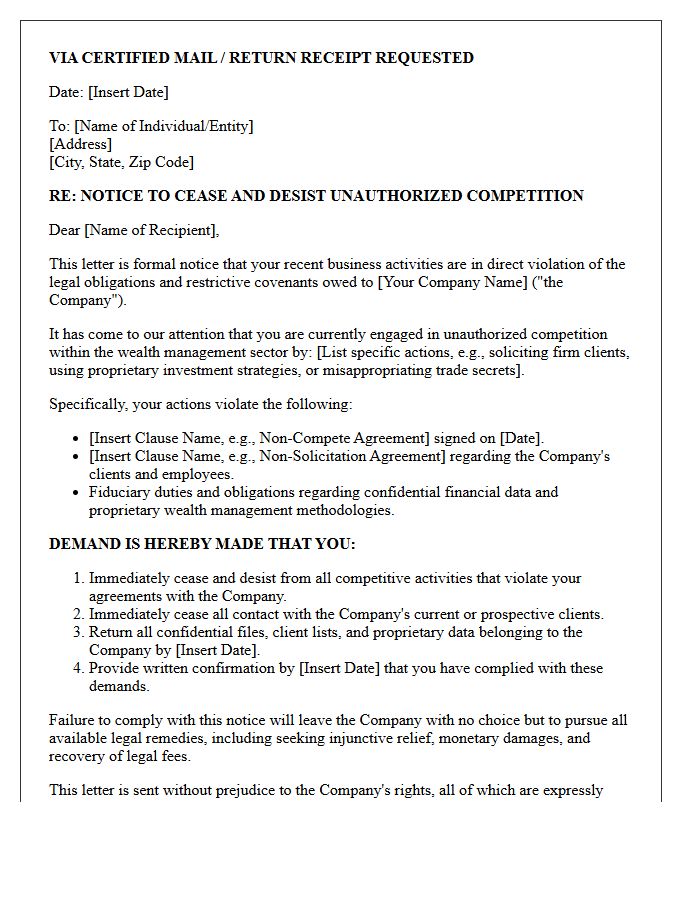
A cease and desist letter for unauthorized competition in wealth management is a formal legal demand to stop activities violating restrictive covenants. These typically include non-compete, non-solicitation, or confidentiality agreements signed by former advisors. The letter serves as a critical warning to prevent the misappropriation of proprietary investment strategies and client lists. For wealth management firms, sending this document is the first step in protecting trade secrets and mitigating financial loss. It establishes a legal record of notice, which is essential if seeking an immediate injunction or pursuing litigation for breach of contract.
Private Banking Non-Compete Violation Cease and Desist Letter
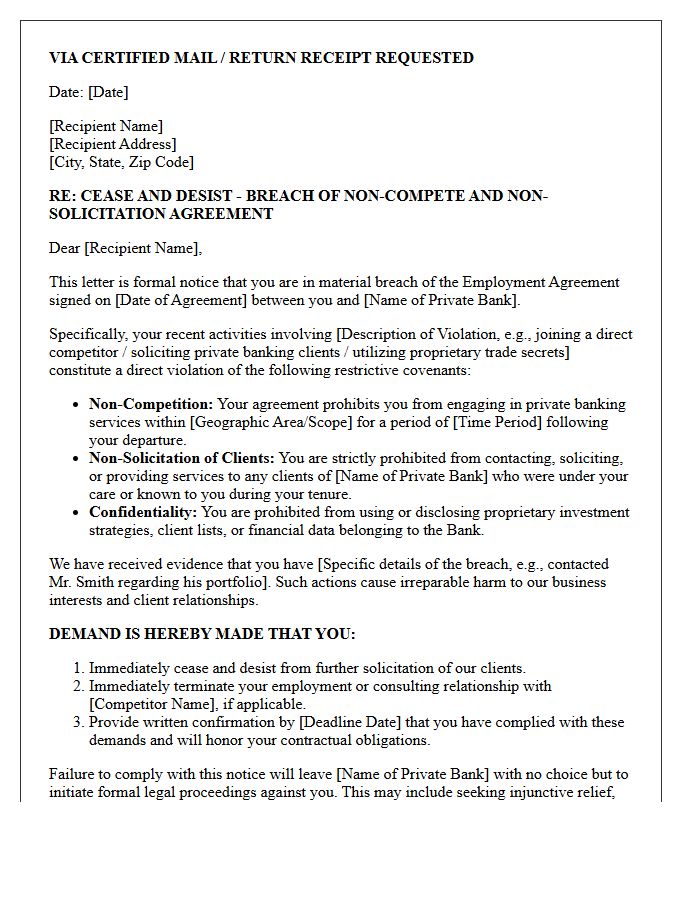
A private banking cease and desist letter is a formal legal notice alleging a breach of restrictive covenants, such as non-compete or non-solicitation agreements. Financial institutions issue these to prevent former advisors from transitioning proprietary client lists or trade secrets to competitors. Receiving this document signifies imminent litigation risks. It is essential to review the specific enforceability of your contract under local labor laws and preserve all communications. Immediate legal consultation is vital to mitigate damages, respond professionally, and protect your professional reputation within the high-stakes wealth management industry.
Cease and Desist Letter for Breach of Restrictive Covenants in Banking
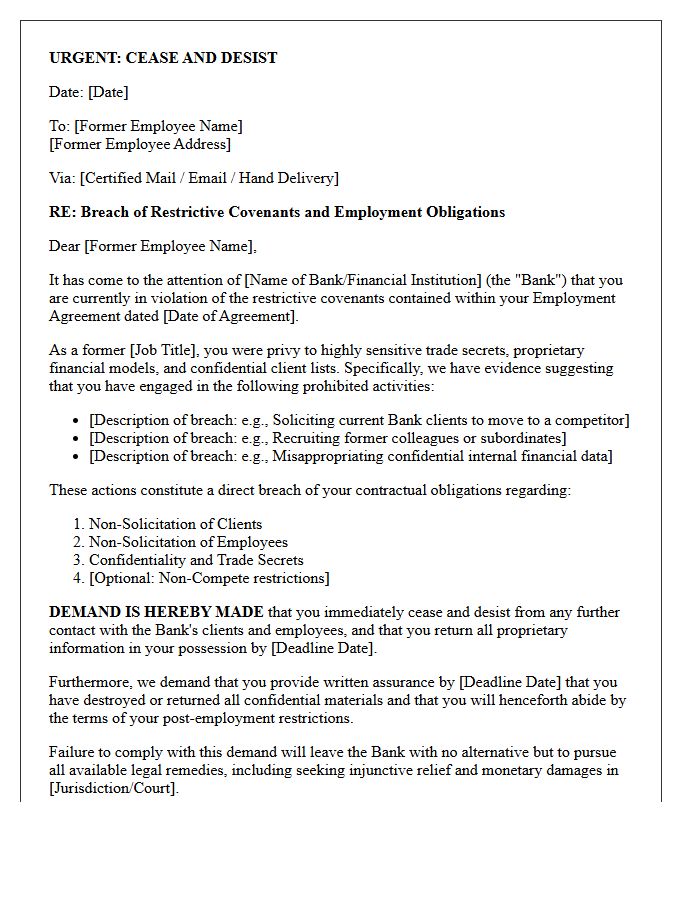
A Cease and Desist Letter for breach of restrictive covenants in banking is a formal legal demand to stop violating post-employment obligations. These documents typically address unauthorized client solicitation, the misuse of proprietary financial data, or non-compete violations. In the highly regulated banking sector, firms use these letters to protect trade secrets and prevent significant capital loss. Failing to comply often leads to immediate injunctive relief or litigation, making it essential for employees to strictly adhere to signed non-disclosure and non-solicitation agreements to avoid severe professional and financial consequences.
Wealth Advisor Non-Compete Enforcement Cease and Desist Letter
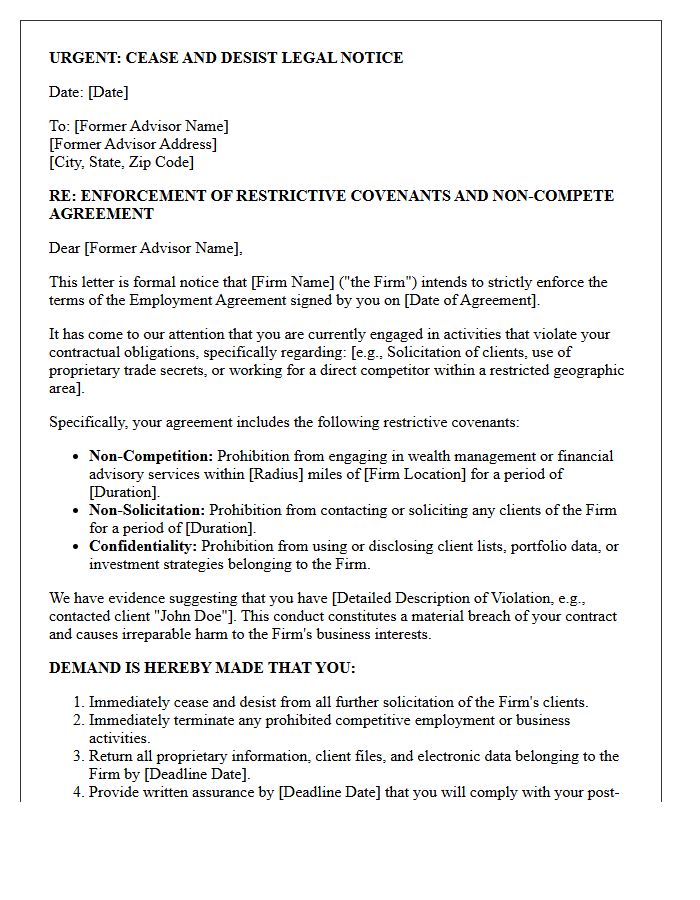
A Cease and Desist Letter is a formal legal notice used to halt the unauthorized solicitation of clients or use of proprietary data after a wealth advisor switches firms. It serves as the primary tool for enforcing restrictive covenants and preventing immediate book-of-business transfers. Receiving one signals imminent litigation, making it critical to review the specific non-compete or non-solicitation clauses previously signed. Prompt legal response is essential to mitigate damages, avoid preliminary injunctions, and ensure compliance with industry-specific regulations like the Protocol for Broker Recruiting.
Cease and Desist Letter Regarding Unlawful Wealth Management Competition
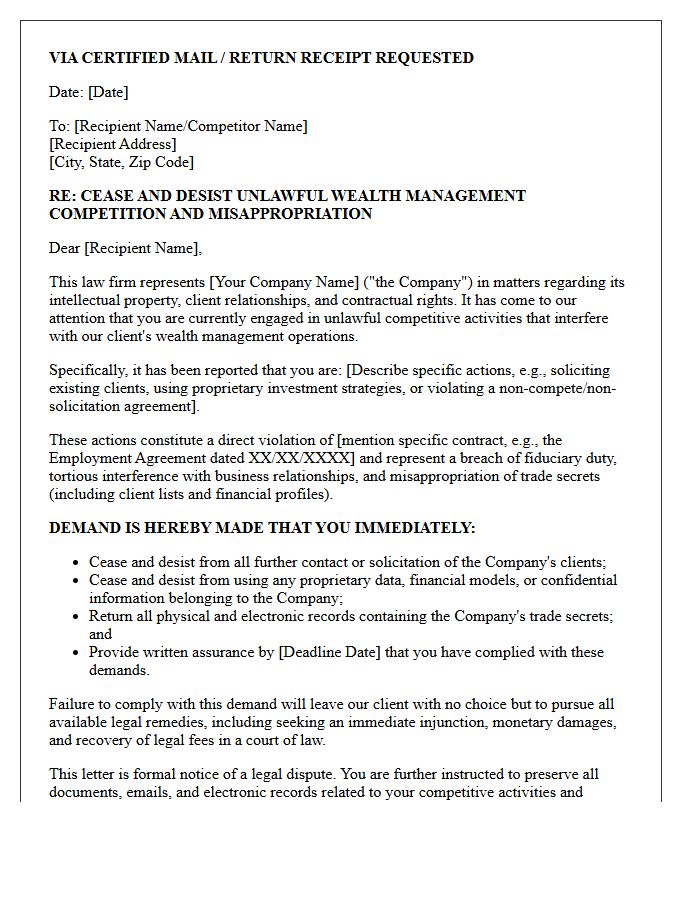
A Cease and Desist Letter regarding unlawful wealth management competition is a formal legal notice demanding that an individual or firm stop engaging in unfair business practices. This typically addresses violations of non-compete agreements, solicitation of existing clients, or the misappropriation of proprietary financial strategies. Receiving such a letter signifies imminent legal action if the prohibited behavior continues. It is crucial to review specific restrictive covenants within employment contracts to ensure compliance with industry regulations and protect intellectual property from unauthorized competitive exploitation.
Financial Institution Cease and Desist Letter for Non-Compete Violation
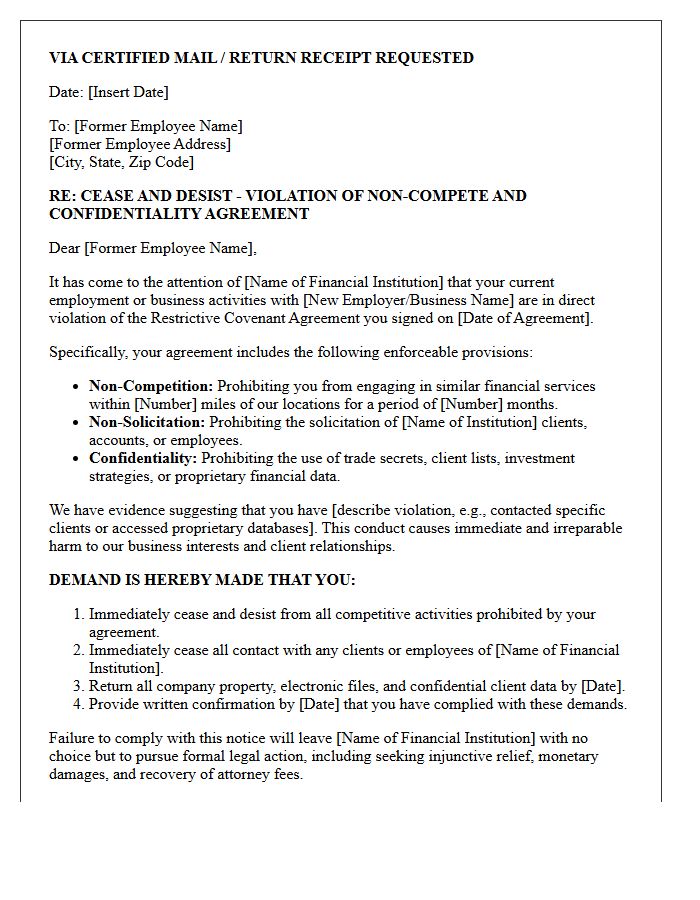
A financial institution issues a Cease and Desist Letter to formally demand that a former employee stop violating specific non-compete agreements. This legal notice warns of imminent litigation if the individual continues working for a competitor or soliciting protected clients. It serves as a critical first step in protecting proprietary trade secrets and maintaining market stability. Recipients must immediately review their employment contract obligations, as ignoring this directive often leads to injunctive relief and significant monetary damages sought through the court system to prevent further irreparable commercial harm.
What is a cease and desist letter for a wealth management non-compete violation?
A cease and desist letter is a formal legal notice sent to a former financial advisor or wealth manager who is allegedly violating restrictive covenants, such as non-compete, non-solicitation, or confidentiality agreements, by managing clients or working for a competitor within a prohibited geographic area or timeframe.
Can a wealth management firm legally enforce a non-compete clause?
Enforceability depends on state law and the reasonableness of the restrictions. Generally, a non-compete is enforceable if it protects legitimate business interests-such as client relationships and trade secrets-and is limited in duration, geographic scope, and the type of activities prohibited.
What happens if I ignore a cease and desist letter regarding my non-compete agreement?
Ignoring the letter typically leads the former firm to seek an immediate temporary restraining order (TRO) or a preliminary injunction in court. This can legally bar you from working for your new firm or contacting clients until the dispute is resolved, often leading to costly litigation and potential damages.
How does a cease and desist letter impact the transition of client accounts?
The letter serves as a warning that any further solicitation of clients from the former firm may result in legal action. If the advisor is governed by the Protocol for Broker Recruiting, the letter may argue that the advisor exceeded the allowed data sets (name, address, phone, email, and account title) permitted during a move.
What are the common defenses against a cease and desist for a non-compete violation?
Common defenses include arguing that the non-compete is overly broad and prevents the advisor from earning a living, that the former firm breached the employment contract first, or that the clients initiated contact independently without solicitation by the advisor.


Comments