
A Comfort Letter serves as a critical support document in debt restructuring, providing lenders with assurance regarding a parent company's commitment to a subsidiary's financial health. It clarifies intentions and enhances creditworthiness during complex negotiations to stabilize corporate liabilities. This guide explores its legal significance and practical applications in restructuring. Below are some ready to use templates.

Image cover: Mastering Comfort Letters for Debt Restructuring: Templates and Professional Samples
Letter Samples List
- Parent Company Comfort Letter for Corporate Debt Restructuring Agreements
- Auditor Comfort Letter for Financial Covenant Waiver Restructuring
- Sponsor Comfort Letter for Project Finance Debt Restructuring
- Comfort Letter for Debt-to-Equity Swap Restructuring Agreements
- Syndicate Bank Comfort Letter for Loan Refinancing and Restructuring
- Comfort Letter for Interest Rate Reduction and Principal Forbearance
- Holding Company Comfort Letter for Subsidiary Debt Restructuring
- Comfort Letter for Working Capital Facility Restructuring
- Comfort Letter for Collateral Substitution in Debt Restructuring
- Central Bank Comfort Letter for Institutional Debt Restructuring
- Comfort Letter for Non-Performing Loan Portfolio Restructuring
- Comfort Letter for Cross-Border Banking Debt Restructuring
Parent Company Comfort Letter for Corporate Debt Restructuring Agreements
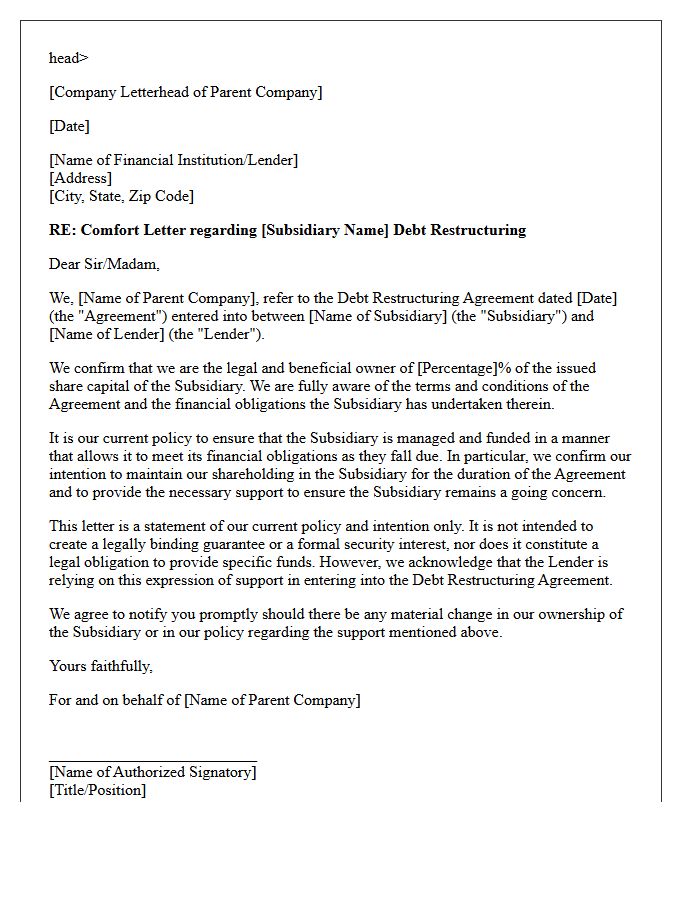
A Parent Company Comfort Letter is a non-binding moral commitment used in corporate debt restructuring to reassure lenders. While it does not constitute a legal guarantee, it signals the parent entity's intent to support a subsidiary's financial stability. These letters provide credit enhancement by outlining the parent's awareness of the restructuring terms and its commitment to maintaining ownership. Creditors use them to gauge parental support when formal guarantees are unavailable. Understanding the distinction between moral obligation and legal liability is essential for risk assessment during complex debt negotiations.
Auditor Comfort Letter for Financial Covenant Waiver Restructuring
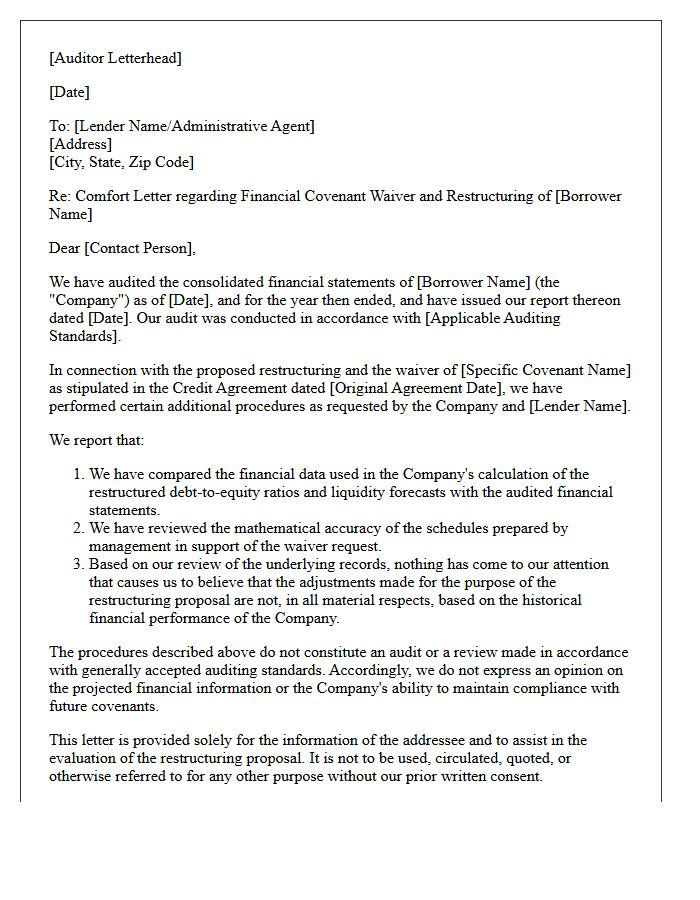
An Auditor Comfort Letter is a critical document provided during financial restructuring to reassure lenders about a company's updated financial position. When negotiating a covenant waiver, auditors perform agreed-upon procedures to verify financial data accuracy. This letter provides negative assurance, confirming that no material modifications are needed for the figures used to calculate new debt thresholds. It bridges the information gap between management's projections and lender expectations, facilitating the formal approval of restructuring terms by reducing perceived credit risk and validating the borrower's solvency during the transition period.
Sponsor Comfort Letter for Project Finance Debt Restructuring
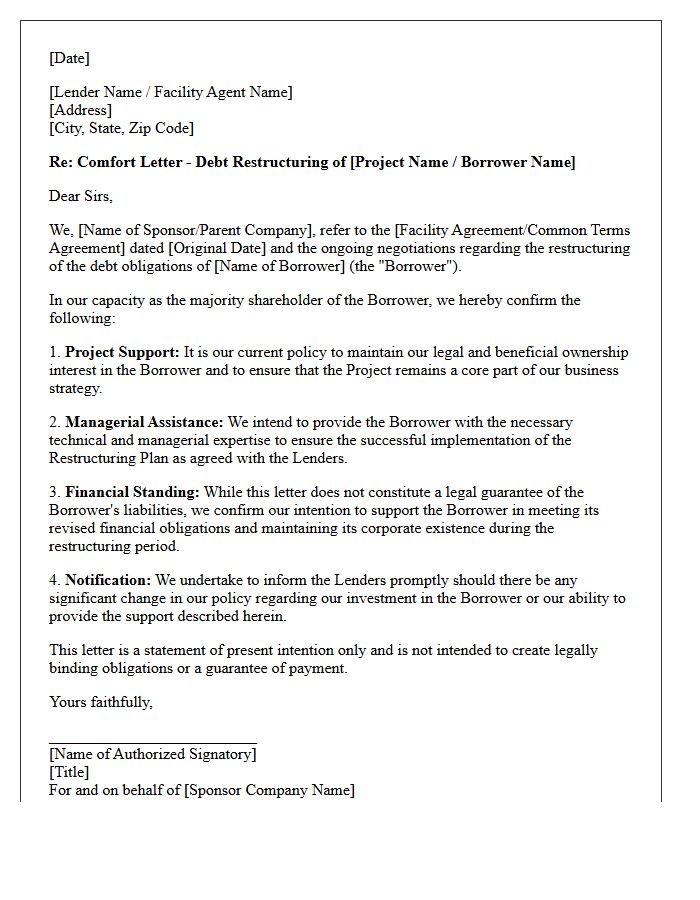
A Sponsor Comfort Letter is a critical support instrument in project finance debt restructuring, signaling a shareholder's moral and operational commitment to a distressed project. Unlike a formal guarantee, it provides lenders with assurance regarding management support and potential equity injections without appearing as a direct liability on the sponsor's balance sheet. Understanding the nuances of its legal enforceability is essential, as these letters bridge the trust gap between sponsors and creditors, facilitating smoother negotiations and stabilizing the project's financial structure during complex workout scenarios.
Comfort Letter for Debt-to-Equity Swap Restructuring Agreements
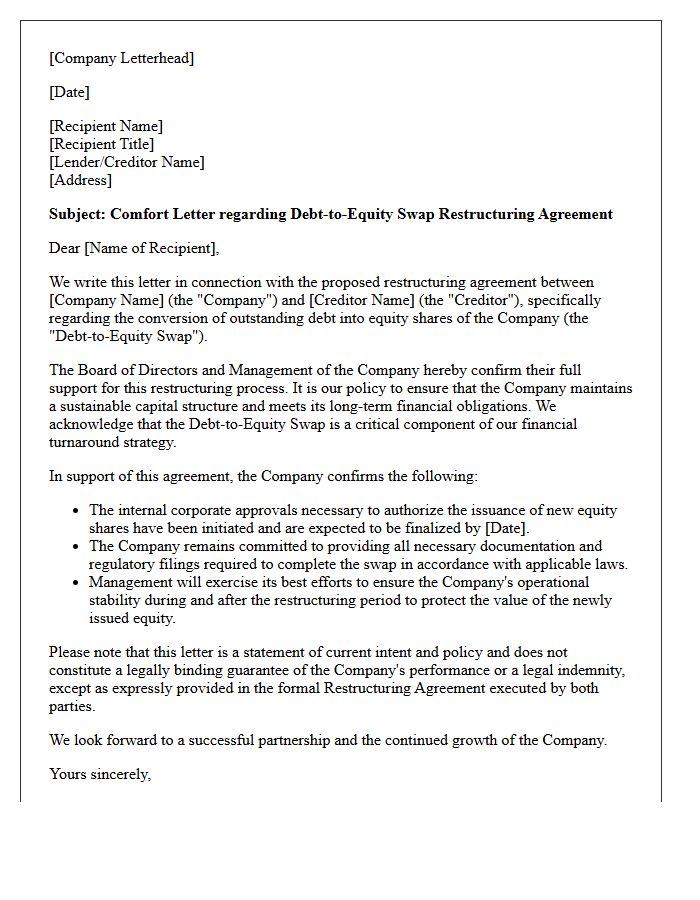
A Comfort Letter in a debt-to-equity swap provides essential assurance regarding the financial stability and intent of the parties involved. It serves as a non-binding commitment that supports the restructuring agreement by validating the valuation of converted shares and the solvency of the debtor. This document builds credibility with creditors and regulatory bodies, ensuring that the transition from debt to equity ownership aligns with agreed fiscal projections. Understanding its role is vital for mitigating risks during complex corporate reorganizations and maintaining stakeholder confidence throughout the insolvency or recovery process.
Syndicate Bank Comfort Letter for Loan Refinancing and Restructuring
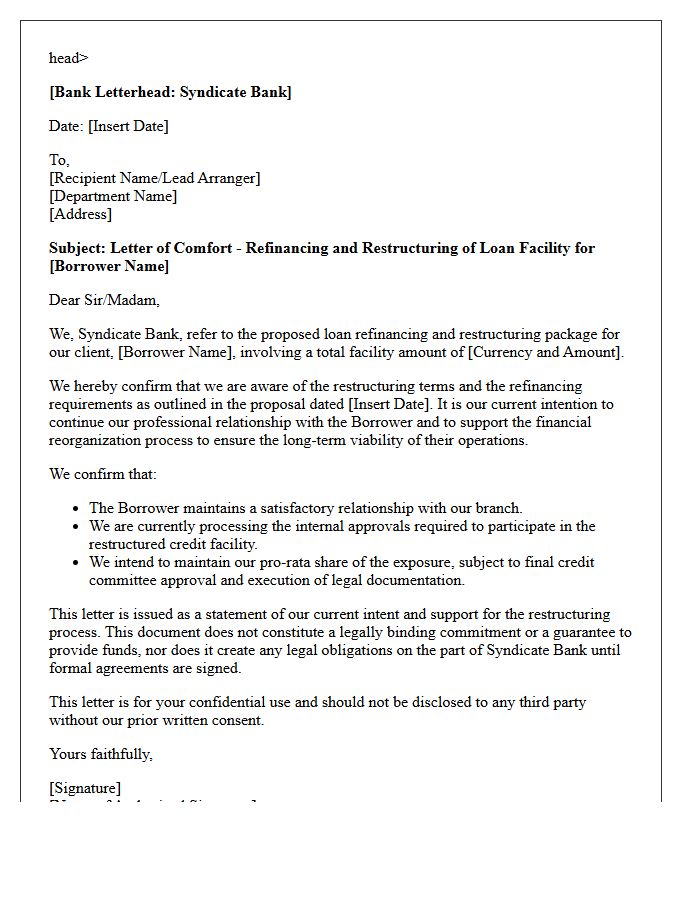
A Syndicate Bank comfort letter serves as a crucial document for loan refinancing and restructuring, indicating a parent company's moral commitment to support a subsidiary's debt obligations. While not a legally binding guarantee, it provides financial assurance to lenders regarding creditworthiness. This document facilitates smoother negotiations by mitigating perceived risks during debt modification. For successful restructuring, the letter helps bridge trust gaps between the borrower and the syndicate, ensuring liquidity stability. Understanding the underlying intent is essential for corporations seeking to optimize their balance sheets through strategic debt management.
Comfort Letter for Interest Rate Reduction and Principal Forbearance
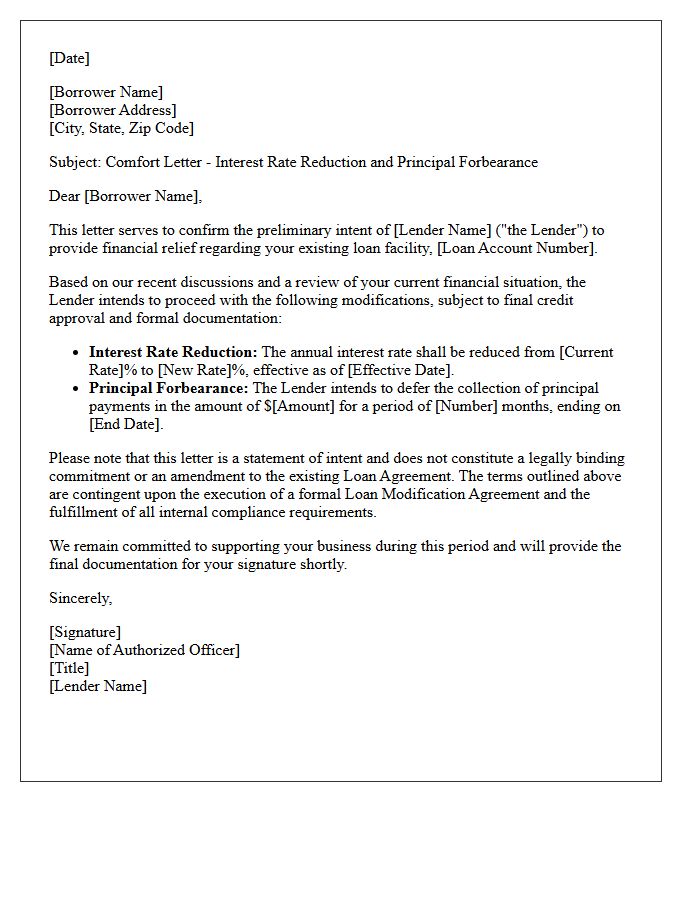
A comfort letter for interest rate reduction and principal forbearance acts as a non-binding declaration of support from a parent company to a lender. It provides financial assurance that the subsidiary remains capable of meeting restructured obligations. This document helps mitigate risk during debt renegotiations by outlining a commitment to maintain the borrower's liquidity and operational stability. While not a formal guarantee, it is a vital tool for securing concessions and ensuring the long-term viability of distressed loans through enhanced transparency and corporate backing.
Holding Company Comfort Letter for Subsidiary Debt Restructuring
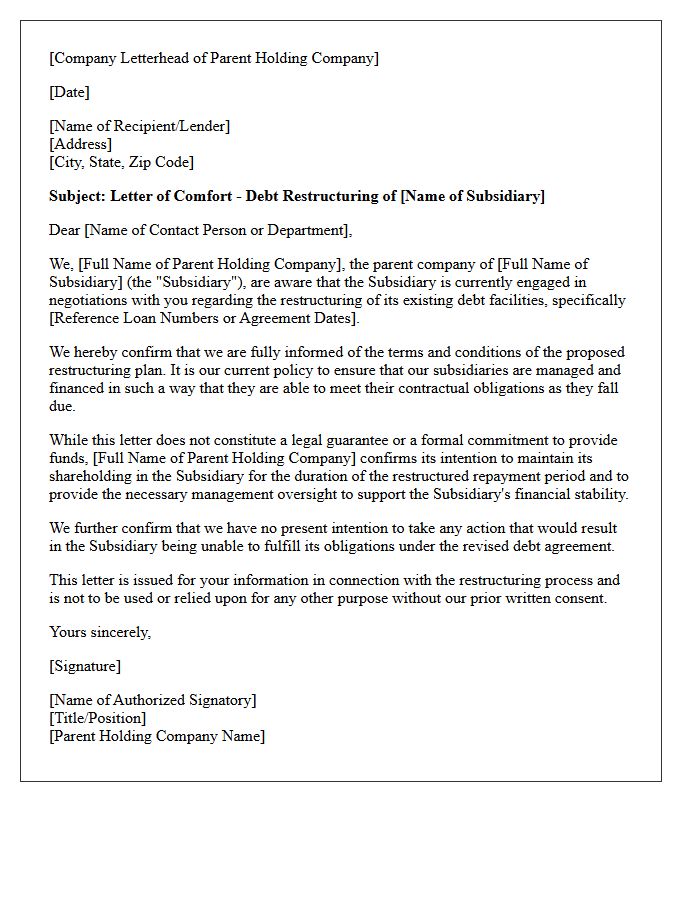
A Comfort Letter is a document issued by a holding company to provide moral assurance regarding a subsidiary's financial stability during debt restructuring. While often not legally binding, it improves the subsidiary's creditworthiness by signaling the parent company's intent to support its obligations. Lenders use these letters to mitigate risk when formal guarantees are unavailable. Understanding the specific enforceability and wording is crucial, as certain jurisdictions may interpret these assurances as contractual commitments, significantly impacting the parent company's contingent liabilities and overall financial exposure during the restructuring process.
Comfort Letter for Working Capital Facility Restructuring
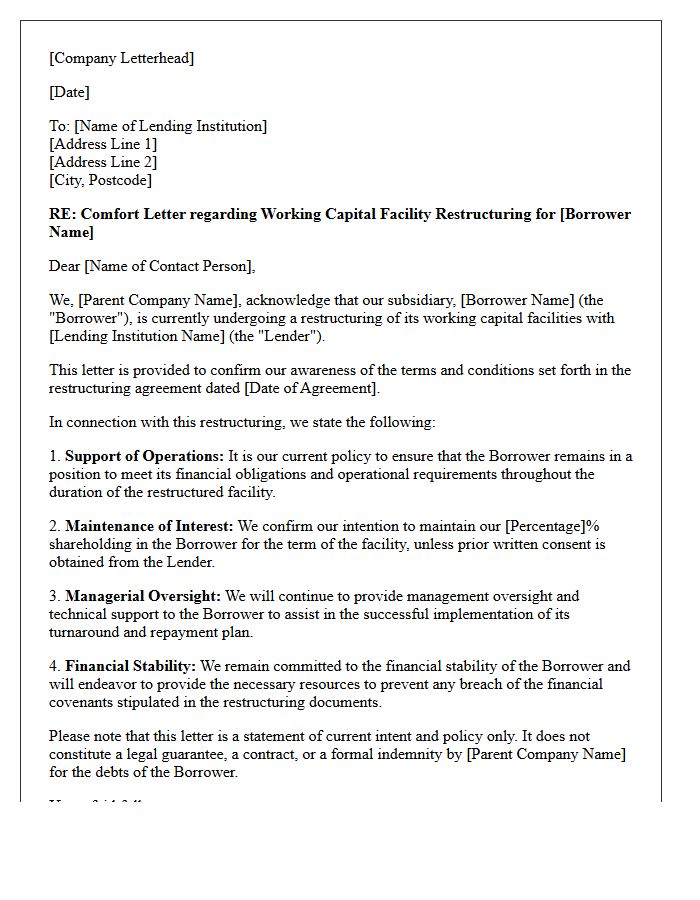
A comfort letter for working capital facility restructuring provides reassurance to lenders regarding a parent company's commitment to its subsidiary's financial stability. While often not a legally binding guarantee, it outlines support intentions and operational backing during debt renegotiation. This document helps bridge liquidity gaps by enhancing creditworthiness and ensuring the bank that the group will maintain oversight of the borrower's obligations. Understanding its specific wording is crucial, as it influences the lender's risk assessment and the overall success of the restructuring process.
Comfort Letter for Collateral Substitution in Debt Restructuring
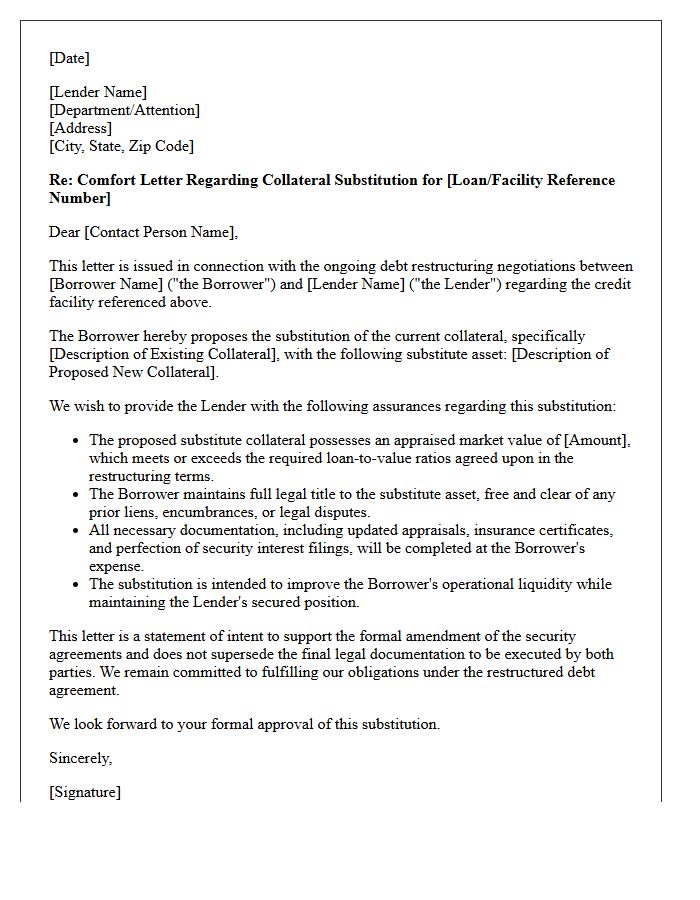
A Comfort Letter for Collateral Substitution is a formal document issued during debt restructuring to facilitate the replacement of existing loan security. It provides conditional assurance that the new asset maintains equivalent value and legal enforceability. This instrument is vital for maintaining creditor confidence while offering borrowers operational flexibility. By outlining the terms of the exchange, it ensures the underlying risk profile remains stable, preventing technical defaults and ensuring a seamless transition of collateral interests without compromising the overall integrity of the restructuring agreement.
Central Bank Comfort Letter for Institutional Debt Restructuring
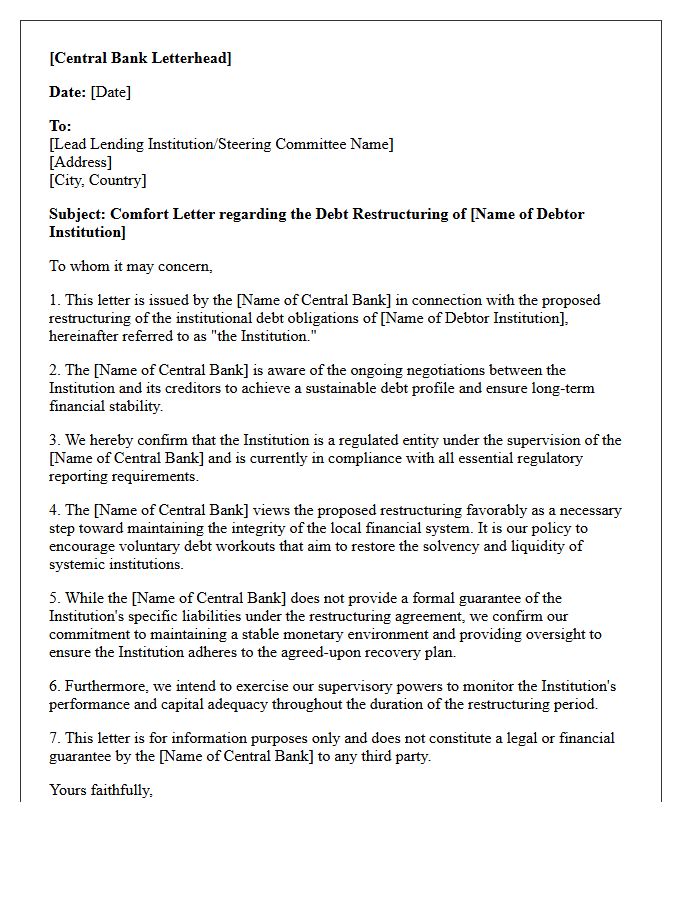
A Central Bank Comfort Letter is a vital document in institutional debt restructuring, signaling regulatory non-objection to proposed repayment terms. It provides conditional assurance to creditors that the restructuring plan aligns with national monetary policies and banking stability frameworks. While not a legally binding guarantee, it mitigates sovereign risk and enhances creditor confidence by validating the feasibility of the financial workout. For institutional lenders, this letter is essential for internal risk assessments and ensuring that the renegotiated debt remains compliant with local capital requirements and exchange control regulations during economic recovery.
Comfort Letter for Non-Performing Loan Portfolio Restructuring
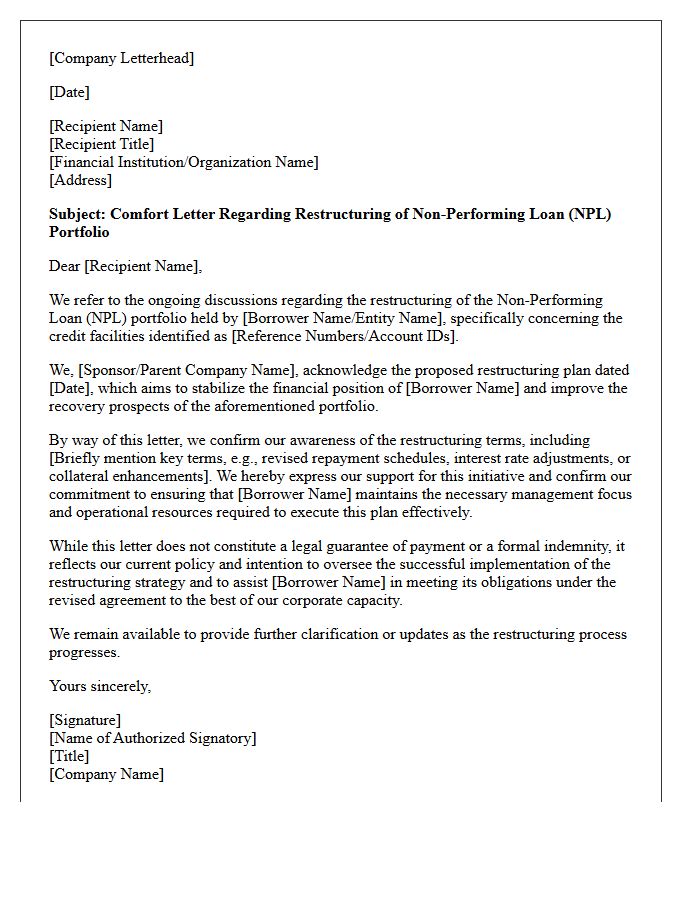
A Comfort Letter serves as a vital moral commitment issued by a parent company to reassure lenders during Non-Performing Loan (NPL) portfolio restructuring. While typically not a legally binding guarantee, it demonstrates a supportive intent to maintain the subsidiary's financial stability. This document enhances creditworthiness, mitigates perceived risk for asset management companies, and facilitates smoother negotiations. Understanding the specific legal enforceability and wording is crucial, as it bridges the confidence gap between creditors and distressed debtors during complex debt rehabilitation processes.
Comfort Letter for Cross-Border Banking Debt Restructuring
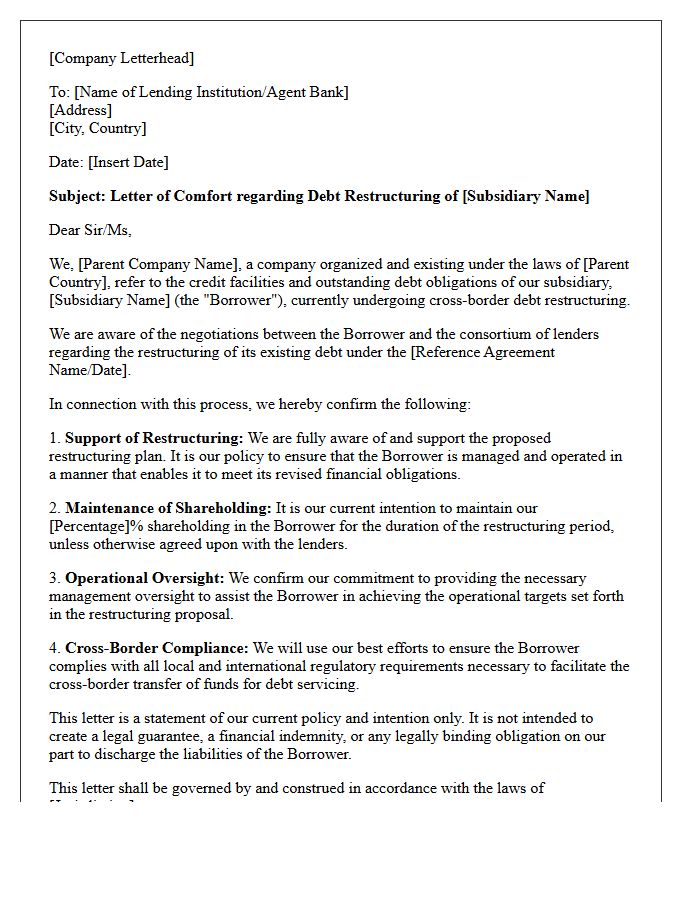
A Comfort Letter is a non-binding document issued by a parent company to reassure lenders during cross-border debt restructuring. It signifies moral commitment to a subsidiary's financial stability without creating a formal legal guarantee. While it reduces perceived risk for international banks, its enforceability varies significantly across jurisdictions. Understanding the specific legal strength and wording is essential, as these letters often bridge the gap when formal collateral is unavailable, helping to maintain liquidity and creditor confidence during complex multinational negotiations.
What is a Comfort Letter in the context of debt restructuring?
A Comfort Letter is a document issued by a parent company or third party to a lender, providing assurance regarding a borrower's financial obligations and commitment to a debt restructuring agreement without creating a full legal guarantee.
How does a Comfort Letter differ from a formal Guarantee in restructuring?
Unlike a formal guarantee, which creates a legally binding obligation to pay a debt, a Comfort Letter typically expresses intent or moral obligation to support the debtor, offering a lower level of legal recourse for the lender.
Why do lenders require a Comfort Letter during debt negotiations?
Lenders require Comfort Letters to mitigate credit risk, gain insight into the parent company's support levels, and ensure that the restructured entity remains a viable "going concern" throughout the repayment period.
Are Comfort Letters legally binding in debt restructuring agreements?
The enforceability depends on the specific language used; while most are intended as statements of intent, courts may deem them legally binding if the phrasing creates clear contractual obligations or specific performance promises.
What are the key components of a Comfort Letter for debt restructuring?
Key components typically include an acknowledgment of the debt facility, a statement of awareness regarding the restructuring terms, a "maintenance of ownership" clause, and an expression of the issuer's policy to ensure the subsidiary meets its liabilities.


Comments