
An Import Financing Commitment Letter is a formal document issued by a financial institution promising to provide credit for international trade transactions. It ensures suppliers that payment is guaranteed, facilitating smoother global logistics and cash flow management. This letter is crucial for securing high-value goods from overseas vendors. Below are some ready to use template.
Image cover: Mastering Import Financing: Commitment Letter Samples and Professional Templates
Letter Samples List
- Conditional Import Financing Commitment Letter
- Firm Import Financing Commitment Letter
- Syndicated Import Financing Commitment Letter
- Bilateral Import Facility Commitment Letter
- Revolving Import Credit Commitment Letter
- Short-Term Import Trade Commitment Letter
- Post-Shipment Import Financing Commitment Letter
- Trust Receipt Facility Commitment Letter
- Islamic Import Financing Commitment Letter
- Amended Import Financing Commitment Letter
- Multi-Currency Import Financing Commitment Letter
- Standby Import Financing Commitment Letter
Conditional Import Financing Commitment Letter
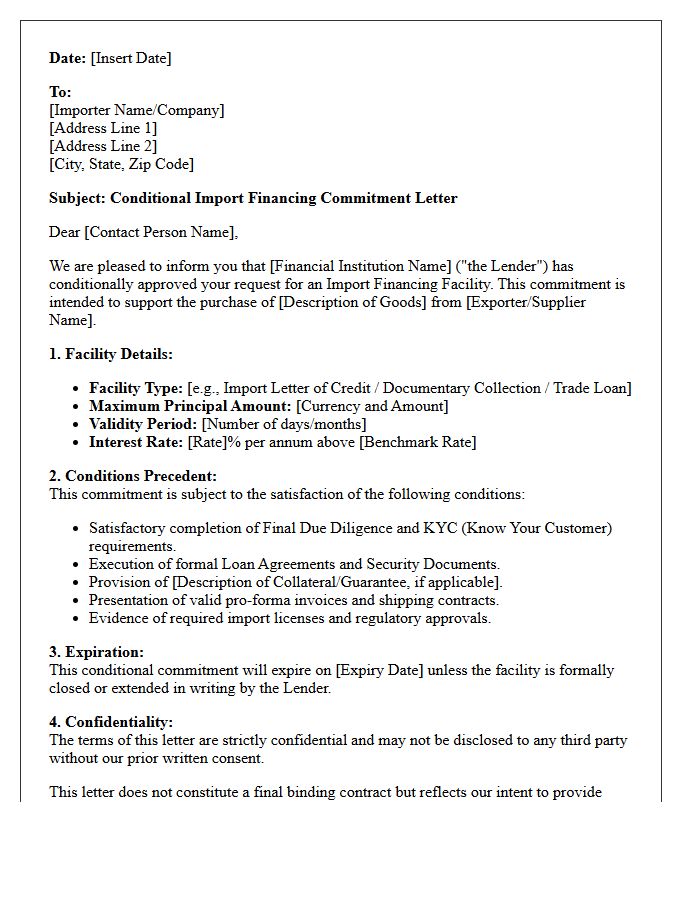
A Conditional Import Financing Commitment Letter is a formal document issued by a lender outlining the specific terms under which they agree to fund a business's international purchases. It serves as preliminary approval, signaling to suppliers that credit is available subject to meeting defined criteria. Key requirements often include valid purchase orders, creditworthy end-customers, and verified shipping documentation. This letter enhances a buyer's credibility during negotiations, though it remains non-binding until all contingencies, such as collateral verification or financial audits, are fully satisfied by the importer.
Firm Import Financing Commitment Letter
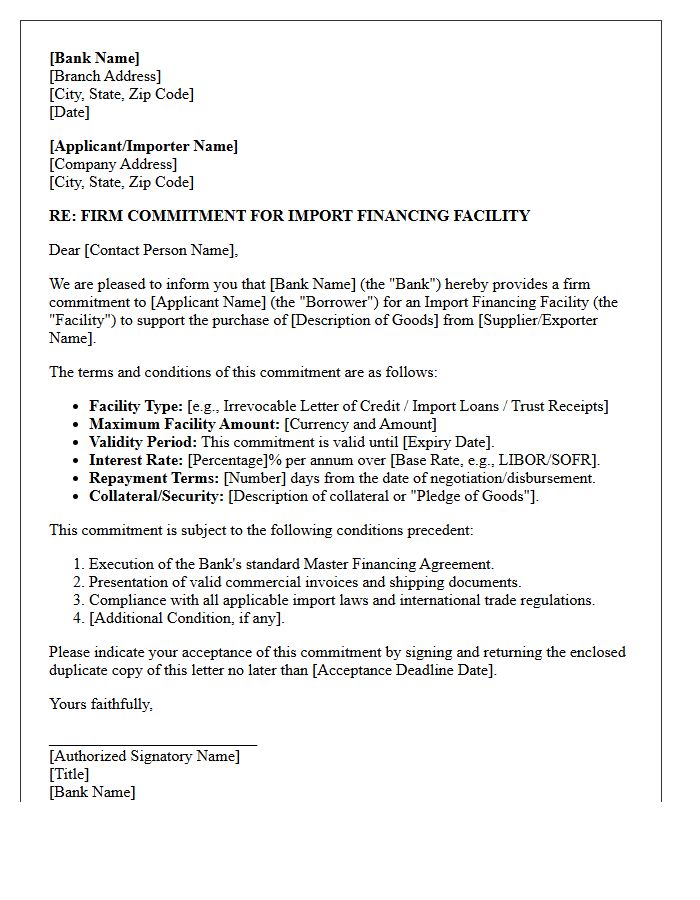
A Firm Import Financing Commitment Letter is a legally binding document issued by a lender to guarantee funding for purchasing foreign goods. It provides financial certainty to exporters, ensuring that the necessary capital is available to settle international trade transactions. This commitment enhances a buyer's creditworthiness and streamlines the procurement process by mitigating non-payment risks. For importers, securing this letter is essential to finalize supply contracts and maintain a stable global supply chain through reliable liquidity support.
Syndicated Import Financing Commitment Letter
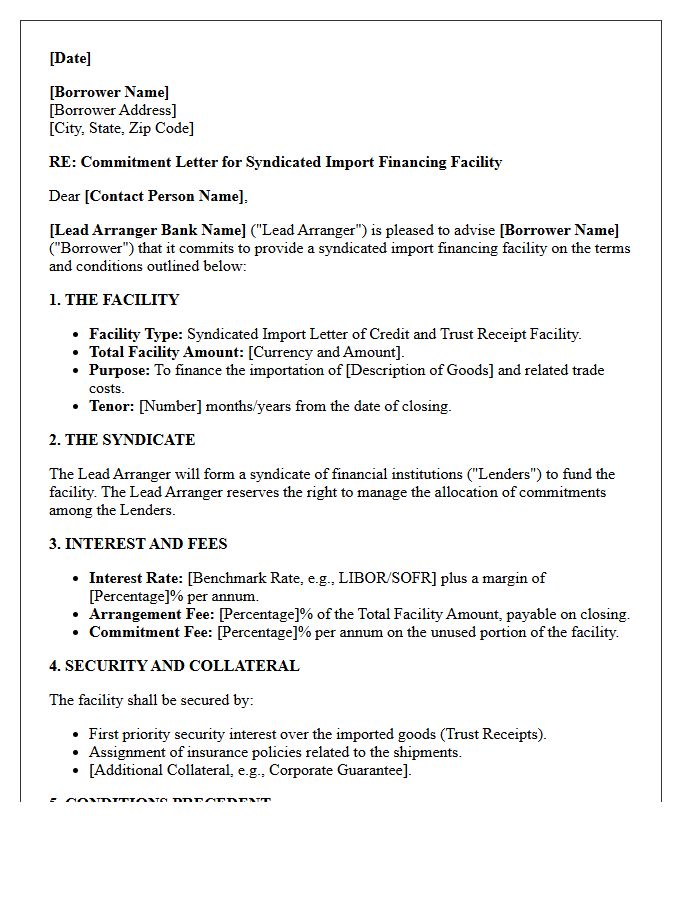
A Syndicated Import Financing Commitment Letter is a legally binding agreement where a group of lenders pledges to provide structured credit for international trade. It outlines critical terms, including the facility limit, interest rates, and collateral requirements. This document ensures the importer has guaranteed liquidity to settle letters of credit or trade payables. For borrowers, the most vital aspect is the conditions precedent, which must be satisfied before funds are released. This commitment centralizes large-scale funding, mitigating risk for individual banks while supporting global supply chain operations.
Bilateral Import Facility Commitment Letter
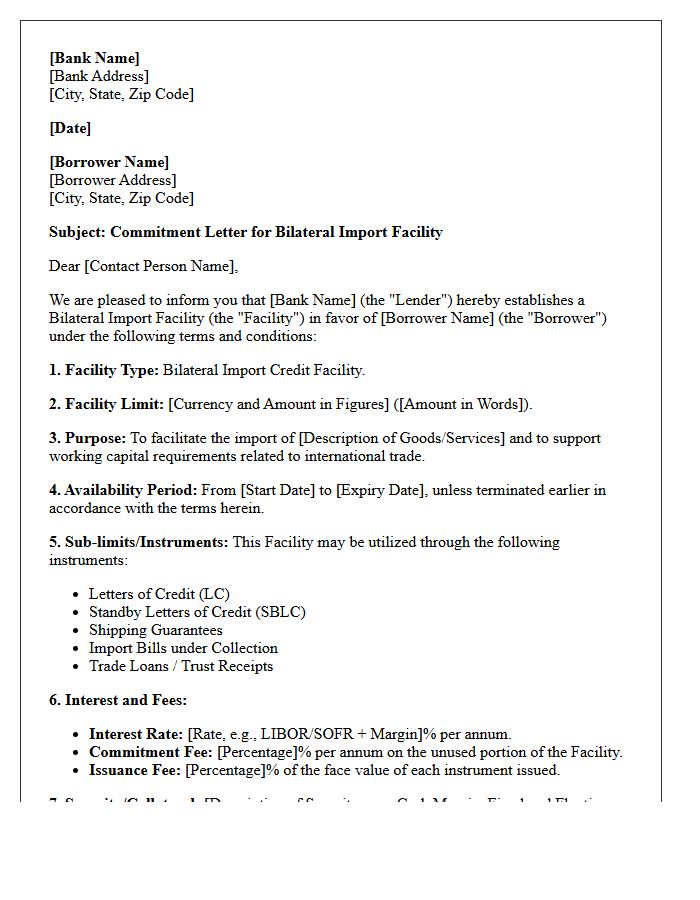
A Bilateral Import Facility Commitment Letter is a legally binding agreement where a single lender pledges to provide specific financing for a borrower's import-related transactions. This document outlines critical terms including credit limits, interest rates, and repayment schedules tailored to international trade needs. It serves as a formal assurance of liquidity, enabling businesses to issue letters of credit or manage open account payments efficiently. Understanding the conditions precedent within the letter is essential, as they dictate the availability of funds for global procurement activities.
Revolving Import Credit Commitment Letter
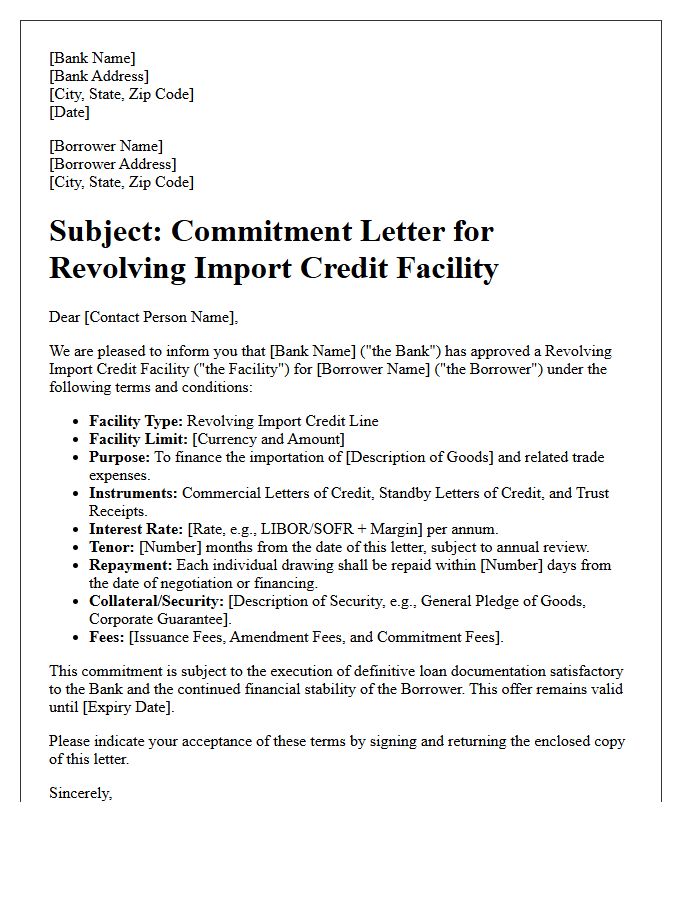
A Revolving Import Credit Commitment Letter is a formal agreement where a bank guarantees continuous financing for international trade transactions. Unlike standard loans, this facility allows importers to reuse funds up to a set limit as previous balances are repaid. It primarily supports the issuance of letters of credit and ensures liquid capital for purchasing foreign goods. This commitment provides businesses with financial flexibility and predictable cash flow, enabling them to maintain consistent supply chains while mitigating payment risks between global buyers and sellers.
Short-Term Import Trade Commitment Letter
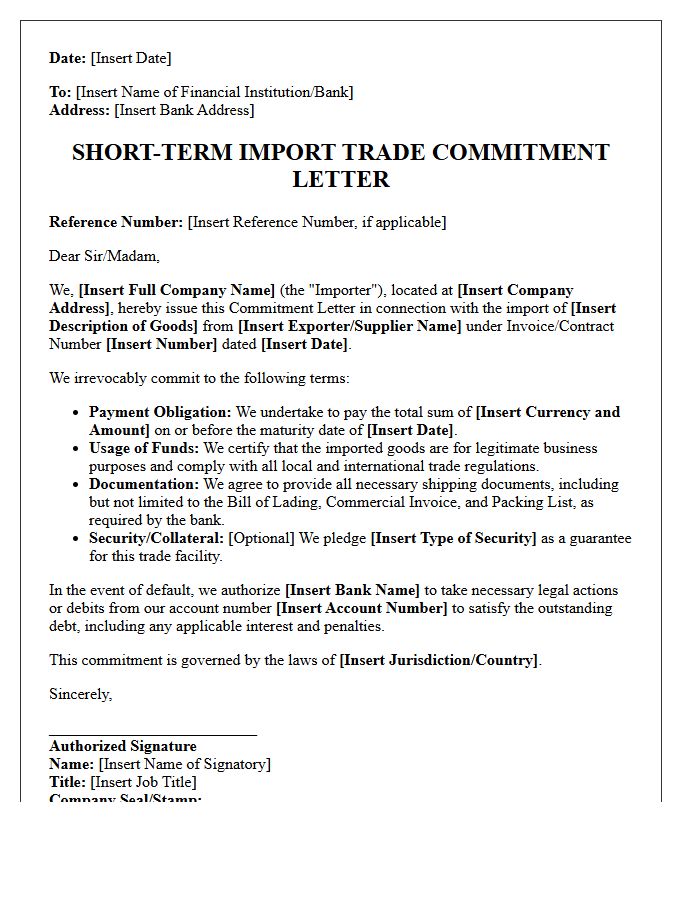
A Short-Term Import Trade Commitment Letter is a formal document where a bank guarantees payment to a foreign exporter on behalf of an importer. It facilitates international trade by mitigating risk for the seller while allowing the buyer to manage liquidity effectively. This instrument ensures that payment obligations are met within a brief period, typically under one year. It is essential for businesses needing to secure goods quickly while maintaining financial credibility and optimizing cash flow cycles in global markets. This letter serves as a critical bridge for time-sensitive maritime or air freight transactions.
Post-Shipment Import Financing Commitment Letter
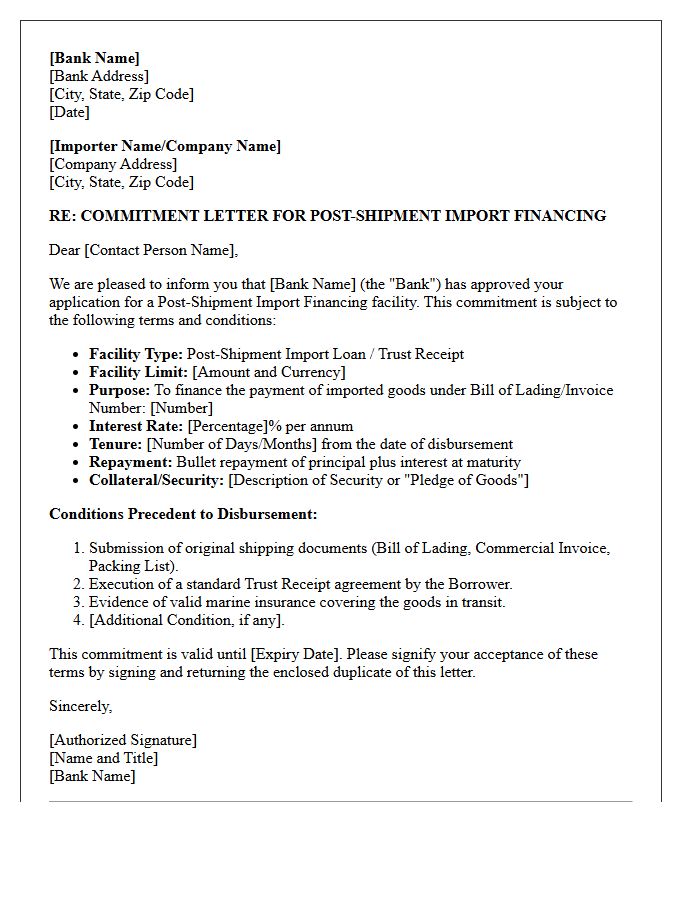
A Post-Shipment Import Financing Commitment Letter is a formal guarantee issued by a financial institution to provide liquidity after goods have been shipped. This document confirms the lender's obligation to settle payments or provide short-term loans to the importer based on verified shipping documents. It serves as a vital tool for working capital management, allowing businesses to receive inventory while deferring immediate cash outlays. By securing this commitment, importers enhance their creditworthiness and maintain stable cash flows throughout the international trade cycle until the final sale of goods is realized.
Trust Receipt Facility Commitment Letter
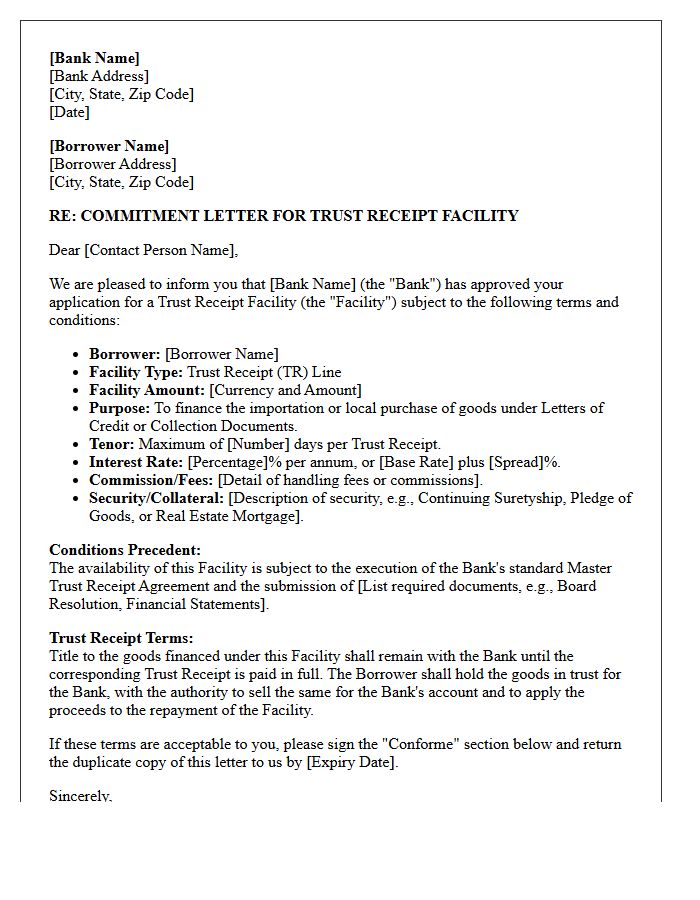
A Trust Receipt Facility Commitment Letter is a formal agreement where a bank pledges to provide short-term financing for import transactions. It allows businesses to take possession of goods for resale or processing while the bank retains legal ownership until the loan is repaid. This document outlines critical terms such as credit limits, interest rates, and maturity dates. It is essential for managing working capital and ensuring seamless international trade operations by bridging the gap between receiving inventory and generating cash flow from sales.
Islamic Import Financing Commitment Letter
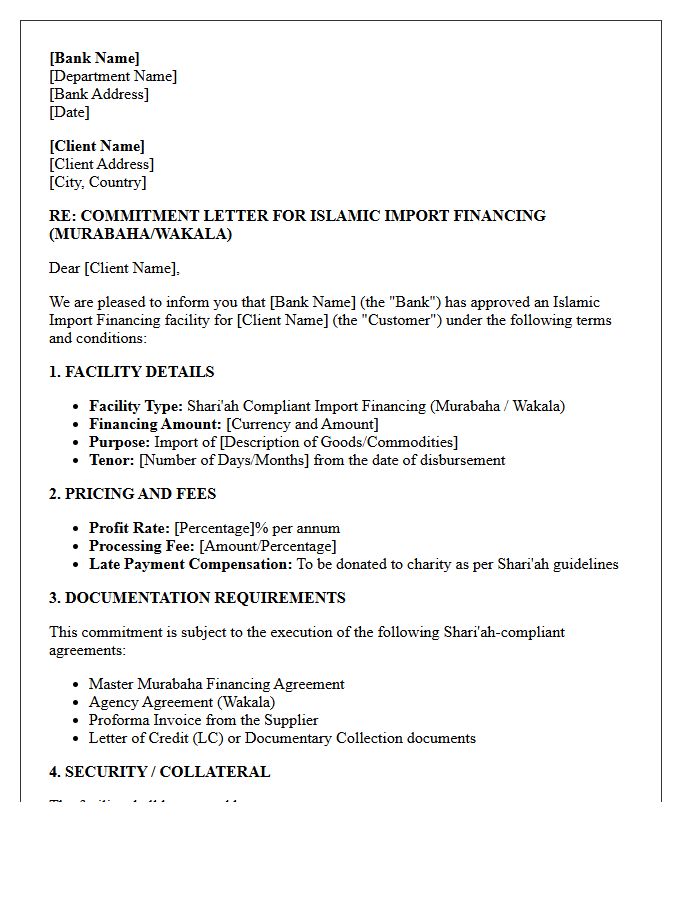
An Islamic Import Financing Commitment Letter is a formal document issued by a bank to facilitate global trade under Sharia principles. It outlines the Murabaha or Musawamah terms, where the bank agrees to purchase goods and resell them to the importer at a disclosed profit margin. This letter confirms the bank's pledge to provide liquidity, ensuring the supplier is paid while the buyer benefits from deferred payment options. It is essential for managing working capital and ensuring ethical compliance by avoiding interest-based lending in international commercial transactions.
Amended Import Financing Commitment Letter
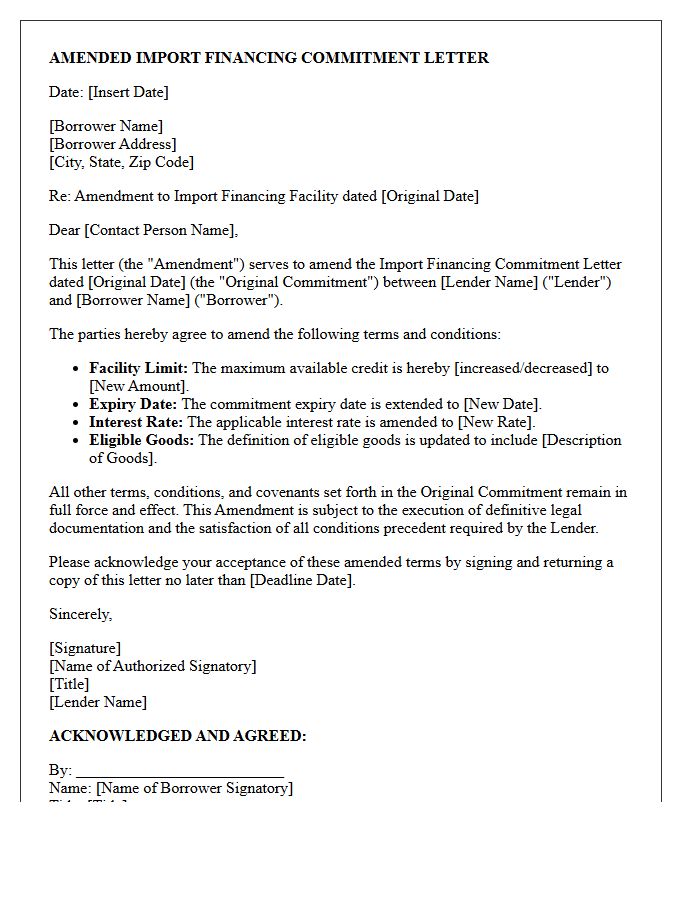
An Amended Import Financing Commitment Letter is a legally binding modification to an existing credit agreement between a buyer and a lender. It serves to update specific financial terms, such as extended credit lines, adjusted interest rates, or revised expiration dates for purchasing foreign goods. This document is crucial for maintaining trade liquidity, as it formally reflects new negotiations or changing market conditions. Ensuring all covenants and conditions are accurately documented helps businesses secure necessary capital while mitigating risks associated with international supply chains and cross-border transactions.
Multi-Currency Import Financing Commitment Letter
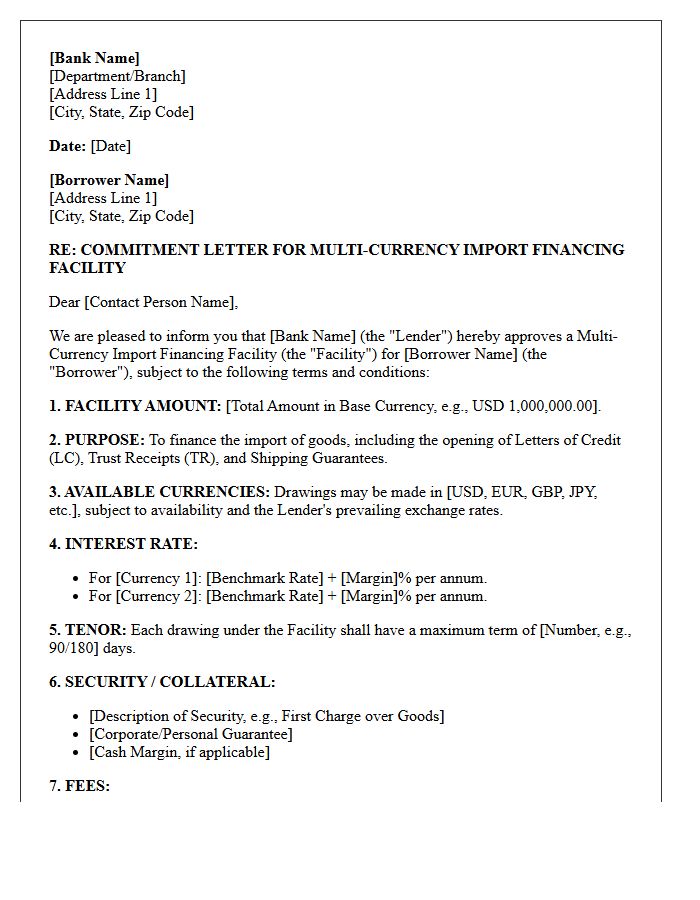
A Multi-Currency Import Financing Commitment Letter is a formal agreement where a lender guarantees funding for international trade in various denominations. This document outlines critical terms, including the credit limit, interest rates, and repayment schedules tailored to global transactions. It serves as a vital tool for importers to mitigate exchange rate risk while ensuring liquidity across different markets. By securing this commitment, businesses can confidently negotiate with foreign suppliers, knowing their cross-border payments are backed by a structured financial facility that supports diverse operational needs in a globalized economy.
Standby Import Financing Commitment Letter
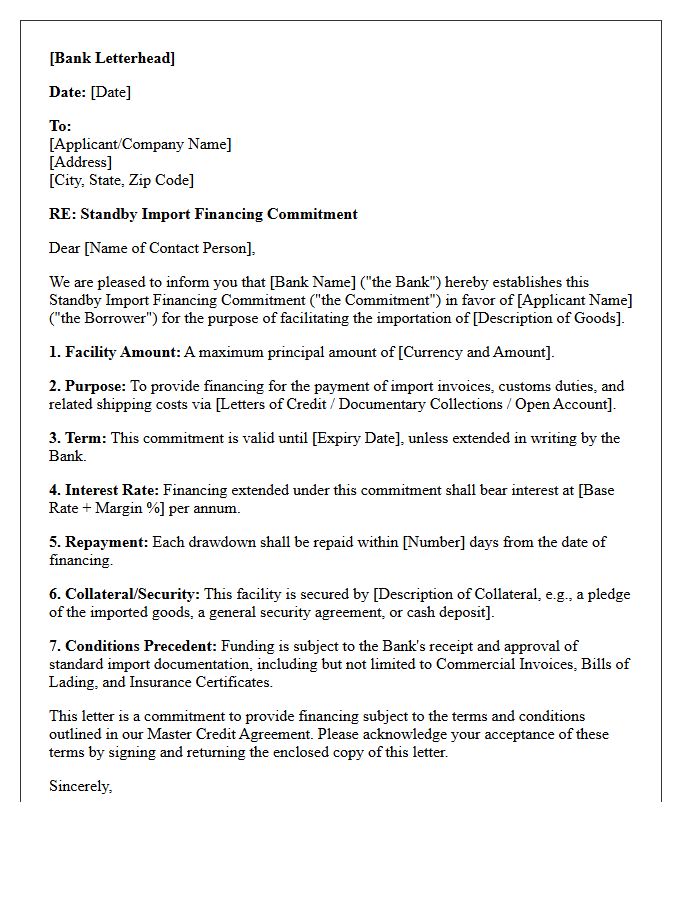
A Standby Import Financing Commitment Letter is a critical guarantee from a bank ensuring that funds are available to cover import payments. This document provides exporters with the assurance that they will receive payment upon meeting specific terms, even if the buyer defaults. It functions as a secondary payment mechanism, significantly reducing international trade risk. By securing this commitment, businesses can negotiate better terms and strengthen supply chain relationships through verified financial credibility and liquidity support during cross-border transactions.
What is an Import Financing Commitment Letter?
An Import Financing Commitment Letter is a formal document issued by a financial institution pledging to provide a specific amount of funding or credit to an importer for the purchase of goods from foreign suppliers.
What are the primary benefits of securing an Import Financing Commitment Letter?
The primary benefits include demonstrating creditworthiness to overseas exporters, strengthening negotiation leverage for better payment terms, and ensuring that the necessary working capital is available to facilitate international trade transactions.
What information is typically included in an Import Financing Commitment Letter?
A standard commitment letter outlines the total credit limit, interest rates, repayment schedules, collateral requirements, expiration dates, and the specific terms and conditions under which the funds will be disbursed.
How does a commitment letter differ from a Letter of Credit (LC)?
While a commitment letter is an assurance from a bank to a borrower that financing is available, a Letter of Credit is a direct guarantee from the bank to the seller that payment will be made upon the presentation of complying shipping documents.
What documents are required to apply for an Import Financing Commitment Letter?
Applicants generally need to provide audited financial statements, pro forma invoices or purchase contracts, business registration details, and documentation regarding the company's import-export history and collateral assets.

Comments