
A Notice of Foreclosure Sale Date is a formal legal document notifying homeowners and the public of the specific time and location where a property will be auctioned. This essential notice marks the final stage of the legal proceedings after a default occurs. Understanding your rights during this period is critical. To help you draft this document, below are some ready to use template.
Image cover: Official Notice of Foreclosure Sale: Templates and Professional Samples
Letter Samples List
- Initial Notice of Foreclosure Sale Date Letter
- Final Notice of Foreclosure Sale Date Letter
- Amended Notice of Foreclosure Sale Date Letter
- Postponed Notice of Foreclosure Sale Date Letter
- Cancelled Notice of Foreclosure Sale Date Letter
- Residential Notice of Foreclosure Sale Date Letter
- Commercial Notice of Foreclosure Sale Date Letter
- Trustee Notice of Foreclosure Sale Date Letter
- Guarantor Notice of Foreclosure Sale Date Letter
- Lienholder Notice of Foreclosure Sale Date Letter
- Junior Creditor Notice of Foreclosure Sale Date Letter
- Court-Ordered Notice of Foreclosure Sale Date Letter
Initial Notice of Foreclosure Sale Date Letter
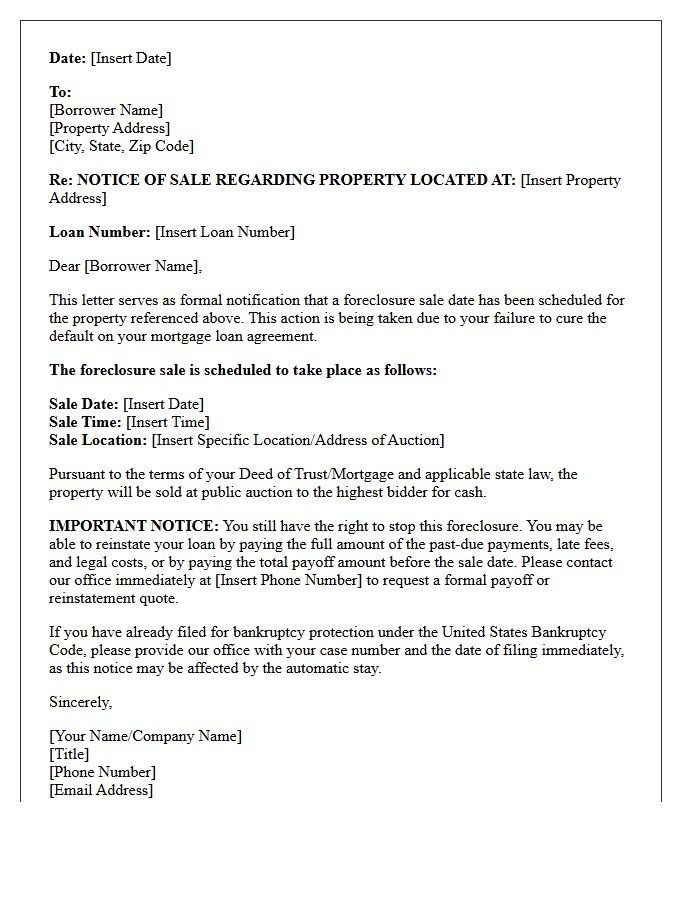
The Initial Notice of Foreclosure Sale Date Letter is a critical legal document informing homeowners that their property has been scheduled for auction. This notice signifies the final stage of the foreclosure process, providing a specific date, time, and location for the sale. It serves as a formal warning that the lender intends to recover the debt by selling the asset. Receivers should immediately explore mitigation options, such as loan modification or legal intervention, to halt the proceedings before the designated sale occurs and legal ownership transfers.
Final Notice of Foreclosure Sale Date Letter
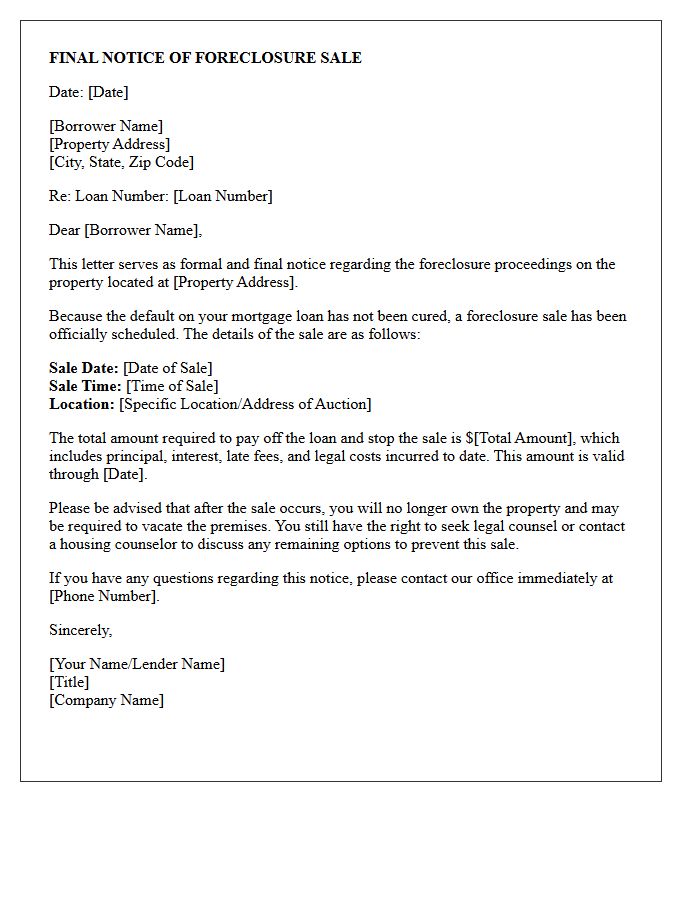
A Final Notice of Foreclosure Sale Date Letter is a critical legal document informing a homeowner of the exact auction date for their property. Received after a period of delinquency, it represents the final stage of the foreclosure process. Homeowners must act immediately upon receipt to explore loss mitigation options, such as a loan modification, short sale, or filing for bankruptcy to trigger an automatic stay. Ignoring this notice results in the loss of ownership and eventual eviction once the property is sold to the highest bidder.
Amended Notice of Foreclosure Sale Date Letter
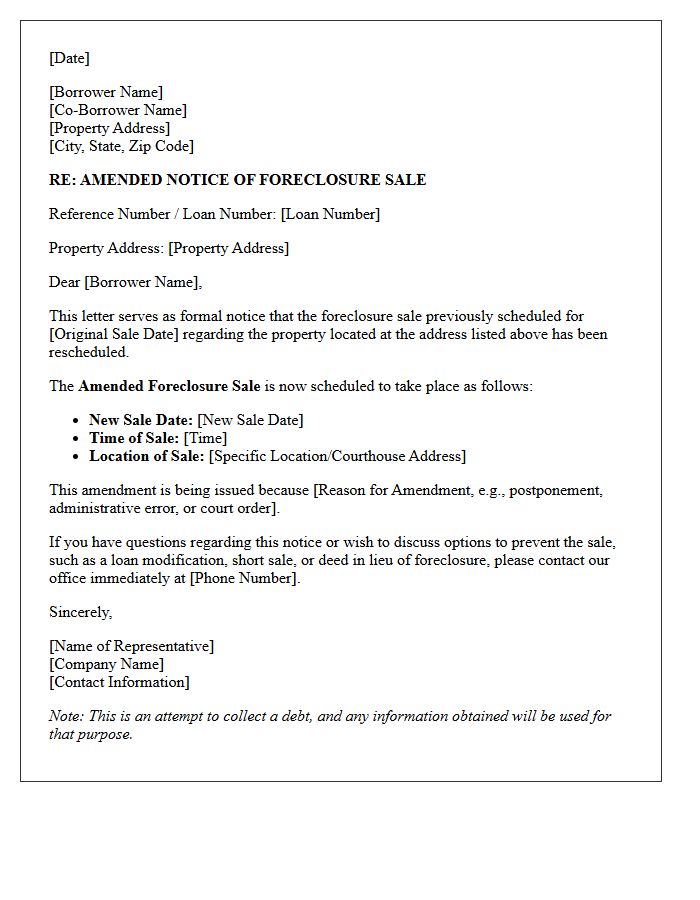
An Amended Notice of Foreclosure Sale Date is a legal document issued when the original auction schedule for a property changes. This letter provides official notification of the newly rescheduled date, time, and location of the public sale. It is crucial for homeowners to review this notice immediately, as it resets the timeline for redemption rights or loss of ownership. Receiving this document often signifies that previous legal delays or postponements have concluded, and the lender is moving forward with the final liquidation process of the collateralized asset.
Postponed Notice of Foreclosure Sale Date Letter
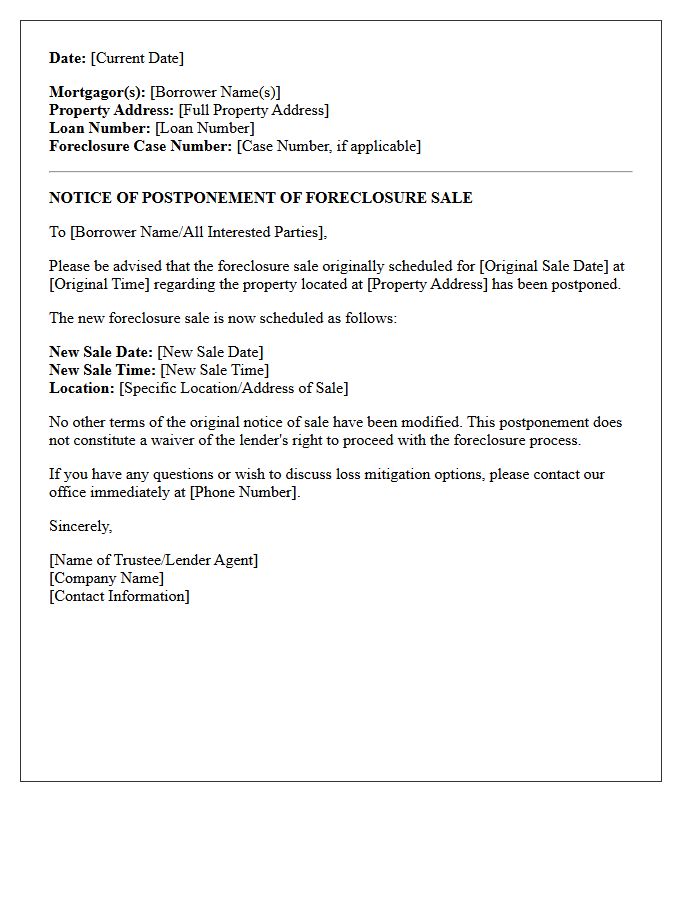
A Postponed Notice of Foreclosure Sale Date Letter is a legal document informing homeowners that a scheduled foreclosure auction has been rescheduled to a later date. This delay provides a critical window for borrowers to pursue loss mitigation options, such as loan modifications or short sales. It is essential to verify the new date immediately to prevent property loss. Understanding this notice allows homeowners more time to seek legal counsel or negotiate with lenders to reach a settlement and potentially save their home from being sold.
Cancelled Notice of Foreclosure Sale Date Letter
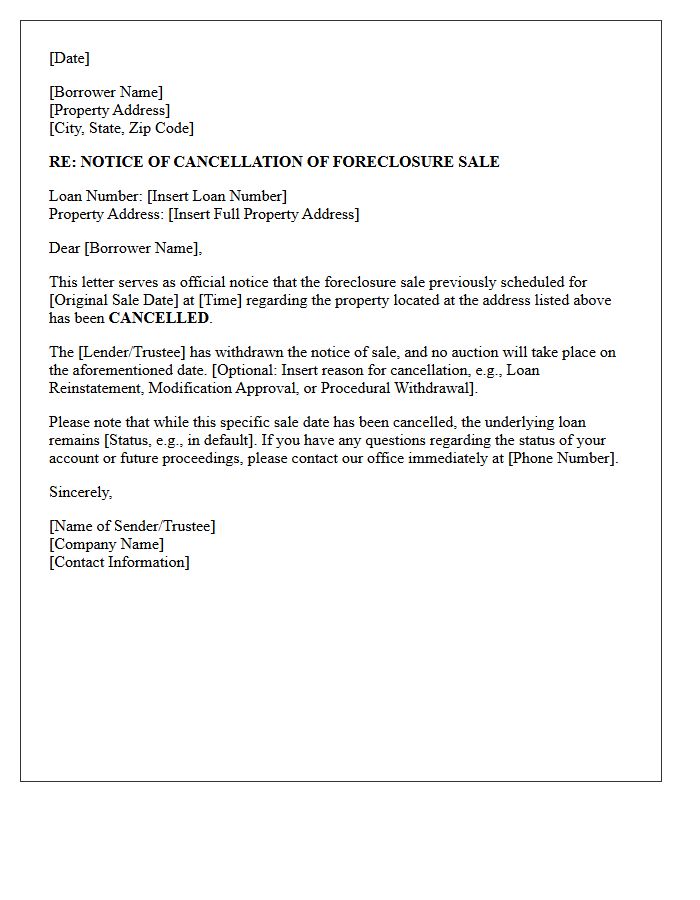
A Cancelled Notice of Foreclosure Sale Date Letter is a formal legal document confirming that a previously scheduled auction of your property has been rescinded. Receiving this notice signifies a temporary or permanent halt to the foreclosure process, often due to a successful loan modification, reinstatement, or short sale approval. While this letter provides immediate relief from the loss of your home, it is essential to verify if the underlying default is resolved or if the lender intends to reschedule the sale later.
Residential Notice of Foreclosure Sale Date Letter
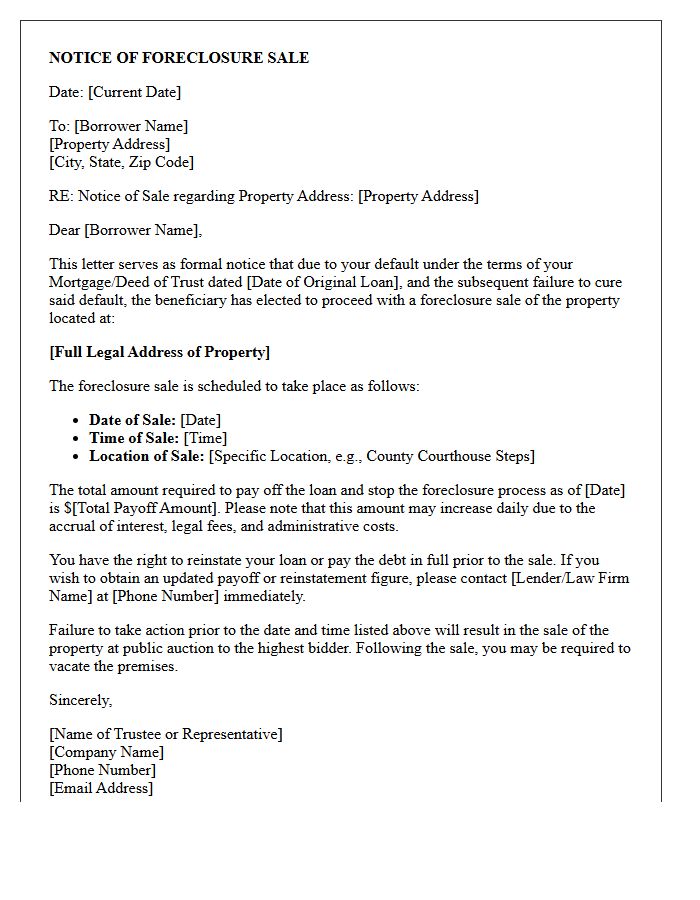
A Residential Notice of Foreclosure Sale Date Letter is a legal notification informing a homeowner of the exact day, time, and location their property will be auctioned. This document marks the final stage of the foreclosure process, typically sent after a period of delinquency and legal filings. It serves as a formal warning that the owner's equity and title are at immediate risk. To stop the sale, homeowners must often pursue immediate action through loan reinstatement, filing for bankruptcy, or negotiating a last-minute loss mitigation agreement with the lender.
Commercial Notice of Foreclosure Sale Date Letter
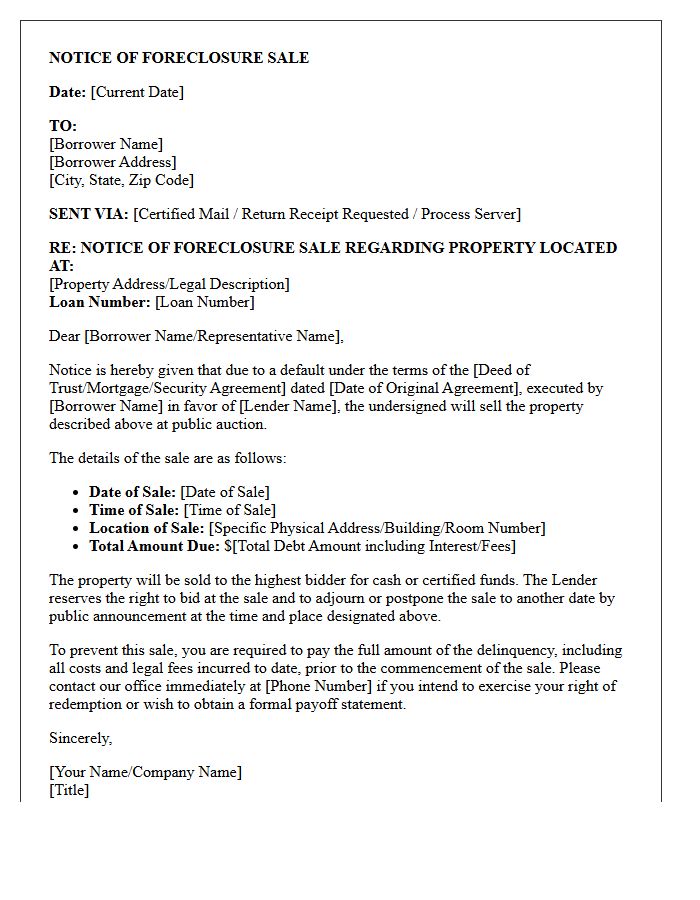
A Commercial Notice of Foreclosure Sale Date Letter is a formal legal notification informing a borrower that their property will be sold at public auction. The foreclosure sale date is the most critical detail, as it marks the final deadline to resolve the debt. Receiving this letter indicates that the lender has finished the pre-foreclosure process. To prevent the loss of assets, owners must immediately explore legal remedies or refinancing options. Timely action is essential to stop the sale through mediation, reinstatement, or filing for bankruptcy protection before the scheduled date.
Trustee Notice of Foreclosure Sale Date Letter
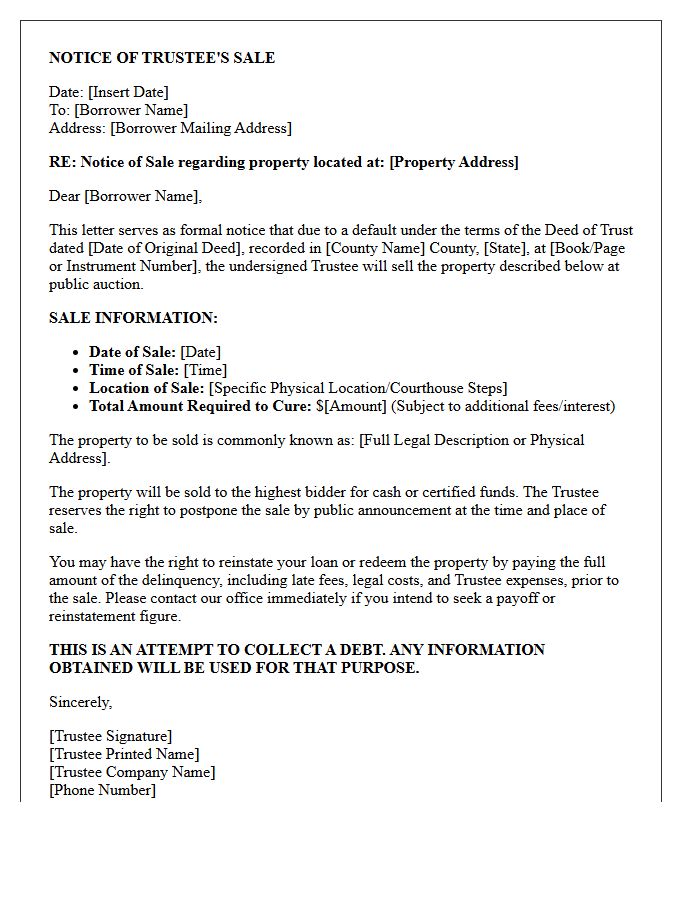
A Trustee Notice of Foreclosure Sale Date Letter is a legal notification informing a borrower that their property will be sold at public auction. It specifies the sale date, time, and location, typically sent after a period of default. Receiving this document is the final stage of the foreclosure process, providing a definitive deadline to reinstate the loan or seek legal alternatives. It is essential to act immediately to explore loss mitigation options, such as a short sale or loan modification, to prevent the loss of ownership.
Guarantor Notice of Foreclosure Sale Date Letter
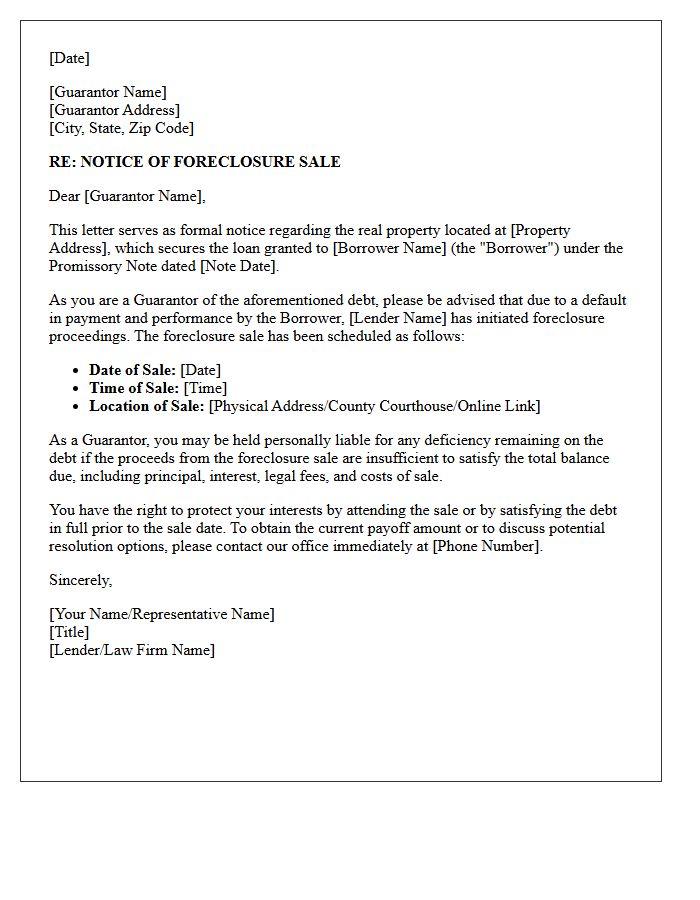
A Guarantor Notice of Foreclosure Sale Date Letter is a critical legal document informing a secondary liable party that a property will be auctioned. This formal communication specifies the exact auction date, time, and location, ensuring the guarantor can exercise their rights or mitigate financial risk. Receiving this notice is vital because the guarantor may remain responsible for any deficiency balance if the sale proceeds do not cover the outstanding debt. Timely awareness allows the recipient to seek legal counsel or arrange for debt settlement before the foreclosure process concludes.
Lienholder Notice of Foreclosure Sale Date Letter
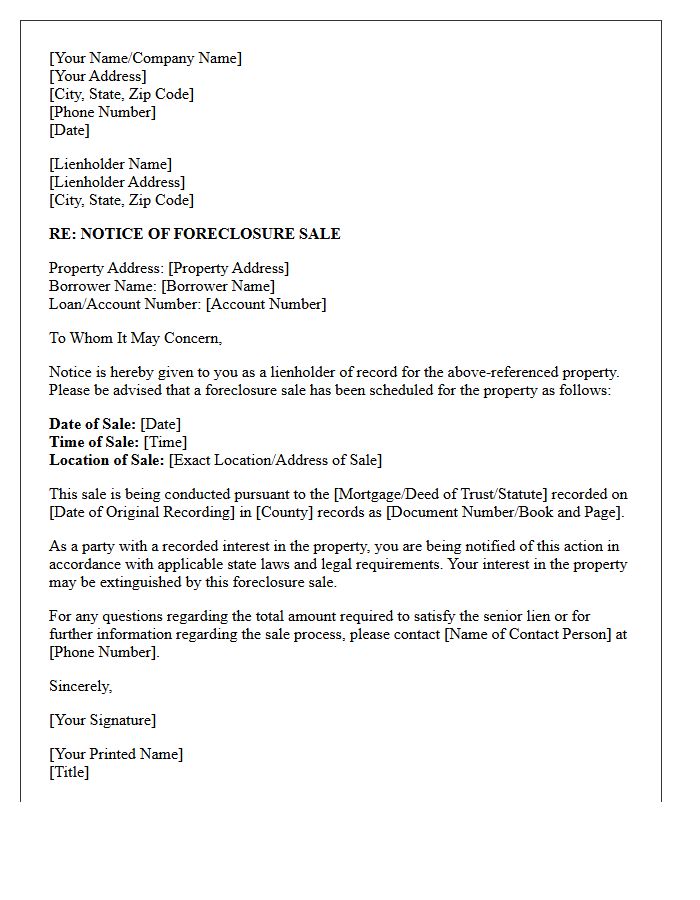
A Lienholder Notice of Foreclosure Sale Date Letter is a critical legal document sent to inform secondary creditors that a property's primary lender has scheduled an auction date. This notice is essential for protecting lien priority and redemption rights. It ensures all parties with a recorded financial interest can take action to safeguard their equity before the foreclosure sale finalizes. Receiving this letter serves as a final warning to either pay off the underlying debt or risk losing the security interest in the collateral through the legal foreclosure process.
Junior Creditor Notice of Foreclosure Sale Date Letter
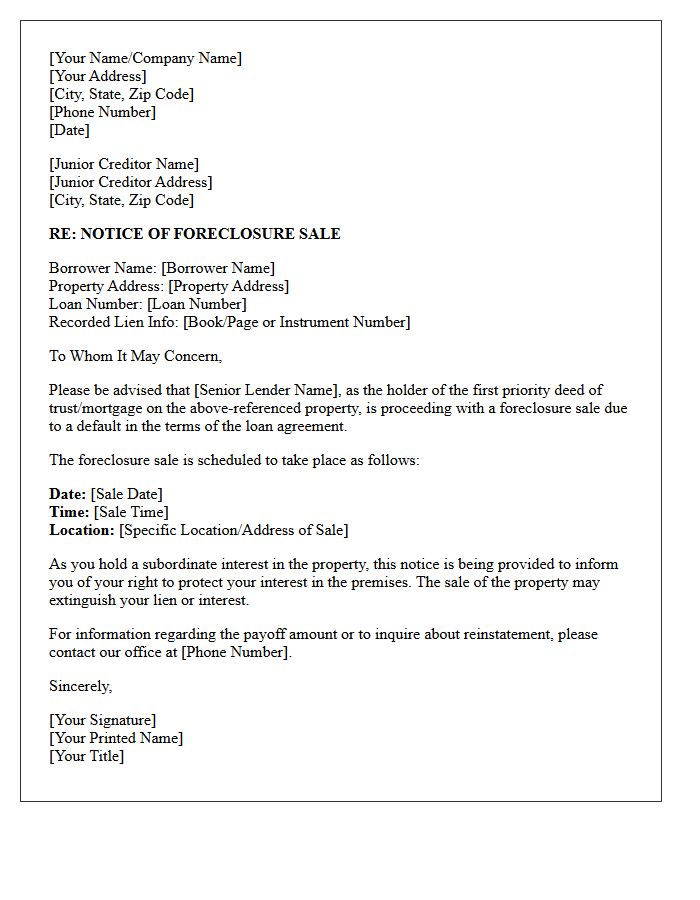
A Junior Creditor Notice of Foreclosure Sale Date Letter is a vital legal document notifying secondary lienholders about an upcoming property auction. This formal communication ensures that junior lenders can protect their financial interest before the senior creditor completes the foreclosure process. Timely receipt allows these parties to bid on the property, cure the default, or prepare for the potential extinguishment of their subordinate claims. Understanding this notice is crucial for maintaining legal priority and managing debt recovery strategies during real estate liquidation proceedings.
Court-Ordered Notice of Foreclosure Sale Date Letter
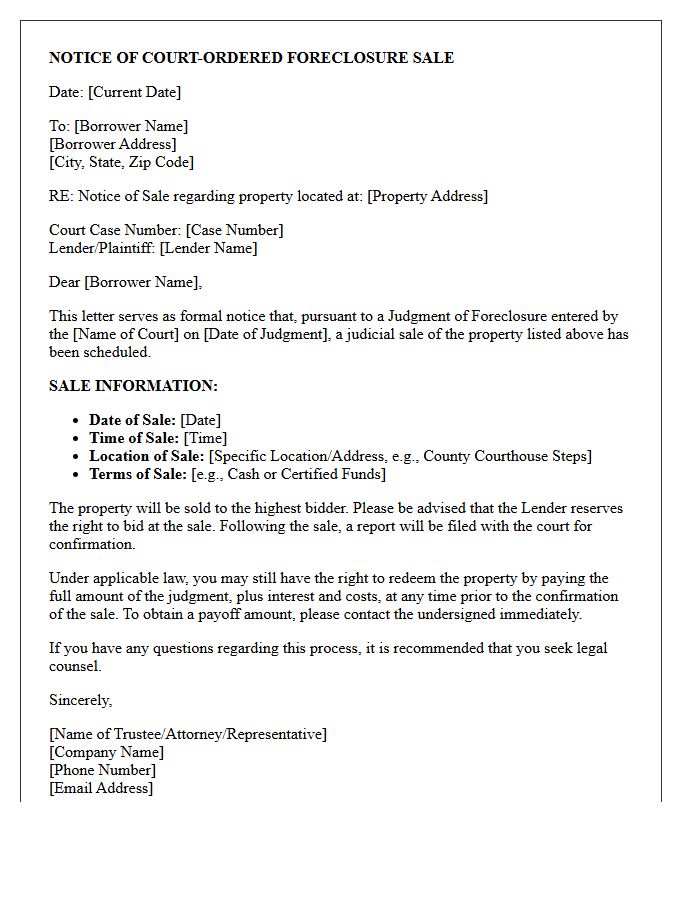
A Court-Ordered Notice of Foreclosure Sale Date Letter is a legal notification informing a homeowner that a judge has authorized the auction of their property. This document specifies the exact time and location where the house will be sold to satisfy a debt. It marks the final stage of the foreclosure process, leaving a limited window for the owner to seek legal remedies, such as filing for bankruptcy or negotiating a loan modification, to prevent the permanent loss of their home ownership rights.
What is a Notice of Foreclosure Sale Date?
A Notice of Foreclosure Sale Date is a formal legal document notifying the homeowner and the public that a property will be sold at auction on a specific day. This notice is typically issued after a period of default and serves as the final step before the property title is transferred to a new owner or the lender.
How long do I have to move after receiving a Notice of Foreclosure Sale Date?
The timeline varies by state, but generally, you can remain in the home until the actual sale date. Once the property is sold, the new owner must provide a formal notice to quit or start eviction proceedings, which can take anywhere from a few days to several weeks depending on local landlord-tenant laws.
Can I stop a foreclosure sale after a date has been set?
Yes, it is possible to stop a sale through several methods, including filing for bankruptcy (which triggers an automatic stay), securing a loan modification, completing a short sale, or paying the full reinstatement amount. However, these actions must usually be finalized at least several days before the scheduled auction.
Where is the Notice of Foreclosure Sale Date usually published?
Lenders are legally required to publicize the sale date to ensure a fair auction. This typically involves recording the notice with the county clerk, posting a physical copy on the property itself, and publishing the announcement in a local newspaper for several consecutive weeks leading up to the sale.
What happens if the property does not sell on the scheduled foreclosure date?
If no third-party bidder meets the minimum bid at the auction, the property becomes "Real Estate Owned" (REO) by the lender. In some cases, the sale date may be postponed or rescheduled due to legal delays, borrower negotiations, or administrative errors, requiring a new notice to be issued.

Comments