
Efficiently tracking payments is essential for financial transparency. A Wire Transfer Status Inquiry Response Letter serves as professional communication confirming whether a transaction is pending, completed, or requires additional documentation. This guide explains how to provide clear updates to clients or partners regarding their electronic funds transfers. To help you draft these notifications quickly, below are some ready to use template.
Image cover: Tracking Your Funds: Wire Transfer Status Inquiry Response Templates
Letter Samples List
- Successful Wire Transfer Status Inquiry Response Letter
- Pending Wire Transfer Status Inquiry Response Letter
- Delayed International Wire Transfer Status Inquiry Response Letter
- Rejected Wire Transfer Status Inquiry Response Letter
- Returned Wire Transfer Status Inquiry Response Letter
- Incorrect Beneficiary Details Wire Transfer Status Inquiry Response Letter
- Intermediary Bank Delay Wire Transfer Status Inquiry Response Letter
- Compliance Review Wire Transfer Status Inquiry Response Letter
- Wire Transfer Recall Status Inquiry Response Letter
- Domestic Wire Transfer Status Inquiry Response Letter
- Wire Transfer Tracer Investigation Status Inquiry Response Letter
- Fraud Investigation Wire Transfer Status Inquiry Response Letter
Successful Wire Transfer Status Inquiry Response Letter
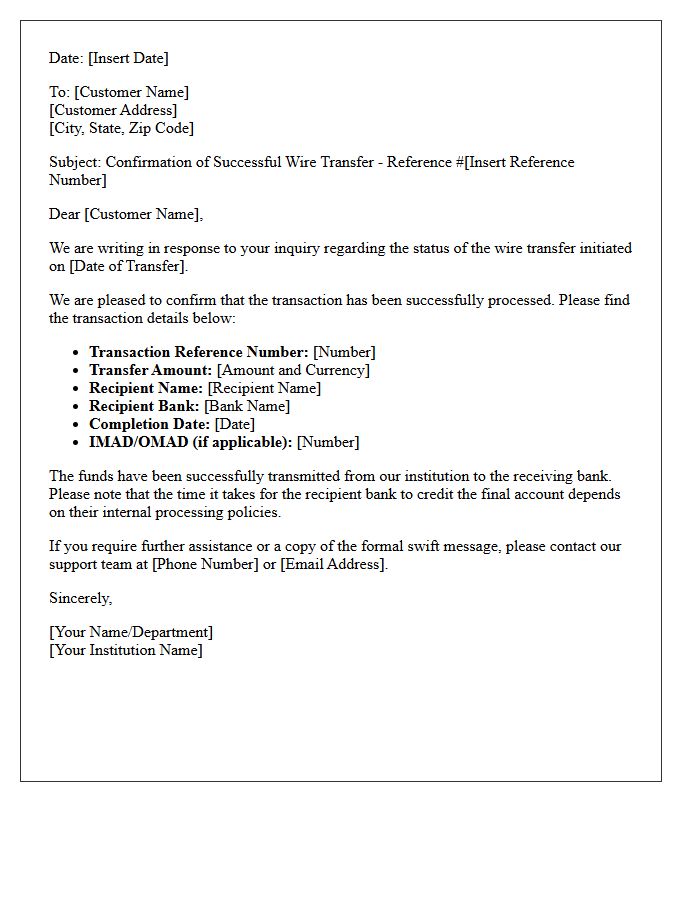
A successful wire transfer status inquiry response letter confirms that funds have been credited to the recipient's account. This formal communication provides critical tracking details, such as the Input Message Accountability Data (IMAD) or Sequence Number, which serves as definitive proof of payment. For businesses, this document ensures financial transparency and reconciles outstanding invoices efficiently. Always verify the Federal Reference Number included in the response to validate the transaction's completion through the banking network and maintain accurate accounting records for all international or high-value domestic electronic transfers.
Pending Wire Transfer Status Inquiry Response Letter
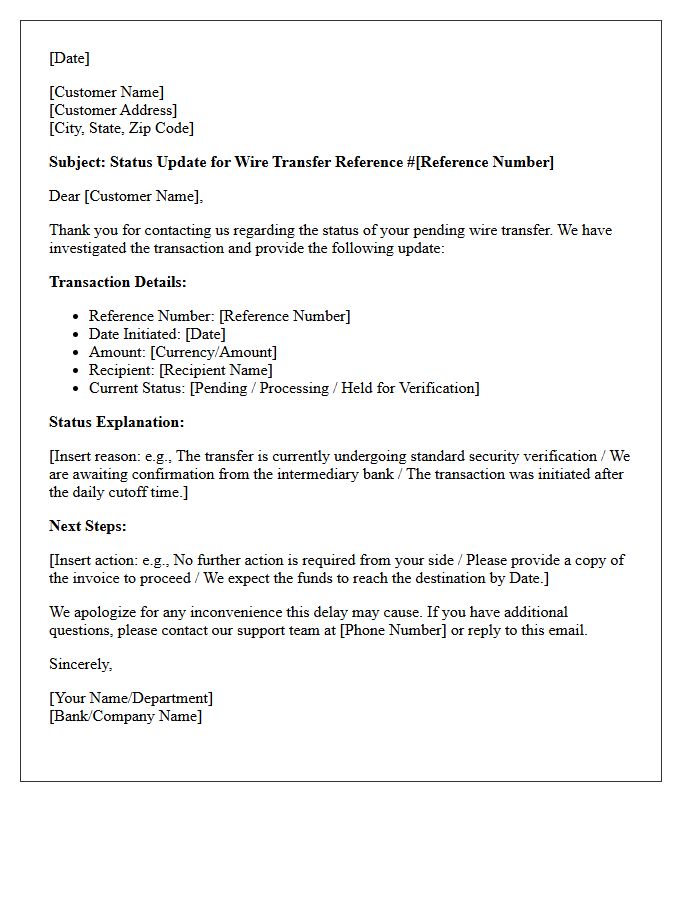
A Pending Wire Transfer Status Inquiry Response Letter serves as official documentation regarding the delay or processing stage of a fund transfer. It verifies that the financial institution is actively investigating the transaction, often due to intermediary bank reviews or security compliance checks. This formal response provides clients with essential updates on the estimated resolution timeframe and confirms the current location of assets within the global banking system. It ensures transparency and maintains a written record of communication, helping to manage expectations during critical financial transactions where timing is essential.
Delayed International Wire Transfer Status Inquiry Response Letter
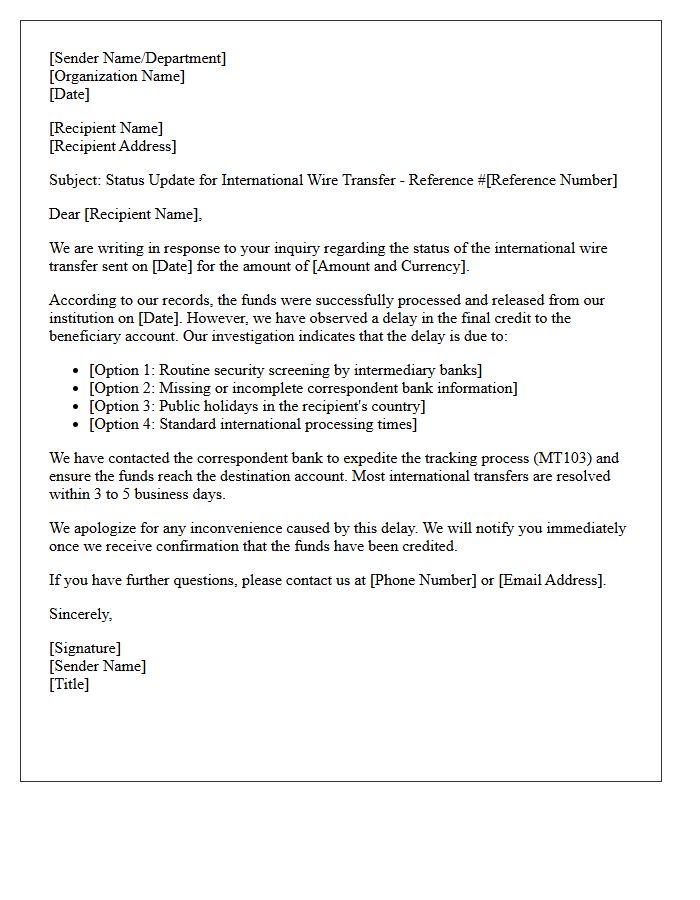
A Delayed International Wire Transfer Status Inquiry Response Letter is a formal notification from a bank addressing a missing or stalled payment. It typically explains that the funds are undergoing regulatory compliance screening, such as AML or OFAC checks. The letter provides an updated status, confirming if the transfer is being processed, held by an intermediary bank, or requires additional documentation. This document is essential for tracking cross-border transactions and ensures transparency between the financial institution and the client regarding the specific reasons for the payment delay.
Rejected Wire Transfer Status Inquiry Response Letter
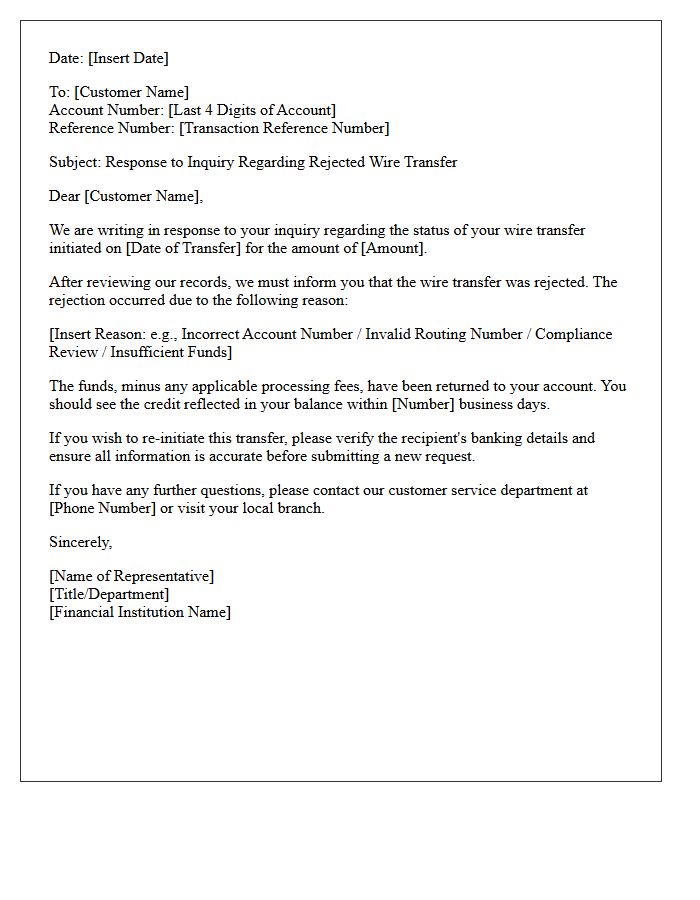
A Rejected Wire Transfer Status Inquiry Response Letter is a formal notification from a financial institution explaining why a payment failed. It details specific compliance issues, incorrect beneficiary details, or insufficient funds that prevented the transaction. Understanding this document is vital for reconciling accounts and initiating corrective actions. It provides the necessary reference numbers and legal reasons for the rejection, ensuring transparency between the bank and the sender while assisting in the successful re-submission of the electronic fund transfer.
Returned Wire Transfer Status Inquiry Response Letter
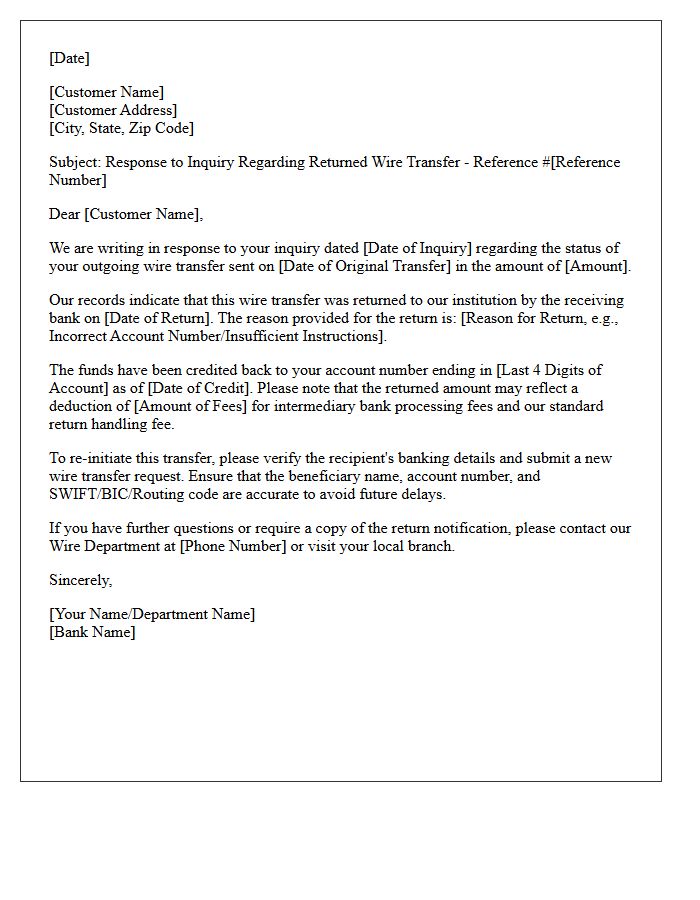
A Returned Wire Transfer Status Inquiry Response Letter is a formal document issued by a financial institution to clarify why a payment failed or was reversed. This letter provides essential details, including the transaction reference number, the specific reason for return-such as incorrect account details or insufficient funds-and any associated reversal fees. It serves as official evidence for reconciling accounts and helps senders initiate a corrective action to successfully resubmit the funds or resolve disputes with the intended recipient efficiently.
Incorrect Beneficiary Details Wire Transfer Status Inquiry Response Letter
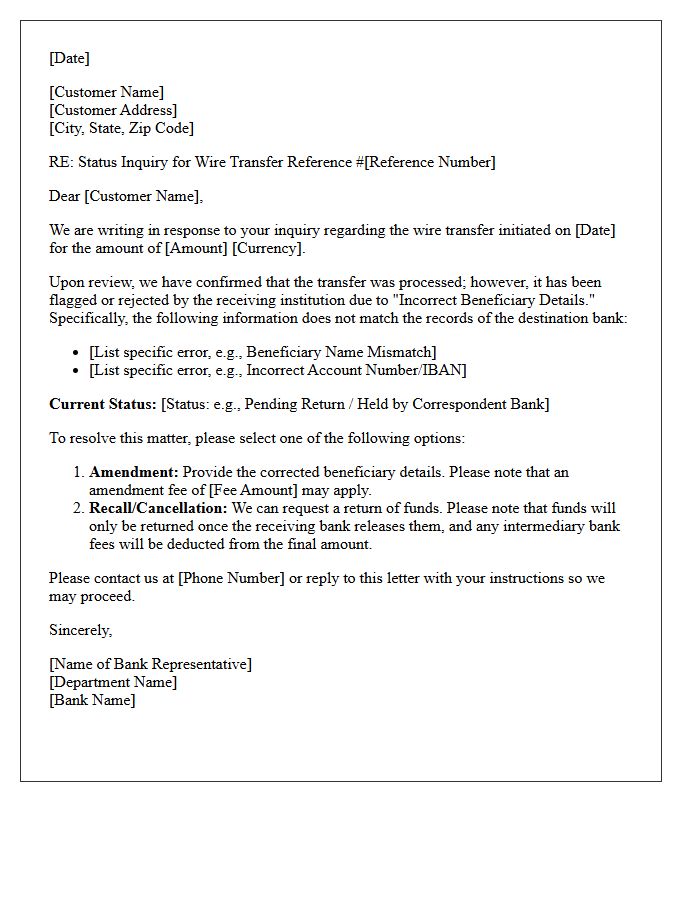
When responding to an inquiry regarding a wire transfer failed due to incorrect beneficiary details, clearly state the current transaction status. Confirm whether funds are held, returned, or pending correction. Specify the exact discrepancy found, such as a mismatched account number or name. Advise the sender on necessary amendment procedures or refund timelines to resolve the issue effectively. Maintaining clear communication helps mitigate financial delays and ensures the security of the payment process while adhering to banking compliance standards and internal recovery protocols.
Intermediary Bank Delay Wire Transfer Status Inquiry Response Letter
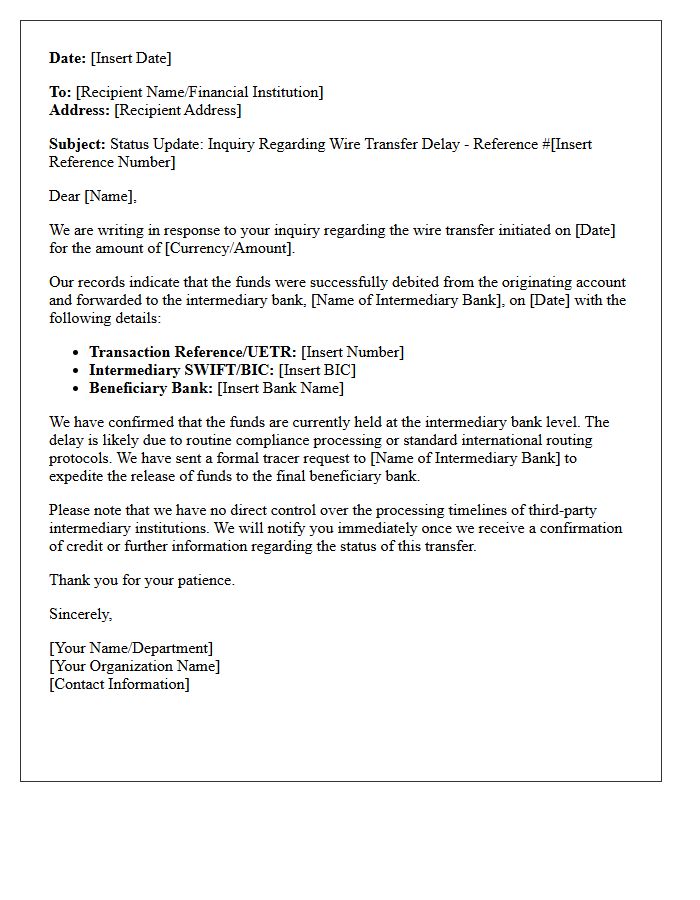
An Intermediary Bank Delay Wire Transfer Status Inquiry Response Letter explains why funds are held between sending and receiving institutions. It typically addresses compliance reviews, missing intermediary information, or processing backlogs. To expedite resolution, ensure the UETR (Unique End-to-end Transaction Reference) is provided. This formal communication confirms the current status of the payment and outlines any necessary actions required from the remitter to release the hold. Understanding these delays is essential for managing international liquidity and resolving cross-border payment issues efficiently through SWIFT tracking updates.
Compliance Review Wire Transfer Status Inquiry Response Letter
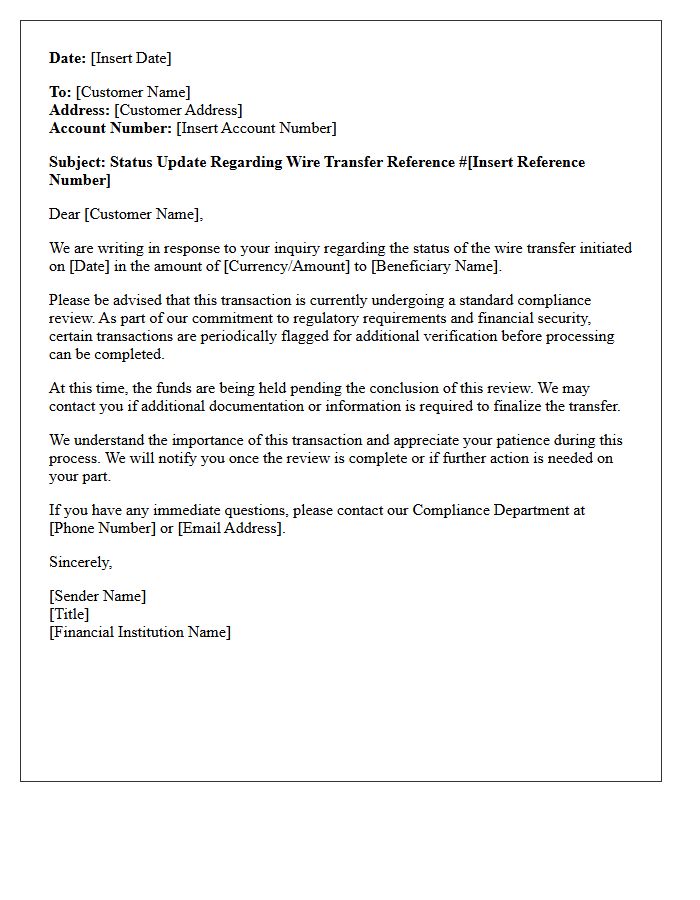
A Compliance Review Wire Transfer Status Inquiry Response Letter is a formal notification issued by a financial institution regarding a payment investigation. It informs the sender why a transaction is under review, typically due to regulatory screening or anti-money laundering protocols. The document outlines whether funds are held, released, or require additional due diligence documentation from the parties involved. Understanding this letter is essential for resolving delays and ensuring regulatory compliance during cross-border or high-value financial transactions.
Wire Transfer Recall Status Inquiry Response Letter
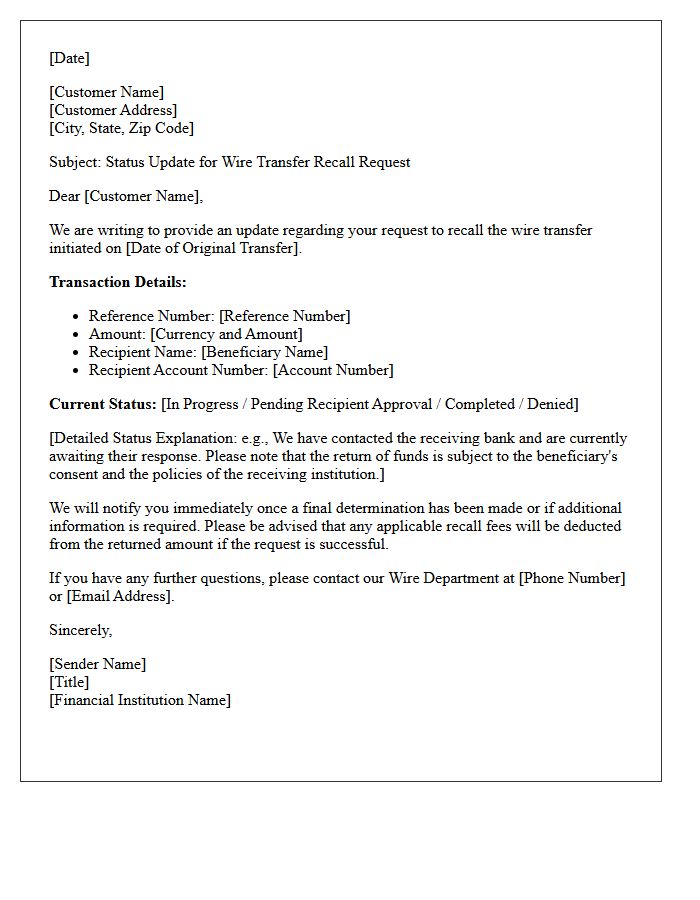
A Wire Transfer Recall Status Inquiry Response Letter is a formal notification from a bank regarding a request to reverse a payment. It confirms whether the funds were successfully recovered or if the beneficiary denied the reversal. Since wire transfers are generally final, this document provides the final disposition of the recovery attempt. It is an essential record for tracking disputed transactions and serves as legal proof of the bank's communication with the receiving institution during the recall process.
Domestic Wire Transfer Status Inquiry Response Letter
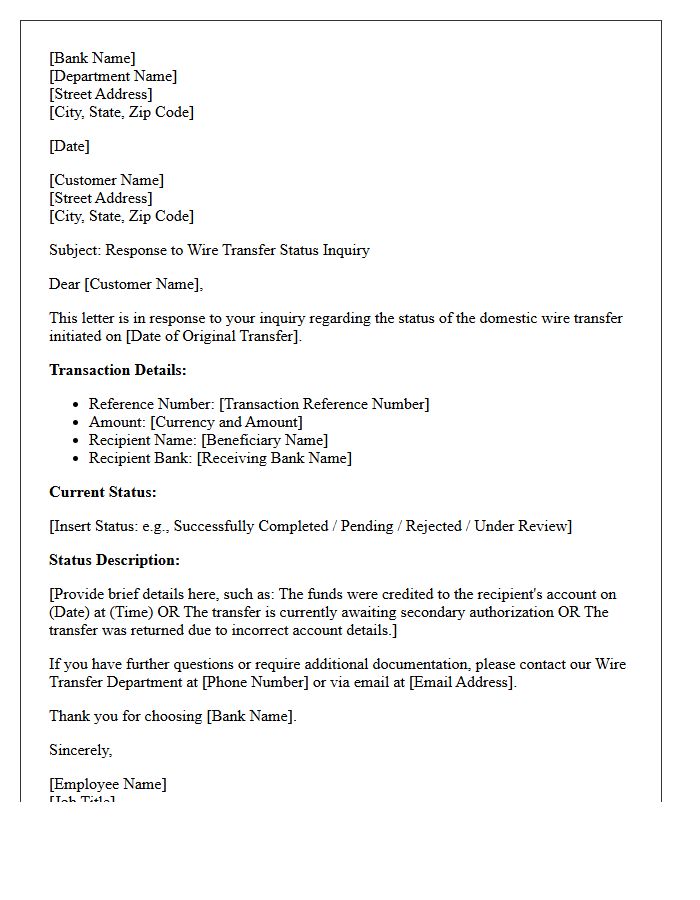
A Domestic Wire Transfer Status Inquiry Response Letter serves as formal documentation regarding the progress or completion of a fund transfer. This letter typically provides the Transaction Reference Number, current processing status, and specific dates of execution. It is essential for verifying that capital has reached the recipient's bank or for identifying delays within the Federal Reserve system. Financial institutions issue this response to resolve discrepancies, ensuring transparency and providing a legal audit trail for high-value transactions. Always review the confirmation details to ensure all banking information matches the original request.
Wire Transfer Tracer Investigation Status Inquiry Response Letter
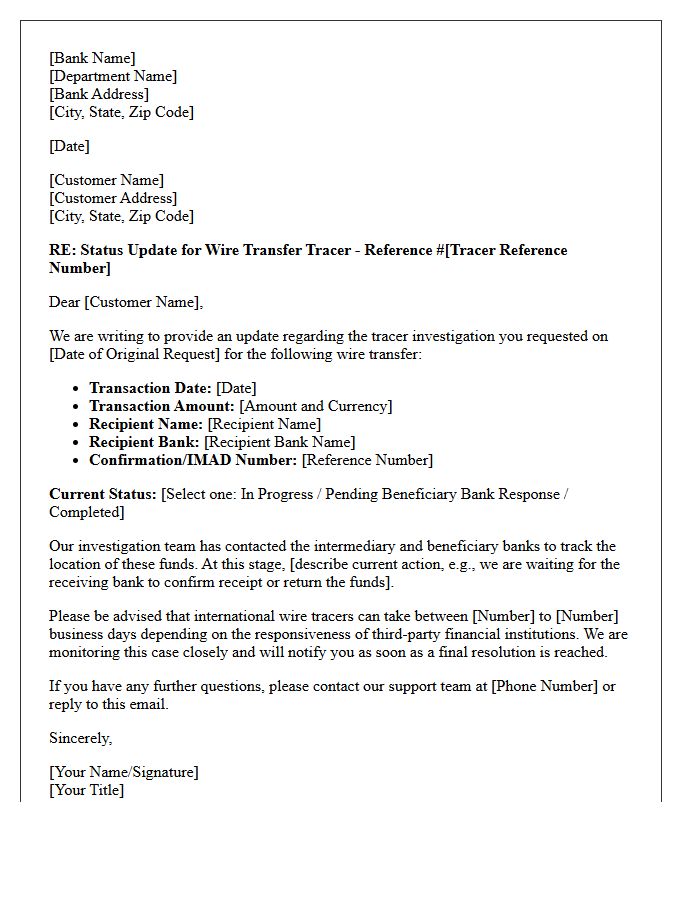
A Wire Transfer Tracer Investigation Status Inquiry Response Letter provides an official update on a missing or delayed payment. This document confirms that a financial institution has initiated a formal trace to locate funds within the banking network. It typically includes the transaction reference number, current status, and any potential issues identified by intermediary banks. Understanding this response is essential for verifying fund recovery efforts and resolving payment discrepancies between sending and receiving parties through standardized regulatory communication channels.
Fraud Investigation Wire Transfer Status Inquiry Response Letter
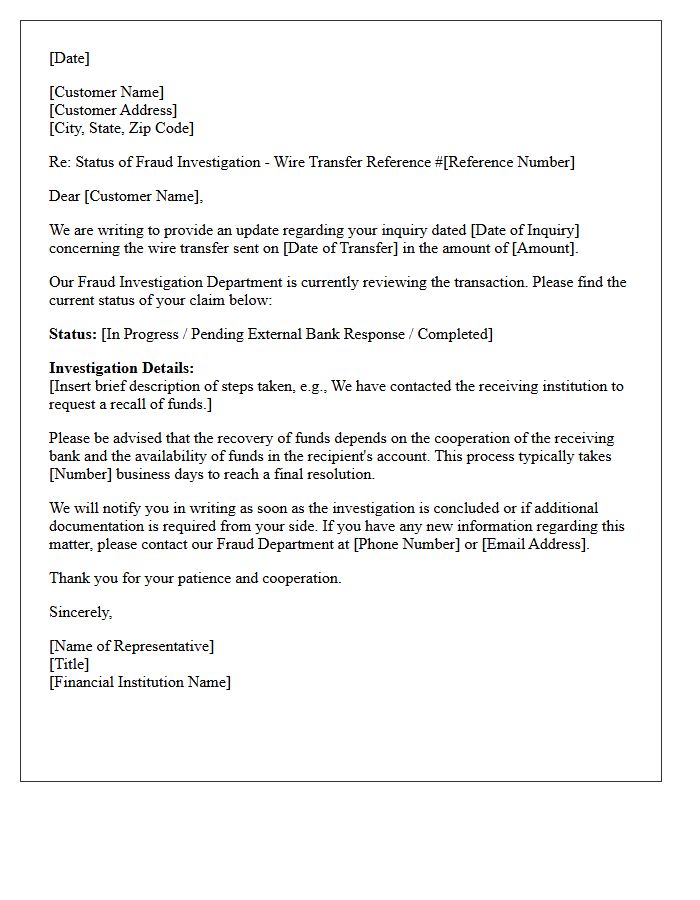
A response to a wire transfer status inquiry during a fraud investigation must provide clear, factual documentation regarding the transaction's progress. It serves as official communication confirming whether funds are recovered, frozen, or successfully transmitted. To ensure compliance, the letter should detail security protocols triggered and specify the estimated resolution timeline. Accurate reporting protects both the financial institution and the client, facilitating risk mitigation while maintaining a transparent audit trail necessary for legal evidence and regulatory reporting requirements throughout the investigative process.
How can I check the current status of my wire transfer request?
You can track your wire transfer status by referring to the unique transaction reference number provided in your confirmation receipt. Status updates are available through our online banking portal under "Transaction History" or by contacting our support team with your reference details.
What do the different wire transfer status stages mean?
A "Pending" status indicates the transfer is undergoing internal verification; "Processed" means the funds have been dispatched from our institution; and "Completed" or "Delivered" signifies that the funds have been successfully credited to the recipient's bank.
How long does it typically take for a wire transfer to reach the recipient?
Domestic wire transfers are usually completed within 24 business hours. International wire transfers typically take 3 to 5 business days, depending on intermediary bank processing times and the destination country's regulatory requirements.
Why is my wire transfer status still showing as "Pending"?
A pending status may occur due to standard security screening, insufficient account documentation, or because the transfer was initiated after the daily banking cutoff time. If the status does not update within one business day, please contact us to provide any necessary additional information.
What information is required to trace a missing wire transfer?
To initiate a formal trace on a wire transfer, you must provide the Federal Reference Number (for domestic) or the IMAD/OMAD and SWIFT MT103 message (for international). These details allow our investigations team to communicate with the receiving institution to locate the funds.


Comments