
A Bank-to-Bank Counter Guarantee Letter is a critical financial instrument issued by one bank to request another bank to provide a local guarantee. This mechanism ensures security in international trade by mitigating credit risks and legal complexities between foreign parties. Understanding its structure facilitates seamless cross-border transactions and contract fulfillment. Please find below are some ready to use template.
Image cover: Essential Bank-to-Bank Counter Guarantee Templates and Practical Samples
Letter Samples List
- Standard Bank-to-Bank Counter Guarantee Letter
- Irrevocable Bank-to-Bank Counter Guarantee Letter
- Advance Payment Counter Guarantee Letter
- Performance Bond Counter Guarantee Letter
- Bid Bond Counter Guarantee Letter
- Financial Obligation Counter Guarantee Letter
- Retention Money Counter Guarantee Letter
- Warranty Obligation Counter Guarantee Letter
- Deferred Payment Counter Guarantee Letter
- Customs Clearance Counter Guarantee Letter
- Cross-Border Facility Counter Guarantee Letter
- Standby Facility Counter Guarantee Letter
Standard Bank-to-Bank Counter Guarantee Letter
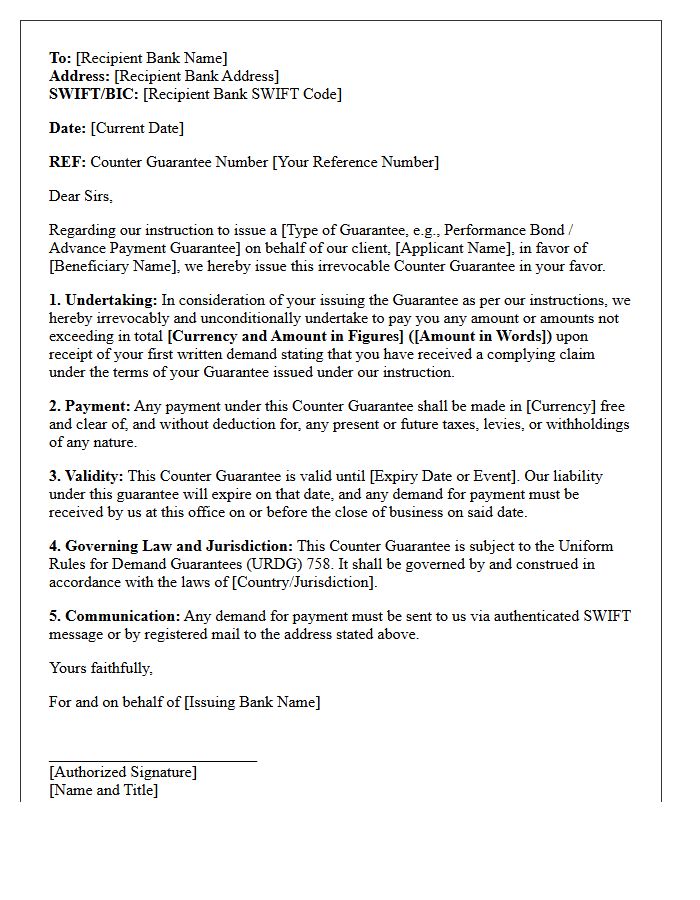
A standard bank-to-bank counter guarantee is a critical risk mitigation instrument used in international trade. It is issued by an instructing bank to a beneficiary's bank, requesting the issuance of a local letter of guarantee. This document ensures the second bank is fully indemnified against potential claims. It is governed by URDG 758 standards to provide legal certainty. The primary purpose is to overcome jurisdictional barriers, allowing a foreign bank to secure local performance or payment obligations while protecting all parties through a clear, legally binding framework of financial security.
Irrevocable Bank-to-Bank Counter Guarantee Letter
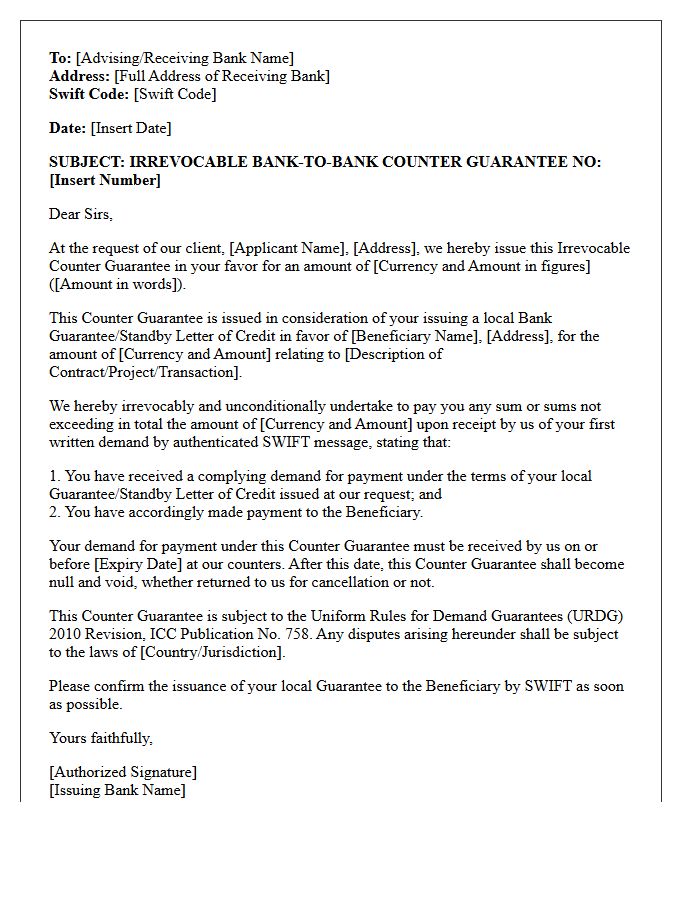
An Irrevocable Bank-to-Bank Counter Guarantee Letter is a binding financial instrument issued by an instructing bank to a beneficiary's bank. It serves as a security mechanism where the issuing bank promises to reimburse the local bank if a claim is made. Because it is "irrevocable," the terms cannot be modified or cancelled without the consent of all parties. This document is essential for international trade, facilitating cross-border transactions by shifting credit risk from the applicant to a reputable financial institution, ensuring payment certainty for the foreign beneficiary.
Advance Payment Counter Guarantee Letter
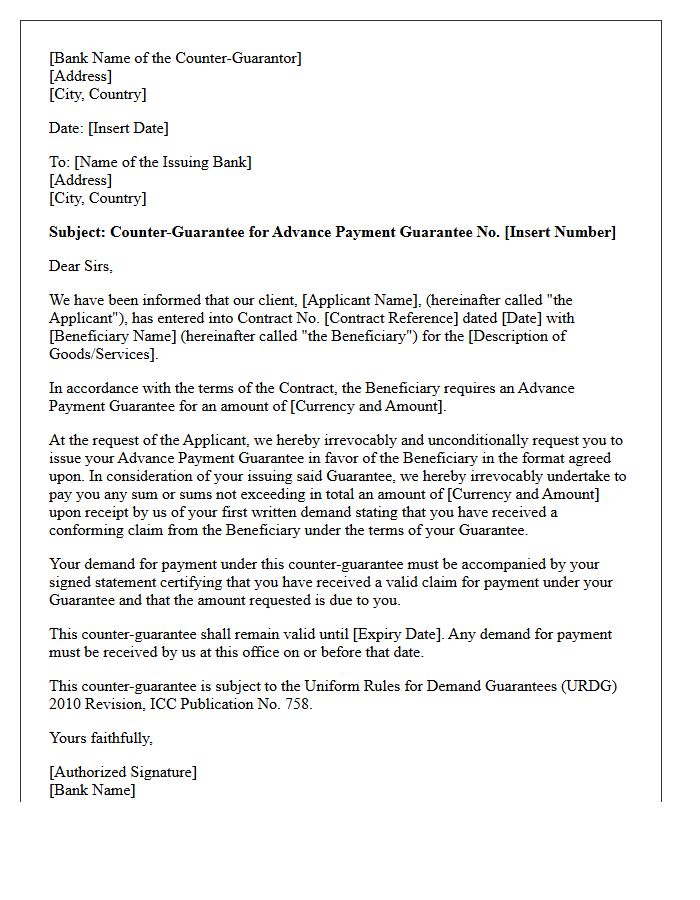
An Advance Payment Counter Guarantee Letter is a legal commitment issued by a bank to support an indirect guarantee. It provides security to the issuing bank by ensuring they are reimbursed if a claim is made by the beneficiary. This document is essential in international trade when the guarantor bank requires a back-to-back pledge from the applicant's local bank. It facilitates risk mitigation and ensures that advanced funds are protected, allowing contractors to receive upfront payments while maintaining financial accountability through a secondary layer of institutional protection.
Performance Bond Counter Guarantee Letter
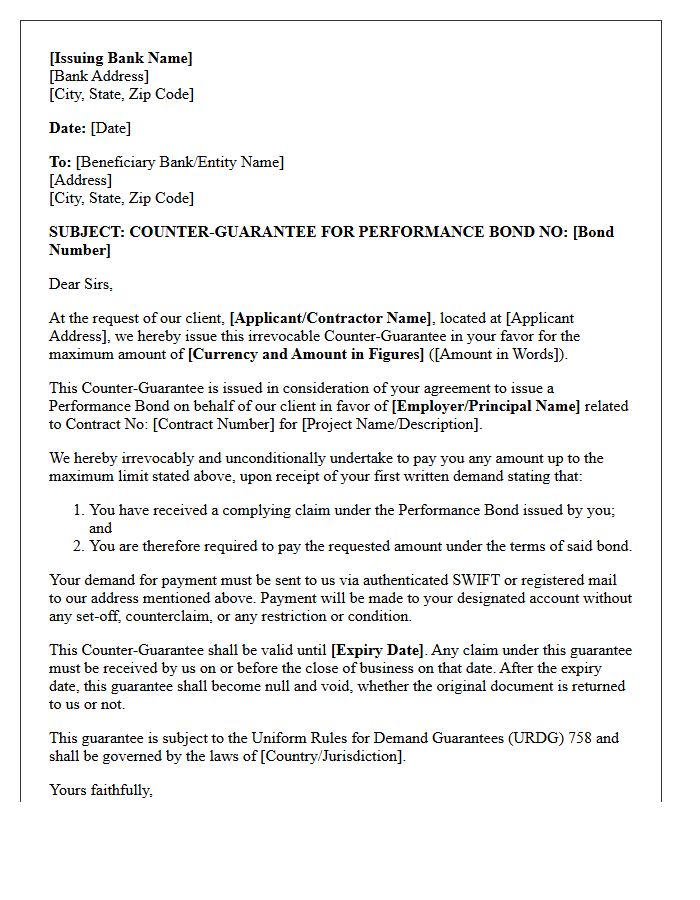
A Performance Bond Counter Guarantee Letter is a legal indemnity issued by a secondary bank to back a primary bank's commitment. Its primary purpose is to provide financial security to the project owner by ensuring the issuing bank is reimbursed if the contractor defaults on contractual obligations. This document serves as a critical risk mitigation tool in international trade, bridging the gap between local banking requirements and foreign contractors. It guarantees that the primary bond remains enforceable, protecting the beneficiary while shifting liquidity risks back to the applicant's home institution.
Bid Bond Counter Guarantee Letter
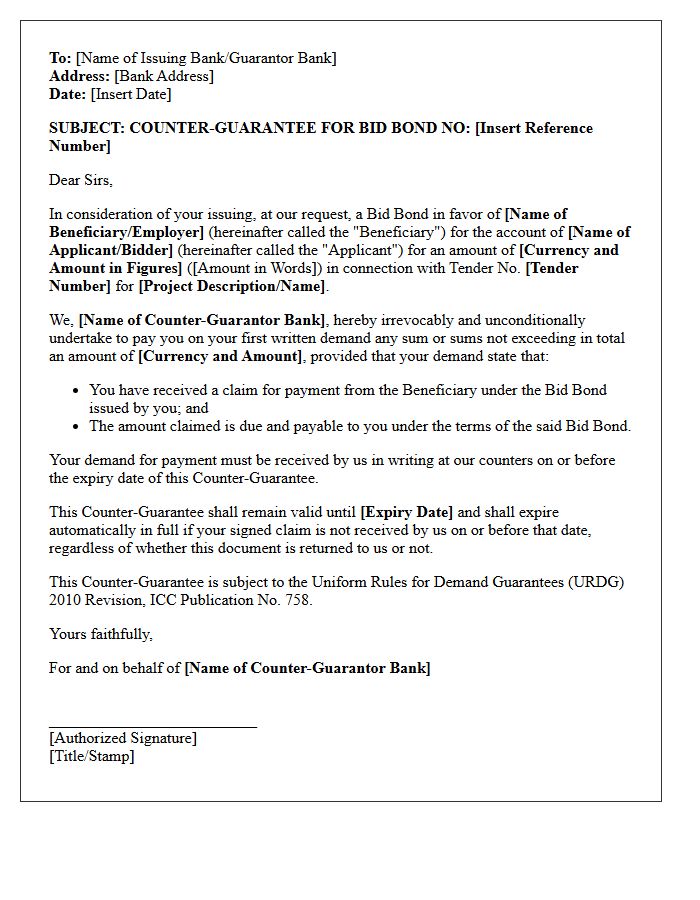
A Bid Bond Counter Guarantee Letter is a critical document where a bank or financial institution provides security to a local bank to issue a primary bid bond. This instrument protects the beneficiary if a contractor fails to sign the contract or provide performance security after winning a tender. It acts as a back-to-back promise, ensuring the local bank is reimbursed if the guarantee is called. This mechanism is essential for international contractors seeking to meet tendering compliance and demonstrate financial credibility in foreign markets during the competitive bidding process.
Financial Obligation Counter Guarantee Letter
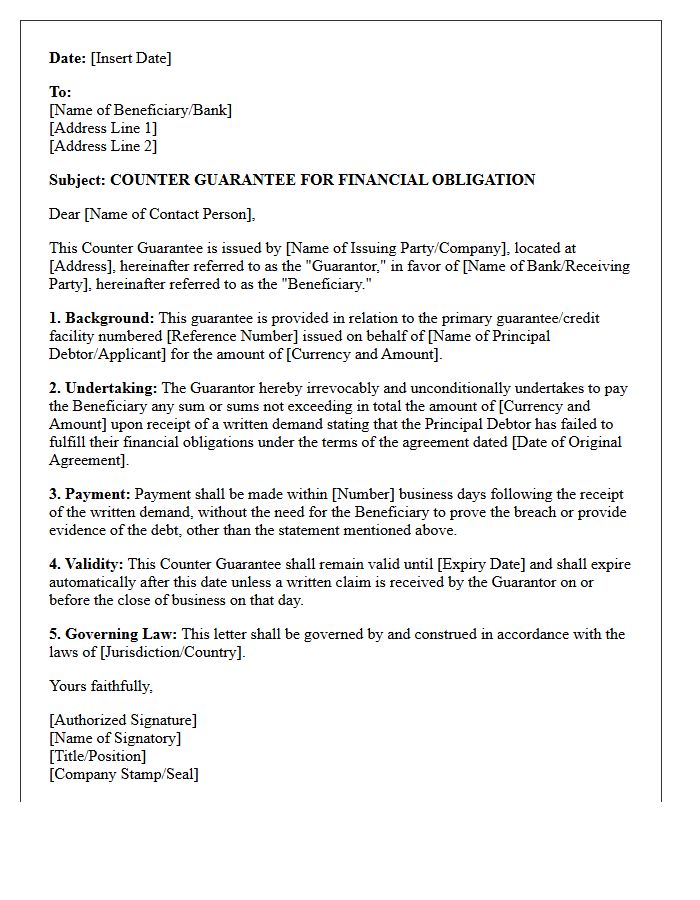
A Financial Obligation Counter Guarantee Letter is a legal commitment issued by a bank to indemnify another financial institution. Its primary purpose is to provide repayment security if the principal debtor fails to meet contractual terms. This document acts as a secondary layer of protection, ensuring the primary guarantor is reimbursed for any losses incurred. It is a critical tool in international trade and large-scale construction, facilitating trust between parties by effectively transferring financial risk from the beneficiary to the issuing bank through a binding back-to-back arrangement.
Retention Money Counter Guarantee Letter
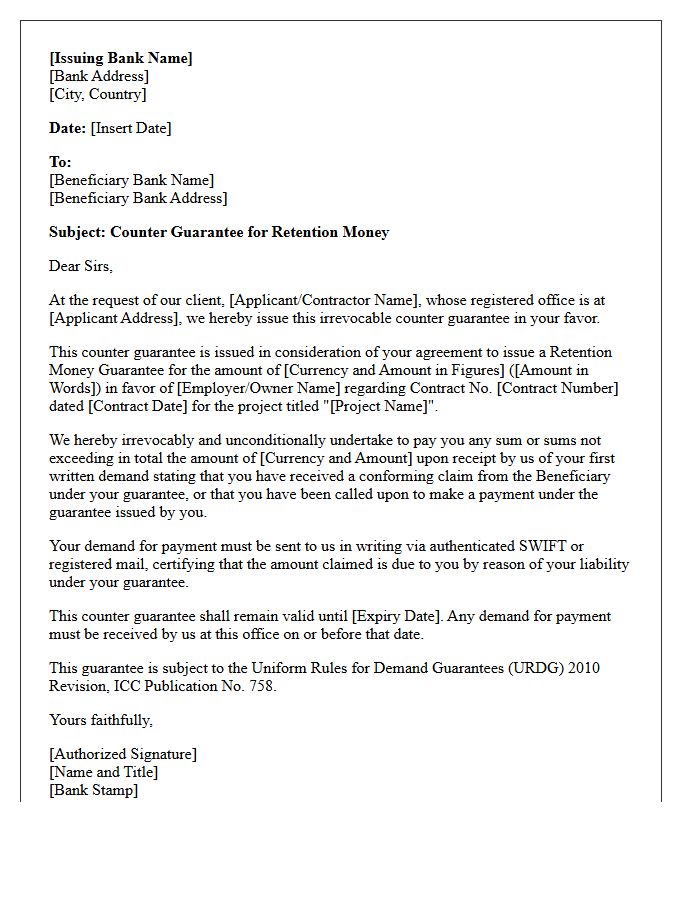
A Retention Money Counter Guarantee Letter is a formal commitment issued by a bank to another bank. It serves as security to support a primary retention guarantee, ensuring the employer can recover withheld funds if a contractor fails to rectify defects. This instrument facilitates liquidity for contractors by allowing the early release of retention money while protecting the project owner's interests. It acts as an essential indemnity mechanism in international construction contracts, balancing cash flow requirements with the legal obligation to complete works according to specified quality standards and contractual timelines.
Warranty Obligation Counter Guarantee Letter
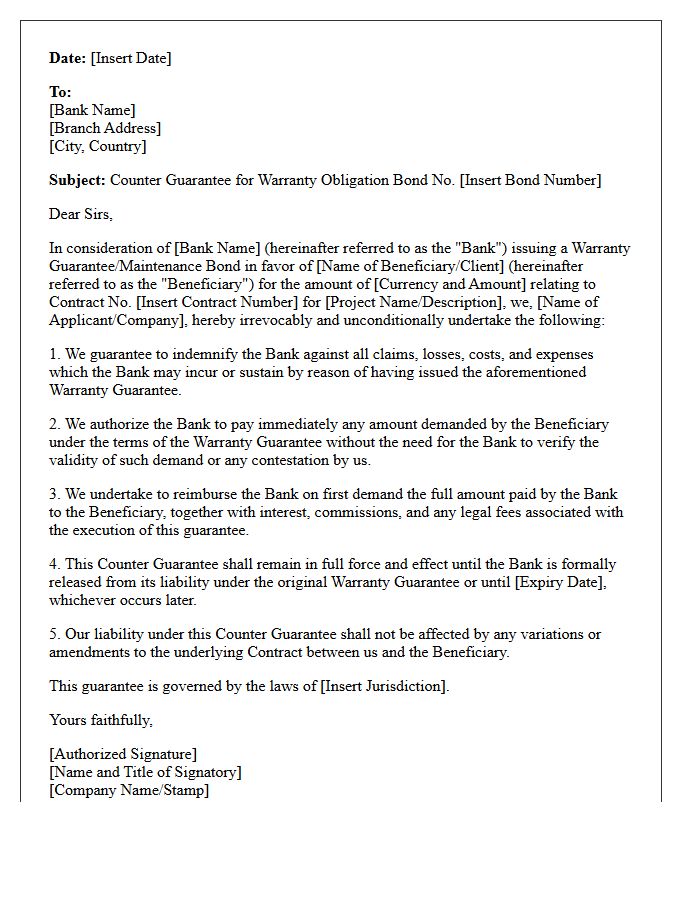
A Warranty Obligation Counter Guarantee Letter is a binding legal commitment issued by an applicant to an issuing bank. It serves as a financial security measure, ensuring the bank is indemnified if a beneficiary claims against a performance or warranty bond. This document protects the financial institution by shifting the repayment liability back to the customer. It is a critical requirement in international trade to secure project completions and quality standards, effectively providing risk mitigation for banks while facilitating contractual trust between exporters and global buyers during the maintenance period.
Deferred Payment Counter Guarantee Letter
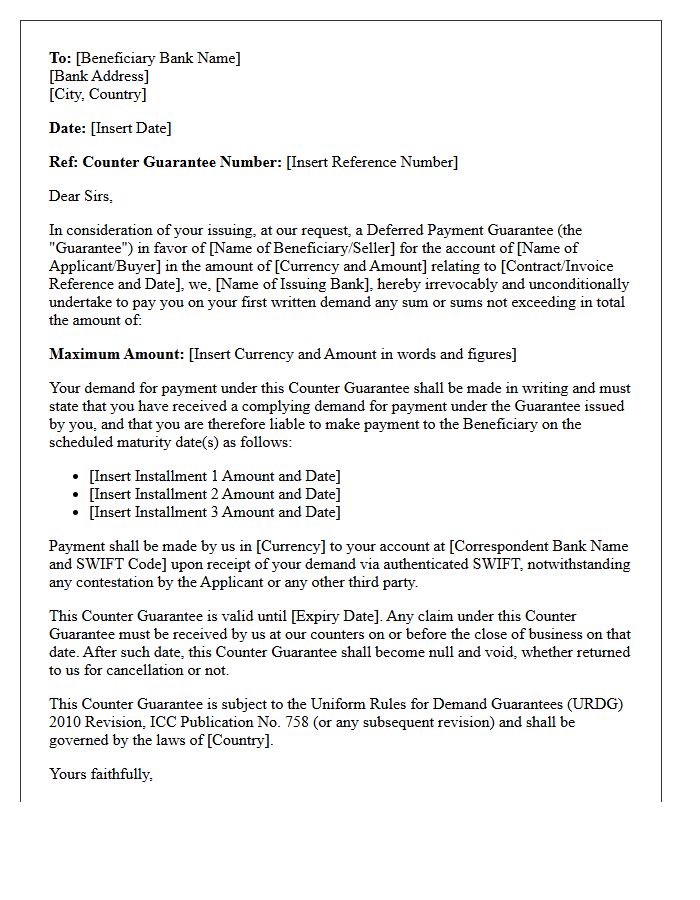
A Deferred Payment Counter Guarantee Letter is a legal commitment issued by a bank to indemnify an intermediary bank. It ensures that the issuing bank will reimburse the nominated bank for payments made to a beneficiary at a future specified date. This instrument mitigates credit risk in international trade, providing security when immediate cash settlement is unavailable. It acts as a back-to-back protection, guaranteeing that the secondary guarantor is covered if the primary applicant defaults on their obligation to pay for goods or services rendered under a deferred arrangement.
Customs Clearance Counter Guarantee Letter
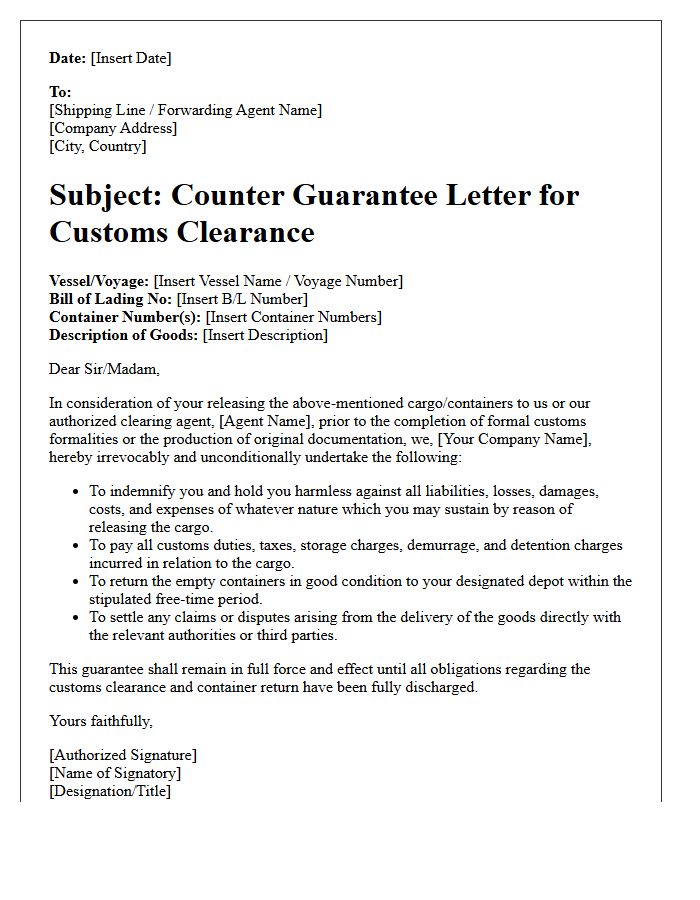
A Customs Clearance Counter Guarantee Letter is a formal commitment issued by a bank to indemnify customs authorities. This document acts as a financial security, ensuring that any potential duties, taxes, or penalties are covered if the importer fails to meet their obligations. It facilitates the immediate release of goods before final payment or formal documentation is complete. By providing this legal assurance, businesses can avoid costly port delays and maintain a smooth supply chain while customs finalizes the assessment of imported shipments.
Cross-Border Facility Counter Guarantee Letter
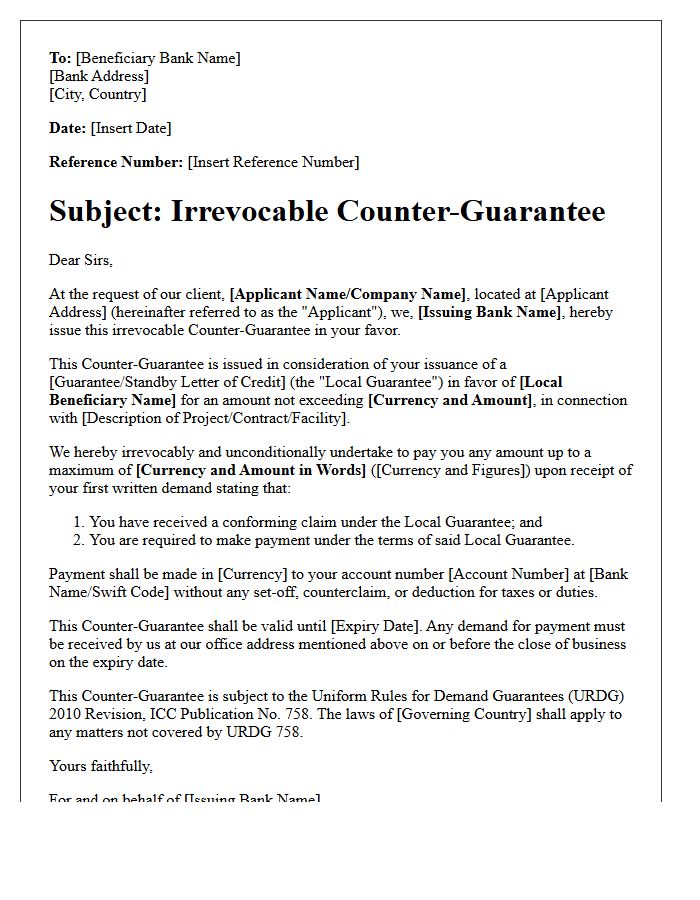
A Cross-Border Facility Counter Guarantee Letter is a critical financial instrument issued by a local bank to a foreign bank. It provides security for local credit facilities extended to a subsidiary of a multinational corporation. This irrevocable commitment ensures that the local bank will indemnify the foreign lender if the borrower defaults. By leveraging the creditworthiness of the parent company's bank, businesses can efficiently manage international liquidity and optimize working capital across different jurisdictions while mitigating cross-border default risks.
Standby Facility Counter Guarantee Letter
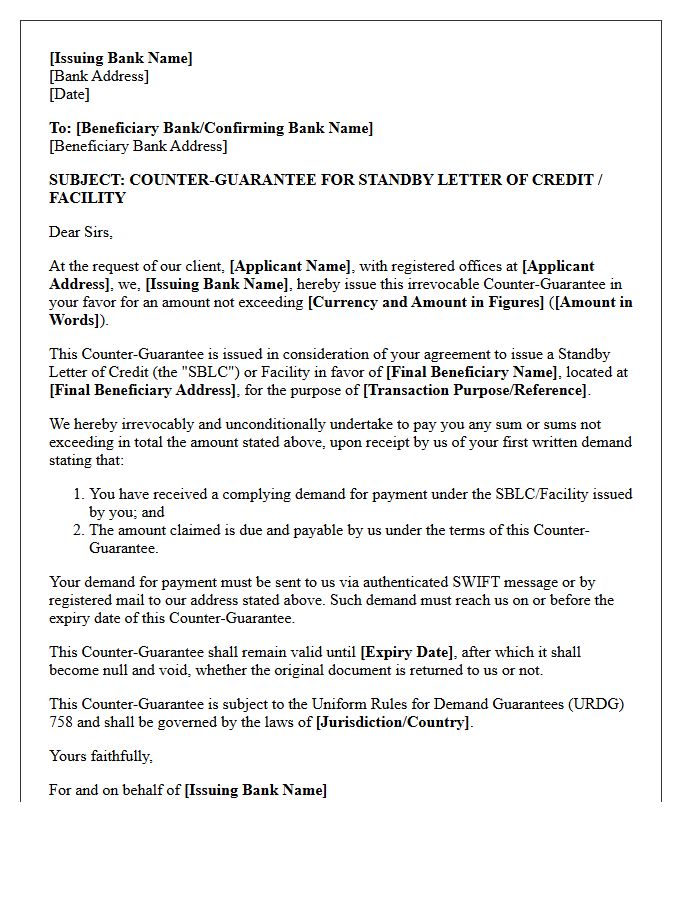
A Standby Facility Counter Guarantee Letter is a critical financial instrument issued by a bank to back an underlying obligation. It serves as a back-to-back security, where an instructing bank requests a local bank to issue a final guarantee to a beneficiary. This structure mitigates credit risk in international trade and cross-border transactions. If the applicant defaults, the issuing bank can claim reimbursement from the counter-guarantor. It ensures payment certainty and legal compliance across different jurisdictions, providing a robust safety net for global commercial contracts and large-scale projects.
What is a Bank-to-Bank Counter Guarantee Letter?
A Bank-to-Bank Counter Guarantee Letter is a legal undertaking issued by an applicant's bank (the instructing bank) to a beneficiary's bank (the issuing bank), requesting the latter to issue a local guarantee in favor of a third party. It serves as a commitment to reimburse the issuing bank if a claim is made under the local guarantee.
How does a Counter Guarantee differ from a Direct Guarantee?
In a direct guarantee, the applicant's bank issues the instrument directly to the beneficiary. In a counter guarantee structure, an intermediary bank is involved to issue a local guarantee that complies with the laws and language requirements of the beneficiary's jurisdiction, backed by the security of the counter-guarantee from the instructing bank.
What are the primary risks covered by a Counter Guarantee?
The primary risk covered is the financial reimbursement of the issuing bank. If the beneficiary makes a valid demand on the local guarantee, the issuing bank pays the beneficiary and then utilizes the counter-guarantee to claim those funds back from the instructing bank, regardless of any disputes between the applicant and beneficiary.
What are the standard URDG rules for Counter Guarantees?
Most international Bank-to-Bank Counter Guarantees are subject to the Uniform Rules for Demand Guarantees (URDG 758). These rules establish a standardized framework for independent guarantees, defining the obligations of all parties and ensuring that the counter-guarantee remains legally separate from the underlying commercial contract.
What happens if a claim is made under a Counter Guarantee?
When a claim is made, the issuing bank notifies the instructing bank that a conforming demand has been received under the local guarantee. The instructing bank is then contractually obligated to pay the issuing bank according to the terms of the counter-guarantee, subsequently seeking reimbursement from the original applicant.


Comments