
Financial regulators issue the Operational Resilience Feedback Letter to outline critical gaps in institutional risk management and business continuity. This guidance ensures firms maintain essential services during disruptions through rigorous testing and impact tolerance monitoring. Improving these processes is vital for regulatory compliance and long-term stability. Below are some ready to use templates.
Image cover: Mastering Operational Resilience: Feedback Letter Templates and Strategic Samples
Letter Samples List
- Operational Resilience Assessment Feedback Letter
- Critical Business Services Resilience Feedback Letter
- Third-Party Vendor Risk Resilience Feedback Letter
- Cybersecurity Incident Response Resilience Feedback Letter
- Core Banking System Outage Resilience Feedback Letter
- Business Continuity and Operational Resilience Feedback Letter
- Annual Stress Testing Resilience Feedback Letter
- Post-Incident Operational Resilience Feedback Letter
- Disaster Recovery and Resilience Feedback Letter
- Payment Infrastructure Disruption Resilience Feedback Letter
- Cloud Migration Operational Resilience Feedback Letter
- Regulatory Audit Operational Resilience Feedback Letter
Operational Resilience Assessment Feedback Letter
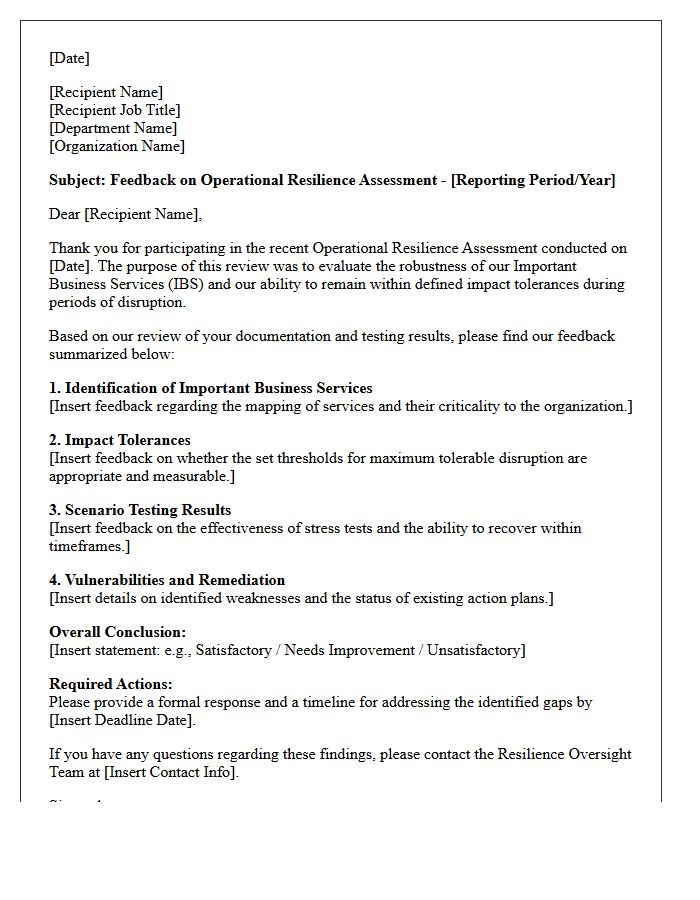
An Operational Resilience Assessment Feedback Letter is a formal communication from regulators, such as the PRA or FCA, evaluating a firm's ability to prevent, adapt, and recover from disruptions. It highlights remediation priorities regarding impact tolerances, vulnerability identification, and scenario testing robustness. Firms must address these findings to ensure the continuity of important business services. This document serves as a critical benchmark for regulatory compliance, requiring senior management accountability to strengthen organizational stability against systemic risks and operational failures within the financial sector.
Critical Business Services Resilience Feedback Letter
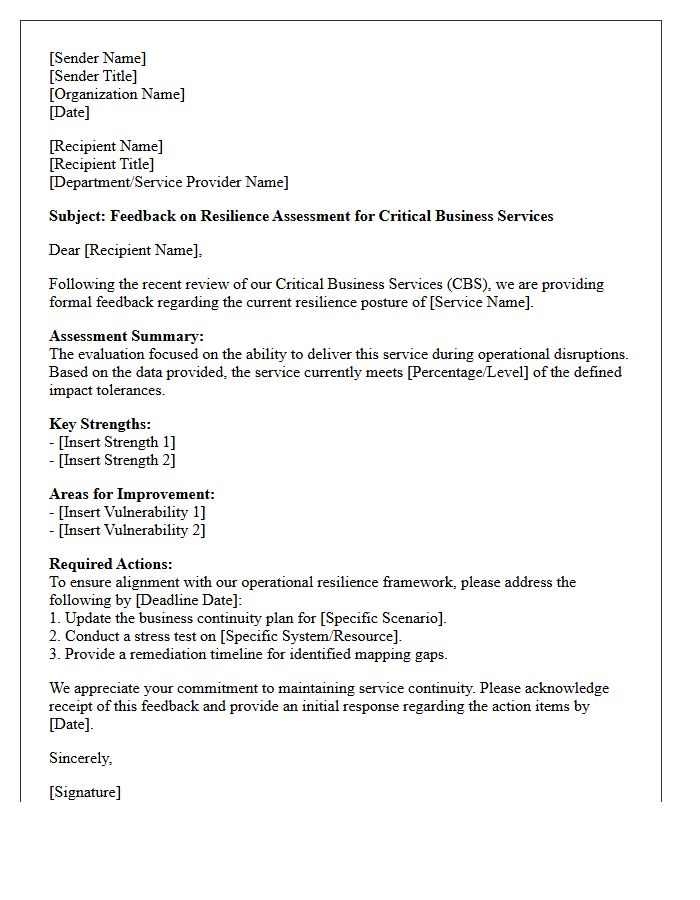
The Critical Business Services Resilience Feedback Letter is a formal regulatory communication highlighting deficiencies in an organization's operational continuity. It serves as supervisory feedback, requiring firms to address vulnerabilities in their mapping, impact tolerances, and testing scenarios. Regulators use these letters to ensure that essential functions can withstand operational disruptions without harming market stability. Boards must prioritize these findings to demonstrate compliance and enhance their overall recovery strategies, ensuring that service delivery remains robust during potential crisis events to protect consumers and the broader financial ecosystem.
Third-Party Vendor Risk Resilience Feedback Letter
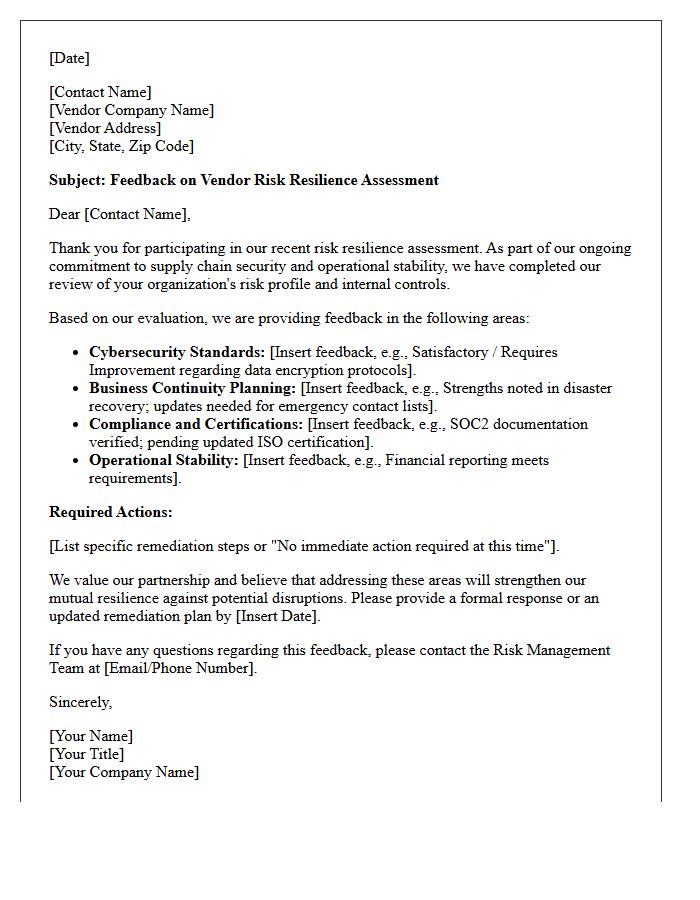
A Third-Party Vendor Risk Resilience Feedback Letter is a formal communication from regulators or auditors assessing an organization's ability to manage outsourcing vulnerabilities. This document highlights critical gaps in supply chain security and operational continuity. It serves as a roadmap for improving oversight of external service providers to prevent systemic disruptions. Organizations must address these findings to enhance their risk posture and ensure compliance with evolving resiliency standards. Prioritizing the remediation of identified weaknesses is essential for maintaining robust data integrity and service availability across all vendor relationships.
Cybersecurity Incident Response Resilience Feedback Letter
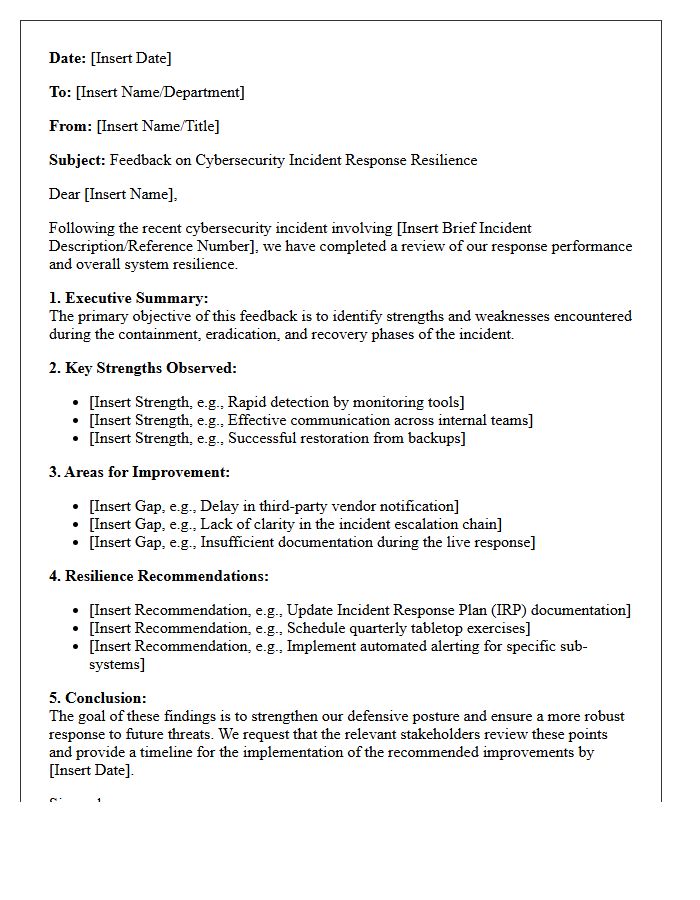
A Cybersecurity Incident Response Resilience Feedback Letter serves as a formal evaluation document issued after a security breach. Its primary purpose is to identify vulnerabilities and document lessons learned during the mitigation process. By analyzing the response effectiveness, organizations can implement corrective actions to strengthen their digital defenses. This feedback loop ensures continuous improvement, transforming technical failures into strategic insights. Sharing this letter with stakeholders fosters transparency and demonstrates a proactive commitment to long-term operational resilience and data protection standards.
Core Banking System Outage Resilience Feedback Letter
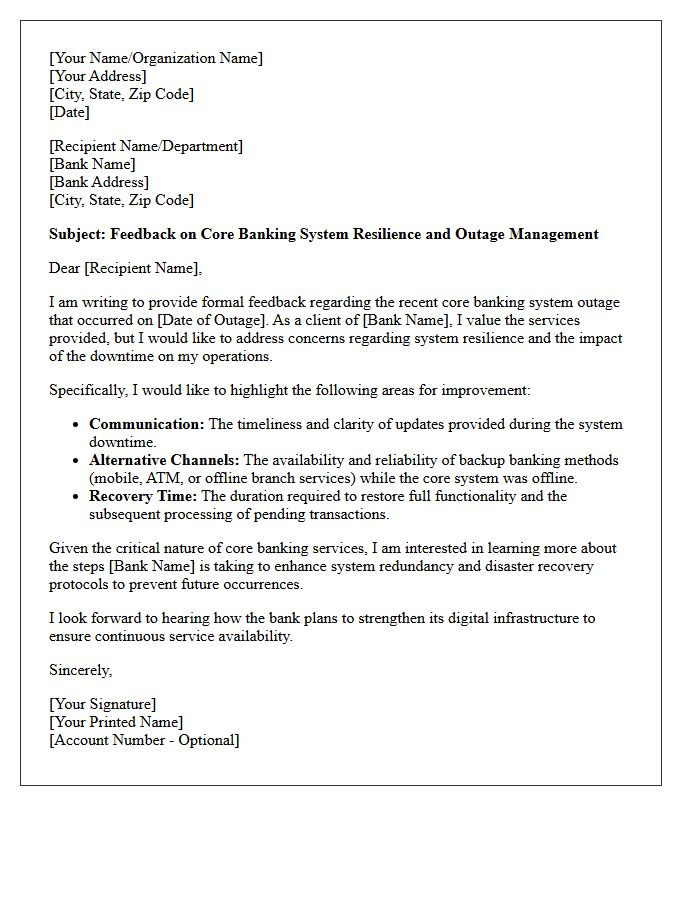
A Core Banking System Outage Resilience Feedback Letter is a formal communication used by financial institutions to document service disruptions. Its primary purpose is to address operational resilience by outlining the incident's root cause, duration, and recovery steps. These letters serve as a compliance record for regulators and provide transparency to stakeholders. Effective letters focus on risk mitigation strategies and future prevention measures, ensuring trust is maintained during technical failures. Understanding this feedback loop is essential for improving system stability and meeting modern regulatory standards in the banking sector.
Business Continuity and Operational Resilience Feedback Letter
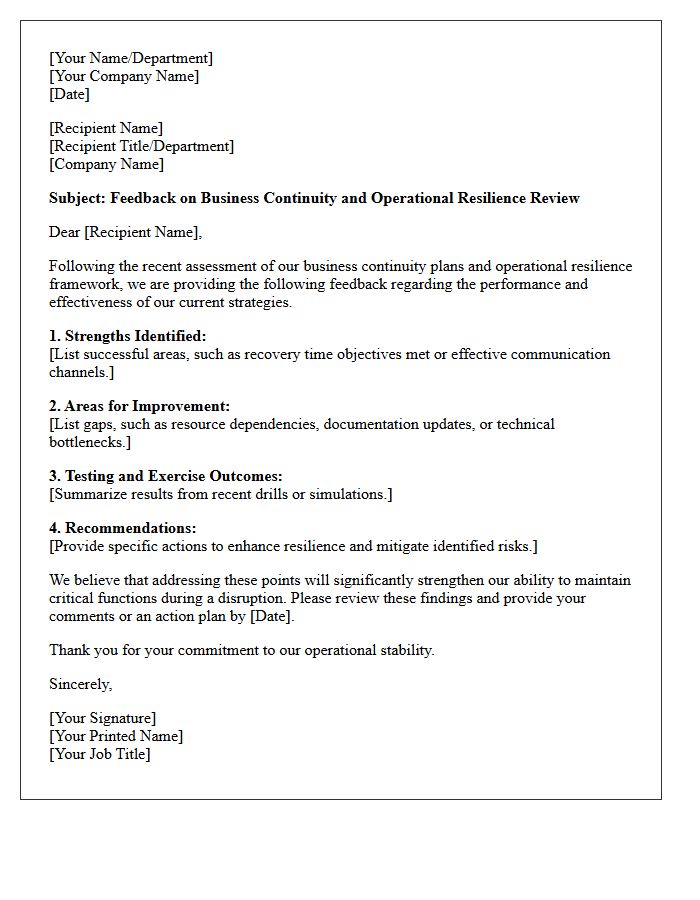
The Business Continuity and Operational Resilience Feedback Letter serves as a critical regulatory tool for firms to align with supervisory expectations. It highlights key deficiencies identified during thematic reviews, focusing on a firm's ability to prevent, adapt, and recover from severe operational disruptions. Understanding these findings is vital for maintaining service availability and ensuring compliance with impact tolerance levels. By addressing the specific feedback provided, organizations can strengthen their operational resilience framework, protect consumer interests, and safeguard the overall stability of the financial system against evolving systemic threats.
Annual Stress Testing Resilience Feedback Letter
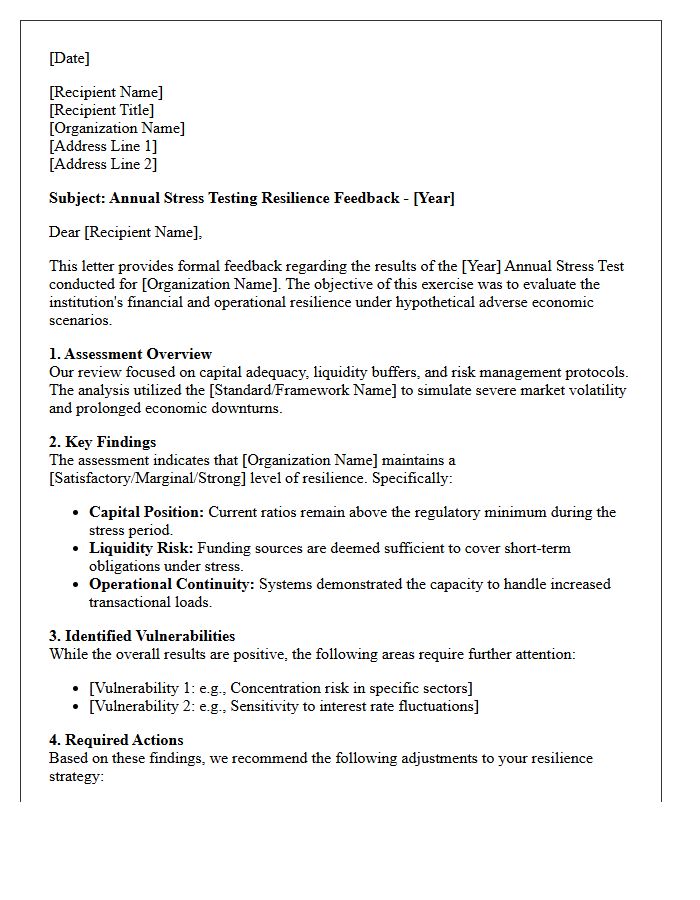
The Annual Stress Testing Resilience Feedback Letter is a critical supervisory document issued by regulators to financial institutions. It provides a formal assessment of a bank's capital adequacy and risk management capabilities under hypothetical adverse scenarios. This feedback highlights vulnerabilities in governance, data integrity, and modeling practices. Organizations must address these findings to ensure they maintain sufficient capital buffers and operational strength. Understanding this letter is essential for maintaining regulatory compliance and enhancing overall financial stability within the banking sector.
Post-Incident Operational Resilience Feedback Letter
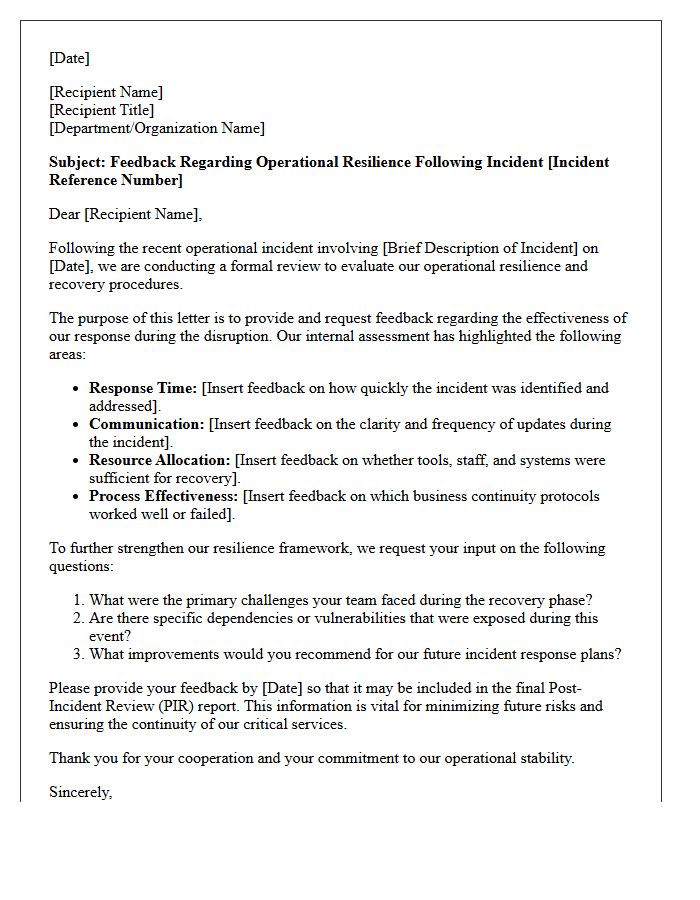
A Post-Incident Operational Resilience Feedback Letter is a critical communication tool used to analyze system failures and document recovery actions. It serves as a structured debriefing report that identifies root causes, assesses impact, and outlines strategic improvements to prevent recurrence. This document ensures organizational accountability and strengthens future stability by transforming technical disruptions into actionable insights. By formalizing the learning process, organizations can enhance their risk mitigation frameworks and maintain long-term service continuity during unexpected operational stresses.
Disaster Recovery and Resilience Feedback Letter
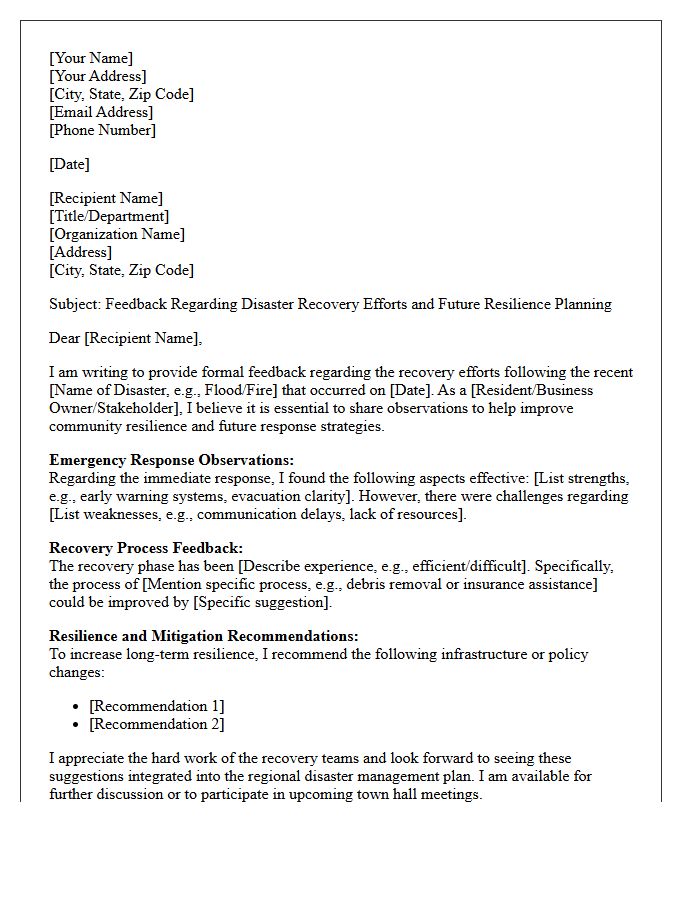
A Disaster Recovery and Resilience Feedback Letter evaluates an organization's ability to restore critical infrastructure after a crisis. It identifies structural vulnerabilities and assesses business continuity strategies to ensure future stability. This document serves as a roadmap for improving emergency response protocols and mitigating long-term risks. By analyzing system failures and recovery timelines, stakeholders can implement resilient architectures and protective measures. Ultimately, this feedback loop is essential for strengthening organizational operational durability and ensuring that lessons learned translate into proactive disaster mitigation and robust risk management frameworks.
Payment Infrastructure Disruption Resilience Feedback Letter
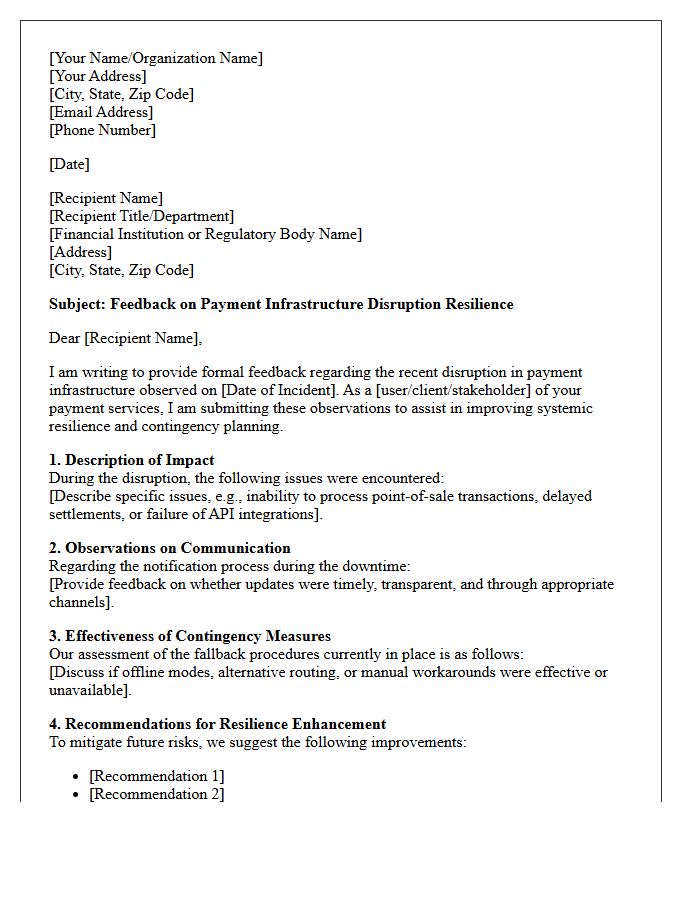
The Payment Infrastructure Disruption Resilience Feedback Letter is a regulatory communication addressing institutional preparedness for systemic outages. It emphasizes the need for robust contingency strategies to ensure operational continuity during financial service interruptions. Authorities use this feedback to evaluate how entities mitigate risks and maintain transaction flows under stress. Organizations must demonstrate proactive testing and recovery protocols to safeguard the financial ecosystem against technical failures or cyber events. Understanding these requirements is essential for maintaining compliance and ensuring long-term structural stability within global payment networks.
Cloud Migration Operational Resilience Feedback Letter
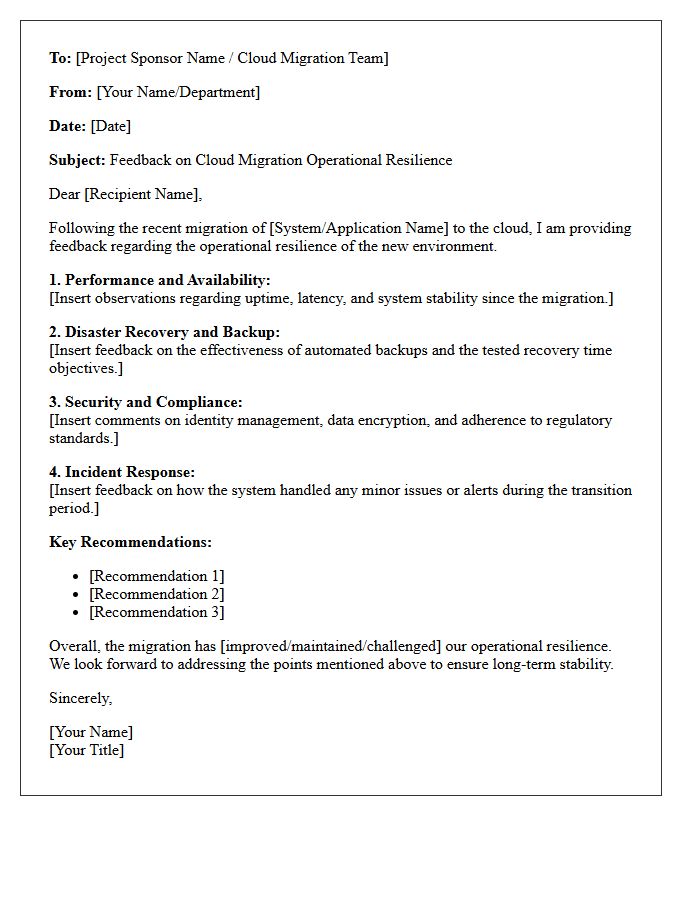
A Cloud Migration Operational Resilience Feedback Letter is a regulatory communication issued by financial authorities to firms transitioning services to the cloud. It outlines critical vulnerabilities identified during supervision, focusing on risk management, data integrity, and exit strategies. The letter serves as a formal benchmark for compliance, ensuring organizations maintain continuous service availability during technical shifts. Understanding this feedback is essential for addressing governance gaps and enhancing overall system stability against cyber threats and outages while meeting specific regulatory expectations for operational continuity.
Regulatory Audit Operational Resilience Feedback Letter
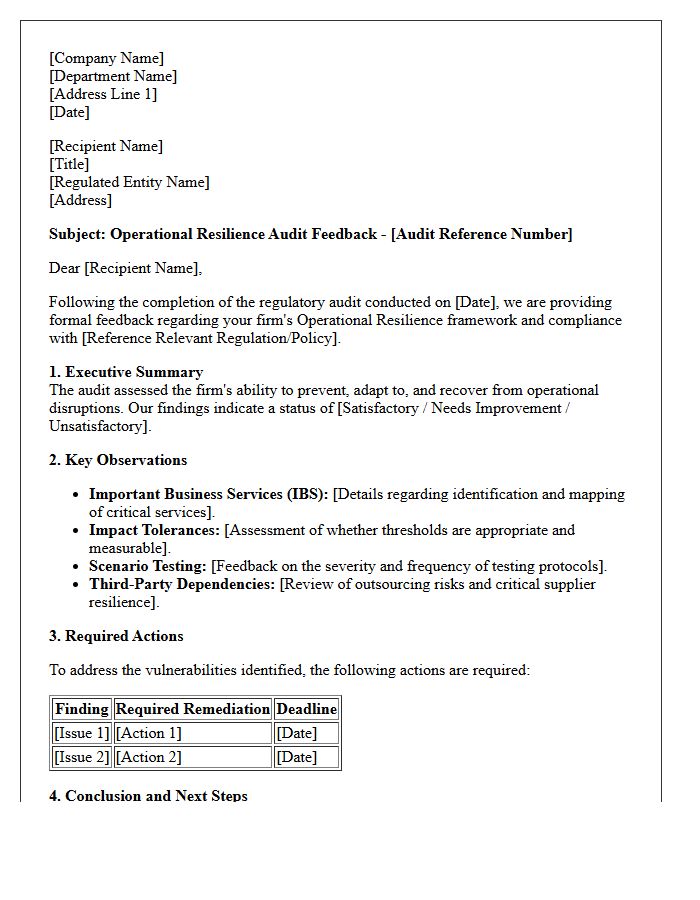
The Regulatory Audit Operational Resilience Feedback Letter serves as a critical communication from financial supervisors evaluating a firm's ability to withstand disruptions. It highlights gaps in impact tolerances, resource mapping, and business continuity strategies. Firms must prioritize addressing these findings to ensure compliance with regulatory frameworks. Proactive integration of this feedback strengthens operational resilience, mitigates systemic risks, and prevents potential enforcement actions. Understanding these expectations is essential for maintaining market integrity and operational stability during unforeseen events.
What is an Operational Resilience Feedback Letter?
An Operational Resilience Feedback Letter is a formal communication issued by financial regulators to firms, detailing observations and assessment findings regarding their ability to prevent, adapt to, and recover from operational disruptions.
What are the common findings in an Operational Resilience Feedback Letter?
Common findings often include weaknesses in identifying Important Business Services (IBS), inadequate impact tolerance testing, insufficient mapping of interdependencies (people, processes, and technology), and gaps in board-level oversight or governance frameworks.
How should a firm respond to an Operational Resilience Feedback Letter?
Firms should respond by acknowledging receipt, providing a detailed remediation plan with specific timelines, and demonstrating how they will address the identified gaps to meet regulatory standards for operational continuity.
Why is the Feedback Letter important for regulatory compliance?
The letter serves as a direct benchmark for compliance with operational resilience regulations (such as PS21/3 or DORA), signaling whether a firm's current strategy is sufficient to mitigate systemic risk and protect consumers during a crisis.
Does a Feedback Letter imply a regulatory fine or penalty?
Not necessarily; while it highlights areas of concern, it is primarily a supervisory tool used to drive improvement. However, failure to address the issues raised in the letter can lead to escalated supervisory action, including formal investigations or financial penalties.

Comments