
Failure to adhere to agreed payment schedules can result in a Notice of Voided Settlement, rendering prior agreements null and void. This formal notification informs the debtor that the settlement offer is revoked due to breach of contract, reinstating the full original debt amount immediately. Understanding the legal implications is crucial for debt recovery. Below are some ready to use template options.
Image cover: Payment Default Notice: Settlement Cancellation Templates and Voidance Letters
Letter Samples List
- Notice of Voided Settlement Due to Missed Payment Letter
- Debt Settlement Voidance and Payment Default Letter
- Missed Payment Settlement Agreement Cancellation Letter
- Notice of Default and Settlement Voidance Letter
- Breach of Settlement Agreement Nullification Letter
- Settlement Revocation Due to Non-Payment Letter
- Voided Debt Settlement and Account Reactivation Letter
- Notice of Broken Settlement Terms and Voidance Letter
- Delinquent Payment Settlement Cancellation Letter
- Termination of Settlement Agreement Due to Missed Payment Letter
- Voided Settlement and Reinstatement of Full Balance Letter
- Debt Collection Settlement Forfeiture Letter
Notice of Voided Settlement Due to Missed Payment Letter
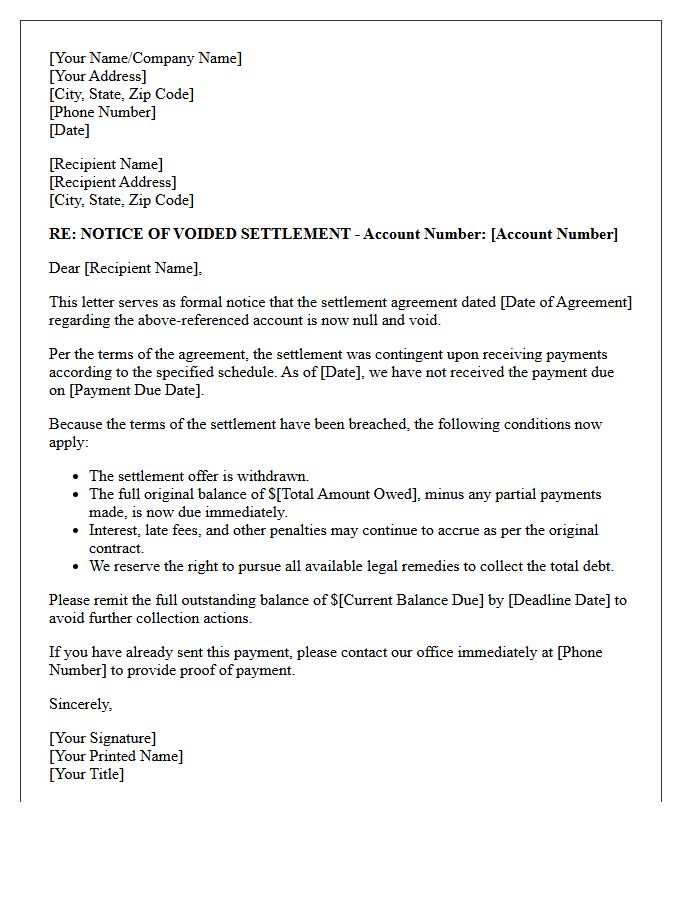
A Notice of Voided Settlement is a critical legal document informing a debtor that their previous debt resolution agreement is no longer valid. This typically occurs because of a missed payment or breach of specific repayment terms. Once the settlement is voided, the original full balance is reinstated, and any prior discounts are forfeited. To avoid aggressive debt collection or potential legal action, recipients must immediately contact the creditor to negotiate a reinstatement or alternative payment plan to resolve the outstanding liability effectively.
Debt Settlement Voidance and Payment Default Letter
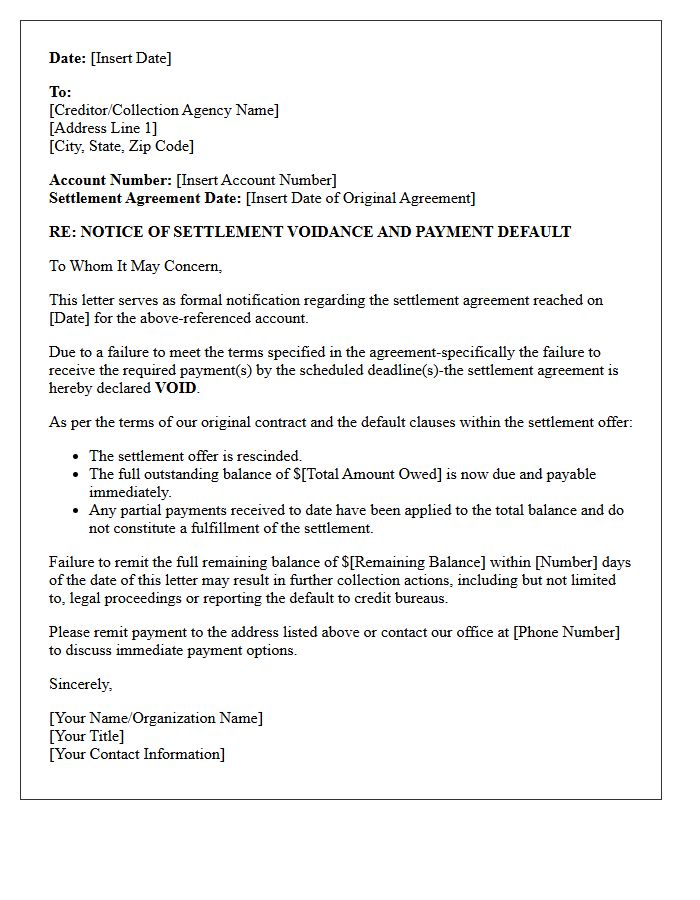
A Debt Settlement Voidance and Payment Default Letter is a formal notice sent by a creditor or debt buyer when a borrower fails to meet the specific terms of a negotiated settlement agreement. This legal document officially declares the settlement void, reinstating the full original balance plus accrued interest and penalties. Receiving this letter means the default has triggered a breach of contract, often leading to immediate collection efforts, legal action, or wage garnishment. Promptly addressing this notice is critical to prevent severe credit score damage and further litigation.
Missed Payment Settlement Agreement Cancellation Letter
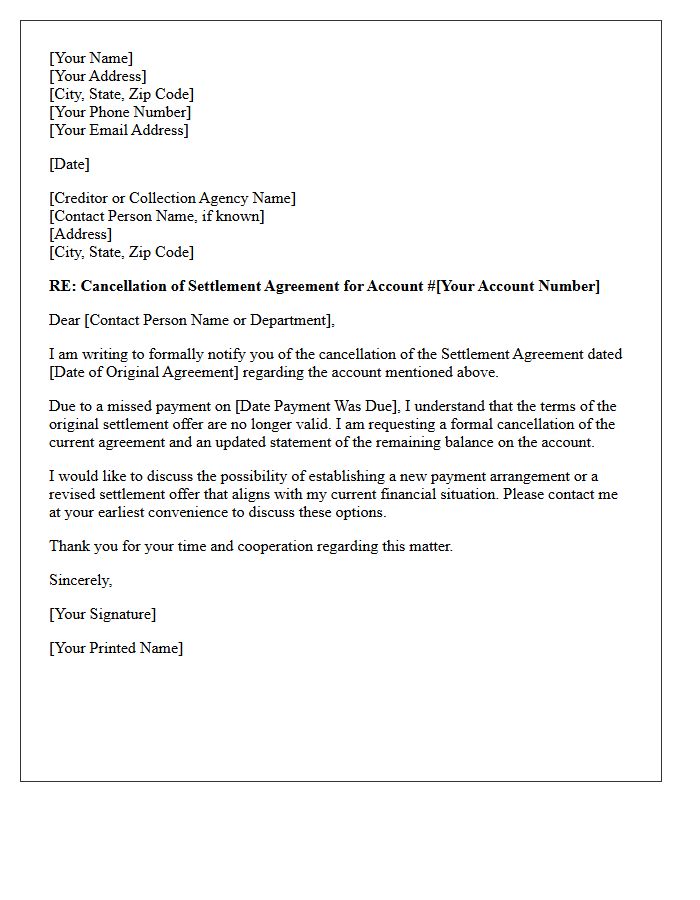
A Missed Payment Settlement Agreement Cancellation Letter is a formal notice used to terminate a debt resolution plan. It is crucial to state the account number and the specific reason for cancellation, such as a dispute or improved financial status. Sending this document via certified mail provides legal proof of your request. Always review your original contract for notice period requirements to avoid penalties. Once canceled, be aware that creditors may resume collection activities or legal action unless a new arrangement is established immediately.
Notice of Default and Settlement Voidance Letter
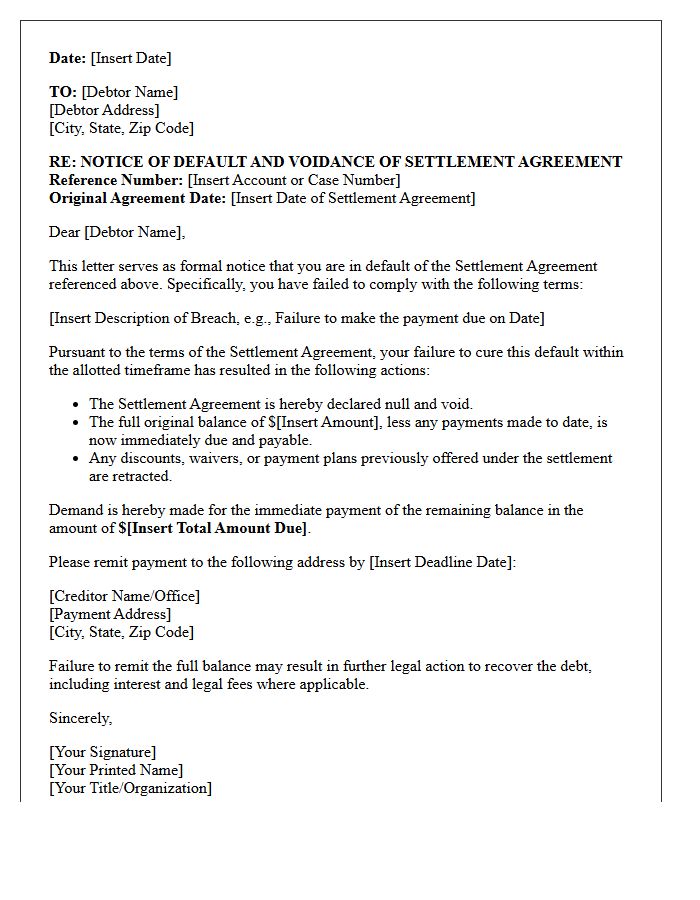
A Notice of Default and Settlement Voidance Letter is a critical legal document issued when a party fails to meet the specific terms of a legal agreement. It formally alerts the debtor that their breach has voided the previous settlement, potentially reinstating the original debt amount and legal liabilities. Understanding this notice is vital because it often serves as the final warning before litigation or foreclosure resumes. Timely action is required to cure the default and prevent the loss of settlement protections or additional financial penalties.
Breach of Settlement Agreement Nullification Letter
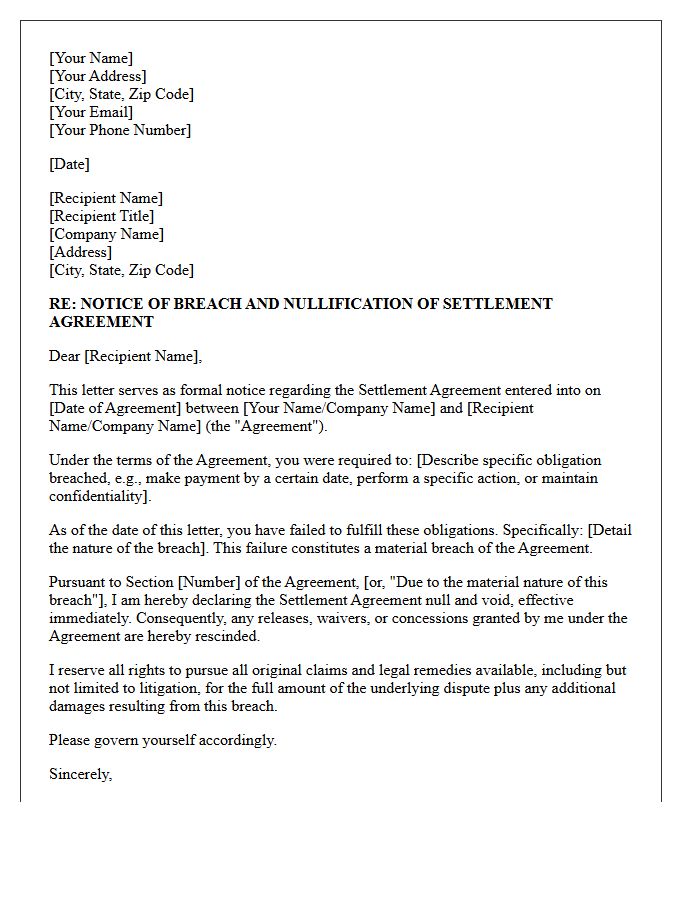
A Breach of Settlement Agreement Nullification Letter is a formal legal notice declaring a prior contract void due to non-compliance. It serves to terminate the release of liability, often allowing the injured party to pursue original legal claims in court. To be effective, the letter must clearly identify the specific defaulted terms and provide evidence of the violation. Timely delivery is essential to preserve your legal rights and prevent the forfeiture of potential damages. Always consult a legal professional to ensure the document adheres to specific jurisdictional requirements and contractual clauses.
Settlement Revocation Due to Non-Payment Letter
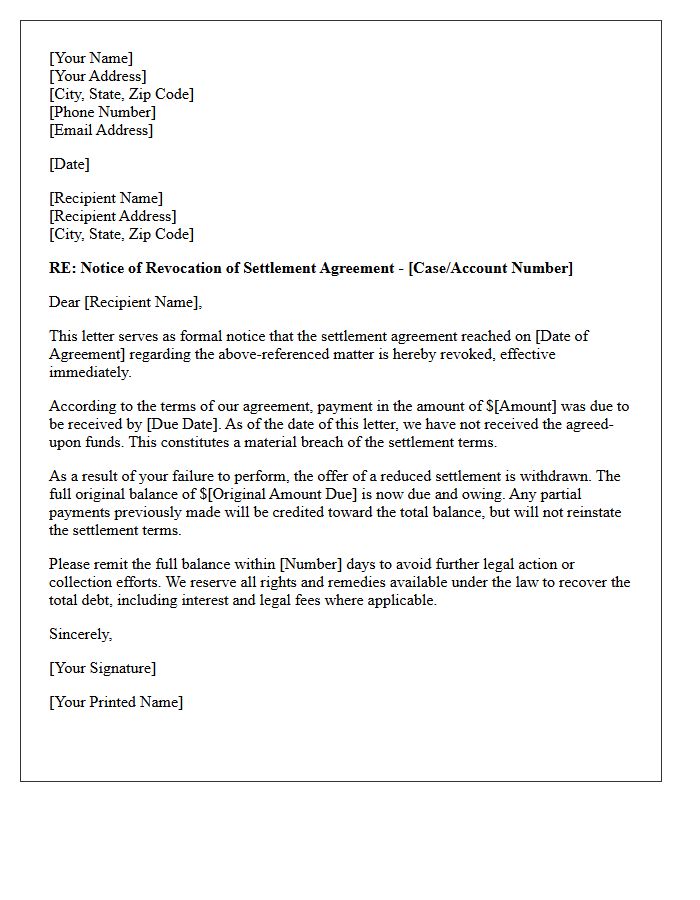
A settlement revocation letter is a formal legal notice issued when a debtor fails to fulfill agreed financial obligations. The most critical aspect is the default notice, which officially nullifies the previous compromise. Once issued, the creditor typically reinstates the original debt amount, including all previously waived interest and penalties. This document serves as vital evidence for future litigation or debt collection actions. It signifies that the settlement agreement is void, and the creditor will pursue the full balance through legal channels or credit reporting agencies.
Voided Debt Settlement and Account Reactivation Letter
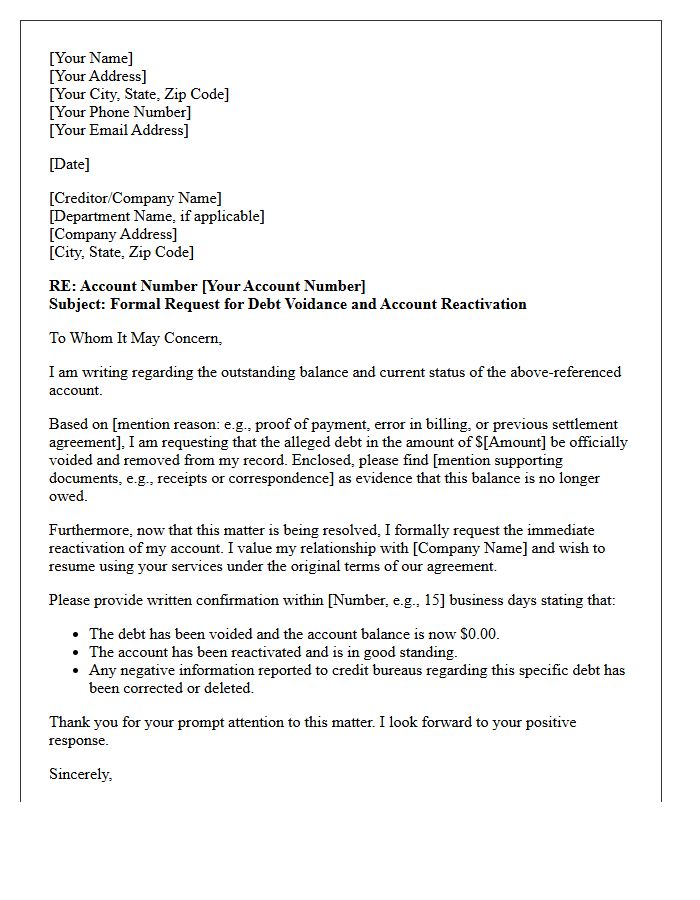
A Voided Debt Settlement and Account Reactivation Letter is a critical document used when a settlement agreement is nullified due to payment failure or breach of terms. It notifies the debtor that the original balance is reinstated and account reactivation procedures have commenced for further collection. Understanding this notice is essential for managing your credit standing and legal liability. To avoid debt escalation, debtors must promptly address the balance or negotiate a new payment plan to prevent legal action or persistent negative reporting on their credit profiles.
Notice of Broken Settlement Terms and Voidance Letter
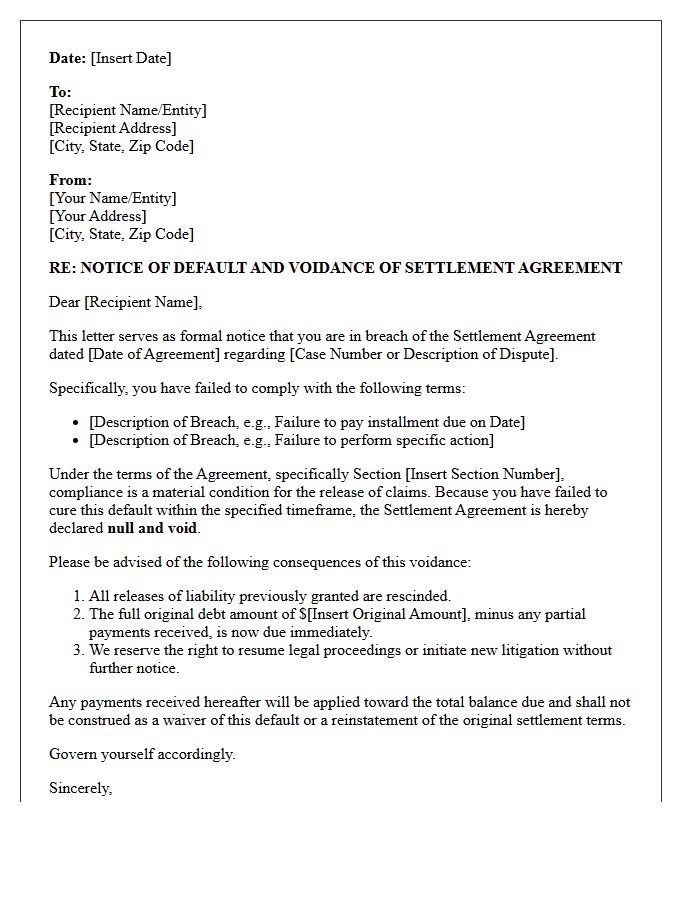
A Notice of Broken Settlement Terms and Voidance Letter is a formal legal document issued when a party fails to fulfill their obligations under a settlement agreement. This notice serves as official communication that the original contract is breached, potentially rendering the release of liability void. It preserves the claimant's right to pursue further legal action or reinstate original claims. Sending this letter is a critical procedural step to document the default and notify the breaching party that the settlement is no longer binding due to non-compliance.
Delinquent Payment Settlement Cancellation Letter
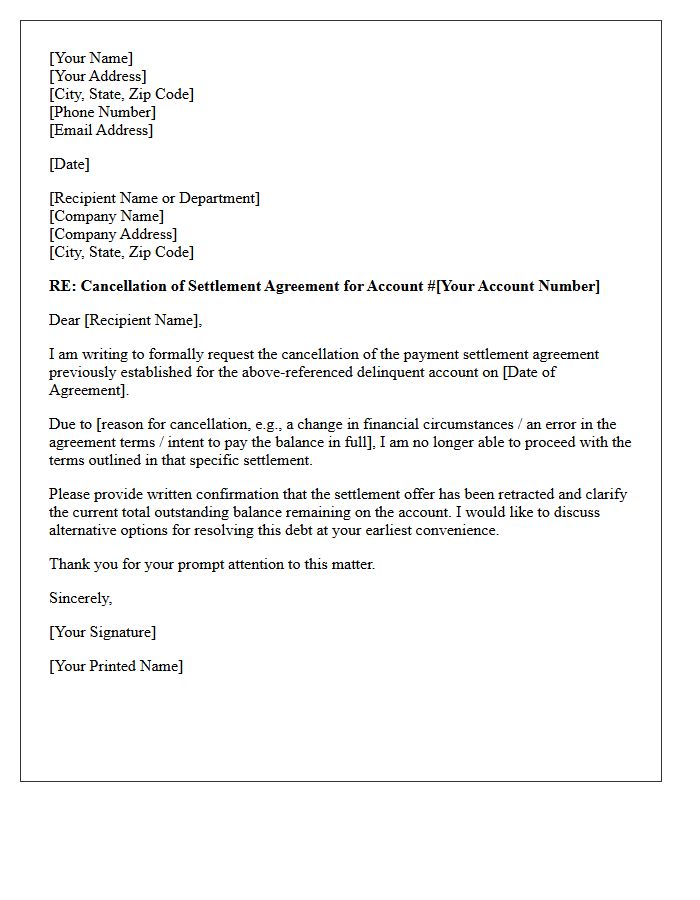
A Delinquent Payment Settlement Cancellation Letter is a formal document used to terminate a previous debt resolution agreement. It officially notifies the creditor or debtor that the proposed settlement terms are no longer valid, often due to default or failure to meet specific deadlines. Sending this letter is crucial for legal protection, as it clarifies that the original balance is reinstated. It ensures transparency regarding the account status and helps prevent future disputes by documenting the exact cancellation date and the reason for ending the compromise arrangement.
Termination of Settlement Agreement Due to Missed Payment Letter
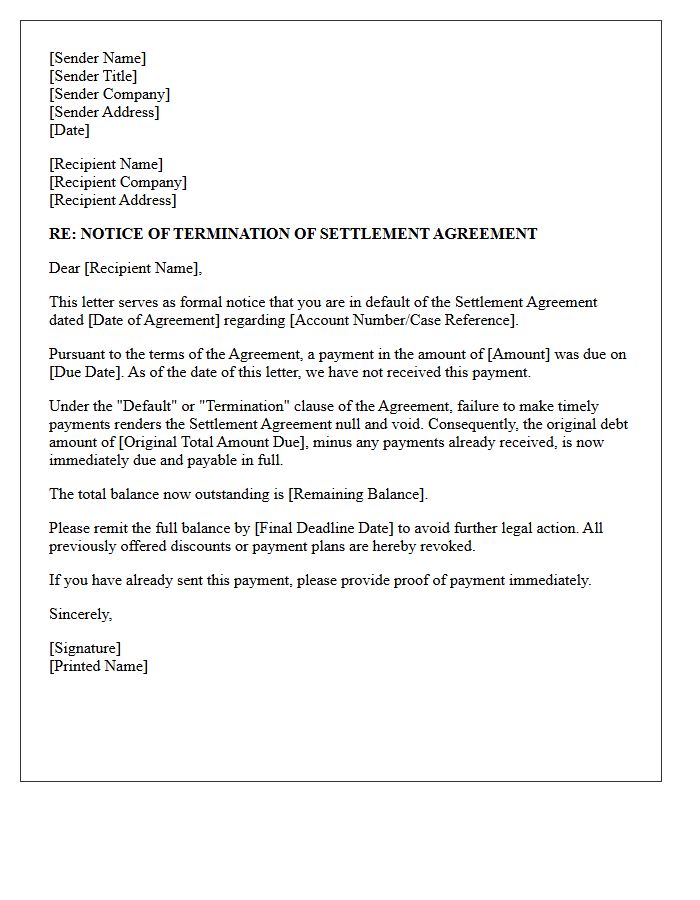
A Termination of Settlement Agreement Due to Missed Payment Letter serves as formal notice that a debtor has breached their payment schedule. This document is crucial because it officially declares a default, effectively voiding the previous compromise. Once issued, the creditor typically reserves the right to pursue the full original debt amount, including accumulated interest and legal fees. Timely delivery of this notice ensures clear documentation of the breach, protecting the creditor's legal standing if further litigation or aggressive collection actions become necessary to recover the outstanding balance.
Voided Settlement and Reinstatement of Full Balance Letter
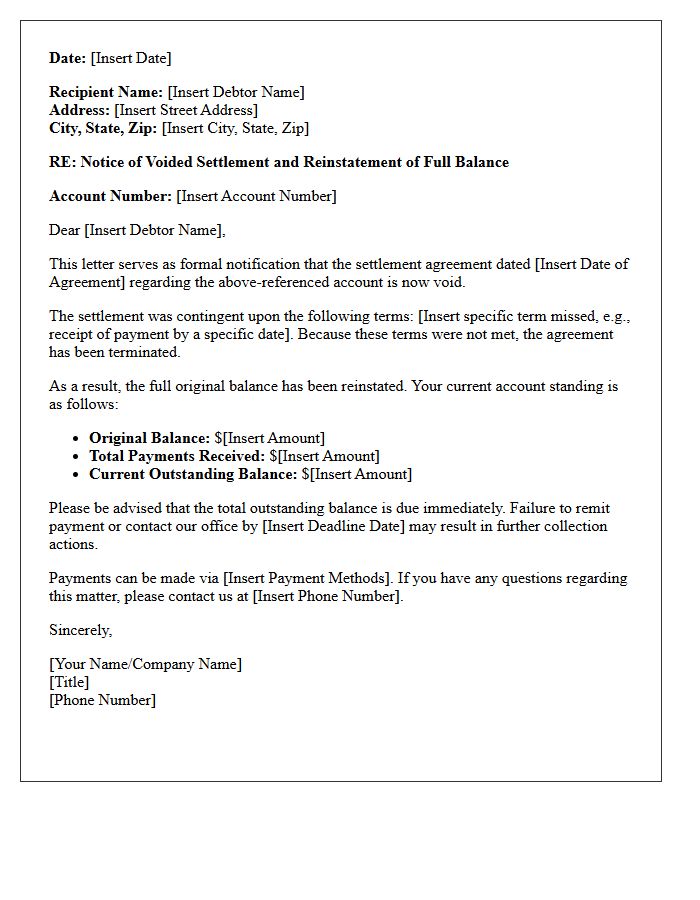
A voided settlement and reinstatement of full balance letter is a formal notice sent by a creditor when a debtor fails to meet the specific terms of a negotiated payment agreement. This legal document informs the recipient that the previous settlement offer is now void due to breach of contract, such as a missed payment. Consequently, the creditor will reinstate the original total debt, including any previously waived interest or penalties. Receiving this letter means you are once again liable for the entire balance rather than the reduced settlement amount.
Debt Collection Settlement Forfeiture Letter
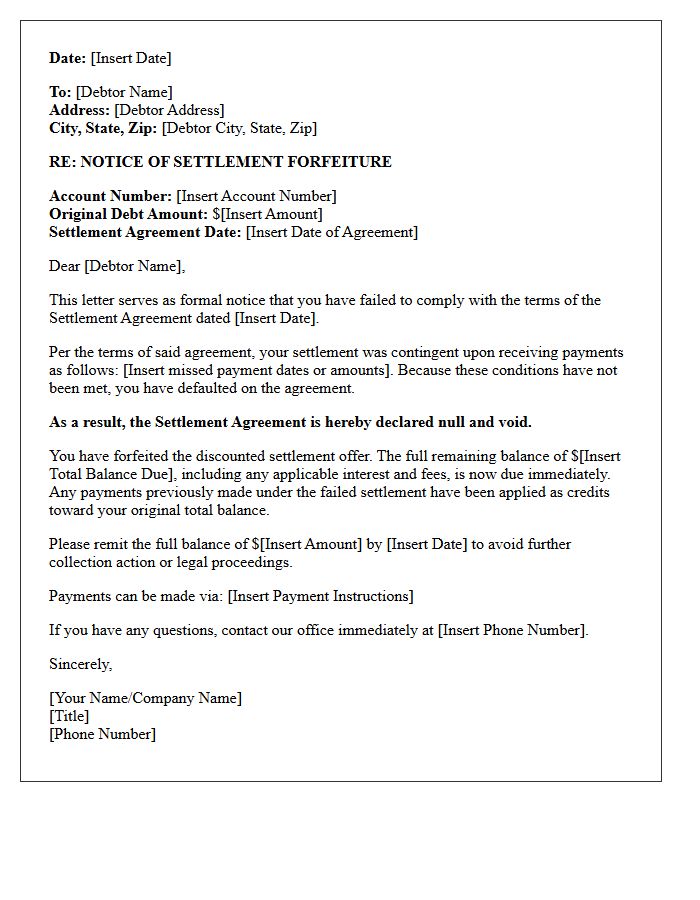
A Debt Collection Settlement Forfeiture Letter is a formal notice stating that a previous agreement to resolve a debt is now void. This typically occurs because the debtor failed to meet specific payment deadlines or terms. Once issued, the creditor or agency regains the legal right to pursue the full original balance, often including added interest and late fees. To protect your financial standing, it is crucial to respond immediately or provide proof of payment to prevent further legal action or severe damage to your credit report.
What is a Notice of Voided Settlement?
A Notice of Voided Settlement is a formal communication stating that your previous debt resolution agreement is no longer valid. This typically occurs because the terms of the settlement, such as a scheduled payment, were not met.
Why was my debt settlement voided?
Your settlement was voided due to a missed or late payment. Most settlement agreements are contingent upon strict adherence to a specific payment schedule; failing to pay by the deadline constitutes a breach of contract, effectively cancelling the discounted payoff amount.
Can I reinstate a voided settlement after a missed payment?
Reinstatement is not guaranteed and depends on the creditor's policies. You should contact the creditor or collection agency immediately to explain the hardship and ask for a "reinstatement agreement" or a "cure period" to make up the missed payment.
What happens to my debt balance now that the settlement is voided?
When a settlement is voided, the full original balance of the debt is typically reinstated, minus any payments you have already made. Additionally, any interest or late fees that were waived during the settlement process may be reapplied to your total balance.
Will a voided settlement impact my credit score?
Yes, a voided settlement can negatively impact your credit score. The account will likely be reported as delinquent again, and you lose the opportunity to have the account marked as "Settled" or "Paid in Full," which stops further negative reporting.

Comments