
Receiving a Property Tax Default Acceleration Letter means your local government is demanding immediate full payment of overdue taxes to avoid foreclosure. This formal notice accelerates the debt, making the entire balance due instantly rather than in installments. Understanding your legal rights and payment options is crucial to saving your home. Below are some ready to use templates to help you respond.
Image cover: Navigating Property Tax Default: Essential Acceleration Letter Samples and Templates
Letter Samples List
- Notice of Property Tax Default Letter
- Initial Property Tax Delinquency Warning Letter
- Escrow Advance Reimbursement Demand Letter
- Notice of Intent to Accelerate Loan Letter
- Pre-Acceleration Tax Default Cure Letter
- Breach of Mortgage Covenant Notice Letter
- Final Warning of Loan Acceleration Letter
- Mortgage Acceleration Demand for Tax Default Letter
- Notice of Accelerated Mortgage Balance Due Letter
- Property Tax Lien Protection Warning Letter
- Formal Loan Acceleration and Foreclosure Letter
- Reinstatement Demand Following Tax Default Letter
Notice of Property Tax Default Letter
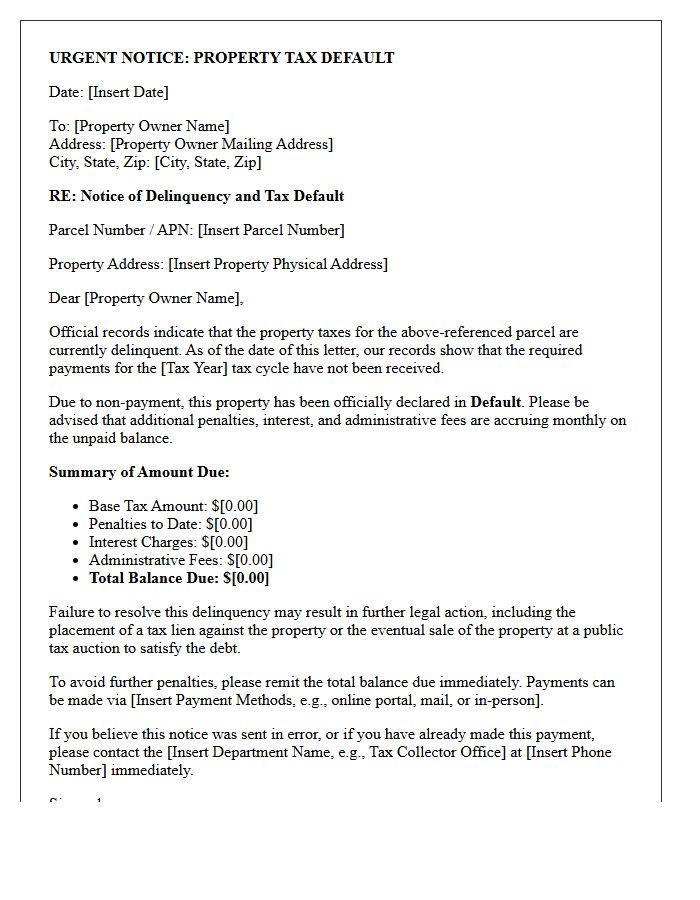
A Notice of Property Tax Default is a critical legal warning issued when property taxes remain unpaid after the annual deadline. Receiving this letter signifies that your account is officially delinquent, potentially triggering additional penalties and monthly interest charges. Most importantly, it initiates a statutory waiting period-typically five years-before the government can exercise a tax sale to recover debts. To avoid losing ownership, property owners must pay the full balance or establish a formal redemption installment plan with the local county tax collector immediately.
Initial Property Tax Delinquency Warning Letter
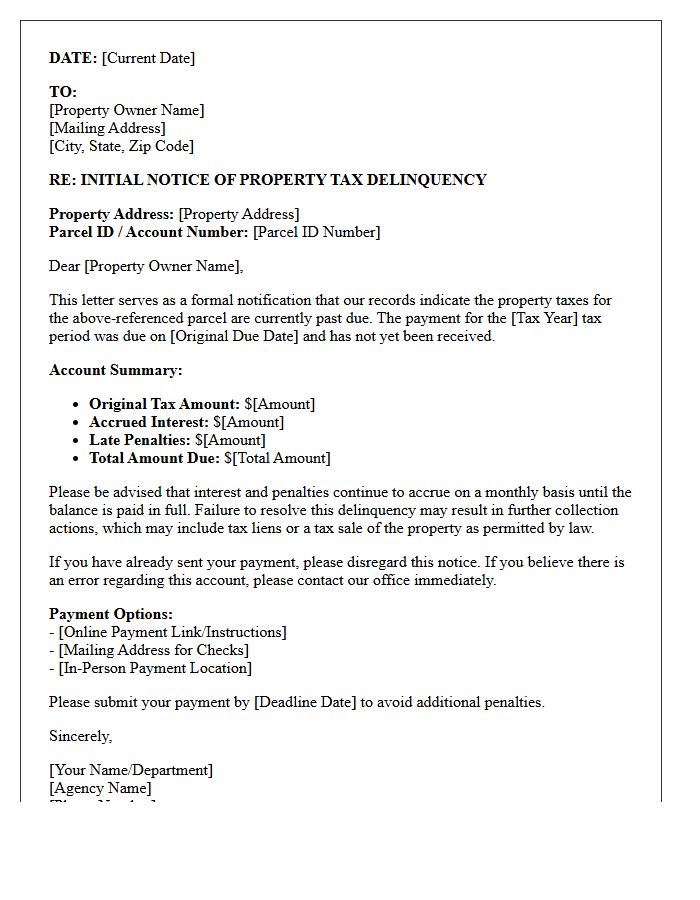
An Initial Property Tax Delinquency Warning Letter is a formal notice issued when property taxes become overdue. It serves as a final reminder before significant financial penalties, interest, and potential tax liens are applied to the property. Property owners must act quickly to settle the balance or establish a payment plan to avoid legal action or foreclosure. Reviewing the deadline and total amount owed is critical to maintaining ownership and protecting your credit rating from negative impacts associated with government debt collection processes.
Escrow Advance Reimbursement Demand Letter
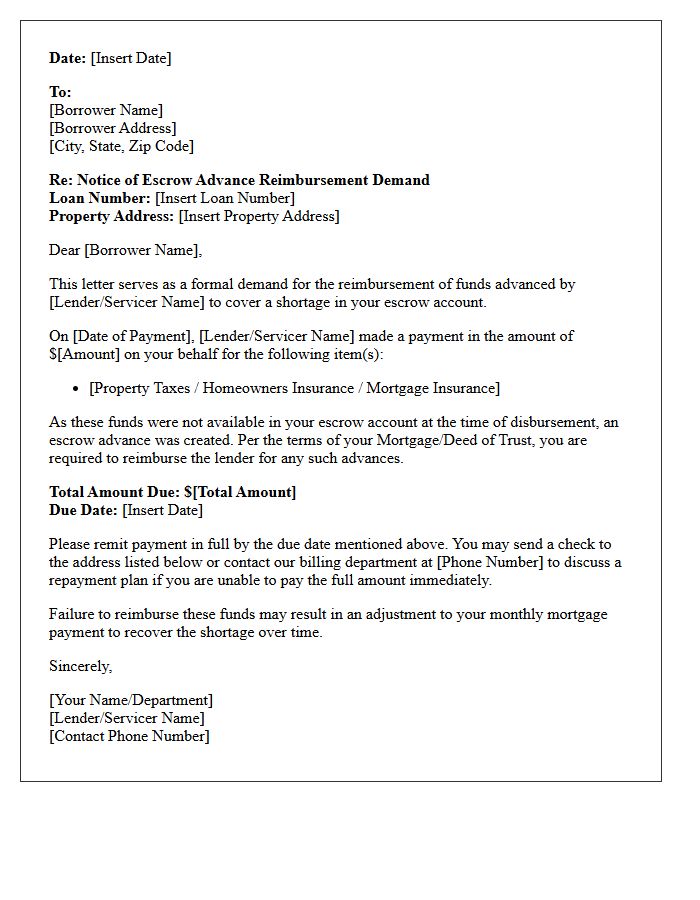
An Escrow Advance Reimbursement Demand Letter is a formal notice sent by mortgage servicers to recover funds paid on a borrower's behalf. This typically occurs when an escrow account has a negative balance due to unexpected increases in property taxes or insurance premiums. The letter specifies the repayment amount and a strict deadline to avoid default. Understanding this demand is crucial for homeowners to maintain loan compliance and prevent the initiation of foreclosure proceedings resulting from unaddressed escrow shortages or advanced corporate disbursements.
Notice of Intent to Accelerate Loan Letter
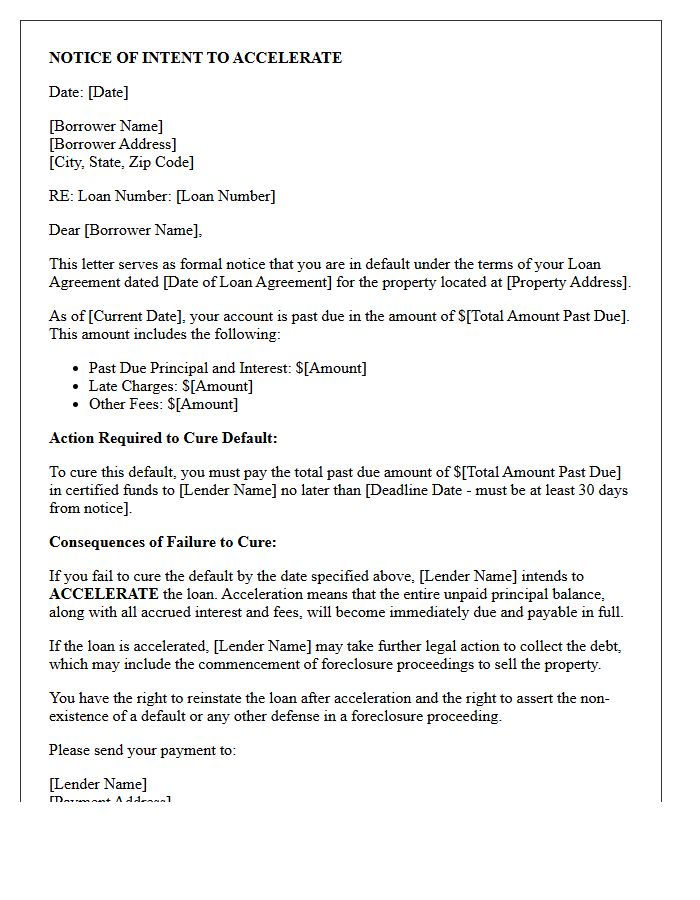
A Notice of Intent to Accelerate Loan is a critical legal warning from a lender indicating that your mortgage is in default. This letter serves as a final opportunity to cure the delinquency by paying the overdue balance before a specific deadline. If ignored, the lender will "accelerate" the debt, making the entire remaining loan balance due immediately. Receiving this notice is a serious precursor to foreclosure proceedings, making it essential to contact your servicer immediately to discuss loss mitigation or repayment options.
Pre-Acceleration Tax Default Cure Letter
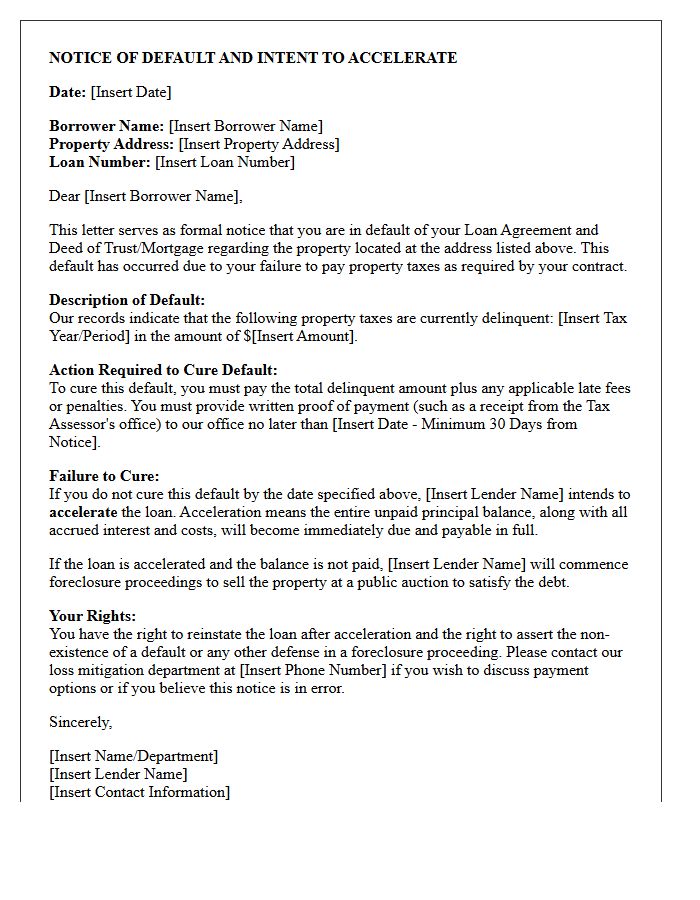
A Pre-Acceleration Tax Default Cure Letter is a formal legal notice sent by mortgage lenders when a borrower fails to pay property taxes. This document serves as a final warning before the lender accelerates the loan balance, potentially leading to foreclosure. It specifies the exact delinquency, the required remedial action, and a strict deadline to pay the outstanding taxes. Receiving this letter is critical because failing to "cure" the default allows the lender to demand the full mortgage amount immediately to protect their senior lien priority and collateral interest.
Breach of Mortgage Covenant Notice Letter
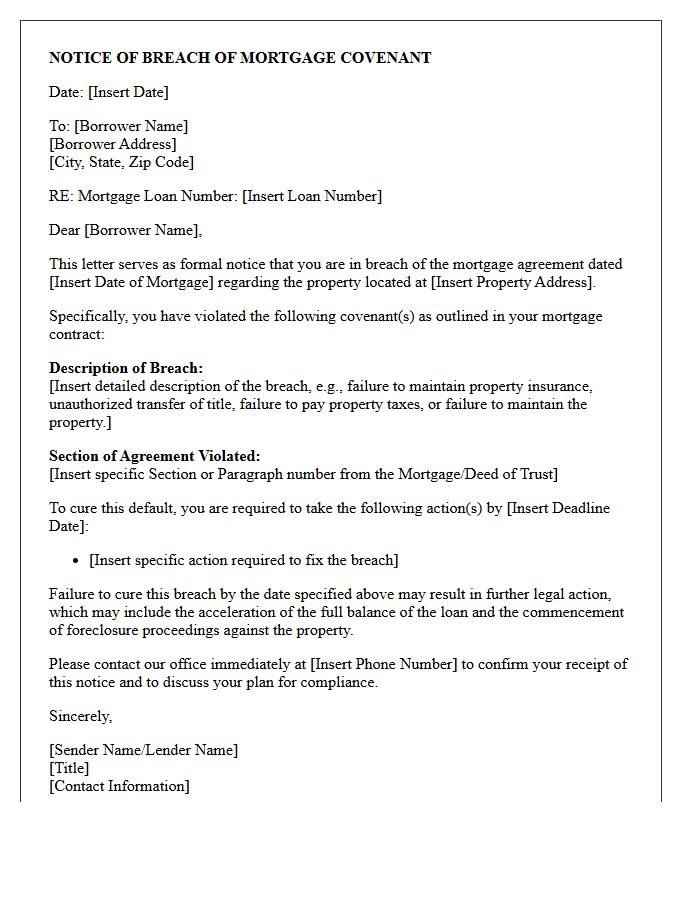
A Breach of Mortgage Covenant Notice Letter is a formal legal document issued by a lender when a borrower violates specific terms of their loan agreement. Beyond missing payments, triggers may include failure to maintain property insurance, unauthorized structural changes, or unpaid property taxes. Receiving this notice is critical because it serves as a preliminary step toward foreclosure. It outlines the specific default, the required remedial action, and a strict deadline to cure the breach to avoid acceleration of the debt and potential loss of the property.
Final Warning of Loan Acceleration Letter
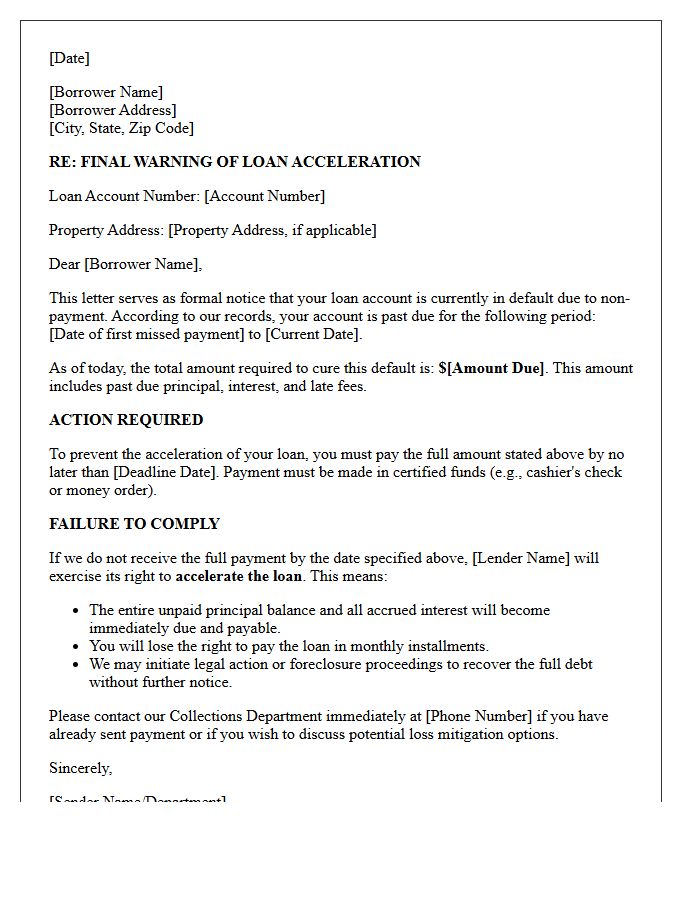
A Final Warning of Loan Acceleration Letter is a critical legal notice notifying a borrower that their entire debt balance will become immediately due unless past-due payments are resolved. This document serves as the last opportunity to cure a default before the lender invokes the acceleration clause. Once triggered, you lose the right to make monthly installments, often leading directly to foreclosure or repossession. To protect your assets, you must act before the specified deadline by paying the full reinstatement amount or negotiating an alternative workout plan with your lender.
Mortgage Acceleration Demand for Tax Default Letter
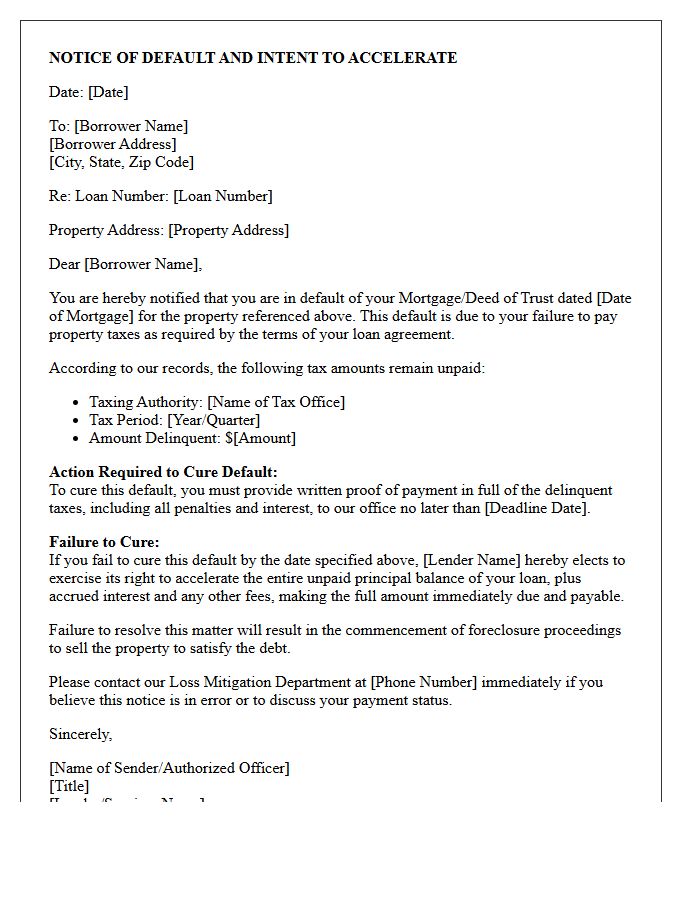
A Mortgage Acceleration Demand for Tax Default Letter is a formal notice from a lender stating that the borrower has breached the loan agreement by failing to pay property taxes. Because unpaid taxes create a priority lien that supersedes the mortgage, lenders issue this demand to protect their collateral. The letter warns that the entire loan balance is now due immediately. To avoid foreclosure, the borrower must quickly provide proof of payment or risk losing the property to a legal sale. Prompt communication and tax redemption are essential to stop the acceleration process.
Notice of Accelerated Mortgage Balance Due Letter
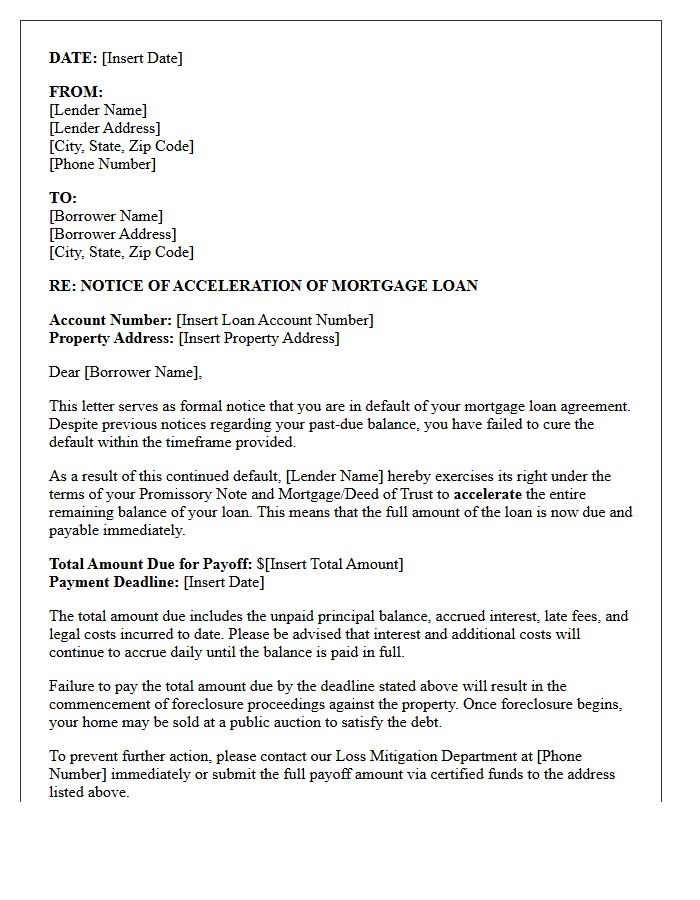
A Notice of Accelerated Mortgage Balance Due is a formal legal warning from your lender indicating you have defaulted on your loan. This document signifies that the full outstanding loan balance is now due immediately, rather than through monthly installments. It usually follows multiple missed payments and serves as the final step before the foreclosure process begins. To prevent losing your home, you must pay the total amount specified or negotiate a loss mitigation plan, such as a loan modification or reinstatement, before the deadline expires.
Property Tax Lien Protection Warning Letter
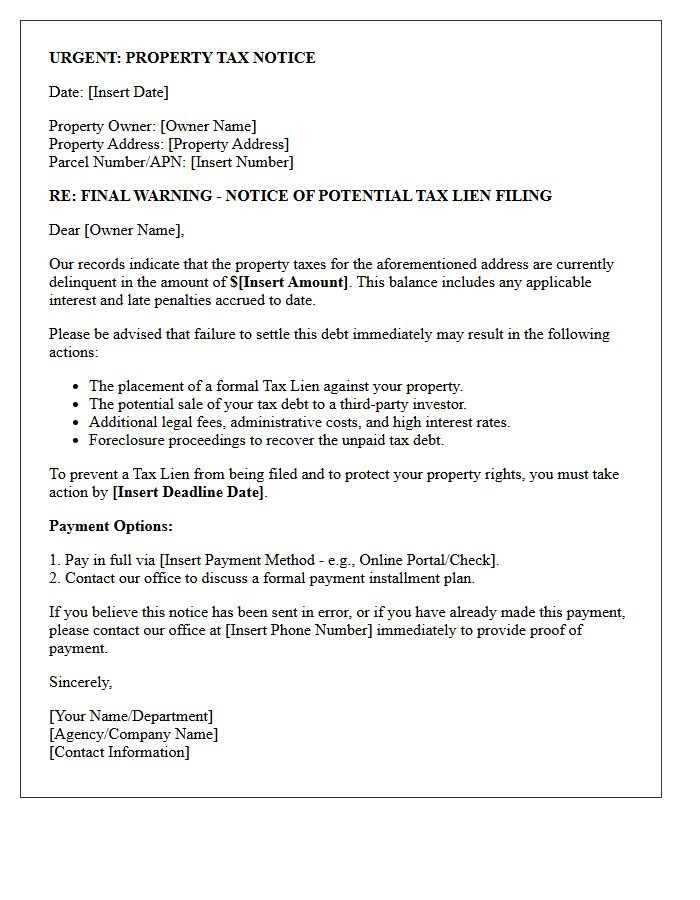
A Property Tax Lien Protection Warning Letter is often a solicitation from private companies rather than an official government notice. These letters typically warn homeowners of potential foreclosure due to unpaid taxes, offering monitoring services for a substantial fee. While they appear urgent, most jurisdictions provide this information for free through the local tax assessor's office. Property owners should verify their tax status directly with official county records before paying for third-party protection services to avoid unnecessary costs or potential scams targeting equity and homeownership security.
Formal Loan Acceleration and Foreclosure Letter
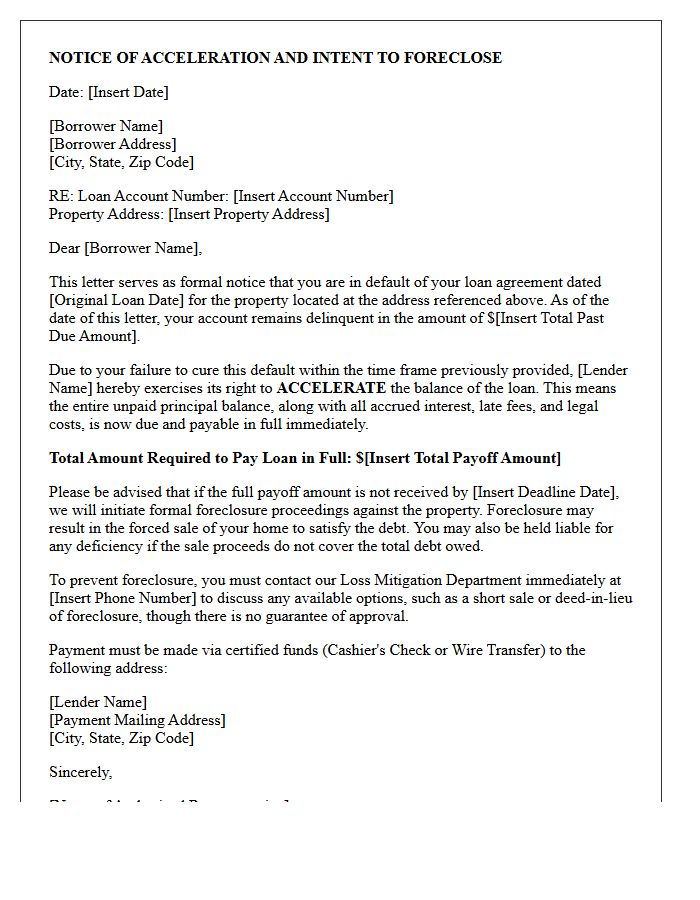
A formal loan acceleration and foreclosure letter is a critical legal notice issued when a borrower defaults on mortgage payments. This document signifies that the lender has invoked the acceleration clause, demanding immediate payment of the entire remaining loan balance. It serves as the final warning before the foreclosure process officially begins. Borrowers must act quickly during this reinstatement period to negotiate a loan modification or repayment plan, as failure to resolve the debt will result in the loss of the property through a public auction or judicial sale.
Reinstatement Demand Following Tax Default Letter
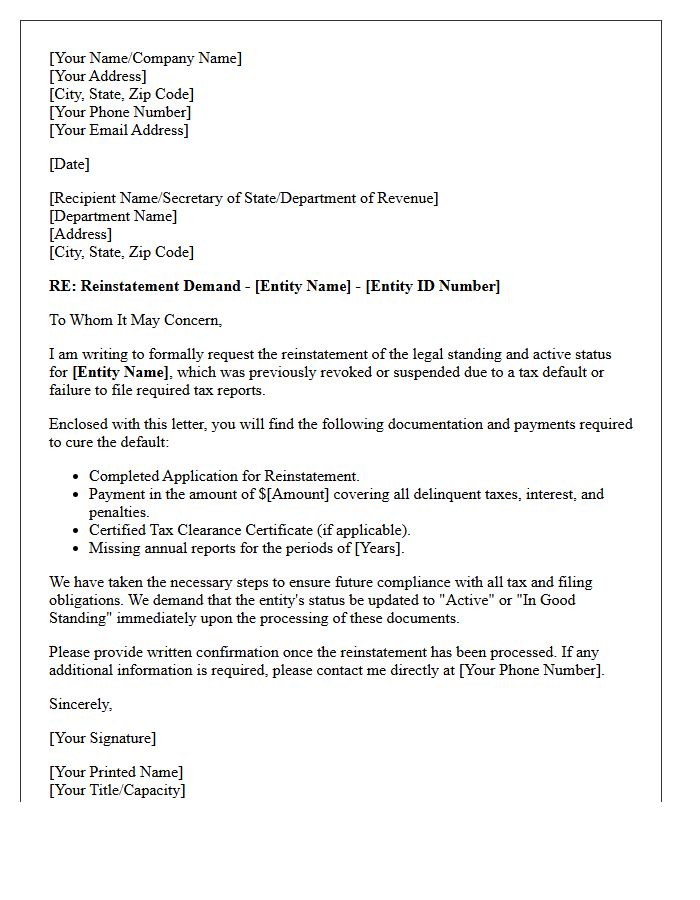
A Reinstatement Demand Following Tax Default Letter is a formal notice issued when a property is at risk of foreclosure due to unpaid property taxes. This document outlines the exact total needed to cancel the default, including back taxes, interest, and legal penalties. To protect your ownership rights, you must pay the full amount by the specified deadline. Failing to comply typically results in a tax sale, where the government auctions the property to recover debts. Always verify the figures with your tax assessor to ensure compliance.
What is a Property Tax Default Acceleration Letter?
A Property Tax Default Acceleration Letter is a formal legal notice sent by a mortgage lender informing the borrower that their loan is in default because property taxes were not paid. The letter warns that the lender is "accelerating" the loan, meaning the entire remaining mortgage balance is now due immediately to prevent foreclosure.
Can a lender foreclose if I fail to pay my property taxes?
Yes. Most mortgage agreements include a "tax covenant" requiring the homeowner to keep property taxes current. If you default on these payments, the lender may pay the taxes on your behalf to protect their lien priority and then initiate foreclosure proceedings through an acceleration notice to recover the debt.
How long do I have to respond to a tax default acceleration notice?
Typically, homeowners are given a "cure period" of 30 days from the date of the letter to pay the delinquent taxes and associated late fees. Failure to resolve the default within this specific window allows the lender to move forward with the legal foreclosure process.
What should I do if I receive a Property Tax Default Acceleration Letter?
You should immediately contact your county tax assessor to verify the amount owed and then notify your mortgage servicer. You must pay the delinquent tax amount in full or negotiate a repayment plan with your lender to stop the acceleration of the loan and avoid a foreclosure sale.
Does paying the delinquent taxes stop the acceleration process?
In most cases, paying the full amount of the delinquent taxes, plus any interest or legal fees incurred by the lender, will "cure" the default and reinstate the original terms of your mortgage. Once the debt is satisfied, the lender will typically rescind the acceleration demand.

Comments