
When applying for a mortgage, a conditional approval often requires a Source of Large Deposits Letter to verify the origin of unexplained funds. This ensures compliance with anti-money laundering regulations and confirms your down payment's legitimacy. Providing clear documentation and a signed explanation helps finalize your loan. To simplify this process, below are some ready to use templates.
Image cover: Mastering Conditional Approval: Source of Large Deposit Letter Samples and Templates
Letter Samples List
- Letter of Explanation for Large Deposits
- Verification of Deposit Letter
- Mortgage Gift Funds Letter
- Employer Bonus Confirmation Letter
- Sale of Asset Verification Letter
- Real Estate Sale Proceeds Letter
- Inheritance Funds Verification Letter
- Wire Transfer Explanation Letter
- Certified Public Accountant Attestation Letter
- Insurance Payout Confirmation Letter
- Divorce Settlement Payout Letter
- Retirement Account Withdrawal Letter
Letter of Explanation for Large Deposits
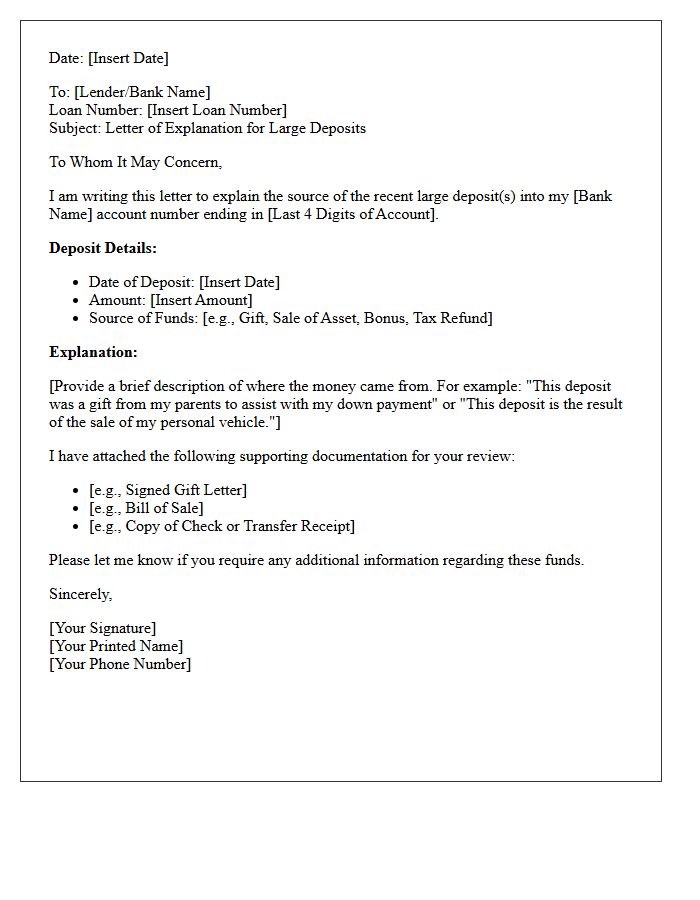
When applying for a mortgage, a Letter of Explanation for Large Deposits is essential to verify your source of funds. Lenders require this document to ensure your down payment comes from legitimate sources and not undisclosed loans. You must clearly state the origin of any deposit exceeding 50% of your monthly qualifying income. Providing supporting documentation, such as bank statements or gift letters, ensures financial transparency and prevents delays. Proving that funds are seasoned or legally gifted is vital for maintaining mortgage eligibility and securing final loan approval.
Verification of Deposit Letter
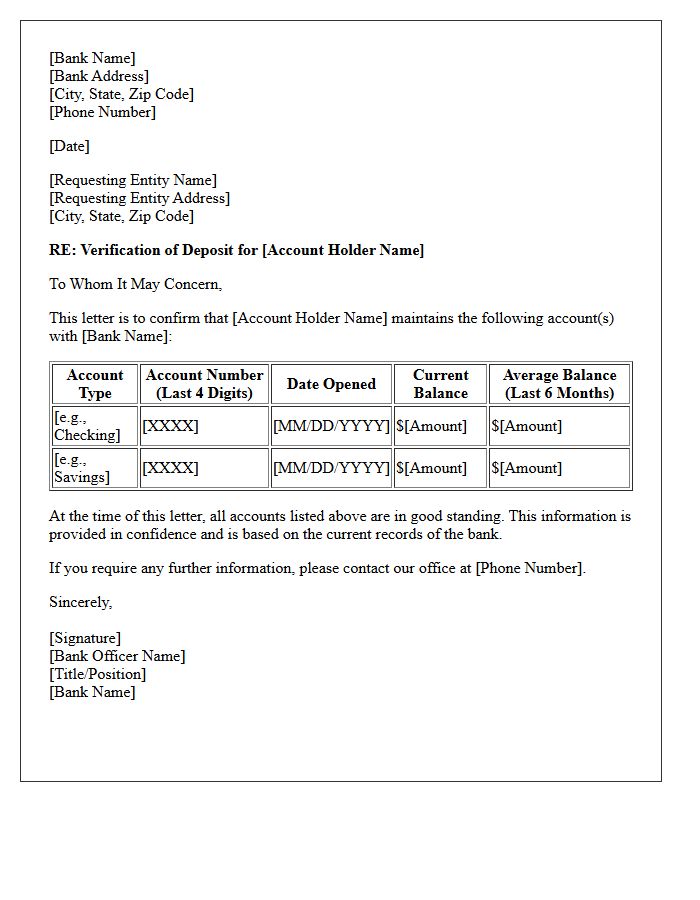
A Verification of Deposit (VOD) letter is an official document issued by a financial institution to confirm a borrower's account balance and history. It serves as financial proof for mortgage lenders to validate that an applicant possesses sufficient liquid assets for a down payment and closing costs. This statement typically includes the current balance, average monthly balance, and account opening date to ensure transparency and prevent fraud. Lenders require this verification to mitigate risk and confirm the source of funds during the underwriting process.
Mortgage Gift Funds Letter
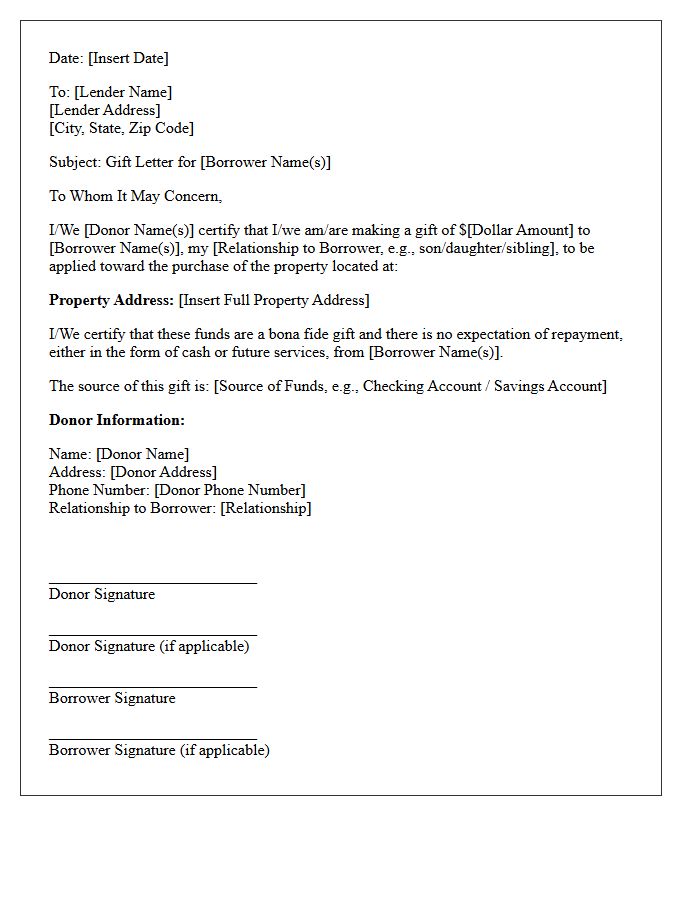
A Mortgage Gift Funds Letter is a formal document required by lenders when a homebuyer uses financial gifts for a down payment. It serves as legal proof that the money is a genuine gift, not a loan that requires repayment. The letter must clearly state the relationship between the donor and recipient, the exact amount transferred, and the source of funds. To ensure approval, both parties must sign it, confirming the donor has no expected interest in the property equity, maintaining the borrower's debt-to-income ratio integrity.
Employer Bonus Confirmation Letter
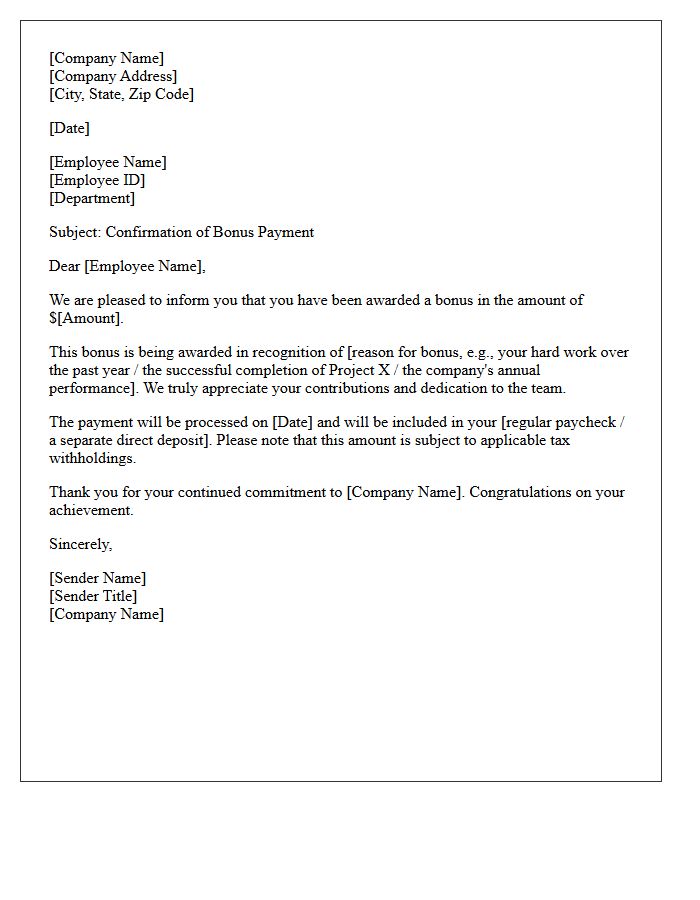
An Employer Bonus Confirmation Letter serves as a formal document verifying a performance-based or discretionary payment. This essential record outlines the gross bonus amount, payment date, and specific tax withholdings applied. It provides professional written proof of income, which is crucial for financial planning, loan applications, or potential audits. Employees should ensure the letter details any eligibility criteria met to earn the reward. Retaining this confirmation helps maintain accurate payroll history and clarifies the terms of total compensation packages within a legal and professional framework.
Sale of Asset Verification Letter
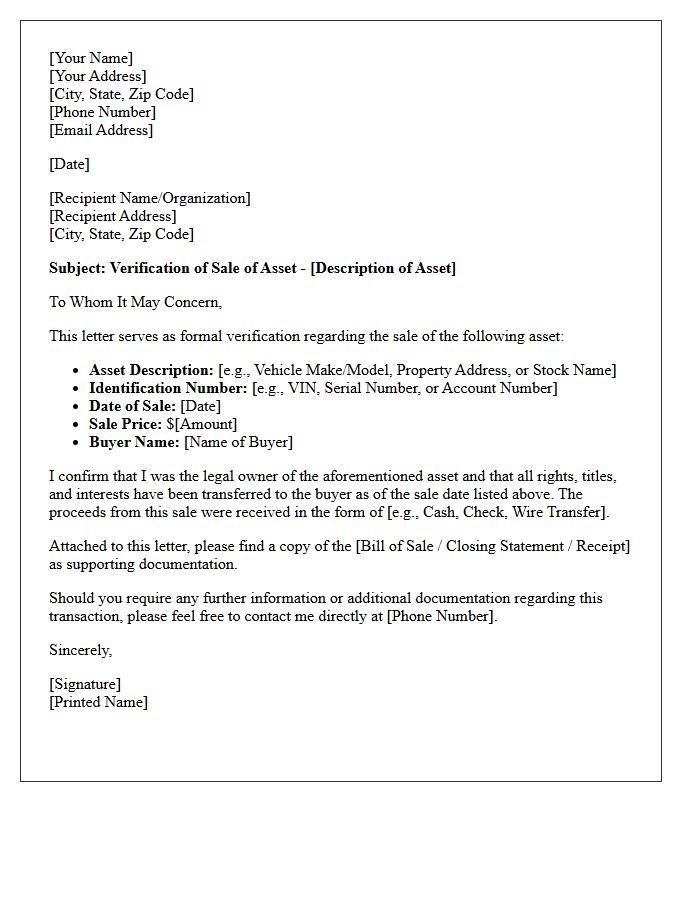
A Sale of Asset Verification Letter provides official proof that a seller has received liquid funds from disposing of property, vehicles, or investments. Lenders require this document during the mortgage process to verify the legitimacy of a down payment. It must clearly state the asset sold, the final sale price, and the date of transaction. Attaching supporting evidence, such as a closing statement or bill of sale, ensures transparency and confirms that the capital originated from a legal, non-debt source before being deposited into your bank account.
Real Estate Sale Proceeds Letter
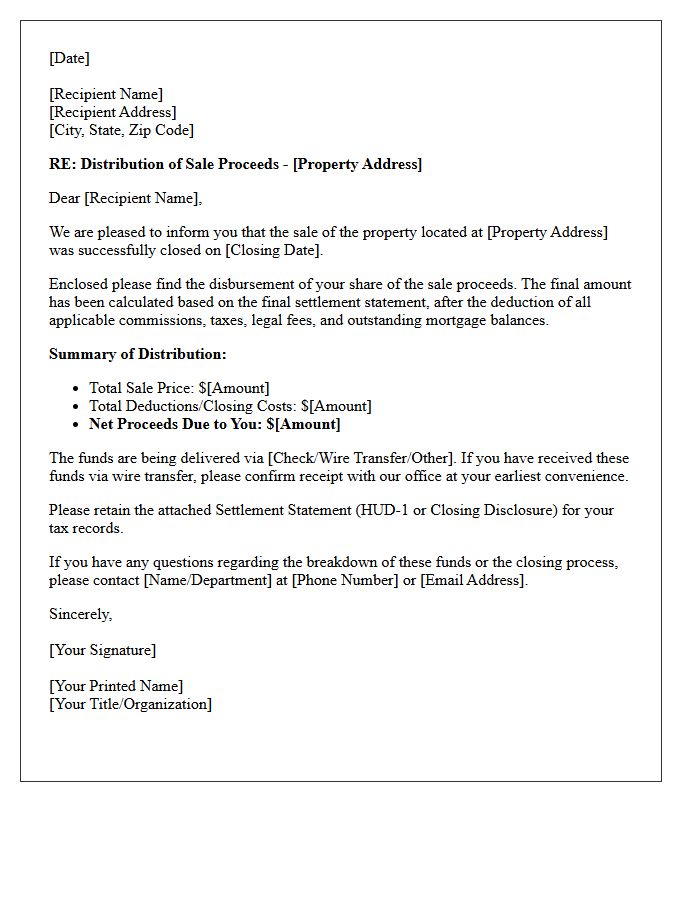
A Real Estate Sale Proceeds Letter is a formal document issued by a closing agent or attorney detailing the final distribution of funds following a property transaction. It serves as a financial reconciliation, outlining the gross sale price minus mortgage payoffs, commissions, and closing costs. This statement is essential for your records to verify the net profit received. Ensure all figures align with your closing disclosure to maintain accurate tax documentation and provide proof of funds for future investments or legal requirements.
Inheritance Funds Verification Letter
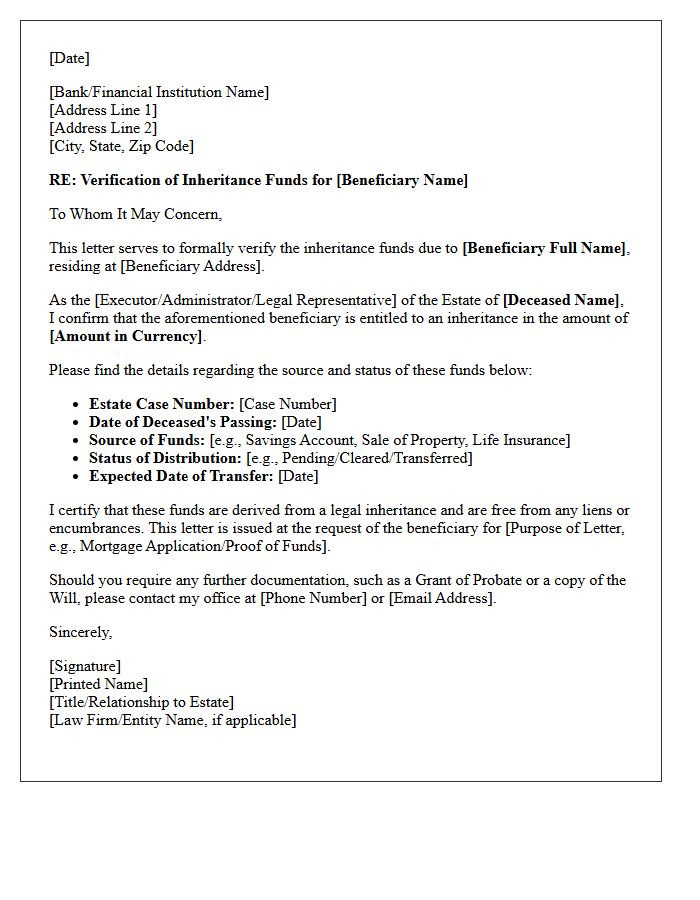
An Inheritance Funds Verification Letter is a formal document issued by a financial institution or legal authority to confirm the legitimacy of inherited wealth. This letter serves as critical proof for banks and regulatory bodies during high-value transactions, ensuring compliance with Anti-Money Laundering (AML) regulations. It verifies that the capital originates from a legal bequest rather than illegal activities. Obtaining this official certification is essential for smooth fund transfers, property purchases, or investment activities, providing the necessary transparency to satisfy global financial scrutiny and due diligence requirements.
Wire Transfer Explanation Letter
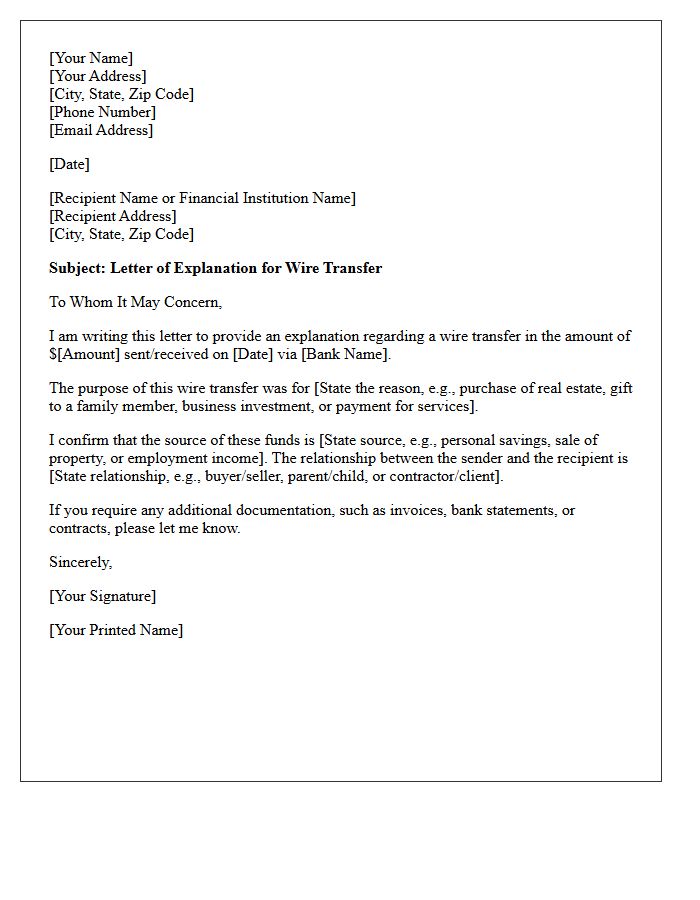
A wire transfer explanation letter is a formal document required by banks to verify the source of funds and the specific purpose of a high-value transaction. It ensures compliance with anti-money laundering (AML) regulations and security protocols. The letter must clearly state the sender's relationship to the recipient and include supporting documentation, such as invoices or gift letters. Providing accurate details helps prevent processing delays or account freezes. This verification process is essential for maintaining financial transparency and legal safety during domestic or international electronic money transfers.
Certified Public Accountant Attestation Letter
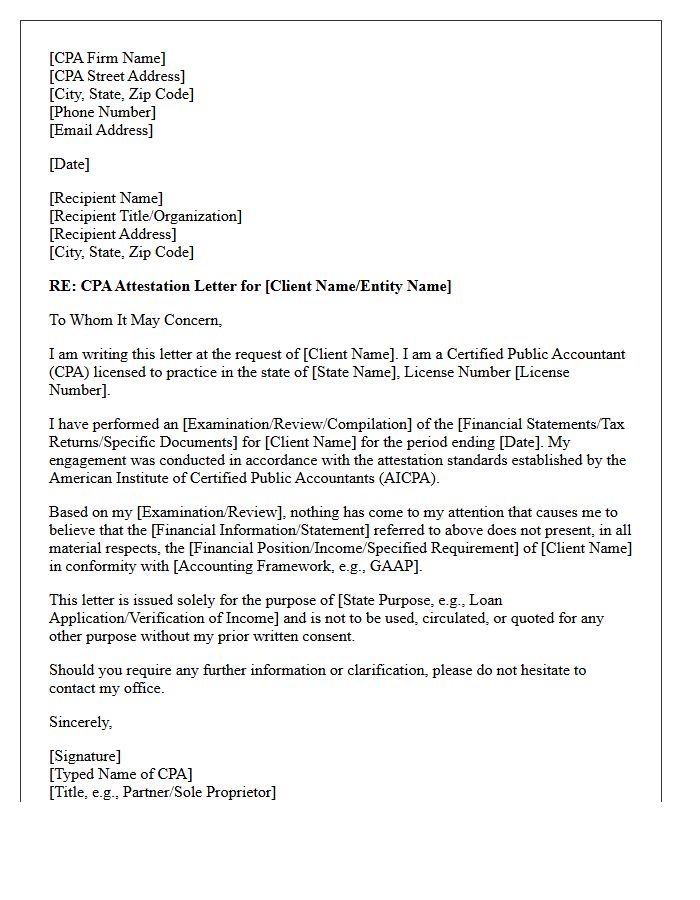
A Certified Public Accountant Attestation Letter is a formal document where a CPA verifies specific financial information or internal controls. It provides third-party assurance to lenders, investors, or regulatory bodies regarding the accuracy of a client's data. These letters are often required for mortgage applications, business loans, or compliance audits. Unlike a standard tax return, an attestation represents a professional independent verification conducted under strict professional standards. It serves as a critical tool for establishing financial credibility and mitigating risk during high-stakes business transactions or legal evaluations.
Insurance Payout Confirmation Letter
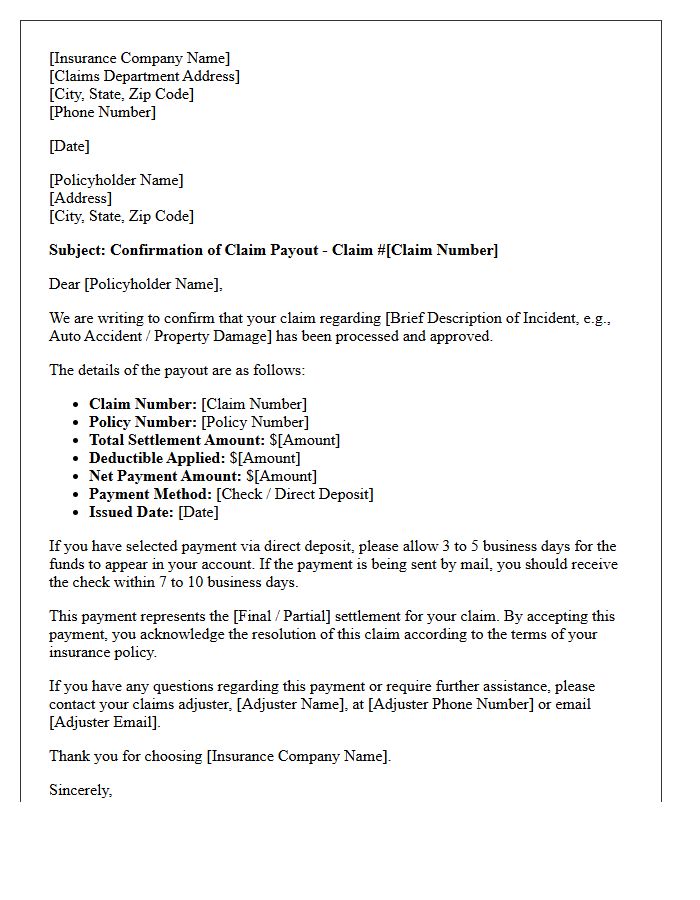
An Insurance Payout Confirmation Letter serves as formal verification that a claim has been approved and funds are being issued. This essential document details the settlement amount, payment method, and any applicable deductions like deductibles. It acts as a legal receipt for your records, ensuring transparency between the insurer and policyholder. Always verify that the beneficiary details are accurate to prevent delays. Retaining this letter is crucial for financial tracking and confirms the final resolution of your insurance claim after an unexpected loss or damage occurs.
Divorce Settlement Payout Letter
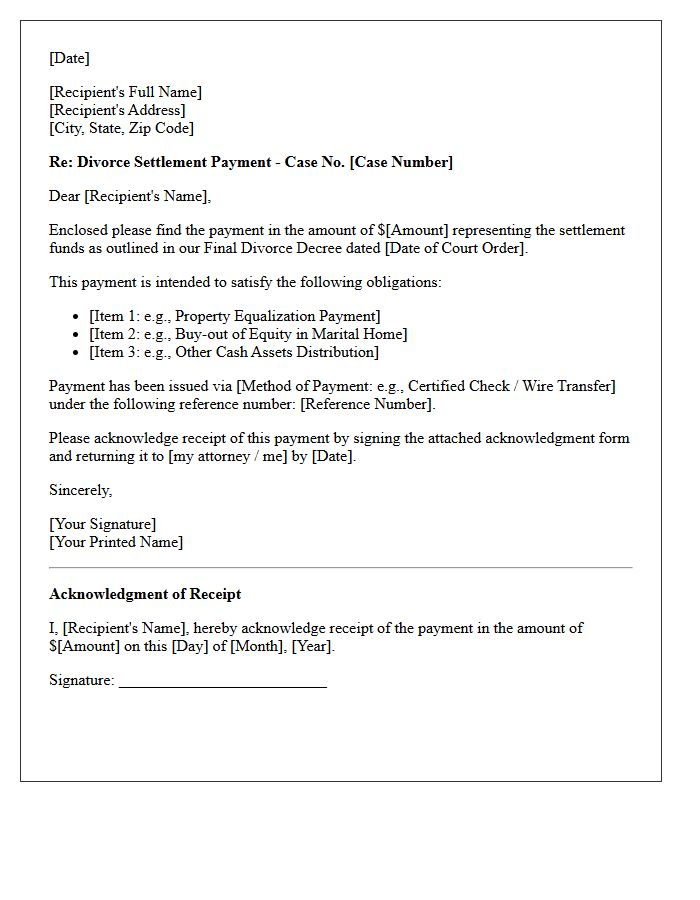
A divorce settlement payout letter is a formal document verifying the transfer of marital assets following a legal separation. It outlines the specific financial obligations, payment timelines, and methods used to distribute funds or property. This record serves as essential proof of compliance with the court-ordered divorce decree. Both parties should retain a copy to prevent future legal disputes, ensure accurate tax reporting, and confirm that all shared debts or equities have been legally resolved according to the final agreement.
Retirement Account Withdrawal Letter
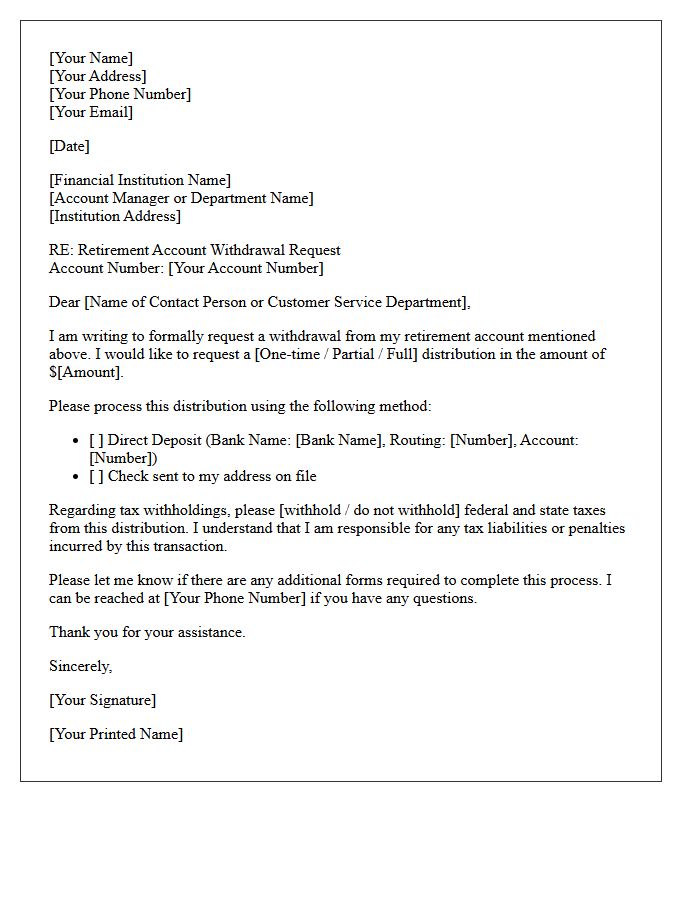
A retirement account withdrawal letter is a formal request used to authorize the distribution of funds from plans like a 401(k) or IRA. The most critical element is specifying the distribution method to ensure accurate processing. You must clearly state your personal details, the exact withdrawal amount, and preferred tax withholding options. Providing precise banking information prevents delays in receiving your capital. Always review your plan's specific requirements to avoid unintended penalties or tax liabilities before submitting your signed document to the financial institution or plan administrator.
What is a conditional approval pending a large deposit letter?
A conditional approval means your mortgage is approved provided you submit documentation explaining and proving the source of any large, non-payroll deposits appearing on your bank statements.
How do I write a source of funds letter for a large deposit?
Your letter should clearly state the specific deposit amount, the date it was credited, and a detailed explanation of where the money came from, such as a gift, sale of an asset, or a tax refund.
What documentation is required to verify a large deposit for a mortgage?
Lenders typically require a signed letter of explanation accompanied by "paper trail" evidence, such as a bill of sale, a gift letter, investment liquidation receipts, or copies of cleared checks.
What amount is considered a "large deposit" by mortgage underwriters?
Under Fannie Mae and Freddie Mac guidelines, a large deposit is generally defined as any single deposit that exceeds 50% of the total monthly qualifying income for the loan application.
Can a mortgage be denied due to an unexplained large deposit?
Yes, if a borrower cannot prove the funds came from an acceptable and legal source, the lender may exclude those funds from your assets, which could lead to a loan denial if you no longer meet down payment or reserve requirements.

Comments