
A Rate Lock Fee Invoice and Disclosure Letter is a critical document that outlines the costs and terms associated with securing a specific mortgage interest rate. It ensures transparency between lenders and borrowers regarding expiration dates and non-refundable charges. Properly documenting these fees protects both parties during the home financing process. To simplify your documentation, below are some ready to use template.
Image cover: Rate Lock Fee Disclosures: Professional Templates and Invoice Samples
Letter Samples List
- Initial Rate Lock Fee Invoice Letter
- Mortgage Rate Lock Confirmation Letter
- Interest Rate Extension Fee Invoice Letter
- Float Down Option Disclosure Letter
- Rate Lock Expiration Warning Letter
- Lock-In Agreement Fee Disclosure Letter
- Loan Estimate Rate Lock Cover Letter
- Rate Lock Cancellation Refund Letter
- Revised Rate Lock Terms Disclosure Letter
- Rate Lock Re-Pricing Notification Letter
- Borrower Requested Rate Lock Change Letter
- Rate Lock Fee Collection Authorization Letter
Initial Rate Lock Fee Invoice Letter
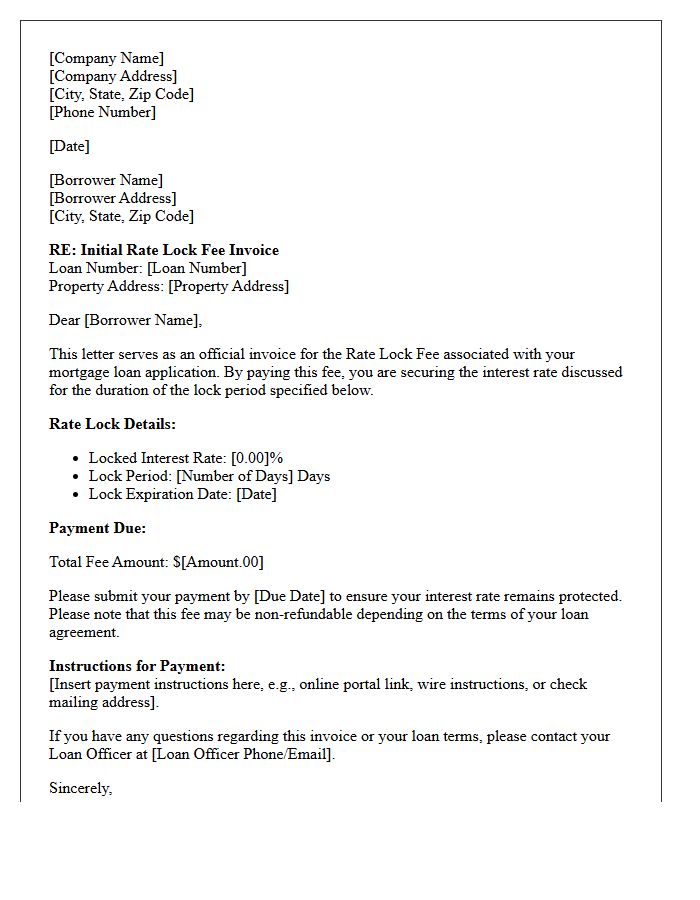
The Initial Rate Lock Fee Invoice Letter is a critical document notifying borrowers of the required payment to secure a specific interest rate for their mortgage. This letter outlines the exact amount due, payment deadlines, and the lock expiration date. Promptly addressing this invoice ensures financial protection against market fluctuations during the loan processing period. Reviewing the terms carefully is essential, as the fee is often non-refundable if the loan fails to close, making it a vital commitment in the home financing journey.
Mortgage Rate Lock Confirmation Letter
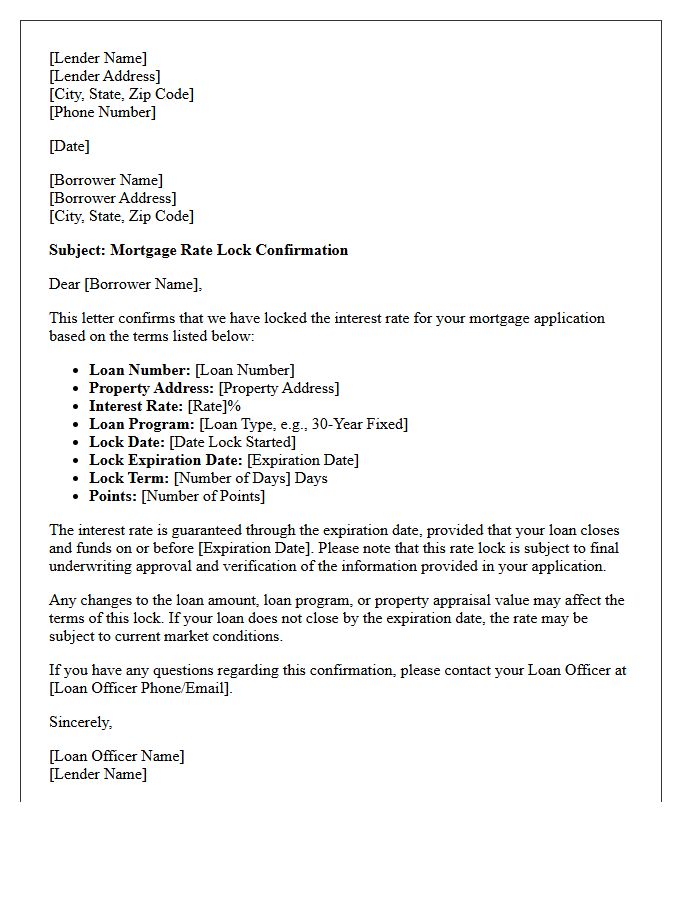
A Mortgage Rate Lock Confirmation Letter is a vital document issued by your lender that legally guarantees a specific interest rate for a set period. This agreement protects you from market fluctuations while your loan is processed. It is essential to verify the expiration date, the locked rate, and any associated fees listed. If your loan does not close before the lock expires, your rate could increase. Always review this letter carefully to ensure your financial terms remain secure throughout the home-buying journey.
Interest Rate Extension Fee Invoice Letter
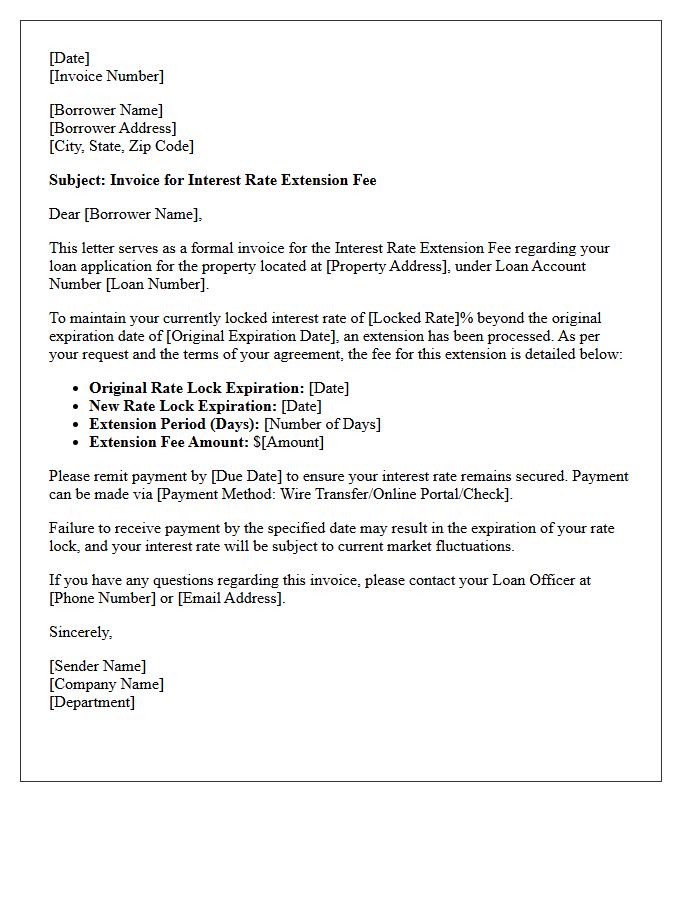
An Interest Rate Extension Fee Invoice Letter notifies a borrower that their rate lock period has expired. To maintain the current favorable interest rate, the lender requires a non-refundable payment. This formal document outlines the specific cost, the new expiration date, and the deadline for payment. It is crucial to settle this invoice promptly to avoid financial fluctuations caused by rising market rates. Failure to pay may result in the loan transitioning to current market pricing, potentially increasing long-term borrowing costs and monthly mortgage obligations.
Float Down Option Disclosure Letter
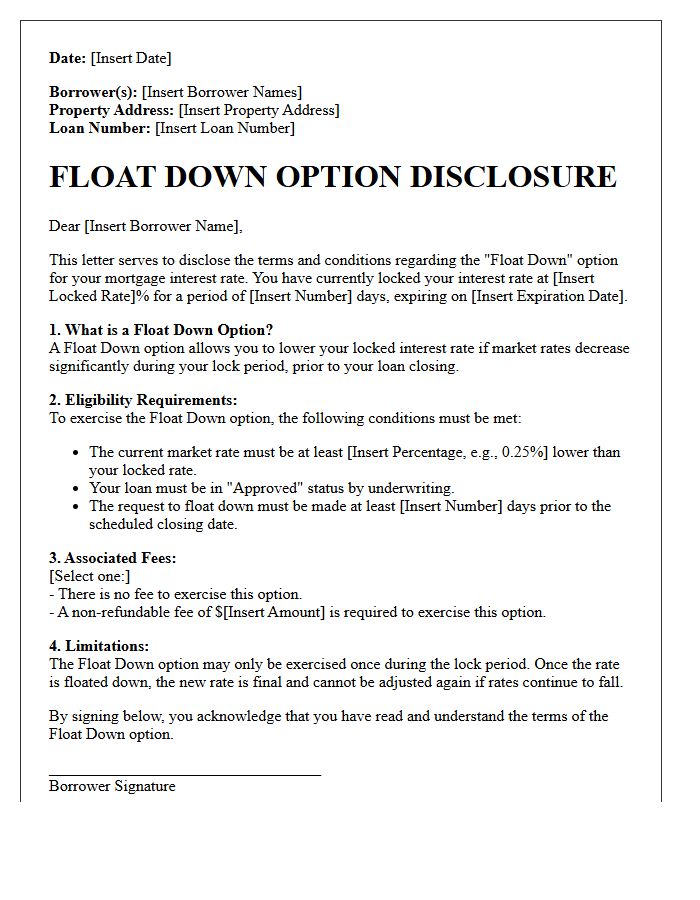
A Float Down Option Disclosure Letter is a formal document allowing borrowers to lock in a lower mortgage interest rate if market conditions improve before closing. This optional feature typically requires an upfront fee or a specific rate drop threshold to exercise. It provides financial protection by securing a ceiling while maintaining the flexibility to benefit from market decreases. Borrowers must carefully review the expiration dates and associated costs outlined in the letter to ensure the option remains valid during the home-buying process.
Rate Lock Expiration Warning Letter
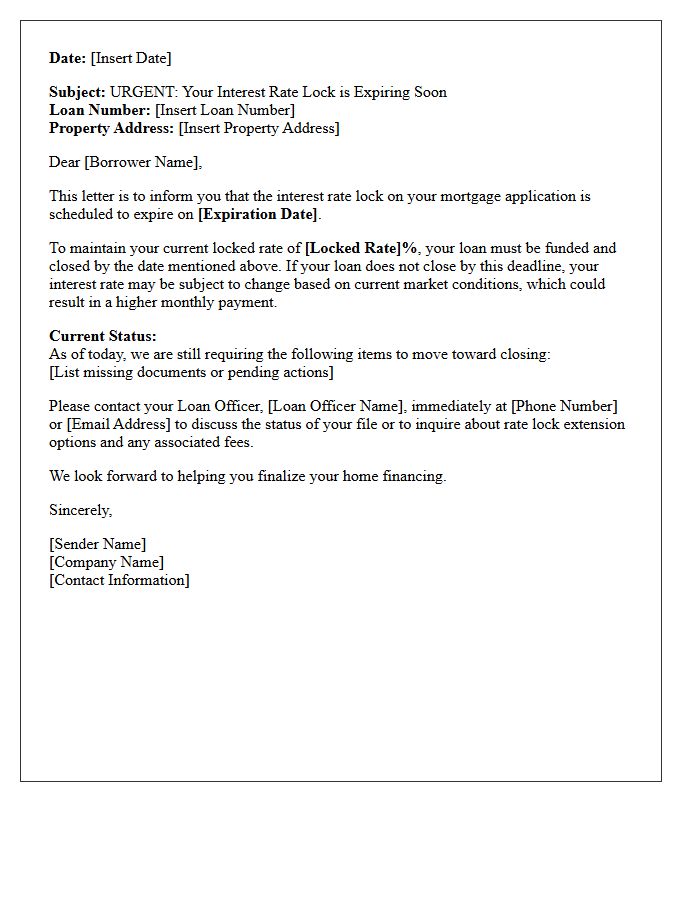
A Rate Lock Expiration Warning Letter is a critical notification from your lender indicating that your guaranteed interest rate is about to expire. If you do not close your mortgage before the deadline, you may face higher monthly payments or expensive extension fees. To protect your financial terms, maintain frequent communication with your loan officer and ensure all underwriting requirements are met promptly. Ignoring this alert can result in losing a favorable rate, especially in a volatile market where current interests may have increased significantly since your initial lock date.
Lock-In Agreement Fee Disclosure Letter
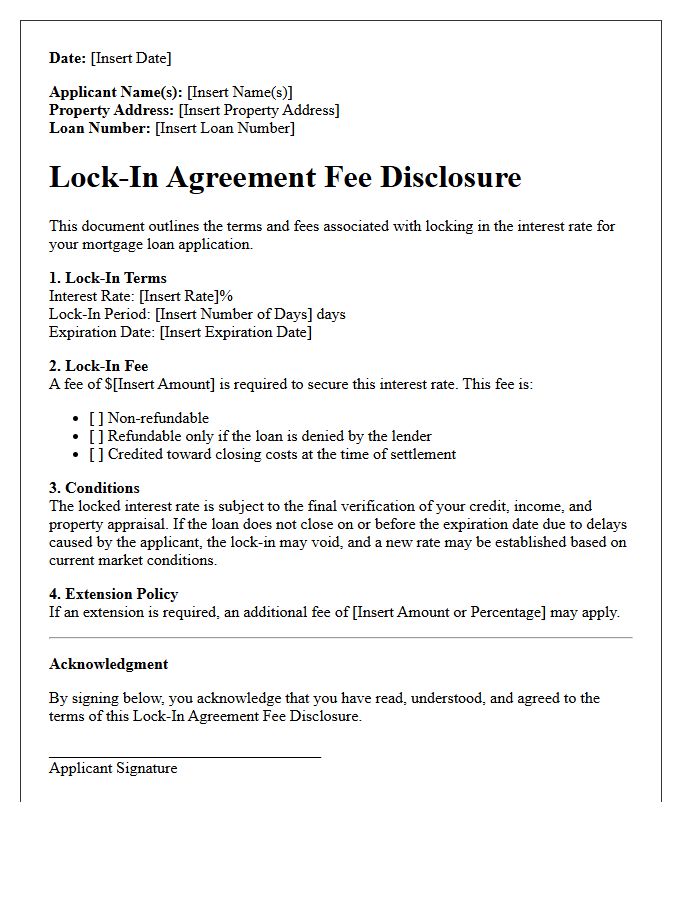
A Lock-In Agreement Fee Disclosure Letter is a critical document provided by mortgage lenders to confirm a specific interest rate for a set duration. It must clearly outline the lock-in fee, the expiration date, and any conditions that could void the guarantee. This transparency ensures borrowers understand their financial commitment and protects them from market fluctuations during the loan processing period. Reviewing this disclosure is essential to verify that all loan terms align with your initial agreement before moving forward with the mortgage application.
Loan Estimate Rate Lock Cover Letter
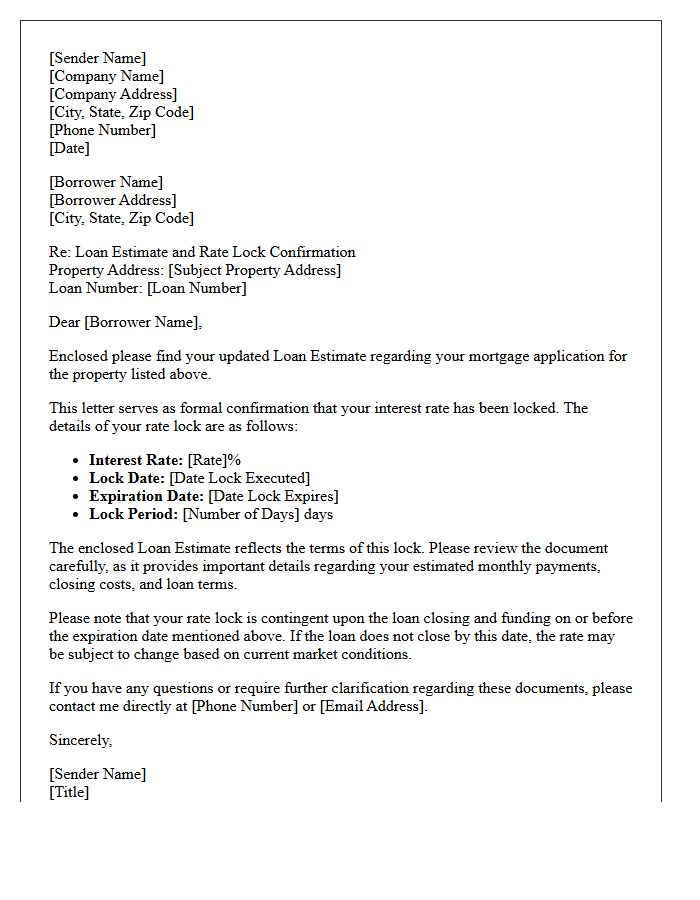
A Loan Estimate Rate Lock Cover Letter is a vital document confirming your interest rate is secured for a specific period. This letter provides formal written verification that your rate will not change before closing, protecting you from market fluctuations. It acts as an essential supplement to the official Loan Estimate, detailing the lock-in expiration date and any associated fees. Reviewing this document ensures your monthly payments remain predictable, offering financial certainty throughout the mortgage application process until your loan successfully funds.
Rate Lock Cancellation Refund Letter
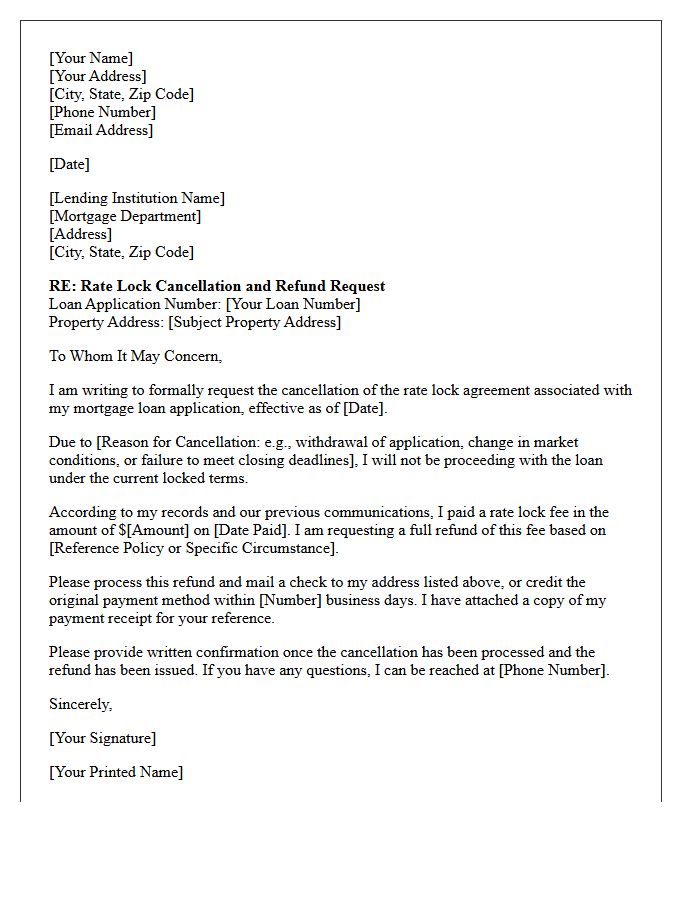
A Rate Lock Cancellation Refund Letter is a formal request sent to a lender to recoup lock-in fees after a mortgage application is withdrawn. To ensure a successful claim, you must clearly state your loan application number and the specific reason for cancellation. Refund eligibility often depends on your loan agreement terms and state regulations. Timely submission is crucial, as many lenders have strict deadlines. Always include supporting documentation to prove you met the necessary conditions for a reimbursement of your deposit.
Revised Rate Lock Terms Disclosure Letter
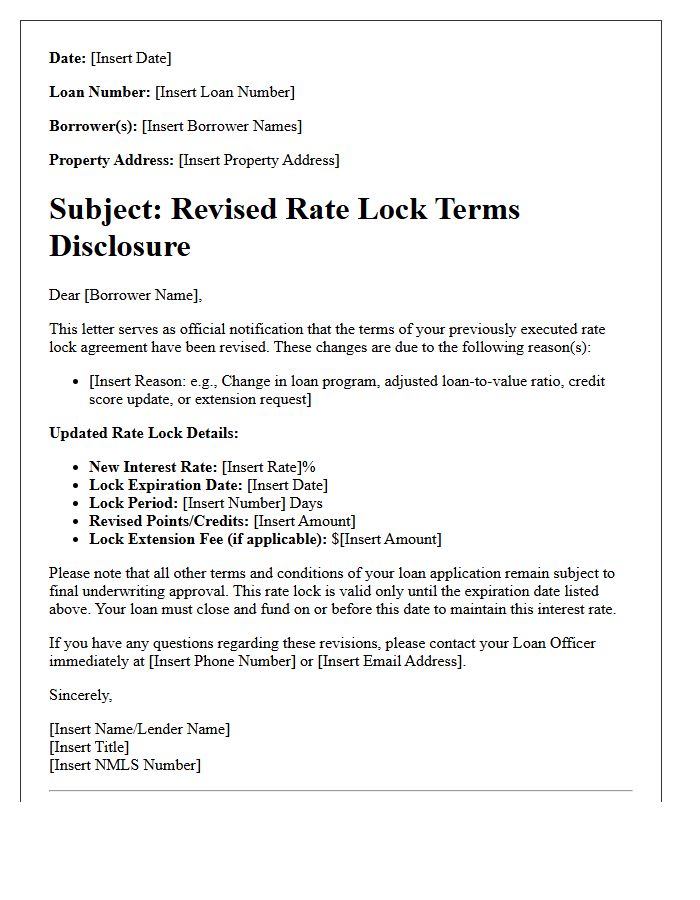
A Revised Rate Lock Terms Disclosure Letter is a formal document issued when your interest rate agreement changes due to specific valid changed circumstances. It provides updated details on your locked rate, expiration date, and associated loan costs. This letter ensures transparency, confirming that the lender is honoring the newly adjusted terms. Borrowers must review this document carefully to verify that the locked period covers their anticipated closing date, protecting them from market fluctuations before the loan is finalized.
Rate Lock Re-Pricing Notification Letter
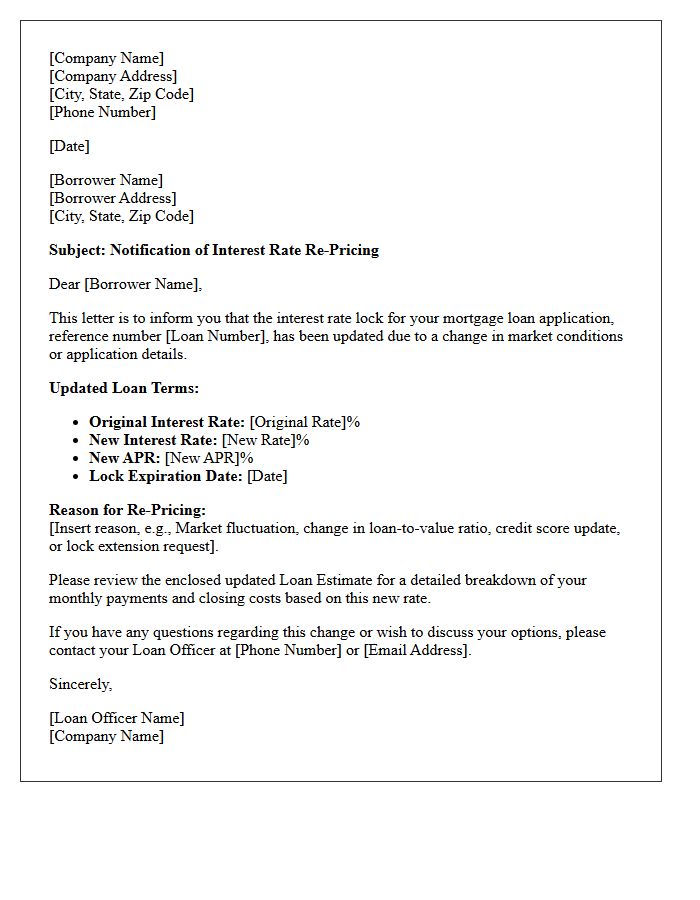
A Rate Lock Re-Pricing Notification Letter is a formal document issued by lenders when a mortgage interest rate changes after an initial lock. This typically occurs due to material changes in your loan application, such as a shift in credit score, property value, or loan-to-value ratio. The letter details the new adjusted rate and any associated costs. It is crucial to review this document immediately to understand how these pricing adjustments impact your monthly payments and overall loan affordability before closing your real estate transaction.
Borrower Requested Rate Lock Change Letter
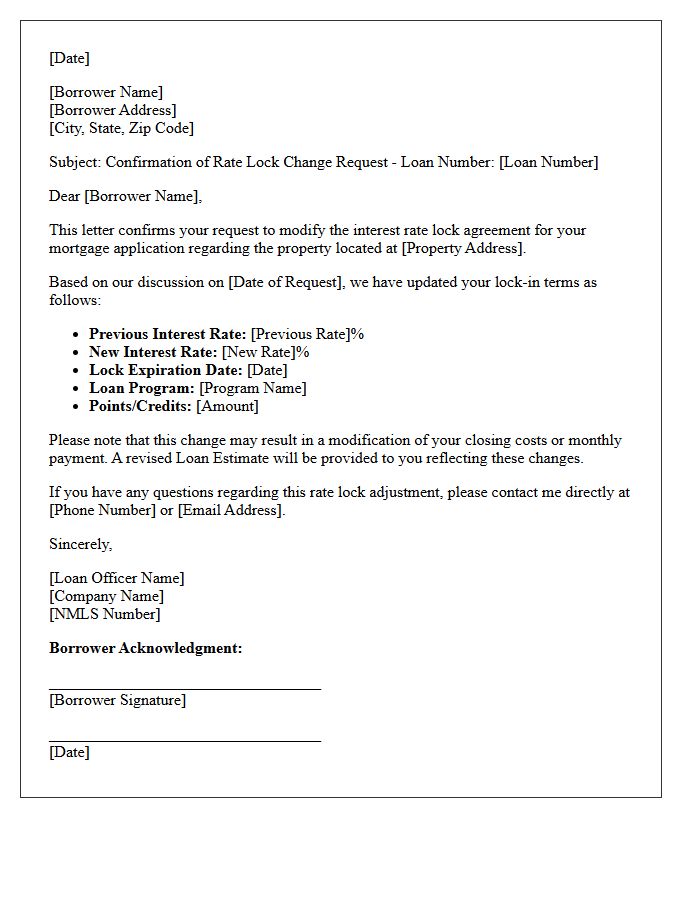
A Borrower Requested Rate Lock Change Letter is a formal document initiated by the applicant to modify the terms of an existing interest rate lock agreement. This request typically occurs when market conditions shift or loan programs change. It is crucial to understand that modifying a lock may incur additional fees or impact the closing timeline. Lenders require this written confirmation to ensure transparency and legal compliance before updating the loan commitment. Always review how these changes affect your monthly payments and total financing costs before signing.
Rate Lock Fee Collection Authorization Letter
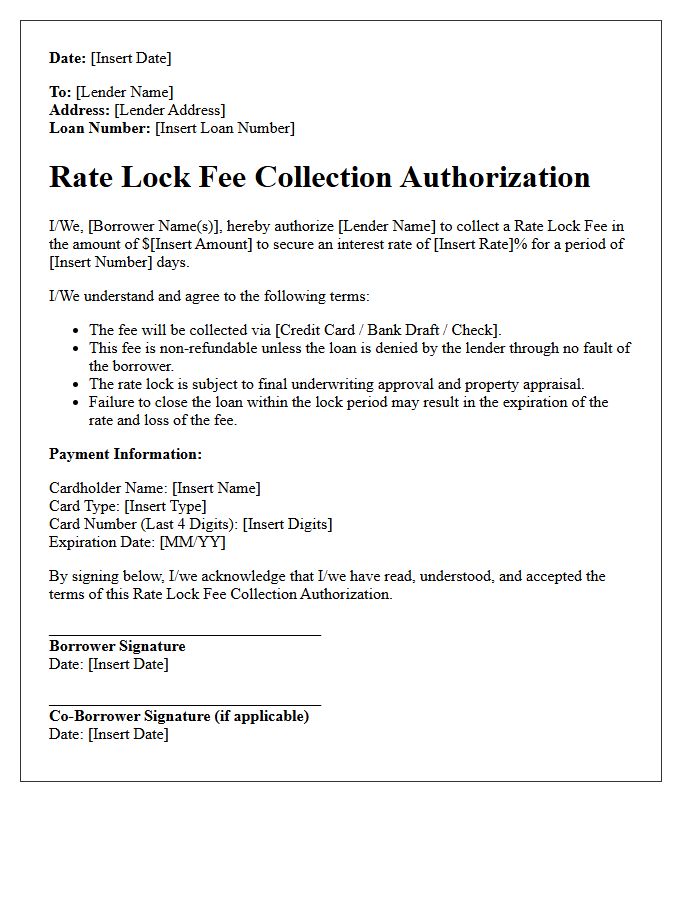
A Rate Lock Fee Collection Authorization Letter is a formal document where a borrower grants a lender permission to charge a specific fee to secure a guaranteed interest rate for a set period. This protects the applicant from market fluctuations during the loan processing phase. It is essential to understand that this fee is often non-refundable if the loan fails to close due to the borrower's actions. By signing, you acknowledge the financial commitment required to freeze your mortgage terms against potential economic volatility.
What is a Rate Lock Fee Invoice and Disclosure Letter?
A Rate Lock Fee Invoice and Disclosure Letter is a formal document provided by a mortgage lender that outlines the specific cost to guarantee a particular interest rate for a set period. It serves as both a bill for the commitment fee and a legal disclosure explaining the terms, expiration date, and conditions under which the rate lock remains valid.
Is the rate lock fee refundable if my loan does not close?
Generally, rate lock fees are non-refundable once paid, as they compensate the lender for hedging the interest rate on your behalf. However, refundability depends on the specific terms outlined in your Disclosure Letter; some lenders may offer a partial refund if the loan is denied due to appraisal issues, while others maintain a strict no-refund policy.
What information is included in the Rate Lock Disclosure Letter?
The letter includes the locked interest rate, the "lock-in" period (typically 30, 45, or 60 days), the expiration date, the total fee amount, and the loan program details. It also specifies whether the lock includes "float-down" provisions, which would allow you to lower your rate if market interest rates drop before closing.
How do I pay the Rate Lock Fee Invoice?
Most lenders require payment of the invoice via credit card, wire transfer, or certified check immediately upon locking the rate. The invoice will provide specific payment instructions and a deadline; failure to pay the invoice within the required timeframe may result in the rate lock being voided and the rate reverting to current market pricing.
What happens if my rate lock expires before my closing date?
If the lock expires before closing, you may be subject to current market rates, which could be higher than your original locked rate. Most lenders offer a "Rate Lock Extension" for an additional fee, which will be detailed in a revised Disclosure Letter or an addendum to your original invoice.

Comments