
A Verification of Assets letter is a formal document used by lenders to confirm a borrower's liquid holdings and financial stability. It provides official proof that you possess the necessary funds for down payments or closing costs during a real estate transaction. Ensuring accuracy in this document speeds up mortgage approval. To assist your process, below are some ready to use template.
Image cover: Asset Verification Letter: Professional Samples and Templates
Letter Samples List
- Bank Depository Asset Verification Letter
- Retirement Account Asset Verification Letter
- Investment Portfolio Asset Verification Letter
- Gift Fund Asset Verification Letter
- Business Asset Verification Letter
- Earnest Money Deposit Verification Letter
- Trust Account Asset Verification Letter
- Certificate Of Deposit Verification Letter
- Life Insurance Cash Value Verification Letter
- Real Estate Equity Verification Letter
- Mutual Fund Asset Verification Letter
- Down Payment Sourcing Verification Letter
Bank Depository Asset Verification Letter
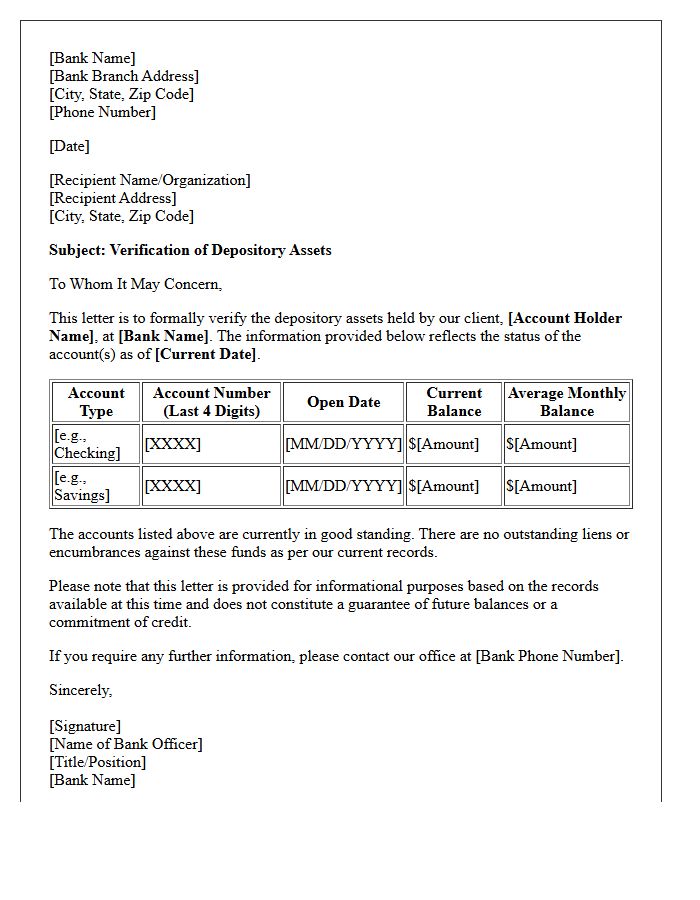
A Bank Depository Asset Verification Letter is an official document issued by a financial institution to confirm an applicant's account balances and history. It serves as essential proof for mortgage lenders or landlords that you possess sufficient liquid funds to cover obligations. The letter typically details the account type, open date, and average balance over a specific period. Providing this verified statement ensures transparency and security during high-stakes financial transactions, confirming that your reported liquid assets are accurate and readily available for the intended investment or agreement.
Retirement Account Asset Verification Letter
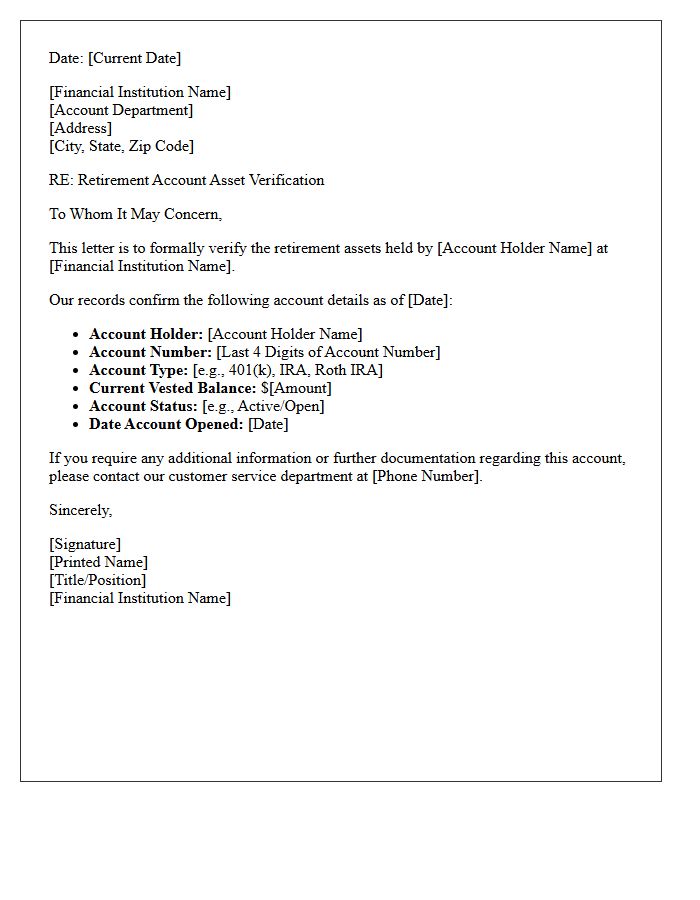
A Retirement Account Asset Verification Letter is an official document issued by a financial institution to confirm your current account balance and total holdings. Lenders often require this statement during the mortgage approval process to verify your liquidity and long-term financial stability. It provides formal proof of assets held in 401(k), IRA, or pension plans. Ensuring this letter is dated recently is essential for meeting strict underwriting requirements and demonstrating that you possess the necessary funds for a down payment or required cash reserves.
Investment Portfolio Asset Verification Letter
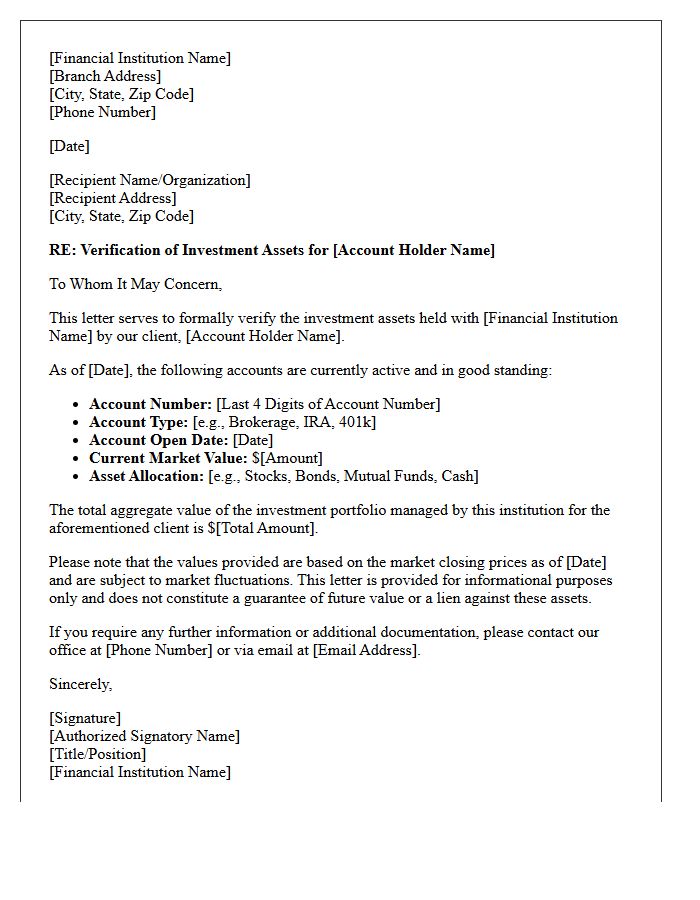
An Investment Portfolio Asset Verification Letter is an official document issued by a financial institution to confirm a client's current holdings and net worth. Lenders and government agencies use this record to validate liquid assets, ensuring the investor has sufficient collateral or capital for loans and visas. It serves as credible proof of wealth by detailing specific account balances and security types. Obtaining a formal letter provides financial transparency and accelerates the underwriting process by verifying that reported funds are readily available and legally documented.
Gift Fund Asset Verification Letter
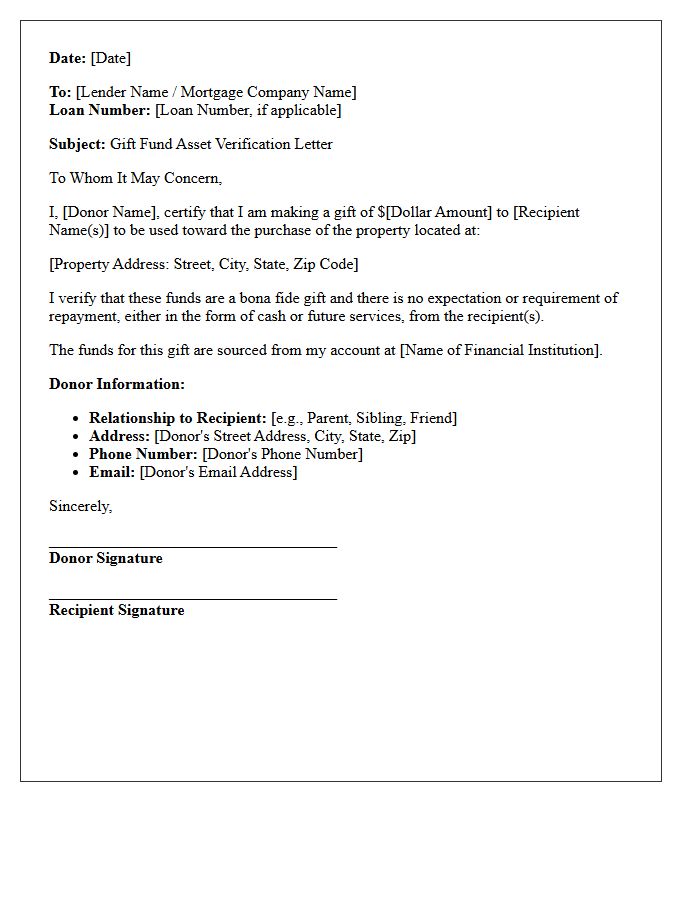
A Gift Fund Asset Verification Letter is a formal document required by mortgage lenders to confirm that a financial gift is not a loan. It serves as legal proof that the donor does not expect repayment, ensuring the homebuyer's debt-to-income ratio remains stable. The letter must include the donor's contact information, the specific gift amount, and a clear statement of the relationship. Providing this verification is essential for verifying asset transparency and securing final loan approval during the mortgage underwriting process.
Business Asset Verification Letter
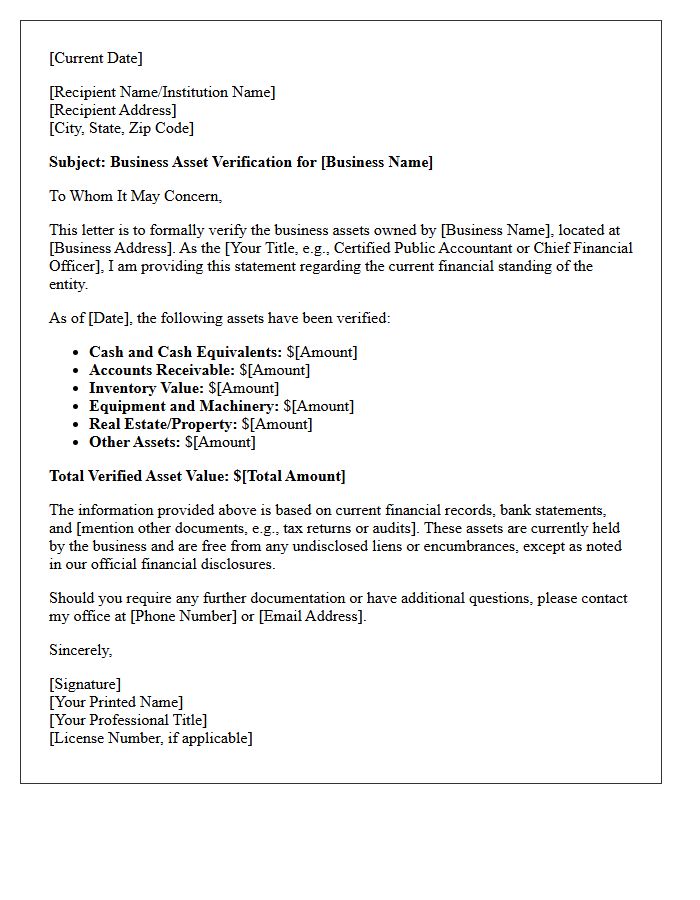
A Business Asset Verification Letter is a formal document used to confirm the liquidity and ownership of company resources. Typically requested by lenders or investors, it validates that a business possesses the collateral or capital necessary to secure financing. This letter must accurately detail account balances, equipment values, and investment holdings. Often prepared by a CPA or financial institution, it serves as third-party verification of a company's financial solvency and operational stability, ensuring transparency during due diligence or high-stakes commercial transactions.
Earnest Money Deposit Verification Letter
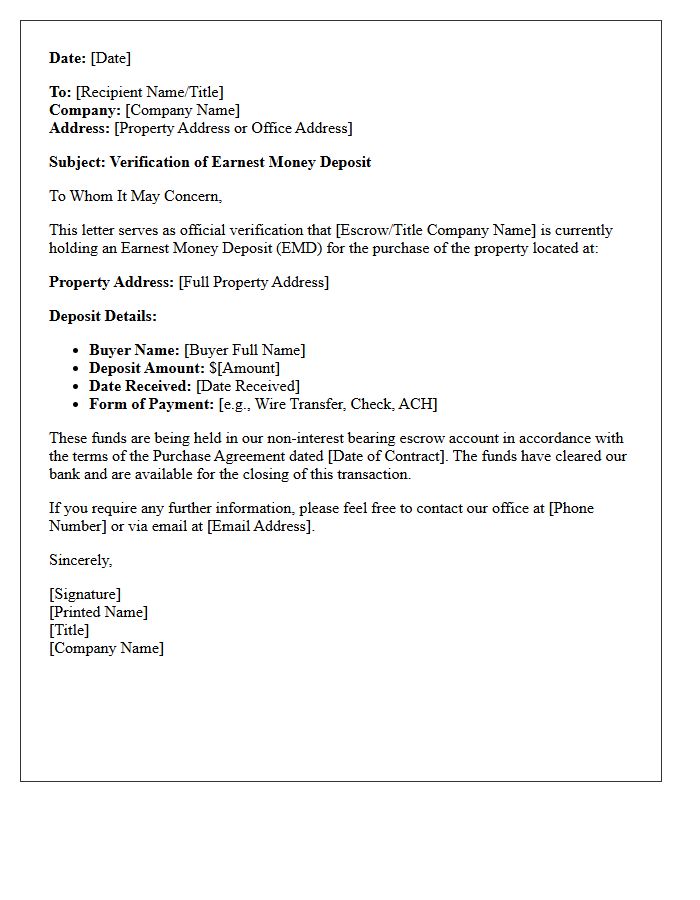
An Earnest Money Deposit Verification Letter serves as official proof that a homebuyer has successfully deposited their "good faith" funds into an escrow account. This document confirms the availability of liquid assets to the seller, demonstrating the buyer's financial commitment to the transaction. Lenders require this letter during underwriting to verify the source of funds and ensure compliance with mortgage guidelines. It validates that the deposit has cleared, protecting the interests of all parties by certifying that the initial contractual financial obligation has been met in full.
Trust Account Asset Verification Letter
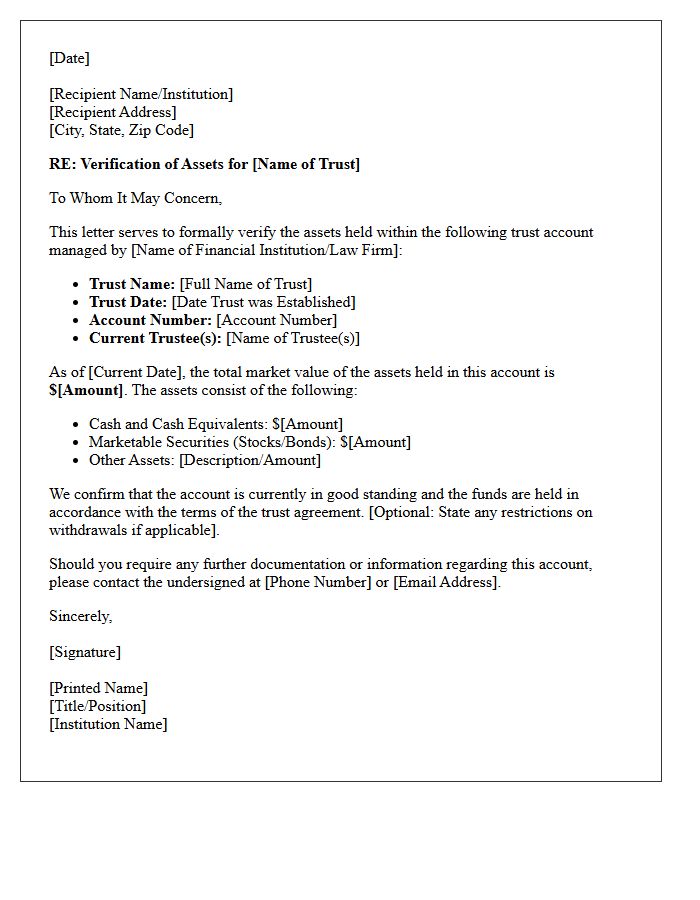
A Trust Account Asset Verification Letter is a formal document issued by a financial institution to confirm the existence and liquidity of funds held within a trust. It serves as essential proof of solvency during high-value transactions, such as real estate purchases or legal settlements. The letter verifies the account holder's identity, current balance, and any restrictions on the assets. Providing this official certification ensures transparency and builds credibility with lenders or third parties by validating that sufficient capital is available to fulfill specific financial obligations or contractual requirements.
Certificate Of Deposit Verification Letter
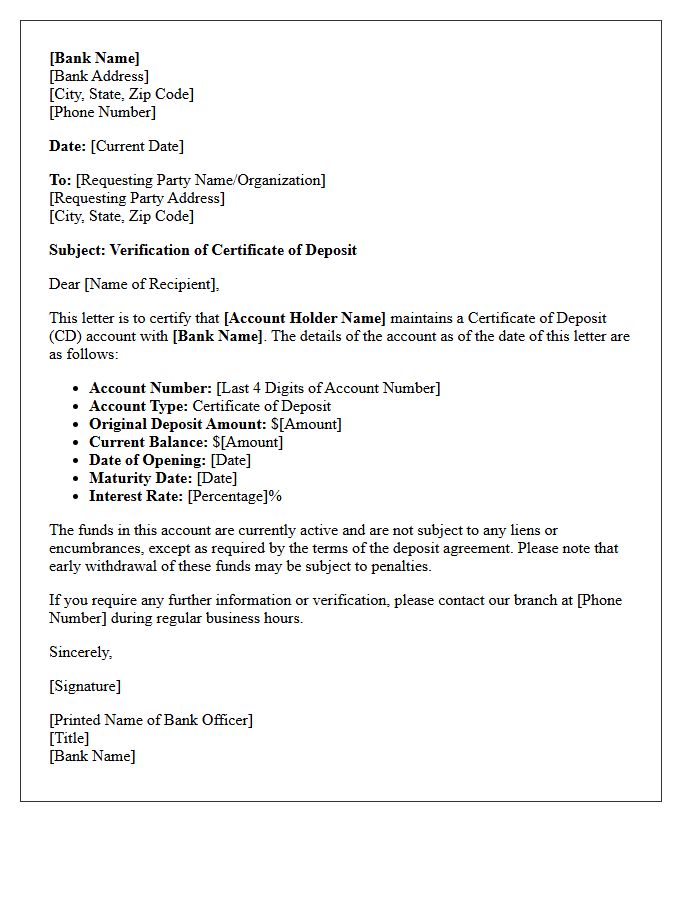
A Certificate of Deposit Verification Letter serves as official documentation from a financial institution confirming the existence and details of a CD account. This letter typically verifies the account holder's name, current balance, interest rate, and maturity date. It is an essential document for asset verification during mortgage applications, legal proceedings, or audit requests. Ensuring the letter is printed on bank letterhead and signed by an authorized representative is crucial for its validity and acceptance by third-party organizations requiring proof of liquid funds.
Life Insurance Cash Value Verification Letter
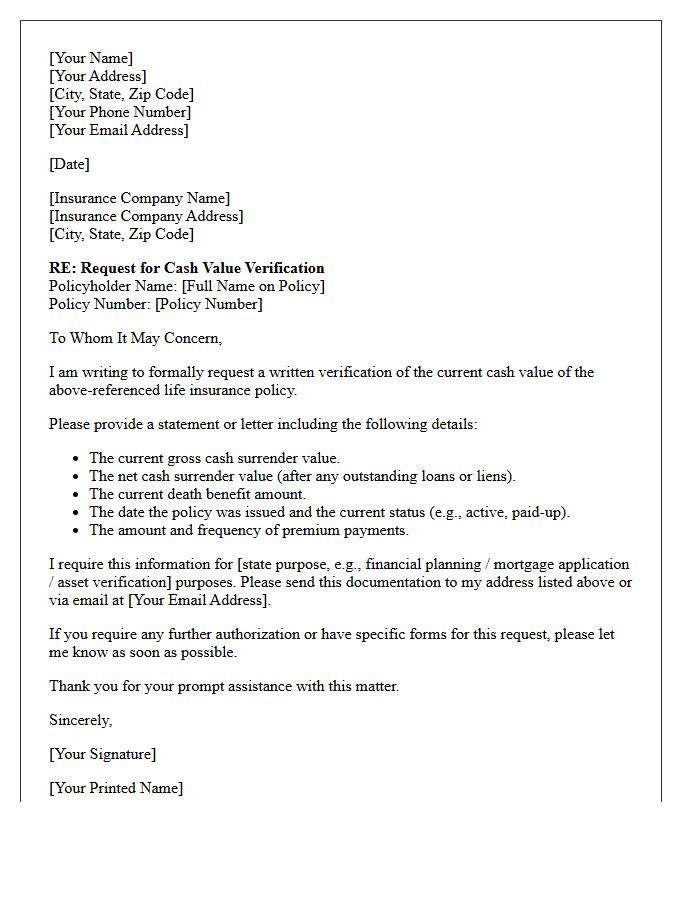
A Life Insurance Cash Value Verification Letter is an official document from an insurer confirming the current equity within a permanent policy. This statement is essential for financial transparency during mortgage applications, divorce settlements, or Medicaid eligibility audits. It provides a certified snapshot of the surrender value and any outstanding policy loans. To ensure accuracy, the letter must include the policy number, owner's name, and the specific net cash amount available. Obtaining this verification is a critical step in documenting liquid assets for comprehensive personal or legal financial planning.
Real Estate Equity Verification Letter
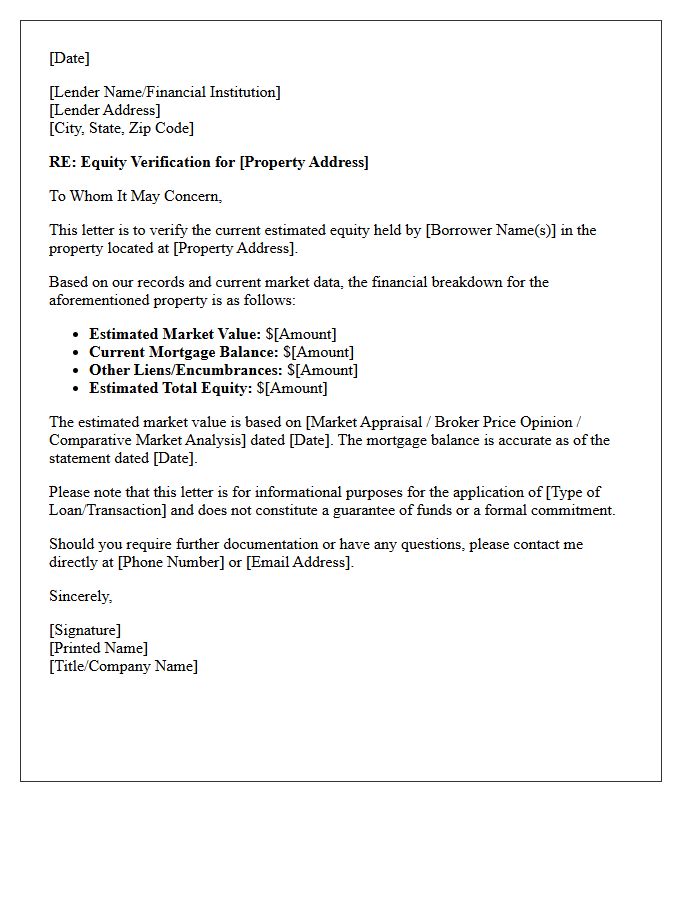
A Real Estate Equity Verification Letter is a formal document confirming the available net value in a property after subtracting outstanding mortgages. Lenders use this to verify a borrower's financial stability and collateral strength. It serves as critical proof that an owner possesses sufficient liquidable equity to secure new financing or bridge loans. This letter must be issued by a qualified professional, such as a certified appraiser or tax official, ensuring the stated valuation accuracy meets strict underwriting standards for real estate transactions and investment verification.
高度Mutual Fund Asset Verification Letter
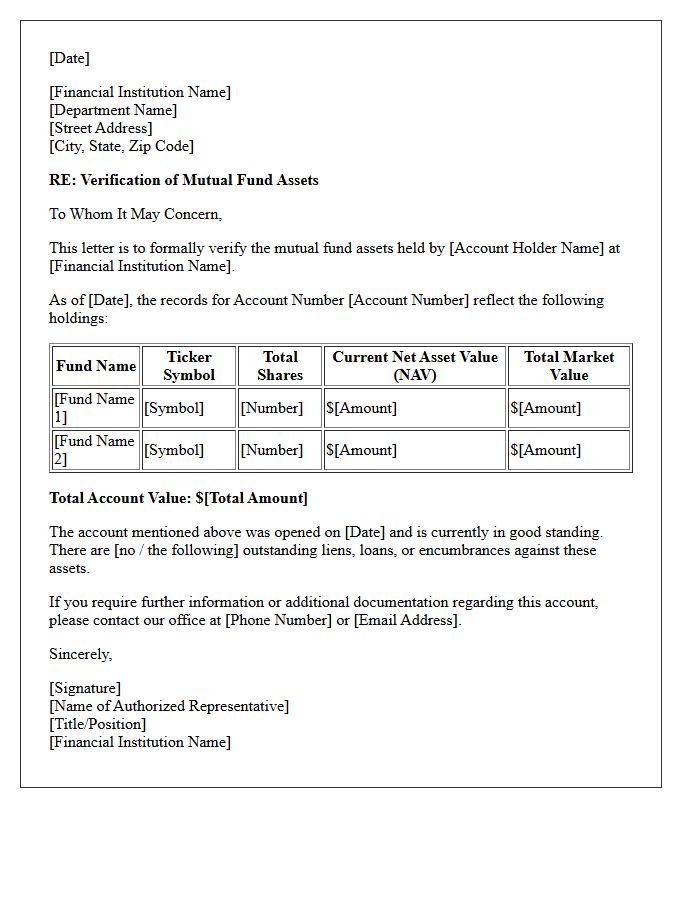
A Mutual Fund Asset Verification Letter is an official document issued by a fund house or brokerage to confirm your current investment holdings. It serves as proof of liquidity and net worth for third parties, such as mortgage lenders, visa authorities, or legal entities. The letter typically details the account holder's name, fund types, number of units held, and the current market value of the assets. This document is essential for verifying your financial capacity to meet long-term obligations or secure large loans against your investment portfolio.
Down Payment Sourcing Verification Letter
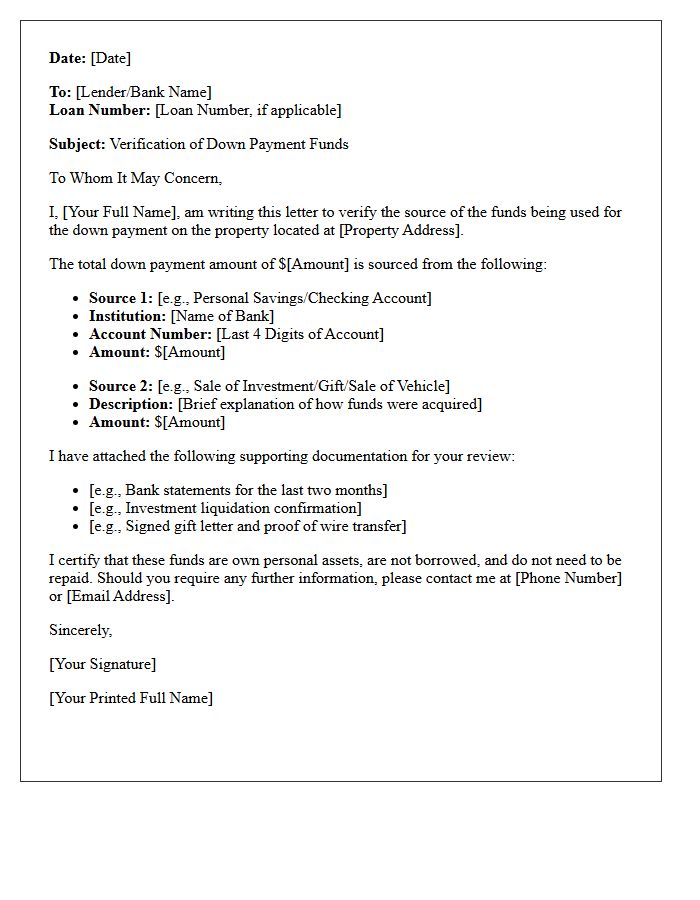
A Down Payment Sourcing Verification Letter is a formal document required by lenders to prove the legitimate origin of your investment funds. This letter verifies that the money used for a home purchase was earned or obtained through acceptable means, such as savings, investments, or legal gifts, rather than undisclosed loans. Lenders use this to comply with anti-money laundering regulations and assess financial risk. Providing a clear trail of bank statements and supporting documentation ensures a smooth mortgage approval process by confirming your financial transparency and assets.
What is a Verification of Assets (VOA) letter?
A Verification of Assets letter is an official document issued by a financial institution that confirms the current balance and history of an individual's liquid assets, such as savings, checking, or investment accounts.
Why do mortgage lenders require a Verification of Assets letter?
Lenders require this document to ensure the borrower has sufficient funds for a down payment, closing costs, and cash reserves, while also verifying that the source of the funds is legitimate and stable.
What specific information is included in a Verification of Assets letter?
The letter typically includes the account holder's name, account numbers, the date the accounts were opened, the current balance, and the average balance over the previous two to three months.
How long is a Verification of Assets letter valid for?
Generally, a VOA letter is considered valid for 30 to 60 days. Because financial positions can change quickly, lenders often request an updated version if the closing process extends beyond this timeframe.
Can a Verification of Assets be completed digitally?
Yes, many modern lenders use automated third-party services to securely access your banking data and generate a digital Verification of Assets report, which often speeds up the underwriting process.

Comments