
A Lease Renewal Notice with Term Modifications is a formal document used by landlords to propose extending a tenancy while updating specific conditions, such as rent increases or policy changes. It ensures legal clarity and helps maintain positive tenant relationships through transparent communication. Understanding these adjustments is vital for seamless property management. Below are some ready to use templates.
Image cover: Strategic Guide to Lease Renewal Notices: Templates and Key Terms Modification Samples
Letter Samples List
- Standard Lease Renewal with Rent Increase Letter
- Month-to-Month Lease Renewal Modification Letter
- Lease Renewal with Pet Policy Modification Letter
- Lease Renewal with Utility Responsibility Modification Letter
- Fixed-Term Lease Renewal with Parking Fee Modification Letter
- Lease Renewal with Maintenance Terms Modification Letter
- Early Lease Renewal Offer with Term Modification Letter
- Lease Renewal with Late Fee Policy Modification Letter
- Lease Renewal with Tenant Insurance Requirement Letter
- Short-Term Lease Renewal Modification Letter
- Lease Renewal with Subletting Policy Modification Letter
- Lease Renewal with Property Amenity Access Modification Letter
Standard Lease Renewal with Rent Increase Letter
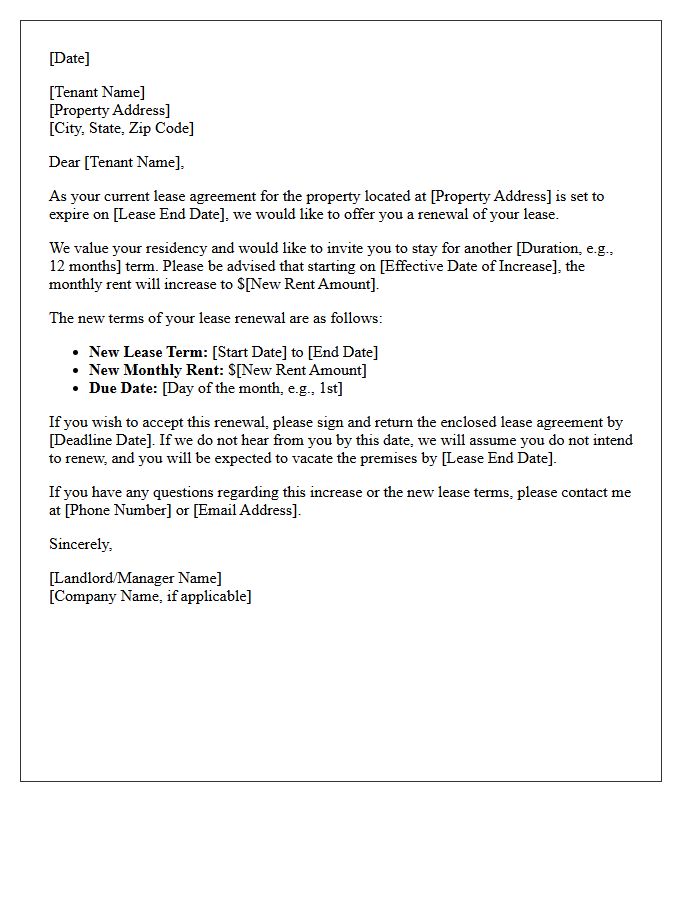
A standard lease renewal letter serves as a formal offer to extend a tenancy while outlining new terms. The most critical element is the rent increase notice, which must comply with local rent control laws and notice period requirements, typically 30 to 90 days before the current lease expires. To ensure legal validity, the document should clearly state the new monthly amount, the effective date, and the deadline for the tenant to accept or vacate. Proper documentation protects both parties by establishing clear expectations for the upcoming rental term.
Month-to-Month Lease Renewal Modification Letter
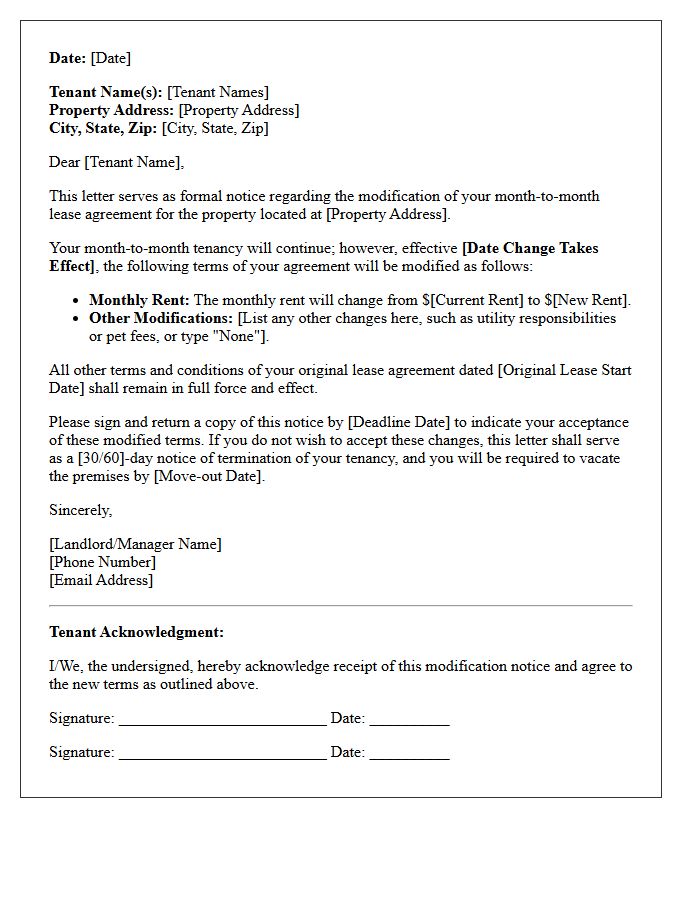
A Month-to-Month Lease Renewal Modification Letter is a formal notice used to amend existing rental terms while maintaining a flexible tenancy. Its primary purpose is to document changes to specific clauses, such as rent increases or updated building policies, without requiring a long-term commitment. Landlords must ensure the letter complies with local notice period regulations, typically providing 30 to 60 days' warning. This document serves as a legally binding addendum, ensuring both parties understand their revised obligations while preserving the original agreement's month-to-month nature and termination rights.
Lease Renewal with Pet Policy Modification Letter
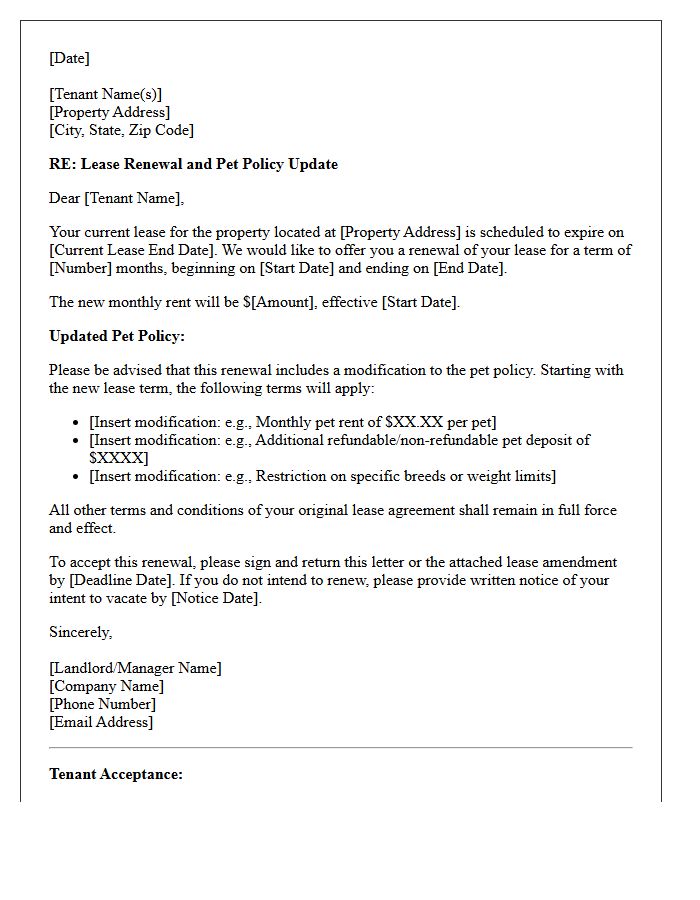
A lease renewal with pet policy modification letter formally extends a tenancy while updating rules regarding domestic animals. It is essential for landlords to specify changes in pet rent, security deposits, or breed restrictions. Tenants must review these updates to ensure compliance and avoid potential lease violations. Clearly defining owner responsibilities, such as waste disposal and noise control, helps maintain a harmonious living environment. This legal document serves as a binding amendment to the original contract, protecting both parties as they continue their professional rental relationship.
Lease Renewal with Utility Responsibility Modification Letter
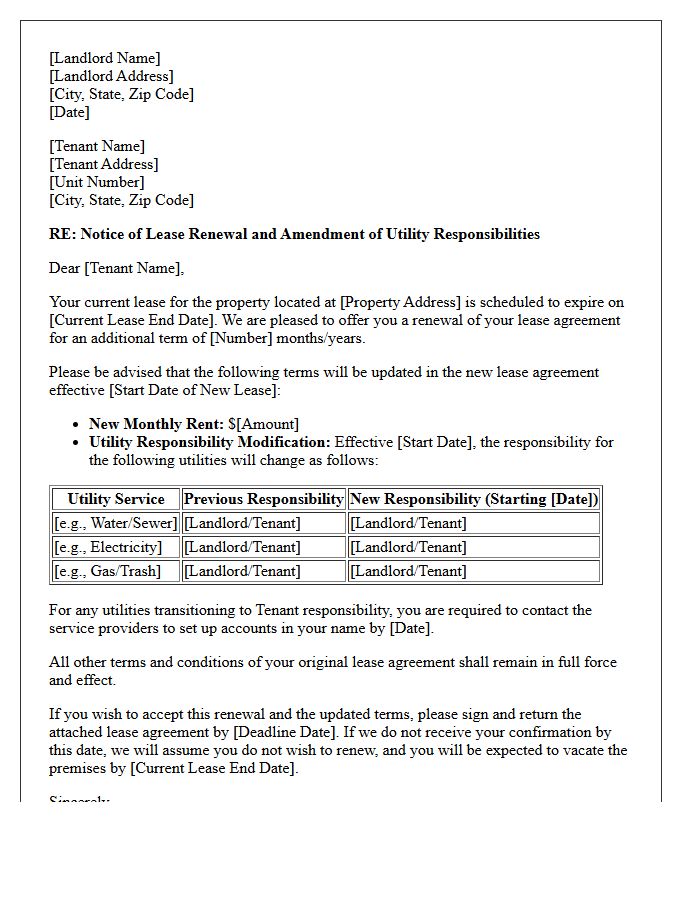
A Lease Renewal with Utility Responsibility Modification Letter is a formal notice used to extend a rental agreement while reallocating utility costs between parties. This document is essential when a landlord shifts financial obligations for services like water, gas, or electricity to the tenant. It must clearly outline the new payment terms and the effective date to ensure legal transparency. Providing this update ensures that both parties understand the revised financial structure, helping to prevent future billing disputes and maintaining clear communication during the lease extension process.
Fixed-Term Lease Renewal with Parking Fee Modification Letter
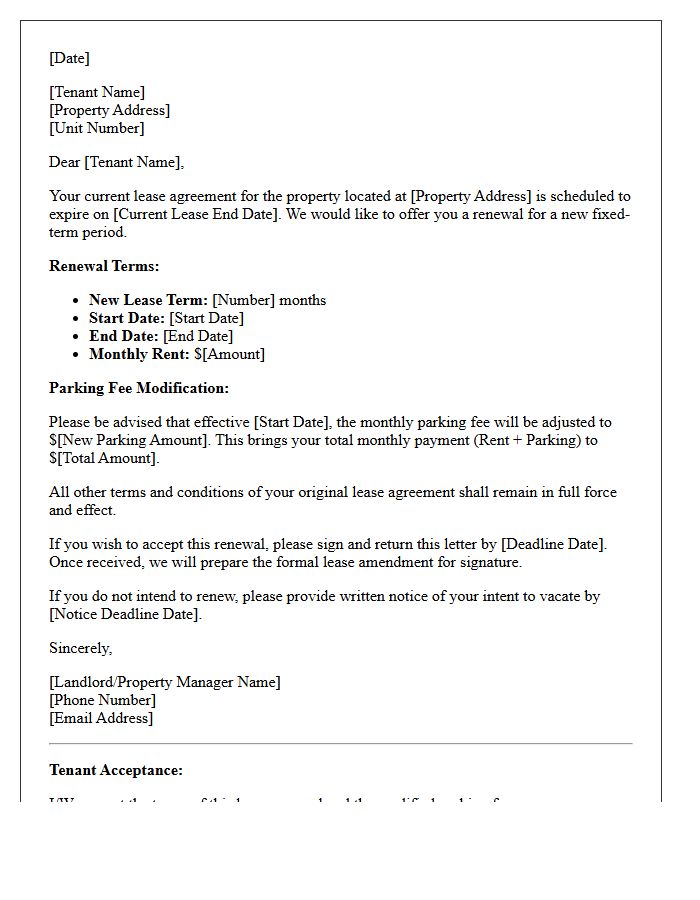
A Fixed-Term Lease Renewal letter notifies tenants that their current rental agreement is ending while offering a new duration. When implementing a parking fee modification, landlords must clearly state the adjusted monthly cost and the effective date. This document serves as a formal legal notice, ensuring transparency regarding updated financial obligations. To secure the extension, tenants typically must sign and return the letter by a specific deadline. Reviewing these terms is essential to confirm that all utility or amenity changes align with local rent control regulations and housing laws.
Lease Renewal with Maintenance Terms Modification Letter
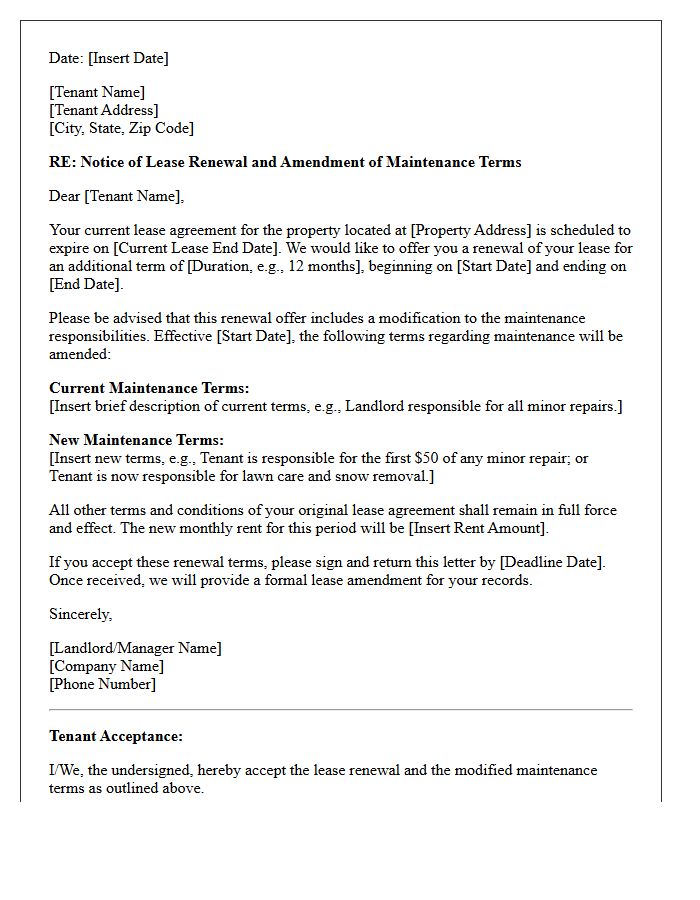
A lease renewal letter with maintenance modifications serves as a formal proposal to extend a tenancy while adjusting service obligations. It is essential to clearly outline which party is responsible for specific upkeep tasks, such as landscaping or minor repairs, to avoid future disputes. Landlords use this document to shift or clarify costs, while tenants must review these terms to understand their new financial liabilities. Ensuring these changes are documented in writing protects both parties and maintains legal transparency throughout the renewed contract period.
Early Lease Renewal Offer with Term Modification Letter
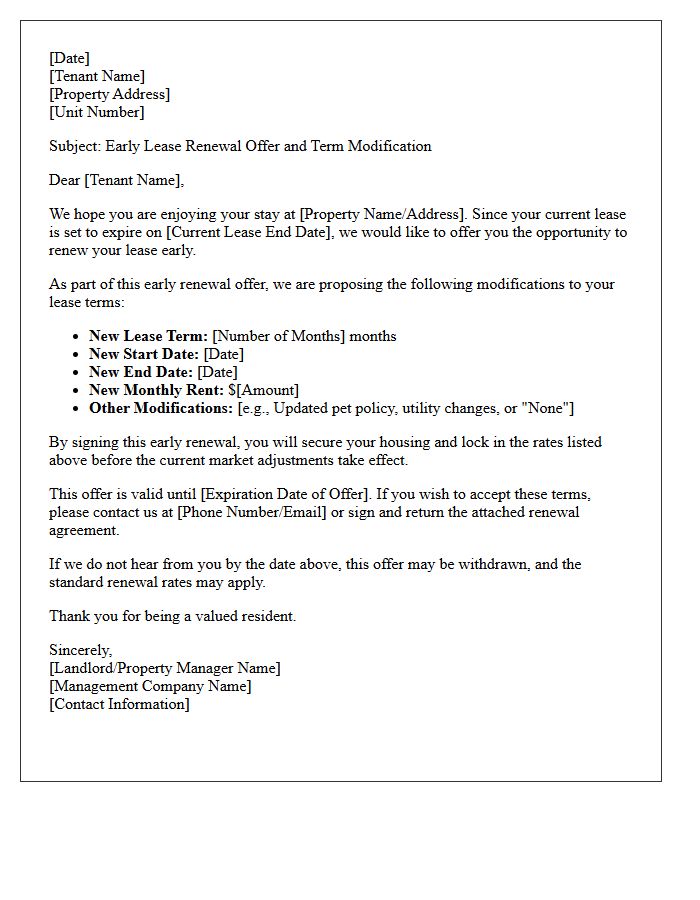
An Early Lease Renewal Offer with Term Modification Letter serves as a proactive formal proposal to extend a rental agreement before expiration. This document outlines updated conditions, such as rent adjustments, revised duration, or policy changes. Tenants benefit from long-term housing security, while landlords ensure continuous occupancy and predictable cash flow. Carefully reviewing the modified terms is essential to understanding new obligations before signing. It functions as a legal bridge, transitioning current residents into a renewed contract while documenting all structural changes to the original lease agreement for clear future compliance.
Lease Renewal with Late Fee Policy Modification Letter
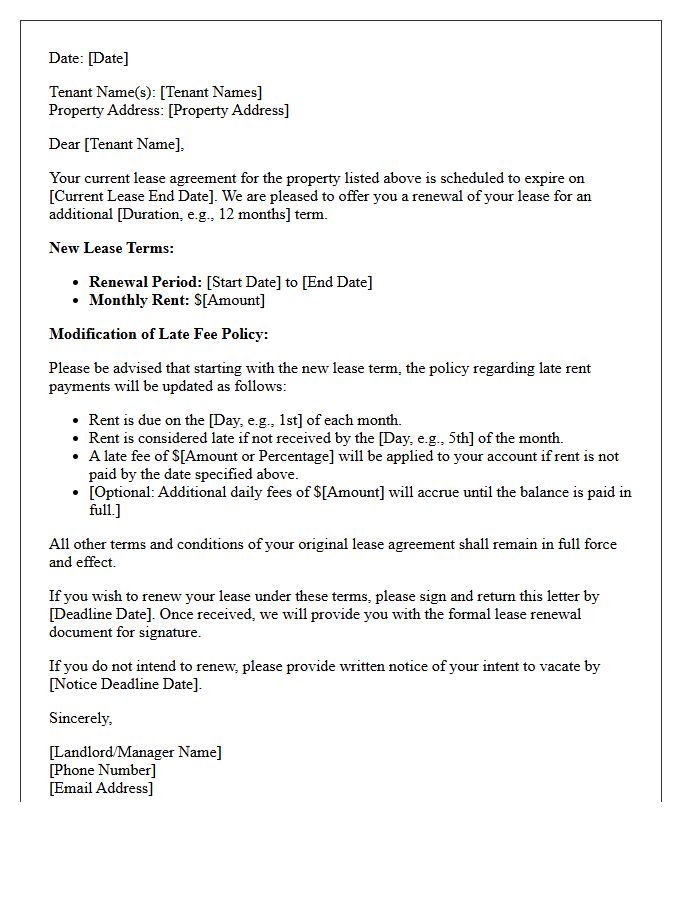
A lease renewal with a late fee policy modification letter informs tenants of an upcoming contract extension while introducing updated penalty terms for overdue rent. This document is essential for maintaining transparent communication and legal compliance. It must clearly outline the new fee structure, the effective date, and any grace period adjustments. By signing, the tenant acknowledges the revised payment obligations, ensuring that the landlord can enforce stricter collection policies to protect cash flow and discourage consistent delinquency during the new lease term.
Lease Renewal with Tenant Insurance Requirement Letter
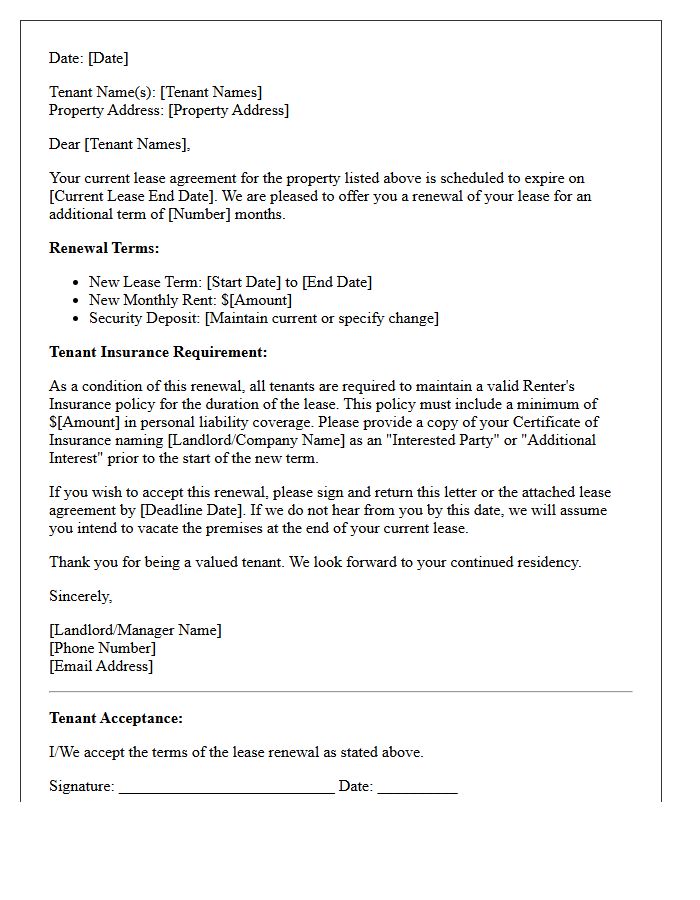
A lease renewal letter containing a tenant insurance requirement ensures continued protection for both parties. It serves as a formal notice that renewing the rental agreement is contingent upon maintaining an active HO-4 policy. Landlords use this document to mitigate liability risks while verifying that coverage limits meet specific building standards. For tenants, providing updated proof of insurance is essential to avoid lease violations. This professional communication clarifies that professional liability and personal property protection are mandatory conditions for extending the residency period and maintaining a compliant tenancy.
Short-Term Lease Renewal Modification Letter
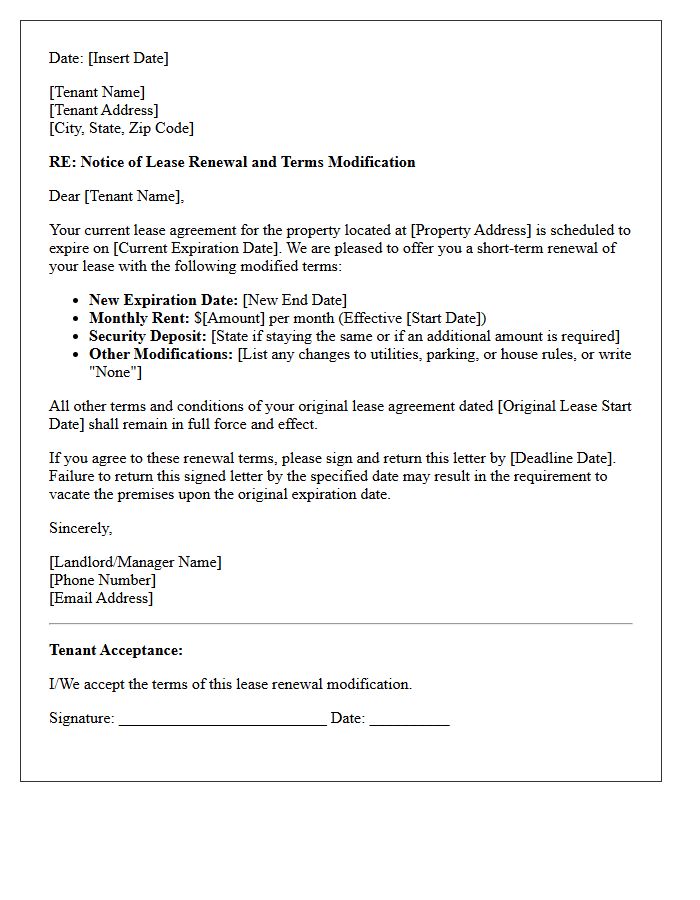
A Short-Term Lease Renewal Modification Letter is a formal document used to extend a rental agreement for a brief duration. Its primary purpose is to outline specific amendments to the original contract, such as updated expiration dates or adjusted rent amounts. This letter ensures legal continuity without requiring an entirely new lease. It is essential for documenting temporary occupancy changes while maintaining the validity of existing terms and conditions. Clear communication in this letter protects both parties by providing written proof of the extension period and any modified obligations.
Lease Renewal with Subletting Policy Modification Letter
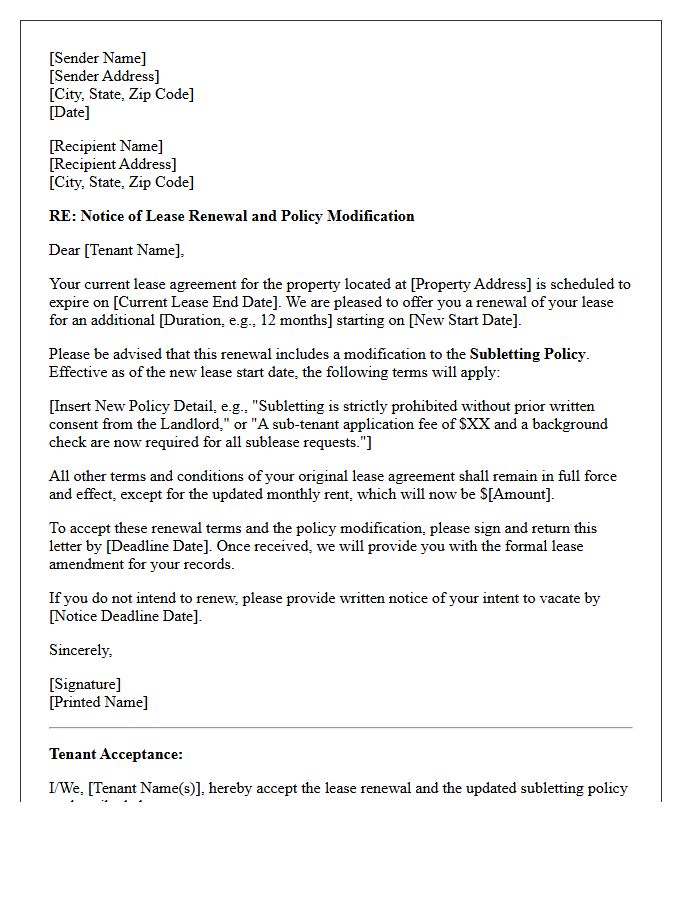
A Lease Renewal with Subletting Policy Modification Letter is a formal document extending a tenancy while updating terms regarding occupancy rights. It is crucial to review the specific changes to the subleasing clause, as landlords often impose stricter consent requirements or fees during the renewal process. Understanding these modifications ensures tenants remain compliant with the updated rental agreement and helps avoid potential legal disputes. Clear communication regarding these policy shifts protects both parties' interests, clarifying how third-party residents are handled throughout the new lease term.
Lease Renewal with Property Amenity Access Modification Letter
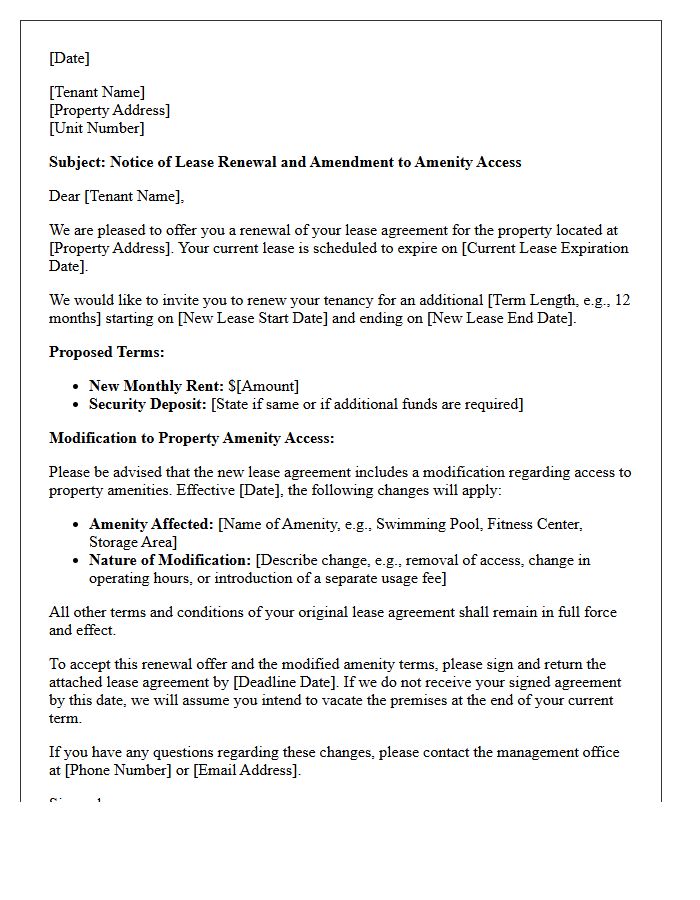
A Lease Renewal with Property Amenity Access Modification Letter is a formal notice used to extend a rental agreement while officially changing facility usage rights. It is crucial to clearly outline which specific perks, such as gyms, pools, or parking, are being added, restricted, or requiring new fees. This document ensures legal transparency between landlords and tenants, preventing future disputes regarding service changes. Tenants must review these modifications carefully before signing, as the renewal binds them to the updated amenity policies and potential liability adjustments for the upcoming term.
What is a Lease Renewal Notice with Term Modifications?
A Lease Renewal Notice with Term Modifications is a formal document sent by a landlord to a tenant offering to extend the rental agreement under updated conditions, such as changes to the monthly rent, lease duration, or updated building policies.
How much notice must a landlord provide for lease term modifications?
Notice requirements vary by jurisdiction, but landlords typically must provide the tenant with a renewal offer and notice of modifications 30 to 90 days before the current lease expiration date to ensure legal compliance and tenant stability.
Can a tenant negotiate the new terms in a lease renewal notice?
Yes, tenants have the right to negotiate proposed modifications. Common points of negotiation include the percentage of rent increase, the length of the new lease term, and the inclusion of specific maintenance requests or updated utility responsibilities.
What happens if a tenant does not respond to a lease renewal notice?
If a tenant fails to respond by the specified deadline, the lease may automatically transition to a month-to-month arrangement at the new rate, or the landlord may initiate the move-out process depending on the "holdover" clauses in the original agreement.
Are lease modifications legal if they are not signed by both parties?
Generally, for term modifications to be legally binding, both the landlord and tenant must sign the renewal amendment or a new lease agreement. Continuing to pay a new rent amount after receiving notice can sometimes be viewed as "acceptance by conduct" in certain jurisdictions.

Comments