
Effectively managing a Response to Reasonable Accommodation Request is vital for legal compliance and supporting employee needs under the ADA. Employers must engage in an interactive process to determine effective solutions that balance workplace requirements with individual accessibility. Clear communication ensures a professional and inclusive environment. To simplify your documentation process, below are some ready to use templates.
Image cover: Professional Response Templates for Reasonable Accommodation Requests
Letter Samples List
- Approval Letter for Emotional Support Animal Accommodation
- Approval Letter for Accessible Parking Space Modification
- Approval Letter for Ground Floor Unit Transfer Request
- Approval Letter for Structural Unit Modification Request
- Approval Letter for Service Animal Breed Restriction Exemption
- Approval Letter for Rent Payment Date Adjustment Accommodation
- Request Letter for Additional Disability Verification Documentation
- Request Letter for Clarification on Accommodation Needs
- Alternative Accommodation Offer Letter for Tenant Request
- Denial Letter Due to Undue Financial and Administrative Burden
- Denial Letter Due to Fundamental Property Operations Alteration
- Status Update Letter for Pending Reasonable Accommodation Request
Approval Letter for Emotional Support Animal Accommodation
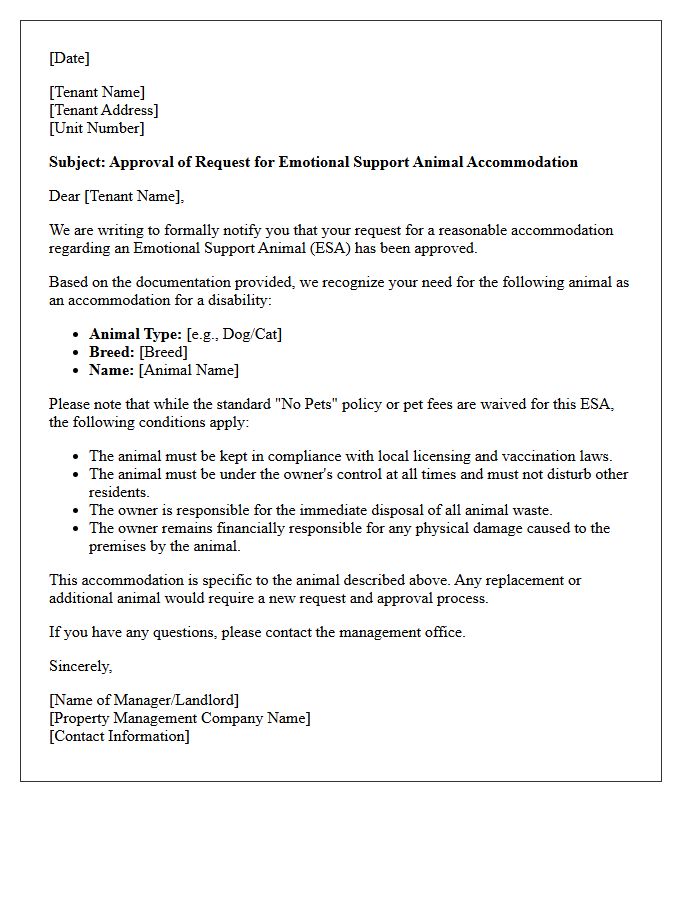
An ESA Letter is a formal document issued by a licensed mental health professional certifying that an individual requires an Emotional Support Animal for therapeutic benefit. Under federal laws like the Fair Housing Act, this approval letter grants owners the right to live in "no-pet" housing without paying extra fees. To be legally valid, the document must be written on the provider's official letterhead, including their license type, date, and state of jurisdiction. It confirms that the animal alleviates symptoms of a diagnosed mental health condition or disability.
Approval Letter for Accessible Parking Space Modification
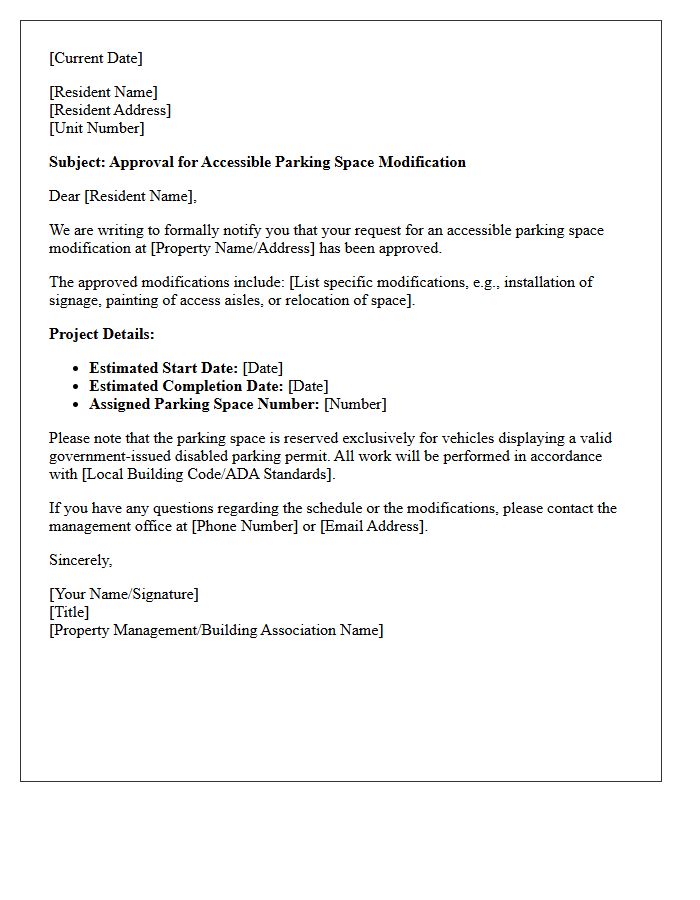
An Approval Letter is a formal authorization from property management or local authorities allowing physical changes to a parking area. It confirms that your request for an Accessible Parking Space Modification complies with building codes and ADA regulations. This document is essential before starting construction, as it outlines specific requirements for signage, dimensions, and striping. Keep this letter as legal proof of compliance to ensure long-term reasonable accommodation and to protect against potential disputes regarding property alterations or designated parking rights.
Approval Letter for Ground Floor Unit Transfer Request
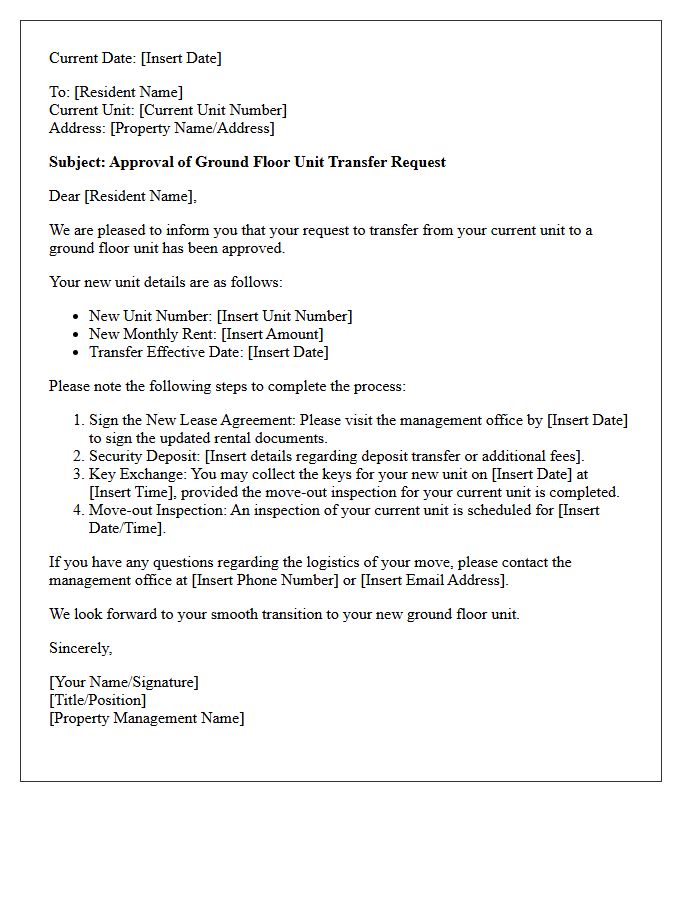
An Approval Letter for Ground Floor Unit Transfer Request is a formal document confirming that a tenant's application to relocate to a lower level has been granted. This authorization typically addresses accessibility needs or medical requirements. It serves as an official amendment to the existing lease agreement, detailing the new unit number, updated rental rates, and the scheduled moving date. Retaining this letter is crucial for legal protection and ensures a smooth transition while maintaining compliance with building management policies and housing regulations.
Approval Letter for Structural Unit Modification Request
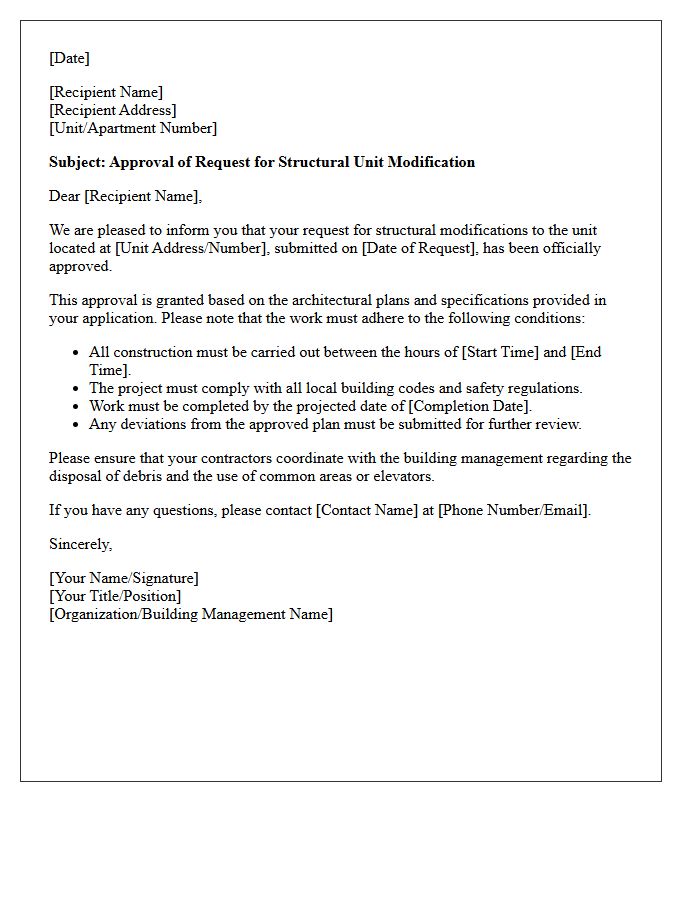
An Approval Letter for Structural Unit Modification Request is a formal document issued by building authorities or management boards granting permission for renovations. It confirms that your proposed changes meet safety codes and structural integrity standards. Before starting construction, ensuring you have this official authorization is crucial to avoid legal penalties, fines, or safety hazards. This letter serves as essential proof that the modification is professionally vetted and compliant with local regulations, protecting both your property value and the safety of the entire building structure.
Approval Letter for Service Animal Breed Restriction Exemption
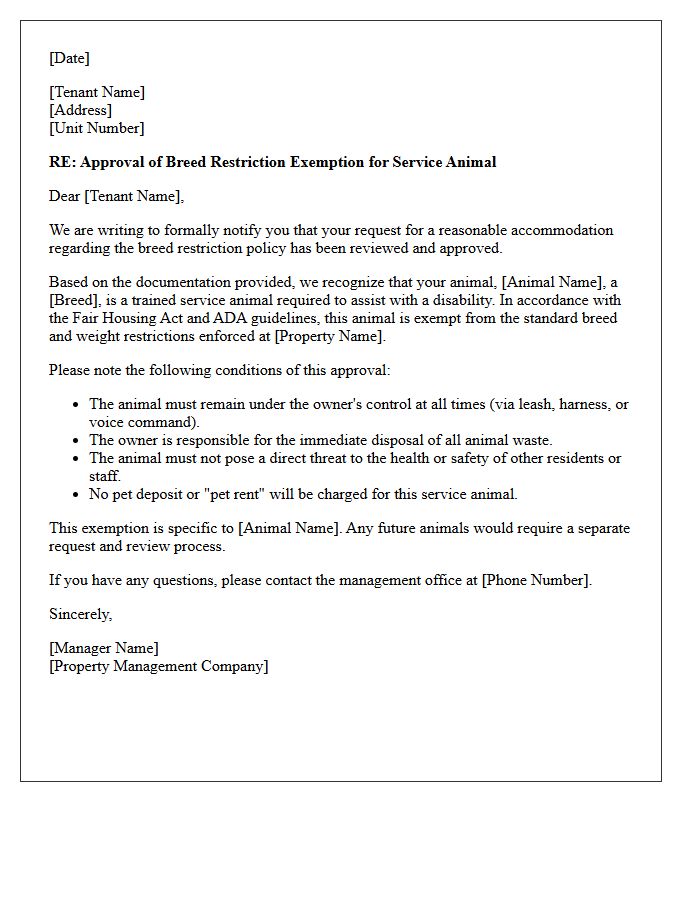
Under the Fair Housing Act, housing providers must allow reasonable accommodations for assistance animals regardless of local policies. An approval letter for a service animal breed restriction exemption serves as formal documentation that bypasses standard weight or breed bans. This letter confirms that your animal is not a pet but a necessary support aid. Landlords cannot legally deny entry based on breed alone unless they prove the specific animal poses a direct threat. Ensuring your documentation is legally compliant protects your housing rights and prevents discriminatory eviction based on breed stereotypes.
Approval Letter for Rent Payment Date Adjustment Accommodation
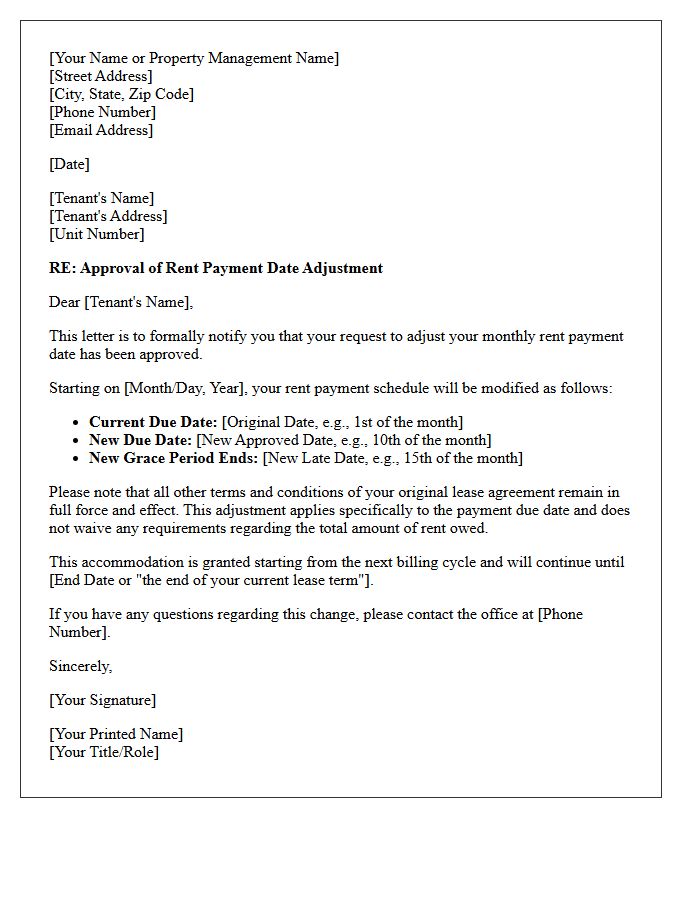
An Approval Letter for Rent Payment Date Adjustment serves as formal written consent from a landlord to modify the monthly due date. This document is a vital legal record that prevents late fees and protects your tenancy status. It should clearly state the new recurring deadline and the effective start date to avoid future disputes. Having this written confirmation ensures both parties are aligned on the revised financial obligations, providing security for the tenant while maintaining a professional relationship with the property management.
Request Letter for Additional Disability Verification Documentation
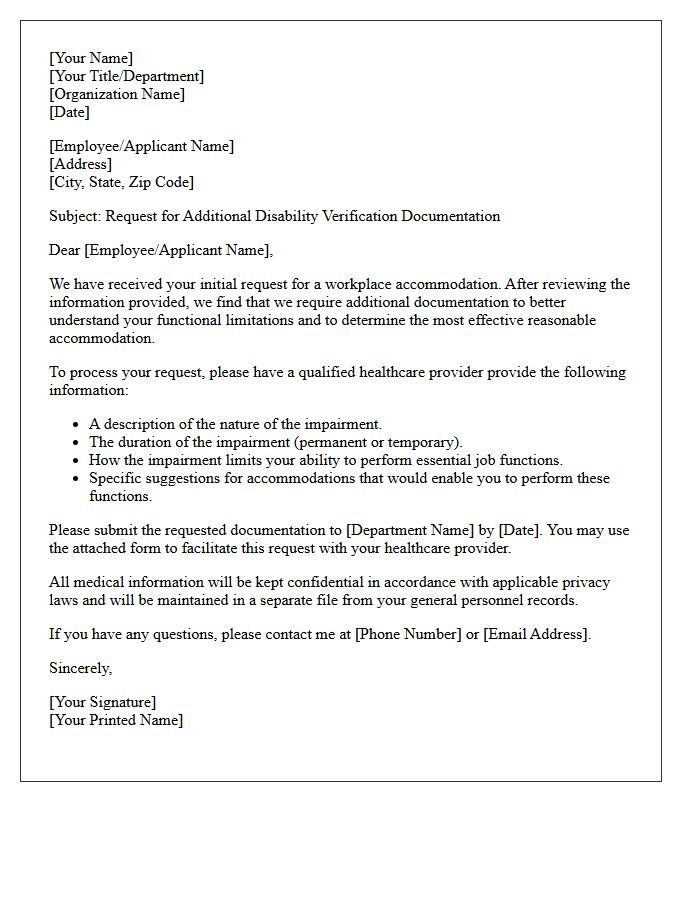
When drafting a Request Letter for Additional Disability Verification Documentation, clarity is essential. This formal document asks for further evidence to substantiate a claim when initial records are insufficient. It must specify the precise medical information needed, such as clinical findings or functional limitations. Ensure compliance with privacy regulations like HIPAA to protect sensitive data. Providing a clear deadline helps expedite the review process and prevents delays in benefit adjudication. Maintaining a professional tone ensures that the applicant understands their responsibilities in securing the necessary supporting documentation for an accurate evaluation.
Request Letter for Clarification on Accommodation Needs
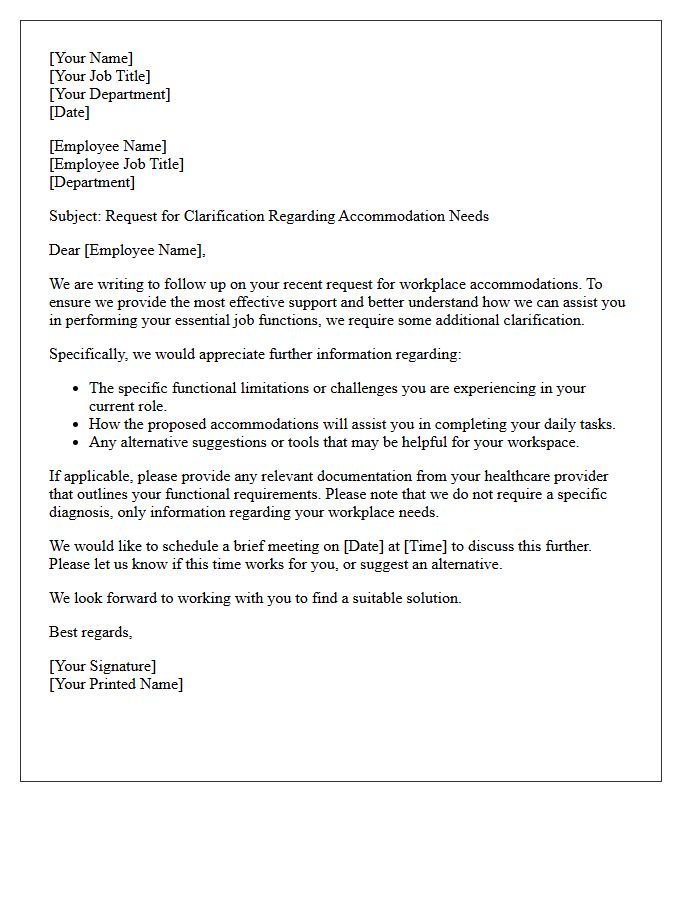
A Request Letter for Clarification on Accommodation Needs is a formal document used to specify the exact support an individual requires to perform tasks effectively. It bridges the communication gap between employees or students and their organizations. This letter should clearly outline the functional limitations and suggest reasonable adjustments, such as flexible hours or assistive technology. Providing precise medical documentation ensures the request is handled professionally. Clear communication helps both parties reach a mutually beneficial agreement while ensuring compliance with accessibility laws and fostering an inclusive environment.
Alternative Accommodation Offer Letter for Tenant Request
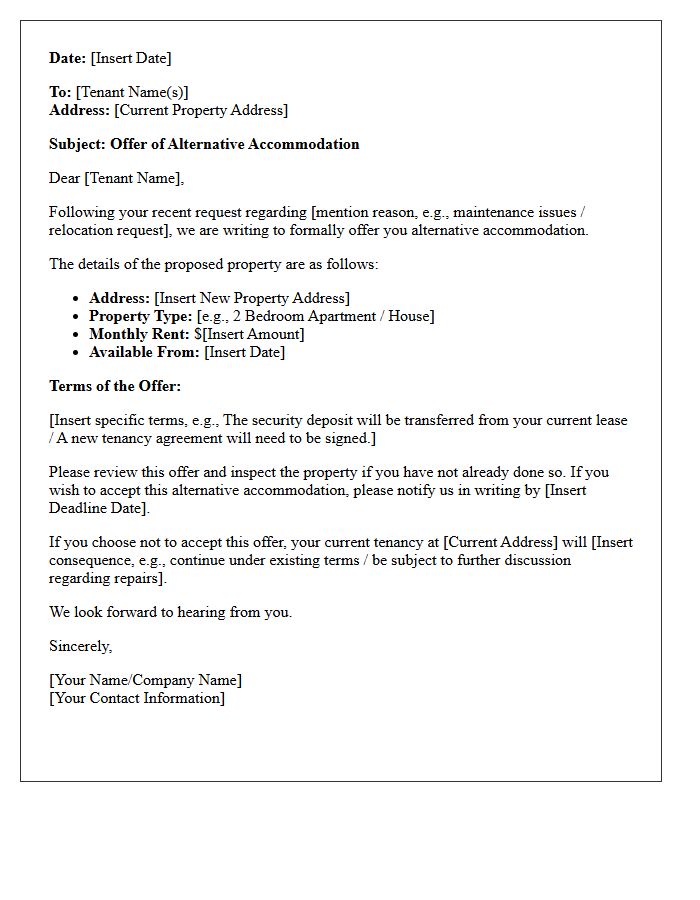
An alternative accommodation offer letter is a formal document used when a landlord must temporarily relocate a tenant due to essential property repairs or uninhabitable conditions. This letter should clearly outline the temporary housing address, the duration of the stay, and confirm that the landlord is responsible for all associated costs. It serves as a legal record to ensure the tenant's housing rights are protected while maintaining the original tenancy agreement. Both parties must sign this agreement to avoid future disputes regarding rent payments or displacement terms during the renovation period.
Denial Letter Due to Undue Financial and Administrative Burden
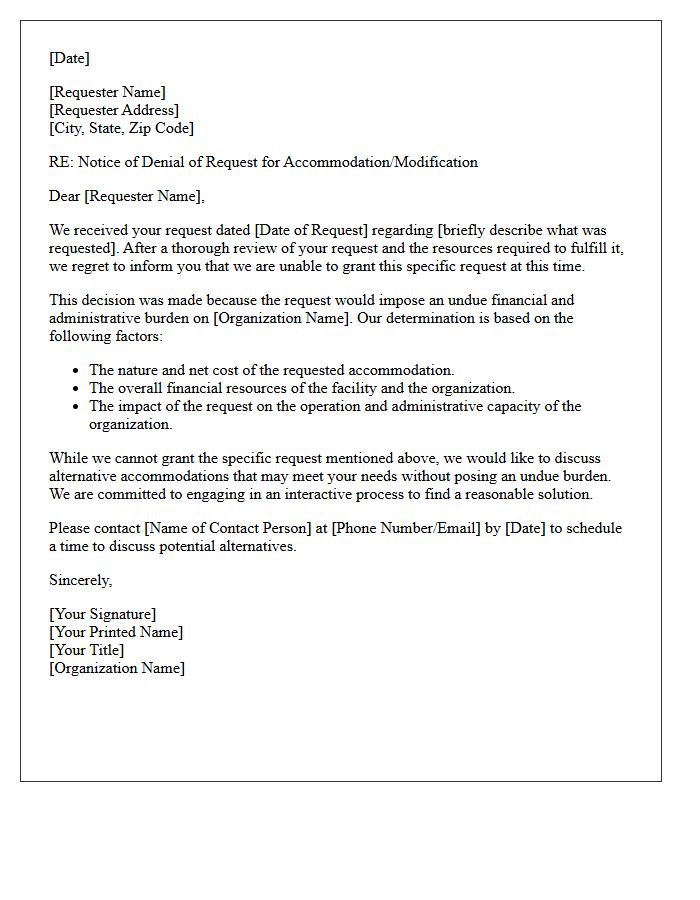
A denial letter citing undue financial and administrative burden means an employer or housing provider believes a requested reasonable accommodation is too costly or operationally difficult to implement. Under the ADA, they must prove the request causes significant difficulty based on their total resources. Receiving this notice does not necessarily end the process; the provider should engage in an interactive process to find an alternative solution that balances your needs with their constraints. Always request a written explanation detailing the specific financial or structural impacts used to justify the refusal.
Denial Letter Due to Fundamental Property Operations Alteration
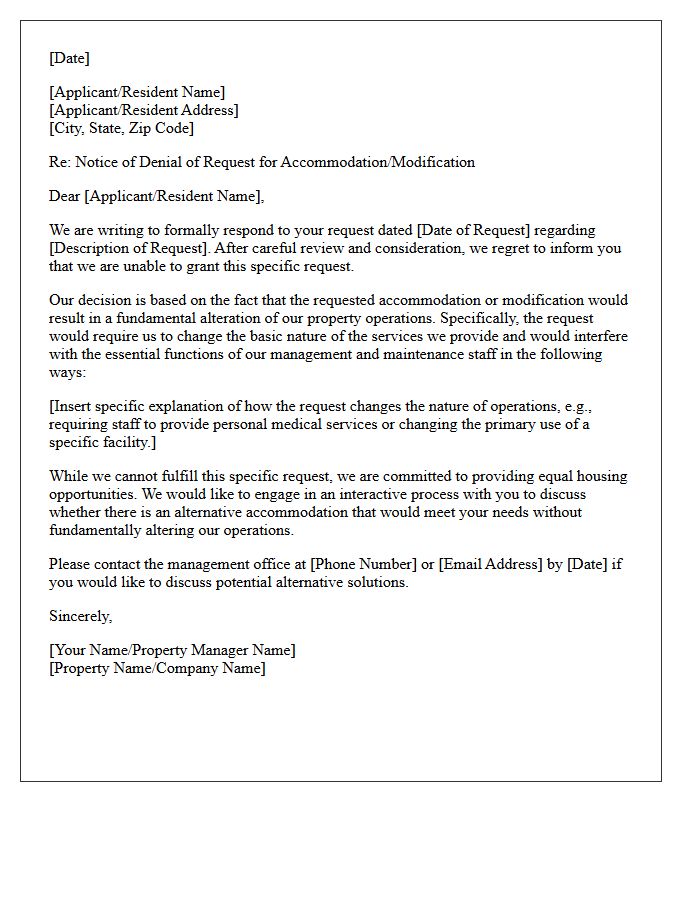
A denial letter based on fundamental property operations alteration occurs when a requested accommodation would drastically change how a housing provider functions. Under fair housing laws, landlords are not required to grant requests that force them to provide services outside their professional scope or business model. This legal threshold protects owners from undue administrative burdens that would fundamentally redefine their primary operations. To remain compliant, providers must engage in an interactive process to explore alternative solutions before issuing a final rejection based on these operational impacts.
Status Update Letter for Pending Reasonable Accommodation Request
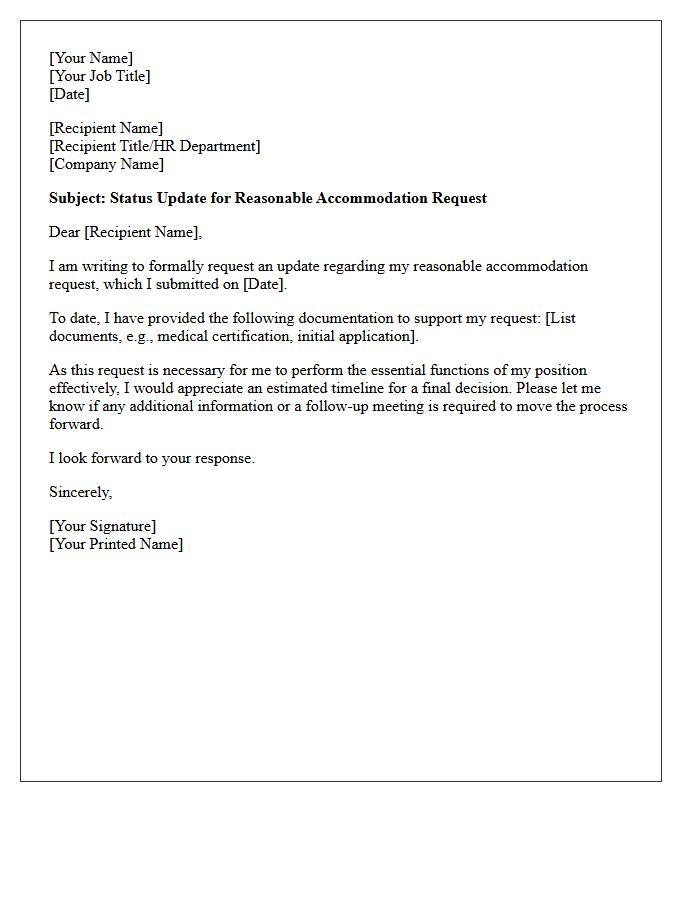
A status update letter is a vital tool for tracking a pending reasonable accommodation request under the ADA. This formal inquiry ensures interactive process continuity and prevents unnecessary delays in receiving workplace adjustments. It should professionally reference the initial submission date, request a current progress report, and reiterate the medical necessity of the accommodation. Maintaining a written record of these communications protects your legal rights and encourages your employer to provide a timely response, ensuring you receive the essential support needed to perform your job effectively.
What is a reasonable accommodation request under the ADA?
A reasonable accommodation request is a modification or adjustment to a job, the work environment, or the hiring process that enables a qualified individual with a disability to enjoy equal employment opportunities.
How should an employer respond to a formal accommodation request?
Employers should respond promptly by initiating the "interactive process," a collaborative dialogue intended to determine the employee's specific limitations and identify effective solutions that do not pose an undue hardship.
Can an employer request medical documentation for an accommodation?
Yes, if the disability or the need for accommodation is not obvious, an employer may request limited medical documentation to confirm the existence of a disability and clarify how the requested accommodation will address functional limitations.
What factors determine if an accommodation request is an "undue hardship"?
Undue hardship is determined by whether the specific accommodation would cause significant difficulty or expense, considering the employer's size, financial resources, and the nature of its business operations.
What are the legal requirements for denying a reasonable accommodation?
An employer can legally deny a request only if the employee is not a "qualified individual," the accommodation does not address the disability, or the requested modification creates an undue hardship; however, they must still explore alternative effective options.

Comments